Good Review of Unscientific America from APS’s “Forum on Education” | The Intersection

Art Hobson, an Emeritus physicist at the University of Arkansas at Fayetteville, has reviewed our book for the American Physical Society’s educational forum, and it seems he liked it. A quote:

Summarizing its prescription, the book’s final chapter states “We must fundamentally change the way we think and talk about science education,” and this means rethinking the education of scientists as well as the public school and college education of non-scientists. “We don’t simply need a bigger scientific workforce: We need a more cultured one, capable of bridging the divides that have led to science’s declining influence. …We must invest in a sweeping project to make science relevant to the whole of America’s citizenry.” I couldn’t agree more.

You can read Hobson’s full review here.


The New Murder-Mystery Game: Who Killed Copenhagen? | 80beats

obama220Let the Copenhagen fallout continue.

Friday night, after a two-week diplomacy fest that could be called “difficult” at best, leaders of some of the most powerful countries in the world announced that they reached an 11th hour agreement to conclude the United Nations Copenhagen climate summit. After speaking to the assembly, President Barack Obama spent the day going in and out of meetings with Chinese prime minister Wen Jiabao. They met later with Mammoghan Singh of India, President Luiz Inácio Lula da Silva of Brazil, and South African President Jacob Zuma, before a White House official leaked that these big players had reached an agreement.

Obama had flown to Denmark for the meeting’s final day, hoping to snatch an agreement from the jaws of growing defeatism among those desiring a climate accord. Obama’s 15-hour, seat-of-the-pants dash through Copenhagen was marked by doggedness, confusion and semi-comedy. Constrained by partisan politics at home, and quarrels between rich and poor nations abroad, he was determined to come home with a victory, no matter how imperfect [AP].

And the result was far from perfect. First, the nations assembled failed to meet a binding agreement, as many feared would happen going into the meeting. In addition, the document that remained at the end was the work of those five nations, which has now ignited a storm of protest around the world. Despite the fact that South Africa’s leader was around for the 11th hour agreement, for instance, its climate representatives are now steaming mad. South Africa’s environment minister Buyelwa Sonjica and her two top climate change negotiators said Tuesday that part of the blame rested with the way the host guided the conference. In their first media briefing since returning from talks in the Danish capital that ended Saturday, the trio described an atmosphere of distrust and suspicion that Denmark was plotting to force its own position on other nations [AP].

Europeans, too, balked at Copenhagen’s conclusion. U.K. Climate Secretary Ed Milliband, in a Guardian editorial, also slammed the process, but pointed the finger at China in particular. We did not get an agreement on 50% reductions in global emissions by 2050 or on 80% reductions by developed countries. Both were vetoed by China, despite the support of a coalition of developed and the vast majority of developing countries [The Guardian]. European Union representatives reacted negatively to the loose agreement, both for not being part of the talks among the five nations and for the agreement’s failure to set binding goals. The markets reacted too. European and United Nations carbon prices fell the most since February after the Copenhagen climate accord didn’t set targets that would boost demand for permits [Bloomberg].

Copenhagen did result in one actual ruling: One hopeful sign is the accord’s pragmatic agreement to pay countries to prevent deforestation. Reversing one of the Kyoto Protocol’s failures, which perversely rewarded countries for planting trees but not for protecting them, this is precisely the kind of big picture cooperation between developed and developing economies that is needed to make a dent in global emissions [CNN]. The U.S. pledged $100 billion to aid poor nations in reducing emissions, and China promised greater transparency in how it cuts carbon, but neither of those are binding.

The parlor game this week is explaining why the Copenhagen talks went down in flames. Writing for CNN, Lisa Margonelli of the think tank New America Foundation says the meeting’s scope was a disadvantage, not an advantage, as gathering the world together to craft rules that would be agreeable and effective was “scientifically and practically naive.” The BBC blames 24 hour news, EU politics, and even the snowy weather for giving skeptics ammunition. (No, apparently we haven’t gotten past the weather/climate issue. Just ask Homer Simpson.)

The BBC hit it closest with their number one reason, however: “Key governments do not want a global deal.” As long as that’s the case, and major U.N. meeting occur in this format, no climate conference will produce anything but a document so wishy-washy that the effect on global emissions is negligible.

Related Content:
80beats: Copenhagen Roundup: Protests, Walkouts, and the Money Wars
80beats: Day One: U.N. Climate Summit Begins in Copenhagen
80beats: Climatologist Steps Down as “ClimateGate” Furor Continues
Discoblog: Another “Climate Trick” Controversy: Copenhagen Prostitutes Giving Freebies
The Intersection: I’m Going to Copenhagen

Image: White House / Pete Souza


Inspired Onion | Bad Astronomy

I love The Onion. It is that simple. I hope someone was eating a banana when they wrote that piece.

Sam Harris put it pretty well: the timing of when young Earth creationists claim God created the Universe, "… is, incidentally, about a thousand years after the Sumerians invented glue."


The blue clouds of the red planet | Bad Astronomy

I post a lot of pictures here from Hubble, Spitzer, and other massively-funded large observatories. But it doesn’t take a huge, multi-billion-dollar project to create amazing astronomical images. Proof in point: Emil Kraaikamp is one of the more gifted astrophotographers I’ve seen. He has a 25 cm (10″) telescope that he uses to create truly jaw-dropping views of the sky.

Want proof? Check this image out: it’s an animation he made of Mars, using observations he made in early December and showing the planet’s rotation over the course of more than two hours about 45 minutes (a day on Mars is a half hour longer than Earth’s). You can clearly see both the south and north polar ice caps together with several dark surface features on the planet, which in itself is lovely and very cool.

But what blew me away is something you may not notice immediately in the picture. Take a look on the left side of the animation. See those three aligned blue spots, with the one blue spot to the lower right? Those are called orographic clouds, formed when moist air is lifted up over an obstacle; the air cools and the moisture condenses, forming clouds. What kind of obstacle on the Martian surface could do that?

olympusmonsVolcanoes. Yes, volcanoes: in the animation, you can actually see clouds that have formed as the Martian atmosphere moves up the banks of the enormous volcanoes on the Tharsis shield, a massive uplift feature on Mars. The fourth cloud to the lower right is actually marking the spot of Olympus Mons, the largest volcano in the solar system. The image inset here is from NASA, showing Olympus Mons up close; but you don’t need to go to Mars to see it.

After all, it can be captured with a ten inch telescope.

Holy — and for once I mean this literally, folks — Haleakala.

On his page, Emil Kraaikamp showed how he took three images using red, green, and blue filters to create the stills that were then used for the animation:

kraaikamp_mars_rgb

I love this, because it shows how using filters tells you a lot about what you’re seeing. Note that in the red Mars is fairly smooth, with some dark spots. The red dust covers the planet, so it smooths out features (though the ice caps are obvious). In the green you’re just starting to see a hint of clouds, and then in the blue the clouds pop right out.

Combine them, and you have Mars. Another world, seen through what most people would consider a small telescope here on Earth.

You absolutely must peruse his other planet images; the animations of Jupiter are fantastic, and the detail he was able to capture on Venus — normally a featureless white blur — is nothing short of spectacular!

I’ll add that his setup is quite sophisticated, and he spent many hours processing these images, so it’s not like you can buy an off-the-shelf ’scope and expect to do this on your first night. But it does show what someone dedicated to the art and science of astronomy can do when they set their mind and heart to it. Amazing.

Credits: Images from Emil Kraaikamp used with permission. Olympus Mons image: NASA.


New Malaria Strategy: No Mosquito Babies, No Problem | 80beats

Researchers from the Imperial College London have a new strategy to combat malaria. The species of mosquito responsible for the spread of malaria in Africa, Anopheles gambiae, only mates once during its life. Putting a stop to their one shot at reproduction should slow down malaria transmission. Anopheles males deploy a glob of proteins and fluids known as a “mating plug” that is essential for ensuring sperm is correctly retained in the female’s sperm storage organ, from where she can fertilise eggs over the course of her lifetime [BBC News]. Without a mating plug, the sperm is not stored and the mosquitoes can’t reproduce. Simply put, the researchers want to prevent male mosquitoes from plugging in the wild.

Anopheles gambiae is the only known species of mosquito to use a mating plug. (However, mating plugs are found in other animals where they prevent multiple males from reproducing with a female. Plug checking mice in research laboratories is a right of passage for many graduate students.) In their research, written up in the journal PLoS Biology, scientists were able to alter the mosquitoes’ genes so that they could no longer form a plug, and thus were unable to reproduce. If this process could be developed for use in the field, perhaps in a spray form like an insecticide, it could “effectively induce sterility in female mosquitoes in the wild,” [study author Flaminia] Catteruccia wrote, offering potential as “one more weapon in the arsenal against malaria” [Reuters]. The WHO is optimistic that their increased funding efforts will produce more technologies similar to this one and that, hopefully, one of them will prove effective.

Related Content:
80beats: Potential Mosquito Repellent Keeps Them From Smelling Victims’ Breath
80beats: DEET Is Harmful to Cells in Lab Settings. What’s the Significance?
80beats: The Ultimate Source of Malaria Is Found in Chimps


Hey, the stupid really DOES burn | Bad Astronomy

So there’s a video of actress Jessica Simpson which is burning up (hahahahahahaha!) the internet right now. Her friend gave her an ear candle for Christmas, and she’s using it in the video:

I love this video, for a lot of reasons. First, as should be obvious to anyone who prefers not to set their head on fire, ear candling is dangerous and ineffective. Unless you’re trying to set your head on fire. Then it’s very effective.

Second, Ms. Simpson clearly thinks this is a bad idea as well. She titled the video "Who gives this kind of candle for a christmas gift?", and her reactions to it in the video is pretty clear. I love how one purported benefit of ear candling is relief of vertigo, but Ms. Simpson complains of nausea constantly in the video.

Third, and related to the second, the video shows how painful and awful this procedure is. It may set antiscience "alternative medicine" back a thousand years. Which is where alt-med is anyway. So I guess that’s a wash.

Fourth, it makes me wonder if anyone has sent Ms. Simpson to this website. I’ll refrain from commenting on any potential video of that.

Fifth and finally, it gives me a chance once again to use this drawing, which has been lonely lately:

The stupid, it burns


Time to Eat the Dog? | The Intersection

Today a link to this story hit my inbox:

..the revelation in the book “Time to Eat the Dog: The Real Guide to Sustainable Living” by New Zealanders Robert and Brenda Vale has angered pet owners who feel they are being singled out as troublemakers.

……

Combine the land required to generate its food and a “medium” sized dog has an annual footprint of 0.84 hectares (2.07 acres) — around twice the 0.41 hectares required by a 4×4 driving 10,000 kilometres (6,200 miles) a year, including energy to build the car.

26731701

While admittedly, I haven’t read the book, it appears the authors are just as hard on cats for killing wildlife, producing toxic waste, and eating Fancy Feast. In fact, no pet is innocent… not even goldfish. BUT there’s a big elephant in the room on this one (hopefully included in detail once readers get beyond the eye-catching title).

While the cumulative ‘eco-pawprint’ of our furry friends may be large, the trouble isn’t really about pets specifically. Rather, the point is that here on planet Earth, we (humans included) eat lots of protein. Food production (for dogs, cats, people, and more) has a gargantuan impact. Thus, the largest part of this equation–by far–has everything to do with the overwhelming carbon footprint of the meat industry.

The solution would be shifting average diet away from meat. Is it possible? Yes. Likely? That’s more complicated.


Study: Velociraptor’s Cousin Had a Venomous Bite and Saber-Teeth | 80beats

dinoskullEarlier this month DISCOVER covered the 213-million-year-old fossils of the theropod Tawa hallae, a dinosaur ancestor that could show how early dinos spread around the world. Now, in a study (in press) in the Proceedings of the National Academy of Sciences, another research team has uncovered a surprise in the bones of a theropod from almost 100 million years later. By that time, these creatures may have adopted a clever new weapon: venom.

Sinornithosaurus lived 125 million years ago in what’s now China, and while it might have been covered in feathers (and the size of a turkey), the researchers say it attacked like modern rear-fanged snakes. Rear-fanged snakes don’t inject venom. Instead, the toxin flows down a telltale groove in a fang’s surface and into the bite wound, inducing a state of shock [National Geographic].

Looking at the dinosaur’s skull, study author David Burnham says his team found a pocket that they believe Sinornithosaurus could have used to store venom. A groove runs from there to the base of the fang, the team says. Like rear-fanged snakes, the venom Sinornithosaurus used was probably not lethal. The researchers suggest it instead caused rapid shock, allowing the dinosaur to subdue its prey [BBC News]. Today’s komodo dragons may use a similar blast of venom to weaken their targets.

Burnham says the dinosaur probably ate the birds that lived in the forests of that time and place. Short front teeth were probably used “to pluck the feathers off their victims,” wrote the researchers, who suggest that other members of Sinornithosaurus‘ family, including the velociraptors of Jurassic Park fame, had the same venomous capabilities [Wired.com]. What Burnham doesn’t know is how far back venom goes—if dinosaurs 125 million years ago possessed the ability, it possibly could date to even earlier reptiles.

Related Content:
80beats: New Fossil Suggests Dinosaur World Domination Started in S. America
80beats: T. Rex May Have Been Hot-Blooded, Sweaty Beast
80beats: Did a Throat Infection Take Down Sue, the Famous T. Rex?
80beats: Four-Winged Dino Cliches the Case for Bird Evolution
80beats: Miniature T. Rex Was a Man-Sized Monster

Image: National Academy of Sciences


The Year in Science 2009: What Was Important? What Changed Everything? | The Intersection

It is getting to be that time of year again–that time of year when everybody summarizes the year. So this is an open thread to ask for your picks: What happened in science, technology, and medicine in 2009 that was really important, potentially historic or groundbreaking, or simply worth remarking upon?

I certainly have my ideas, but I want to hear what others think as well….


What is Basic Climate Science Literacy? | The Intersection

Climate-Literacy-CoverIn the last post, I asked whether we should go back to basics on climate science. I also wondered how to do so in a way that wouldn’t be a waste of time and energy, by requiring me to re-write things that have been written a hundred times.

But I may have found a solution: NOAA’s Climate Program Office has done a nice brochure about the basics of climate science literacy, which are enumerated as the following:

CLIMATE LITERACY: The Essential Principles of Climate Science

  1. The Sun is the primary source of energy for Earths climate system.
  2. Climate is regulated by complex interactions among components of the Earth system.
  3. Life on Earth depends on, is shaped by, and affects climate.
  4. Climate varies over space and time through both natural and man-made processes.
  5. Our understanding of the climate system is improved through observations, theoretical studies, and modeling.
  6. Human activities are impacting the climate system.
  7. Climate change will have consequences for the Earth system and human lives.

Anyone who wants can read the brochure for further explanation of each point. I actually am surprised that the greenhouse effect is not one of these 7 major points, but is subsumed under 1.

But anyway, it is interesting to contemplate whether climate “skeptics” take issue with any of these basics, or whether they are indeed “climate science literate” by this standard. For after all, the complicated data and “hockey stick” type issues that “skeptics” seem to seize upon don’t appear to have much to do with these basics; and yet these basics are all you need to know that global warming is a serious concern and that we stand to get fried.

So perhaps finding clarity about who accepts the basics can provide a firm foundation for further discussion. So let’s hear it, “skeptics”: Has NOAA gotten anything wrong in its attempt to spread climate science literacy on a pretty rudimentary level?


The fall of UK science | Bad Astronomy

I have been quiet about the woes being suffered in the UK over science funding. That’s mostly because it’s hard enough keeping up with the attacks here in the U.S.! But the Science and Technology Facilities Council (STFC) has been underfunded and in trouble financially for a while now, and they announced last week that they will make up the gap by basically slashing and burning major amounts of science research in the UK.

How much? Well, gone will be the UK participation in SOHO, Cassini, Venus Express, and XMM. These are major projects, and just in astronomy. Also gone will be many more projects — some critical — across the science spectrum.

I don’t have the experience or insight to understand all this, but you can read what astronomer Ian O’Neill, Ian Douglas at the Telegraph, and the e-astronomer have to say. Brian Cox, a physicist and friend, has been tweeting about this relentlessly as well. Brian has some insight on the political aspects of this too, and is a particularly good source of information.

I don’t know how this will all fall out. The money shortfall is a pittance — about $U.S. 200M — compared to so many other programs that don’t contribute to the public good nearly as much as science does. If this does not get straightened out (and it doesn’t look like it will) then this is a great tragedy for the UK and indeed for the world of science.


Fixing California | Cosmic Variance

This past year has been a long, slow downward spiral for California into one of the worst financial crises in state history. Revised revenue projections in February led to huge slashes in funding for an array of programs from higher education to state parks, and a $25 billion budget shortfall looms next year. State employes and university (both Cal State and UC) employees have been furloughed, and UC tuition has gone up dramatically – 32% within a year. Protests at Berkeley, UCLA, and my own institution, UC Davis, led to dozens of arrests in November.

[I was amazed, the night of November 19, to see a helicopter with a powerful searchlight circling over the main administration building at UC Davis. The police, many from jurisdictions 20 miles away, had created a perimeter about 100 yards from the building, which was still occupied by students who were later arrested for trespass (and the campus police returned to find their tires slashed). The next week saw another protest, resulting in amnesty for those previously arrested...]

People are angry, and justifiably so. There are over 400,000 parents in the state who are getting a giant kick in the pants (myself among them – my daughter is at Berkeley). But who should we be angry at? Faculty? UC administration? The government in Sacramento? The global economy? What can we change that will truly fix the problems California faces?

One simple and direct idea has emerged, from a professor of linguistics at Berkeley, George Lakoff. He proposes the following 14-word amendment to the state constitution for the Nov. 2010 state ballot:

All legislative actions on revenue and budget must be determined by a majority vote.

With a million signatures, this proposition will be on the ballot next fall, and I am going to predict at this point that this will very likely be the case. If adopted, this would put an end to the 2/3 majority of the legislature required in California to enact any tax increase, and thereby end the present tyranny of the minority that hamstrings the state that I wrote about before.

No one wants their taxes to go up. But there are some real no-brainers out there, in my opinion:

  • Increase the state gasoline tax. In February the legislature failed to enact an increase of 12 cents per gallon on top of the present 18 cent tax that would have raised over $2 billion per year.
  • Tax energy extraction. Inexplicably, California is the only oil-producing state that does not tax oil extraction. The failed 2006 Proposition 87, with a 6% capped tax on extracted oil, would have generated over $1 billion in revenue per year. (By contrast, Sarah Palin raised the Alaska energy extraction tax to 25%!)
  • Decriminalize marijuana. There is in fact going to be a proposition on the 2010 ballot to do just that. A combination of legalization, taxation, and drug education, much as we treat alcohol (a far more dangerous drug) will be vastly superior to incarceration. Legal growers will drive the smugglers out of California. How much revenue could be generated by taxing one of California’s largest crops is hard to guess. It’s a lot.
  • Repeal corporate tax loopholes. There could be a ballot initiative on this next fall as well. It’s technical stuff: loss carry-backs, tax credit-sharing, and the single-sales factor. But it’s potentially $2.5 billion per year! And again, California is alone in some of this ridiculousness.

There are plenty more ideas out there, I am sure. In any case, it is the majority who should decide. The is how it is done in every other state in the union. California is far from being the most heavily taxed state in the nation – I believe there is plenty of room to solve the present crisis and create a state worthy of being one of the largest economies in the world.

Culprit Emerges in Botched Take-Off: a Typo | Discoblog

Thanks to the winter devastation wrought by this weekend’s storm, my weekend holiday travel plans were put on hold until, well, now. So from 36,000 feet above the ground, courtesy of Delta’s free wifi (it’s the least they could do, seeing how they put me on hold all weekend with “Let it Snow” playing on a loop), I bring you a story of a flight canceled not by weather, but by a typo.

Back on March 20th at Melbourne Airport, a United Arab Emirates (UAE) aircraft’s tail made contact with the runway during take-off (known as a tail-strike), and the plane was having trouble taking off at all. In fact, the tail hit the ground three more times beyond the runway and the landing gear took out a strobe light and a localizer antennae. Through some slick piloting, the airplane’s captain was able to get off the ground, dump fuel, and return to the same airport.

The cause for the tail-strike? A number 3 where a number 2 was supposed to be, as reported by IEEE Spectrum:

The Australian Transport Safety Bureau (ATSB) confirmed its preliminary findings that determined that “the pre-flight take-off performance calculations were based on an incorrect take-off weight that was inadvertently entered into the take-off performance software on a laptop computer used by the flight crew.”

The aircraft’s first officer typed in the aircraft’s weight as being 262.9 tonnes, while the actual weight was 362.9 tonnes. So yeah, he was a little off, which caused the bumpy take-off. The flight crew members found responsible resigned shortly after the event.

Apparently my flight crew at LGA was paying closer attention.

Related Content:
DISCOVER: The Physics of… Airplanes
Discoblog: Airlines, Desperate to Lower Fuel Costs, Turn to GPS
Discoblog: So Is It a Disease? United Airlines to Double-Charge Obese Fliers

Some antiscience updates | Bad Astronomy

Oh, just a few quickies.

1) I will never get tired of hearing that the truly awful Australian Anti-Vaccination Network is getting what they deserve.

2) The SETI Radio show Are We Alone did a Skeptical Check show on vaccines! You can also follow along on AWA blog.

3) The CDC has released their numbers about the rates of autism. Cue the hysterical antivax lies about it in 3… 2… 1…

4) And ending on a bright note: the Colorado Children’s Immunization Coalition had a wonderful campaign, asking parents what they gave thanks for. After reading so much bad news about antiscience nutbags, this’ll put a smile on your face.


VISTA Starts Work

No it’s not a computer program, no it’s a new telescope has started work at the ESO’s Paranal Observatory and this is one of the first releases.  The telescope is the Visible and Infrared Survey Telescope for Astronomy, or VISTA for short.  VISTA is surveying the sky at infrared wavelengths and is the largest telescope dedicated to survey work.

Indeed the telescope is working quite well if this image of the Flame Nebula is any indication.  The Flame is seen near the constellation of Orion. Actually the big bright star is Alnitak, the easternmost star in the Belt of Orion.

Visit the ESO page for more info and images from VISTA.

Mayon volcano ready to blow? | Bad Astronomy

Mayon is a volcano in the Philippines that has been rumbling quite a bit lately, and scientists think it may be on the verge of a catastrophic eruption. They’ve issued a Level 4 alert; the only higher alert is Level 5, which is when a volcano is actually and actively erupting. This is serious: 45,000 people have been evacuated in case the volcano blows.

This image of Mayon was taken last week and posted on the Earth Observatory Image of the Day:

mayon_volcano

As you can see, downslope of the volcano — and in the path of previous flows — is the town of Legazpi, with nearly 200,000 inhabitants. Scientists at the Philippine Institute of Volcanology and Seismology are recommending making danger zones that extend for several kilometers north and south of the volcano.

mayon_volcano_1984Activity such as earthquakes and smaller eruptions have already been seen, and it looks like this volcano really is going to erupt. The last big one was in 1993, and its history of deadly activity goes back longer than that; the picture here is of a pyroclastic flow from 1984.

I certainly hope that no one will be killed or injured from this, but I also know that there will always be people who don’t heed the warnings. If only more people understood that science works, and that geologists and volcanologists know their stuff. They devote their lives to this field, and their study of the Earth and its paroxysms may save the lives of others.


The winter of our solsticular discontent | Bad Astronomy

Happy winter solstice!

sts129_sunset

Today, at 17:47 GMT, the Sun reaches the southernmost point in its annual up-and-down journey in the sky. Because the Earth’s axis is tilted, the Sun gets higher in the sky in the summer, and lower in the winter. Today marks the moment when the center of the Sun just kisses that lowest point. From here on out, every day until the summer solstice next June, the Sun will get higher in the sky at local midday.

If you’re in the southern hemisphere, reverse that — replace higher with lower, winter with summer, color with colour, and peanut butter with Vegemite. I’d explain in detail, but that’s what you get for living standing on your heads all the time.

The winter solstice marks the longest night and shortest day of the year. However, it’s not when the Sun rises latest and sets earliest! The Earth has the unfortunate habit of orbiting the Sun in an ellipse, which screws things up a bit when it comes to timing. The actual rise and set times depend on your latitude, but for me, for example, in Boulder, the latest sunrise occurs in the first week of January, and the earliest sunset already happened in early December. Craziness! But the Earth is a crazy place.

If you want more information on this than you could possibly ever need, then try reading the Analemma website. Very cool stuff there. Or you could read what I wrote about this in 2005, 2006, 2007, and 2008.

Still and all, the good news here is that if you live above the equator, the days’re getting longer after today: the Sun will stay up a wee bit more every day. And that means soon it’ll be spring (when eggs will stand on end, just like they do EVERY FRAKKIN’ DAY), and then summer and then autumn and then we’ll be right back here again, as the Earth has done time and again, billions of times, and will continue to do so until the Sun swells into a red giant and consumes it in a fiery blaze of overwhelming solar red gigantism.

But until then, happy new year, too!

Image credit: NASA.


Should This Blog Re-Teach Climate Science? | The Intersection

Last week, in a post that drew over 200 comments, I asked where all the climate science “skeptics” who comment here so frequently were coming from. There were a vast array of different responses, but I was impressed by the fact that many of the “skeptics” seemed to have genuine doubts about the state of climate science, and seemed to be arriving here out of their interest in “ClimateGate”–which has made those doubts even stronger.

After many years of covering climate science as a journalist, I really don’t grasp well where they are coming from. They seem to be nitpicking around the edges of the big picture, mostly. But it almost calls for a review of the basics of climate science, the core reasons for why scientists are convinced humans are causing warming, and the consilience of evidence that makes this conclusion so strong.

Certainly it would be a lot of work to undertake, to lay all of that out. Plus, it would be work that has already been done by others–like the US EPA. I wonder, would trying to blog about this basic science be at all illuminating or useful? Or, perhaps I could offer refutations to the most standard “skeptic” claims? That, too, has been done over and over again, including by myself in various articles, and in my first book. Would doing it here be any different?

What if Earth really did have rings? | Bad Astronomy

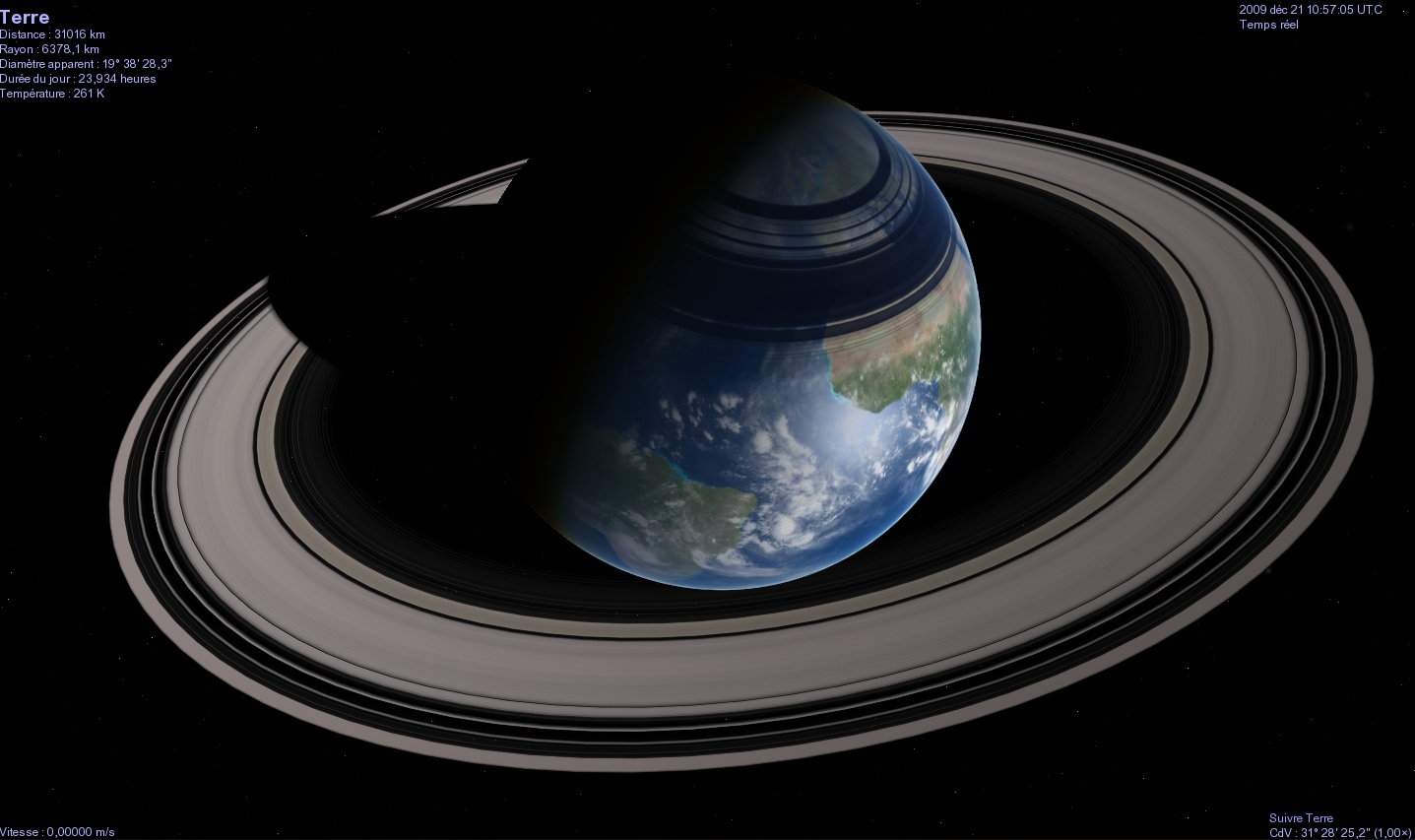
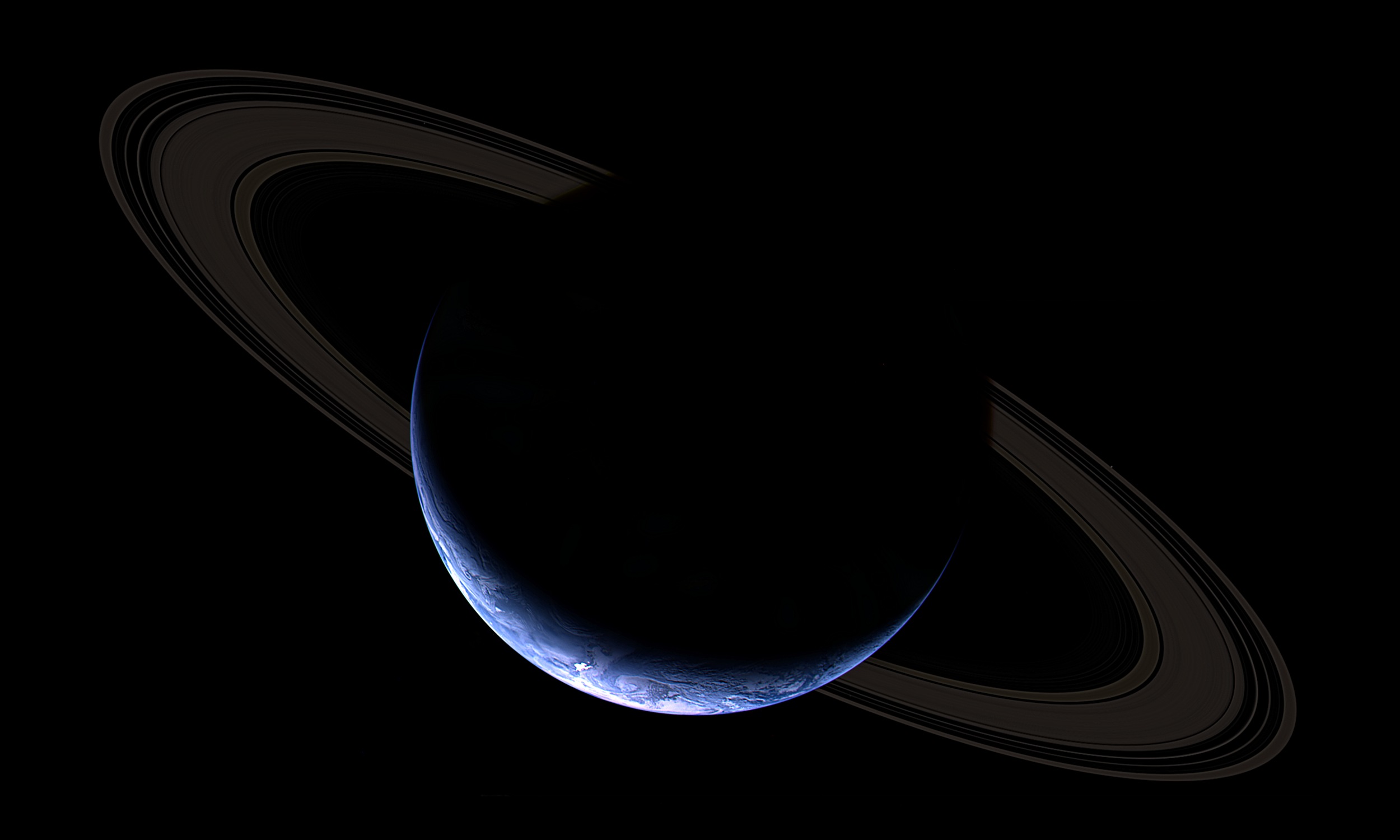
By now, you’ve probably seen this very interesting video. It imagines what it would look like if Earth had rings like those of Saturn!

This is a very cool idea, and it went viral pretty quickly when it came out a few weeks ago. And of course I’m for anything that increases people’s interest in astronomy.

But the nitpicker in me can’t resist thinking the idea through a little more. The video is accurate as far as it goes, discussing the geometry of the rings and the viewing angles. But it makes some assumptions that, in real life (if you can say such a thing), are worth investigating further. Note: some of this is speculation on my part, based on my knowledge of astronomy and some reading I’ve done on rings. I wouldn’t take this as gospel (I wouldn’t take anything as gospel); instead think of it as idle brain stimulation.

With this ring, I thee shred

earthrings
Earth with rings image courtesy Damien Bouic.

First, could Earth have rings? Sure! It’s unclear exactly how Saturn (or the other four outer giant planets) got their rings, but there is more than one mechanism to create them. A small moon could get hit by an asteroid or comet, shattering it. An impact on the Earth itself, if it were big enough, could create rings (the impact that formed the Moon billions of years ago may have done just that). That would kinda suck for us, though. Saturn’s moon Enceladus has geysers which may resupply the planet’s A and E rings (though that’s more of a replenishment than actually creating them).

Rings of rock and ice

OK, so Earth could have rings. But would they last? That’s an interesting question. Saturn’s rings are made of ice, but Saturn is 1.4 billion kilometers (850 million miles) from the Sun, where things are cold. At the Earth’s distance from the Sun, small ice particles would quickly be destroyed by sunlight (regular old sunlight would help sublimate the ice from a solid to a gas, and UV light would break apart water molecules). So if the Earthrings were made of ice like Saturn’s they’d disappear pretty quickly, certainly on a timescale far shorter than the age of the Earth.

If the Earthrings were made of rock they might last a longer time. Pressure from sunlight might be an important thing to think about for the smallest particles (though they would also be replenished as bigger particles grind together)… as well as perturbations from the Sun’s and Moon’s gravity. To be honest that’s a bit above my pay grade to do that calculation (and it looks like long-term stability would really be an issue), but let’s assume that small pebbles and such could last long enough to give Earth a ring system. Would Earthrings look like they did in that video?

Does this ring make me look fat?

hst_saturnWell, yes and no. They would still be bright enough to see at night. Ice is shiny, which is one reason Saturn’s rings are so bright. Rock is much duller, so the Earthrings wouldn’t be quite so shiny. But the Moon is made of rock that is very dark, yet is incredibly bright in the night sky. It’s safe to assume the rings would be obvious at night then, too.

One interesting bit: the rings would look different if you were seeing sunlight reflected off them versus seeing the Sun through them. Sunlight seen through them would be reddened if the rings were dusty, just like a sunset looks very red if there is haze and junk in the air. Saturn’s rings look very different when Cassini has taken images showing them from the unlit side. So in the summer the rings might look one way when you see sunlight reflected off them, and different in the winter when they are seen from the unlit side.

Would they be visible during the day? I think so, since the Moon is easily visible during the day. Being close and broad, they should be bright enough to spot above the brightness of the sky itself.

God of the gaps

What about the structure? In the video they simply took Saturn’s rings and transposed them on the Earth. But that’s not really accurate, because of the gaps.

mimas_deathstar
If Mimas really were a Death Star,
clearing a gap in the rings would be a lot easier.

Saturn’s rings are not a simple disk, but actually made up of thousands of separate rings. The big dark gap in the rings is called the Cassini Division, discovered by the astronomer Giovanni Domenico Cassini in the 17th century. Saturn’s moon Mimas is responsible for that gap; any particle in the Cassini Division orbits Saturn in half the time Mimas does, and so it feels a periodic tug from the moon (called a resonance). That pulls the particles clear from that region, carving a gap. Other broad gaps in the rings are from other moon resonances, while some of the narrow ones are from small moons in the gaps gravitationally clearing out nearby ring particles.

So the actual Earthrings would look substantially different than in the video. There may not be any major gaps in the rings, or there might be numerous smaller ones (which wouldn’t be hard to see from the ground). The color would be different, too.

saturn_ring_profile
Saturn’s rings, annotated with names and distance from the center of the planet. Click to embiggen beyond your wildest dreams.

One ring to rue them all

How would this affect life on Earth? They would be more than just pretty features! The shadow they cast would change the amount of sunlight reaching the ground; in the northern hemisphere summer the Earthring shadow would be cast on the southern hemisphere (where it would be winter), and vice-versa. That means winters in both hemispheres might be somewhat colder. Plants would have to adapt to the lessened amount of light. The actual diminution of light would depend on how wide and how thick the rings are, too.

Ground-based optical astronomy would be screwed pretty well. It’s hard enough to observe when the Moon is out; imagine a sky filled with rings! It would actually be difficult to see stars at all if you lived at latitudes where the rings ate up a goodly-sized piece of the sky. I wonder how legends and myths would be changed on such an Earth?

And the Earthrings would certainly affect space travel! They would be a major hazard to spaceflight; you really wouldn’t want to plow through them at several kilometers per second unless breathing vacuum is something you enjoy. Also, the rings would be located in the very worst possible place: right over the Earth’s equator. That’s the best place to put satellites — they’re easier to launch near the equator (you get a boost of 1600 kph from the Earth’s spin that way) and that’s where you want to put geosynchronous satellites for weather and communications. A lot of astronomical (and no doubt spy) satellites are in polar orbits, but again you wouldn’t want them plunging through the rings twice each orbit. Space debris is a bad enough problem now with all the junk in orbit; having billions of particles out there wouldn’t help any!

So the Earthrings would be incredible, and lovely, and ethereal, but they would come at a terrible cost: astronomy and space travel. I’m sure we’d figure out some way to launch rockets anyway — giant absorbing puffy shields around rockets, maybe — but that would come with its own cost of high mass, which makes getting to orbit that much harder.

Ringing off

So all in all, it’s fun to think about, and remarkable to simulate and actually see in an animation — what a sight they would be! — but all in all, I think I like the Earth the way it is.

earthrings_rosetta
Image courtesy Damien Bouic.