
Felix Salmon points to someone who asks, Is the European crisis good for America? A piece at Politico suggests that Midterm fury might leave Nancy Pelosi safe. Journalism of this sort would get very boring, very soon, if the journalists actually had to place any money on their musings, either directly by changing their investment portfolio, or getting involved in betting markets like Intrade.
Category Archives: Astronomy

ISS, Shuttle transit the Sun! | Bad Astronomy
Thierry Legault is a gift to astronomy bloggers. He just sent me this:

Holy.
Hale.
Akala.
The big yellow thing is the Sun. But look at the upper right section. See those two dark blips? The one on the left is the Shuttle Orbiter Atlantis and on the right is the International Space Station! Incredibly, Thierry caught them as they passed directly in front of the Sun! To give you an idea of how talented Thierry is, the entire transit lasted just over half a second.
Click to embiggen. I mean it, click it. The full-scale image is drop-dead incredible. Mind you, Atlantis had just started its pitch maneuver, designed to show its belly to the crew on the ISS so they can inspect it for heat tile damage. That means this image was taken shortly before the Orbiter docked with the station, on May 16th. Thierry was in Madrid specifically to get this shot.
Un frakkin’ believable.
Get a good look. This is the last mission of Atlantis (unless it’s needed as a rescue mission later this year), so we won’t get too many more views like this.
Related posts:
Extremely cool 3D Space Station video taken from the ground
Check. This. Out. Amazing photo of the Sun
Image used with permission by Thierry Legault.


Neuroscience Goes to Court: Can Brain Scans Be Used as Lie Detectors? | 80beats
 Not just yet.
The day probably will come when functional MRI brain scans become viable evidence in American courts, but thanks to a ruling in a Brooklyn case this week, that day is yet to come.
DISCOVER covered the details of the case two weeks ago—a woman sued her former employer claiming she was treated poorly after complaining of sexual harassment, and wanted fMRI scans admitted as evidence to validate the credibility of a witness. But Judge Robert H. Miller has now denied the request under New York State’s Frye test, which says, among other things, that expert testimony is only admissible if it’s widely accepted in the scientific community. As we saw yesterday when we covered the optogenetics tests designed to verify fMRI results, there are still lingering doubts about the technique’s reliability.
Given that there were apparently no other rulings that dealt with the admissibility of fMRI (at least as far as the lawyers could find), Judge Miller declined to be the first to allow it.
He decided that under the Frye test, which is slightly different from the Daubert standard used in federal court, lie detection evidence contravenes a jury’s key right to decide the credibility of witnesses [Wired.com].
But a similar fMRI battle is under way in Tennessee. Cephos, the same company that provided the brain scans in the Brooklyn case, is involved here, and CEO Steven Laken testified about the validity of his technology on Friday.
Late last year, Cephos was retained by the defendant in the Tennessee case, Lorne Semrau, a psychologist who is fighting charges that he defrauded Medicare and other health insurers with wrongful claims. Semrau’s attorney hopes to introduce fMRI scans performed by Cephos as evidence that he is telling the truth when he says he had no intent to commit fraud [ScienceInsider].
Neurologist Martha Farah traveled to Memphis to watch the proceedings, which she said went back and forth.
After lunch, the court heard from Marcus Raichle, a neuroimaging expert at Washington University in St. Louis. Farah says Raichle raised questions about the strength of evidence that increased activity in the brain regions examined in the Cephos scans are specifically related to deception. The same regions become active during a variety of mental tasks, Raichle said. He also noted that Semrau was in his 60s when the scans were taken, considerably older than the 18- to 50-year-old subjects who participated in the published studies [ScienceInsider].
A decision in the Tennessee case is still forthcoming. It should arrive in a matter of weeks.
Related Content:
Discoblog: I’m Telling the Truth, Your Honor. Just Look at This Brain Scan!
Discoblog: Mind-Reading Machine Puts Woman in Jail For Murder
80beats: Shiny New Neuroscience Technique (Optogenetics) Verifies a Familiar Method (fMRI)
Image: flickr / Everyone’s Idle


Welcome, UC Berkeley Freshmen! Now Hand Over Your DNA Samples | Discoblog
This fall, incoming students at UC Berkeley will find a little something extra in their welcome packages: cotton swabs. The university is hoping that students will swab a few cells from the insides of their cheeks and pass them over to the university for DNA testing. The university says this exercise will get students excited about the prospects of personalized medicine, in which genetic testing could allow doctors to tailor their treatments to individual patients. The administration stresses that students won't be tested for their risks of serious diseases, but instead for three fairly mundane genes. USA Today reports:
Geneticists will analyze each sample for three genes: metabolism of folate, tolerance of lactose and metabolism of alcohol, all relatively innocuous and perhaps useful in students' daily lives. Students will be able to use that information to learn if they should eat more leafy green vegetables, steer clear of milk products or limit alcohol intake. Jasper Rine, the professor of Genetics and Development Biology who's overseeing the project, swears he's not trying to create a genetic database of thousands of undergraduates for any nefarious purpose. Really, what nefarious purpose could there possibly be? Anyway, the school can't make lists of students who might be suitable for ...


Announcing My Next Point of Inquiry Guest: Denialism Author Michael Specter | The Intersection
I'm a bit late in doing this--I have already interviewed the guy, so you can't pose online questions to him as with previous guests. They've already been asked! Still, I'm psyched that the next guest for the program is New Yorker staff writer, Denialism author, and Daily Show guest Michael Specter. Specter and I happen to have developed a bit of a dynamic/rapport over the past year, having done a recent panel together at the Cambridge Science Festival, as well as a Bloggingheads.tv episode and a Slate dialogue. Indeed, and as you'll see, we've been arguing for some time about the meaning of a famous John Milton quotation...er, but to say more about that would be giving too much away. And we've also been arguing, in a pretty friendly way, about whether there is anything we can do about American irrationalism, whether the left is more guilty than the right--and much else. So listen for the show on Friday--and in the meantime, if you haven't already, get yourself a copy of Denialism by clicking the book cover....

Are We Alone Skeptic Check: Oil’s Pill | Bad Astronomy
 This week on the Are We Alone radio/podcast show, Seth Shostak and I talk about the Intention Experiment, a group of people who think they can meditate away various problems in the world… including the Gulf of Mexico oil spill. You can guess how I feel about this. Oh wait, you don’t need to! I’ve written about it.
Go to the Are We Alone website for a synopsis as well as a list of other segments on the show, or get the direct download here.


Forget Car-Jacking: Car-Hacking Is the Crime of the Future | 80beats
 Sticking accelerator pedals were just the beginning. Soon you might lose control of your car not because of a technical failure, but because someone hacked into it from afar.
Tomorrow at a security conference in California, Stefan Savage and his team will present their research showing how they used the computer systems that oversee different systems in a car to break in and take control—braking and accelerating against the driver’s will.
The researchers concentrated their attacks on the electronic control units (ECUs) scattered throughout modern vehicles which oversee the workings of many car components. It is thought that modern vehicles have about 100 megabytes of binary code spread across up to 70 ECUs [BBC News].
The software Savage’s team created, called CarShark, took advantage of the fact that ECUs must communicate between different systems. Electronic Stability Control, for instance, must talk to the brakes, accelerators, and wheels; Active Cruise Control and systems that parallel park the car for you also rely on communication across many systems. The team inserted fake packets of data into the lines of communication to seize control of a car, Savage says.
He and co-researcher Tadayoshi Kohno of the University of Washington, describe the real-world risk of any of the attacks they’ve worked out as extremely low. An attacker would have to have sophisticated programming abilities and also be able to physically mount some sort of computer on the victim’s car to gain access to the embedded systems. But as they look at all of the wireless and Internet-enabled systems the auto industry is dreaming up for tomorrow’s cars, they see some serious areas for concern [BusinessWeek].
Savage said he and his team wanted to get a head start on the problem of car-hacking, which is sure to arise when hackers get the chance, especially with more wireless access. In small ways it has already started: A couple of months ago an Austin, Texas, man who was fired by a car dealership broke into the remote system that the dealer used to torment people who were delinquent on their payments by honking the horn or otherwise annoying them. About 100 people found their cars inoperable, or honking like mad, after his hack.
The researchers said they did not address the question of the defenses the cars might have against remote access, but said the experience of the PC industry, which did not have extensive security problems until computers became networked, was worth remembering. “To be fair, you should expect that various entry points in the automotive environment are no more secure in the automotive environment than they are in your PC,” Mr. Savage said [The New York Times].
Car companies should probably address this issue before they offer us the networked “road trains” of the future.
Related Content:
80beats: Reports: Chinese Hackers Stole Indian Missile Secrets & the Dalai Lama’s E-mail
80beats: Massive Spanish Botnet Busted, But Hacker Mastermind Remains Unknown
80beats: Code Protecting 80 Percent of Cellphone Convos Finally Cracked
80beats: In the Commute of the Future, Drivers Can Let a Pro Take the Wheel
Image: Savage et. al.


The Chemistry of Instinct: Here’s What Makes Mice Freeze in Fear | 80beats
 It’s the essence of instinct: If you take a lab mouse who has never caught a glimpse of a cat and waft a little eau de feline towards it, the mouse will freeze in fear, and will then back away from the source of the odor. Now researchers have pinned down the chemical signals the mice are reacting to–and have shown in the process a fascinating new form of inter-species communication.
Mice have a specialized organ in their noses that picks up chemical signals, called the vomeronasal organ, which helps them detect pheromones emitted by other mice. These mice pheromones have a direct effect on behavior–most obviously in the realms of mating and fighting. In this new study, published in the journal Cell, neurobiologist Lisa Stowers decided to investigate whether the vomeronasal organ was capable of picking up signals from other species as well.
The reseachers took normal lab mice and mutant mice with inactive vomeronasal organs and presented them with cotton balls laced with predator smells, including cat saliva and rat urine. The normal mice backed into the corners of their cages as if trying to escape a predator’s attention, but the mutant mice showed no signs of concern. The mutants were so relaxed that they didn’t even react when a live but anesthetized rat was placed in their cages.
“In fact, one of our subjects curled up and went to sleep next to the rat,” Dr. Stowers said. “We think he was cold” [The New York Times].
The researchers then identified the precise chemicals that were triggering the fear reaction in mice by dripping one chemical compound at a time on to a cotton ball, and found that compounds called Mups, or major urinary proteins, were the active ingredient. Despite their name, Mups aren’t only present in urine, but also in saliva and other secretions.
Experts say this work is a major step forward for understanding the biology of fear.
“This paper moves the field forward by about a century, because it actually identifies the proteins that are responsible for eliciting fear in mice,” says Leslie Vosshall, a neurobiologist at the Rockefeller University in New York City. It also shows that “Mups can be used not only for chemical conversations of animals in the same species, but they can also send information across species” [ScienceNOW].
Related Content:
80beats: Sniffing Out Sickness: Mouse Noses Respond to the Urine of Diseased Mice
80beats: Mammals Have a Nose for Danger (Literally)
80beats: Do Humans Communicate Via Pheromones? The Jury Is Still Out
DISCOVER: The Brain: The First Yardstick for Measuring Smells
DISCOVER: Top 100 Stories of 2009, #75: Yes, You Really Can Smell Fear
Image: iStockphoto


CA to TX: we’ve got our eye on you | Bad Astronomy
Speaking of Texas political goofballery…
I’ve written extensively about the maniacal practices of the Texas State Board of Education: promoting creationism, twisting reality, and most recently engaging in ridiculous historical revisionism. Because, after all, Joseph McCarthy was simply a misunderstood patriot.
<insert rolleyes here>
 Well, there’s been an update to this insanity. Two actually: one is that the Texas BoE is now an international embarrassment, since the UK paper The Guardian has picked up on this story. I’d like to think that the more publicity this story gets, the more pressure there will be on Texas citizens to throw those antireality bums out of the BoE. However, I suspect that the people who voted them in in the first place will consider stories like this a badge of honor.
The second bit of news sounds good at first, but I don’t think will make much difference: a California legislator is introducing a bill that will make sure that any Texas nonsense introduced into textbooks will be reviewed by the California BoE, and the results reported both to the Legislature and the secretary of education.
Personally, I don’t see much use for this bill. The concern behind it is that the decisions made by the Texas BoE have national ramifications, since they have such a huge educational system that it’s easier for textbook publishers to simply use the Texas standards in their books that they sell in the national market. That’s not strictly the case; in reality there are four very large markets that influence textbooks (California is bigger than Texas, in fact, and the other two are Florida and New York). It is true, though, to the best of my knowledge, that Texas does unduly influence the way education is presented in textbooks in national markets, however. I used to work in this business, and talked to quite a few teachers, educational experts, and people who helped create national education standards, so I have some experience in this.
Be that as it may, the California bill doesn’t really do much. It just says that the California BoE has to report any problems they see, but it’s vague on the next step. Even a staff member of Leland Yee, who introduced the bill, says it’s just a precautionary measure. It strikes me that the California BoE should be doing stuff like this anyway, so I’m unsure of the efficacy of a bill like this.
I’ll note that in 2005, Yee passed bills making it illegal to sell video games rated M to minors. I’m a bit of a libertarian when it comes to such things; while I don’t think young kids should be playing violent video games, I don’t think it’s the government’s place to be making it illegal. It strikes me as the government being in loco parentis, as well as just being a bandaid on a much larger issue.
This new BoE bill appears to me to be more of the same thing. We’ll see. I will add one thing: despite my admonitions above, I’m very glad that the government of a big state sees right through the snake oil the Texas BoE is peddling. While I don’t think California needs legislation to make sure the Texas BoE silliness doesn’t infect other states, they certainly need to keep a jaundiced eye on it.
Tip o’ the mortarboard to Slashdot.


On Science and Religion, It’s Hard to Walk a Middle Road | The Intersection
It is no secret that our book, Unscientific America, which will soon release in paperback, displeased many New Atheists. They didn't much like the argument that science and religion can work together, rather than always being at odds; that constant warfare between the two isn't necessary, and can be destructive. But don't forget that there is another side in this debate that is also devoted to incompatibility, rather than reconciliation--the anti-science "intelligent design" types. Here is none other than Casey Luskin of the Discovery Institute criticizing those like myself, or Michael Ruse, who are atheists but also take a compatibilist stance:
So it turns out that atheists like Ruse and Mooney promote compatibility between God and evolution out of constitutional concerns. They fear that if atheism and evolution become too closely linked, this could make the teaching of evolution unconstitutional. Thus, they feel they’d better fix the problem by going around preaching that God and evolution are compatible.
Now they might genuinely believe it’s possible to reconcile God and evolution, but then again, don’t forget we’re talking about ardent evolutionists and atheists who personally reject belief in God and expressly admit legally / politically oriented motives for pushing the compatibilist perspective. Isn’t that ...

The SDO Begins Phase E

An SDO image of a region on the Sun (described below). Click for larger. Image and movie: SDO (NASA) and the AIA, EVE, and/or AIA consortium.
We have above as described by NASA, an AIA image in 193 Å after a solar eruption and a flare. The dark regions show the site of evacuated material from the eruption, and the large magnetic loops were formed during the flare.
The Solar Dynamics Observatory entered “Phase E” just a few days ago. “Phase E” is the science part of the mission. As part of the mission the spacecraft is sending 1.5 Terabytes of data daily to Earth (yes bytes). Good thing they can cherry pick the data they want to see because that data rate is expected to continue until at least 2015.
The caption says this is an AIA image. AIA stands for Atmospheric Imaging Assembly and it is designed to provide a look at the solar corona. To understand the image a little more, click here to see a Quicktime movie of the area.
You can read more about the AIA here.
My Favorite Silly Function | Cosmic Variance
In today’s link roundup, Uncertain Chad points to a new digital library of mathematical function. As a huge, huge fan of Abramowitz & Stegun (which can now be downloaded as a PDF, if you would rather not have it sitting majestically on your shelf), I am thrilled.
Sometimes you’ll be happily calculating along, and wind up with an equation you wouldn’t want to meet at night in a dark alley. But, a quick flip through Abramowitz & Stegun frequently turns up your nemesis, along with handy tricks for disarming it. Additional satisfaction comes when you write the paper, and get to throw off lines like “The solutions to equation 4 are confluent hypergeometric functions (of the first kind)”.
However, it will be hard top my amusement when I once discovered that the solutions to my problem were closely related to Anger functions.

I can only hope that Dr. Hate and Professor Loathing someday derive equally useful function forms.


A Yardstick For The Nose | The Loom
 My newest column for Discover is about that strangest of the senses, smell. An odor can be an overwhelming experience, and yet it’s often impossible to put that experience into words. In fact, we’re terrible at naming smells, despite being exquisitely sensitive to the differences between them. I take a look at some recent research that may bring us closer to resolving this paradox, with the invention of the first yardstick for the nose–a simple measurement of odor molecules that reveals a lot about how pleasant or vile we find them. Not only might it help us understand our own noses, but it may even let us build electronic noses to sniff for things we don’t want to stick our own noses in. Check it out.


Did the Eradication of Smallpox Accidentally Help the Spread of HIV? | 80beats
 With smallpox largely eradicated around the world, health organizations phased out the smallpox vaccine between the 1950s and 1970s (the last natural case of the disease was seen in 1977, in Somalia). During that span, Raymond Weinstein says, the AIDS crisis broke out in force. And in a study in BMC Immunology, he argues those two events could be connected.
Supposing that smallpox vaccination could have some effect on a person’s susceptibility to HIV, researchers led by Weinstein tested the idea on cells in a lab. They took immune cells from 10 people recently vaccinated against smallpox and 10 people never vaccinated. HIV, they found, was five times less successful at replicating with the cells of vaccinated people.
Why?
The researchers believe vaccination may offer some protection against HIV by producing long-term alterations in the immune system, possibly including the expression of a receptor called CCR5 on the surface of white blood cells, which is exploited by the smallpox virus and HIV [BBC News].
Any finding that expands knowledge of how HIV replicates could be an important one. And while this small study can’t prove Weinstein’s assertion is correct, the argument is, at the very least, plausible. Says Weinstein:
“There have been several proposed explanations for the rapid spread of HIV in Africa, including wars, the reuse of unsterilised needles and the contamination of early batches of polio vaccine. However, all of these have been either disproved or do not sufficiently explain the behaviour of the HIV pandemic” [Press Association].
Related Content:
DISCOVER: Whatever Happened to… Smallpox?
DISCOVER: 20 Things You Didn’t Know About… Lab Accidents
DISCOVER: Killer Pox in the Congo
80beats: Researchers Track the HIV Virus to a Hideout in the Bone Marrow
80beats: S. African HIV Plan: Universal Testing & Treatment Could End the Epidemic
Image: CDC


What Do a Newfoundland Dog and Tiger Woods Have in Common? | Discoblog
To answer that question, don't go comparing their personality traits (the Newfie: famously loyal and sweet, Tiger Woods: um, no comment). Instead, look to the knees. Newfoundland dogs are prone to cruciate ligament disease, the same knee disorder that has troubled Woods and many other professional athletes--the disease makes dogs and humans more prone to ligament ruptures. Now, researchers at Liverpool University are asking Newfie owners to send in DNA samples from their pets so they can search for genetic factors that predispose dogs to the condition. According to lead researcher Arabella Baird, the study could have two benefits. If researchers determine which genes put dogs at risk of the condition, they can help breeders create healthier lines of dogs by preventing matings between dogs with the key genes. But the study may also help medical researchers find the comparable genes in humans, The Guardian reports:
Baird added: "The disease in humans tends to occur when stress is put on the ligament, but there have been some preliminary findings that suggest there is a genetic component that could predispose humans to the condition.... Our project will be looking at many genes and the results of our study in dogs will be comparative to ...

Virginia Scientists Fight Back Against Harrassment and Abuse | The Intersection
See here and here. The Union of Concerned Scientists has organized a statement from 800 researchers in Virginia defending Michael Mann and denouncing Ken Cuccinelli's tactics and investigation. Key quote: "In the interests of the people of Virginia, we urge you to halt this burdensome and entirely unwarranted investigation." Now if only the University of Virgina would lend its heft to the cause...


More Kudzu Blues: Now the Invasive Vine Is Increasing Air Pollution | 80beats
 Kudzu: It’s worse than you thought. The invasive plant now covers more than 7 million acres in the United States, mostly in the Southeast but not limited to there. Besides overrunning trees as it spreads like wildfire, the vine also brings another danger: In a study in the Proceedings of the National Academy of Sciences, Jonathan Hickman sounds the alarm that kudzu could cause a spike in ozone, polluting the air.
Ozone, of course, is a good thing when it’s high in our atmosphere, blocking some of the sun’s harmful radiation. But down on the surface of the planet, ozone isn’t such a good thing. It can cause respiratory problems in people and harm plants’ ability to absorb carbon dioxide; it also is a major constituent of smog.
Kudzu’s contribution to ozone levels works like this: Like other members of the pea family, or legumes, Kudzu grabs nitrogen from the air and puts it into the soil. There microbes convert nitrogen into nitrous oxide, one of the pollutants that also comes from automobile exhaust. That gas escapes from the soil and into the air, and undergoes reactions that lead to the creation of ozone [Discovery News].
When this reaction happens on a small scale it’s not a big problem. However, there’s getting to be so much kudzu in the U.S. that Hickman decided to measure what its ozone contribution might be. So his team studied the soil of Madison County, Georgia, picking some areas where kuzdu had invaded and some where it had not. In the kudzu-ed areas, he says, nitrous oxide emissions were double that of the kudzu-free areas.
To drive home the point, Hickman and his colleagues ran a simulation in which kudzu spread over the entirety of its region except for soils in the city or those used in agriculture. Crunching those numbers, the team estimated a dramatic increase—35 percent—in the number of days that would register an atmospheric ozone level in excess of the safe limit set by the Environmental Protection Agency.
That’s a pretty extreme scenario; kudzu alone isn’t going to drive up ozone pollution by a third. Even with kudzu stretching out ever further, its present contribution to ozone is most likely a minor one, Hickman says, but the ozone potential is one more reason to loathe the vine.
He acknowledged that any soil used to grow nitrogen-fixing plants or were fertilised for agricultural reasons would result in an increase in gases involved in the formation of ozone. “But in those cases, we are doing these things for necessary reasons — namely food production,” he observed. “In the case of Kudzu, it is an undesirable plant that is spreading over a large area in the south-east US” [BBC News].
It’s also an undesirable plant that people brought to America on purpose, making it not just a poster child for invasive species, but also for importing a foreign organism to try to fix some other problem in an ecosystem.
Kudzu (Pueraria montana) is a rapidly growing vine native to Asia that was introduced to the United States in 1876 at the Centennial Exposition in Philadelphia as an ornamental plant and later promoted to farmers in the Southeast as a means of controlling soil erosion by the U.S. Soil Conservation Service during the 1930s [LiveScience].
Related Content:
DISCOVER: The Truth About Invasive Species
DISCOVER: Humans vs. Animals: Our Fiercest Battles With Invasive Species (photo gallery)
80beats: Should Humans Relocate Animals Threatened by Global Warming?
80beats: Globalized Pollution: Asian Smog Floats to American Skies
80beats: Today’s Biggest Threat to the Ozone Layer: Laughing Gas
Image: flickr / SoftCore Studios


Hubble Picture of the Week | Bad Astronomy
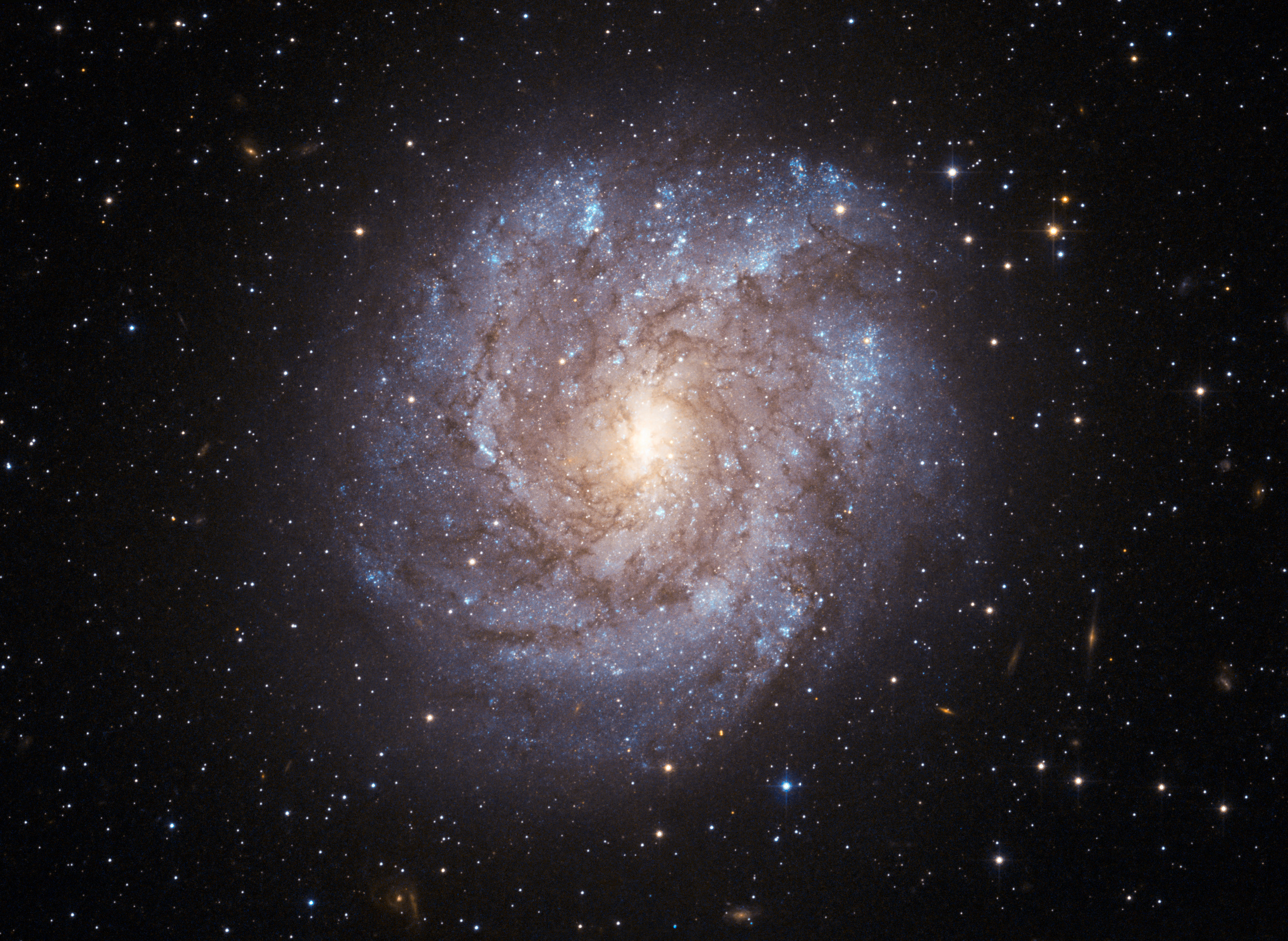 Since its launch in 1990, the Hubble Space Telescope has taken… let’s see… <counting on fingers>… carry the two… about a gazillion pictures of the sky. Not all of them are gorgeous, and not all of them are news-breaking, but an awful lot are really cool but don’t get any press.
That’ll change now. The folks at the European Space Agency side of Hubble Central have created a new feature: the Hubble Picture of the Week. This is pretty much what it sounds like: a new, way cool picture posted once a week. They’ve posted the first three already, like this one:
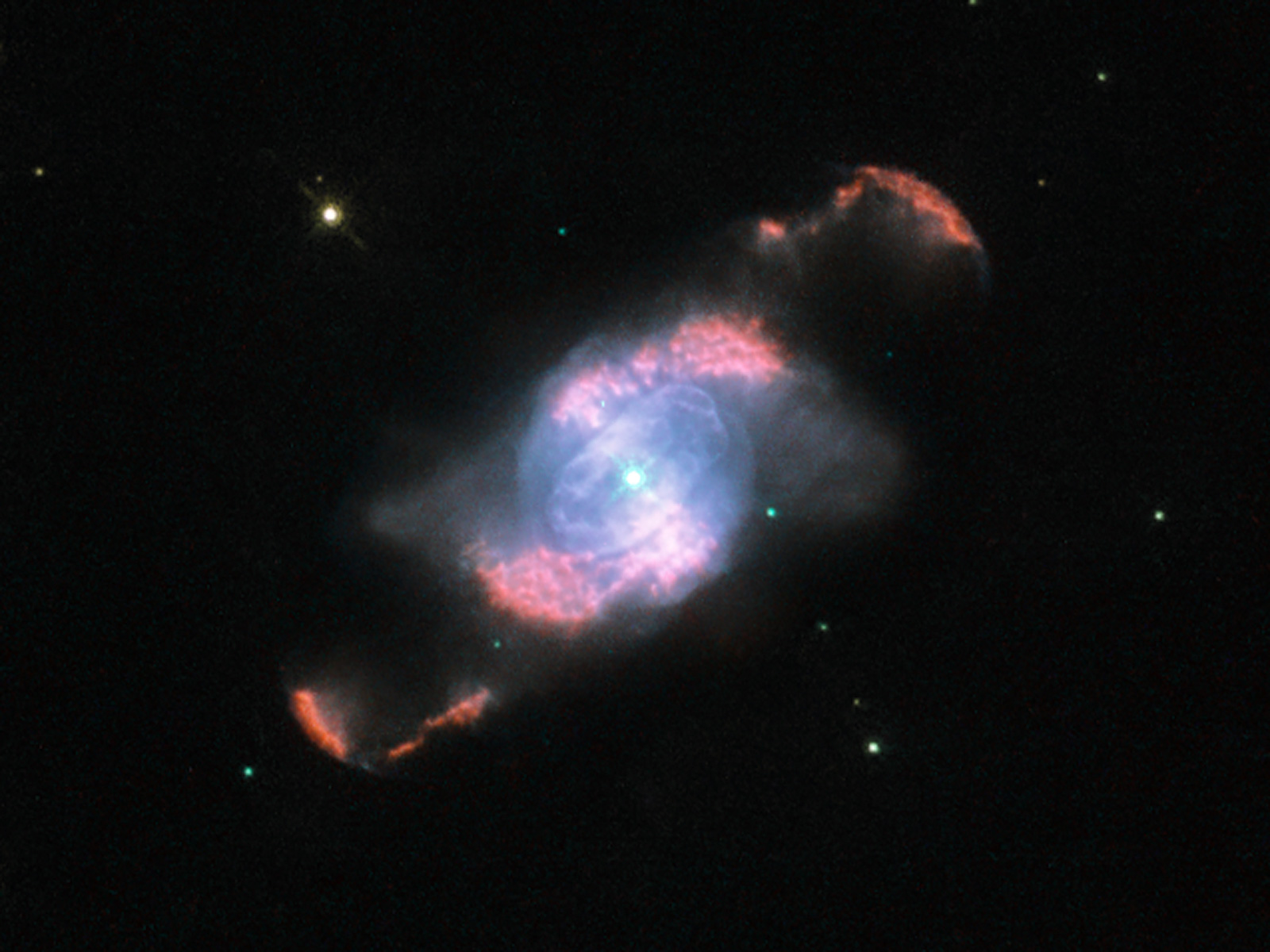
Click to embiggen. That’s the planetary nebula IC4634, a star that was once much like the Sun, but is now at the end of its life, throwing off great gusts of gas in its final paroxysms before fading away as a white dwarf.
The galaxy image above is another one, NGC 2082, a pretty, face-on spiral about 60 million light years away. I worked on Hubble data for a long time, and I saw a lot of images that should be seen by more people, but there simply wasn’t a way to do it back then. With this new HST PotW, I bet a lot of those will get wider acknowledgment now.
Tip o’ the lens cap to astronomer, my friend, and sometime dance partner Lars Christian Lindberg.


Mount St. Helens, +30 years | Bad Astronomy
I was going to write something up about Mount St. Helens, which erupted 30 years ago today. But then The Big Picture went and did an incredible retrospective of it, so I’ll just send you there. Here’s a taste:

If you’ve ever wondered what my nightmares are like, you’re looking at one.
I’ll add that a few years ago, when I still lived in California, I flew up to Seattle for a meeting. I literally gasped out loud when I saw the volcano out my window. I stared at it for as long as it was visible. The whole story was laid out clearly for anyone to read it: the side of the caldera was collapsed, and I could see the long run out from the lahar, the mudslide that followed the eruption. Even nearly three decades later the devastation was incredible. Over 3 cubic kilometers (0.67 cubic miles) of rock and ash blew out of the volcano that day.
You can read about the details of the event on the USGS site and on their 30th anniversary page. It’s a hair-raising story. [Edited to add: This NASA series of pictures is also way cool.]
And by the way? The volcano is still active. Have a nice day.
Image credit: USGS.


A Strange Journey into the Minds of Vaccine Skeptics | The Intersection
Orac has a great post skewering an ambitious gambit over at Age of Autism: One Julie Obradovic lectures us there on how to actually save the vaccine program. Much of the advice has to do with accepting the incorrect premises of the vaccine skeptics, and humoring them. All of Orac's criticisms are on target, but I actually thought Obradovic wrote one thing worth listening to--at least if we take the more abstract point out of the biased context in which she introduces it. It is this:
Additionally, [vaccine skeptical parents] don't take kindly to propaganda or threats, and they most definitely don't like to be insulted. Telling them their choice is to go with the scientific side is juvenile in its approach, suggesting that any parent who researchers [sic] both sides of the debate, personally knows someone with a different experience, and disagrees with the one size fits all approach to vaccination is by default, non-scientific. Brilliant. Well, they actually are unscientific when they do this. However, it probably is true that the confrontational, "you're clueless and irrational approach" is unlikely to unclog their minds or shatter their misconceptions. Why? Human beings just don't work that way. We have vast bodies of social science ...

