The Face on Mars

The Faces on Mars 1976 Viking1, click for the new MRO image. All images credit: NASA/MSSS

The face on Mars the conspiracy theorists pointed to as some cover-up is no more.  The HiRiSE camera aboard the Mars Reconnaissance Orbiter took a close in hi-res image of the same location and it looks totally different.

Back in 1976 when the Viking1 took images looking for a good landing spot for Viking2 NASA said “it’s just a mesa”.  Oh no, the conspiracy groups were hot on it, gotta love ‘em though – they’re colorful and nobody really takes them seriously.

The image above is the Viking1 image and if you click it you will get to see the new one from the MRO.  To see the Viking one image with NASA caption – click here.  To see the MRO image and image data -  click here.

This isn’t the first photographic proof the “faces are really nothing” and this isn’t even my favorite.  This one is, taken back in 2001 by the Mars Global Surveyor.

Note: We are hearing all over the news about the stupendous northern (and southern) lights that will be coming our way tonight and tomorrow night.  Turns out there were two CME’s and there is indeed a possibility of a major geomagnetic storm, more likely we will see minor storm conditions, so yes we will see the aurora (if the darned clouds go away), but how far south they will be visible is hard to say.

So far we have no unusual activity, but that is going to change rather suddenly.  Keep an eye on this chart, it updates every three hours and when the top graph lines go to red (indicating a value of 5 or 6) we are in conditions favorable for the Aurora.  Around here, a value of 6 is pretty much a sure sign I can see the aurora (at 43 N latitude).  If the chart goes to a blue bar, go outside and look because who knows you could see them even if you are south of 43 N or north of 43 S latitude you might see them.  Up here, an value of 7 to 9 will make the lights horizon to horizon and bright.

NCBI ROFL: Beauty week: Ugly babies are perceived as incompetent. | Discoblog

44075162_309ca5e28e_oBaby beautiful: adult attributions of infant competence as a function of infant attractiveness.

“To determine at what age children first elicit differential expectations from adults as a function of their appearance, a sample of black, Caucasian, and Mexican-American adults rated photographs of a sample of black, Caucasian, and Mexican-American infants at 3 time periods in the first year of life. These adults first rated the infants on physical attractiveness and then rated the infants on 12 bipolar adjectives. The adjectives were reduced to 4 dimensions of infant behavior by factor analysis. A strong beauty-is-good stereotype was associated with 3 of the dimensions. On the measures of smart – likable baby, good baby, and causes parents problems, there was a beauty-is-good bias that prevailed across ethnic groups. In contrast, no such bias was found on the measure of active baby. The activity index was expected to reflect positive characteristics, but it appears to have implied overactivity and irritability. Strong and consistent expectations for behavior of attractive and unattractive individuals thus appear to be elicited soon after birth in Caucasian and non-Caucasian populations.”

pretty_babies_percieved_better

Photo: flickr/ AntToeKnee

Related content:
Discoblog: NCBI ROFL: Science: getting babies drunk since 1997.
Discoblog: NCBI ROFL: Should the definition of micropenis vary according to ethnicity?
Discoblog: NCBI ROFL: Finally, science brings you…the baby poop predictor (with alarm)!

WTF is NCBI ROFL? Read our FAQ!


Fatty, Sugary Western Diets Give Kids Inferior Gut Microbes | 80beats

BacillusThe health detriments of a Western diet—eating foods high in fat, sugar, and animal protein—are now well known. However, according to a group of studies out in this week’s Proceedings of the National Academy of Sciences, how you eat when you’re just a kid can have a great impact, influencing the gut microbes you’ll carry your entire life.

Researchers led by Carlotta de Filippo studied the gut microbes of African children raised in Burkina Faso versus those in European children from Italy. According to the team’s findings, the kids’ diet had a dramatic effect on what bacteria they harbored in their guts to help them with digestion. The Burkina Faso children, who grew up eating a lot of fiber, had gut bacteria that help to break down that tough material. Meanwhile the Italian children, who grew up on a Western diet, had guts dominated by a kind of bacteria that’s more common in obese people, and they had less bacterial diversity overall.

Two other PNAS papers this week took on the formation and evolution of a human’s gut microbiome. One showed how a nursing infant gets its first helpful gut microbes from mother’s milk, and the other followed the same baby for two and a half years—collecting “samples” from diapers—to show how its population of gut bacteria changed and developed.

For an in-depth take on these studies and insight on how they fit together, check out Ed Yong’s post at Not Exactly Rocket Science.

Related Content:
Not Exactly Rocket Science: You Are What You Eat—How Your Diet Defines You in Trillions of Ways
80beats: Scientists Sequence DNA from the Teeming Microbial Universe in Your Guts
80beats: My Excrement, Myself: The Unique Genetics of a Person’s Gut Viruses

Image: Wikimedia Commons


Science, and rumors of science | Bad Astronomy

Dennis Overbye of the New York Times has a good article on rumors in science: how they get started, and how they propagate. As someone who stamps flat about a dozen or more of these every year, I appreciated Overbye’s take on it… especially as I’ve been too busy to look into the latest ones, like the foofooraw over a misunderstanding about how the Kepler mission has found hundreds of Earthlike planets. It hasn’t, and happily the NYT article covers that terrestrial tempest in a teapot pretty well.

I try not to report astronomy news here until it’s officially released, and even then I always try to read the journal paper affiliated with it, if there is one. I’ve skipped a lot of press releases after reading the paper and finding the PR was inaccurate, or the news incremental (in other words, a step in the right direction to understanding something, which is important in science but not always newsworthy), or that the work has been done before. I’m surprised at how often that last bit happens; in science new observations confirming previous results are important, but again, newsworthiness has different criteria.

Anyway, even if you read something here, I’m not asking you to believe it. I do my best to look into these things when they occur, but it’s not always possible to be 100% accurate. Take everything you read with a grain of salt. You’ll be a lot less likely to get fooled that way.

Tip o’ the printing press to Sarah Anderson.


EPA on Oil Dispersants: No More Toxic Than Oil Alone | 80beats

471883main_gulf_amo_2010209What do you get when you mix oil and dispersants? A mixture that doesn’t seem to be more toxic than oil alone, the EPA said yesterday. Their statement came after a second round of testing eight oil dispersants.

The EPA tested the response of two sensitive Gulf species, the mysid shrimp and a small fish called the inland silverside, which they exposed to mixtures of dispersants plus oil and to oil alone.

The results indicate that the eight dispersants tested are similar to one another based on standard toxicity tests on sensitive aquatic organisms found in the Gulf. These results confirm that the dispersant used in response to the oil spill in the Gulf, Corexit 9500A, is generally no more or less toxic than the other available alternatives. [EPA statement]

Chemical dispersants help break down oil, in theory putting it in a form easier for microbes to consume. Still, dispersants are toxic, and BPs unprecedented use of huge amounts of Corexit worried EPA officials, who were uncertain of the chemical’s long-term effects. Reportedly, BP and the United States Coast Guard have not used dispersants since July 19, when the leaking well was successfully fitted with a temporary cap.

The tests prove that the oil itself, not the dispersants, is “enemy No. 1,” Paul Anastas, EPA assistant administrator for research and development, told reporters on a conference call. [CNN]

Still, Anastas says EPA scientists have more research to do on the lingering effects of dispersants:

“The type of acute toxicity we’re discussing today is only one part of the hazard,’’ he said. Another is the health effects of the breakdown products of the dispersant, which the agency has yet to investigate. [New York Times]

As we reported yesterday, since the temporary cap was put in place oil slicks have been quickly disappearing from the surface of Gulf waters. Some say that the oil evaporated, that sunlight broke it down, or that the dispersants helped microbes eliminate it:

Adm Thad Allen, the national incident commander, said: “It’s becoming a very elusive bunch of oil for us to find.” … By some estimates, up to 40 per cent of the oil may have evaporated as soon as it reached the surface. Experts said that warm surface water and weeks of sunlight had broken up the crude, along with strong winds and waves during storms last week. The Gulf’s waters also contain bacteria that have always degraded oil that seeps naturally from the ocean floor. [The Telegraph]

But the fact that the oil is quickly disappearing from the water’s surface doesn’t have everyone celebrating. As Discovery News reports, researchers have seen such vanishing acts before only for the oil to reappear on shore, as happened with the 1979 Ixtoc I oil gusher which also used dispersants. Larry McKinney, who worked on that spill, said he fears that the oil will mix with sediment and sink to the continental shelf.

“It’s a race,” McKinney said. “Can the microbial activity eat up the oil before it mixes with sediments and sinks? … BP used a lot of dispersant and the oil went someplace,” McKinney said. [Discovery News]

Related content:
80beats: BP Prepares for “Static Kill” Operation to Permanently Seal Leaking Well
80beats: One Cap Off, One Cap On: BP Tries Another Plan To Catch Leaking Oil
80beats: Photos From the Gulf’s Great Sea Turtle Relocation
80beats: Gulf Coast Turtle News: No More Fiery Death; Relocating 70,000 Eggs
80beats: Next from X Prize: An Award for Cleaning up BP’s Oil Spill?

Image: NASA


Antarctic Particle Detector Buried in Ice Records Cosmic Ray Weirdness | 80beats

icecube_skymap_22string09Detectors buried thousands of feet under the Antarctic ice recently confirmed a mysterious cosmic lopsidedness. Though it might seem reasonable for our planet to receive energetic particles, called cosmic rays, on average from all directions equally, more cosmic rays’ seem to approach Earth from certain preferred directions.

The IceCube Neutrino Observatory, which is still under construction, confirmed these odd cosmic ray preferences, previously detected in the northern hemisphere.

Cosmic rays–energetic particles flung from as nearby as the sun and light years away–are the extra “noise” in the observatory’s experiments; to filter out this noise, researchers needed to map where the cosmic rays are coming from. In a paper published earlier this month in The Astrophysical Journal they confirmed that more cosmic rays seem to come from certain directions–an observation known as anisotropy–in the Earth’s southern hemisphere too.

[T]hey used IceCube to study a longstanding puzzle: whether the distribution of cosmic ray arrivals is uneven across the southern sky, as scientists have previously observed in the northern hemisphere. Indeed, the team found, IceCube detected a disproportionate number of cosmic rays arriving from some parts of the sky. But the reason for this uneven distribution remains unclear. [ScienceNOW]

Physicists designed the detector to search for neutrinos–particles that race through most matter without a trace. The detector picks them up only in the off-chance that they slam into matter, making a brief-lived and only slightly more detectable particle called a muon. The problem is that the detector also picks up muons created when cosmic rays collide with matter in our atmosphere and the muons make their ways into the underground detectors. So the researchers must weed out these cosmic ray-created muons (by studying their paths through the detector). Still, observing the direction of these muons’ arrivals has proven an interesting study on its own.

“IceCube was not built to look at cosmic rays. Cosmic rays are considered background,” said University of Wisconsin-Madison researcher Rasha Abbasi in a statement. “However, we have billions of events of background downward cosmic rays that ended up being very exciting.” [LiveScience]

The completed detector will have almost four times the sensors of the 2007-2008 partially-built system that collected the data for this published study. This may help researchers uncover the cause of this uneven barrage of energetic particles.

The IceCube group is currently extending its analysis to improve its understanding of the anisotropy on a more detailed scale and delve further into its possible causes. While the newly published study used data collected in 2007 and 2008 from just 22 strings of optical detectors in the IceCube telescope, they are now analyzing data from 59 of the 79 strings that are in place to date. When completed in 2011, the National Science Foundation-supported telescope will fill a cubic kilometer of Antarctic ice with 86 strings containing more than 5,000 digital optical sensors. [University of Wisconsin-Madison]

They suspect that the particles may originate from a supernova, such as the nearby supernova remnant Vela, or that perhaps the preferred direction results from interstellar magnetic fields which could steer the particles into these preferred approaches.

“At the beginning, we didn’t know what to expect. To see this anisotropy extending to the Southern Hemisphere sky is an additional piece of the puzzle around this enigmatic effect — whether it’s due to the magnetic field surrounding us or to the effect of a nearby supernova remnant, we don’t know,” Abbasi says…. “This is exciting because this effect could be the ’smoking gun’ for our long-sought understanding of the source of high-energy cosmic rays.” [University of Wisconsin-Madison]

Related content:
80beats: A Particle Physics First: Researchers Watch Neutrinos Change Flavors
80beats: Physicists Shoot Neutrinos Across Japan to an Experiment in an Abandoned Mine
80beats: LHC Beam Zooms Past 1 Trillion Electron Volts, Sets World Record
DISCOVER: Ice Fishing for Neutrinos From the Middle of the Galaxy

Image: University of Wisconsin-Madison / IceCube Neutrino Observatory


Proof That We Live in the Future: Tweets From a Robot Astronaut | Discoblog

robonaut-tweetsAstronauts aboard the International Space Station have been tweeting from space for six months now, making that Twitter phenomenon officially old and busted. So what’s the new hotness? Tweets from an ISS-bound robot astronaut.

Robonaut 2 is currently cooling its heels at the Johnson Space Center in Houston, Texas, awaiting its scheduled trip to the International Space Station on November 1st. Once on board the ISS, the two-armed humanoid bot will help out astronauts with their duties; it expects to be particularly useful on tasks that are “too dangerous or boring for astronauts.” But it will also find time to tweet.

Already, Robonaut 2 has addressed some pressing questions via Twitter with answers like these:

“Robots are non-gender by design. I’m an it.”

“No, no relation to Hal. Don’t know if I’d want to admit to having him on my family tree if I was. Def. don’t condone his actions”

Fans can get much more information from the first robot astronaut during its “twitterview” tomorrow. Send a question marked #4R2 and Robonaut will begin answering them at 10 am CST.

Related Content:
Discoblog: Astronauts in Space Finally Enter the Intertubes
80beats: A New Crew Member for the Space Station: The “Robonaut 2?
80beats: Robonaut 2: Coming Soon to Space Stations and Assembly Lines Near You
80beats: Japanese Consortium: We’ll Send a Humanoid Robot to Walk on the Moon

Image: flickr / NASARobonaut


Farked moonset | Bad Astronomy

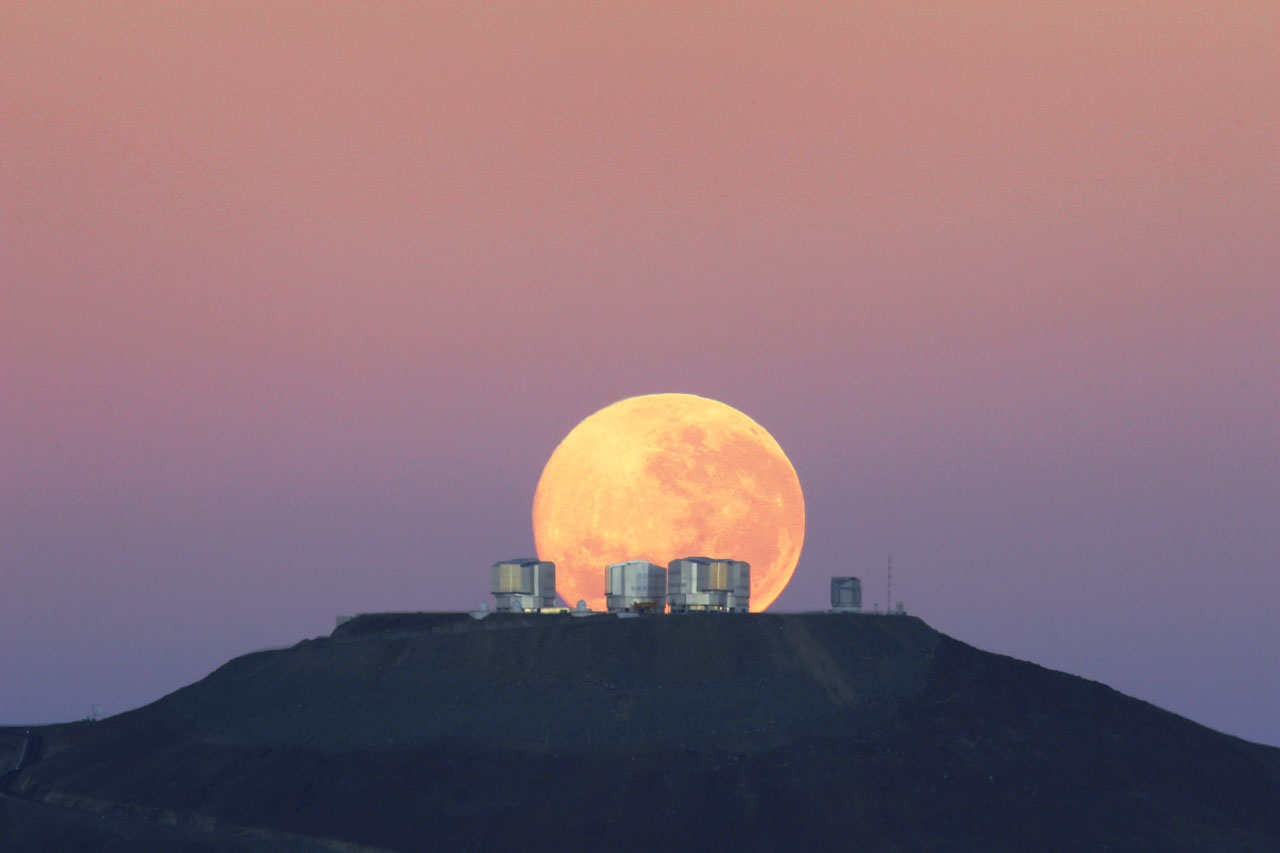
A while back I posted a pretty cool picture care of the European Southern Observatory:

eso_vlt_moonset

It shows the Moon setting behind the Very Large Telescope observatory in Chile. BABloggee Craig Clem notified me that in July this picture was the victim target of a Fark.com Photoshop contest (some pix maybe NSFW), where people are invited to have at the image and do what they will.

My favorite? No contest:

moonset_space1999

Nicely played, robbase. Nicely played.


Letter from SciFoo: The joys and sorrows of the Unconference | The Loom

scifooThis morning I am sitting down at my desk with a small red notebook with the words “Google: Open Source Programs Office” on the cover. It is filled with my scrawlings from a meeting this weekend at Google Headquarters, known as SciFoo. The notebook was part of a standard meeting goody bag SciFoo dispensed, along with one of those very heavy plastic cubes that meeting organizers love to engrave as a memento of a never-to-be-forgotten experience. Since I never check baggage when I fly, I left the cube behind. SciFoo was a wonderful meeting, but not without room for improvement. I can sum my feelings up this way: love the small, empty notebook for recording thoughts, not so fond of the heavy, self-celebrating cube.

SciFoo is the product of a three-way media/technology union between O’Reilly, Google, and Nature. They decided a few years back to bring together a big bunch of people each summer, and let them make up the conference on the spot. When we arrived at Google HQ for SciFoo 2010, the 300-odd invitees had some getting-to-know-you drinks, and then a fairly big subset rushed the scheduling board to grab a time and room where they could hold a session of their liking. With a dozen or so sessions taking place every hour from morning till dusk, formulating a schedule was a fairly random process. Nevertheless, I ended up participating in a lot of fascinating sessions, and milling about in the Google courtyard was just as enlightening.

Here is a buffet of some of the experiences I had–a selection of links and thoughts in roughly chronological order.

1. Saturday morning, Rebecca Saxe of MIT talked about her work on morality in the brain. She can use magnetic pulses to temporarily reduce people’s moral judgments back to childhood. Here’s Rebecca talking in a Discover panel I moderated, and at a TED lecture.

2. Ray Jayawardhana, an astronomer at the University of Toronto, brought us up to date on exoplanets. Scientists have found 473 of them (I lost track at around 12, I think). I got to know Ray when he went to college with my brother. He spent a number of years writing about science for the Economist and Science, and then he decided he’d rather go explore the universe. Fortunately, he hasn’t given up writing, and next year he will be publishing a book called Brave New Worlds. In the meantime, you can watch him on this video.

3. I had to skip a bunch of cool-looking sessions to speak at one called RuleCamp. Four speakers had to present three rules each for doing something. Eric Drexler, a pioneer in nanotechnology, presented Three Rules to Understand Anything. I confess I can’t present them here, because I was still trying to figure out my own three rules. Basically, Drexler urged people to read widely, let themselves be confused, and realize that the experts might be wrong.

I presented Three Rules to Be Understood. (Drexler and I never spoke beforehand, amazingly enough). Mine were:

One: Mentalize (get in the heads of others, think about what they do and don’t understand)

Two: Choose your words (don’t just go on auto-pilot and spew out dead language–see my Index of Banned Words.)

Three: Respect stories. They are powerful ways of conveying information. But they only work if you actually tell coherent stories, not isolated fragments joined by your own thoughts. You must mentalize, but you cannot expect your readers or your audience to read your own mind.

Jonah Lehrer, who writes excellent articles and books on the brain, offered some insights from neuroscience on how to have more Aha moments. Take a warm shower, pretend your problem is far away, and move to Silicon Valley.

Garrett Lisi, who splits his time between searching for theory of everything and windsurfing, offered Three Rules for Being a Mad Scientist. He promptly presented eight rules, which, in itself, was his main message: don’t worry about the rules other people set.

4. Theodore Gray led a session on the future of books. Gray produced the first truly awesome book for the Ipad, the Elements. Here’s a YouTube demo of the thing. Gray bemoaned the drift going on right now to make ebooks nothing but static replicas of print books. It’s as if people had decided to base the web on nothing but pdf documents instead of html language. He used his own book to show how you can make ebooks that are like nothing on paper.

Gray also argued that authors would start making and selling these new books on their own, because traditional publishers were trapped in an old way of doing business. It should be pointed out, however, that Gray, who co-founded a very successful software company, could drop ten grand on a software programmer for his book without batting an eye. I came away confirmed in my suspicion that more typical authors cannot, in fact, do it alone. But we can experiment.

5. At some point in the evening, I got into a loud conversation with a very funny psychologist. It turned out his name was Bruce Hood. He works on, among other subjects, the psychology of the supernatural. Here’s a video of a lecture he gave on the topic. His next book is on the biology of the self–something to look forward to.

6. The Joys and Sorrows of Blogging on a Network: On Sunday morning, I was one of the speakers in a session organized by John Dupuis. He was inspired to organize it by, among other things, the Pepsi affair over at scienceblogs.com. That experience raised an interesting point: what are the pluses and minuses of blogging about science on a network? For me, the reasons are obvious, but that’s because my network is actually a magazine, and I blog as a journalist. But networks don’t always provide these obvious benefits. They may not provide good technical support to their bloggers, and they may take the network in directions individual bloggers may not like.

I’ve always thought that people put way too much stock in blog networks. In practice, they are practically indistinguishable from our personal collections of favorite blogs from all over the Internet. They seems like a hangover from the old days when writers were inescapably bound together on the pages of a magazine or a newspaper. But, as is often the case, I’m wondering if I may be wrong. Blog networks can provide a psychological support to bloggers–a camaraderie that can lift the spirits when we look out at the vast wilderness of the Internet.

In a nice bit of timing, some of the folks who walked away from scienceblogs.com started up their own blog network yesterday, called Scientopia. Let’s see how that experiment fares.

7. Thank goodness my session did not run up against that of Armand Leroi. Leroi is an evolutionary biologist in England; I got to know him through his wonderful book, Mutants. Here’s a video of him talking about the book (the book is much cooler, though). I had no idea Leroi had moved on to the evolution of music. He has done some intriguing experiments in which he uses people’s ratings of music to drive the evolution of songs. He played us a starting song–just noisy garbage, basically–and a song that evolved from that ancestor after hundreds of generations. It was lovely in a Brian Eno kind of way–so lovely that Leroi couldn’t help but start dancing.

Here’s the DarwinTunes site where you can read about the research and watch a video.

I also had no idea that Leroi was a television personality in England, where he writes and hosts science shows. He hosted a show on Aristotle as a biologist earlier this year, which you can’t watch on the web outside the UK. (Grrr.) But he says he’s writing a book on it, so I look forward to that.

And so endeth the buffet. For me, the best sessions were ones where somebody had something new to offer. People could pepper the speaker with questions and bring forth their own connected ideas, but the sessions needed an anchor to work well. Some of the other sessions ended up as under-informed free-for-alls. For example, I was in a session on biodiversity, run by Beth Shapiro of Penn State. She works on, among other things, ancient DNA in mammoths. In other words, THE VERY COOL. Check out this video of a lecture she gave in 2008. (Note to producers: Dr. Shapiro is not tall, so don’t block her face with the mike.)

At SciFoo, Shapiro asked the 20 or so people who gathered for the session if biodiversity should be preserved, and why. People started throwing out lots of reactions and got into arguments, but our arguments seemed to me to be a big muddle, because we were talking at different levels of the questions, and because, frankly, most of us didn’t know enough about the subject to really dig deep into it. Over the weekend, the SciFoo organizers liked to tell us how wonderful we were, which seems to have created an illusion that the meeting was a hotter ticket than the Clinton wedding. As a whole, the meeting was certainly stimulating, but I don’t think its social status should have been a free pass for us to hold forth on anything and everything.

I was glad when Shapiro started talking at the end of her session about her own work, and about what it’s like to eat a piece of boiled mummified mammoth. Apparently it’s like the food on British Airways.


An Active Orangutan Burns Fewer Calories Than a Lazy Human | 80beats

orangutanWhen an orangutan swings through the trees like an acrobat in its rainforest habitat, it’s burning fewer calories than a human couch potato.

A new study by biological anthropologist Herman Pontzer has found that oragutans use less energy, pound-for-pound, than any other mammal–except for that all-time champion of metabolic lethargy, the tree sloth.

“You and I sitting in front of our computers use more energy each day than these orangutans that are walking around, and climbing around and socializing around their big enclosures,” Pontzer says. [NPR]

Pontzer worked with captive orangutans kept by the non-profit Great Ape Trust; the cooperative animals drank water that contained heavy isotopes of hydrogen and oxygen, and peed in cups for analysis. The researchers then checked the ratio of hydrogen to oxygen isotopes–the oxygen levels reflected how much CO2 the primate had breathed out during physical exertion, and allowed researchers to determine how many calories the orangutan burned.

The results, published in the Proceedings of the National Academy of Sciences, showed that a 250-pound male orangutan consumed 2,000 calories a day, which is 20 percent less than a typical human male. The two 120-pound females burned 1,600 calories a day.

Dr. Pontzer said the orangutans may have evolved this parsimonious metabolism to avoid starving when the ripe fruits that they eat periodically become scarce in their native rainforests. The evolutionary tradeoff is that orangutans grow slowly and reproduce at a low rate. [The New York Times]

For more on this story, see Ed Yong’s post on Not Exactly Rocket Science.

Related Content:
Not Exactly Rocket Science: Orangutans Are Masters of Conserving Energy
80beats: Study: Orangutans Play Leaf Instruments to Fool Predators
80beats: Syncopated Rhythm Makes Orangutans Masterful Swingers
80beats: Happy News: New Population of Endangered Orangutans Found in Borneo
80beats: Orangutans Are Threatened With Extinction as Habitat Shrinks

Image: flickr / ltshears


X-Prize Foundation Wants To Make Tricorders a Reality | Science Not Fiction

tricorder

Doctors are not doing so well. In addition to being extremely expensive to train, maintain, and, of course, to visit, they have a lot of other problems. If your doctor is a drunk, an addict, or just plain-old incompetent, his or her colleagues may not tell you or anyone else.[1] Even when doctors are sober and sharp, their diagnoses are often, ahem, less than correct. Mark Walker’s “Uninsured, Heal Thyself” paints a pretty terrifying picture:

Physicians can and do misdiagnose frequently: they prescribe for nonexistent diseases or injuries and fail to notice symptoms or make the correct inferences. An article in the Journal of the American Medical Association noted: “Two 1998 studies validate the continued truth that there is an approximately 40% discordance between what clinical physicians diagnose as causes of death antemortem and what the postmortem diagnoses are” (Lunberg, 1998). This is a pretty shocking statistic: in 4 out of 10 deaths there is a disagreement between what physicians think is the cause of death prior to autopsy, and autopsy findings.[2]

Egads. Is there any solution to the doctor debacle? Walker proposes computer-aided diagnosis:

For example, in a well-known 1971 study, a computer diagnostic system was pitted against experienced physicians in the diagnosis of acute abdominal pain: computer diagnosis was 91.1% accurate compared to 79.7% for experienced physicians (de Dombal et. al., 1972). In another study, computer diagnosis matched that of neurosurgeons, orthopedic surgeons and general practitioners in overall average in diagnosing lower back pain. While humans surpassed computers in non-critical cases, computers surpassed humans in diagnosing more critical spinal symptoms in which quick intervention is correlated with better outcomes (Bounds et. al., 1998).

The X-Prize Foundation (famous for spurring the privatization of space flight) agrees with Walker. The foundation is developing a new prize: the “AI Physician X Prize, which will be won by the first team to build an artificial intelligence system that can offer a medical diagnosis as good as or better than a diagnosis from a group of 10 board-certified doctors.”[3] Ten doctors – forget a second opinion, every diagnosis would come with a tenth opinion!

And where would one keep such an artificial intelligence? Why in a smartphone, of course. A hand-held computer used to diagnose medical issues: that sounds suspiciously like something Dr. Bev Crusher might be using on the USS Enterprise; namely a tricorder. Or, as Dilbert creator Scott Adams calls it, an exobrain.[4] My iPhone already has access to Wikipedia, WebMD, the Mayo Clinic and a free app for the University of Maryland Medical System’s medical encyclopedia. In a pinch I could probably use it to help in an emergency until professionals arrived. My knowledge and intelligence is expanded instantly by virtue of owning a hand-held computer with a wireless data signal.

Now imagine an app as smart and accurate as a panel of ten doctors in the hands of a trained MD or EMT, emphasis on the “trained.” Walker’s essay focuses on allowing patients to self-diagnose, but the huge benefit would be for professional diagnoses. Instead of being required to memorize thousands of potential diseases and syndromes, each with their own fickle and bizarre permutations, a doctor’s two primary goals would become 1) ensuring accurate, exhaustive entry of symptoms into the tricorder and 2) giving comprehensive, patient oriented care. Diagnoses, particularly esoteric ones, would become the prerogative of the device, instead of certain hobbled, cantankerous MDs named “House.” In addition to the symptoms entered by the doctor, the tricorder would have access to the patient’s entire medical history — including reoccurring issues, worsening conditions, potential genetic dispositions, and a plethora of other minutia — that could be the difference between sending someone home with “drink fluids and come back if it gets worse” and hospitalization. Furthermore, long, infection-prone hospital stays for “observation” would be reduced or even eliminated thanks to better initial diagnoses.

With so much potential to help, the tricorder may become an ever-present part of the doctor’s uniform, just as the stethoscope did in a previous era.

1. “Doctors don’t rat out their incompetent colleagues,” Salon
2. “Uninsured, Heal ThyselfJET Press
3. “The Next Five Years of the X-Prize” CNET
4. “Exobrain” Dilbert Blog


Spirit Doesn’t Return NASA’s Calls; Rover Might Be Gone for Good | 80beats

spirit-tracks425It’s hard to say goodbye to old friends. We’ve known since the springtime that NASA’s Spirit rover, which roamed the surface of Mars for more than six years, was probably doomed to a frozen death. But in the last week, NASA has repeatedly called the rover, hoping that the endurance explorer somehow managed to conserve enough power during the martian winter to respond.

So far, no luck. Spirit has not phoned home.

Spirit’s been on Mars since January 2004 and already survived previous winters, which run from May through November. With sunlight reaching Spirit at a weak angle, the rover hibernates and uses the scant solar power to recharge batteries and heat itself to –40 degrees [Scientific American].

But this winter it could not. With a wheel caught in the loose martian terrain, Spirit could not drive to an opportune position to capture some sunlight. As a result, the rover probably dropped to -67 degrees during the brutal winter on the red planet, too cold for its heaters or machinery to function.

This looks like the end of the line. In January, after months of fruitless attempts to extricate Spirit from its quagmire, NASA scientists conceded that the rover would rove no more. Now, NASA says, it would be a shock if Spirit manages to wake up and answer hails from Earth. Its creators will keep trying.

“This has been a long winter for Spirit and a long wait for us,” said Steve Squyres, the Cornell astronomer and chief scientist for both rovers. “Even if we never heard from Spirit again, I think her scientific legacy would be secure” [San Francisco Chronicle].

That’s putting it humbly on Squyres’ part. Spirit turned an expected Mars mission lifetime of 90 days into six years, a 24-fold improvement. Spirit provided invaluable evidence supporting the case that our planetary neighbor was once hospitable for life, and snapped more than 100,000 pictures. You can see some of its best in our photo gallery.

And Spirit’s twin rover, Opportunity, still survives.

Related Content:
DISCOVER: Those Mars Rovers Keep on Going and Going…
80beats: Photo Gallery: The Best Views from Spirit’s 6 Years of Mars Roving
80beats: Dis-Spirit-ed: NASA Concedes Defeat Over Stuck Mars Rover
80beats: Mars Rover Sets Endurance Record: Photos from Opportunity’s 6 Years On-Planet
80beats: It’s Alive! NASA Test-Drives Its New Hulking Mars Rover, Curiosity

Image: NASA/JPL


Building a Better Dead Body Detector | Discoblog

graveIt was just like an Easter egg hunt, except instead of eggs, two researchers hid dead rats. Some rats waited three inches underground. Others sat in the open. The duo also buried empty boxes–for comparison. By the end of their study, Thomas J. Bruno and Tara M. Lovestead were expert deceased rodent-hunters, and may have developed a tool to help law enforcement find buried human bodies.

Bruno and Lovestead are chemists at the National Institute of Standards and Technology. Their body-finding tool has an aluminum needle, slightly thicker than a human hair, which they used to prick grave soil for samples from underground air pockets. Back in the lab, they sorted through those samples for rotting flesh gases, in particular one called ninhydrin-reactive nitrogen.

They found that five week-old bodies gave off the most ninhydrin-reactive nitrogen, but that they could detect the gas even after twenty weeks. Their test is an improvement on more expensive means for finding dead bodies, because the device works at room temperature (previously analysis required an ultra-cold device). It also uses a chemical already available on a crime scene–forensics teams use ninhydrin reagent to pick up latent fingerprints.

Though this initial study only uncovered rat bodies under soil, Bruno said that the device might even detect a human body buried under a concrete slab (after drilling a one-eighth-inch hole). A seemingly particular scenario, but for crime show and mafia movie enthusiasts an understandable one.

Check out DISCOVER’s new TV show, Joe Genius.

Related content:
Discoblog: “Gravestone Project” Takes Citizen Science to the Cemetery
Discoblog: How Long Would It Take a Physics Lecture to Actually Kill You?
Discoblog: DNA Test Solves the Mystery of Copernicus’s Remains
Discoblog: Decapitated, Lion-Chewed Remains = Ancient Gladiator Graveyard

Image: flickr / Jay Malone


New study clinches it: the Earth is warming up | Bad Astronomy

For quite some time now, the evidence that the Earth is warming up has been piling up. Study after study has shown this, and that’s why the vast majority of scientists agree on it.

And now, to pile on even more, a large NOAA study has been released reiterating this fact:

The 2009 State of the Climate report released today draws on data for 10 key climate indicators that all point to the same finding: the scientific evidence that our world is warming is unmistakable. More than 300 scientists from 160 research groups in 48 countries contributed to the report, which confirms that the past decade was the warmest on record and that the Earth has been growing warmer over the last 50 years.

They looked at multiple indicators for temperatures, including sea levels, air temperature over land, air temperature over water, the sea surface temperatures, and more. All of them — all of them — indicate the Earth is warming.

warmingindicators

I have little to add to the science or conclusions of this, since I’ve said it so many times here on the blog (see Related Posts at the bottom for more info). But what I will mention are some of the headlines I’m seeing. CBC News said, "Global warming signs unmistakable" and had a video saying it was "undeniable". Slashdot had it as "Global warming undeniable, report says" as well. You can find many others.

That’s not correct. Of course this report is deniable. That’s what deniers do: deny. And we’ll be hearing from them in the comments below, have no doubts.

Mind you, I am distinguishing, as I always do, between deniers and skeptics. Those are two very different things. I am, quite literally, a skeptic of global warming. I do think it’s happening, but that’s because that’s what the evidence is telling me. If good, solid evidence came along that contradicted that, I would a) look at it, and b) assess it, and c) if it’s incontrovertible then I would change my mind. But I haven’t seen that evidence. Note again I mean evidence that overturns the consensus, not evidence that simply weakens it. A good, broad theory does need occasional modification (like the Big Bang model has added pieces like inflation, dark matter, and dark energy) but it takes a boatload of evidence to overturn. That evidence doesn’t exist.

But to deny means to ignore the evidence, or twist it, spin it, cherry-pick it, distort it. Studies like the one above are critical, but they will be dismissed by the deniers and their acolytes. We need to keep hammering away at the deniers, and make sure we get as much press — more — than they do. Because this is real, it’s happening, and all the denialists with their fingers in their ears cannot change that. All they can do at this point is make it worse.

Always remember, this is the denialists’ mascot:

lalalala_ottercanthearyou


Related posts:

- Two posts about denialism: climate change and otherwise
- Stepping off the narrow path of reality
- Global warming emails: followup
- Climategate’s death rattle


You are what you eat – how your diet defines you in trillions of ways | Not Exactly Rocket Science

Gutbacteria

We depend on a special organ to digest the food we eat and you won’t find it in any anatomy textbook. It’s the ‘microbiome’ – a set of trillions of bacteria living inside your intestines that outnumber your own cells by ten to one. We depend on them. They wield genes that allow them to break down molecules in our food that we can’t digest ourselves. And we’re starting to realise that this secret society within our bowels has a membership roster that changes depending on what we eat.

These changes take place across both space and time. Different cultures around the world have starkly contrasting diets and their gut bacteria are different too. As we grow older, we eat increasingly diverse foods, from the milk of infancy to the complex menus of adulthood. As our palate changes, so do our gut bacteria.

It all starts from the moment we’re born, when we inherit our first microbiome from our mums – a zeroeth birthday present that give us the digestive abilities that we need from day one. These first colonists are laden with genes for digesting milk proteins, allowing babies to make full use of their only source of nourishment.

But breast milk isn’t just a meal for baby, but for baby’s first gut bacteria. After lactose and fat, the third most common ingredients in breast milk are small sugar molecules called ‘oligosaccharides’. Gut bacteria thrive on these and Angela Zivkovic from the University of California, Davis thinks that they evolved as part of breast milk, to selectively feed the right bacteria in a baby’s bowels.

Breast milk contains over 200 types of oligosaccharides. They’re part of a baby’s immune system by acting as decoys for disease-causing bacteria. They look like molecules on the surface of human cells, which infectious bacteria recognise and stick to. By presenting alternative targets, the oligosaccharides divert these bacteria away from actual cells.

But they also feed helpful bacteria just as they distract harmful ones. The bifidiobacteria, which are common in the guts of breast-fed infants, have a preference for milk oligosaccharides, and some species can survive on these molecules alone. So when mum suckles her infant, she’s looking after both her baby and its partners-in-digestion.

Of course, babies are eventually weaned off milk and as they move to solid foods, their guts are the sites of tumultuous change. Jeremy Koenig from Cornell University studied these shifts by tracking the gut bacteria of one specific baby for its first 2.5 years. Koenig had the unenviable task of collecting over 60 samples from the baby’s soiled diapers. As the child grew up, the bacteria in his guts became gradually more diverse, but the roster went through four bigger shifts all associated with big life events – getting fever, starting on solid foods, taking antibiotic treatments, and shifting from breast milk to cow milk.

With each change, the baby’s microbiome started wielding different genetic tools. His first group were rife with genes for digesting milk proteins. Just before he was weaned on solid food, his microbiome started activating genes that break down the complex sugars and starches in plant food. It was already prepared for the arrival of peas and other table food. And when he actually started eating these foods, the bacteria changed even further to include more members of the Bacteroidetes, a family that specialises in digesting plant molecules.

In the baby’s second year, when he started scoffing increasingly complex foods, the abilities of his microbiome diversified again. They started activating genes that can use carbohydrates effectively, produce vitamins, and break down unusual and diverse chemicals. Koenig thinks that things settle down at this point and the make-up of our bacterial cartel becomes relatively stable. Even after an antibiotic assault, the same species bounce back in the same numbers. But once again, the food we eat determines which species set up shop in the first place.

Burkina_Faso

Carlotta de Filippo compared the gut bacteria of 14 children from a village in Burkina Faso with those of 14 children in Florence, Italy. The African children came from families of subsistence farmers and their menus were mostly vegetarian. The eat little in the way of fat or animal protein and their diet is heavy in fibre, starch and plant carbohydrates. By contrast, the Italian kids ate a typical Western diet, high in animal protein, sugar, starch and fat and low in fibre. They ate about half as much fibre as their African peers and about 50% more calories.

These differences are reflected in their bowels. The bacterial community in the African guts were dominated by those plant-digesting specialists, the Bacteroidetes. They probably helped the children to break down the tough fibres that they eat and extract more energy from their meals. Meanwhile, the Italian bowels were dominated by another group, the Firmicutes, which are generally more common in obese people compared to lean ones.

Of course, diet is just one of many traits that separate children from Italy and Burkina Faso, including genes, hygiene and climate. But the youngest babies in de Filippo’s sample show that diet wields by far the greatest influence on the microbiome. The toddlers, unlike their older peers, all ate the same food – breast milk – and as a result, their microbiomes were very similar to one another’s, despite the gulf of differences between their cultures. It’s only at the point of weaning when their diets diverged that their gut communities did too.

The African children also had a greater diversity of gut bacteria, which probably hitch a ride into their bodies via their food. In Europe, generic, uncontaminated food presents a blockade to bacteria from the outside world, which means that Western gut communities have become gentrified. They lack genetic diversity, and they have few ways of increasing it.

This is bad news, for bacteria from the outside world provide a reservoir of useful genes that could help the microbiome to adapt to unusual diets. The fibre-digesting abilities of the Burkina Faso children are probably one example of this. A more striking one was discovered just last year: Japanese gut bacteria have borrowed genes from an oceanic species, which allow them to digest carbohydrates in seaweed. Western diets hold back this evolutionary potential.

But De Filippo thinks that the problems are bigger. An unbalanced or simplified microbiome could be damaging the health of Westerners more directly, affecting the risk of a variety of other medical conditions, including allergies, inflammatory bowel disease, bowel cancer and obesity. A diverse microbiome could also prevent more harmful species from setting up shop – indeed, and somewhat unexpectedly, food poisoning bacteria like Shigella and Escherichia were less common in the Burkinabe children than the Italian ones.

As we learn more about our bacterial partners, we might eventually find ways of influencing them to improve our health, just as breast milk appears to selectively nourish helpful species. The prospect of combating obesity, allergies or infections by inoculating people with the right bacteria might seem far-fetched but it’s already happening. In 2008, Alexander Khoruts from the University of Minnesota managed to cure a woman with a “vicious gut infection” by giving her a transplant of her husband’s gut bacteria.

A success like this is just the beginning, based on a fairly limited understanding of the microbiome. Koenig’s study demonstrates how important it is to look at gut bacteria over time while de Filippo shows that it’s equally essential to look at how they vary from place to place. This is the sort of deeper understanding that future triumphs will be built from.

References:

More on the microbiome:

If the citation link isn’t working, read why here


Twitter.jpg Facebook.jpg Feed.jpg Book.jpg

Off to Lake Tahoe for “Techonomy” | The Intersection

Lake TahoeFor the remainder of this week, I’ve signed on as a blogger for a fantastic conference that’s unfolding in Lake Tahoe called “Techonomy: A New Philosophy of Progress.” It’s a love-fest for Innovation that has just about the best list of speakers conceivable. There are many tiers, but at the top tier are people like Bill Gates, Jeff Bezos, and so on.

The Techonomy blog, where I’ll be covering the conference along with four other bloggers, is here. I’ll be crossposting here, but not giving the full content and just linking back over to Techonomy. Topics that I plan on blogging about include geoengineering, new advances in unraveling aging, and much else…


1 in 200 men direct descendants of Genghis Khan | Gene Expression

473px-YuanEmperorAlbumGenghisPortraitIn 2003 a groundbreaking historical genetics paper reported results which indicated that a substantial proportion of men in the world are direct line descendants of Genghis Khan. By direct line, I mean that they carry Y chromosomes which seem to have come down from an individual who lived approximately 1,000 years ago. As Y chromosomes are only passed from father to son, that would mean that the Y is a record of one’s patrilineage. Genghis Khan died ~750 years ago, so assuming 25 years per generation, you get about 30 men between the present and that period. In more quantitative terms, ~10% of the men who reside within the borders of the Mongol Empire as it was at the death of Genghis Khan may carry his Y chromosome, and so ~0.5% of men in the world, about 16 million individuals alive today, do so. Since 2003 there have been other cases of “super-Y” lineages. For example the Manchu lineage and the Uí Néill lineage. The existence of these Y chromosomal lineages, which have burst upon the genetic landscape like explosive stars sweeping aside all other variation before them, indicates a periodic it “winner-take-all” dynamic in human genetics more reminiscent of hyper-polygynous mammals such as elephant seals. As we do not exhibit the sexual dimorphism which is the norm in such organisms, it goes to show the plasticity of outcome due to the flexibility of human cultural forms.

ResearchBlogging.orgJason Goldman of Thoughtful Animal reminded me of the 2003 paper a few days ago, so I thought it would be useful to review it again for new readers (as I know most of you have not been reading for 7 years!). To understand how one Y chromosomal lineage can have such a wide distribution across such a large proportion of the human race, here is a quote attributed to Genghis Khan:

The greatest joy for a man is to defeat his enemies, to drive them before him, to take from them all they possess, to see those they love in tears, to ride their horses, and to hold their wives and daughters in his arms.

You’re probably more familiar with the paraphrase in Conan the Barbarian.

The Genetic Legacy of the Mongols:

We have identified a Y-chromosomal lineage with several unusual features. It was found in 16 populations throughout a large region of Asia, stretching from the Pacific to the Caspian Sea, and was present at high frequency: ?8% of the men in this region carry it, and it thus makes up ?0.5% of the world total. The pattern of variation within the lineage suggested that it originated in Mongolia ?1,000 years ago. Such a rapid spread cannot have occurred by chance; it must have been a result of selection. The lineage is carried by likely male-line descendants of Genghis Khan, and we therefore propose that it has spread by a novel form of social selection resulting from their behavior.

What is social selection? In this context it’s pretty obvious, the Mongol Empire was the personal property of the “Golden Family,” the family of Genghis Khan. More precisely this came to consist of the descendants of Genghis Khan’s four sons by his first and primary wife, Jochi, Chagatai, Ogedei, and Tolui. Like descent from the gods in the mythology of the Classical World, or the House of David in medieval Christian monarchies, a line back to Genghis Khan became a necessary precondition for fitness to be a ruler in the centuries after the rise of the Mongol Empire across much of Asia.

To me the power and fury of the Mongol expansion, the awe and magnetism which Genghis Khan’s bloodline held for Asiatic societies in the wake of their world conquest, is attested to by the fact that descent from Genghis Khan became a mark of prestige even within Islamic societies. Timur claimed a relationship to Chagatai. His descendants in India, the Timurids, retained pride in their Genghiside heritage. In Russia among the Muslim Tatars and in Central Asia among the Uzbeks descent from Genghis Khan was a major calling card for any would-be warlord. This is peculiar in light of the fact that Genghis Khan, and his near descendants, were non-Muslims! Not only were they non-Muslims, but the Mongol assault on West Asian Muslims societies was particularly deleterious; it is generally assumed that Iran and Mesopotamia’s relatively productive irrigation system were wrecked during the Mongol conquests to the point where it took centuries for them to rebound to their previous levels of productivity. More symbolically, it was the Mongols who finally extinguished the Abbasid Caliphate.

In Muslim societies pride of place is given to Sayyids, descendants of Muhammad through his grandsons Hasan and Husain. Naturally this is often fictive, but that matters little. In fact in the Golden Horde, the northwestern region of the Mongol Empire which eventually gave rise to the Tatars who imposed the yoke on the Russians, non-Genghiside warlords produced fictive genealogies claiming descent from Muhammad as a way to negate the lineage advantage of their Genghiside rivals. But it is still shocking that there was even a question as to whether descent from Genghis Khan was more prestigious than descent from the prophet of Islam!

And the power of descent from Genghis Khan, the monopoly of the commanding heights which his male line descendants still felt to be theirs by right of their blood, obtained at the heart of his Empire, Mongolia, down to a very late period. The last of the great steppe polities, the Zunghar Empire, was defeated by the Manchus in part because it was led by a subset of the Oirat Mongols, a tribe whose leadership were not descended in the male line from the Golden Family, and so could not convince the Genghiside nobility of eastern Mongolia to align with them. From the perspective of moderns, who tend to conceive of historical patterns and forces in economic, or at least ideological, terms, this fixation on blood descent seems ridiculous. I suspect that many pre-modern people, who were accustomed to small family groups and kin networks in a way we are not, would find our own surprise rather perplexing.

So what did they find in the paper? First, they discovered that there was a particular Y chromosomal haplotype, a set of unique genetic markers, which was found across much of Asia. This haplotype seems to have expanded relatively recently, as was evident from small number of mutational steps connecting all of the local variants. Figure 1 illustrates the phylogenetic network:

stardd1

The shaded area represents the star-phylogeny. It’s characterized by a core haplotype, a nearby set of variants separated by one mutational step. This suggests that the genetic variant has risen rapidly in frequency before mutations had time to build up variation and generate a more complex topology. Observe the greater complexity of the network for other Y lineages. Here is the text which explains the factors behind the rise of the Genghis Khan haplotype:

This rise in frequency, if spread evenly over ~34 generations, would require an average increase by a factor of ~1.36 per generation and is thus comparable to the most extreme selective events observed in natural populations, such as the spread of melanic moths in 19th-century England in response to industrial pollution…We evaluated whether it could have occurred by chance. If the population growth rate is known, it is possible to test whether the observed frequency of a lineage is consistent with its level of variation, assuming neutrality…Using this method, we estimated the chance of finding the low degree of variation observed in the star cluster, with a current frequency of 8%, under neutral conditions. Even with the demographic model most likely to lead to rapid increase of the lineage, double exponential growth, the probability was <10?237; if the mutation rate were 10 times lower, the probability would still be <10?10. Thus, chance can be excluded: selection must have acted on this haplotype.

Could biological selection be responsible Although this possibility cannot be entirely ruled out, the small number of genes on the Y chromosome and their specialized functions provide few opportunities for selection…It is therefore necessary to look for alternative explanations. Increased reproductive fitness, transmitted socially from generation to generation, of males carrying the same Y chromosome would lead to the increase in frequency of their Y lineage, and this effect would be enhanced by the elimination of unrelated males….

A factor of 1.36 per generation is crazy high. In theory of course drift could do this, but in theory the molecules of gas in a room could all congeal to one corner. As noted in the text the Y chromosome is not rich in biologically useful genes. It may be that in the near future we’ll find something peculiar about the carriers of this particular haplotype, but until then, this map speaks for itself:

star2

The haplotype we’re focusing on clearly tracks the boundaries of the Mongol Empire as it was at the death of Genghis Khan. The main exception to this are the Hazara people of central Afghanistan, who importantly have a claim of paternal descent from Mongol soldiers who fled turmoil in Persia after the collapse of Mongol rule over that nation. Also, the shaded areas are regions where the population density was, and is, relatively low in relation to later societies which the Mongols conquered in East and West Asia. Finally, the shaded areas were under domination of Genghiside lineages for far longer than Yuan China or the Ilkhanate of Persia. In Mongolia, northeast China, and throughout Central Asia, Genghiside lineages were paramount down to the era of the “Great Game” between Russia and the British Empire.

The 2003 paper isn’t the last word. Here’s a table from a 2007 paper which surveyed groups which include many groups currently resident within the Russian Federation:

star3

Of interest in this table is the relatively higher frequency among the Kazakh sample than among the Kalmyks. The Kalmyks are a people who were a fragment of the aforementioned Zunghar Empire who took refuge in the Russian Empire. They make the claim to be the only indigenous people of Europe who are Buddhists (Kalmykia is to the west of the Urals and Volga). Though more closely related to the Mongols proper than the Turkic Kazakhs in culture and genes, they do not seem to carry the lineage of Genghis Khan, as was reputedly the case in the 18th century when the Genghiside led Mongol tribes fought them as arriviste interlopers. In contrast the Kazakhs have presumably mixed for centuries with the remnants of the Golden Horde. It is interesting to note that the 2007 Genghis Khan biopic Mongol had funding from the government of Kazakhstan, again attesting to the prestige which he still retains outside of Mongolia in Inner Asia.

Let’s jump back to the conclusion of the original paper:

…Several scenarios, which are not mutually exclusive, could explain its rapid spread: (1) all populations carrying star-cluster chromosomes could have descended from a common ancestral population in which it was present at high frequency; (2) many or most Mongols at the time of the Mongol empire could have carried these chromosomes; (3) it could have been restricted to Genghis Khan and his close male-line relatives, and this specific lineage could have spread as a result of their activities. Explanation 1 is unlikely because these populations do not share other Y haplotypes, and explanation 2 is difficult to reconcile with the high Y-haplotype diversity of modern Mongolians…The historically documented events accompanying the establishment of the Mongol empire would have contributed directly to the spread of this lineage by Genghis Khan and his relatives, but perhaps as important was the establishment of a long-lasting male dynasty. This scenario shows selection acting on a group of related men; group selection has been much discussed…and is distinguished by the property that the increased fitness of the group is not reducible to the increased fitness of the individuals. It is unclear whether this is the case here. Our findings nevertheless demonstrate a novel form of selection in human populations on the basis of social prestige. A founder effect of this magnitude will have influenced allele frequencies elsewhere in the genome: mitochondrial DNA lineages will not be affected, since males do not transmit their mitochondrial DNA, but, in the simplest models, the founder male will have been the ancestor of each autosomal sequence in 4% of the population and X-chromosomal sequence in 2.7%, with implications for the medical genetics of the region….

Garrett Hardin, pioneer of the “tragedy of the commons” model, also asserted that “nice guys finish last.” From what I know of the history it does not seem that Genghis Khan was any more evil or sociopathic than Julius Caesar, Charlemagne or Alexander the Great. What he had on his side was simply scale of success. So I don’t know if it truly is an example of nice guys finishing last. The biography gleaned from The Secret History of the Mongols doesn’t indicate the level of self-destructive sociopathy of Stalin or Ivan the Terrible. Rather, Genghis Khan was able to gather around himself a cadre of followers who were willing to stick with him through thick and thin.

In the life and legacy of the great Mongol warlord I suspect we see the patterns of male domination and power projection which were the norm after the decline of hunter-gatherers, and before the rise of the mass consumer society. During this period complex civilizations built on rents extracted from subsistence agriculturalists arose. These civilizations were dominated by powerful men, who could accrue to themselves massive surpluses, and translate those surpluses into reproductive advantage. This was not possible in the hunter-gatherer world where reproductive variance was constrained by the reality that allocation of resources was relatively equitable from person to person. But with agriculture and village society inequality shot up, and the winner-take-all dynamic came to the fore. And so the appearance on the scene genetically of super-Y lineages. Over the past 200 years the pendulum has started to shift back, thanks to the spread of Western values and normative monogamy, which dampens the potential unequal reproductive outcomes between the rich and the poor.

Addendum: Since my surname is Khan, I should admit that I am not a direct descendant of Genghis Khan through the male line. I’m R1a1a. In South Asia “Khan” was an honorific for Muslims.

Image Credit: National Palace Museum in Taipei

Citation: ZERJAL, T. (2003). The Genetic Legacy of the Mongols The American Journal of Human Genetics, 72 (3), 717-721 DOI: 10.1086/367774


The Sun rises again | Bad Astronomy

Our nearest star has woken up for real and for sure. After several years of stubborn silence, the Sun has unleashed several fairly big explosions of material. Called Coronal Mass Ejections, or CMEs, these gigantic events blast out hundreds of billions of tons of matter into space. They create vast interplanetary shock waves, and when they reach the Earth can cause all sorts of havoc. They are different from solar flares, but have similar origins in the Sun’s magnetic field.

sdo_cme_aug2010

NASA’s recently-launched Solar Dynamics Observatory caught the action mid-eruption. This image shows million-degree-hot gas blasting off the surface, entangled in the Sun’s strong magnetic field. The most recent CMEs probably won’t do much more than give us pretty aurorae — they’ve already been spotted — which is good (worse effects are the loss of satellites and potential blackouts on Earth). In fact, if you live in the far north or south you may be able to see the light show.

You can read more about this at Orbiting Frog, SpaceWeather (with pictures!), Universe Today, and pretty much every other space blog on the planet. I’m probably too far south and in far too light-polluted skies to see, but give it a try if you can. Aurorae can be quite spectacular.

But if you miss it, don’t fret: I’m sure we’ll get lots of other opportunities. The Sun is gearing up for the peak of its cycle in the next three years or so, and there will be plenty of chances to watch as our sky reacts.

Image credit: NASA/SDO


NCBI ROFL: Beauty week: Beauty and the teeth. | Discoblog

2603413014_559218e6d7_bBeauty and the teeth: perception of tooth color and its influence on the overall judgment of facial attractiveness.

“This study investigated the influence of changes in tooth color on judgments of facial attractiveness. Standardized photographs were presented, and teeth were digitally manipulated (main categories: original, whitened, colored; filler category: impaired). Participants were instructed to evaluate the faces for attractiveness.Additionally, they were asked to name facial features they found either positive or negative with regard to attractiveness. Whitened teeth were mentioned more often in a positive way but did not improve participants’ assessment of attractiveness. A colored tooth did not attract attention, and the attractiveness judgment did not worsen. Tooth color is thus not necessarily perceived and does not have a major impact on facial attractiveness.”

beauty_white_teeth

Photo: flickr/david_shankbone

Related content:
Discoblog: NCBI ROFL: Morning breath odor: influence of treatments on sulfur gases.
Discoblog: NCBI ROFL: Kiss my cytomegalovirus!
Discoblog: NCBI ROFL: A moment on your lips, forever in your intestine.

WTF is NCBI ROFL? Read our FAQ!