Tonight at Coney Island! Gin! Destruction Spectacles! Disaster Music! Puppet Vaudeville! And! Vincent Price's 100th Birthday!!!


Vincent Price was born 100 years ago tonight--May 27th--as the Great Dreamland Fire blazed, ultimately to consume a never-to-be-rebuilt Dreamland amusement park at Coney Island. Bizarre coincidence? Cosmic reincarnation?

Join us tonight as we try to figure it out with Hendrick's drinks bearing his name, theatrical performances, and the unveiling of a new 19th Century-style disaster spectacle!

Full details follow; Very much hope to see you there.

Unveiling of a brand new 19th Century style disaster amusement! Free Hendrick's Gin! Disaster tunes of yester-year! Lord Whimsy! Stars of TV's Oddities! Vintage Coney Island films curated by Zoe Beloff! Rare appearance of the old Dreamland Bell!

All this and more await you next Friday at our Centennial Celebration of the Great Dreamland Fire. Please, come celebrate the end of an era with us!

Full invite below. Hope very much to see you there!!!

Centennial Celebration of the Great Dreamland Fire Featuring the Opening of Coney Island’s Newest Cosmorama
Presented by The Coney Island Museum, The Morbid Anatomy Library, and Atlas Obscura
Date: Friday May 27, 2011
Time: 7:00 PM
Admission: $25 (Tickets at the door, or purchase here)
Location: The Coney Island Museum, 1208 Surf Avenue, Brooklyn (map here)

Next Friday, May 27th, you are cordially invited to a party commemorating the "awful splendor" of The great Dreamland fire of May 27, 1911, the most devastating disaster to hit New York City in the pre-9-11 era, a fire which devastated a never-to-be-rebuilt-Dreamland 100 years ago on this day.

This event will mark the premiere of the Cosmorama of the Great Dreamland Fire, a 360 degree immersive cosmorama telling the story of the great fire in pictures, sound, and light. Based on Coney Island’s great immersive disaster spectacles, the cosmorama is the product of months of labor, thousands of dollars, and the expertise of artists and artisans from the Metropolitan Opera, and uses real boards from the original Coney Island boardwalk in its construction.

The party will also feature a complementary gin bar with custom cocktails, disaster tunes of yester-year curated by The Foppinton Brothers, vintage Coney Island films, a rare appearance of the old Dreamland Bell, celebrity appearances, anatomical give-aways, myriad performances, and much more!

Full line-up:

Tickets are available by clicking here or purchasing at the door. See you there!

"Le Livre Sans Titre," An Illustrated Warning of the Deadly Perils of Self Abuse, 1830


Jim Edmonson of the Dittrick Museum has just written a wonderful post on his museum blog about a rare book from the 1830s entitled Le Livre Sans Titre (The Book without a Title). This beautifully illustrated tome is a graphic warning against the perils of self-abuse, or onanism, via the tale of a healthy and handsome young man's slow decline--symptom by terrifying symptom!--under the influence of the deadly vice.

Mr. Edmonson has generously scanned the lovely hand-colored images and translated the captions from French to English, creating a kind of inadvertent 1830s graphic novel; I have republished the highlights here as a warning to young men, lest you trace this young and comely man's tragic fall and ultimate demise:


He was young, handsome; his mother's fond hope


He corrupted himself! ... soon he bore the grief of his error, old before his time... his back hunches...


See his eyes once so pure, so brilliant; they are extinguished! a fiery band envelops them


Hideous dreams disturb his slumber... he cannot sleep...


His chest burns... he spits up blood...


His hair, once so lovely, falls as if from old age; his scalp grows bald before his age....


He hungers; he wants to satiate his appetite; food won't stay down in his stomach...


His chest collapses... he vomits blood...


Pustules cover his entire body... He is terrible to behold!


A slow fever consumes him, he declines; all of his body burns up..


His entire body stiffens!... his limbs stop moving...


He is delirious; he stiffens against death; death gains strength.


At the age of 17, he expires, and in horrible torment!

As mentioned above, this is an excerpt from a larger piece; you can read the entire story on The Dittrick Museum Blog by clicking here. And click on images to see much larger, more detailed images.

Thanks very much to Jim Edmonson for making this available for public consumption!

Tonight at Observatory! A Virtual Tour of the Anatomical Collections of the University of Groningen with Curator Dr. Rolf ter Sluis!


Tonight at Observatory! Hope very much to see you there!

A Virtual Tour of the Anatomical Collections of the University of Groningen
An illustrated lecture with Dr. Rolf ter Sluis, Curator and Director of the Groningen University Museum
Date: TONIGHT May 24th
Time: 8:00 PM
Admission: $5

Tonight, join Dr. Rolf ter Sluis--curator and director of the Netherlands based Groningen University Museum--for a virtual tour of the museum's historic and amazing anatomy and pathology collections. The majority of the collection consists of preparations in spirit, but also includes dry preparations where the veins have been injected with coloured wax, wax and Papier-mâché models, skeletons and skulls, preserved tattooed skin, and much more.

The core of the museum collection is drawn from the private collections of two important 18th century medical scientists, Petrus Camper and Pieter de Riemer. The collection of Camper, professor of medicine from 1763 - 1774, and his son Adriaan Gilles Camper consisted of anatomical, comparing anatomical and biological preparations, fossils, minerals and instruments. The collection was donated to the museum after Camper’s death in 1820 and there are still around 200 of his preparations in the museum collection. Another important part is the collection of the medical scientist Pieter de Riemer (1769 - 1831). He was especially interested in anatomy, surgery and obstetrics. The De Riemer collection, containing more than 900 preparations, came into the hands of the university in 1831.

Dr. Rolf ter Sluis is the Curator and Director of the Groningen University Museum. He also studied history and worked for 25 years as a registered nurse in Anaesthetics before taking on his role as curator and director of the collection.

You can find out more about this event on the Observatory website by clicking here; you can access these event on Facebook here. You can get directions to Observatory--which is next door to the Morbid Anatomy Library (more on that here)--by clicking here. You can find out more about Observatory here, join our mailing list by clicking here, and join us on Facebook by clicking here.

New Book (In English!!!) About Honoré Fragonard's Incredible 18th Century Anatomical Ecorchés!


If the Founding Fathers wanted to visit Body Worlds they could have. Or pretty darn close, at least - they just needed to visit one of the many European cabinets of anatomical curiosities, to see the work of anatomists like Honore Fragonard.

Fragonard's eighteenth-century ecorches were the clear precursors to Gunther von Hagens' "Body Worlds" exhibits: preserved, injected, partially dissected bodies in lifelike, dramatic poses, with ragged strips of muscle draped like primitive clothing over exposed vessels and nerves. The effect is eerie - like a Vesalius illustration sprung to (half-)life... --Bioephemera, "If the Founding Fathers wanted to visit Body Worlds..."

Much has been said--and rightfully!--about the "uncanny similarity" (as one might charitably say) between the anatomical works of Body Worlds' impresario Gunther von Hagens and the 18th Century allegorical anatomical ecorchés of Honoré Fragonard, cousin of well-known rococo painter Jean-Honoré Fragonard. Bioephemera says it very very well today--as quoted above--and follows with a really nice, extensive review of the new, wonderful, lavishly illustrated Blast Books publication Fragonard Museum: The Ecorches.

To read the entire post on the Bioephemera website--very much recommended!--click here. To order a copy of the book for your very own--also highly recommended!--click here.

The specimens you see above -- and more! -- are housed in the amazing Le Musée de l’Ecole Nationale Vétérinaire d’Alfort (née Musée Fragonard) right outside of Paris; to find out more about that museum, click here. Images as credited; to see more images from the Musée, click here. To visit the museum website, click here.

Image credits and captions:

  • Top image: Fragonard's Horseman, found here.
  • Second image: Fragonard's man with the mandible, inspired by Samson smiting the Philistines with an ass's jaw, found here.

All other images from the Bioephemera post. Captions, top to bottom:

  • Nilgai/Doe of the Indies
  • Human Bust
  • Human Bust
  • Installation view of The Musee Fragonard

This Week At Observatory! Obscure Anatomical Collections! Behind the Scenes at The Museum of Natural History! Gender and Medical Illustration!

To celebrate (or mourn, depending on your point of view) yesterday's anti-climactic non-rapture, Morbid Anatomy has put together a very exciting week of illustrated lectures to take place at Brooklyn's Observatory! On Tuesday, join Dr. Rolf ter Sluis for a virtual tour of the underknown European anatomical collection he curates; on Thursday, author Jay Kirk will tell us the story of Carl Akeley, that "brooding genius who revolutionized taxidermy and created the famed African Hall we visit today at New York's Museum of Natural History;" and on Saturday, practicing medical illustrator Shelley Wall will discuss "how sexual anatomy, gendered bodies, and dimorphic sex have been represented in the visual discourse of medicine."

Heady stuff! Full details for all events follow; hope very much to see you there!

A Virtual Tour of the Anatomical Collections of the University of Groningen
An illustrated lecture with Dr. Rolf ter Sluis, Curator and Director of the Groningen University Museum
Date: This Tuesday, May 24th
Time: 8:00 PM
Admission: $5

Tonight, join Dr. Rolf ter Sluis--curator and director of the Netherlands based Groningen University Museum--for a virtual tour of the museum's historic and amazing anatomy and pathology collections. The majority of the collection consists of preparations in spirit, but also includes dry preparations where the veins have been injected with coloured wax, wax and Papier-mâché models, skeletons and skulls, preserved tattooed skin, and much more.

The core of the museum collection is drawn from the private collections of two important 18th century medical scientists, Petrus Camper and Pieter de Riemer. The collection of Camper, professor of medicine from 1763 - 1774, and his son Adriaan Gilles Camper consisted of anatomical, comparing anatomical and biological preparations, fossils, minerals and instruments. The collection was donated to the museum after Camper’s death in 1820 and there are still around 200 of his preparations in the museum collection. Another important part is the collection of the medical scientist Pieter de Riemer (1769 - 1831). He was especially interested in anatomy, surgery and obstetrics. The De Riemer collection, containing more than 900 preparations, came into the hands of the university in 1831.

Dr. Rolf ter Sluis is the Curator and Director of the Groningen University Museum. He also studied history and worked for 25 years as a registered nurse in Anaesthetics before taking on his role as curator and director of the collection.

Kingdom Under Glass: A Tale of Obsession, Adventure, and One Man’s Quest to Preserve the World’s Great Animals
An illustrated lecture and book signing with author Jay Kirk
Date: This Thursday, May 26th
Time: 8:00 PM
Admission: $5
***Books will be available for sale and signing

During the golden age of safaris in the early twentieth century, one man set out to preserve Africa's great beasts. In his new book Kingdom Under Glass: A Tale of Obsession, Adventure, and One Man's Quest to Preserve the World's Great Animals, Jay Kirk details the life and adventures of naturalist and taxidermist Carl Akeley, the brooding genius who revolutionized taxidermy and created the famed African Hall we visit today at New York's Museum of Natural History. The Gilded Age was drawing to a close, and with it came the realization that men may have hunted certain species into oblivion. Renowned taxidermist Carl Akeley joined the hunters rushing to Africa, where he risked death time and again as he stalked animals for his dioramas and hobnobbed with outsized personalities of the era such as Theodore Roosevelt and P. T. Barnum. In a tale of art, science, courage, and romance, Jay Kirk resurrects a legend and illuminates a fateful turning point when Americans had to decide whether to save nature, to destroy it, or to just stare at it under glass.

Tonight, join author Jay Kirk for an illustrated lecture based on his new book Kingdom Under Glass. Books will be available for sale and signing after the event.

Jay Kirk's nonfiction has been published in Harper's, GQ, The New York Times Magazine, and The Nation. His work has been anthologized in Best American Crime Writing 2003 and 2004, and Best American Travel Writing 2009 (edited by Simon Winchester). He is a recipient of a 2005 Pew Fellowship in the Arts and is a MacDowell Fellow. He teaches in the Creative Writing Program at the University of Pennsylvania.


Pub(l)ic Identities: Reading Medical Representations of Sex
An illustrated lecture with medical artist Shelley Wall
Date: This Saturday, May 28th
Time: 8:00 PM
Admission: $5

"It's a girl!" "It's a boy!"... The genitals, those body parts conventionally expected to remain most hidden, are also the first and most powerful shapers of our public identity. In this illustrated talk, medical artist Shelley Wall considers how sexual anatomy, gendered bodies, and dimorphic sex have been represented in the visual discourse of medicine. From early anatomical atlases through to present-day clinical illustrations and the Visible Human datasets, medical imagery has influenced ideas about sexual identity and what it means to be "normal".

Shelley Wall is a medical artist and professor in the Biomedical Communications graduate program, University of Toronto. Her research interests include biomedical representations of sex and gender, conventions in visualizing the embryology of sexual differentiation and intersex conditions, contemporary and historical visual practices in relation to women's health, and medical humanities.

You can fin
d out more about these events on the Observatory website by clicking here; you can access these events on Facebook here. You can get directions to Observatory--which is next door to the Morbid Anatomy Library (more on that here)--by clicking here. You can find out more about Observatory here, join our mailing list by clicking here, and join us on Facebook by clicking here.

This Friday at Observatory: Collector Cortland Hull With and on His Collection of All Things Classic Monster Movie!


This Friday at Observatory, please join Morbid Anatomy in welcoming collector and museologist Cortland Hull as he shares some artifacts from his private museum of classic movie monster artifacts, shows some film clips, and provides a visual history of the actors & makeup artists behind the classic monsters. This event is part of the new Out of the Cabinet: Tales of Strange Objects and the People Who Love Them series.

Full details follow; hope to see you there!

The Witch's Dungeon
An illustrated lecture and show and tell with collector, artist, and proprietor of "The Witch's Dungeon" Cortlandt Hull
Date: Friday, May 20th
Time: 8:00 PM
Admission: $5
Part of
Out of the Cabinet: Tales of Strange Objects and the People Who Love Them, presented by Morbid Anatomy and Evan Michelson

Friday, May 20th may be a dark and stormy night. Brave souls normally catch the coach at midnight from the Borgo Pass to access the lawless and far off lands of Bristol, CT, spoken about in hushed tones as the home of the Witch's Dungeon. But on this rare occasion the stars have aligned and like the Baba Yaga's chicken-footed cabin, the Witch's Dungeon is coming to Observatory!

Tonight, Cortlandt Hull will be speaking about his life's work: the creation and evolution of The Witch's Dungeon, a museum consisting of life size reproductions of classic film monsters. Growing up during the 1960's monster boom, Cortlandt began construction of the Witch's Dungeon 45 years ago in the back yard of his parent's house. Over its near half century in existence, the Witch's Dungeon has continually creaked open its doors, striking chords with patrons, becoming a true piece of Americana, and attracting many of the actors and filmmakers commemorated in the museum.

Cortlandt will also be screening clips of his multiple documentary films, providing a visual history of the actors & makeup artists who created the classic films. Original head props from fantasy films will be on display along with samples of Cortlandt's work from the Witch's Dungeon.

Cortlandt Hull--artist, museologist, and film historian--began "THE WITCH'S DUNGEON CLASSIC MOVIE MUSEUM" when just 13. in 1966. It is now considered the longest running tribute to the makeup artists & actors from classic horror films. Featuring accurate life-size figures of Boris Karloff, Vincent Price, Lon Chaney, Bela Lugosi, and many others. Many of the figures are made from the actual life casts of the actor's faces Cortlandt has produced documentaries on the history of classic horror & fantasy films. Actor, Henry Hull ("Werewolf of London") was Cortlandt's great uncle, and Josephine Hull ("Arsenic & Old Lace") was his great aunt, so fantasy & horror is "in the blood"! He has lectured at universities, and film festivals, across the country, and has written for books and magazines.

You can find out more about this event on the Observatory website by clicking here; you can access this event on Facebook here. You can get directions to Observatory--which is next door to the Morbid Anatomy Library (more on that here)--by clicking here. You can find out more about Observatory here, join our mailing list by clicking here, and join us on Facebook by clicking here.

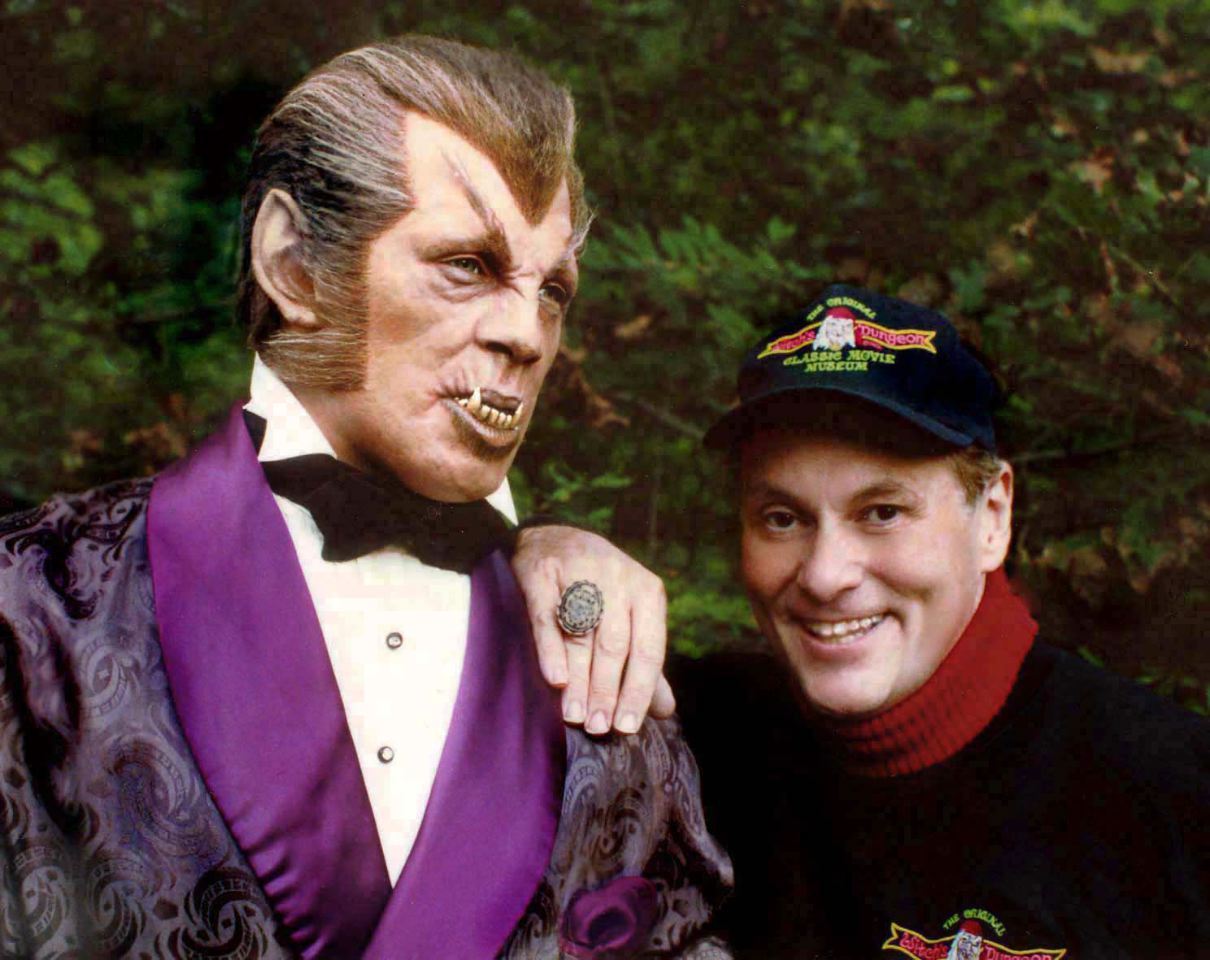
Image: Cortlandt Hull with figure of his great uncle, Henry Hull, "The Werewolf Of London"

Celebrate the Centenary of The Great Dreamland Fire of 1911 with A Brand-New Disaster Spectacle, Period Amusements, Free Hendrick's Gin, and More!


Unveiling of a brand new 19th Century style disaster amusement! Free Hendrick's Gin! Disaster tunes of yester-year! Lord Whimsy! Stars of TV's Oddities! Vintage Coney Island films curated by Zoe Beloff! Rare appearance of the old Dreamland Bell!

All this and more await you next Friday at our Centennial Celebration of the Great Dreamland Fire. Please, come celebrate the end of an era with us!

Full invite below. Hope very much to see you there!!!

Centennial Celebration of the Great Dreamland Fire Featuring the Opening of Coney Island’s Newest Cosmorama
Presented by The Coney Island Museum, The Morbid Anatomy Library, and Atlas Obscura
Date: Friday May 27, 2011
Time: 7:00 PM
Admission: $25 (Tickets at the door, or purchase here)
Location: The Coney Island Museum, 1208 Surf Avenue, Brooklyn (map here)

Next Friday, May 27th, you are cordially invited to a party commemorating the "awful splendor" of The great Dreamland fire of May 27, 1911, the most devastating disaster to hit New York City in the pre-9-11 era, a fire which devastated a never-to-be-rebuilt-Dreamland 100 years ago on this day.

This event will mark the premiere of the Cosmorama of the Great Dreamland Fire, a 360 degree immersive cosmorama telling the story of the great fire in pictures, sound, and light. Based on Coney Island’s great immersive disaster spectacles, the cosmorama is the product of months of labor, thousands of dollars, and the expertise of artists and artisans from the Metropolitan Opera, and uses real boards from the original Coney Island boardwalk in its construction.

The party will also feature a complementary gin bar with custom cocktails, disaster tunes of yester-year curated by The Foppinton Brothers, vintage Coney Island films, a rare appearance of the old Dreamland Bell, celebrity appearances, anatomical give-aways, myriad performances, and much more!

Full line-up:

Tickets are available by clicking here or purchasing at the door. See you there!

"Animated Anatomies," Duke University, Durham, North Carolina, Until July 17, 2011


While at the AAHM meeting in Philadelphia a few weeks ago, I met a number of fascinating folks, among them Rachel Ingold, the curator of the History of Medicine Collections at the Duke Medical Center Library & Archives. She was telling me about a wonderful exhibition on flap anatomies (images above) that will be on view there until July of this year; here is what she had to say about it:

Animated Anatomies explores the visually stunning and technically complex genre of printed texts and illustrations known as anatomical flap books. This exhibit traces the flap book genre beginning with early examples from the sixteenth century, to the colorful “golden age” of complex flaps of the nineteenth century, and finally to the common children’s pop-up anatomy books of today. The display—which includes materials from the Rare Book Manuscript and Special Collection Library at Duke University, the Duke Medical Center Library & Archives’ History of Medicine Collections, and from the private collections of the curators of the exhibit—highlights the history of science, medical instruction, and the intricate art of bookmaking.

Through the hands-on process of exposing layer after layer of anatomical illustrations, flap books mimic the act of human dissection, inviting the viewer to participate in a virtual autopsy, so to speak. Whether it’s a sixteenth-century hand-colored treatise on the layers of the eye or a nineteenth-century obstetrical guide in 3-D for performing cesareans, these books draw the viewer in. Over time, as advances in both science and printing promoted more widespread medical knoLinkwledge, anatomical flap books began to appeal to more general audiences eager to learn about their own bodies’ inner workings. Technological developments in machine printing also allowed for more colorful and precise illustrations than the hand-colored treatises of the early modern period.

A symposium was held on April 18 and we hope to have videos posted from this event soon. To learn more about the symposium, exhibit, see photos of anatomical flap books, and watch videos of them in action, visit the exhibit website. For more information, contact Meg Brown at meg.brown@duke.edu or Rachel Ingold at rachel.ingold@duke.edu. The exhibit will be up through July 17, 2011, and is free and open to the public.

This fantastic looking exhibition will be on display in the Perkins Gallery, Perkins Library, at Duke University, Durham, North Carolina, until July 17, 2011, and in the History of Medicine Gallery in the Medical Center and Archives Library from April 13-July 17, 2011. To find out more--or to pay a virtual visit!--check out the exhibition website by clicking here.

Robert Burton’s "The Anatomy of Melancholy" on the BBC


The BBC Radio 4’s In Our Time has just produced an episode about Robert Burton's 17th masterwork The Anatomy of Melancholy; the book is essentially a 17th Century multi-disciplinary investigation of what was then known as melancholy, and, as the BBC describes, brings together "almost two thousand years of scholarship, from Ancient Greek philosophy to seventeenth-century medicine. Melancholy, a condition believed to be caused by an imbalance of the body’s four humours, was characterised by despondency, depression and inactivity. Burton himself suffered from it, and resolved to compile an authoritative work of scholarship on the malady, drawing on all relevant sources."

Can't wait to give this a listen!

You can listen to the episode by clicking here. Found on the Advances in the History of Psychology website; click here to read full post.

Image: Frontspiece to Robert Burton’s The Anatomy of Melancholy, or The Anatomy of Melancholy, What it is: With all the Kinds, Causes, Symptomes, Prognostickes, and Several Cures of it. In Three Maine Partitions with their several Sections, Members, and Subsections. Philosophically, Medicinally, Historically, Opened and Cut Up, 1621

"The Immortalization Commission: Science and the Strange Quest to Cheat Death," John Gray

...“The Immortalization Commission” is a fascinating piece of intellectual history, exploring the intersection of science, religion, mysticism and a kind of philosophical curiosity that made the early 20th century so much more intellectually dynamic, so much more open-minded and eclectic, so much more magical than either philosophy or science is today. If contemporary god-builders — seeking to stave off death with blue-green algae, Bikram yoga and cryogenics — are more crass and materialistic than those in Gray’s story, ultimately they fail to appreciate the same point: that life seems to get much of its meaning from the fact that it ends. --The Scientific Revolt Against Death, review of John Gray's The Immortalization Commission, The New York Times Book Review

You can read the entire review of John Gray's fascinating The Immortalization Commission: Science and the Strange Quest to Cheat Death in today's New York Times by clicking here. You can find out more about the book--and purchase a copy--by clicking here.

Thanks, Aaron, for sending this review my way.

Image: Getty Images, captions reads:The search for eternal life: Even Charles Darwin hedged his bets and attended a seance; found at The Daily Mail.

Donate to the Making of a 19th Century Disaster Amuseument! The Cosmorama of the Great Dreamland Fire Needs Your Help!


As many of you know, I have been hard at work on an exhibition called The Great Coney Island Spectacularium, which opened just a few weeks ago at The Coney Island Museum (more on that here).

As part of the exhibition, we are--with the help of scenic painters, lighting designers and prop builders from the theater and opera world--in the midst of building a new component for the exhibition, an 19th Century-style panorama/cosmorama that will allow visitors to experience the 1911 complete destruction of Dreamland by fire in an immersive 360 degree sound, sight, and light spectacular. This component is set to premiere on May 27th, the centenary of the disaster, and is inspired by the immersive disaster spectacles so popular in Coney Island around the turn of the century.

Here's the rub: immersive amusements of this sort, as we are learning the hard way, are quite expensive to produce--probably a large reason that they were put out of business by cinema!--and we are, sadly, seriously under budget.

If 19th Century-style immersive spectacles of this sort are the kind of thing you would like to experience, and you would like to help contribute towards making this project a reality, we would be so pleased to welcome your contribution! Tax-deductable donations to Coney Island USA--our mother institution--can be made by clicking here and then hitting the "Donate" button. No amount too small! All donations appreciated.

Whether you are able to donate or not, please mark your calendar for the cosmorama opening party, which will take place on the centenary of the great disaster on Friday, May 27th, 2011. Or, come experience it later; The Comorama and the rest of The Spectacularium will be on view to the public at the Coney Island Museum until April 29th, 2012.

You can find out more about The Cosmorama by clicking here. You can join our mailing list to get updates about the opening party and other events by entering your email under "events mailing list" on the upper right hand side of the webpage. You can join our Facebook group by clicking here.

Thanks, and see you at Coney!
Joanna

Morbid Anatomy Library Seeking Volunteer(s)!


The Brooklyn-based Morbid Anatomy Library is currently seeking a volunteer to watch over the library on Saturdays from 12-6, do a bit of book cataloging, and take on assorted odd jobs. The position would begin the weekend of May 21-22; Class credit can be worked out if applicable.

For those who have not yet visited, the Library (see photo above) is an open-to-the-public research library and private collection housing books, photographs, artworks, ephemera, and artifacts relating to medical museums, anatomical art, cabinets of curiosity, death and dying, arcane media, collectors and collecting, and curiosity and curiosities broadly considered. You can find out more information about the library here.

If interested, please email me at morbidanatomy [at] gmail.com.

Thanks!

Above photo of the library by Shannon Taggart.

Annals of Eugenics Journal, 1925-1954, Now Available Online


The Annals of Eugenics--now The Annals of Human Genetics--has just made its 1925-1954 journal content available online for researchers in the history of science and medicine. Their current issue also features four specially commissioned articles that contextualizing the content, and highlighting the ways in which Eugenics "embodies the history of human genetics as a scientific enterprise and exemplifies the complex relationship of this discipline with wider society [as well as] the somber role that human genetics played in providing what was taken to be a scientific framework to social prejudice during the period."

This is sure to be some fascinating stuff.

Full details, as told by Advances in the History of Psychology:

The Annals of Human Genetics (AHG), formerly named Annals of Eugenics, has recently made its 1925-1954 journal content available online for researchers. Among the now controversial eugenics research appearing throughout these issues, researchers can also expect to find statistical publications by mathematician Karl Pearson, whose work at University College London concerned the widely used Pearson Product-Moment Correlation Coefficient, the Pearson Chi-Square test, and P-value.

The AHG editorial cites “ongoing use and reference to materials”… “and the somewhat limited availability of the original printed copy” as justification for making the content available online. Furthermore,

"Online access to the Annals of Eugenics archive will also be of interest to historians of science. In many ways, the history of the Annals embodies the history of human genetics as a scientific enterprise and exemplifies the complex relationship of this discipline with wider society. The somber role that human genetics played in providing what was taken to be a scientific framework to social prejudice during the period of “Eugenics” is a well-known case of the complex interaction between science and society. The present issue of the journal includes four specially commissioned articles that attempt to contextualize the online publication of the Annals of Eugenics archive. To exemplify some of the major scientific contributions made during that period, the article by J. Ott highlights key papers on linkage analysis published by the journal. The contributions by K. Weiss, G. Allen, and D. Kevles deal with aspects of the history of eugenics and of human genetics, and explore their relevance to ongoing debates regarding the social implications of human genetics research."

You can read the full article by clicking here.

Lecture: Mark Dion, "My Taxidermy Taxonomy," Museum of Natural History, London, Darwin Center, Thursday May 12


My good friend Petra Lange-Berndt at University College London would like to invite all of you London-based folks out there to a free and fascinating sounding lecture--as part of an equally fascinating sounding series--by one of my favorite contemporary artists, Mark Dion.

Full details on both the lecture and the series follow; hope you can make it!

"My Taxidermy Taxonomy"
Mark Dion (Visual Artist, USA)
Venue: Museum of Natural History, London, Darwin Center, Attenborough Studio
Time: Thursday, 12 May 2011, 5pm
The lecture is free and open to all - but please phone to book tickets on
+44 (0)20 7942 5725

Mark Dion is one of the world's foremost ecological artists. He is best known for investigating and intervening into the cultures of natural history collections through site-sensitive installations. In this slide lecture Dion will examine the ways in which dominant ideologies and public institutions shape our understanding of history, knowledge, and the natural world. The artist will address more specifically the politics of taxidermy, the preservation of animal skins, and its many practices. What kind of stories, curiosities and oddities can be unearthed from the archives of the natural history museum? How is taxidermy linked to extinction and colonialism? And what is the role of the museum in contemporary society?

This lecture is part of the AHRC Research Network "The Culture of Preservation" series, at the UCL History of Art Department, run by Petra Lange-Berndt and Mechthild Fend in collaboration with the Natural History Museum London, The Hunterian Museum, and the Grant Museum of Zoology, London.

More about this series:
Prepared specimens appear in many guises: as monstrous or typical organs preserved in formaldehyde and kept in glass jars not unlike pickled food, as stained and fixed tissue slices, or as skilfully arranged stuffed animals. They may be found in cabinets of curiosities, in the laboratories of histologists, in anatomy theatres or in natural history collections, but nowadays equally in art galleries and the shop windows of fashionable boutiques. This project is concerned with such kinds of preserved natural objects, in particular with anatomical wet preparations and taxidermy. It explorses the hybrid status of these objects between nature and representation, art and science and studies their fabricaton, history and display.

Events

Workshop 1: Taxidermy: Animal Skin and Colonial Practice
12 May 2011, 5pm
Keynote Lecture – free and open to all but please telephone to book tickets on +44 (0)20 7942 5725 –

Mark Dion (Artist, New York and Pennsylvania),
My Taxidermy Taxonomy, Museum of Natural History, London, Attenborough Studio

13 May 2011 Workshop

Workshop 2: Wet Preparations: Anatomy, Pathology and the Body Contained

9 June 2011, 6 pm Keynote Lecture – free and open to all –

Nick Hopwood (Historian of Science, University of Cambridge), Human embryos: bottled, sliced and frozen, Hunterian Museum at the Royal College of Surgeons

10 June 2011 Workshop

For further information please contact Mechthild Fend m.fend(@)ucl.ac.uk or Petra Lange-Berndt p.lange-berndt(@)ucl.ac.uk

The network is a collaboration between the UCL History of Art department, UCL collections, in particular the Grant Museum of Zoology, the Hunterian Museum, London and the Natural History Museum London.

The lecture is free and open to the public, but you will need to make reservations; you can do so by calling +44 (0)20 7942 5725. You can find out more about the event and the series by clicking here.

Image: Mark Dion: An Account of Six Disastrous Years in the Library for Animals (detail), Installation at the Centrum Sztuki Wspólczesnej, Zamek Ujazdowski, Warsaw 1992

The NEW ClockWorks Theater, Grand Opening Party, Saturday April 30th, 7:30 PM


Exciting news! Good friend and brilliant puppeteer/manifester of alternate worlds Jonny Clockworks is opening a new incarnation of his infamous ClockWorks Theatre! Judging from Clockworks' fantastic former productions, this new venture is sure to become the center for innovative and beautiful puppet works in the New York area.

The theater celebrate its opening this Saturday, April 30th, with an exciting evening's programming; full details follow. Very much hope to see you there!

The Cosmic Bicycle Theatre reopens
The ClockWorks Theatre in it’s new incarnation
The Universal ClockWorks, Inc.
in Carroll Gardens ~ West
the Columbia Street Waterfront
Brooklyn , USA

April 30th Walpurgisnacht!
7:30 PM ~ The Blessing of the Wheel ~ Sidewalk Spectacle ~ Free
8:30 PM ~ Theatre Opens
9:00 PM ~ Der WunderKammer Puppet Kabaret ~ Admission $20

The new ClockWorks Theatre is located on Columbia Street in the Carroll Gardens neighborhood of Brooklyn, New York. More on the theatre here; more on the opening event here.

The History of Skin Grafts with Paul Craddock, Observatory, Monday May 9


Come learn about skin grafts, from ancient history to modern controversy, with London-based Paul Craddock, Monday May 9th! Hope to see you there.

Knowing Your Ass from Your Elbow; or, Thinking About Skin Grafts
An Illustrated Lecture with Paul Craddock, Ph.D. candidate with the London Consortium
Date: Monday, May 9
Time: 8:00 PM
Admission: $5
Presented by Morbid Anatomy and The Hollow Earth Society

Late in 2010, The Economist ran a series of advertisements about transplant surgery on the London Underground, putting pressing questions to subterranean commuters like Paul Craddock. Ethics, black markets, identity, and the gap between organ supply and demand were all covered, and both sides of the arguments given, urging us to take a view on weighty questions while waiting for a train. The adverts presented The Economist as being at the cutting edge of debate in light of recent advances in transplant technologies, face transplants, and so forth but these questions are nothing new.

No. Transplants did not even appear in the 1960s with the first heart transplant, or at any point in the twentieth century – or even the nineteenth. They were first widely addressed in the media and Literature of the eighteenth century but medical transplantation is actually an ancient skill. Skin grafts go back around 5,000 years, and were simple but bloody affairs.

This illustrated lecture is about the ‘re-discovery’ of skin grafting from India in the early nineteenth century and the questions that seemed to raise. In what ways is it important that we can move skin? How did we find out that it was possible? What does it tell us about ourselves? If it is possible to have skin that’s not our own, what does this do to our sense of self? And what about identity? Why is this important to you, now? By thinking about how these questions were presented in the past, we may view and wear our own skins differently.

Paul Craddock is a second-year Ph.D. candidate with the London Consortium holding the Science Museum's Science and Humanities Scholarship. He is working on The Poetics of Bodily Transplantation, 1702 - 1902, a cultural history of the transplant procedure in medicine covering the two hundred years prior to the recognized 'beginning' of organ transplant history. In a past life, he was a performance and sonic arts scholar, researching and teaching a phenomenology of sound and the experience of it as part of an environment. Currently based in London, Paul is also the Director of London Consortium TV, the London Consortium's televisual arm, and the Publicity and Guests' Secretary for the University of London's Extra Mural Literary Association. He recently found joy in producing and presenting films, of which he has made two and a third to date.

For more, click here. You can sign up for the Observatory mailing list by clicking here, or join us our Facebook group by clicking here. For more about Observatory, click here. To contact organizers with questions or suggestions, click here.

Image: Cowasjee from the Gentleman's Magazine of 1794

Announcing New Observatory Series: "Out of the Cabinet: Tales of Strange Objects and the People Who Love Them," Co-Curated by Evan Michelson


What, exactly, is it that motivates the collector? Is it primarily an obsession, an addiction or a compulsion? Is the urge to collect benign or malignantly invasive? No one has yet provided a compelling answer, and any collector would be hard-pressed to articulate what exactly is driving the need to hunt down and acquire that next essential piece. The symptoms of the collecting impulse are as varied as the collectors themselves: some collect categorically, some collect socially, and some are driven by aesthetic considerations above all, but most collectors agree that the thrill of that next find is one of life's greatest pleasures, and the love of certain objects can last a lifetime. --Evan Michelson, Collector, Morbid Anatomy Library Scholar in Residence, Star of TV's "Oddities"

I am very pleased to announce "Out of the Cabinet: Tales of Strange Objects and the People Who Love Them," a new collector "show and tell" and lecture series taking place at Observatory and organized as a collaboration between Morbid Anatomy and Evan Michelson, our Library Scholar in Residence and, more recently, star of TV's "Oddities."

"Out of the Cabinet" will take artifacts as a launching off point for exploring the non-rational power of objects and the alluring mysteries of collecting. For the duration of the series, a variety of collectors will be invited to bring in an object or objects from their own collections and use these artifacts as a departure point for a response of some sort, from an illustrated historical lecture to a loose meditation to a debate with another collector.

A few events have already been scheduled (see below), but we continue to seek private or institutional collectors living in--or with plans to visit--the New York City area. If interested, please email me at morbidanatomy [at] gmail.com; And please, feel free to send this post along to any other interesting collector types you may know.

Full details follow. Looking forward to hearing from all you collectors out there!

Out of the Cabinet: Tales of Strange Objects and the People Who Love Them: A Collector "Show and Tell" and Lecture Series
Presented by Morbid Anatomy and Morbid Anatomy Library Scholar in Residence/Star of TV's "Oddities" Evan Michelson

What, exactly, is it that motivates the collector? Is it primarily an obsession, an addiction or a compulsion? Is the urge to collect benign or malignantly invasive? No one has yet provided a compelling answer, and any collector would be hard-pressed to articulate what exactly is driving the need to hunt down and acquire that next essential piece. The symptoms of the collecting impulse are as varied as the collectors themselves: some collect categorically, some collect socially, and some are driven by aesthetic considerations above all, but most collectors agree that the thrill of that next find is one of life's greatest pleasures, and the love of certain objects can last a lifetime.

Above all, it is our own personal history that imbues an object with meaning, and gives it resonance beyond its intended life. Collectors tell their inner stories through their acquisitions, and we can suss a collector's personality through his or her items without a word being spoken; a collection is a physical manifestation of the perpetually unseen, inner life.

Whether it's the pursuit of beauty, a sense of stewardship, the creation of a personal narrative, a love of science and history or acquisitiveness run amok, the objects a collector lives with speak to an undeniable drive to possess something rare, beautiful or personally significant. In this series, collectors will present some choice objects from their collections and discuss what it means to be possessed by a possession, what layers of meaning an object can hold beyond price or rarity, and what shadowed corners of the psyche are illuminated by the things that hold us in their spell.

Out of the Cabinet Events scheduled thus far:

  • April 11, 2011: A Gathering of Bones: An Illustrated lecture by Collector Evan Michelson
  • May 20, 2011: The Witch’s Dungeon: An illustrated lecture and show and tell with proprietor of “The Witch’s Dungeon” Cortlandt Hull
  • June 2, 2011: The Bell Jar: An Artifact-Based Lecture with Collector John Whiteknight
  • June 23, 2011: Home-Made Visual Albums: An Artifact-Based Lecture with Collector David Freund

For more on this series, click here. To keep abreast of newly announced events as part of this series, sign up for the Observatory mailing list by clicking here, or join us our Facebook group by clicking here. For more about Observatory, click here. To contact organizers with questions or suggestions, click here.

Images: Top to bottom:

  1. The Artist in His Museum, Charles Willson Peale, Pennsylvania Academy of the Fine Arts, Philadelphia; found here.
  2. Early 20th Century Department Store Mannequin, From the Home Collection of Evan Michelson, Antiques Dealer, New Jersey, as seen in the Private Cabinets Series, Joanna Ebenstein, 2009
  3. From the Home Collection of Evan Michelson, Antiques Dealer, New Jersey, as seen in the Private Cabinets Series, Joanna Ebenstein, 2009
  4. Kitten Princess of Winter by Fine Art Taxidermist Tia Resleure of A Case of Curiosities, From the Collection of Ronni Ascagni, Art Director, New York City as seen in the Private Cabinets Series, Joanna Ebenstein, 2009
  5. Tim Knox and Todd Longstaffe-Gowan Collection, Private Collection, London, England, as seen in the Private Cabinets Series, Joanna Ebenstein, 2009
  6. Tim Knox and Todd Longstaffe-Gowan Collection, Private Collection, London, England, as seen in the Private Cabinets Series, Joanna Ebenstein, 2009

The Great Coney Island Spectacularium, Obscura Day Oddities Party, 2011

Fancy a peek at drunk people cavorting within our recently launched Great Coney Island Spectacularium? The video above was shot at our Obscura Day "Oddities" party a few weeks ago. The sharp-eyed among you might spot yourself, the cast of TV's "Oddities" and their spouses, friends, and my mother.

You can find out more about the Spectacularium in these recent articles from Time Out New York, New York Press, Boing Boing and Brooklyn Based. Or, of course, on the Spectacularium website, which can be accessed here.

Thanks, G. F. Newland, for alerting me to the existence of this troubling video.

2011 Annual American Association for the History of Medicine (AAHM) Meeting, Phildadelphia, April 28-May 1, 2011


If anyone has plans to be in the Philadelphia area this week, you might consider popping over to the 2011 Annual American Association for the History of Medicine (AAHM) Meeting, taking place this week at the Philadelphia Society Hill Sheraton Hotel from April 28-May 1, 2011.

There are about a dozen interesting looking panels, but the two panels that look the most unmissable to me are the following, both taking place on Friday April 29th: "Museum Practice and the Making of Medical Science: Specimen Collections, Networks, and Institutions in the Late 19th and Early 20th Centuries," which will include two of my favorite scholars, Eva Ahren and Lisa O'Sullivan; and "Digital Media and New Audiences for the History of Medicine," where I will be delivering a short paper, along with such esteemed luminaries as Michael Sappol and Lisa Rosner.

Details for these two panels follow; to view the full schedule, click here.

Very much hope to see you there!

FRIDAY, APRIL 29
10:15 - 11:45 AM
Museum Practice and the Making of Medical Science: Specimen Collections, Networks, and Institutions in the Late 19th and Early 20th Centuries
Ballroom E
MODERATOR: Susan Lawrence (UniversityofNebraska,Lincoln)

  • Eva Ahren (University of Uppsala) ?Making Space for Specimens?: Medical Museums and Institution-Building at the Karolinska Institute, 1860-1910
  • Ross Jones (University of Sydney) ?No interest in human anatomy as such?: Frederic Wood Jones Dissects Anatomical Investigation in the United States in the 1920s
  • Lisa O‘Sullivan (University of Sydney) Creating Medical Specimens and Meanings: Frederic Wood Jones and the Work of a ?Good? Anatomical Specimen

12:00 - 1:15 PM
Digital Media and New Audiences for the History of Medicine
Ballroom B

  • Joanna Ebenstein (Morbid Anatomy Library, New York City)
  • Susan Reverby (Wellesley College)
  • Lisa Rosner (Stockton College)
  • Michael Sappol (National Library of Medicine)
  • Karie Youngdahl (College of Physicians of Philadelphia)
  • Laura Zucconi (Stockton College)

Click here to download a PDF program containing the complete and very extensive schedule. More information about the conference can be found here.

Image source: Rhizome.org; no citation found. Click on image to see larger, more detailed version.

"Hunting Trophies," Unknown Artist, British, Albumen silver print, ca. 1870


"Hunting Trophies," Unknown Artist, British, Albumen silver print, ca. 1870. Full description from The Metropolitan Museum of Art website:

Shikar, or big game hunting, was an immensely popular pastime for the ruling class in India prior to British rule. When the British came into power, elaborate hunting ceremonies were used by Indians and British alike to display their prowess and status to each other. The British influence also brought improvements in hunting technology, which spurred an increase in the capture of game. Dozens of animals were killed in a single day's hunt and the trophies decorated the halls of the princes' extravagant hunting lodges. By the late 1870s, the population of many of these rare species had been severely depleted and a government-implemented system for conservation had begun to take hold.

From The Metropolitan Museum of Art website. Found via Wunderkammer blog.

Click in image to see much larger, more detailed version.