“Anatomy of Injustice: A Murder Case Gone Wrong” by Raymond Bonner

In January 1982, a white South Carolina widow named Dorothy Edwards — “seventy-six years old but could have passed for fifty-six, a petite five foot three, size 6,” not rich but certainly “well-off” — was found dead in the closet of her bedroom in Greenwood, a small town a little more than an hour’s drive west of Columbia, the state capital. The crime shocked the town, not merely because it happened but because it was exceptionally bloody. As a forensic pathologist testified in the murder trial that followed soon after, she had “thirty-three wounds on her chest, abdomen, and back,” 13 of her ribs had been broken, and “altogether, there were fifty-two wounds, most of them no more than a third of an inch deep.” Many of the wounds had been inflicted before Edwards’s death.

(Knopf) - ’Anatomy of Injustice: A Murder Case Gone Wrong’ by Raymond Bonner

As subsequent events made all too plain, the police of Greenwood and the state agents brought in to assist them often displayed the competence of Keystone Kops and the racial sensitivity of the Ku Klux Klan, but they certainly moved with dispatch. Within hours of the discovery of the body, they arrested a black handyman named Edward Lee Elmore, a few days shy of his 33rd birthday. He had done occasional jobs for Edwards, and police claimed to have found his fingerprints in her house. He was known as “a steady, trustworthy handyman,” though his IQ “was measured at 61, which psychologists classify as within the range of ‘mild mental retardation.’” Many of his customers were well-to-do whites such as Edwards, and they liked him: “He was polite, deferential, sweet-natured — in a word, he was ‘servile,’ as blacks were supposed to be.”

He was also unlucky: not only unlucky to be black in a part of South Carolina that still revered the Confederacy and conducted public affairs accordingly; not only to be a resident of a state that “has been executing criminals as long as it has existed, as a colony and a state,” often with gusto; not only to have been the wrong man in the wrong place at the wrong time; not only to have been arrested in a town where law enforcement officials — police, state investigators and prosecutors alike — were far more interested in a speedy trial with a predictable outcome than in the unbiased administration of justice. As Raymond Bonner writes in this taut account of his trial and its long aftermath, the story is much more than at first it seems to be:

“In many ways, Elmore’s is a garden-variety death penalty case: a young black male of limited intelligence convicted of murdering a white person after a trial in which his lawyers’ performance was so poor that it could barely be called a defense. But the case is also exceptional, and not just because it involved ‘sex, violence, and racism,’ as one of Mrs. Edwards’s neighbors put it, convinced that this was the only reason reporters were interested. Elmore’s story raises nearly all the issues that mark the debate about capital punishment: race, mental retardation, bad trial lawyers, prosecutorial misconduct, ‘snitch’ testimony, DNA testing, a claim of innocence.”

Read the original post:
“Anatomy of Injustice: A Murder Case Gone Wrong” by Raymond Bonner

'Grey's Anatomy': Dr. Webber's Wife Adele Realizes She Has Alzheimer's (VIDEO)

It was a tough week for Cristina, as she spent the entire hour growing more and more convinced that Owen was cheating on her with Summer Glau on "Grey's Anatomy" (Thu., 9 p.m. EST on ABC). To keep things mysterious, Glau didn't speak a word during her guest turn, adding fuel to the skulking and spying that Cristina was doing. By the end of the hour, she seemed more convinced than ever, but no definitive answer had been given as to whether or not he was cheating on her, or just treating her rather poorly.

Far more definitive was Adele's self-awareness. Richard had decided that he owed it to his wife to stand by her through sickness as per their wedding vows, no matter how bad they got. But after a kitchen fire led to him getting a pretty serious burn, and then she lashed out with no idea who he was later, he began to realize the enormity of what he was going to do.

But that night, Adele came in and while she had no idea what had happened to his hand, or the dining room, she surprised him by saying, "I have Alzheimer's, don't I?"

She remembered visiting Rose Ridge nursing home earlier that day. At the time she had thought this was her and Richard looking for their first house, but now she knew exactly what it was, and insisted to Richard that that's where she belonged, and where she wanted to be.

Watch "Grey's Anatomy" on Thursdays at 9 p.m. EST on ABC.

TV Replay scours the vast television landscape to find the most interesting, amusing, and, on a good day, amazing moments, and delivers them right to your browser.

Related on HuffPost:

MONDAY, FEB. 20: "Basketball Wives"

1  of  20

"Basketball Wives" (8 p.m. EST on VH1) season premiere In season four of "Basketball Wives" the two new ladies alter the ever-changing landscape and dynamic among these women. Newcomer Kesha Nichols survived every girl's worst nightmare, having her engagement broken off by her ball-playing fiance via email shortly before their wedding. Kenya Bell is in the process of finalizing a divorce from a basketball star and is one of the most notorious and controversial wives in the league, whose infamous reputation is well-known by the other wives. Shaunie O'Neal is on the path to establishing herself as a business mogul. Evelyn Lozada and Jennifer Williams' 12-year friendship is in a precarious position; will it recover from last season's fracture? Strong-willed Tami Roman continues to be a force to be reckoned with both socially and now in business. Royce Reed and Suzie Ketcham attempt to navigate uncharted waters as new chapters open in their lives. "Basketball Wives" (8 p.m. EST on VH1) season premiere
In season four of "Basketball Wives" the two new ladies alter the ever-changing landscape and dynamic among these women. Newcomer Kesha Nichols survived every girl's worst nightmare, having her engagement broken off by her ball-playing fiance via email shortly before their wedding. Kenya Bell is in the process of finalizing a divorce from a basketball star and is one of the most notorious and controversial wives in the league, whose infamous reputation is well-known by the other wives. Shaunie O'Neal is on the path to establishing herself as a business mogul. Evelyn Lozada and Jennifer Williams' 12-year friendship is in a precarious position; will it recover from last season's fracture? Strong-willed Tami Roman continues to be a force to be reckoned with both socially and now in business. Royce Reed and Suzie Ketcham attempt to navigate uncharted waters as new chapters open in their lives.

MONDAY, FEB. 20: "Basketball Wives"

"Basketball Wives" (8 p.m. EST on VH1) season premiere In season four of "Basketball Wives" the two new ladies alter the ever-changing landscape and dynamic among these women. Newcomer Kesha Nichols survived every girl's worst nightmare, having her engagement broken off by her ball-playing fiance via email shortly before their wedding. Kenya Bell is in the process of finalizing a divorce from a basketball star and is one of the most notorious and controversial wives in the league, whose infamous reputation is well-known by the other wives. Shaunie O'Neal is on the path to establishing herself as a business mogul. Evelyn Lozada and Jennifer Williams' 12-year friendship is in a precarious position; will it recover from last season's fracture? Strong-willed Tami Roman continues to be a force to be reckoned with both socially and now in business. Royce Reed and Suzie Ketcham attempt to navigate uncharted waters as new chapters open in their lives.

Here is the original post:
'Grey's Anatomy': Dr. Webber's Wife Adele Realizes She Has Alzheimer's (VIDEO)

'Grey's Anatomy' Recap: Richard Makes a Life-Altering Decision

S8E16: One element Grey's Anatomy prides itself on is its ability to make the audience deeply feel for its characters. Grey's won't let us sit idly by, not feeling the emotional pull of each and every character. We've grown to know and love them on their journey as both doctors and regular people, so when they hurt, we hurt as well -- a fact made abundantly clear in this episode.

Normally Shonda Rhimes draws our attention to the younger couples: Callie/Arizona, Mark/Lexie, Cristina/Owen, and of course Meredith/Derek. These pairings have become the major focal point for most of the show's romantic stories, however, this episode temporarily shifted the primary focus away from them and onto Richard and Adele, whose story has thus far been more of a subplot. But with Adele's Alzheimer's worsening, Richard soon realizes he must face one of the toughest decisions any spouse ever has to make. It's a heart-wrenching topic to undertake, however, Grey's handles it will the delicacy and care it deserves, making us root for their happy ending just as much as we have for Meredith and her McDreamy. You might want to have tissues on hand.

"Ever seen a baby that weighs less than a pound?" - Alex
"No because babies that weigh less than 16 ounces don't survive." - Lexie
Lexie joins Arizona and Alex in pediatrics for the day in the hopes of getting a break from Derek's "lost cause" brain patients. However, she finds that everything isn't all pacifiers and cute baby noises in peds when she's assigned to work with Alex on the intern, Morgan's, premature son. The baby is dangerously small and in constant need of observation, which causes Morgan's boyfriend (and the baby's father) to give up based on all the negative odds. He suggests that maybe the baby just wasn't meant to be born, which ends in Morgan kicking him out of her life. And good riddance too, since it looks like things could be heating up with Morgan and Alex somewhere down the line. Now that he's back to being the sweet, adorable Karev we all know and love, it will be easy to get onboard with this pairing. It's about time Alex was shown some love.

"This is sexual harassment - you know that, right?" - April
"I like to think of that as sexual encouragement." - Mark
When an espresso machine explodes in a coffee shop, Meredith and Cristina are assigned to Devin: the victim of the explosion who's hopelessly in love with the coffee shop's barista. However, it turns out she doesn't feel the same way about him, a fact that Cristina makes him aware of in the bluntest way possible. And while this would normally seem like just another insensitive Cristina thing to do, it's very reflective of just how much she's hurting over the whole Owen ordeal. Throughout the episode, she's overcome with the fear that Owen is cheating on her, which quickly grows into an obsession. She, like Devin, can't bear the thought of being forgotten -- something that the old Cristina would have never cared about. This preoccupation shows how much her character has changed since meeting Owen. But as for whether suspicions are actually true, the truth remains unclear. Although, if this distance and lack of communication continues, it could very well be possible.

Meanwhile, Avery accidentally snaps at his patient thanks to his obsession with studying for the boards. This prompts Mark to offer some sage advice: get laid. He even tells April that she and Avery could become something a little more than just study buddies -- an idea she doesn't exactly get too thrilled about. And although this doesn't initially seem like a pivotal plot point, it reveals a significant piece of intel. After Mark tries and tries to pimp Avery out, he confides to Mark that he just can't be with someone right now. And even though he doesn't come out and say it, Mark takes it to mean that he's still in love with Lexie. And since Mark probably still has feelings for Lexie too, that could mean trouble for their newfound bromance. Let's hope not.

"I have Alzheimer's, don't I?" - Adele
Then we come to the most significant story line of the entire episode. After Adele accidentally starts a fire in the kitchen, Richard considers moving her to an assisted living facility. But when they go visit, Adele comments that it's too small for the both of them, especially if they want to start a family. Of course, this is an example of one of her Alzheimer's episodes - in that moment she believes they're a young couple just starting out. Overcome with sadness, Richard changes his mind and immediately takes her home.

But as Adele's condition worsens, it slowly takes a toll on Richard's emotions. Eventually he breaks down crying at the dining room table, literally at a loss of for how to handle his wife's affliction. But then Adele enters the room, fully returned to her cognitive state of mind. She now realizes the extent of her condition and pleads with Richard to let her go to the assisted living facility. He tries to fight it, but she insists, not because she really wants to go, but because she knows it's the best thing for Richard. The fact that they're both trying so hard to do what's right for the other shows just how much love the two of them share. It's downright heartbreaking and proves that there are things even the finest medical surgeons can't prevent. It makes their characters excruciatingly real and truly added an extra layer of value to the relationship - and to the series itself.

What did you think of tonight's episode? Were you pleased to see the Adele-Richard story take center stage? Will a romance spark between Alex and Morgan? Is Avery going to let Lexie know his true feelings? Sound off in the comments or get at me on Twitter @KellyBean0415.

More here:
'Grey's Anatomy' Recap: Richard Makes a Life-Altering Decision

Facing a shortage of cadavers, professor turns to poetry to students anatomy

Tom Blackwell  Feb 23, 2012 – 11:34 PM ET | Last Updated: Feb 23, 2012 11:39 PM ET

With dissection-ready cadavers in short supply and class sizes burgeoning, an Ottawa professor has come up with an unusual tool to teach the complexities of human anatomy: limericks.

Jacqueline Carnegie had students create the funny rhymes that incorporated anatomical concepts as part of her courses at the University of Ottawa, and suggests in a new study that writing body-part rhymes may have actually improved the amateur poets’ class performance.

Her idea adds to a cluster of creative study aids — including a Korean professor’s humorous comic strips and even folk songs — developed recently to make the age-old scientific discipline easier to grasp.

Limericks are a variation on mnemonics: groups of words, numbers or letters that help people remember complicated terms.

Ms. Carnegie said she now wants to gather the best of her students’ poems — including one about the gallbladder’s green and yellow bile — and print a booklet that students could use.

Anatomy, the study of the bodily structure, has long been a staple of medical training and other health-sciences education. While the subject once took up more than 800 hours of class and lab time for medical students, though, the volume of teaching even for trainee doctors has fallen dramatically in recent decades, according to a 2009 U.S. study.

Anatomical limericks
Created by Jacqueline Carnegie and her students

Three cheers for the pyloric sphincter, hurray!
It knows that acid beside cells should not stay,
So it opens just a mite,
Then closes up fast and tight,
Keeping damage to the duodenum at bay.

Atlas and Axis are King and Queen,
Thoracic and lumbar are in between,
The sacrum is next,
Your discs help you flex,
Your spinal column is curvy and lean.

Our gallbladder is the bile’s favourite place to hide,
Its green and yellow colour gives it a lot of pride,
Through the cystic duct it goes,
Past the ampula it flows,
Causing big droplets of fat to break up and divide.

The reasons include increased enrolment, more subjects to teach in the curriculum and less emphasis on basic science, Ms. Carnegie notes in her paper in the journal Anatomic Sciences Education. Human cadavers are also harder to obtain, and in higher demand for practising a variety of surgical and other procedures, as well as learning the body parts. While medical students still have at least some time dissecting real human corpses, students in other undergraduate programs no longer can observe anatomical facts in the flesh, said Ms. Carnegie.

With its odd-sounding vocabulary and complex systems, the topic has long been recognized as demanding. Somerset Maugham quotes a fictional anatomy teacher in his classic, 1915 novel Of Human Bondage as saying students would learn “many tedious things … which you will forget the moment you have passed your final examination.” One instructor at South Korea’s Ajou University School of Medicine has created scores of comic strips that wittily — and sometimes with a little sexual innuendo — explain anatomical concepts.

“It’s tough because it’s got a language of its own,” Ms. Carnegie said. “A lot of those names are long and complicated, a lot of them are derived from Latin.”

The five-line limerick is well-suited for retaining such facts because it places new information in a familiar context, uses rhyming to trigger recall and takes advantage of rhythm to promote long-term memory, she said. She had a total of just under 600 students over two years form into groups and come up with limericks, then assess each others’ poems for their educational value, literary skill and anatomical accuracy.

Average course marks for the minority of students who did none of the limerick work were significantly lower than those who did all the limerick-related tasks. Although it’s possible the students who did all the work are those who would have excelled anyway, Ms. Carnegie said she is convinced limericks helped the students better remember concepts.

That fits well with a modern educational approach that focuses less on rote, passive teaching of anatomy, and more on active learning by teams of students, said Dr. Wojciech Pawlina, anatomy-department chair at the Mayo Clinic college of medicine in Minnesota.

“You’re not at a table trying to memorize those strange names; you’re making something fun,” he said. “I don’t have anything against having fun in anatomy.”

National Post
• Email: tblackwell@nationalpost.com

Like this:

One blogger likes this post.

Excerpt from:
Facing a shortage of cadavers, professor turns to poetry to students anatomy

'Grey's Anatomy' recap: Return to Rose Ridge

If you thought we said goodbye to Rose Ridge -- the facility where Meredith Grey’s Alzheimer’s-stricken mother Ellis Grey lived before she died rather early in the series -- you were sadly mistaken. No, unfortunately, the latest new episode of Grey’s Anatomy, “If Only You Were Lonely,” took us back there last night, as Richard Webber explored options for how to care for his Alzheimer’s-stricken wife Adele. The whole thing was -- in a word -- heartbreaking to watch. Rose Ridge is not the kind of place where you want to return.

The whole sequence began when cameras turned to a sleeping Richard, who woke to the sound of a smoke alarm going off. He ran to the kitchen of his house, where a skillet on the stove was flaming. It was clear from the outset: Adele, in her affected state, had somehow forgotten about the skillet and caused the accident, which saw Richard suffer burns on his arm while trying to put it out. “Adele, are you okay honey?” he asked her, but she only looked completely bewildered.

As seems to be the case whenever one of the Webbers is hurt or sick, Meredith took care of Richard when he came into Seattle Grace after the accident. His faux daughter recommended that he check out Rose Ridge. Her concern ran deep: “Any deeper,” Meredith said to Webber, “and this burn could have retired you from surgery.” Rather reluctantly, Richard took Adele to look at the place. I just about crumbled when the guy giving them a tour of the facility -- we saw the exact pair of chairs that Meredith and her mother Ellis used to sit and chat, all those years ago -- excitedly offered to show the Webbers the gym. “We just added a piloxing class.” Yes, piloxing, apparently a mash-up of Pilates and boxing -- that was supposed to be a selling point for the place. As if that would make the fact that Adele was suffering from a debilitating disease somehow bearable. But the line did exactly what it was supposed to do: make me feel like grabbing Adele, wrapping her in my arms, and running home -- or really anywhere else -- with her.

That, in fact, is just what Richard wanted to do, too, especially after Adele's confusion about why they were there continued. “It’s nice, but it’s too small for us,” she told Richard. “You’re a doctor. You said you could afford a house. We couldn’t possibly start a family here. Richard, where would the nursery go?” The pain in Richard’s face was palpable as he said to her, “You’re right, honey. It’s too small. I said I’d get you a house. Let’s go.”

Richard seemed determined to take care of Adele himself. “Rose Ridge is not the answer.” But Meredith told him: “You think you can handle this, but you can’t.” Richard volleyed back to Meredith with more heartbreaking words: “I made vows to Adele, vows that I have broken time and again…. The least I can do is honor her in sickness. She stays home, and if necessary, so do I.” But then, Adele had another tantrum with a caretaker in her home, which found her also questioning who Richard was. “Don’t hurt me!” he yelled at her. “I’m your husband, Richard! I’m your husband!”

The final scenes we saw with the Webbers really brought the whole situation to a head, and it became clear that we’ll -- very tragically -- be seeing a whole lot more of Rose Ridge as Adele's disease progresses. “I have Alzheimer’s, don’t I?” Adele said, as she realized that she’s the one that caused the burns on Richard’s arm. “Yes, sweetheart, you do," he told her. And then Adele again: “Rose Ridge does seem like a nice place. We went there this morning, didn’t we? I think it’s best that I would go live there.” And this is the part where you see your heart fall out of your chest.

NEXT: More on Adele's Alzheimer's

Read the original post:
'Grey's Anatomy' recap: Return to Rose Ridge

Grey's Anatomy Recap: "If Only You Were Lonely"

Is Owen cheating on Cristina?

That was this big question in this week's episode of Grey's Anatomy. Cristina worrying that her husband's eyes were wandering actually drove her insane. But that was the least of the insanity this week as Adele nearly burned her and Richard's house down and attacked a live-in nurse. Oh boy. Check out the top moments from this week's episode:

It's Summer in Seattle: Finally Summer Glau made her Grey's debut. The producers had kept her role hush-hush and we now see why. Turns out she's an overly friendly nurse who Cristina thinks is cheating with Owen. When Cristina tries to rekindle her marriage in an on-call room, Owen shuts her down. She later rifles through his stuff to look for evidence that he's cheating, but comes up empty handed.

Derek's baby drama: After a parent gives him a sideways glance, Derek worries people have a certain perception of him because he has a black child. He even asks Bailey for a play date with Tuck so Zola can be around her roots. Race isn't the issue, though. It's that Derek doesn't know how to do Zola's hair, so Bailey teaches him.

No coffee, thanks: After an espresso machine explodes, Life Unexpected's Austin Basis looked like he took a whole load of buckshot to the chest. Gross.

The Chief's on fire: After Adele suffers a memory lapse, she nearly sets the house on fire, burning Richard as he tries to put out the flames. It's heartbreaking when he brings Adele to Rose Ridge — where Ellis Grey was housed when she had Alzheimer's — and she forgets that they've already grown old, complaining that he had promised them a house now that he's a doctor. Richard makes the decision not to leave her there, knowing that it means he'll be at Seattle Grace less. Adele later attacks their new in-home nurse, and forgets who Richard is altogether, but remembers later that night that she has Alzheimer's and decides to go to Rose Ridge.

Alex's sparks: Alex continues to treat intern Morgan's premature baby, later named Thomas. Usually terrible with his bedside manner, Alex looks like a true gentleman next to Morgan's boyfriend, who decides to bail when it looks like little Tommy won't survive.

Jackson's, ahem, frustrations: When Mark notices that Jackson is overly stressed about his Boards, he goes to April, trying to enlist her to sleep with Jackson. That's sexual harassment, but it's also pretty funny. Not so funny when Jackson admits he's still in love with Lexie, though. (Never been a Jaxie fan.)

What did you think of this week's episode of Grey's Anatomy? Should Lexie and Jackson get back together? Hit the comments with your thoughts.

show less

Is Owen cheating on Cristina?

That was this big question in this week's episode of Grey's Anatomy. Cristina worrying that her husband's eyes were wandering actually drove her insane. But that was the least of the insanity this week as Adele nearly burned her and Richard's house down and attacked a live-in nurse. Oh boy. Check out the top moments from this week's episode: read more

See the original post:
Grey's Anatomy Recap: "If Only You Were Lonely"

Anatomy of a survey gone bad

February 23, 2012, 4:27 AM PST

Takeaway: Surveys seem to be marketers go-to sales device these days. But if you look closely, you’ll find that they’re not always on the up and up.

Sometimes, I get a press release that really irks me. Most of the time it has something to do with survey results. Either the survey bears out some obvious fact that makes me wonder why time, money and effort were even wasted on it, or the “sponsor” of the survey, astoundingly enough, profits in some way from the positive results.

You’ve probably seen those emails whose subject lines scream “Football now America’s favorite pastime!”, and then in tiny letters in the body copy you see “…sponsored by the NFL.”

So you can imagine how much eye-rolling I did upon getting what looked like the National Enquirer of emails that screamed “Americans willing to divorce in order to work from home!”

Upon opening the email, you see that 5 percent of the people surveyed said that they would divorce in order to be able to telecommute. Now, maybe it’s me, but why would that be a choice? And here are some of the other “findings” from the survey:

Social media - 34% Texting - 30% Chocolate - 29% Smartphone - 25% Shopping - 20% A salary increase - 17% Half of vacation days - 15% Daily showers - 12% Spouse - 5% (just so you know, people in the West were significantly more likely to say they would give up their spouse (7%) in order to telecommute than people in the Midwest (2%).)

First of all, chocolate? In what nightmare (dare I say, apocalyptic?) scenario would one be asked to give up chocolate in order to telecommute? And how does that even make sense? (How is a Cadbury Egg related to telecommuting? Huh? Somebody tell me that!) Oh yeah, and the divorce thing is weird too.

Then you check out this survey’s sponsor-TeamViewer. TeamViewer is, coincidentally, a “provider of remote control and online meetings software.” So needless to say, they have their reasons to want telecommuting to be something people would sacrifice measurably for.

I’m bright enough to put a survey in perspective on that basis. But when they get into the phrasing of survey questions that are supposed to bear out some relevant fact but are kind of meaningless, then I get a little perturbed.

Case in fact: Here’s some more of the survey’s findings:

Most Americans believe that more people want the option to telecommute (62%) with an overwhelming percentage (83%) believing that telecommuting is on the rise.

That doesn’t mean that most Americans want the option to telecommute. It means that most Americans think that more people want the option to telecommute. Got that? So of all the people asked, “Do you think more people want to telecommute these days?” sixty-eight percent said yes. Big freakin’ deal. That tells me nothing as to whether telecommuting numbers are up or down, or whether the concept is becoming more popular among working folks.

Just be careful when looking at survey results.

Link:
Anatomy of a survey gone bad

Chandra Wilson – Grey's Grey's Anatomy Stars Run Half-marathon For Charity

Grey's Anatomy stars Chandra Wilson, Kim Raver and Justin Chambers donned their running shoes on Sunday (19Feb12) to complete a half-marathon for charity.

The acting trio, as well as singer Joey MCIntyre, took part in the 13.1-mile (21-kilometre) Rock 'n' Roll Pasadena run in aid of CureMito!, an organisation which raises awareness and funds for mitochondrial disease, a cell disorder which Wilson's daughter suffers from.

Raver, who completed the challenge in two hours and two minutes, says, "CureMito! was my biggest inspiration, which definitely is what got me out here, supporting Chandra and her daughter Sarina. I think when you have something that you are running for, it really keeps you going and you want to make a difference for those kids.

"CureMito! is an amazing organisation and I am so happy to be here in support of Chandra, she is such a team player on the set of Grey's. It was really emotional crossing the finish line."

See the article here:
Chandra Wilson - Grey's Grey's Anatomy Stars Run Half-marathon For Charity

Grey's Anatomy Scoop: Adele's Alzheimer's Takes a Turn for the Worse

Loretta Devine and James Pickens, Jr.

Richard's had a rough year on Grey's Anatomy already having taken the fall for Meredith and stepped down as Chief of Seattle Grace. Now Adele's illness may pull him from the hospital altogether.

"Adele's Alzheimer's is progressively getting worse," James Pickens Jr. tells TVGuide.com. "It's obvious now that the Alzheimer's is making her a danger to herself and possibly others. We have something coming up that really brings the seriousness of her condition to the floor and forces him to act right away."

Mega Buzz: Scoop on Grey's Anatomy and more!

The incidents — yes, that's plural — will take place in this Thursday's episode and will end up being the catalyst for Richard to realize that he can no longer leave Adele (Emmy winner Loretta Devine) alone.

While Meredith (Ellen Pompeo) insists that Richard check Adele into Rose Ridge — the same assisted living establishment that her mother, Ellis Grey (Kate Burton) once resided at — he's in complete denial. "He still loves Adele very deeply, and he doesn't want to think about the possibility that there may have to be some other options made in terms of her living arrangements and her being cared for," Pickens says. "He doesn't want to make that decision right now."

Meredith understands what Richard is going through. "She went through this thinking she could handle it herself, and then it just gets to a point where it's more than you can handle," Pompeo says. "No convincing by Meredith is going to make Richard OK with putting Adele in a home. He has to get to a place where he feels like it's his only option."

Grey's Anatomy's Sandra Oh: Cristina and Owen head to couples therapy!

"One of the big deterrents for him putting Adele in Rose Ridge is the fact that he visited Ellis there so much and those memories weren't particularly good ones," Pickens adds. "Now, the prospect of possibly putting his wife there is a little more than he can stomach right now."

In the middle of Richard's crisis, he'll also be faced with temptation when Jackson's mother, Catherine Avery (Debbie Allen), returns in the March 15 episode. "He and Avery's mom are back and forth with a little flirtiness," he says. Adds Pompeo: "That's going to make Richard feel guilty."

Grey's Anatomy airs Thursdays at 9/8c on ABC.

See the rest here:
Grey's Anatomy Scoop: Adele's Alzheimer's Takes a Turn for the Worse

Toronto: Anatomy of a Protest

February 21, 2012 (TORONTO) (WLS) -- Chicago will have an elaborate security plan when the G-8 and NATO summits begin in May.

Toronto also had an elaborate security plan when it hosted the G-20 conference two years ago.

ABC7's Paul Meincke went to Canada's largest city to get a sense of lessons learned in the Toronto experience.

The policing challenge in Toronto was - as it will be in Chicago - protecting the visiting dignitaries while allowing large numbers of people their right to peaceful protest.

Toronto knew going in it would not be easy. And it wasn't. Because among the protestors were people who had no intention of expressing dissent in peaceful fashion. Some were home-grown. Others came from out of town to visit, and basically break things.

By some estimates there were 10,000 protesters in Toronto. They were not pleased that the main designated protest zone was a park almost two miles from the summit meeting site.

Police had met with some protest leaders in advance, knew of their plan to march, and allowed it.

Interspersed in the crowds were groups of so-called "black bloc" protesters - largely young men in their teens and 20s - dressed in black.

The march on Saturday afternoon of the summit weekend was noisy and tense, but initially non violent.

"Suddenly a flare went up, and all these black bloc tactic people started running the other way, so the parade went this way, the black bloc went that way," said Austin Delaney, CTV reporter.

What followed was extensive property damage carried out by a comparatively small number of people, described by police and others as hooligans with no agenda other than to create chaos. At varying points, they'd shed their black clothing and meld themselves back into the crowd.

"They'll change into their clothes, dump their clothes and then run back into the group. And that's what we saw, and we said to them, hey what are you doing?" said Delaney.

A couple of the young men caught on camera complained to Delaney that he and his photographer were invading their privacy.

Storefronts with breakable glass appeared to the opportunistic targets along with several squads - left by police and later torched.

"People were getting their pictures taken and putting on Facebook, kicking and spray-paiting and smashing and jumping on hoods," said Kevin Parker, Toronto merchant.

Critics say the initial police response was tepid at best. Their main focus was ensuring the security of the summit perimeter which they achieved. But the following day, police were far more aggressive, making hundreds of arrests and holding people in a former film studio converted into a mass detention center.

"We have some serious concerns about who they were arresting, why they were arresting, and whether they were just rounding people up," said Abby Deshman, Canadian Civil Liberties Assocation.

"Demonstrations are messy, they're not neat and tidy. People don't wear signs that identify themselves as reasonable protestors and violent anarchist," said Mark Pugash, Toronto Police.

Police contend that they accomplished their main mission. The perimeter was not breached. The dignitaries remained safe. In all this, there were no fatalities.

They do acknowledge - from initial strategy to the weight of riot gear front line officers wore - that they weren't agile enough - particularly when those bent on causing damage can coordinate so quickly with cell phones and social media.

"This is a serious challenge for law enforcement, to be mobile and flexible enough to deal with people who are dealing with the latest technologies to facilitate their violence," said Pugash.

Toronto's Police Department is strongly invested in the use of social media, and that will clearly be a big part of the policing equation in Chicago in May.

If the intent of some of the protesters is to create sporadic, hit-and-run violence on a widespread basis, then police have to be prepared to engage on multiple fronts, and that would likely mean having plainclothes police within the ranks of protesters.

Chicago's police superintendent says he's not commenting on specific tactics, but has said repeatedly that police will pursue protestors who are clearly breaking the law.

(Copyright ©2012 WLS-TV/DT. All Rights Reserved.)

Get more Special Segments »

Tags:

special segments, paul meincke

See more here:
Toronto: Anatomy of a Protest

Find-A-Code and Primal Pictures Partner to Provide Anatomy Training Tools to Medical Coders Preparing for ICD-10

Primal Pictures and Find-A-Code have joined forces to offer medical coders integrated access to 3D anatomy software that will help coders prepare for new government-mandated ICD-10 medical coding requirements.

Las Vegas, NV (PRWEB) February 21, 2012

Primal Pictures and Find-A-Code have launched a strategic relationship to offer medical coders integrated access to 3D anatomy & physiology software that will help coders prepare for new government-mandated ICD-10 medical coding requirements.

Customers who already rely on Find-A-Code for medical billing code information will be offered integrated access to Primal’s Anatomy & Physiology Online, a learning tool that provides virtual access to every element of the human anatomy, using detailed 3D models created from real medical scan data. Primal’s 3D anatomy views can be peeled away, rotated and labelled. The product also includes narrated animations of physiology, learning objectives, self-testing, and pronunciation guides.

“To comply with ICD-10, coders need to take a quantum leap in their knowledge and understanding of complex human anatomy,” said LaMont Leavitt, CEO of Find-A-Code. “By integrating Anatomy & Physiology Online with our coding database tools, we can help coders virtually explore the detailed human anatomy that will be so critical to understanding and applying thousands of new diagnosis and procedure codes.”

To continue receiving both public and private insurance reimbursement for patient treatment, every U.S. healthcare provider must comply with the U.S. Department of Health and Human Services new ICD-10 coding requirements by October 20, 2013. The new requirements expand the number of medical diagnosis codes from 14,000 to 68,000, and the number of procedure codes from 4,000 to 87,000.

“Medical coders already use Find-A-Code to get answers to complex problems,” said Neal Alen, Vice President of Sales for Primal Pictures. “As the complexity of medical billing increases ten-fold, we are pleased to work with Find-A-Code to provide virtual tools that can increase coder’s knowledge of human anatomy.”

The more detailed ICD-10 codes are expected to allow better analysis of disease and treatment that will lead to better healthcare and speed up the payment process. While the compliance deadline for transitioning to ICD-10 is 18 months away, the complex conversion process of software, tools and training is expected to take most health providers more than a full year.

ABOUT FIND-A-CODE

Find-A-Code provides a comprehensive single search database of billing codes and related information that provides thousands of medical coders a simple, search-engine-like system to access medical billing codes. Find-A-Code’s integrated tools assist medical coders in their efforts to accurately determine proper codes for documenting medical diagnosis and procedures for claim forms, documentation, and notes. Please visit FindACode.com for more information or to subscribe.

ABOUT PRIMAL PICTURES

Primal Pictures offers the most complete, detailed and medically-accurate 3D model of human anatomy for students, educators and health care practitioners. Primal Pictures’ 3D anatomy software is widely adopted in education and it is used for patient, practitioner and student education in over 20 countries. In 2011, over half a million students will learn anatomy using Primal software. Anatomy & Physiology Online recently won the British Medical Association’s annual prize for the best digital resource.

###

Connie Hofmann
Primal Pictures
(215) 219-2943
Email Information

Read more:
Find-A-Code and Primal Pictures Partner to Provide Anatomy Training Tools to Medical Coders Preparing for ICD-10

Anatomy of the perfect website: infographic

Print

Posted 21 February 2012 16:02pm by Heather Taylor with 0 comments

It's getting easier and easier for non-designers to make basic websites. In seconds you can have your own site in Tumblr, WordPress, or Posterous (to name a few) but have you considered how users will experience your site and what they want to see?

According to a new infographic by ROI Media, only 4.13% of websites have valid HTML and CSS. The bigger worry is only 40% of users say they can find the information they need on sites. This could be the fault of the users themselves but more likely it's due to poor design.

Have a look at your company website. Do you have all the elements you need for a perfect website? Do you agree with this anatomical chart?

Heather Taylor is the Editorial Director for Econsultancy US. You can follow her on Twitter, Google+ or Pinterest.

See the article here:
Anatomy of the perfect website: infographic

Book Review | Anatomy of Injustice: Law student’s efforts reveal botched case

By  Margaret Quamme

For The Columbus Dispatch Sunday February 19, 2012 5:55 AM

Anatomy of Injustice is both a fascinating and disturbing study of a single case in which a man was condemned to death for a murder that he most likely didn’t commit. It is also a dexterous look at the legal ramifications of capital punishment in the United States during the past century.

Raymond Bonner examines the case of Edward Lee Elmore, a black handyman who was tried and convicted in 1982 of the murder of Dorothy Edwards, an elderly white widow for whom he had done a few chores.

Bonner, a former lawyer and investigative journalist, follows the investigation, the first trial and subsequent ones, the appeals, and the ultimate outcome of the case.

Edwards of Greenwood, S.C., was found dead on a Sunday morning by Jimmy Holloway, a neighbor with whom many believed Edwards had been having an affair. Her body was covered with shallow stab wounds and had been stuffed into a bedroom closet. The surfaces of the house had been wiped clean. A pair of bottle tongs protruded from a kitchen drawer, and a bloody, serrated cake spatula was placed neatly atop a chest of drawers upon which were “several sweaters, all neatly folded; a bra; and several family photos in silver frames.” Edwards’ wedding ring and other jewelry were in clear sight; nothing seemed to have been stolen.

On the slimmest of evidence — one fingerprint on the back door and a check written to Elmore for gutter cleaning and window washing in December — Elmore was arrested and convicted.

Elmore, whose only previous troubles with the law had stemmed from minor fights with his girlfriend, was a physically slight man of limited intelligence who had grown up in poverty, and was described by those he worked for as “polite, deferential, sweet-natured” and “not at all physically threatening.”

In matter-of-fact, well-researched prose, Bonner details the many ways, deliberate or just plain sloppy, in which justice was botched in Elmore’s case. During Elmore’s first trial, his lawyers — one evidently an alcoholic and another who told friends he didn’t care much for work — “did virtually nothing” to clear their client: They consulted no experts, interviewed no neighbors or witnesses, and allowed the county prosecutor — “a Greenwood institution” who was “renowned, powerful, and feared” — to introduce whatever evidence he wanted. In this and subsequent trials, evidence was apparently tampered with or hidden.

The hero of Bonner’s story is Diana Holt, who took on Elmore’s case in 1995, when she was 36 and finishing law school after many personal struggles of her own, including an abusive stepfather and problems in school.

Holt followed Elmore through appeal after appeal, taking a personal interest in making sure he didn’t get lost in the system.

Bonner makes it clear that Elmore’s case isn’t necessarily typical of capital punishment appeals, many of which are conducted on the basis of “legal innocence” as opposed to “factual innocence”: In other words, many of the defendants may have committed a crime but been badly defended, whereas Elmore appears not to have committed a crime at all. But Bonner’s description of decades of bungling is an appalling reminder of the ways class and race can shape outcomes in the American legal system.

margaretquamme

@hotmail.com

Follow this link:
Book Review | Anatomy of Injustice: Law student’s efforts reveal botched case

The Moon in 3D! Absinthe-Drenched Lunar-Themed Fund Raiser! Tomorrow and Saturday at Observatory

Hope to see you at our lunar themed Observatory double header tomorrow and Saturday night! Full details follow.

The Moon and Its Closest Associates: A 3-D Slideshow with 3-D Legend Gerald Marks
Date: Friday, February 17
Time: 8:00
Admission: $5
Presented by Morbid Anatomy

The Moon and its relationship to our earth has been a prominent feature in the work of artist Gerald Marks for the past four decades. Tonight, join this 3-D legend and former San Francisco Exploratorium artist in residence for an all 3-D ode to our dear satellite. Some of the images premiered at Marks' 2000 presentation at the American Museum of Natural history as part of their "Rockets in Sprockets" festival, honoring the first anniversary of the new Rose Center for Earth & Space. Also included will be Marks’ panoramic 3-D images of New York City, taken during the January 2001 Lunar Eclipse, from the top of the World Trade Center.

Gerald Marks is an artist working along the border of art and science, specializing in stereoscopic 3-D since 1973. He may be best known for the 3-D videos he directed for The Rolling Stones during their Steel Wheels tour. He has taught at The Cooper Union, The New School for Social Research, and the School of Visual Arts, where he currently teaches Stereoscopic 3-D within the MFA program in Computer Art. He was artist in residence at San Francisco's Exploratorium and a Visiting Scholar at the MIT Media Lab, where he worked with computer-generated holography. His Professor Pulfrich's Universe installations are popular features in museums all over the world, including the Exploratorium, The N. Y. Hall of Science, and Sony ExploraScience in Beijing & Tokyo. He has done 3-D consulting, lecturing & design for scientific purposes for The American Museum of Natural History, the National Institutes of Health, and Discover Magazine. He has created a large variety of 3-D artwork for advertising, display, and pharmaceutical use, as well as broadcast organizations Fox and MTV. He has designed award winning projections and sets at the N.Y. Public Theater, SOHO Rep, Kaatsbaan International Dance Center and the Nashville Ballet, where he created stereoscopically projected sets. He created the 3-D mural in the 28th Street station of the #6 train in New York City’s subway. He did 3-D imaging of dance around the New York shoreline as part of an iLAB grant from the iLAND Foundation for using the arts to raise environmental consciousness.

Image: "Moon Viewing," from the series "Artistic, Aesthetic and Poetic Tastes of the Japanese," by Gerald Marks, as featured in our current Lunation exhibition. Put on 3-D glasses for full experience.

Observatory's Lunar-Themed 3rd Anniversary Fundraiser Party
Yes, friends, we're over the moon about our 3rd Anniversary! Come celebrate with us, and help support your favorite interdisciplinarian art, science, & occult event space.
Date: Saturday, February 18th
Time: 8pm
Admission: $20

Check out our art show, Lunation: Art on the Moon, and then trip out to a Moon Phantasmagoria show by VJ Fuzzy Bastard. We'll also be screening episodes from the Midnight Archive, a show featuring your favorite Observatory masterminds.

Libations will be provided courtesy of La Fée Absinthe.

There will also be:

The luminous MC Lord Whimsy!

Stellar giveaways courtesy of Kikkerland!

Out-of-this-world raffle prizes, including:

Gift certificates from the scrumptious SweetWolf's and the delectable Palo Santo!

Moonrise Perfume from Herbal Alchemy!

30 Minute Divination Session with Kathy Biehl - Tarot or Astrology - your choice!

Audiobooks from Hachette!

Occult Book Set including an autographed copy of Mitch Horowitz's Occult America (Bantam), and Manly P. Hall's The Secret Teachings of All Ages (Tarcher/Penguin)!

Abraxas International Journal of Esoteric Studies with accompanying occult music CD!

Lunavision Ritual Tea Set from Rebis Remedies!

And so! much! more! We look forward to seeing you there.

You can find out more here.

Source:
http://morbidanatomy.blogspot.com/feeds/posts/default?alt=rss

Happy Valentine's Day!!!

Der Vivisektor (The Vivisector), 1883
Gabriel von Max
Oil on canvas
39 ¾ x 65 ¾ in. (101 x 167 cm)
Ernst von Siemens Kunststiftung, Munich, on permanent loan to the Städtische Galerie im Lenbachhaus und Kunstbau, Munich, inv. no. FH 551

Throughout his life, Max was outspokenly opposed to the practice of vivisection (dissection of living animals), that was common at the time for scientific research. A famous painting, The Vivisector comments on this (seen above). He depicts a contemplative doctor with Lady Justice standing behind him. Her scales contain a brain and a heart, with the heart weighing heavier. Max died in 1915 in Munich.

From Explore Seattle.

Source:
http://morbidanatomy.blogspot.com/feeds/posts/default?alt=rss

"Morbid Curiosity: The Richard Harris Collection," Through July 8, Chicago Cultural Center


I am pleased to announce an exhibition showcasing the collection of friend-of-Morbid Anatomy Richard Harris--one of the foremost collectors of all things death related--on view through July 8 at the Chicago Cultural Center. This looks to me amazing; full info follows, from the press release:

Chicago Cultural Center Brings Death To Life In Unprecedented New Exhibition
Morbid Curiosity: The Richard Harris Collection
January 28 – July 8, 2012

Exhibit Explores the Iconography of Death, Showcases Nearly 1,000 Works From Richard Harris’ Collection – by Rembrandt, Mapplethorpe, Du?rer, Goya, Jasper Johns and Many Other Notable Artists

CHICAGO (November 2, 2011) – A deadly obsession takes hold of the Chicago Cultural Center this winter when one of its largest exhibitions to date, Morbid Curiosity: The Richard Harris Collection, opens Saturday, January 28, 2012.

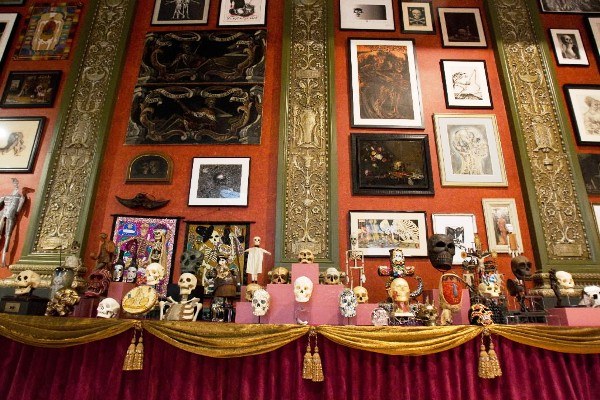
Presented by the Chicago Department of Cultural Affairs and Special Events in partnership with the Chicago Office of Tourism and Culture, Morbid Curiosity: The Richard Harris Collection showcases the wild and wonderfully eclectic selection of nearly 1,000 works of fine art, artifacts, massive installations and decorative objects, including creations by many of the greatest artists of our time, that explore the iconography of death across a variety of artistic, cultural and spiritual practices from 2000 B.C.E. to the present day.

Richard Harris, a resident of Riverwoods, Ill. who has been an art collector for 40 years, has gathered his provocative collection from all corners of the world to share with Chicago. Morbid Curiosity will fill two exhibition spaces, the 4th floor Exhibit Hall and Sidney R. Yates Gallery, at the Chicago Cultural Center, 78 E. Washington St., and will run through Sunday, July 8, 2012.

“We are all born to die. The questions that fascinate me are how we will die, where will we die and when will we die,” said Richard Harris. “At the age of 74, I believe it is incumbent upon me to make my collection a paean to death in all its many visages.”

The two major components of this exhibition are the “War Room,” highlighting the atrocities of war in notable works from the 17th century to present day in the 4th floor Exhibit Hall; and the “Kunstkammer of Death,” a modern-day “cabinet of curiosities” housed in the Sidney R. Yates Gallery, featuring a wide-ranging survey of mortality across cultures and spiritual traditions. The centerpiece of the “War Room” is Mr. Harris’ rare collection of five great war series, featuring prints by Jacques Callot, Francisco Goya, Otto Dix, the Chapman Brothers and Sandow Birk, which he has acquired over the past 30 years. This exhibition marks the first time that all five series will be exhibited together in their entirety.

“The scope, quality and diversity of Mr. Harris’ collection is unprecedented,” said Michelle T. Boone, Commissioner of the Chicago Department of Cultural Affairs and Special Events. “Morbid Curiosity will fill two gallery spaces on the 4th floor to cover a total of 14,000 sq. ft. during its six-month run, making it one of our largest and longest-running exhibitions to date.” “We look forward to hosting an exciting array of music, theater and art programming in conjunction with the exhibition, further engaging the public in a conversation about difficult themes that continue to fascinate humankind,” added Commissioner Boone.

“War Room”
Mr. Harris presents his rare collection of five great war series, arguably the most remarkable interpretations of war in art, evoking the ongoing cycle of human cruelty and destruction over centuries. Chronologically, the first of the series features Jacques Callot’s 17th century Miseries of War prints, followed by Francisco Goya’s extraordinary 18th century Disasters of War. The two masterpieces of the 20th century include Otto Dix’s Der Kreig and Jake and Dinos Chapman’s Disasters of War, both of which are heavily influenced by Goya. Completing the series is the 21st century The Depravities of War by Sandow Birk featuring massive woodblock prints depicting the Iraq war.

“Kunstkammer of Death”
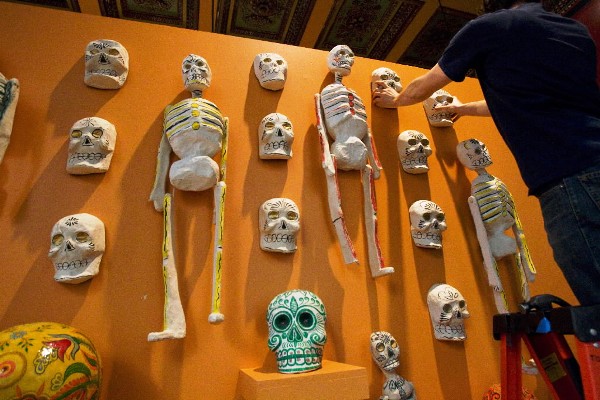
The Italianate Sidney R. Yates Gallery will have its own distinct flavor within the exhibition as it is transformed into the style of a 17th century “Kunstkammer of Death.” (“Kunstkammer” is the precursor of the Public Museum as we know of them today. One of the greatest examples of a Kunstkammer was established by Peter the Great in Russia in 1727. Peter’s museum was a “cabinet of curiosities” dedicated to preserving natural and human curiosities and artistic rarities from across the globe as a means of acquiring a comprehensive knowledge of the world.) Featured in the “Kunstkammer of Death” will be works that explore death in all aspects from the spiritual to the scientific. Incredible works by such artists as Laurie Lipton, Chicago artist Marcos Raya and the Argentinean collective, Mondongo, bring to life the Mexican Holiday, Day of the Dead. Additionally, the gallery will be filled with a vast assortment of artistic styles and genres including the Dance of Death, a late-medieval allegory on the universality of death and Vanitas, a type of art that employs symbolic elements, such as hourglasses, rotting fruit and skulls, to signify the brevity of life.

Additional highlights of Morbid Curiosity: The Richard Harris Collection include:

  • Works by notable artists including Rembrandt, Albrecht Du?rer, Hans Bellmer, Odilon Redon, Pavel Tchelitchew, James Ensor, Jasper Johns and Robert Mapplethorpe.
  • Breathtaking 13 ft. high chandelier made of 3,000 handcrafted plaster bones by contemporary British artist Jodie Carey. The piece directly engages the viewer with the irony or contradictions implicit in the decay/beauty aesthetic.
  • Visually stunning large-scale installation, “Tribute,” from Guerra de la Paz entirely built from colorful used clothing that commemorates the Holocaust.
  • Specimens, medical charts and ephemera.
  • Work by contemporary artists such as Andres Serrano, Vik Muniz and Hugo Crosthwaite, including his commissioned 10 x 25 ft. site-specific mural, “Death March,”among others.
  • Ethnographic artifacts and art from other cultures, particularly Tibet, Mexico, Africa and New Guinea.

“Ironically, the object that best personifies my own curiosity towards the subject of death can be seen in a 1927 photograph that is probably the least expensive object in the collection, costing me $5,” said Mr. Harris. “It is a photograph of a woman named Phebe Clijde surrounded by friends in the backyard of Phebe’s home in the suburbs of San Diego. In this neighborly scene, Phebe is holding a human skull. ‘What could she be thinking? Who’s skull is this? How did the person die?’ are some of the questions that ignite Phebe’s and my curiosity.”

Richard Harris has been collecting for more than 40 years. Previous shows that have exhibited his works are The Slought Foundation, Philadelphia, Pa., Strictly Death (Jan. 23 – Mar. 13, 2010); Th
e Figge Art Museum, Davenport, Iowa, Dancing Towards Death (Sept, 18, 2010 – Jan. 9, 2011); and Loyola University Museum of Art (LUMA), Chicago, The Richard Harris Collection: Balint Zsako Collages (Feb. 3 – May 1, 2011).

You can find out more by clicking here. Thanks to Richard Harris and Pam Grossman for alerting me to this exhibition!

Images: The Chicago Tribune

Source:
http://morbidanatomy.blogspot.com/feeds/posts/default?alt=rss

Anatomy of the Greek debt negotiations

(ATHENS) - Eurozone finance ministers are to meet Monday in Brussels and might approve a financial bailout package for Greece that would involve contributions from the European Union and International Monetary Fund.

The overall rescue framework for Greece also involves a major, unprecedented write-down of debt held by private banks and financial institutions.

Here are the main issues at stake:

- WHAT THE TALKS COVER

The unprecedented PSI (Private Sector Involvement) talks are classic debt restructuring negotiations, under which private creditors should accept a cut of at least 50 percent on the 200 billion euros ($260 billion) in Greek debt they hold and considerably longer repayment schedules.

Greece's debt totals some 350 billion euros.

For the first time however, a eurozone member is concerned and the talks are taking place to prevent Greece, which is on the brink of bankruptcy, from having to declare a debt default.

A Greek sovereign default could raise market pressure on countries like Portugal and possibly larger economies like Italy, Spain and even France, and increase the chances of a prolonged recession in the 17-nation eurozone.

That in turn could well undermine the global economy.

As a result, many countries around the world and the International Monetary Fund (IMF) have a keen interest in the crisis being resolved.

- WHY HAVE THE TALKS DRAGGED ON ?

Banks, insurers and private investors wanted to stick to an EU October summit deal that called for a 50-percent debt writedown (a 100-euro bond to be replaced by a 50-euro bond), with additional debt relief coming via the interest rate to be paid on the replacement bonds, which are to be repaid at considerably later dates.

Germany and the IMF insisted meanwhile that Greece's overall debt burden be reduced to 120 percent of gross domestic product in 2020 from the current 160 percent to ensure that it is sustainable over the longer term.

Italy's debt is currently worth around 120 percent of its GDP.

The success of a Greek accord with private creditors is tied to wider talks on the conditions of a second bailout of 130 billion euros that the eurozone pledged in October.

Greece has already benefitted from a 110-billion-euro rescue approved in May 2010 by the EU and the IMF.

Greece has had to accept stringent austerity measures, along with reforms aimed at getting its recession stuck economy back on track.

Greek political parties argued until the last minute over replacing extra pension cuts with cuts elsewhere in the budget but finally made the sums add up.

The EU is now considering opening an escrow account for Greece, which would block a portion of state revenues to guarantee repayment of bailout loans, a top EU official said Thursday.

EU economic affairs commissioner Olli Rehn said the suggestion was "one possibility for reinforcing surveillance and effectively implementing the programme."

- THE INTERNATIONAL STAKES IN THE NEGOTIATIONS

In the short term, the aim is to avoid bankruptcy by a eurozone member that could set off an unpredictable chain of events across the bloc.

Because the single currency is Europe's biggest project to date, a eurozone failure could have wider repercussions across the 27-member EU, one of the world's biggest economic regions.

In the absence of an accord, Greece could default from March 20, when it has to repay 14.5 billion euros to creditors.

If talks failed at the eurozone level, Athens might be forced to leave the bloc to be able to devalue its currency and loosen the debt stranglehold.

- WHAT ARE THE RISKS FOR GREECE ?

Under the terms of an expected deal with the EU and IMF, Greece will suffer in social terms given the efforts required, which include cuts in public sector salaries and pensions.

If Greece defaults or has to leave the eurozone, analysts warn that its borrowing costs would soar, making it even more difficult to straighten out its finances.

Most economists calculate the ultimate cost of such a scenario as much higher than that of the debt rescheduling agreements now under discussion.

- WHERE DOES THE ECB FIT IN ?

The European Central Bank has faced calls to write off some of the value of its own Greek bonds to help finalise a debt deal.

According to one eurozone central bank official, the ECB holds 45 billion euros in Greek bonds.

On Friday, sources told AFP the ECB had embarked on a debt swap programme in what could mark a crucial step towards a much wider deal.

But the central bank must take care not to create a situation that would generate lawsuits from private creditors contesting ECB moves to exempt itself from losses.

German central bank chief Jens Weidmann is also worried that investors could lose confidence in the eurozone, as similar debates might arise concerning bonds issued by countries like Portugal, worsening the crisis, a source said.

- WHY IS THE IMF PRESSURING THE ECB ?

The IMF has had trouble getting non-European shareholders to back a second debt bailout for to Greece, and the Fund's statutes prevent it from helping a country whose debt is unsustainable.

If the ECB balks and PSI does not reduce Greece's debt enough, the Fund has threatened to cut loans to Greece.

- AND IF ALL GOES WELL

Now that Greek political parties have agreed to swallow the latest radical austerity measures, a PSI accord is expected to be signed.

Before March 20, half of the debt held by private creditors should be erased and the first payments of some 85 billion euros in new European loans be made to meet the debt default deadline.

Up to 2015: continued austerity in Greece, which must still reform its economy if it is to compete successfully on a global level.

Text and Picture Copyright 2012 AFP. All other Copyright 2012 EUbusiness Ltd. All rights reserved. This material is intended solely for personal use. Any other reproduction, publication or redistribution of this material without the written agreement of the copyright owner is strictly forbidden and any breach of copyright will be considered actionable.

View original post here:
Anatomy of the Greek debt negotiations

Grey's Anatomy-Private Practice Crossover Scoop: The Shepherd Siblings Reunite Again!

The bad news: Erica, who had a child with Private Practice's Cooper, has a terminal brain tumor. The good news: Amelia Shepherd and her big brother Derek will reunite to try to save her.

Amelia (Caterina Scorsone) will travel to Grey's Anatomy's Seattle Grace during a special crossover episode, airing Thursday at 9/8c, in which she'll convince Derek (Patrick Dempsey) to lend a hand in saving Erica (A.J. Langer) - something that has thus far seemed impossible.

Grey's Anatomy's Sandra Oh: Cristina and Owen head to couples therapy!

"We're coming at the case from such a place of hopelessness in terms of Erica's prognosis, that it can only go up from here," Scorsone tells TVGuide.com. "There's pressure for Amelia to do the best job possible, but Erica is going to die, that's the hard reality that everyone's been dealing with for this whole story arc, so even the fact that there's a possibility that she could live is something better than what we had thought an episode [ago]."

Erica has long resisted the idea of treatment, fearing it would limit her time with her son Mason (Griffin Gluck). And it isn't foolproof: The difficult procedure requires the surgeons to remove the tumor in less than 90 seconds. "It really is a dangerous procedure that they're attempting to do, so Erica's quite shaken by how immediate the option is," Scorsone says. "She has to decide within a very short amount of time, and if it doesn't go well, that's going to be the last time she sees her son, so that's a huge decision for anyone."

Exclusive: Paul Adelstein to direct an episode of Private Practice

"Once she's there, and she's presented with what the procedure would actually entail and how risky it is, and it almost sounds impossible, she has even more reservations about it," adds Paul Adelstein. "The biggest challenge of all to Erica is that she still hasn't told Mason."

Erica's case will also mark the first time the Shepherd siblings have been together since Amelia's recent trip to rehab. Though Derek was missing from Amelia's big intervention earlier this season on Private, her falling off the wagon will be addressed during the crossover. "He's the one who brings it up," Scorsone says. "Families are complicated and there's a lot of history between the two of them. They've shared good times and bad, but ultimately, they have a bit of a confrontation about it, but it's resolved in an interesting and positive way."

Don't expect Amelia, who ventured to Seattle Grace last season, to make some of the same mistakes again - like sleeping with Mark Sloan (Eric Dane). "There's no time for dilly-dallying," she jokes. "Amelia has lives to save!"

The Grey's Anatomy-Private Practice crossover begins at 9/8c on ABC.

View original Grey's Anatomy-Private Practice Crossover Scoop: The Shepherd Siblings Reunite Again! at TVGuide.com

Related Articles on TVGuide.com

Other Links From TVGuide.com

View the original article on TVGuide.com

See the rest here:
Grey's Anatomy-Private Practice Crossover Scoop: The Shepherd Siblings Reunite Again!

Graphic: Anatomy of a team pursuit track cycling team

An enthralling year of high intensity competition, culminating with the Olympics, is currently being teed up beautifully at the London velodrome with favourites for the team pursuit, Great Britain and Australia, going head-to-head over four days of action as part of one of the most eagerly anticipated test events to date.

Both the men and women's squads from both nations last night qualified for Sunday's final of one of the most spectacular events on the track cycling agenda.

Britain's gold rush on the track in Beijing was one of the most defining aspects of the last games from a home nations perspective. And much is expected of them this summer.

Britain has strong medal hopes across all disciplines in the saddle, none more so than the team pursuit.

The race is run over 4km (16 laps) for men and 3km for women, who have three riders instead of the four in a squad, with the competing teams starting on opposite sides of the track.

The object is to either catch up with your opponents or ride the fastest time with the clock stopped when the third rider crosses the line.

Riders ride in close formation, switching lead riders every lap to share the workload. Changeovers can only ever be made on the bends. Streamlining is massively important and the ideal is always for the four to move and think as one.

During the race wheels will be about an inch apart. The old pros sometimes say they actually like to feel the back wheel of the rider in front on their front wheel – at least then they know where it is.

The rest is here:
Graphic: Anatomy of a team pursuit track cycling team