New Biochemistry, Food and Inorganics Resources Published at ScienceIndex.com

The Biochemistry, Food and Inorganics Sciences are three new key categories covered by the Sciences Social Network ScienceIndex.com. The users of the website monitor over 130 scientific Biochemistry, Food and Inorganics journals and submit the most significant scientific results of these journals for inclusion in ScienceIndex.com. ScienceIndex.com was established in 1998 to index the very latest news, headlines, references and resources from science journals, books and websites worldwide. The site covers news in all fields of biology, business, chemistry, engineering, geography, health, mathematics and society.

Mannheim, Germany (PRWEB) February 27, 2012

ScienceIndex.com is a Web 2.0 sciences social network established in 1998 to index the very latest news, headlines, references and resources from science journals, books and websites worldwide. The site covers news in all fields of biology, business, chemistry, engineering, geography, health, mathematics and society. In the field of Chemistry, the site has now included the three new categories Biochemistry, Food and Inorganics. While the Biochemistry category covers the chemical substances and vital processes in living organisms, the Food category covers production of materials of plant or animal origin, that are ingested and assimilated by an organism to produce energy, stimulate growth, and maintain life, and the Inorganics category covers chemical reactions and properties of all elements in the periodic table and their compounds, except element carbon.

ScienceIndex.com's Chemistry Sciences Category covers the composition, structure, properties, and reactions of substances. Its seven subsections include Biochemistry, Food, Inorganics, Materials, Organics, Physics and Toxicology.

ScienceIndex.com's Biochemistry Sciences Category covers covers the chemical substances and vital processes in living organisms. It currently contains over 18,500 articles partly derived from over 40 scientific journals. One of the latest additions covers novel oxidative stress transcription factor. Hypochlorite is a powerful oxidant produced by neutrophils to kill invading microorganisms. Despite this important physiological role of hypochlorite in fighting bacterial infections, no hypochlorite-specific stress response has been identified yet. The authors identified a hypochlorite-responsive transcription factor, YjiE, which is conserved in proteobacteria and eukaryotes. To their knowledge, YjiE is the first described hypochlorite-specific transcription factor specifically conferring hypochlorite resistance to E. coli cells.

ScienceIndex.com's Food Sciences category covers production of materials of plant or animal origin, that are ingested and assimilated by an organism to produce energy, stimulate growth, and maintain life. It currently contains nearly 11,800 articles partly derived from almost 50 scientific journals. One recently included article in this category covers a review of osmotic dehydration of fruits and vegetables. Osmotic dehydration is one of the best and suitable method to increase the shelf life of fruits and vegetables since this process retains vitamin and minerals, color, flavor and taste in fruits and vegetables. The authors review different methods, treatments, optimization and effects of osmotic dehydration. Their results show that combination of different osmotic agents are more effective than sucrose alone due to combination of properties of solutes.

ScienceIndex.com's Inorganics Sciences Category covers chemical reactions and properties of all elements in the periodic table and their compounds, except element carbon. It currently contains nearly 6,200 articles partly derived from over 40 scientific journals. One of the latest additions characterizes work hardening mechanisms in Fe–Mn based TWIP steels. When strained in tension, high-manganese austenitic twinning induced plasticity (TWIP) steels achieve very high strength and elongation before necking. The authors show that the Fe–Mn–C grade exhibits the best properties, together with a Portevin–Le Châtelier effect which could result in supplementary hardening. Furthermore, TEM analyses show that twins in the Fe–Mn–C steel are thinner and without dislocation activity, which could lead to a composite effect and increase the work hardening.

###

ScienceIndex.com currently contains over 1.38 million stories distributed among 75 categories. 75,291 users monitor nearly 8,400 journals covering the broad spectrum of sciences. They share circa 2,500 new articles every day. Since new science content is discovered in real-time, the delay between original publication and appearance at ScienceIndex.com is no more than two days. ScienceIndex.com provides an advanced search feature which suggests up to ten closely related articles for a search and also for a selected story. Other features include a "Life Traffic Feed", a "Top Content" sidebar, Google Translate functionality, and RSS feeds for every category. ScienceIndex.com also maintains the new Twitter account @ScienceIndex_ .

George Maine
ScienceIndex.com
+49-180-35518-59433
Email Information

The rest is here:
New Biochemistry, Food and Inorganics Resources Published at ScienceIndex.com

Darien High Schoolers fare well at science fair

Darien High School students took home first place honors in five out of eight categories at the 12th Annual Southern Connecticut Invitational Science & Engineering Fair in Woodbridge on Feb. 4.

More than 600 students, judges and community members were joined by Dr. Dan Riskin, host of Animal Planet's Monsters Inside Me, at the fair, which was held at Amity Regional High School. Completed projects and research proposals were presented by students from Darien, Amity, Convent of the Sacred Heart, Joel Barlow High School, Hamden High School, Newtown High School and Staples High School.


Each student was required to create an exhibit, make a presentation, and participate in a question and answer session. Volunteer judges evaluated entries — both completed projects and research proposals — in four categories: behavioral sciences, environmental sciences, health sciences and physical sciences.

Darien student Reed Morgan took first place for his behavioral science proposal called, "Ethnogenesis and State Formation in the Mycenaean Hither State of Pylos: A-pu2/Iklaina as a Diagnostic for Expansion of the Core Zone." Katherine Ferguson won first place for her environmental science proposal, "Quantifying the Effect of Lionfish and Other Stressors on Coral Reef Ecosystems off the Coast of Southern Mexico." Jeffrey Sload tied for first place in the health science proposal category his work, "Elucidating Warfarin Pharmacogenomics in African Americans: A Genome-Wide Association Study on Warfarin Dose Response in a Cohort of African American Individuals." Brooke Davis won first place for her completed behavioral science project, "Use of Formant Values in Classifying Vocalizations of Beluga Whales (Delphinapterus leucas)," and Amanda Sommi took first place for her completed environmental science project, "The Effect of Rising Sea Level on the Elevation of Salt Marshes Throughout Long Island, NY."

Darien students Oscar Barbour, Leah Hotchkiss, Caroline Wetterauw, Grace Brandon, Mark Kaminski and Andrew Fletcher also earned awards for their science projects. Sacred Heart junior Lauren Wood also lives in Darien and was awarded a second place prize for her project.

State Rep. Tony Hwang, a Democrat who represents Fairfield and Trumbull, was a first time judge at the event. "The quality of each exhibit was impressive and the enthusiastic and energetic presentation by each young science/engineering scholar gave hope that our community and country will ably compete in the global marketplace into the future," Hwang said. "The tireless work of board members and volunteers made this event an incredible success. They are the true heroes in advocating science/engineering education for our kids."

Celebrity scientist Riskin delivered a speech called, "Should I Really Consider a Career in Science?" An internationally known evolutionary biologist, Riskin told the story of his own career path, how it led him to become an expert on bat locomotion and then a TV host. Among his many lessons, he urged the students to question what they see and what others have told them, and then to question themselves before drawing any conclusions. He said science is about following one's passion, and that it's an intellectual pursuit but "cool and awesome," too.

The science foundation is actively encouraging future participation by additional schools for the science fair competition, part of this effort being to subsidize participation by science teachers in a program on teaching science research at the high school level offered by the State University of New York.

The Sexauer Foundation is a major funding source of the fair and this year's prizes were sponsored by Laticrete International of Bethany. The fair is sponsored by the Southern Connecticut Science & Engineering Foundation.

Add this page to your favorite Social Bookmarking websites

Commenting is reserved for registered users.

Log in or register a new account.

Read more from the original source:
Darien High Schoolers fare well at science fair

Ovarian Stem Cells Produce Eggs in Method That May Aid Fertility Therapy

By Ryan Flinn - Sun Feb 26 18:00:00 GMT 2012

Stem cells taken from human ovaries can produce normal, healthy eggs, scientists demonstrated for the first time in an experiment that may lead to new methods to help infertile women.

Women have a fixed number of eggs from birth that are depleted by the time of menopause. The finding, published today in the journal Nature Medicine, challenges the belief that their ovaries can't make more. The research was led by Jonathan Tilly, director of Massachusetts General Hospital’s Vincent Center for Reproductive Biology.

Tilly discovered in 2004 that ovarian stem cells in mice create new eggs, or oocytes, in a way that's similar to how stem cells in male testes produce sperm throughout a man’s life. His latest study proves the same is true in human ovaries, and may point to new ways to preserve fertility or overcome infertility by delaying when the ovaries stop functioning, Tilly said.

“The 50-year-old belief in our field wasn’t actually based on data proving it was impossible, or not ongoing,'' Tilly said in a telephone interview. ``It was simply an assumption made because there was no evidence indicating otherwise. We have human cells that can produce new oocytes.”

A female is most endowed with oocytes as a fetus, when she has about 7 million. That number that drops to 1 million by birth, and around 300,000 by puberty. By menopause, the number is zero. Since the 1950’s, scientists thought that ovarian stem cells capable of producing new eggs are only active during fetal development.

Rare Protein Expressed

In the study, healthy ovaries were obtained from consenting patients undergoing sex reassignment surgery. The researchers were able to identify ovarian stem cells because they express a rare protein that’s only seen in reproductive cells.

The stem cells from the ovaries were injected into human ovarian tissue that was then grafted under the skin of mice, which provided the blood supply that enabled the cells to grow. Within two weeks, early stage human follicles with oocytes had begun to form.

“This paper essentially opens the door to the ability to control oocyte development in human ovaries,” Tilly said.

About 10 percent of women of child-bearing age in the U.S., or 6.1 million, have difficulty getting pregnant or staying pregnant, according to the Centers for Disease Control and Prevention. Most cases of female infertility are caused by problems with ovulation, hormone imbalance or age.

Infertility Treatments

Infertility in women is now treated through drugs, surgery, artificial insemination or assisted reproductive technology, in which the woman’s eggs are mixed with sperm outside the body, then reinserted.

The study offers “a new model system for understanding the human egg cell,” according to David F. Albertini, director of the Center for Reproductive Services and professor in the department of molecular and integrative physiology at Kansas University. Still, “there’s a long way to go before this has real practical applications,” he said.

“I’ve spent 35 years of my life studying egg cells and this is a cell that is at least as complicated as a neuron in the brain, if not more,” Albertini said by telephone. “You will need to establish reproducibility from one lab to the next, and hopefully others will be able to confirm his work and extend it, make it into something that will make us confident that the cells are safe to use and we could actually use them to repopulate an egg-depleted ovary.”

New Therapies

Tilly's team is exploring the development of an ovarian stem- cells bank that can be cryogenically frozen and thawed without damage, unlike human eggs, he said. The researchers are also working to identify hormones and other growth factors for accelerating production of eggs from human ovarian stem cells and ways to improve in-vitro fertilization.

“The problem we face with IVF is we don’t have many eggs to work with,” he said. “These cells are renewable. If we are successful -- and it’s a big if -- in generating functioning eggs from these cells, we can generate as many eggs as we need to on a per patient basis.”

Tilly is also collaborating with researchers at the University of Edinburgh in the U.K. to determine whether the oocytes can be developed into fully mature human eggs for fertilizing. The U.S bans creating or fertilizing embryos for experimental purposes, he said.

A company Tilly co-founded, Boston-based OvaScience Inc., has licensed the technology for potential commercial applications.

To contact the reporter on this story: Ryan Flinn in San Francisco at rflinn@bloomberg.net

To contact the editor responsible for this story: Reg Gale at rgale5@bloomberg.net

Excerpt from:
Ovarian Stem Cells Produce Eggs in Method That May Aid Fertility Therapy

Experts on longevity to highlight Healthy People 2012 conference

LOMA LINDA - Experts from around the country will speak, present research and offer tips at "Healthy People 2012: The Lifestyle Conference" at Loma Linda University on March 6-7.

Healthy People 2012, sponsored by Loma Linda University Medical Center, is an annual lifestyle conference that attracts top-level speakers and is open to the public. This year's theme is "Healthy Aging and Living Whole."

The conference will define the "Top 10 Lifestyle Priority Areas" necessary for healthy aging.

Dr. Walter M. Bortz, clinical associate professor of Stanford University School of Medicine and author of the bestselling book, "Dare to be 100" and Dr. Bruce Rabin, medical director of the University of Pittsburgh Medical Center Healthy Lifestyle Program, will give presentations at the conference, to be held at the Loma Linda University Drayson Center, 25040 Stewart St.

"We are very excited and looking forward to hearing valuable insights from Dr. Bortz and Dr. Rabin," said Krystal Sky Gheen, assistant director for continuing education at LLU School of Public Health and coordinator of Healthy People 2012.

"The speakers are leading authorities in the area of longevity and conference participants will certainly benefit from hearing both of them," she said.

Dr. Don Wright, deputy assistant secretary, U.S. Department of Health and Human Services, will give the keynote on "National Prevention Strategy and Healthy People 2020 initiatives.

Dr. Jane Wright (no relation), of the Centers for Disease Control and Prevention, will speak on "The Million Hearts Initiative" to prevent a million heart attacks and strokes in five years.

Bortz is speaking during the March 6 session as is Janet Wright and Don Wright; Rabin will speak on March 7.

Dr. Wayne Dysinger, chairman of the Loma Linda University Department of Preventive Medicine, will speak March 7 on "Stress Reduction and Prioritizing Rest."

Dora Barilla, director of community benefits for Loma Linda University Medical Center, will lead a special session on March 6, called Power of Transformation in Health Care.

For more information and to register for the conference, go to healthypeopleconference.org

Reach Jim via email or call him at 909-386-3855.

View post:
Experts on longevity to highlight Healthy People 2012 conference

DNA clue to 47-year-old murder

Police scour Wanda Beach following the murders, 1965. Source: The Daily Telegraph

Marianne Schmidt in undated family photo, who was found murdered along with friend Christine Sharrock at Wanda Beach in Sydney in 1965. Source: The Daily Telegraph

Cold Case: Christine Sharrock and Marianne Schmidt. Source: The Daily Telegraph

Christine Sharrock in undated family photo, who was found murdered along with friend Marianne Schmidt at Wanda Beach in Sydney in 1965. Source: The Daily Telegraph

A BLOOD spot may hold vital DNA evidence that could solve one of Sydney's most enduring mysteries.

The blood, taken from the scene of the Wanda Beach murders 47 years ago, belongs to an unknown male and was gleaned from crime scene boxes after cold case detectives revisited the case.

Now police hope new testing methods will give them a fuller profile and provide a breakthrough in the case.

Teenagers Marianne Schmidt and Christine Sharrock were found stabbed and bashed to death in the sand dunes at Wanda beach, in Sydney's south, in January 1965. Despite a number of investigations over the years no one has ever been arrested for the murders of the two 15-year-olds from Ryde.

The Cold Case Squad was told to reinvestigate the case by Police Commissioner Andrew Scipione in 2007.

The Cold Case Justice program located clothing belonging to the Wanda Beach victims, had crime scene negatives reprinted and reviewed all the evidence.

A button and zipper were removed from one of the victim's shorts and a sub sample sent to New Zealand for DNA testing but the profile which came back belonged to one of the victims.

Surprised that DNA profiles could still be obtained from a sample so many years old, officers decided to test a blood mark on the shorts that could be a knife wipe mark. A weak male profile was found.

Assistant Commissioner Mark Sweeney, head of the forensic group, said: "We are optimistic that when enhanced with new techniques the DNA could be used against a number of known suspects. What it shows is DNA can be successfully extracted nearly 50 years later and science used to investigate new and old crimes."

Police are being cautious and at the moment it is believed the DNA markers are not strong enough for a conclusive comparison. However, testing methods are improving and the sample will undergo further tests as the technology becomes available. Police won't say if they have a suspect in mind to match the DNA against.

However, other sources have revealed a number of suspects are still alive.

"There is one in particular that I would love to see matched against any DNA we may get in the future," the investigator said. "Luckily he is incarcerated interstate and will never be released." Last year the Cold Case squad cleared more than 33 sex assaults and several murders committed as far back as the early 1980s.

Original post:
DNA clue to 47-year-old murder

Posted in DNA

DNA clue to Wanda Beach murders 47 years on

Police scour Wanda Beach following the murders, 1965. Source: The Daily Telegraph

Marianne Schmidt in undated family photo, who was found murdered along with friend Christine Sharrock at Wanda Beach in Sydney in 1965. Source: The Daily Telegraph

Cold Case: Christine Sharrock and Marianne Schmidt. Source: The Daily Telegraph

Christine Sharrock in undated family photo, who was found murdered along with friend Marianne Schmidt at Wanda Beach in Sydney in 1965. Source: The Daily Telegraph

Two teenagers murdered at Wanda Beach 47 years ago Blood spot found on cold-case evidence tested  Faint DNA profile of male discovered, further testing needed

A BLOOD spot may hold vital DNA evidence that could solve one of Sydney's most enduring mysteries.

The blood, taken from the scene of the Wanda Beach murders 47 years ago, belongs to an unknown male and was gleaned from crime scene boxes after cold case detectives revisited the case.

Now police hope new testing methods will give them a fuller profile and provide a breakthrough in the case.

Teenagers Marianne Schmidt and Christine Sharrock were found stabbed and bashed to death in the sand dunes at Wanda beach, in Sydney's south, in January 1965. Despite a number of investigations over the years no one has ever been arrested for the murders of the two 15-year-olds from Ryde.

The Cold Case Squad was told to reinvestigate the case by Police Commissioner Andrew Scipione in 2007.

The Cold Case Justice program located clothing belonging to the Wanda Beach victims, had crime scene negatives reprinted and reviewed all the evidence.

A button and zipper were removed from one of the victim's shorts and a sub sample sent to New Zealand for DNA testing but the profile which came back belonged to one of the victims.

Surprised that DNA profiles could still be obtained from a sample so many years old, officers decided to test a blood mark on the shorts that could be a knife wipe mark. A weak male profile was found.

Assistant Commissioner Mark Sweeney, head of the forensic group, said: "We are optimistic that when enhanced with new techniques the DNA could be used against a number of known suspects. What it shows is DNA can be successfully extracted nearly 50 years later and science used to investigate new and old crimes."

Police are being cautious and at the moment it is believed the DNA markers are not strong enough for a conclusive comparison. However, testing methods are improving and the sample will undergo further tests as the technology becomes available. Police won't say if they have a suspect in mind to match the DNA against.

However, other sources have revealed a number of suspects are still alive.

"There is one in particular that I would love to see matched against any DNA we may get in the future," the investigator said. "Luckily he is incarcerated interstate and will never be released." Last year the Cold Case squad cleared more than 33 sex assaults and several murders committed as far back as the early 1980s.

Read more:
DNA clue to Wanda Beach murders 47 years on

Posted in DNA

Pregnancy and fish oils – How both mother and baby can benefit

by: Dr. Daniel Zagst

By 2012, most people understand the importance of including omega-3 fatty acids to their diets. Commonly found in fish oil, omega-3 fatty acids have countless benefits to a person's health and complexion. From teens to the elderly, everyone can benefit from the wonders of omega-3 fatty acids, but what about pregnant moms and newborns? Recent research indicates that moms and fetuses need fish oils just as much as the rest of the population.

Good news for the mother, better news for the baby

Pregnant women have been advised to consume omega-3 fatty acids in order to ensure proper development of the fetal neurological system. Even after birth, fish oil supplementation can improve the early development of a newborn's brain, visual system, and motor function in women who breastfeed. These fish oils, most notably the fatty acid docosahexaenoic acid (DHA) is part of a group of omega-3s known as polyunsaturated fatty acids (PUFAs). The human brain is full of PUFAs that modulate inflammation and provide integrity to the neuronal network. By supplying a developing brain with plenty of PUFAs, a mother can support their child's proper development. Along with benefits to the child, a pregnant mother that consumes fish oils can prevent pre-term labor, reduce the risk of pre-ecclampsia, and may even help in the prevention of post-pardum depression (PPD). Read more...

AyurGold for Healthy Blood

Source:
http://anti-aging-for-today.blogspot.com/feeds/posts/default?alt=rss

Black raspberries prevent colorectal cancer

by: David Gutierrez

Black raspberries contain natural compounds that may significantly reduce the risk of colorectal cancer, according to a study conducted by researchers from Ohio State University and published in the journal Cancer Prevention.

Researchers genetically engineered mice to develop either intestinal tumors or a type of colon inflammation, colitis, known to increase the risk of colorectal cancer. They then fed all the mice a high-risk diet low in calcium and vitamin D and high in saturated fat for 12 weeks. Some of the mice were fed 10 percent of their daily calories from freeze-dried black raspberry powder.

Among the mice engineered to get colitis, black raspberry powder significantly reduced inflammation and cut both the number of new and total tumors by 50 percent. Among mice engineered to get intestinal tumors, black raspberry powder reduced the number of new tumors by 45 percent and the number of total tumors by 60 percent. The effect appeared to be produced, in part, by the suppression of a protein that binds to the artificially modified gene. Read more...

AyurGold for Healthy Blood

Source:
http://anti-aging-for-today.blogspot.com/feeds/posts/default?alt=rss

Volunteer Week 2012

Serving By Doing- Honors College Volunteer Week 2012!
Attention UA Students: Want a fun and interactive way to support the community you live in? Looking for a way to interact with fellow students while assisting the less fortunate? The UA Honors College is hosting their first annual volunteer week entitled “Serving by Doing” from February 27th-March 3rd. There will be a variety of activities including the following:
•Monday: BorderLinks Awareness Event (12pm-2pm, UA Mall)
•Tuesday: Blood Drive at UA Main Library (10am-3pm, UA Main Library)
•Wednesday: Project Linus Blankets for Children in Need (6:00-8:00pm, Honors College)
•Thursday: Crafts for Kids for Project Sunshine (5:30pm-6:30pm, Honors College)
•Friday: Ben’s Bells (10am-1pm, Ben’s Bells on University)
•Saturday: Cats in the Community (10:30am-2:00pm, World Care Center)
**Advanced registration required by Feb. 16th for Cats in the Community, http://catsincommunity.arizona.edu/2012_volunteer_registration.
** Register with Honors Student Council, from 10:45-2pm, and bring the waivers to the Honors College before February 15th!
Register for Service Week online at HonorsStudentCouncilAZ.com and direct any questions: to HonorsStudentCouncil@gmail.com. Everyone is invited and those who participate in at least 3 events win a FREE T-Shirt!!! (*while supplies last) Registration opens February 12th at HonorsStudentCouncilAz.com !!!! The events are open to ALL students, including non-honors students. We look forward to seeing you!
Tamara Armstrong
University of Arizona
Honors College
Physiology Major
French Minor
Biology Minor
Honors Student Council Philanthropy Chair
Blue Chip Pima Lodge Programming Assistant

Source:
http://physiologynews.blogspot.com/feeds/posts/default?alt=rss

Sports Business Industry:

Know a student looking for a career in the sports business industry? The Sports Marketing Association (SMA), a student run organization on the University of Arizona campus is holding a day long educational, networking, and interviewing event! This Friday, February 24th from 11AM to 5PM, SMA will be hosting 20+ speakers in the sports industry at the MAC Gym in the University of Arizona Rec Center. The MAC Gym is right outside the weight room and south of the sand volleyball courts in the rec center. Students will have the opportunity to listen to professionals discussing current topics and trends in the sports industry by attending any (or all!) of the discussion panels shown below. The event is free for students and there is no RSVP needed to attend. However, we ask all attendees to dress in business professional attire.
Come as you want. If you want to stay for the entire event, we'd love that! But if a certain panel catches you're interest, come to that! Whatever fits in your schedule!
Check out our Facebook event page here! Post questions, insights on companies or just to check out more details!
What: Third Annual SMA Sports Media and Career Symposium
When: Friday, February 24th 2012 from 11AM to 5PM
Where: MAC Gym at the University of Arizona Recreation Center
Attire: Business Professional
Cost: Free - NO RSVP Needed
The schedule for the day:
11 am to 12 pm - How Brands Use Sports Media to Reach Their Fans
Major League Soccer - Dan Courtemanche
Team One Advertising - Darian Areyan
The Lavidge Company - Bryan Perleberg
Octagon - Bo Heiner
JFG Consulting - Jeff Golner
12-12:30pm - Networking/Lunch Break - FREE Food!
12:30 pm to 1:30 pm – The Impact of Media and Technology on College Athletics
Learfield Sports - David Soble
Fiesta Bowl - Adam Lehe
Rose Bowl - Gina Chappin
Fox Sports Arizona - Ed Olsen
2:00 pm to 3:00 pm – From SMA to Getting Paid – Stories from alumni in the sports world moderated by Mark Tudi, Sports Search
Arizona Diamondbacks - Kristie Van Engelen
Phoenix Coyotes - Brittany Grant
Phoenix Suns - Bob Hamer
Tucson Padres - James Jensen
Fox Sports/Scout.com - Inna Lazarev
3:00 pm to 5:00 pm - Roundtable Sessions
Each speaker will host their own roundtable where students can ask questions about the respective company and receive information on internships and entry-level opportunities.
Other roundtable attendees include:
Univ. of Arizona Athletic Dept. - Alixe Holcomb
Wildcat Club - Tom Theodorakis & Victor Yates
Phoenix Suns - Chris Moran & David Baldwin
Phoenix Coyotes - Kevin West
Univ. of Arizona Alumni Assoc. - Nick Pierson
For questions, please email uofa.sma@gmail.com
Andrew Price
President
Sports Marketing Association
University of Arizona Marketing Major
602.826.3246
adprice@email.arizona.edu

Source:
http://physiologynews.blogspot.com/feeds/posts/default?alt=rss

Visiopharm Introduces APPsolute Digital Pathology

Cloud computing and models using software as a service are increasingly being used on a "per use" or "per case" basis as similar stories related to cloud computing on this blog have appeared. 

It is getting increasingly harder to talk about software with folks without being asked "Is there an app for that?"  The reasons for this are many - lower cost, ease of use, minimal development needed and ready "out of the box" as well as potentially increased portability on small screen mobile devices, tablets and pads.

Now comes word from Visiopharm their entrance into this space with some patent pending technology to facilitate image analysis with free trial, low cost and lowered upfront costs to implement software locally and maintain.

Icon-140-appcenterIcon-140-appcenter 

For the clinical market, "per-click" models have been attempted on the hardware side in the past.  These models may create a

disincentive to use versus a larger initial investment as folks get charged per case, per slide or per view.  For software such as image analysis, however, this model makes a lot of sense.  Use what you need when you need it that is proven and reliable from a library of tried and true algorithms.  

If you need to customize, you can create on demand with lower cost, risk and demonstration of performance as you need it.

Dr. Grunkin's quote below pretty much sums this up by lowering many barriers to entry.

For more information on this new offering leverage hosted computing and per analysis offering, check out Visiopharm's webinar mentioned at the end of the below press release and their booth at the upcoming USCAP meeting.

APPsolute Digital Pathology offers a novel approach to Quantitative Digital Pathology. Powered by CloudAnalysis and the APPCenter; currently featuring over 25 ready-to-use Analysis Protocol Packages (APPs).

APPsolute Digital Pathology is a novel approach to Quantitative Digital Pathology (QDP); costs are reduced, the learning curve is minimized, and the common risks of adoption are eliminated. The Visiopharm APPCenter provides access to a library of solutions that are ready-to-run and can be used with minimum training. Analysis Protocol Packages (APPs) can be tested free of charge before investing, productivity is achieved immediately, the upfront costs are low, and solutions can be scaled to fit customer needs.

A Pay-As-You-Go Solution: Low upfront costs

CloudAnalysis and APPs provide a low cost, easy to budget solution for customers who need access to sophisticated image analysis capabilities for a specific amount of time. Whether it is a week, a month, or longer you only pay for analysis when you need it.

Michael Grunkin, PhD, President of Visiopharm, stated "Currently, the cost structure of commercially available deployed Quantitative Digital Pathology solutions prevents the majority of researchers from benefitting from this increasingly important technology. This has to change. With our CloudAnalysis the upfront investment can be reduced to a fraction of any existing deployed solution. With CloudAnalysis there is always access to the most recent software version, studies can be run from anywhere, and technical deployment issues are eliminated."

The patent pending APPCenter provides customers with easy access to an extensive library of ready-to-run APPs. Each APP includes detailed descriptions, references to scientific literature, illustrated examples, webinars, and more. There is no need to become an expert in image analysis; APPs are created and validated in collaboration between experts in the field and Visiopharm’s application scientists and programmers.

Customers try an APP free of charge, before investing, to make sure that 1) the APP is working according to specifications, 2) the APP provides useful results, and 3) the APP can be understood and operated.

APPs are purchased for a low fixed cost, are yours to keep, and will work with both Visiopharm’s DeployedAnalysis and CloudAnalysis solutions. Custom APPs can be developed upon request, at a fixed known cost, and are also risk free with a complimentary trial.

"In a research project involving 300 patients, we worked with Visiopharm’s Image Analysis APPs developed for five different biomarkers. We could work seamlessly on the cloud, we were productive within an hour or two of training, and were able to complete and review the analysis of 5 x 300 tissue specimens in less than a week. The results we achieved were at least as good as manual scoring, and in several cases significantly better. The speed, convenience, and cost structure offered by CloudAnalysis and Image APPs makes Quantitative Digital Pathology an efficient, affordable, and attractive research tool", says Dr. Lars D. Andersen, Associate Professor, Group Leader, Center for Molecular Clinical Cancer Research, Department of Molecular Medicine (MOMA).

Built on leading technology

CloudAnalysis provides instant access from work, home, or from anywhere to the complete suite of Visiopharm software solutions; including advanced image analysis and stereology. Simply log in to your secure account and start to analyze your slides locally or in the cloud.

CloudAnalysis is built upon proven Whole Slide image analysis technology. Johan Doré, CTO at Visiopharm says, "Our solutions have been stress-tested over the last 10 years in the most demanding environments when it comes to capabilities, automation, and throughput. The feedback we consistently get from the world’s most experienced and sophisticated Digital Pathology users is, that we provide solutions with a lower learning curve, lower cost of ownership, by far the lowest computational costs, while providing high quality results."

Visit Visiopharm’s new website at http://www.visiopharm.com to learn more about APPsolute Digital Pathology and [register] for an introductory webinar on March 14, 2012 at 11 AM EST titled “Squaring the Circle of Quantitative Digital Pathology: instant implementation, while increasing productivity and achieving a return on investment."  In this webinar Visiopharm will demonstrate this new generation of software for Quantitative Digital Pathology with a flexible, affordable method of delivery in the Cloud.

About Visiopharm

Over the past 10 years, Visiopharm image analysis and stereology software has become the preferred Quantitative Digital Pathology solution for leading biopharmaceutical companies, clinical researchers, and academic researchers all over the world. Visiopharm has more than 300 deployed systems worldwide and a large network of distribution and support partners, and is featured in over 400 scientific publications.

Source: Visiopharm


Source:
http://feeds.feedburner.com/DigitalPathologyBlog

Attend APF’s Spring Conference Next Week

American Pathology Foundation's 

2012 Spring Conference   

"Charting a New Course for Pathology; 

Navigation and Leadership In Turbulent Times" 

February 29 - March 2, 2012, Marriott Marquis, San Diego
LAST WEEK TO REGISTER! 
 

Make plans to join the American Pathology Foundation next week in San Diego, CA for our 2012 Spring Conference.  Attendees can look forward to three full days of informative sessions on best practices in the business of pathology and plenty of practical, "take home" ideas for better managing their time and resources.
 
APF conferences set the standard for pathology business and management education.  Our programs provide ample opportunities for you to collaborate and share experiences  with your colleagues.  The Spring Program has been carefully crafted to include the most timely topics and knowledgeable speakers to help you address critical practice management issues and is designated for 20.5 AMA PRA Category 1 Credits. 
 

In light of recent regulatory changes - YOU WON'T WANT TO MISS -these valuable sessions that will help you protect your practice, improve your bottom line and prepare for the future.


2012 Spring Conference Speakers & Topics Include:

  • Navigating a Perfect Storm in Pathology - George Lundberg, MD
  • Sink or Swim with Accountable Care Organizations -James Crawford, MD, PhD
  • Key Compliance and Regulatory Issues Update  - Rick Cooper, Esq.
  • 2012 Coding Issues Update - Dennis Padget, MBA, CPA, FHFMA
  • Ensuring the Delivery of Vendor Obligations - Eric Carbonneau, John Allen, MBA
  • LIS Implementation in Academic Health Systems-Joe Rondinelli, Raj Dash, MD
  • Avoiding Common Lab Inspection Issues - Gerald Hoeltge, MD
  • Improving Quality in CP/AP-LEAN Production Systems-Richard Zarbo,MD
  • Leadership Development for Today and Tomorrow - CPT. Mark Brouker
  • Choose Your Crew-Leadership Culture Drives Performance- Larry Siedlick, CEO
  • 2012 Pathology Legal and Risk Management Update - Jane Pine Wood, Esq.
  • PAP vs HPV Screening - What Does the Data Show? - Walter Kinney, MD
  • Implementing New Molecular Tests and Controlling Costs- Samuel Caughron, MD
  • Virtual Pathology -What is on the Horizon? -Gary Tearney, MD, PhD
  • Creating Pathology Reports that Market Your Practice - Eric Glassy, MD

For online conference registration visit: http://www.apfconnect.org


You may also register over the phone by calling the 

APF National Office toll-free at: 877-993-9935, ext. 202  


             Reserve your room at the Marriott Marquis San Diego

            Contact hotel reservations toll-free at:  1-800-266-9432


Source:
http://feeds.feedburner.com/DigitalPathologyBlog

Corista inks deal with MGH and Partners Healthcare


Corista to provide platform for Massachusetts General Hospital's Pathology Network

The Massachusetts General Hospital Pathology Service has chosen Corista's Digital Image Management Platform (DP3) to support its goal of providing clinical review of pathology cases with a digital platform. This new capability will allow MGH clinical experts to extend their reach to remote patients and their physicians for second opinions in real time.

"Recent technological advances have enabled immediate and widespread access to highly specific pathology expertise, speeding up both diagnosis and the start of treatment," said David Wilbur, MD, Director , Clinical Imaging -Pathology Services at MGH and Professor of Pathology at Harvard Medical School. "The key is having an image-centric platform that provides access together with the tools needed to respond and interact with multiple systems in the community."


Corista

Corista’s CEO, Elizabth Wingard said , "We’re pleased to be working with MGH and Partners Healthcare to extend the reach of the hospital’s expertise in pathology to physicians and patients in communities near and far. The Corista platform provides an intuitive case management dashboard that manages workflow and patient cases with digital images, and which can be integrated with existing hospital information systems," Wingard said. "In accessing specialists online and getting an immediate response, remote patients and hospitals can improve patient care with expertise that would have been delayed by days using couriers and FedEx. Eliminating the delay improves the patient’s care by enabling providers to initiate the appropriate treatment plan immediately."


Corista provides Pathologists with a single point of access to read and manipulate patient images with an extensive toolset for analysis, collaboration, diagnosis and report generation. With Corista's platform, MGH will be able to improve the process and quality of pathology medicine while extending real time clinical support for remote patients. 

About Corista

Since 2005, Corista has been developing its image-based processing software and proprietary browser-based software platform.  The patent-pending platform, DP3, provides a comprehensive solution for pathology practices that includes: a universal viewer that reads images from any whole slide imaging platform; secure local and remote image viewing and navigation, image management, on-demand colleague consultation, annotation, measurement  diagnoses; notifications to physicians of new cases or consults to be reviewed, and a centralized Physician Dashboard integrating in-house and remote patient cases into a single view for physicians. DP3 can integrate with existing hospital information systems, is hardware agnostic and supports a complete range of physician devices including high resolution monitors, tablets and touchscreens. 


Study

Full size image

Source: Corista


Source:
http://feeds.feedburner.com/DigitalPathologyBlog

Aurora to DICOMize Digital Pathology Images for Inclusion in PACS

Exciting news from Aurora Interactive mentioning inclusion of a DICOMizer within their functionality adding another needed piece to integration of pathology images into the PACS and electronic health record (EHR).

Aurora Interactive is including this new functionality in its mScope suite of products to allow a better integration of digital pathology images with radiology images and to simplify the inclusion of digital pathology images in the electronic health record (EHR)

MONTREAL, QUEBEC, CANADA- FEBRUARY 22, 2012 – Aurora Interactive announced today that it has added a DICOMizer to its mScope digital pathology product.  This tool will make the inclusion of report images in the hospital PACS possible which will allow the inclusion of these images in the electronic health record (EHR) where the PACS and the EHR are integrated.

“Aurora continues to reinforce its commitment to universality, interoperability, our client’s strategic flexibility and service. We believe in supporting our client’s in their efforts to deliver pathology diagnosis information to all diagnostic stakeholders through whatever means they choose.” stated Pierre Le Fèvre, President and Chief Executive Officer, Aurora Interactive.

About Aurora Interactive Ltd.

Aurora Interactive has developed the leading web based software platform (mScope) for simplification, productivity and ease of communications.  mScope’s Universal Web Viewer has collaborative tools to view medical slides and images anytime, anywhere, regardless of file format.  The software has four applications to aid digital pathology web based communications needs: mScope Education, mScope Clinical, mScope Research and mScope Universal Viewer. Aurora’s mission is to improve patient outcomes and help members of the medical community achieve their full potential by eliminating the learning, diagnostic and collaborative restrictions imposed by time and space. http://www.aurorainteractive.com  


Source:
http://feeds.feedburner.com/DigitalPathologyBlog

AMA and AT&T Combine Care Management Platforms to Improve Collaboration Among Caregivers Nationwide

Perhaps in the end this "strategic alliance" aka acquisition of AMA's physician portal by AT&T could be a good thing but commercial ventures by the AMA in the past of this sort have not ended well.  Not sure this impacts pathology to a great degree, perhaps laboratory medicine in the general sense but AMA, in my opinion has not done terribly much on behalf of pathologists or the greater public health and why a majority of physicians are not members of the AMA. Time will tell if this "alliance" between two widely recognized brands will benefit patients and providers and offer a more robust and flexible health information exchange platform.  Meaningful use incentives while important for primary care providers, again, do not impact pathology or laboratories, both in terms of incentives or penalties.  This thanks to recent efforts by CAP to amend meaningful use penalties. This of course would not have come about if the original legislation excluded laboratories and pathologists from the reporting requirements recognizing that while we manage a huge amount of data often times the outcome assessment cannot be complete without missing corresponding clinical information collected by the clinical provider at the point of service of clinical services.  In any event, pathologists are now neither eligible for incentives and won't be penalized for not being able to do it.  Meanwhile, physician organizations can focus on working with communication companies to faciliate transfer of lab order and results so non-laboratory providers can be compensated for "meaningful use".

How about some "incentives" for reporting accurate timely data that is used to meet meaningful use?


AMA Press Release:

Strategic Alliance Helps Thousands of Physicians Modernize Practices

Chicago and Dallas – In a union of two iconic American brands, the American Medical Association (AMA) and AT&T* have formed a strategic alliance that will enable hundreds of thousands of physicians, physician organizations and medical societies nationwide to connect and collaborate with hospitals, payers and patients to help enhance patient care and reduce costs.

The organizations will integrate AMA's AMAGINE™ physician community portal for physicians with AT&T Healthcare Community Online, creating an advanced collaborative care and Healthcare Information Exchange (HIE) platform. By combining the platforms, both powered by Covisint, physicians will have more tools at their fingertips to modernize the management of their practices. 

AMA and AT&T will advance the adoption of health information technology (health IT) across the healthcare ecosystem by enabling customers that use the platforms – physicians, hospitals, payers and patients – to access health IT applications and exchange highly-secure clinical and administrative data. The alliance will create one seamless solution that will enable highly-secure, virtually anywhere, anytime access to advanced applications, aggregated clinical information and data analytics that enable the coordination and management of patient care and population health. 

Meaningful-use-101

The relationship will expand the functions and capabilities of the AMAGINE physician community portal that was created to help physicians easily integrate health IT into the management of their practices through a single source with affordable choices. AT&T Healthcare Community Online provides the foundation for a fully clinically integrated system across the entire care team and helps improve collaboration, reduce paperwork and potential errors, and ultimately improve the quality of patient care.


Together, the combined platform will:

  • Increase caregiver collaboration by connecting AMAGINE customers with AT&T Healthcare Community Online customers
  • Provide access to AT&T's patient care and clinical integration solutions that help bring evidence-based information to the point of care
  • Enable access to important applications such as clinical decision support, e-prescribing, care management and electronic medical records
  • Improve workflow efficiency and streamline processes associated with physician orders and referrals, lab orders and results, medications and discharge planning
  • Help physicians to take further advantage of "meaningful use” incentives

"This alliance with AT&T makes the combined product offering that much stronger and more beneficial to physicians,” said Robert Musacchio, Senior Vice President of Business Operations for the American Medical Association. "With the AMA's extensive knowledge of physician and patient needs, and AT&T's proven track record delivering technology solutions to clients, we expect that physicians and their patients will be able to enjoy the benefits of advanced health IT sooner and with more dramatic results.” 

AT&T will own and operate the combined platform as AT&T Healthcare Community Online and lead efforts to evolve technology solutions and bridge clinical and information needs across patients, physicians, hospitals and ancillary organizations. AMA will remain actively engaged and will collaborate with AT&T on business strategies to expand availability and accessibility of health IT for physicians and practices.

"If caregivers across the country aren't connected, they can't collaborate effectively as a team. By joining forces with the nation's largest physician organization, we're providing a seamless solution to meet the "last mile' of connectivity across the entire healthcare ecosystem,” said Randall Porter, Assistant Vice President, AT&T ForHealth, AT&T Business Solutions.

Both organizations will be discussing the alliance at booth #3829 at HIMSS12 in Las Vegas from Feb. 20 - Feb. 24, 2012.

###

For more information contact:

Robert J. Mills
American Medical Association
312-543-7268
robert.mills@ama-assn.org

Wendi Fuller
AT&T Corporate Communications 
214-373-0118
wendi.fuller@att.com


Source:
http://feeds.feedburner.com/DigitalPathologyBlog

Hopkins Pancreas App

Appjhulogo

The pancreas folks over at Johns Hopkins recently updated their already fantastic pancreas pathology app within the past week.  Search for "pancreas" in the app store and you would be hard pressed to find more than a couple of apps.


If you have any interests in pancreatic pathology, be it student or practioner, this is a must have app.  Stunning images in the atlas, teaching algorithm derived from the AFIP fascicle and a quiz for self-study.  The over 1400 images in the atlas are high resolution color images of awesome quality with captions covering over 100 entities.  A top notch app which can be found here:


Ipad-in-use-1


Description provided by developers:

This app is a teaching tool for medical residents, fellows, and practicing pathologists.

The Atlas of Pancreas Pathology is comprised of three modules: an interactive teaching algorithm, a search-able image atlas, and an image-based quiz. Viewing multiple examples of the same entity or feature from this large, rich image atlas will strengthen your diagnostic skills.

Teaching Algorithm. The teaching algorithm is a tool to teach the diagnostic criteria for the most common neoplasms of the pancreas. The algorithm consists of a series of usually dichotomous decision points, starting with determining if the tumor is solid or cystic, which end in specific diagnoses. Gross and microscopic photographs, together with didactic illustrations created by medical illustrator Bona Kim, support the instructional design of the algorithm. The algorithm was adapted with permission from RH Hruban, MB Pitman, and DS Klimstra, Tumors of the Pancreas. Washington D.C.: American registry of Pathology; 2007. Atlas of Tumor Pathology; 4th series, fascicle 6.

Image Atlas. The image atlas contains over 1,400 high resolution color images with captions authored by a leading expert, and covers 115 diagnostic entities. These gross and microscopic photographs can be viewed together or separately, and two entities can be compared, side by side. The atlas can be viewed by diagnosis or by features (these features re-enforce the diagnostic features used in the algorithm), and the atlas can be searched using a key word search. You can create your own albums and add images you select from from the atlas to these albums.

Quiz: The Quiz contains 166 multiple choice questions for self-study.


Jhuss1


Jhuss1


Jhuss1


Jhuss1


Jhuss1


Source:
http://feeds.feedburner.com/DigitalPathologyBlog

Lost Libraries and Fake Catalogs: A Renaissance Trope Explained

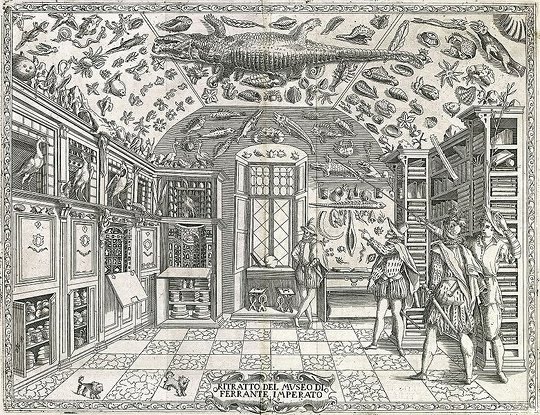
Musaeum Clausum (the hidden library) is a fake catalogue of a collection that contained books, pictures, and artefacts. Such collections (and their elaborate indices) were a common phenomenon from about 1500 to 1700 and after. Gentlemen and the nobility collected as a matter of polite engagement with knowledge and as a way of displaying wealth and learning; savants made arrays of plants, animals, and minerals as museums or ‘thesauruses’ of the natural world to record and organise their findings; imperial and monarchical collections were princely in their glamour, rarity, and sheer expenditure: these might contain natural-historical specimens but also trinkets and souvenirs from far-flung places, curiosities of nature and art, and historically significant items. For example, taxidermically preserved basilisks shared room with a thorn from Christ’s crown and feathered headdresses and weapons belonging to native American tribes. Browne takes these traditions of assemblage and makes a catalogue of marvellous things that have disappeared...

Read the whole fascinating article about fake catalogues of fictional collections--a common trope, as the article explains, from around 1500 to 1700--on the Public Domain Review website by clicking here.

Image: Engraving from the Dell'Historia Naturale (1599) showing Naples apothecary Ferrante Imperato's cabinet of curiosities, the first pictorial representation of such a collection.

Source:
http://morbidanatomy.blogspot.com/feeds/posts/default?alt=rss

Théodore Géricault's Morgue-Based Preparatory Paintings for "Raft of the Medusa," A Guest Post by Paul Koudounaris


When I was in Los Angeles last week, I had a really fascinating conversation with my friend (and former Observatory presenter) Paul Koudounaris, author of the beautiful and essential book The Empire of Death: A Cultural History of Ossuaries and Charnel Houses. I asked him to do a guest post on the topic of our conversation--a series of relatively unknown preparatory paintings for Géricault's Raft of the Medusa that were based on human remains checked out, library like, from the illustrious Paris Morgue; following is Paul's writeup; really fascinating stuff!

Despite being among the finest early nineteenth-century macabre-themed paintings, Théodore Géricault’s various versions of still lifes with human body parts have remained little known and commented upon. Géricault is best remembered as a pioneering French Romantic and the auteur of the massive Raft of the Medusa [see bottom image]—an over-life-sized painting of the survivors of a shipwreck which had been a tabloid sensation in France in the 1810s. While Géricault’s public personae was that of a hard-living, chaotic, and tempestuous personality, as an artist he maintained an often obsessive dedication. The ship known as the Medusa sank in June of 1816, and Géricault soon began preparatory studies for his painted version, including interviews with survivors, and the construction of a scale model of the raft on which they escaped.

At the same time, Géricault also became increasingly interested in the naturalistic rendering of distressed anatomy, and started making frequent trips to morgues—in particular, that of the Hospital Beaujon in Paris. Initially these trips were intended simply to sketch body parts, but Géricault eventually found beauty in the severed limbs and heads he was studying, and began rendering them as subjects in their own right. At the time, there were programs in local morgues to lend human remains to art students for anatomical study—something like a lending library of body parts. Géricault would take them home to study them as they went through states of decomposition. He was known to stash various heads, arms, and legs under his bed—or alternately store them on his roof—so he could continue to render them in increasingly putrid states and in various angles. The upper torso in the so-called Head of a Guillotined Man in the Art Institute of Chicago (the title is misleading—the head is not guillotined) is one of those which is recognizable from multiple paintings, and is believed to be a thief who died in the insane asylum of Bicêtre; Géricault painted this head from multiple viewpoints over the two week period he kept it in his studio. In particular, the artist seems to have been fascinated by the subtle gradations of color body parts attained as they rotted.

He delighted in playing the morbid tones of putrefying flesh against a warm chiaroscuro which fades into a dark background and seems timeless and quiet, giving these anatomical fragments a presence that is almost iconic. Géricault made frequent jokes about the reaction of his neighbors to this kind of study—not surprisingly, they were displeased, especially with the smell emanating from his studio. Most of these paintings date to the later half of the 1810s. They were apparently entirely for the artist’s own edification—they were not sold to collectors, and most remained in his studio when he died at the age of 32 in 1824, and were offered as lots in his estate sale.

Perhaps the reason that Géricault’s still lifes with body parts have so frequently been overlooked is that they seem to defy interpretation, or lack any kind of editorial intent on the part of the artist. In that sense, they have always seemed perverse. Other, contemporary Romantic artists won great fame for their macabre scenes, but those scenes provide a context to guide the viewer’s reaction. In the Disasters of War by Goya, for example, severed body parts are placed within a moralizing relationship of cause and effect—war produces casualties, and the viewer is invited to disapprove of war itself as futile and barbaric. In various versions of the painting Nightmare by Henri Fuseli, macabre motifs such as demons are menacing, implying the threat of paralysis and loss of free will. But Géricault’s version of the macabre lacks this kind of interpretive framework—he presents his dismembered remains to the viewer simply as collections of objects, nothing more. His insistence on depriving his body parts of any identifiable context has ensured that they remain elusive, and thus marginalized in the history of art. But it is this same lack of context which has preserved them as unique objects of beauty.

To find out more about Paul's work, you can visit his website by clicking here; you can purchase a copy of his book (highly recommended!) from the Morbid Anatomy Giftshop by clicking here. Paul will also be participating in this years's iteration of The Congress for Curious People at The Coney Island Museum, so stay tuned for more on that!

Source:
http://morbidanatomy.blogspot.com/feeds/posts/default?alt=rss