DNA links suspect to two rapes in Massillon

Authorities say DNA evidence helped link a Massillon man to two alleged sexual assaults reported more than two years apart by young city women.

Nathan Trammell, 40, whose last known address was 807 Dielhenn St. SE, Massillon, was indicted by a Stark County grand jury earlier this week on two counts each of rape, kidnapping and sexual battery. Sexually violent predator specifications are attached to each of the charges. The kidnapping charges also include sexual motivation specifications. Authorities arrested Trammell last week on warrants, court records show. Last week, Trammell pleaded not guilty at his arraignment in Common Pleas Court.

A final pre-trial hearing is set for June 4, and the case is scheduled to go to trial June 11. The case has been assigned to Judge Charles Brown. If convicted of all counts, including the sexual motivation and violent offender specifications, Trammell faces a potential sentence of 10 years to life in prison, according to county prosecutors.

Public Defender Stephen Reisch could not be reached for comment Tuesday.

According to the indictment, Trammell held a then-18-year-old woman against her will and sexually assaulted her in March 2009 at her residence. The second incident, which involved a then-20-year-old woman, allegedly occurred in May 2011 at a city residence. The sexual battery charges allege that the judgment of the victims was substantially impaired or they were unaware that the act was being committed. The victims did not know each other.

From our understanding, he did not have a (boyfriend-girlfriend) relationship with them, said Massillon police Det. Bobby Grizzard, who investigated the case.

Grizzard said police developed Trammell as a suspect after the first victim stepped forward. Physical evidence was obtained from the victim, he said, but police lacked a DNA comparison from Trammell.

Police also identified Trammell as a suspect in the second case, which occurred under circumstances similar to the first. The investigation wasnt solidified, however, until last February when police obtained a DNA standard from Trammell following his arrest on an unrelated charge. That evidence was forwarded to the Canton-Stark County Crime Lab for testing and the results tied Trammell to both cases.

Although the DNA is an important part of the case, there are other variables (such as victim statements) that also helped to tie things together, Grizzard said.

Grizzard declined to say if alcohol was involved in either of the incidents.

Read the original post:
DNA links suspect to two rapes in Massillon

Posted in DNA

Rewritable DNA memory shown off

22 May 2012 Last updated at 09:01 ET

Researchers in the US have demonstrated a means to use short sections of DNA as rewritable data "bits" in living cells.

The technique uses two proteins adapted from viruses to "flip" the DNA bits.

Though it is at an early stage, the advance could help pave the way for computing and memory storage within biological systems.

A team reporting in Proceedings of the National Academy of Sciences say the tiny information storehouses may also be used to study cancer and aging.

The team, from Stanford University's bioengineering department, has been trying for three years to fine-tune the biological recipe they use to change the bits' value.

The bits comprise short sections of DNA that can, under the influence of two different proteins, be made to point in one of two directions within the chromosomes of the bacterium E. coli.

The data are then "read out" as the sections were designed to glow green or red when under illumination, depending on their orientation.

The two proteins, integrase and excisionase, were taken from a bacteriophage - a virus that infects bacteria. They are involved in the DNA modification process by which the DNA from a virus is incorporated into that of its host.

The trick was striking a balance between the two counteracting proteins in order to reliably switch the direction of the DNA section that acted as a bit.

Read the original post:
Rewritable DNA memory shown off

Posted in DNA

Synthetic Biologists Turn DNA Into Rewritable, Digital Data Storage | 80beats

DNA is a great way to store informationjust ask your cells. Its molecules are stable, and billions of base pairs coil neatly into a few microns in a cell nucleus.While its easy for a cell to read information from DNA, a cell cant rewrite new data into its DNA sequence.

But now synthetic biologists at Stanford have managed to pull off that very trick. To do so, they had to abandon the genetic code of ATCG and get a DNA sequence to act like bitspieces of binary informationin a computer.The memory system uses two enzymes that can cut out and reintegrate a sequence of DNA in a live cell. Crucially, the attachment sites are designed so that the DNA sequence can be flipped every time it is put back in. The sequence oriented one way would represent 1, and its inversion is 0.

This maysound unnecessarily convoluted and maybe even a little inefficientthis DNA bit took three years to engineerbut synthetic biologists have something bigger brewing on their hands. By working out the pieces of a biological circuit, they hope to get cells to perform computations. A DNA bit, for example, can be used as a counter for cell divisions, perhaps as part of circuitry that shuts down a cell when division goes awry, as in cancer.

This paper published in PNAS comes from the lab of Drew Endy, an assistant professor at Stanford best known for his work withBioBricks. BioBricks are a set of standardized DNA sequences that synthetic biologists can snap together into a biological circuitanalogous to the wires, transistors, and capacitors of an electronic circuit. (To learn more, read thisWired feature about Endy and BioBricks.)Scientists have gotten RNA or DNA sequences to act like computers before, understanding Boolean logic and even doing square roots.

The principles behind biocircuitry are simplethe challenge is getting them to work in the messy, wetware environment of a cell. Rewritable data storage in the DNA of live cells gets it one step closer.

[via Scientific American]

Image via Shutterstock / ermess

Originally posted here:
Synthetic Biologists Turn DNA Into Rewritable, Digital Data Storage | 80beats

Posted in DNA

Research and Markets: 2012 Encyclopedia of Radicals in Chemistry, Biology and Materials Highlights the Growing …

DUBLIN--(BUSINESS WIRE)--

Research and Markets (http://www.researchandmarkets.com/research/wdl5r8/encyclopedia_of_ra) has announced the addition of John Wiley and Sons Ltd's new book "Encyclopedia of Radicals in Chemistry, Biology and Materials" to their offering.

Over the last two decades the application of free radicals in organic synthesis, materials science and life science has steadily increased, this Encyclopedia presents methodologies and mechanisms involving free radicals of chemical and biological research, including applications in materials science and medicine.

The aim of this Encyclopedia is to offer for the first time a description of free radicals within an interdisciplinary and multidisciplinary context, connecting structural characteristics and chemical properties to their applications in different areas of chemistry and related disciplines.

It covers not only basic concepts and chemical synthesis, but also touches on various aspects concerning the role of free radicals in materials and life sciences. The reader will find a balanced contribution of topics related to free radicals covering for example, their role in proteomics, genomics and lipidomics as well as their enormous potential in synthesis and technology.

Covers topical areas such as:

- Alzheimer's disease and antioxidants in food within medicine and life sciences

- Synthesis and catalysis, combustion and atmospheric chemistry within chemistry

- Ageing and signalling in biological processes

Of interest to anybody working in the field of free radicals in the broadest sense. It will address scientists who want to enter the interdisciplinary field of free radicals. In particular, it is aimed primarily at chemists and life science researchers who want to gain a wider and deeper understanding of free radicals which will allow them to apply free radicals in their own scientific field.

Continued here:
Research and Markets: 2012 Encyclopedia of Radicals in Chemistry, Biology and Materials Highlights the Growing ...

Amarillo biology students take the classroom outside

Readmore: Local, News, Davon Morris, Derek Uries, Caprock High School, Kristen Barrett and Biology Teacher, US Fish and Wildlife Service, David Pipkin, Adrian Escobar and Natural Resource Specialist, Cross Bar Ranch, Natural Sciences and Learning Outside, Amarillo Students take Classroom Outside

Every student is different when it comes to the best way to learn a lesson.

For instance, some like total silence when they studyand some like to study listening to loud music.

But many students have a better time learning through hands-on experiences.

Tuesday, students fromAmarillo's high schools spent the afternoon on a 12,000-acre stretch of land learning about the natural sciences.

DavonMorris andDerekUries,both freshman fromCaprockHighSchool,talked about how much they enjoyed combining learning with the outdoors.

"We're learning about nature and a lot of animalsI'd really never heard of," saidUries. "It's just an awesome experience coming out here."

It is the first year they have tried the outdoor classroom at Cross Bar Ranch.

KristenBarrett, the biology teacher who started the program, says being outside is the best way to really understand the natural sciences.

"We just got done learning about evolution and a lot of them had seen bugs that were different colors and they said oh wow they're different than the ones in town," said Barrett."So they're really making a connection and enjoying being out of the classroom."

Read more:
Amarillo biology students take the classroom outside

Research and Markets: Chemistry and Biology of Artificial Nucleic Acids

DUBLIN--(BUSINESS WIRE)--

Research and Markets (http://www.researchandmarkets.com/research/qw3xhx/chemistry_and_biol) has announced the addition of John Wiley and Sons Ltd's new book "Chemistry and Biology of Artificial Nucleic Acids" to their offering.

This is the first book to provide a comprehensive overview of the field of artificial nucleic acids. Covering a tremendous amount of literature on the chemistry, biology, and structure of artificial nucleic acids, it will constitute an invaluable source of information for the specialist and for young researchers interested in starting a career in this fascinating field of research alike.

This book combines the contributions of many of the major players in this research field, and covers the synthesis of sugar-, base- and backbone-modified nucleic acids, their structural characteristics studied by X-ray crystallography, and NMR in solution as well as their chemical and biological properties.

Key Topics Covered:

- Nucleic Acids with a Six-membered Carbohydrate Mimic in the backbone

- Oligonucleotide N3 P5 Phosphoramidates and Thio-Phoshoramidates as Potential Therapeutic Agents

- From Anionic to Cationic a-Anomeric Oligodeoxynucleotides

- The Resurgence of Acyclic Nucleic Acids

- Exotic DNAs Made of Nonnatural Bases and Natural Phosphodiester Bonds

See original here:
Research and Markets: Chemistry and Biology of Artificial Nucleic Acids

PSI Announces New Leadership in Latin America

ZUG, Switzerland--(BUSINESS WIRE)--

PSI CRO, a full service Contract Research Organization, known for predictable,on-timeenrollment and project delivery, announced today that Oscar Podesta has joined PSI as Head of Latin America. He holds a University degree in Biochemistry with sixteen years experience in research, a Fellowship in Clinical Microbiology and further specialization in Virology.

Prior to joining PSI, Mr. Podesta worked in the clinical research business field, working as a manager for central laboratory services and has held positions in Operations and Strategic Development at international CROs and SMOs in Latin America that have included clinical start up activities in the region.

We are very pleased to have Oscar join PSI at a time when we are expanding our operational presence in the region which is directly driven by a strong interest and demand from our clients worldwide, said Boris Iossel, Head of Project Management, The Americas. Oscar brings a wealth of experience and a clear understanding of specifics of growing a successful operation and understands the challenges of conducting high quality clinical studies in Latin America. Supported by our existing experienced clinical and regulatory teamat our regional headquarters in Buenos Aires, Oscar will lead our expansion, oversee opening more of our new offices and manage the continuing growth of our personnel across Latin American region.

Mr. Podesta has an active role in the clinical research market in Latin America, with participation in the Chamber of CROs (Brazil and Argentina) and Committee member of the Drug Information Association Latin American event. Lastly, Mr. Podesta is currently responsible for Fundraising and Marketing for a non-profit organization focused on Ethics and Quality in Clinical Research in Latin America (FECICLA).

Mr. Podesta stated, I am very excited with this opportunity. PSI has the strengths and resources to expand their business in the region and I am honored the company has considered me to lead this process. There is no doubt Latin America is a fertile ground for a patient recruitment centric international CRO like PSI.

About PSI CRO AG: PSI is a privately-held, full-service CRO, operating globally with 1,200 employees worldwide.Global headquarters are located in Zug, Switzerland at 113a Baarerstrasse 6300.

Excerpt from:
PSI Announces New Leadership in Latin America

Innovative Enterprises Partners with PeopleAssessments To Provide Industry-Leading Assessment Solutions

NEWPORT NEWS, Va., May 22, 2012 /PRNewswire/ -- Innovative Enterprises, Inc., a strategic partner to the background screening industry and expert provider of court research information products, smart data solutions and ancillary services, today announced that it has partnered with PeopleAssessments.com to deliver industry-leading, science-based assessment solutions to the professional background screening community. Through this new partnership, Innovative's network of Screening Industry Partners gains immediate access to a comprehensive suite of best-in-class behavioral assessment solutions designed to empower employers to hire the very best candidates.

Solutions offered by PeopleAssessments are based upon more than 90 years of research and field practice by its principal scientists, Drs. Tom Janz, George Paajanen and John Callender. With over 140 million tests scored, more than 250,000 behavioral responses collected, hundreds of case studies and numerous biodata and ability scales developed, validated and administered around the world, PeopleAssessments' behavioral assessment products represent the cutting edge in science-based and empirically proven solutions designed to connect the right applicant to the right position.

"PeopleAssessments provides what is clearly the most advanced and scientifically validated set of assessment solutionsavailable," stated Clifford J. Williams, Innovative's Vice President and Chief Operating Officer. "We are very pleased to partner with PeopleAssessments to bring enhanced value to our network of the industry's leading background screening professionals."

"We are very excited to begin our partnership with Innovative and their network of Screening Industry Partners. Given the recent updates in the background screening industry's best practice guidelines, we anticipate many employers looking for validated screening instruments to complement their recruitment processes. This timely offering will provide Screening Industry Partners with a highly valuable proposition to help support and compliment their overall set of solutions," offered Dr. Tom Janz, PeopleAssessments' Chief Scientist.

About Innovative Enterprises, Inc.

Innovative serves as a strategic partner to the background screening industry as an expert provider of court research information products, smart data solutions and ancillary services. Innovative commands an intimate knowledge of its core competencies gleaned from more than two centuries of cumulative staff experience in public records research and aggregation, law enforcement, judicial administration and private investigation.

An industry leader since 1996, Innovative is a founding member of the National Association of Professional Background Screeners and hashelped to raise the barthrough its active participation in the formulation of a number of best practice guidelines for industry providers across various segments.Innovative was honored in 2008 and again in 2009 as one of the Inc. 5000 Fastest Growing Privately Held Companies in America. For more information, please call 1-888-777-9435, email solutions@knowthefacts.com, or visit us online at http://www.knowthefacts.com.

About PeopleAssessments

PeopleAssessments provides assessment solutions for companies that want to hire better people, faster, for less total cost. Our methods have helped thousands of companies identify candidates who contribute more and stay longer. Reports clearly outline a candidate's potential and past performance through validated tests and online responses to our proprietary Behavioral Interview application. With PeopleAssessments' per hire pricing, employers gain true ROI and competitive advantage compared to per test or candidate pricing. Assess more and hire better with PeopleAssessments! For more information go to http://www.peopleassessments.com or email info@peopleassessments.com.

Visit link:
Innovative Enterprises Partners with PeopleAssessments To Provide Industry-Leading Assessment Solutions

Sense Networks Unveils New Products to Transform Mobile Advertising for Advertisers and Publishers

NEW YORK--(BUSINESS WIRE)--

Sense Networks, the original Big Data mobile location company, today announced its new products AdMatch and AudienceSense, which will empower marketers to reach new audiences and allow publishers to monetize mobile advertising. Unique to market newcomers, Sense Networks has a proven platform to turn location data into behavioral data at a scale of billions of mobile location points per day. Using location and prediction, Sense Networks is able to understand each users behavior, allowing advertisers and publishers to finally accurately profile and target to their audiences, and generate more revenue from mobile advertising.

The latest products from Sense Networks that will help mobile publishers and advertisers include:

Both products offer big advantages for consumer privacy as well. All user data is anonymous and never matched to external data sources that would require knowing a users name, address, phone number, or email. The location data is abstracted into consumer segments and the raw data is discarded after processing.

As consumers increasingly depend upon their mobile devices to access content and social media, its critical that publishers transition their ad strategies to a mobile-first approach. AdMatch provides the solution that delivers higher mobile ad revenue by anonymously pairing users to local ads with behavioral profiles and machine-learned models. AdMatch today is delivering a 4x increase in performance and beating traditional ring-fenced targeting by twice as much. AdMatch does this by selecting the best ads in real time through evaluation of behavioral attributes, current location context (whats nearby), click history and ad characteristics. AdMatch is delivering ads to users in their neighborhoods from thousands of local merchants. The familiarity that users have with their local merchants and the relevance of the offers drives up click-throughs and ultimately revenue.

For content and social media sites to survive the shift to mobile, they will have to dramatically increase the relevance of their content and offers, and in many cases they wont have much information on users, said David Petersen, CEO of Sense Networks. Sense Networks is unique because we have over six years of experience developing a platform that produces anonymous behavioral information with accuracy and scale, and were now ready to transform how marketers reach their mobile consumers. Were able to combine the power of predictive location and behavioral targeting to reach consumers, allowing publishers to better monetize mobile ads.

For publishers that sell ads directly, the key challenges are being able to target to their audiences and prove the value of their audiences with advertisers. AudienceSense addresses these needs by helping publishers segment and target to their audiences using their own user data. AudienceSense uses a publishers valuable location-based data to build high-value segments that advertisers pay to reach. AudienceSense includes 100 plus pre-built segments and can be extended to deliver custom segments to meet a publishers specific needs.

AdMatch and AudienceSense are now available at http://www.sensenetworks.com.

About Sense Networks

Sense Networks applies science to generate value from mobile location data. The company adds rich user behavior to location data to deliver actionable, predictive targeting beyond place. Sense Networks has a proven technology platform and over six years of experience working at scale with Big Data, processing billions of location points per day. Sense Networks AdMatch uses predictive location and behavioral targeting to match consumers to the most relevant offers from local merchants via mobile display advertising, while increasing revenue for mobile publishers and keeping users anonymous. Its AudienceSense solution helps publishers better monetize their audience by building predictive, location-centric behavioral segments on their own mobile data. For more information about Sense Networks visit us at http://www.sensenetworks.com/. Follow us on Twitter at @Sense_Networks.

Go here to see the original:
Sense Networks Unveils New Products to Transform Mobile Advertising for Advertisers and Publishers

Makucell Selected as a “Cool Company” by the San Diego Venture Group

SCOTTSDALE, Ariz. & SAN DIEGO--(BUSINESS WIRE)--Makucell, Inc., a life science company dedicated to the development, manufacture and distribution of non-prescription products formulated to address the challenges of aging and photo-damaged skin has been selected from 150 applicants as one of San Diego Venture Groups Cool Companies to be showcased at the upcoming 10th Annual Venture Summit on June 6, 2012. The selection criteria included investor appeal, progress, and innovation. Makucell is one of nine life science companies chosen.

We are excited to have SDVGs vote of confidence and to participate in this years venture summit

We are excited to have SDVGs vote of confidence and to participate in this years venture summit, commented Dr. Lawrence Rheins, President and CEO of Makucell. Makucells Renewnt products are at the forefront of skin science; the clinical tests prove their efficacy and safety. The Makucell team is confident that we have a superior product, winning solution and without question, a very cool company.

Michael Kahn, Ph.D., Makucell Co-founder, Board Chairman and distinguished research scientist at the Eli and Edythe Broad Center for Regenerative Medicine and Stem Cell Research of the Keck School of Medicine at the University of Southern California, added, Renewnts proprietary ingredient, Asymmtate, is a novel approach to cellular aging, working with the bodys own skin stem cells by optimizing the signals in the Wnt (pronounced wint) pathway to encourage production of the components that create the skins supportive matrix. This essential regenerative process is the key differentiator in Makucells Renewnt products.

Dr. Mark V. Dahl, Makucell Chief Medical Officer and former President of the American Academy of Dermatology, developed the formulations. Each product targets a specific area of the body with ingredients in specific proportions most suited for that type of skin, explained Dr. Dahl. And all Renewnt products are formulated to reduce the appearance of fine lines, wrinkles, roughness, thinning skin and pigment irregularities.

Initially, Makucell is offering Renewnt products exclusively through aesthetic skincare professionals and directly via our toll-free number (1-855-MAKUCLL).

About Makucell

Makucell Inc. (www.Makucell.com) is a life science company dedicated to the development, manufacture and distribution of non-prescription topical products developed to address the challenges of aging and photo-damaged skin. Based on scientific research at the Broad Center for Regenerative Medicine and Stem Cell Research at the Keck School of Medicine of USC, Makucells Renewnt products are formulated to enhance theskin's appearance, making it stronger and more youthful-looking. The companys new proprietary technology, Asymmtate, works with an individuals own skin stem cells to maintain cellular differentiation which decreases as we age.

The San Diego Venture Group

The San Diego Venture Group cultivates durable and high value relationships between entrepreneurs, capital providers and strategic advisors intended to promote the formulation and funding of innovative new ventures in the San Diego area community. http://www.sdvg.org.

Original post:
Makucell Selected as a “Cool Company” by the San Diego Venture Group

Health Buzz: Panel Recommends Against Prostate Screening

Panel Advises Against Routine Prostate Test

Men shouldn't be screened for prostate cancer with a common blood test, a federal advisory panel recommended Monday. In its new guidelines for prostate cancer screening, the U.S. Preventive Services Task Force urged doctors not to use the popular PSA test to detect the disease. At best, it only helps about 1 in 1,000 men avoid death from prostate cancer, the panel said. And most of the cancers it detects are slow-growing, not life threatening, and will not cause a man any harm during his lifetime. Plus, testing often leads to treatment that leaves men incontinent, impotent, or both. The guideline isn't a mandate, however; men who want a PSA test can still get one, but only after their doctor explains the uncertainties, the Associated Press reports. In an editorial published with the guidelines in the Annals of Internal Medicine, some urologists argued that the panel underestimated PSA's value while overestimating its harms. "What PSA screening offers the men is a substantial opportunity to avoid dying a particularly unpleasant death from prostate cancer," said editorial co-author William Catalona of Northwestern University, who pioneered the testing.

Watch Out for Unproven Anti-Aging Treatments

The anti-aging industry is booming. Twenty years ago, there was no such thing as an "anti-aging" or "longevity" clinic. Today, many major cities house dozens.

Step inside one, and you'll likely encounter an assortment of remedies ranging from multivitamin cocktails to hormone injections to miracle pills that, if you believe the pitches, will guarantee you youthful entry into the triple digits.

There's just one wrinkle. Although often lucrative for physicians, evidence suggests that many of the treatments anti-aging doctors tout don't actually workand some may be downright dangerous. "You really have to be careful," says Loren Schechter, chairman of the patient safety committee for the American Society of Plastic Surgeons. "There are a lot of extravagant claims out there that simply don't check out when you look at the science."

Consider vitamins and supplements, for example. Most are harmless and possibly helpful in moderate doses, but a growing body of evidence shows that in excess, they can cause problems. Getting too much vitamin A, for example, has been linked to osteoporosis, vitamin B to nerve damage, and vitamin E to cancer. [Read more: Watch Out for Unproven Anti-Aging Treatments]

Vitamins and Supplements: Do They Work?

Vitamins and dietary supplements are bigmore than 110 million Americans forked over a collective $28 billion in 2010 on little bottles of would-be health magic. Research is unclear, however, on whether shoring up your diet with extra vitamins, minerals, and other supplements helps or hurtsin the short run or in reaching for the century mark.

For more than a decade, for example, researchers followed more than 35,000 men enrolled in SELECT, a clinical trial designed to see whether taking selenium and vitamin E might help prevent prostate cancer. In 2008, study participants received phone calls and letters: Stop the pills. Not only was the answer "no," but vitamin E apparently increased the chance of prostate cancer, if very slightly, and selenium seemed to do the same to diabetes risk. Later the same year, researchers from the Physicians' Health Study-II reported that neither vitamin E nor vitamin C reduced the chances of major cardiovascular problems or cancer as hoped.

Go here to read the rest:
Health Buzz: Panel Recommends Against Prostate Screening

Omega-3 fats from fish oil and supplements prevent and slow arthritis progression

Humans have been consuming omega-3 fats from natural fish, nut and seed sources for countless generations. Our core genetic structure depends on a regular supply of the long chain omega-3 fats EPA and DHA to form cell wall structures and perform millions of metabolic functions that we normally associate with vibrant health. Imbalance of omega-3 to omega-6 fats cause a surge in inflammatory cytokines that can lead to the painful and debilitating condition known as osteoarthritis. New research published in the journal Osteoarthritis and Cartilage has shown for the first time that omega-3 fats supplied by fish oil could "substantially and significantly" reduce the signs and symptoms of osteoarthritis as we age. Read more…

Source:
http://anti-aging-for-today.blogspot.com/feeds/posts/default?alt=rss

Aperio raises $5.5 million

Story courtesy of a North San Diego newspaper (by BRADLEY J. FIKES bfikes@nctimes.com)

Aperio raises $5.5M

    5/17/12 VISTA (CA) -  Aperio Technologies Inc. has raised $5.5 million in debt and security options, according to a filing with the Securities and Exchange Commission.

    Aperio's digital pathology products convert patient tissue samples on standard glass slides into digital slides that can be shared over the Internet for expert analysis, and stored for later re-examination at any time. The company provides a similar service to life science researchers.

    The digital slides show extremely fine detail; they can each take up gigabytes of storage space.

    The company's products include rapid, high-resolution sample scanners, a hosting service to store the digital slides, and software to help read slides on a computer monitor.

    Related Links


    Source:
    http://feeds.feedburner.com/DigitalPathologyBlog

    The 2012 ASCP Annual Meeting Call for Abstracts deadline is extended to May 30, 2012!

    Submit your Abstract

    The 2012 Call for Abstracts deadline is extended to May 30, 2012!

    Join us in Boston at the 2012 ASCP Annual Meeting and present your abstract to showcase your achievements …

    • Three abstract categories –
      • Scientific Abstract
      • Lab Practice Abstract
      • NEW! Educational Practice Abstract
    • Best poster competition categories, including "Best Poster by a Resident," "Best Poster Submitted from Outside the U.S.," Best Lab Practice Poster," "Best Scientific Poster," and "Best Educational Practice Poster."
    • More categories for Abstract submissions – 19 in all, from autopsy to public health policy and health care reform.
    • Electronic posters (ePosters) on display at the ASCP website throughout the meeting.
    • Learn more...

    Remember to submit your abstract by May 30, 2012!

    Login for details and instructionsSubmit your Abstract

     Submit your Abstract

    Source:
    http://feeds.feedburner.com/DigitalPathologyBlog

    UPMC Digital Pathology Consult Portal Among Top 5 Medical Imaging IT Projects of 2012

    Congratulations to Gonzalo Romero Lauro and his colleagues at UPMC for the Digital Pathology Consultation Portal.

    PRWeb - MAY 14, 2012—One project soars over the EMR seeking relevant patient information. Another crawls through PACS to match studies with specific priors and then perform complex algorithms. Others monitor patient CT radiation dose, assist in study protocoling, and provide a portal for partners in China to access contemporaneous pathology interpretations.

    All five projects were selected as the winners of the Top 5 Medical Imaging IT Projects of 2012 in an annual juried competition, co-sponsored by the Society for Imaging Informatics in Medicine (SIIM) and Radiology Business Journal (RBJ).

    Judged on a matrix of five criteria by a SIIM panel of six judges, the architects of the five winning projects will present their work and discuss the innovation process at the annual SIIM meeting in Orlando, Florida, in a Hot Topic Session at 3:45 PM on June 7. The winning entries will also be featured in the June/July issue of RBJ.

    The winners are (in alphabetical order): Tessa Cook, MD, PhD, Hospital of the University of Pennsylvania, Philadelphia, for the RADIANCE Toolkit for Customizable CT Dose Monitoring; Nathan Cross, MD, MS, University of Washington Medical Center, Seattle, for the RAPTOR system, decision support for contrast risk-assessment and protocol assignment; Bradley J. Erickson, MD, PhD, FSIIM, Mayo Clinic Rochester, Minnesota, for a DICOM-enabled workflow engine; Richard L. Kennedy, MSc, CIIP, Kaiser Permanente Medical Group, Sacramento, California, for Integration of Visible Light Imaging with Enterprise PACS and EMR; and Gonzalo Romero Lauro, MBA, University of Pittsburgh Medical Center, Pennsylvania, for The Digital Pathology Consultation Portal.

    “This competition recognizes innovation, and this year’s entries were exemplary in their ability to solve problems and meet unmet needs,” says Cheryl Proval, editor of RBJ and VP, publishing, imagingBiz, Tustin, California.

    “The contest is a part of an ongoing SIIM strategy to recognize and encourage innovators,” according to Anna Marie Mason, executive director of SIIM. “With the generous support of Bayer, the winners will all receive scholarships to attend SIIM 2012 and present their work.”

    “In health care, the right technological advancements have the potential to shorten the time between testing, diagnosis, and treatment, and this year’s entries show great promise,” says Anthony Cinalli, vice president of the informatics business at Bayer HealthCare Radiology & Interventional, which provided an educational grant to underwrite the competition.  “At Bayer HealthCare, we were pleased to be involved with this important project.” 
     
    About imagingBiz

    Founded by longtime industry veteran Curtis Kauffman-Pickelle, imagingBiz includes a portfolio of specialized publications delivering business intelligence to hospitals, imaging centers, and radiology practices.

    About SIIM

    The Society for Imaging Informatics in Medicine is a health care professional organization that seeks to spearhead research, education, and discovery of innovative solutions, new technologies, and applications to improve the delivery of medical imaging services and the quality and safety of patient care. The 2012 SIIM Annual Meeting (http://www.siim2012.org) takes place June 7-10 at the Orlando World Center Marriott.

    Source: PRWeb


    Source:
    http://feeds.feedburner.com/DigitalPathologyBlog

    New Articles on Efficacy of Whole Slide Images/Virtual Microscopy

    Couple of recent new articles on use of whole slide images/virtual microscopy for use in clinical, education and research.  Increasingly, it is becoming clearer and clearer, that pathologists of today and tomorrow will have to train their analog eyes as well as their digital ones to get the full picture of disease without impairments of travel, time, place and most important, quality.

      Observer agreement comparing the use of virtual slides with glass slides in the pathology review component of the POSH breast cancer cohort study

      Abstract 

      Aims (1) To compare the use of scanned virtual slide images (virtual microscopy) with glass slides (conventional microscopy) in the assessment of morphological characteristics of breast cancers within the setting of the Prospective study of Outcomes in Sporadic versus Hereditary breast cancer (POSH), involving a cohort of women under 40 years of age, presenting with breast cancer. (2) To assess the acceptability to histopathologists of the use of virtual slide images.

      Methods 13 histopathologists from the UK and Australia participated in the POSH pathology review. The observers were asked to assess multiple morphological features such as tumour grade and type. Comparisons were made for a single observer using both virtual images and glass slides. Intra- and inter-observer variability was calculated using the ? statistic and a comparison was made between the use of each image modality.

      Results Diagnostic performance with virtual slides was comparable to conventional microscopic assessment, with the measurement of agreement best for vascular invasion, necrosis and the presence of a central scar (?=0.37–0.78), and poor for more subjective parameters such as pleomorphism, stroma, the nature of the tumour border and the degree of lymphocytic infiltrate (?=0.1).

      Conclusion Virtual slides represent an acceptable methodology for central review of breast cancer histopathology and can circumvent the need for either travel to view material, or the potential problems of sending it by post.

      J Clin Pathol 2012;65:403-408 doi:10.1136/jclinpath-2011-200369

      Correspondence to: Dr Emily Clare Shaw, Department of Cellular Pathology, Mail point 2, Southampton General Hospital, Tremona Road, Southampton SO16 6YD, UK; ecshaw@doctors.org.uk

      ______________________________________________________________________________________

      Whole slide imaging (WSI) has been used in conjunction with virtual microscopy (VM) for training or proficiency testing purposes, multicentre research, remote frozen section diagnosis and to seek specialist second opinion in a number of organ systems. The feasibility of using WSI/VM for routine surgical pathology reporting has also been explored. In this review, we discuss the utility and limitations of WSI/VM technology in the histological assessment of specimens from the prostate. Features of WSI/VM that are particularly well suited to assessment of prostate pathology include the ability to examine images at different magnifications as well as to view histology and immunohistochemistry side-by-side on the screen. Use of WSI/VM would also solve the difficulty in obtaining multiple identical copies of small lesions in prostate biopsies for teaching and proficiency testing. It would also permit annotation of the virtual slides, and has been used in a study of i nter-observer variation of Gleason grading to facilitate precise identification of the foci on which grading decisions had been based. However, the large number of sections examined from each set of prostate biopsies would greatly increase time required for scanning as well as the size of the digital file, and would also be an issue if digital archiving of prostate biopsies is contemplated. Z-scanning of glass slides, a process that increases scanning time and file size would be required to permit focusing a virtual slide up and down to assess subtle nuclear features such as nucleolar prominence. The common use of large blocks to process prostatectomy specimens would also be an issue, as few currently available scanners can scan such blocks. A major component of proficiency testing of prostate biopsy assessment involves screening of the cores to detect small atypical foci. However, screening virtual slides of wavy fragmented prostate cores using a computer mouse aided by an overview image is very different from screening glass slides using a microscope stage. Hence, it may be more appropriate in this setting to mark the lesional area and focus only on the interpretation component of competency testing. Other issues limiting the use of digital pathology in prostate pathology include the cost of high quality slide scanners for WSI and high resolution monitors for VM as well as the requirement for fast Internet connection as even a subtle delay in presentation of images on the screen may be very disturbing for a pathologist used to the rapid viewing of glass slides under a microscope. However, these problems are likely to be overcome by technological advances in the future. © 2012 The Authors APMIS © 2012 APMIS.

      APMIS 2012(Apr); 120(4): 298-304.
      Utility of whole slide imaging and virtual microscopy in prostate pathology.
      Camparo P, Egevad L, Algaba F, Berney DM, Boccon-Gibod L, Compérat E, Evans AJ, Grobholz R, Kristiansen G, Langner C, Lopez-Beltran A, Montironi R, Oliveira P, Vainer B, Varma M  
      Cabinet de Pathologie Amiens, France.
      DOI: 10.1111/j.1600-0463.2011.02872.x
      View PDF | Full Text Link Out via EZ Proxy if enabled. | Link Out via NCBI/PubMed.gov | Comments |  

      ___________________________________________________________________________

      Traditionally, education and training in pathology has been delivered using textbooks, glass slides and conventional microscopy. Over the last two decades, the number of web-based pathology resources has expanded dramatically with centralized pathological resources being delivered to many students simultaneously. Recently, whole slide imaging technology allows glass slides to be scanned and viewed on a computer screen via dedicated software. This technology is referred to as virtual microscopy and has created enormous opportunities in pathological training and education. Students are able to learn key histopathological skills, e.g. to identify areas of diagnostic relevance from an entire slide, via a web-based computer environment. Students no longer need to be in the same room as the slides. New human-computer interfaces are also being developed using more natural touch technology to enhance the manipulation of digitized slides. Several major initiatives are also underway introducing online competency and diagnostic decision analysis using virtual microscopy and have important future roles in accreditation and recertification. Finally, researchers are investigating how pathological decision-making is achieved using virtual microscopy and modern eye-tracking devices. Virtual microscopy and digital pathology will continue to improve how pathology training and education is delivered. © 2012 The Authors APMIS © 2012 APMIS.

      APMIS 2012(Apr); 120(4): 305-15.
      Virtual microscopy and digital pathology in training and education.
      Hamilton PW, Wang Y, McCullough SJ  
      Centre for Cancer Research and Cell Biology, Queen's University Belfast, UK. p.hamilton@qub.ac.uk
      DOI: 10.1111/j.1600-0463.2011.02869.x
      View PDF | Full Text Link Out via EZ Proxy if enabled. | Link Out via NCBI/PubMed.gov | Comments |  

      Source:
      http://feeds.feedburner.com/DigitalPathologyBlog

      The New Cancer Genetics Laboratory at Baylor College of Medicine

      CgllogoThe new Cancer Genetics Laboratory at Baylor College of Medicine provides state-of-the-art clinical genetic testing in the area of cancer, both identifying cancer genes and biological markers of disease classification, prognosis and drug response.

      The new laboratory is a joint project of the College's Departments of Molecular and Human Genetics, Medicine – Division of Hematology/Oncology, Pediatrics – Division of Hematology/Oncology, Pathology and Immunology, the NCI-designated Dan L. Duncan Cancer Center at BCM, the Baylor College of Medicine Human Genome Sequencing Center, the Texas Children's Cancer Center and Texas Children's Hospital Pathology Laboratory.

      Combined strengths

      The Cancer Genetics Laboratory combines the strengths of all of its component departments and centers at BCM, making it possible to provide a new test as soon as possible. It is directed by Dr. Marilyn Li, professor of molecular and human genetics at BCM, and Dr. Federico Monzon, associate professor of pathology and immunology at BCM. Dr. Condie Carmack is general manager of the laboratory.

      Next-generation sequencing

      Li said, "This is a great opportunity to take the latest developments and technologies and apply them to cancer. Cancer is a very complex disorder, and it stands to reason that we should be applying cutting edge technologies. Baylor College of Medicine is known for its early use of complex molecular technologies, like CGH (comparative genomic hybridization) and SNP (single nucleotide polymorphism) microarrays. The Cancer Genetics Laboratory has already designed and now offers customized microarrays for cancer testing."

      "Next-generation sequencing of mutations associated with specific cellular pathways in cancer is possible now," said Li. "We are offering a next-gen panel to test for hundreds of mutations in one test as well as offering individual cancer mutation testing."

      "Combining expertise from the Cancer Genetics Laboratory partners will facilitate developing clinical tests with novel technologies. This environment will allow us to move faster from bench to bedside with the ultimate goal of improving care for patients with cancer," said Monzon. "The Cancer Genetics Laboratory provides both established and novel diagnostic, prognostic and predictive tools that can enable truly personalized cancer medicine."

      Technology personalizes care

      "The Cancer Genetics Laboratory has launched clinical genomic testing on cancers from patients to try to identify the driver genes in that tumor that need to be targeted for successful treatment," said Dr. C. Kent Osborne, director of the Duncan Cancer Center and the Lester and Sue Smith Breast Center at BCM. "This technology is needed for truly personalized care of cancer patients. Tumors are different in different patients and the reason lies in the particular set of gene mutations that caused the cancer in the first place."

      "Each tumor has its own genetic fingerprint of changes in specific genes and the set of mutations in a tumor relates to the cancer's aggressiveness and response to treatment. We can now measure these mutations, which should help clinicians make specific treatment decisions for each patient," said Osborne, who is already planning to make use of the laboratory's services.

      Improving quality of care

      The Cancer Genetics Laboratory now offers more than 140 tests that help identify the type of cancer as well as identify markers that give information about how well a treatment might work or is working. In the future, the Baylor College of Medicine Human Genome Sequencing Center plans to collaborate with the laboratory to provide whole genome or exome (the portion of the genome that codes for proteins) sequencing of tumors.

      The goal of the Cancer Genetics Laboratory is to move the newest research and diagnostic testing into the clinical lab in order to improve the quality of care for patients with cancer. This includes many forms of molecular analysis of the tumor to predict its behavior and to select the most favorable treatment program. The laboratory also provides testing for families that may be at risk for inherited forms of cancer.


      Source:
      http://feeds.feedburner.com/DigitalPathologyBlog

      Visiopharm Corp Opens Office in New Jersey, United States, to Support Customers and Partners

      Visiopharm broadening its operations with local support in North America for growing user base. 

      Image

      Hoersholm, Denmark – May 14, 2012 - Visiopharm A/S, a global leader in Quantitative Digital Pathology, announced today that Visiopharm Corp will open an office in New Jersey to support partners and a rapidly growing user base in North America

      Visiopharm has experienced a sustained growth in the demand for Quantitative Digital Pathology research tools in North America, with a sharp increase following the recent introduction of Cloud Analysis and the APPCenter.

      Digital Pathology specialist Roy K. Min now joins Visiopharm Corp as Regional Sales Manager of North America.

      "We are very pleased that Roy is joining us. As an individual he has very high personal and professional standards. He has extensive practical experience with all key aspects of Digital Pathology and how these technologies can be successfully integrated in a research laboratory.  We look forward to working with Roy in further building a strong US based organization", says Michael Grunkin, CEO of Visiopharm

      Roy is based in New Jersey, United States, and responsible for further expanding sales- , technical-, and application support in the United States.

      "I am excited about joining Visiopharm, and what lies ahead.  I have known Visiopharm for several years, as a company committed to quality and innovation. I regard them as a leader in Quantitative Digital Pathology, and look forward to help our customers become successful when adopting this important technology for their research", adds Roy Min.

      About Visiopharm

      Over the past 10 years, Visiopharm image analysis and stereology software has become the preferred Quantitative Digital Pathology solution for leading biopharmaceutical companies, clinical researchers, and academic researchers all over the world. Visiopharm has more than 300 deployed systems worldwide and a large network of distribution and support partners, and is featured in over 400 scientific publications.


      Source:
      http://feeds.feedburner.com/DigitalPathologyBlog

      "Drawing from the Bestiary: Animal Anatomy of Real and Imagined Creatures," Class with Artist Saul Chernick, Observatory, June 25-July 16

      I am very excited to announce "Drawing from the Bestiary: Animal Anatomy of Real and Imagined Creatures, a new class developed specially for The Morbid Anatomy Art Academy by one of our favorite artists, Saul Chernick. This class will teach students--via illustrated lectures and in-class projects including paper puppets and the creation of bestiary pages--"to use observational and imaginative drawing skills in tandem to capture the essential qualities of their subject" and "learn to draw animals (real, mythic, and otherwise) with greater skill and sensitivity."

      You can see some of Chernick's wonderful artworks above; you can see more of them by clicking here. The class will take place on 4 consectutive Mondays, from June 25 to July 16th. The full class description follows. Also, please note that the class size is limited to 15, so if you are interested, please RSVP as soon as possible to morbidanatomy [at] gmail.com.

      Drawing from the Bestiary: Animal Anatomy of Real and Imagined Creatures with Saul Chernick
      A 4-part class with Artist Saul Chernick, M.F.A., Rutgers University
      Dates: Mondays June 25, July 2, July 9 and July 16th (4 consecutive Mondays)
      Time: 6:30-9:00 PM
      Class Fee: $120
      ***Class size limited to 15; Must RSVP to morbidanatomy [at] gmail.com
      This class is part of The Morbid Anatomy Art Academy

      Contemporary artist and arts educator Saul Chernickis renowned for gorgeous artworks featuring convincingly corporeal depictions of imaginary or mythical creatures rendered in the style of Medieval and early Renaissance woodcuts from Northern Europe. Observatory is very pleased to announce a new workshop developed by Saul Chernick specially for the Morbid Anatomy Art Academy. In this class, Chernick will teach students--via illustrated lectures and in-class projects including paper puppets and bestiary pages--"to use observational and imaginative drawing skills in tandem to capture the essential qualities of their subject" and "learn to draw animals (real, mythic, and otherwise) with greater skill and sensitivity."

      Full class description follows; you can see more of Chernick's fantastic work by clicking here. Class size limited to 15; Please RSVP to morbidanatomy [at] gmail.com.

      Course Description
      Open to artists of all levels, the goal of this workshop is help participants learn to draw animals (real, mythic, and otherwise) with greater skill and sensitivity. Through exercises in drawing and paper puppetry, participants will gain a deeper understanding of the skeletal/muscular structures of most mammals, reptiles, and birds. Participants will also learn to use observational and imaginative drawing skills in tandem to capture the essential qualities of their subject and create works of convincing visual fiction!
      What to expect

      • Participants will cull images from the web to create a dossier on the animal(s) that interest them
      • Participants will fashion movable paper puppets to understand how their chosen animal moves
      • Participants will draw studies of the skeletal and muscular structures of animals
      • Participants will use the medium of their choice to create a Bestiary page entry that depicts an animal situated in an environment

      Materials
      What to bring to the first class:

      • Choose 1-3 animals and gather pictures on the web. Be sure to get images of their skeletons in profile. Please print these as they may be hard to use on a phone screen.
      • 3-5 sheets of Bristol Board Paper 9" x 12" or larger
      • Pencils & erasers
      • Scissors
      • Xacto or utility knife
      • Glue

      What to bring for subsequent classes:

      • White or tinted drawing paper 16" x 20" or 18" x 24"
      • Tracing paper (same size as drawing paper)
      • Mechanical and/or regular pencils (2h, hb, 2b, 4b)

      Optional:

      • Markers, watercolors, gouache, ink, brushes, chalk/oil pastels, colored pencils, Caran D’Ache, collage papers, etc (we’ll discuss further in detail!)

      Saul Chernick, M.F.A., Rutgers University, is a visual artist and educator. Chernick has exhibited internationally in galleries and museums including the Aldrich Museum of Contemporary Art, the Bronx Museum of Art, the Jewish Museum of Art, as well as Max Protetch and Meulensteen Galleries in New York City. He has taught art for the public school system, the 92nd Street Y, Cooper Union, Parson's School of Design, and the Museum of Modern Art. He is currently the Professional Development Coordinator for the Joan Mitchell Foundation where he coaches New York artists in teaching art to young people throughout city. His work can be seen at http://www.saulchernick.com.

      All images are by Saul Chernick and include, top to bottom:

      1. Field Urchin, 2011, from a series of studies in which he attempted to impose the proportions of cherubs onto horses.
      2. Desktop 2013, 2010, Ink, Watercolor, & Opaque White on Paper
      3. Heavenly Touch , 2009, Ink, Watercolor, & Opaque White on Paper
      4. Guilty Pleasures, 2010, Ink, Watercolor, & Opaque White on Paper
      5. Ars Gratia Artis, 2010, Ink on Paper

      You can found out more here. As mentioned above, class size is limited to 15, so if you are interested, please RSVP as soon as you are able to morbidanatomy [at] gmail.com.

      Source:
      http://morbidanatomy.blogspot.com/feeds/po
      sts/default?alt=rss

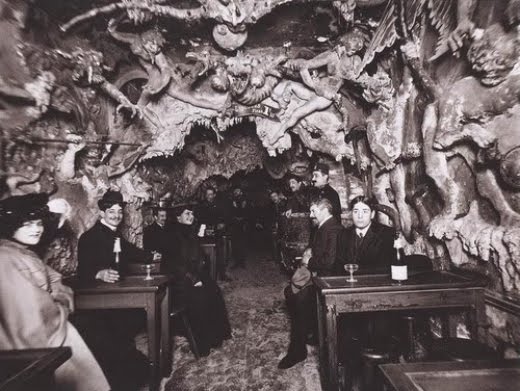
      Café or Cabaret de L’Enfer (Hell's Café), Paris, France, Late 19th Century

      Good friend and Midnight Archive auteur Ronni Thomas just brought Paris's Café de L’Enfer to my attention. Between this and the equally delightful (and previously discussed) Cabaret du Néant (or Tavern of the Dead), I am becoming stronger in my conviction that fin de siècle Paris was probably the most perfect place ever.
      As described on the National Geographic Website:

      MARAIS
      Hell's Swells

      A hot spot called Hell's Café lured 19th-century Parisians to the city's Montmartre neighborhood—like the Marais—on the Right Bank of the Seine. With plaster lost souls writhing on its walls and a bug-eyed devil's head for a front door, le Café de l'Enfer may have been one of the world's first theme restaurants. According to one 1899 visitor, the café's doorman—in a Satan suit—welcomed diners with the greeting, "Enter and be damned!" Hell's waiters also dressed as devils. An order for three black coffees spiked with cognac was shrieked back to the kitchen as: "Three seething bumpers of molten sins, with a dash of brimstone intensifier!"

      Found via Retronaut who sourced it from Cool Stuff in Paris; all images via Retronaut; more to be found at the original link.

      Source:
      http://morbidanatomy.blogspot.com/feeds/posts/default?alt=rss