Minnesota is in the middle – Part 2

Turtle jockeyThe post below I wrote about three years ago and at that time did not mention that the caller was inquiring about my interest and ability to participate in the FDA panel looking at digital pathology back in the Fall of 2009.  That panel of course was put together which I have mentioned on prior occasion (see The FDA States, WSI Systems Are Not Class I Exempt (10/23/2009)).  

Nothing of significance happened until the FDA was invited to speak at Pathology Visions 2011 which I made a few notes about on a related story earlier this year (see Regulators regulating digital scanners).


Since that discussion there appears to be a standoff between manufacturers and the FDA.  

There does not appear to be any movement by either side short of the FDA opening up some positions for digital pathology specialists (more on this next week).

Manufacturers appear to be either (1) looking for opportunities overseas to sell products and services, (2) looking at leveraging cloud computing to facilitate consultations (from overseas or within the USA) or (3) waiting for each other to submit for the first intended use studies while the FDA waits for submissions after stating publicly that whole slide imaging devices would not be considered Class I devices (exempt) and cannot be treated as a laboratory developed test (LDT).  In the meantime, "Approved for Primary H&E Diagnosis" is not available in the US of A.

Based on the post below given my first interaction with FDA on this matter I cannot say that any of this is terribly surprising.  Neither side, particularly the FDA seems that intersted in putting the necessary resources behind this matter on behalf of the imaging or the laboratory community to facilitate necessary validation and clearances.  I can't blame the manufacturers here either.  It is going to take significant time and resources in a difficult business climate with slow adoption and use for what will have to be clearly defined intended uses and therefore limited use whether by tissue type, specimen source and/or defined or excluded histochemical/immunohistochemical/fluorescence stains.

When will the standoff end?

-----------------------------------------------------------------------------------------------------

Where's Mayo Clinic? Oh, Minnesota is in the middle (8/28/2009)

A couple of weeks ago - 6:30 AM phone call

This interaction actually happened and reminded me of this New Yorker cartoon about New York and “everything else”.

Caller: Dr. Kaplan, this is Mr. So and So from the [name of a government agency].  I am calling to inquire about your interest in reviewing grant submissions.  I hope you are not driving.

Me: No.  I was sleeping.

Caller: Good.  I hope I am not disturbing you but I need to know if you can come to [a city in the US] in January when we convene the review panel.

Me: What dates In January?

Caller: We do not know yet but I need to know right now if you can come.

Me: I suppose it depends a little bit on what I will be reviewing, if I have anything to offer and if I don't have a prior conflict.

Caller:  OK.  I will just need to collect some basic information such as your social security number, home address and place of employment. 

Me: Mayo Clinic.

Caller: Where is Mayo Clinic?

Me: Rochester, Minnesota.

Caller: Where is Minnesota?

At this point I start asking some questions about who this individual is, his civilian pay grade, where his office is located, how he knew where to contact me and check the caller ID for area code.

Me: Have you seen 'Taking Chance'?

Caller: No.

Me: 'Fargo'?

Caller: No.

Me: 'Grumpy Old Men'? 

Caller: No. What time zone are you in?

Me: Central.

Caller: Oh, Minnesota is in the middle.

Newyorkeverythingelse

Source:
http://feeds.feedburner.com/DigitalPathologyBlog

Huron Technologies Launches TISSUEscope™ 4000XT for High Throughput Scanning

Waterloo, ON- Huron Technologies announces the launch of the TISSUEscope™ 4000XT with Autoloader Module for high volume and high throughput scanning. The fully-integrated system offers imaging of small and large glass slides for both brightfield and confocal fluorescent imaging modes and is designed to be compatible with all versions of TISSUEscope™ scanners.

Home0

The TISSUEscope™ 4000XT is capable of scanning up to 300-1x3” (25x75mm) glass slides as well as other non-traditional slide sizes including: 150-2x3” (50x75mm), 100-3x4” (75x100mm) and 25-large glass slides sizes for 4x5” (100x125mm), 5x7” (125x175mm) and 6x8” (150x200mm).

With its automatic scanning capability, the TISSUEscope™ 4000XT facilitates extended and overnight operations for labs which provide highly-efficient processes allowing staff to complete other tasks simultaneously.  By significantly increasing the number of slides scanned at one time, labs can enjoy substantial time-savings by reducing set-up delays but also extensive cost-savings through a decrease in lab expenses and processing time. 

The TISSUEscope™ 4000XT is easily controlled by the TISSUEscope™ client software where both automatic or manual control modes are available to customers.

With this launch Huron Technologies becomes the first in the industry to offer high-throughput scanning of small and large specimen samples for both brightfield and confocal fluorescence imaging.


Source:
http://feeds.feedburner.com/DigitalPathologyBlog

Why a cardiologist started a telemedicine business at Walmart

A cardiologist with an MBA has launched a telemedicine business starting with international retailerWalmart (NYSE: WMT) with the goal of providing affordable healthcare in areas underserved by providers.

Dr.Raj Shah, who runs a 37 year-old, 10-physician cardiology and internal medicine practice in Langhorne, Pennsylvania, is the founder of Telemed Ventures and CEO of Smart Care Doc. Having formed the company nearly three years ago, he opened its first telemedicine unit in Bensalem in suburban Philadelphia and another is scheduled to open in Willow Grove, Pennsylvania later this month.

Although suburban Philadelphia does not exactly fit the profile of an underserved area, Shah said he wanted to start with facilities nearby his office so he could more easily iron out any kinks with the business that might arise.

The unit includes a flat screen TV and a dentist-style chair and has a set of bluetooth-enabled medical devices administered by an on site nurse including a digital stethoscope, a handheld EKG device, a finger pulse reader and a digital thermometer. A light pen camera is used to look into ears, at the throat or skin lesions. All of the readings from these devices can be transmitted to the attending physician or entered into a computer and sent to the physician in real time. Nurses also provide immunizations, minor wound care, and other services.

Patients also get a personal health record referred to by the practice as a “patient passport.” It includes continuity of care records and documents, medical problems diagnosed from their encounters with Smart Care Doc physicians, prescribed medications, allergies and appointments. In the years before he started his telemedicine business, Shah had launched a patient passport business to help patients keep track of their records

Despite Shah’s presence at Walmart, his relationship with the big box retailer is only as a tenant, so he is not tied to a partnership agreement. But he hopes to expand the practice if enough people use the service to rural areas across the country where Walmarts are located. Walmart declined to comment.

“Every Walmart store has thousands of people coming to it every day,” said Shah. “My measure of success would be if 12-15 patients used the service each day.”

The company charges patients about $59 for checkups, low enough for people who don’t have insurance. In addition to primary care it plans to offer specialists in cardiology, gastrointestinal disorders, nephrology, dermatology and psychiatry.

So far the biggest use of telemedicine has been by the military and Veterans Affairs. Although the number of people who actually use telemedicine or would use it, were it offered to them remains to be seen, some telemedicine companies have added or have focused on specialties over concerns that there are not currently enough people using it for primary care.

Shah is currently looking for general practice physicians and specialists who would be interested in working for a telemedicine company, who can apply online.

To those who might point out it’s not the same as being in a physician’s office, Shah says with his business, physicians still have eye contact with their patients and have access to the same information that an in-person visit would generate.

The chairman of the company, Tom Pappas, is the former CEO of UnitedHealthcare of Pennsylvania.The company’s other board members include a colleague from his HeartCare Associates cardiology practice, faculty from Rutgers Business School and faculty and staff from Wharton Business School at University of Pennsylvania.

Although Pennsylvania Gov. Tom Corbett recently signed legislation to expand telemedicine’s use for Medicaid patients, along with 36 other states that provide reimbursement for Medicaid patients, there are obstacles to its expansion. U.S. Sen Tom Udall (D-NM) is drafting legislation that would streamline licensing that was expected to be introduced in the Spring.

Ultimately, Shah sees scope for the service being extended to other parts of the world like South America and Africa.


Source:
http://feeds.feedburner.com/DigitalPathologyBlog

Flagship Biosciences acquires IHCtech, a leading provider of research immunohistochemistry and histology services

Westminster, CO -- Flagship Biosciences announces today the acquisition of IHCtech LLC at the Colorado Anschutz Medical Campus. Founded in 2002, IHCtech has developed a strong reputation for high-quality advanced immunohistochemistry procedures, meeting the IHC and histology needs of pharmaceutical and academic investigators.

“We have partnered with Flagship Biosciences on a number of new techniques and approaches for quantitation in immunohistochemistry,” said Patsy Ruegg, owner and founder of IHCtech. “Their approaches to whole slide analysis and commitment to quantitative pathology makes a perfect partner with IHCtech’s expertise in high quality histology and immunohistochemistry. We enthusiastically look to further innovation by evaluating all aspects of the tissue chain -- tissue procurement, fixation and processing, with the ability to measure with whole slide analysis how each of these steps contribute to variability in the overall process.”

“While Flagship Biosciences has established strong partnerships with a number of highly respected IHC laboratories, both within the United States and internationally, this acquisition gives us the opportunity to internally evaluate tissue staining and implement new processes that better equip immunohistochemistry operations for use in quantitative pathology with whole slide imaging analysis,” said Dr. David Young, President of Flagship Biosciences. “Patsy Ruegg’s leadership in the area of high-quality research immunohistochemistry has been clear for many years. She has been a consistent expert in new IHC techniques like dual staining as well as a longtime leader in training of histology personnel.”

Flagship Biosciences specializes in tissue-based companion diagnostics, IHC biomarker development and histopathology assessment of discovery, safety and toxicity using brightfield and fluorescent whole slide imaging. The company provides a full service of tissue analysis for drug and device development, including tissue procurement, tissue preparation and immunohistochemistry, whole slide quantitative computer-based evaluation, with all services overseen by veterinary and medical anatomic pathologists

IHCtech provides high-quality histology, immunohistochemistry, and immunofluorescence to academic and pharmaceutical clients. With over 350 optimized research IHC antibodies, IHCtech brings a wealth of knowledge and expertise to the tissue analysis process.

Source:
http://feeds.feedburner.com/DigitalPathologyBlog

Cloud Software for Microscopy and Image Analysis

Power of  cloud computing and convenience of web applications for biomedical and industrial imaging. 

Upload digital slides from any microscope
Collaborate in real time with Live Markers
Access your work anywhere
Share with a single click
See more information with image overlays
Get results with automated analysis applications

Virtual Microscopy

Simagis Live is designed to support easy upload, publishing, sharing and real-time review of digital microscopy slides on the web. Support for multiple image layers enables multi-dimensional imaging. You can review, annotate, tag and measure images with multiple collaborators on-line at the same time. Sign up for free Virtual Microscopy service, upload your images start sharing your digital slides with authorized users anywhere in the World in minutes.

Cloud-based Image Analysis

Harness the power of the cloud computing to analyze images of any size for any number of users without need to install any desktop software or hardware. All you need is a web browser. Using Simagis Live server you can run complex automated image analysis on composite multi-layered images, create data overlays, and download results from measurement database, all from friendly web interface. Use dozens of available applications or request custom solution for your specific analysis from our Custom App team.

Mobile Microscopy Applications

Simagis Live platform enables emerging field of mobile microscopy.  With portable microscope connected to the web via cell phone of other wireless device, the imaging data can be synchronized with cloud-based Simagis Live applications which will analyze and deliver images for review to experts anywhere in the world (see example of mobilecellscope).

Global Enterprise Solutions

Simagis Live enables virtualization of microscopy processes across the organization. Our technology makes it easy to integrate your automated imaging equipment and build seamless virtual workflow with users anywhere in the world. Integrate your collaborative research, lab service or quality control process with single image analysis server that can receive, store, analyze and share images across your organization. Choose in-house installation or scale processing power using cloud-computing platform to meet your needs.

Source:
http://feeds.feedburner.com/DigitalPathologyBlog

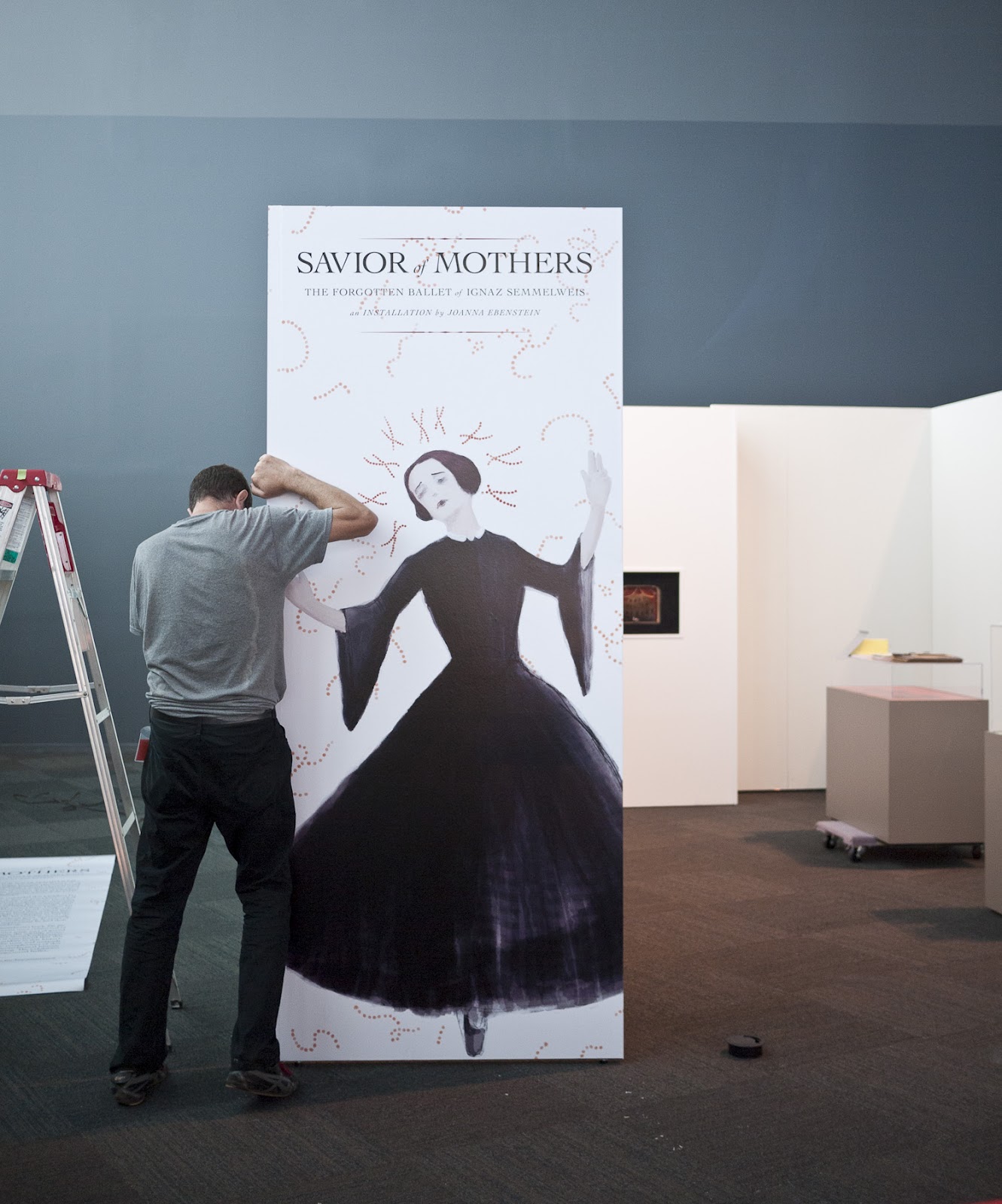
Greetings from the David J. Sencer Centers for Disease Control and Prevention Museum in Atlanta, Georgia

My apologies for the recent silence; I have been hard at work creating--and now installing!--an  exhibition entitled "Savior of Mothers: The Forgotten Ballet of Ignaz Semmelweis." The show officially opens at the David J. Sencer CDC Museum in association with the Smithsonian Institution at the Centers for Disease Control and Prevention in Atlanta, Georgia next Monday, June 11th.

More on the exhibition, from the CDC Museum website:

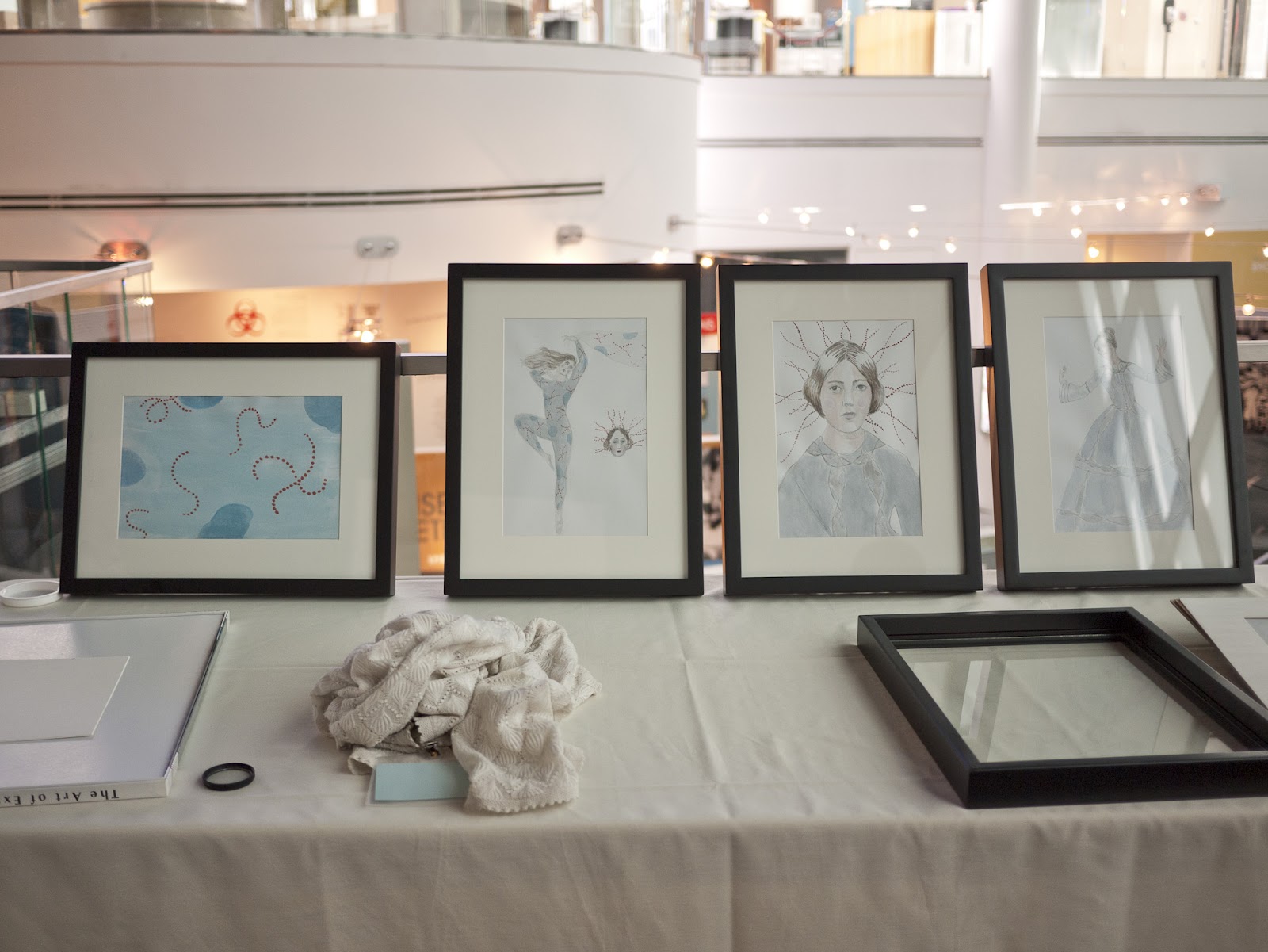
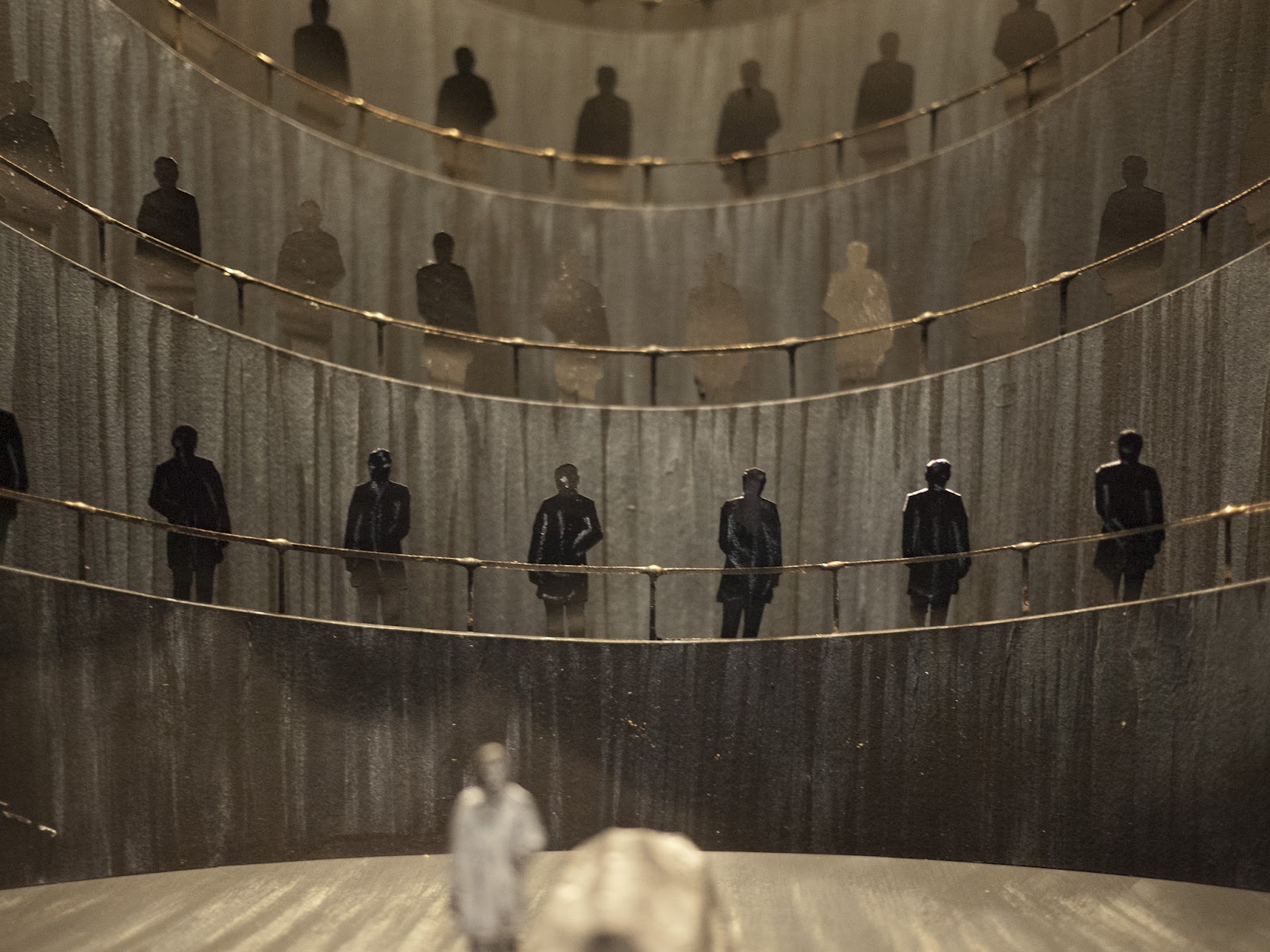
Savior of Mothers: The Forgotten Ballet of Dr. Ignaz Semmelweis is an installation of artifacts and ephemera related to an imaginary 19th century ballet created by artist Joanna Ebenstein. The ballet is based on the true story of the brilliant, yet reviled Hungarian doctor Ignaz Semmelweis (1818-1865). Scenes range from his earliest attempts to curb the "childbed fever" epidemic in his Viennese obstetrical clinic to his premature death of the very disease he had spent his life trying to defeat. Ebenstein was drawn to Semmelweis' distinctive story not only for its topical and scientific theme--albeit tinged by melodrama and mythic elements--but also for its mixture of beauty and the grotesque. His tale, best suited to the form of a popular tragedy, makes ballet the ideal medium for Semmelweis' tale. Ebenstein's installation includes costume designs for the "Plague Demons of Cadaverous Particles"--expressionistic representations of the virulent bacteria Streptococcus pyogenes itself--and the "12 mourning mothers from beyond the grave," as well as model theaters, posters, and more.

More on this to come very soon; In the meantime, above are some photos of the installation as it inches along. My favorite piece is the very truly enchanting model theatre (bottom 2 images), designed by the astounding Chris Muller and executed by the exceptionally talented Jason Ardizzone-West; it depicts a set for of a mid-19th century anatomical theatre in which some of the major action of the ballet takes place.

The exhibition opens on next Monday, June 11th, at the  David J. Sencer Museum at the Centers for Disease Control in Atlanta, Georgia. More can be found here.

Source:
http://morbidanatomy.blogspot.com/feeds/posts/default?alt=rss

Free Press Scholar Athletes: Jessica Turner, Birmingham Groves

At some point in Jessica Turner's anatomy and physiology class at Birmingham Groves, lights flashed and sirens blared.

"Through that class I really discovered a passion for medicine," she said. "I think right now that is what I'm going to pursue in college."

Helping her pursue that passion is Turner's amazing memory that played a part in her earning a 4.522 grade-point average and a 35 on the ACT.

But there is so much more to Turner than her incredible memory.

"A good memory doesn't really help you write a paper of your own ingenuity," she said. "I can study a bunch of terms for my anatomy class, but then I like thinking abstractly about things. I'm happy I have the study tools to kind of lock down the basics and leave time for me to think about things and to question things."

Turner also is an all-state golfer and a standout in basketball and softball, which made her learn how to spend time wisely.

Search our database: 2012 Michigan High School Scholar Athletes

"I think I've had to kind of perfect my studying from playing sports all this time," she said. "I've had to cram everything into a couple of hours after practice. I think I study very efficiently, which I'm very proud of. I'm really happy that in no way do I think that I haven't worked hard enough to feel like I've earned all my successes."

Playing a part in her academic success has been Turner's voracity for reading, which has helped her excel in every class.

"I think I kind of read a little bit of everything," she said. "I don't think I had a specific genre. In high school we've read some Virginia Wolff, which I really liked. She's just a really fascinating person as well as author, so I'd say she's my favorite author."

See more here:
Free Press Scholar Athletes: Jessica Turner, Birmingham Groves

Proper nutrition in sports vital

Posted on June 10, 2012, Sunday

MIRI: Sarawak needs a systematic and professional coaching support in its effort to bring back the glory days as a sport powerhouse in the country.

Assistant Minister of Sports Datuk Lee Kim Shin said such aspiration can be possible with the total commitment and cooperation from schools, parents, private sectors and the community.

In the modern sport industry, olden methods are no longer relevant with current global changes. It is because in order to compete with others, the athletes must be developed under a professional and organised coaching system, he stated in his address when officiating at the Sports Nutrition Talk organised by the State Sport Council (MSNS) at Miri Stadium yesterday.

In effort to boost the performance of the states athletes, Lee said the state government has formulated a long term sports development programme by engaging sports consultation from Australia.

This long term sports development consists of a ten-year master plan to produce an elite team of athletes to represent the state, revealed Lee.

He also added that the performance of the athletes is not only determined by their sporting talents.

Apart from having good sports facility, the athletes must possessed physical and mental toughness, good strategy and many other factors too. In addition to that, the athletes must have good knowledge on the importance of nutrition and watch on their diets. The performance of the athletes would be affected due to wrong diet practice, informed Lee.

Perhaps in the near future, a psychology talk would be conducted to the athletes in the efforts to develop high level of confidence.

The sports nutrition talk was conducted by the head of Food Service Unit National Sports Council, Mohalijah Mohd Ali.

More here:
Proper nutrition in sports vital

DNA test solves Buncombe rape case

ASHEVILLE A man whose rape of a Buncombe County woman went unsolved for nearly five years until a DNA test linked him to the crime will spend more than 14 years in prison.

Antonio Cedillo Morales was prosecuted for obstruction of justice in 2008 after he gave authorities a false name when he was arrested for driving while impaired, District Attorney Ron Moore said.

While in prison serving a six-year sentence on the felony obstruction charge, a sample of his DNA was entered into the national Combined DNA Index System, known as CODIS.

The system linked Morales to a July 2005 Woodfin home invasion and rape case that had gone unsolved, and he was charged in March 2010 with the violent crimes. Police said he broke into a house and assaulted a woman, and the victim did not know her attacker.

Weve been aggressive for many years with people who are not truthful with the court about their identity, Moore said. And when we are able to identify who they are, we prosecute them for identity fraud or obstruction of justice.

So, (Morales) goes to prison, and they take his DNA because he was a convicted felon. If we had just let him plead to DWI, we wouldnt have convicted him of a felony.

Morales, 40, who lived on Brookdale Road in Woodfin before his arrest, pleaded guilty this week in Buncombe County Superior Court to first-degree rape, first-degree burglary and assault by strangulation.

He was sentenced to 173-217 months in state prison. Morales had been scheduled to be released on the obstruction charge in August, according to N.C. Department of Correction records.

Moore said Morales is an illegal immigrant who has been deported twice.

CODIS can generate leads in cases where biological evidence is recovered from a crime scene, and investigators can search the database to assist in the identification of suspects.

Read the original:
DNA test solves Buncombe rape case

Posted in DNA

Biology exam Tuesday for YUHSD freshmen

Yuma Union High School District freshmen will take the Cambridge Board Exam for biology on Tuesday.

Cibola, Gila Ridge, Kofa, San Luis and Yuma high schools will be administering the exam, and students should report to their home campus to take the test.

During this academic year of 2011-2012, all freshman students took part in the unique opportunity of taking Cambridge Curriculum Coursework in biology, stated YUHSD officials.

As part of this opportunity, students completed Cambridge biology labwork and/or coursework during the academic year, which made up a significant portion of their overall board exam. On June 12, students will complete the last remaining portion of the board exam system for biology by taking a 45-minute, multiple-choice exam.

Exam results will be available in August.

Following are the check-in/exam times for each school and the phone numer for more information: Yuma High 1 p.m./1:30 p.m. (502-5000), Kofa High 12:30 p.m./1:30 p.m. (502-5400), Cibola noon/1:15 p.m. (502-5700), San Luis High 12:45 p.m./1:15p.m. (502-6100) and Gila Ridge 1 p.m./1:30 p.m. (502-6400).

Sarah Womer can be reached at swomer@yumasun.com or 539-6858. Find her on Facebook at Facebook.com/YSSarahWomer or on Twitter at @YSSarahWomer.

Read more here:
Biology exam Tuesday for YUHSD freshmen

In our opinion: Editorial: Family structure counts

Related story: Thirty reasons marriage matters more than ever

Related story: Are 'family values' outdated? Traditional family becoming the exception rather than the norm

Perhaps it seems intuitive, but it requires some fairly rigorous social science to show that the actual structure of families, and not just their processes, makes a significant difference for the well-being of children.

For years, social science research on the family has attempted to prove the hypothesis that, when it comes to child well-being, it is the internal dynamics and processes of a family that matter most. The argument has been that love, not family structure, is what makes a family.

That attempt seems to have begun as a response to dramatic changes in household structure. As divorce became both more acceptable and common in our society, researchers hoped to uncover the essential characteristics of successful families that were unrelated to structure. Researchers wanted to provide sound guidance to families where, for whatever reason, the traditional structure of the intact biological family did not exist.

Because of such research, we do know that household stability, the quality of relationships within a household and the economic resources available all make a difference in the long-term physical and emotional health of children. Family members in any household benefit when love is demonstrated through good processes.

Nevertheless, the mounting evidence in the social sciences continues to teach that, as important as processes and dynamics are, family structure is still strongly correlated with the well-being and flourishing of children. And the evidence is clear that the structure setting the standard for child well-being is the intact married biological family.

As reported in today's Deseret News, the respected peer-reviewed journal Social Science Research has just published the first research to come from the New Family Structures Study (NFSS) showing how different family structures correlate with different life outcomes.

By rigorously surveying a large and nationally representative sample of adults about social behaviors, health behaviors, relationships and the structure of their family of origin, the NFSS allows researchers to analyze the relationship, if any, between different family structures and important social, behavioral and health outcomes.

Original post:
In our opinion: Editorial: Family structure counts

Max Haines: Murderer in training

Select a Publication: N E W S P A P E R S ---------------------------------------------- ---Alberta--- Airdrie - Airdrie Echo Banff - Banff Crag and Canyon Beaumont - Beaumont News Calgary - The Calgary Sun Camrose - Camrose Canadian Canmore - Canmore Leader Central Alberta - County Market Cochrane - Cochrane Times Cold Lake - Cold Lake Sun Crowsnest Pass - Crowsnest Pass Promoter Devon - Dispatch News Drayton - Drayton Valley Western Review Edmonton - Edmonton Examiner Edmonton - The Edmonton Sun Edson - Edson Leader Fairview - Fairview Post Fort McMurray - Fort McMurray Today Fort Saskatchewan - Fort Saskatchewan Record Grande Prairie - Daily Herald Tribune Hanna - Hanna Herald High River - High River Times Hinton - Hinton Parklander Lacombe - Lacombe Globe Leduc - Leduc Representative Lloydminster - Meridian Booster Mayerthorpe - Mayerthorpe Freelancer Nanton - Nanton News Peace Country - Peace Country Sun Peace River - Peace River Record Gazette Pincher Creek - Pincher Creek Echo Sherwood Park - Sherwood Park News Spruce Grove - Spruce Grove Examiner Stony Plain - Stony Plain Reporter Strathmore - Strathmore Standard Vermilion - Vermilion Standard Vulcan - Vulcan Advocate Wetaskiwin - Wetaskiwin Times Whitecourt - Whitecourt Star ---Manitoba--- Altona - Alton Red River Valley Echo Beausejour - Beausejour Review Carman - Carman Valley Leader Gimli - Interlake Spectator Lac Du Bonnet - Lac Du Bonnet Leader Morden - Morden Times Portage la Prairie - Portage Daily Graphic Selkirk - Selkirk Journal Stonewall - Stonewall Argus and Teulon Times Winkler - Winkler Times Winnipeg - The Winnipeg Sun ---Ontario--- Amherstburg - Amherstburg Echo Bancroft - Bancroft this Week Barrie - Barrie Examiner Barry's Bay - Barry's Bay this Week Belleville - Intelligencer Bradford - Bradford Times Brantford - Expositor Brockville - The Recorder & Times Chatham - Chatham Daily News Chatham - Chatham This Week Chatham - Today's Farmer Clinton - Clinton News-Record Cobourg - Northumberland Today Cochrane - Cochrane Times Post Collingwood - Enterprise Bulletin Cornwall - Standard Freeholder Delhi - Delhi News-Record Dresden - Leader Spirit Dunnville - Dunnville Chronicle Elliot Lake - Standard Espanola - Mid-North Monitor Fort Erie - Times Gananoque - Gananoque Reporter Goderich - Goderich Signal-Star Grand Bend - Lakeshore Advance Haliburton - Haliburton Echo Hanover - The Post Ingersoll - Ingersoll Times Innisfil - Innisfil Examiner Kapuskasing - Kapuskasing Northern Times Kenora - Kenora Daily Miner and News Kenora - Lake of the Woods Enterprise Kincardine - Kincardine News Kingston - Frontenac This Week Kingston - Kingston This Week Kingston - Kingston Whig Standard Kirkland Lake - Northern News Leamington - Leamington Post Lindsay - The Lindsay Post London - The London Free Press London - The Londoner Lucknow - Lucknow Sentinel Midland - Free Press Minden - Minden Times Mitchell - Mitchell Advocate Napanee - Napanee Guide Niagara-on-the-Lake - Niagara Advance Niagara Falls - Review Niagara Falls - Niagara Shopping News Niagara Falls - W. Niagara Community Newspapers North Bay - North Bay Nugget Northumberland - Northumberland Today Norwich - Norwich Gazette Orillia - Packet and Times Ottawa - The Ottawa Sun Owen Sound - Sun Times Oxford - Oxford Review Paris - Paris Star Online Pelham - Pelham News Pembroke - Daily Observer Peterborough - Peterborough Examiner Petrolia - Petrolia Topic Picton - County Weekly News Port Colborne - Inport News Port Hope - Northumberland Today Port Elgin - Shoreline Beacon Sarnia - Observer Sarnia - Sarnia This Week Sault Ste Marie - Sault Star Sault Ste Marie - Sault This Week Seaforth - Seaforth Huron Expositor Simcoe - Simcoe Reformer St. Catharines - St. Catharines Shopping News St. Catharines - Standard St. Thomas - St. Thomas Times-Journal Stirling - Community Press Stratford - The Beacon Herald Strathroy - Strathroy Age Dispatch Sudbury - Sudbury Star Thorold - Thorold News Tillsonburg - Tillsonburg News Timmins - Daily Press Timmins - Timmins Times Toronto - The Toronto Sun Trenton - Trentonian Wallaceburg - Wallaceburg Courier Press Welland - Tribune Welland - Welland News West Lorne - The Chronicle Wiarton - Wiarton Echo Woodstock - Sentinel Review ---Saskatchewan--- Meadow Lake - Meadow Lake Progress Melfort - Melfort Journal Nipawin - Nipawin Journal MAGAZINES & SPECIALTY PUBLICATIONS --------- Biz Magazine Business London Cottage Home and Property Showcase Food and Wine Show Hamilton Halton Weddings Hamilton Magazine InterVin International Wine Awards Kingston Life London Citylife Muskoka Magazine Muskoka Trails Niagara Food and Wine Expo Niagara Magazine Ontario Farmer Ontario Golf Sault Good Life Simcoe Life The Home Show Vines Magazine What's Up Muskoka

Read more from the original source:
Max Haines: Murderer in training

Agustin Fuentes: DNA Is Not a Blueprint: How Genes Really Work

Sequencing of a fetal genome from parental samples demonstrates how we have advanced in genetic analyses, but the title of a June 6 article in The New York Times, "DNA Blueprint for Fetus Built Using Tests of Parents," gives me pause. While the content does reflect a few interviews where researchers caution against overemphasizing what DNA sequences can tell us, the majority of the public reading the headline will see, yet again, an oversimplified and potentially damaging version of what we actually know about genetics.

Genes play an important role in our development and functioning, not as directors but as parts of a complex system. "Blueprints" is a poor way to describe genes. It is misleading to talk about genes as doing things by themselves. There are very few instances of direct gene-to-trait scenarios, even in well known "genetic" disorders. Traits emerge from the interactions of genes and a range of developmental and environmental influences, and similar DNA sequences often produce slightly different outcomes. Our DNA influences who we are, but not in a linear or easily described manner. (See here for more.)

DNA contains basic information that, when combined with the appropriate organic structures (in the egg) and context (the mother's uterus), will facilitate the growth of a single cell (the combined sperm and egg) into a multibillion-cell person. Note that I say "facilitate," not "determine." The DNA is not the blueprint of life; rather, it contains many of the basic codes and signals for the development of an organism. At its core DNA contains the basic information needed to assemble molecules called "proteins," which are the building blocks of our bodies, and it also acts to regulate how and where different proteins are made and used.

Genes contain information, but the actual relationship between genes and our bodies and behavior is complicated. Chemical interactions inside our cells, interactions between cells, and developmental processes above the level of DNA occur throughout the life span. Most one-gene-to-one-trait analogies are unrealistic. For example, although your hands are composed of numerous proteins that emerge from information in your DNA, hands themselves are not the product of a "hand gene." Hands are the product of a developmental program in which DNA plays an important, but not exclusive, role.

Think of genes as having many types of relationships with traits. Single genes can affect single molecules, groups of genes may work together to produce effects, and one gene can even have many effects on a number of different traits and/or systems. Most genes have many of these patterns at the same time. In all cases the same gene can produce slightly different proteins in different individuals.

Multiple factors influence the development of an organism. These include chemical and physical patterns, internal and external influences, and physical constraints on shape and size, in addition to the information carried in the genes. To make things even more complex, starting with the successful joining of sperm and egg, epigenetic (outside the DNA) processes also affect development. Changes in temperature, fluctuating chemical environments, and mistakes in chemical cues in addition to variations in DNA produce slightly different outcomes.

There is little evidence to support any one-to-one relationship between genes and behavior. However, DNA does influence our physical structures (brain, eyes, mouth, hands, and so on), and because behavior is exhibited via these structures, all behavior has some genetic component.

For example, you are reading this blog using your eyes (optical tissue, muscles, nerves) and maybe your hands (muscle, bones, tendons) to scan the letters and words on the page. You are also using your brain (a set of neurons, vascular tissues, and various hormones that connects all the organs in your body and mediates among them) to process the meaning. All of these elements have a genetic component. However, you are reading the words, a behavior that must be taught to you, and you are reading them in English, something else that must be taught to you. Do reading and using the English language have a genetic component? Yes, the neurons, eyes, muscles, and other parts of the body used in reading are composed of molecules initially coded for by DNA. Are there genes for reading in English? No, the specific language that someone reads is an experiential factor, as languages are parts of cultural systems. Can aspects of our genetic complement impact our ability to acquire specific reading skills? Possibly. Structural differences in the eyes, motor connectivity, and even hormone pathways in the brain might impact the pace and pattern of reading acquisition.

There is a very complex set of relationships between our bodies and behavior on the one hand, and DNA, development, and environment on the other. This relationship is not linear, nor can it be easily described as a simple equation. We should not use simple models or labels such as "blueprints," "building blocks," or "code of life" to describe DNA and genes. Rather, the DNA is an integral component of life itself, and understanding the function of genetic material is critical to understanding evolution and the functioning of organisms. But an understanding of genetics is by no means the complete picture.

For a better understanding of these topics, have a look at these sources:

See the original post here:
Agustin Fuentes: DNA Is Not a Blueprint: How Genes Really Work

Posted in DNA

Nepalese man released from prison based on new DNA test results

The Yomiuri Shimbun/Asia News Network Friday, Jun 08, 2012

The Tokyo High Court on Thursday decided to grant a retrial and stay of execution for a Nepalese man convicted of killing a female employee of Tokyo Electric Power Co. in 1997.

In the decision handed down to Govinda Prasad Mainali, 45, who is now serving a life sentence for the crime, presiding Judge Shoji Ogawa said, "Suspicion has arisen that another person might have murdered the woman and it is assumed a guilty ruling would not have been handed down if the results of this analysis had been presented in the trial."

The remarks were based on a fresh DNA analysis conducted for a high court hearing over a demand for a retrial.

The Tokyo High Public Prosecutors Office lodged an objection to the high court's decision later Thursday. The appeal over the stay of execution was rejected, but the objection to the retrial is still under consideration.

The high public prosecutors office then decided to release Mainali.

Mainali, who was serving time at a Yokohama prison, was transferred to the Tokyo Regional Immigration Bureau's facility in Yokohama later in the day, as he was illegally staying in the country and procedures to deport him are expected to begin soon.

If the high court decision is finalized, Mainali's case would be the eighth retrial after World War II for a person sentenced to death or life in prison.

There will likely be criticism of the fact that DNA analysis of important evidence, which led to the high court's decision Thursday, was not conducted during the investigation or the trial.

On March 19, 1997, a 39-year-old managerial employee at TEPCO was found dead in an apartment in Shibuya Ward, Tokyo. Two months later, Mainali, who lived in a building adjacent to the apartment, was arrested. The guilty ruling finalized by the Supreme Court said Mainali strangled the woman at around midnight on March 8 and robbed her of about 40,000 in cash.

See the original post:
Nepalese man released from prison based on new DNA test results

Posted in DNA

DNA from straw leads to arrest in robbery at OTR bar

Reds beat Detroit with walk-off bunt Reds beat Detroit with walk-off bunt

Updated: Friday, June 8 2012 10:41 PM EDT2012-06-09 02:41:30 GMT

Updated: Friday, June 8 2012 10:32 PM EDT2012-06-09 02:32:15 GMT

Updated: Friday, June 8 2012 9:39 PM EDT2012-06-09 01:39:08 GMT

Updated: Friday, June 8 2012 8:44 PM EDT2012-06-09 00:44:03 GMT

Updated: Friday, June 8 2012 7:53 PM EDT2012-06-08 23:53:31 GMT

DNA from a straw has led to an arrest in a robbery at an Over-the-Rhine bar.

Grammer's on Walnut Street was robbed on Aug. 6, 2011. Police say three suspects entered the bar and held employees at gunpoint and demanded money. The manager was then forced to destroy the computer the robbers believed to contain images of the robbery.

Police collected straws from vodka and cranberries that the suspects drank that night. The DNA from one of the straws led police to Shannon Darnell Howard, 25, of Dayton, OH.

A warrant was filed on April 26 for Howard's arrest. He was taken into custody on Thursday and booked in the Hamilton County Detention Center.

Read more here:
DNA from straw leads to arrest in robbery at OTR bar

Posted in DNA

Take a beating, make a buck: Rockaway lab tests U.S. Army weapons on paid volunteers

ROCKAWAY How do soldiers know what will happen when they fire rubber bullets into a hostile crowd?

How do Marines know if shining a beam of light in a drivers eyes will be enough to deter the vehicle as it approaches a checkpoint?

What percentage of a mob can be turned away by a piercing sound?

The answers are found in Building 3518 a single-story warehouse in Morris County thats in need of a fresh coat of paint. The building on Lake Denmark Road, which you would be forgiven for never noticing, is a couple of miles from the entrance to Picatinny Arsenal, the Armys research and development site in Rockaway Township.

Inside, past the cafeteria and the restrooms, is the Armys only behavioral-science laboratory where real-live volunteers, young and old, men and women, learn what its like to be on the business end of a baton or hit with a laser that makes your skin feel like its on fire.

Picatinny Arsenal is best known for developing weapons, and engineers on base can tell you in precise detail how each one works. In Building 3518 also known as the Target Behavioral Response Laboratory the nine-member team can tell you why they work. And when dealing with non-lethal weapons, that is the most important information a soldier can have.

"I cant just shoot a laser or loud sound at a piece of wood and expect it to run away," said John Riedener, the labs technical director. "We need to know how well it chases someone away. Its all about data, controlled experiments. Its about the probabilities of what can happen."

Applicants are screened so the Army does not end up with all male volunteers or a group all under the age of 30. The research requires a wide swath of the population to measure the effectiveness of the experiments. Flyers are put in libraries and college campuses.

Volunteers paid $20 per hour sign an informed consent form alerting them there is a chance of serious or even permanent injury, and all experiments are conducted under the purview of Picatinnys Internal Review Board and the Armys Human Research Protections Office. There have been no serious injuries to date and volunteers can pull out at any time, said Charles Sheridan, research teaching specialist.

"We dont want them to be surprised, but they have the right to run away," Sheridan said. "And thats a data point for us."

Go here to see the original:
Take a beating, make a buck: Rockaway lab tests U.S. Army weapons on paid volunteers

Six law enforcement officers from South Florida graduate FBI National Academy

By Linda Trischitta

10:08 a.m. EDT, June 8, 2012

Six South Florida law enforcement officers are graduating today from the most recent class of the FBI National Academy, John V. Gillies, special agent in charge of the FBI Miami division announced.

They are: Lt. Kathleen Ream-Fisher, Key West Police; Capt. Nancy Grimes, Palm Beach Sheriffs Office; Maj. Mark Jeter, Miami-Dade Police; Robert Breeden, Asst. Special Agent in Charge, Florida Department of Law Enforcement; Sgt. Jack Vaccaro, Lighthouse Point Police and Chief Thomas Nagy, Hillsboro Beach Police.

The FBI says academy alumni comprise less than one percent of the countrys law enforcement officers. They were selected by their departments and, with about 250 other officers, completed a 10-week course that began April 12th in Quantico, Virginia.

Studies included law, behavioral science; forensic science; understanding terrorism; leadership development; communication and health and fitness.

Participants come from around the U.S., its territories and 150 countries. They gain a big picture perspective on trends and crime-fighting techniques, and build their network of law enforcement peers. The academy was created in 1935 and 1,000 officers attend it each year.

View original post here:
Six law enforcement officers from South Florida graduate FBI National Academy

WellDoc’s® Mobile Diabetes Intervention System Highlighted at American Diabetes Association 72nd Scientific Sessions

BALTIMORE--(BUSINESS WIRE)--

WellDoc, a healthcare behavioral science and technology company whose products improve the lives of people with chronic diseases, today released new data from a study first published last fall in Diabetes Care. The additional analysis Mobile Diabetes Intervention for Glycemic Control: Impact on Physician Prescribing Behavior, will be highlighted during a poster presentation at the American Diabetes Association (ADA) 72nd Scientific Sessions, held June 8-12 in Philadelphia at the Pennsylvania Convention Center.

The new data from study lead investigator Charlene C. Quinn, R.N., Ph.D., University of Maryland School of Medicine, et al. assessed the impact on physicians medication management when patients used a Mobile Diabetes Intervention System (MDIS), and physicians used the associated Clinical Decision Support.

The cluster-randomized controlled trial (RCT) included 163 patients and 26 primary care practices assigned to treatment groups or a control group (usual care) for one year. For this analysis, physicians who used the WellDoc Clinical Decision Support (seven practices) nearly doubled the number of medication changes they made for their patients vs. those who provided usual care alone (66.5 percent of treatment group patients experienced medication changes versus 36.4 percent in the usual care group). The one year parent RCT, reported in Diabetes Care, 2011, found that the virtual patient coach portion of the WellDoc solution reduced A1c on average by 1.5 percent and that when physicians utilized the clinical decision support the A1c was further reduced by approximately 30 percent, or a total of 1.9 percent. These results were significant compared to the 0.7 percent A1c reduction for control group. A1c levels are considered the gold-standard measure for diabetes control and reductions in A1c have been shown to directly reduce the number of complications and costs incurred by a person with diabetes.

Our research shows that this mobile diabetes study intervention impacted how physicians manage medications for their diabetes patients, said Dr. Quinn. The WellDoc intervention provided a patient-centric care solution that impacted medication therapy management at the provider level, while simultaneously supporting other key aspects of diabetes self-management, such as glucose testing, diet, and exercise.

Last year, WellDoc announced the primary endpoint data showing a significant reduction in A1c levels. Today, as we dig deeper into the study data it has become eye-opening how mobile health can not only change patient behavior but also provide doctors with the support and information they need to optimize the treatment plans of their type 2 diabetes patients, said Ryan Sysko, founder and chief executive officer, WellDoc.

WellDocs diabetes product is the only mHealth solution cleared by the U.S. Food and Drug Administration (FDA) to provide real time, automated clinical and behavioral patient coaching combined with decision support for the patients doctor. Type 2 diabetes affects 25.8 million Americans, costing the United States $174 billion in 2007. Only 12.2 percent of these people meet the standards of care for glucose, blood pressure and lipid control.

About WellDoc

WellDoc, a healthcare behavioral science and technology company that develops solutions aimed at engaging patients and enhancing health outcomes, is focused on simplifying the way chronic diseases are managed through a collaborative, life-changing approach that breaks down the barriers of engagement and adherence by providing patients and their healthcare providers with real-time, actionable information. WellDoc has developed an industry-leading, technology-based solution designed to help people with chronic diseases better manage their conditions. In 2011, Forbes editors selected WellDoc as one of America's Most Promising Companies based on its potential for future growth. For more information, visit http://www.welldoc.com.

See more here:
WellDoc’s® Mobile Diabetes Intervention System Highlighted at American Diabetes Association 72nd Scientific Sessions

Video: This Amazing Image Filter Lets Doctors See Under Your Skin

A remarkable new project is capable of magnifying tiny movements in human physiology, like heartbeats, blood flow, and breathing.

Massachusetts Institute of Technology

It's like a magnifying glass for video: a special image processing filter designed by MIT researchers that lets you see body functions the human eye is too weak to pick up.

From monitoring a baby's breathing to detecting a person's pulse through their skin, the new technology could have far-reaching applications. It's called Eulerian Video Magnification, and it's incredible, reports Talking Points Memo's Carl Franzen:

The system works by selectively amplifying color variation between pixels in the video footage. It can also be applied to a still camera if the images are taken shortly after one another, on "burst" mode.

[...]

"After getting it to work for visualizing the human pulse, we then realized we could also amplify motion signals using a very similar technique," the researchers explained. "We noticed motion amplifications in our amplified human pulse signal, so we went back to understand that, and then figured out how to control and exploit it."

The MIT project has a grant from the Pentagon and also enjoys support from the computer graphics giant, Nvidia.

Watch:

Here is the original post:
Video: This Amazing Image Filter Lets Doctors See Under Your Skin

Need a Job? Check out the Nutrition Field

A dark cloud has been hovering over the labor market since the financial collapse, but there has been one consistent bright spot for job seekers: health care. Add to that rising obesity rates and soaring health-care costs, and the industry shows no signs of slowing. Over the next eight years, employment of dieticians and nutritionists is expected to grow 20% faster than the average for all other occupations, according to the Bureau of Labor Statistics. Experts say that such rapid growth in the field will lead to more demand and higher salaries for workers in the nutrition space.

The perfect storm has been brewing for a while, says Ann Kulze, nutrition expert, family physician, and author of Dr. Anns Eat Right for Life. There has been this flood of dazzling science telling us that diet and great health and diet and disease are inextricably linked.

In addition to increased interest on the clinical level, theres also more demand from consumers interested in improving their health, she says. Record numbers of people now have diet-related diseases, and we know that one of the most powerful triggers to change eating behavior is getting a diagnosis. If your doctor tells you that you had a heart attack or have diabetes as a result of your diet, its a very powerful motivator.

But motivation is one thing, execution is another, and many consumers are unsure of how to maintain a healthy diet. It doesnt help that the foods and products that are heavily marketed tend to be heavily processed and not the healthiest option, making it difficult for consumers to separate food commercialism from healthy eating.

According to the International Food Information Council (IFIC) Foundations2012Food & Health Survey, 52% of Americans say that doing their own income taxes would be easier than knowing how to eat healthy. Of those surveyed, 76% report changing nutritional guidelines have made it harder to know how to eat right.

Ten years ago, we were told to eat margarine. Today, we are told its horrible for us, says Kulze. The food pyramid used to tell us we needed 11 servings of grains a day. Are you kidding me? Were looking at a situation where most people want to eat better, but they simply dont know how to do it.

The increase in jobs in the nutrition and dietetics space is a direct result of more schools, corporations and health insurance companies hiring health professionals to educate students, employees and clients, says Chad Oakley, president and chief operating officer at human resources consultancy Charles Aris.

The demand for nutrition talent is growing dramatically on a global scale, he says. Nutrition has not been an oversubscribed career path so you have a low supply base of professionals for something that is suddenly experiencing a high demand.

Today, nutritionists are becoming a very regular part of most health care companies portfolios, according to Oakley. They are hired to design menus for people with dietary restrictions and help manage diets for people who have certain chronic conditions.

Some health care companies have a huge team of nutritionists that do nothing besides think of menus for people and breakdown the ingredients in every product you can think of, Oakley says.

Read the original post:
Need a Job? Check out the Nutrition Field