GOP VP Candidate calls SGR “Ridiculous”

 Courtesy of ModernHealthcare Healthcare Business News

Rep Paul Ryan VP candidate
Ryan

Exclusive interview: Rep. Paul Ryan discusses need for 'market-based' health reform

Premium support an idea whose time has come, Ryan says

By Andis Robeznieks

Posted: August 14, 2012 - 12:45 pm ET
Wisconsin Rep. Paul Ryan's selection as the Republican vice presidential nominee has put Medicare reform back in the national spotlight, as Ryan's plans for transforming Medicare into a "premium support" system gain renewed attention.

Of particular significance is how Ryan's plan to offer beneficiaries federal payments to pick the health plan of their choice goes over with voters in Florida and Pennsylvania—two presidential battleground states with large Medicare-beneficiary populations.

Ryan, who finished first last year on Modern Healthcare's 100 Most Influential People in Healthcare list, was interviewed Aug. 2 by Modern Healthcare for an upcoming story, just nine days before presumptive GOP presidential nominee Mitt Romney announced that the 42-year-old member of the House Ways and Means Committee would be his running mate.

In the interview, Ryan emphasized that premium support wasn't only his idea or a Republican idea. He pointed out that he proposed last year's Medicare-reform plan jointly with Oregon Democrat Sen. Ron Wyden. Premium support's origins, he added, can be traced to President Bill Clinton's 1999 Bipartisan Commission on the Future of Medicare and its Democratic co-chair, Rep. John Breaux of Louisiana.

"This is an idea whose time has come," Ryan said. "And it's a bipartisan idea."

Ryan acknowledged that the idea takes some getting used to and said he knew that Congress would not pass last year's proposal.

"What Ron Wyden and I tried to do was to plant the seeds of a bipartisan consensus," Ryan said. "We knew we weren't going to pass it because of the politics. We did this together to get the consensus-building started."

To that end, Ryan said the plan's chances for approval will greatly improve next year.

"I'm actually pretty optimistic," he said.

Ryan said he heard from "some of his doctor friends" at the Wisconsin Medical Society that his plan was the subject of heated debate at the annual American Medical Association House of Delegates meeting in June and that he has had "years of conversations" about premium support with physicians in his state.

“I think it's a good debate,” he said. Medicare, Ryan said, can go in two directions: toward government-directed price controls as dictated by the Independent Payment Advisory Board or toward premium support, which he said "keeps the patient-doctor relationship intact."

"That to me is the best way to deal with costs and save this program," Ryan said. "Competition does work."

Ryan said he envisions a risk-adjusted program in which beneficiaries who need more support get it and said that risk adjustment is "something CMS knows how to do."

"Physicians are also involved in getting proper incentive alignment focused on quality and cost," Ryan stated. 

“This will help everyone: Sick or healthy, wealthy and poor,” he added. “We can put society's assets where they need to go and emerge from that with a system that is in keeping with our goals of innovation, competition and quality improvement.”

Ryan also said the U.S. should undertake healthcare reform on its own and "fix this on our terms" instead of borrowing ideas from Europe.

"We believe there are far superior ways to get back to a patient-centered healthcare system, the nucleus of which is the patient and her doctor—and not the government," Ryan said. "We believe consumer-driven, market-based reforms do more to alter the cost curve of healthcare inflation."

Ryan said price controls won't bend the healthcare inflation cost curve and would lead to rationing of services.

Ryan credited his selection last year as the most influential person in healthcare to his having had a seat on the House Ways and Means Committee since 2001 and used that position to focus on the healthcare system's impact on health outcomes and economic and social issues.

"It's just something I've immersed myself in," Ryan said. "What a lot of policymakers have failed to grasp is how important healthcare is to our economy and to our future."

Ryan also predicted that Congress would approve another temporary postponement of a physician Medicare payment cut in January of around 30% under the sustainable growth-rate formula used to calculate reimbursement.

"I think the SGR is ridiculous and should have been replaced long ago," Ryan said, adding that he hopes to replace the SGR next year with a formula that furnishes doctors with something predictable and accountable so that "we don't have this can-kicking exercise every six months."

While the SGR has not worked, Ryan said something worse lurks ahead.

“I always say to the doctors, 'If you don't like the SGR, just wait until you see what the IPAB has in store,'” Ryan said.

Read more: Exclusive interview: Rep. Paul Ryan discusses need for 'market-based' health reform, Premium support an idea whose time has come, Ryan says | Modern Healthcare 

Related Articles

MedicareMedicaidPayersHealthcare Reform


More Medicare Articles 


Source:
http://feeds.feedburner.com/DigitalPathologyBlog

Leslie F. Greengard, M.D., Ph.D., Appointed to AccelPath Medical Advisory Board

AccelPath, Inc. (ACLP) (“AccelPath” or the “Company”) announced today that Professor Leslie F. Greengard, M.D., Ph.D., has been appointed to the Company’s Medical Advisory Board.

Professor Greengard is a Professor of Mathematics and Computer Science at the Courant Institute of Mathematical Sciences at New York University. He received his B.A. degree in Mathematics from Wesleyan University in 1979, his M.D., and Ph.D. degree in Computer Science, from Yale University in 1987. He has been at the Courant Institute since 1989, and served as the director of the Institute from 2006-2011.

Research in Professor Greengard's group is largely focused on developing fast and adaptive algorithms for computational problems in biology, chemistry, materials science, medicine, and physics. He is best-known for having developed the fast multipole method (FMM) during the 1980s with Professor V. Rokhlin, which is now widely used in electromagnetics, astrophysics, molecular simulations, and fluid dynamics. He currently works on protein design, the analysis of "metamaterials," electromagnetic theory, diffusion in complex geometry, and magnetic resonance imaging.

Professor Greengard has been an NSF Presidential Young Investigator and a Packard Foundation Fellow. He received the Leroy P. Steele Prize from the American Mathematical Society in 2001 and the Sokol Faculty Award in the Sciences from NYU in 2004. In 2006, he was elected to both the National Academy of Sciences and the National Academy of Engineering.

“After numerous discussions with AccelPath’s management and board members, I am pleased to join the Company’s Medical Advisory Board,” stated Professor Greengard. “The Company is on an exciting road of implementing digital telepathology networks in the US and abroad. The Company also has powerful 3D imaging technology with multiple applications in medicine. I look forward to contributing to the Company’s ongoing successes.”

“We are very pleased to have formalized a collaborative relationship with Professor Greengard,” stated Shekhar Wadekar, AccelPath’s Chairman and Chief Executive Officer. “Professor Greengard’s expertise in developing fast and adaptive algorithms is a key component to enhancing efficiencies in digital whole slide imaging and 3D imaging. Professor Greengard will help enhance the Company’s proprietary 3D digital imaging technology, which has several medical applications. This 3D imaging technology was acquired as part of the Company’s acquisition of Technest Holdings in 2011. We will continue to exploit the value of this technology, as it relates to non-core applications, while pursuing our core business of digital telepathology and the applications for this technology in medicine.”

Source: AccelPath

Source:
http://feeds.feedburner.com/DigitalPathologyBlog

For Most Older Women with Early Stage Breast Cancer, Radiation after Lumpectomy Helps Prevent Need for Subsequent Mastectomy

Contrary to clinical recommendations, older women with early stage breast cancer may want to undergo radiation after lumpectomy to help ensure that they will not need a mastectomy in the future. That is the conclusion of a new study published early online in CANCER, a peer-reviewed journal of the American Cancer Society. The findings indicate that current thinking on the risks and benefits of radiation for early stage breast cancer in older women may be inaccurate.

National treatment guidelines state that older women with early stage breast cancer that has not spread to the lymph nodes and that is driven by estrogen in the body can be treated with lumpectomy and estrogen blockers without the need for radiation. Benjamin Smith, MD, of The University of Texas MD Anderson Cancer Center in Houston, and his colleagues evaluated information on 7,403 women aged 70 to 79 years who were treated with lumpectomy for such breast cancers between 1992 and 2002 and whose data were contained in the Surveillance, Epidemiology, and End Results-Medicare database, which links cancer registry information to a master file of Medicare enrollment. Approximately 88 percent of these women received radiation after their lumpectomy.

When the investigators looked to see what happened to these women after their breast cancer was treated, they found that within 10 years after treatment, 6.3 percent of women who did not get radiation eventually had their breast removed by mastectomy, compared with only 3.2 percent of women who received radiation. The reasons for mastectomy are not reported by this dataset, but the most likely reason for mastectomy in this patient group is recurrence of cancer in the breast. The researchers were also able to identify which women were more and less likely to benefit from radiation. Specifically, radiation did not seem to benefit women ages 75 to 79 years with non-high grade tumors (which contain cells that look only moderately abnormal under a microscope), suggesting that this group can probably skip radiation. Patients with high grade tumors (which contain very abnormal-looking cells), regardless of age, seemed to derive the most benefit from radiation.

“These data are important because they suggest that radiation is likely of some benefit to certain women where national guidelines say that radiation is not needed,” said Dr. Smith. “Our data could be helpful to women when they decide whether or not to undergo radiation,” he added.


Article: “Effectiveness of radiation for prevention of mastectomy in older breast cancer patients treated with conservative surgery.” Jeffrey M. Albert, I-Wen Pan, Ya-Chen Tina Shih, Jing Jiang, Thomas A. Buchholz, Sharon H. Giordano, and Benjamin D. Smith. CANCER; Published Online: August 13, 2012 (DOI: 10.1002/cncr.27457).

Author Contact: Laura Sussman of The University of Texas MD Anderson Cancer Center’s media relations office at lsussman@mdanderson.org, or +1 (713) 745-2457.

CANCER is a peer-reviewed publication of the American Cancer Society integrating scientific information from worldwide sources for all oncologic specialties. The objective of CANCER is to provide an interdisciplinary forum for the exchange of information among oncologic disciplines concerned with the etiology and course of human cancer. CANCER is published by Wiley and can be accessed online at http://wileyonlinelibrary.com/journal/cancer.

CANCER News Alert
NOTE: The information contained in this release is protected by copyright. Please include journal attribution in all coverage. A free abstract of this article will be available via the CANCER News Room upon online publication. For more information or to obtain a PDF of any study, please contact:
Jennifer Beal (UK) +44 (0) 1243 770633
Ashley Fontillas (US) 201-748-6035
sciencenewsroom@wiley.com

Source:
http://feeds.feedburner.com/DigitalPathologyBlog

Closing Party for the Great Coney Island Spectacularium and the Cosmorama of the Great Dreamland Fire, Saturday August 25th, 8:00 PM, The Coney Island Museum

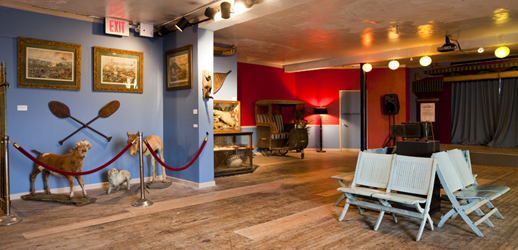
I would like to cordially invite all Morbid Anatomy readers to join us in bidding farewell to the sadly ephemeral Great Coney Island Spectacularium and Cosmorama of the great Dreamland Fire. The exhibition--more on which here--will end after Labor Day weekend, so this is one of your last chances to see it. So please, come raise a glass with us, surrounded by the unfortunate taxidermy once on view at one of the oldest dime museums in the Americas, the Niagara Falls Museum. Join us for a beer in the soon to be dismantled and utterly transporting Cosmorama of the great Dreamland Fire! Help us kiss the lovely toy theater proscenium farewell!

The party will take place next Saturday, August 25th at The Coney Island Museum; There will be free beer and wine, including a special Dreamland Fire Brew, hand-crafted by our friends at the Coney Island Brewery and wine by Red Hook Winery. Artists will be in attendance, as will special guest performers. AND rogue musician Nick Yulman will perform original scores using mechanical instruments for two 1926 films, Now You Tell One and A Wild Roomer by silent comedian and stop-motion animation innovator Charlie Bowers.

The event begins at 8:00 PM; the film will begin at 8:30pm. $20 in advance or at the door. Advance Tickets here. Hope very much to see you there!

You can find out more by clicking here.

Source:
http://morbidanatomy.blogspot.com/feeds/posts/default?alt=rss

Dried Cadavers on Display in a "Terrible Example of Tyranny," Ferdinand I, Fifteenth Century Naples

In an interesting 15th century precursor to spectacular displays of human bodies such as Gunther von Hagen's Body Worlds:

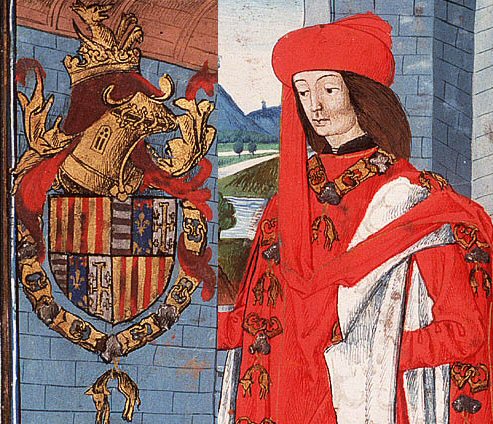
Ferdinand I [of Naples (1423 – 1494)], Alfonso II's long-reigning father, had filled an exhibition hall of Castel Nuovo with the mummified remains of his enemies. Paolo Giovio, the sixteenth-century bishop, doctor, and biographer, writes in Historiarum sue temporis: "They say that these dried cadavers were displayed, pickled with herbs, a frightful sight, in the dress they wore when alive and with the same ornaments, so that by this terrible example of tyranny, those who did not wish to be similarly served might be properly afraid."

Just one of the fascinating revelations in the wonderful book Naples Declared: A Walk Around the Bay, by Benjamin Taylor. Another writer--Jacob Burckhardt, in his The Civilization of the Renaissance in Italy of 1878 --described it thusly:

Besides hunting, which he practiced regardless of all rights of property, his pleasures were of two kinds: he liked to have his opponents near him, either alive in well-guarded prisons, or dead and embalmed, dressed in the costume which they wore in their lifetime. Fearing no one, he would take great pleasure in conducting his guests on a tour of his prized “museum of mummies.”

And wow; looks like this made an appearance on The Borgias as well; I guess I had better consider giving that show another chance.

Image source: Wikipedia

Source:
http://morbidanatomy.blogspot.com/feeds/posts/default?alt=rss

Wax Model of a Decomposing Body in a Walnut Coffin, Italy, 1774-1800, The Science Museum, London

Wax model of a decomposing body in a walnut coffin, Italy, 1774-1800

The body in this wooden coffin is in a severe state of decomposition. It may have had two purposes: as ‘memento mori’, a reminder of death, or as a teaching aid. The figure is surrounded by three frogs. Frogs are symbols of rebirth and regeneration because they change so much in their lifetimes. Wax modelling was used in Europe to create religious effigies. From the 1600s, they were also used to teach anatomy. The creation of wax anatomical models, centred in Italy, was based on observing real corpses. The museum known as La Specola, or ‘the observatory’, in Florence was famous for its wax collection.

Found in the always delightful Macabre and Beautifully Grotesque Facebook Group.

Source:
http://morbidanatomy.blogspot.com/feeds/posts/default?alt=rss

"A Healthy Mania for the Macabre," Stephen T. Asma, The Chronicle for Higher Education

The new morbid curiosity... may be a pendulum swing back toward the sublime and the philosophical—a new secular foray into the morbid territory that religion previously charted. One way to avoid deeper engagement with death is to paint it entirely from the crude palette of emotions like disgust and fear. We've already got plenty of that kind of "morbid" in popular culture. But awe and wonder need to be restored to our experience of death, and we're not sure how to do it in a post-religious culture.

--"A Healthy Mania for the Macabre," Stephen T. Asma, The Chronicle for Higher Education

The above is excerpted from a characteristically thoughtful and erudite piece by Stephen Asma, one of my all-time favorite scholars and author of the fantastic Stuffed Animals and Pickled Heads. The piece--entitled "A Healthy Mania for the Macabre"--explores the current uptick of interest in all things macabre, and situates it within the history ofspectacular morbid display from memento mori to Frederik Ruysch to Gunther von Hagens; It also features interesting quotations from interviews with morbid art collector Richard Harris, charnel house obsessive and Empire of Death author Paul Koudounaris, and yours truly.

You can read the entire article by clicking here. I very highly recommend it!

Image: Clemente Susini (probably): Slashed Beauty, wax, human hair, pearls, rosewood and Venetian glass case, ca 1790, La Specola, Museo di Storia Naturale, Florence, Italy; From the Anatomical Theatre exhibition

Source:
http://morbidanatomy.blogspot.com/feeds/posts/default?alt=rss

The Dannon Company Awards Cook Children's The 2012 Dannon Next Generation Nutrition® Grant

FORT WORTH, Texas, Aug. 18, 2012 /PRNewswire/ --The Dannon Company, Inc. today awarded Cook Children's a Dannon Next Generation Nutrition Grant totaling $30,000 in support of its Nutrition University, a healthy eating and exercise program dedicated to fostering positive lifestyle habits for overweight children. Dannon presented the award during an event in conjunction with the Tax Free Weekend Back to School Expo at North East Mall.

(Photo: http://photos.prnewswire.com/prnh/20120818/NY59501-a )

(Photo: http://photos.prnewswire.com/prnh/20120818/NY59501-b )

Taught by Cook Children's registered dietitians, Nutrition University includes nutrition presentations, cooking demonstrations and healthy family dinner nights and encourages yogurt as part of a balanced diet. This year the program will directly serve 600 children and their parents. As part of the award, the Dannon Next Generation Nutrition Grant will provide scholarships for 100 children who might not otherwise be able to participate in the program.

"Programs like Nutrition University provide an opportunity for youth to learn important nutritional information that will help them build on a healthy future," said Gayle Binney, Dannon's corporate responsibility manager. "For 70 years, Dannon has created great-tasting yogurt that also provides essential nutrients like calcium, protein, and potassium. We couldn't be prouder to partner with a program like Cook Children's and to offer scholarship funding for this program to low-income families."

Nutrition University is working to combat childhood obesity and promote the consumption of foods that are lacking in children's diets, like low-fat dairy. According to the Center for Disease Control's 2007 Youth Risk Behavior Survey, sixteen percent of Texas youth are overweight and another 16% are obeseputting this group at significantly greater risk of developing heart disease, diabetes, high blood pressure and a range of other illnesses. According to the U.S. Department of Agriculture, consumption of dairy products such as yogurt is linked to a reduced risk of cardiovascular disease and type-2 diabetes, lower blood pressure and improved bone health.

Cook Children's Health Care System President and CEO Rick Merrill said, "Our relationship with Dannon is significant because it will aid our efforts to improve the health of children through these nutrition programs. We are grateful for their financial support and are so pleased that their employees will join with us throughout the year to promote good health."

"Childhood obesity is a life-threatening condition that deserves our undivided attention in this country and in the state of Texas," said Fort Worth Mayor Betsy Price. "I'm excited to be here supporting Dannon and Cook Children's for the fantastic work they are doing to keep our families healthy."

Dannon established the Dannon Next Generation Nutrition Grant to promote childhood nutrition education in each of the four communities where a Dannon facility is located. As part of the program, Dannon contributes $30,000 to one non-profit organization in each of the following communities ($120,000 in total) Auglaize, Mercer, Darke, or Shelby County, Ohio; Salt Lake County, Utah; Tarrant County, Texas; and Westchester County, New York, for programs that nurture healthy eating habits among children. Over the last seven years, programs funded through the Dannon Next Generation Nutrition Grant have reached more than 2,000 children in Tarrant County.

Today's grant ceremony, held at North East Mall, was attended by Fort Worth Mayor Betsy Price, Fort Worth Council Member Frank Moss, Tarrant County Director of Public Health Lou Brewer, Fort Worth Chamber of Commerce President & CEO Bill Thornton and Fort Worth ISD Director of Health and Physical Education Georgi Roberts. Also in attendance were Cook Children's Medical Director of Clinical Research Dr. James Marshall and Grants Administrator Johnell Kelley; Dannon Corporate Responsibility Manager Gayle Binney; and Dannon's Fort Worth Plant Director Pere Costa Torrent.

Read the original:
The Dannon Company Awards Cook Children's The 2012 Dannon Next Generation Nutrition® Grant

How To Use Microbiology To Enhance Cannabis Plants – Video

17-08-2012 15:28 For more information, visit: In this video, I will show you how to enrich a water with beneficial bacteria using aeration and adding sugars to the water. This will allow the bacteria to thrive and help your Marijuana plant grow healthier. Some may use only a few bacteria strains for this while I use a lot to benefit the weed more. Just be sure to do this in a well-ventilated room to and avoid inhaling those bacteria.

More:
How To Use Microbiology To Enhance Cannabis Plants - Video

Communicating with Aliens through DNA

DNA encodes the information for all the proteins inside the cell, their amino acid sequence, when and where to turn them on, and a whole lot of other things that we probably dont fully understand yet. With the ability to write DNA, to synthesize our own arbitrary stretches of As, Ts, Cs, and Gs, we can create our own instructions for cellular proteins or we can encode sequences that would be junk to a cell but that we could read as a message. This week, George Church, Yuan Gao, and Sri Kosuri published a short paper demonstrating that not only could we encode a few phrases here and there, but write a whole book in DNA. The book, Churchs Regenesis: How Synthetic Biology Will Reinvent Nature and Ourselves, which will be published using more traditional means this fall, includes 53,426 words, 11 jpgs, and one JavaScript program. The text and images were converted to html format and then read as bits, 1s and 0s that can be easily encoded into DNA: A or C for 0 and T or G for 1. Having two possible letters for each bit means that the sequence wont end up with long stretches of any single letter, a challenge for chemical DNA synthesis. The perl code they used to covert bits to DNA is available in the papers supplementary information (PDF).

This is by far the largest amount of non-biological information synthesized and stored in DNAa total of 5.27 megabits, way beyond the 7,920 bit record previously held by the Venter Institutes watermarks in their chemically synthesized genome (written using an undisclosed code for each letter and punctuation mark).

The sequence of Watermark 4 in the Venter Institute's synthetic genome

While news reports about the DNA book often acknowledge this previous DNA message, as well as a 1999 paper encoding the World War II spy message JUNE 6 INVASION: NORMANDY in DNA (PDF), they dont mention the very first synthetic DNA message cited in the paper. In 1988, Joe Davis, an artist collaborating with molecular biologist Dana Boyd in Jon Beckwiths lab at Harvard Medical School (and currently a research affiliate in George Churchs lab), designed and synthesized an 18 base-pair message encoding the image of the ancient Germanic rune representing life and the female earth. The Microvenus message was then pasted into a vector and transformed into E. coli, creating a living work of art.

Microvenus--The first non-biological message encoded in DNA, by Joe Davis

The Arecibo Message

The coding scheme for Microvenus was inspired by the binary message sent by Carl Sagan and Frank Drake from the Arecibo radio telescope in 1974, an attempt to open up communication with extraterrestrial intelligence (as well as demonstrate the capabilities of the newly remodeled telescope). The image is a 2373 rectangle (having the dimensions be two prime numbers makes it easier to decode the single stream of binary digits) showing pictures of the telescope, a person, and information about our solar system and our DNA. Microvenus is coded with a similar principle, the lines of the image translated to ones and zeros in a 57 grid, converted to DNA with phase-change values rather than numerical values. The DNA bases are arranged by size C= 1, T=2, A =3, G=4 and represent the number of bits needed before you switch to the opposite bit. For example, 10101 translates to CCCCC because each digit occurs once before it switches, and 00011 would be AG because there are three 0 before it switches to two ones.

Despite its tendency to mutate and evolve as cells divide, DNA is a remarkably inert and stable chemical on its own, lasting long enough for archeologists to be able to sequence strands of DNA many thousands of years old. In a microbial spore hurtling through space, DNA could theoretically last long enough to be found by an extraterrestrial civilization that could sequence it and decode the message inside. In the late 1970s, some scientists even hypothesized the inverse possibilitythat viruses on Earth could have been sent as messages from extraterrestrials. Attempts to decode the X174 viral genome sequence into two dimensional images of course didnt yield any striking alien messages, but did open up the possibility of sending out different kinds of messages of our own.

For Davis, the messages that we send to aliens arent just about sending out a friendly description of life, art, and science on Earth, but of better understanding those things ourselves. He writes in his paper describing the Microvenus project:

By sending messages to extraterrestrial intelligence, human beings are importantly engaged in a search for themselves. They must first reveal themselves to themselves before they can reveal themselves to anyone else. This has not only been a central dilemmain the search for extraterrestrial intelligence, but it has also been an essential element of art, history, psychology, and classical philosophy.

Go here to read the rest:
Communicating with Aliens through DNA

Posted in DNA

Frank Mulligan: Nutrition for dummies

I recently took a Nutrition IQ Test in a magazine and scored slightly lower than moron.

In my defense, though, the test failed to accurately reflect some of my rather innovative, complex and, well, insightful views on nutrition. Therefore, and to wit, I have devised my own Nutrition IQ Test that has been dumbed down to a level I find more within reach.

Give it a try. Scoring is completely subjective. As in T-ball, there are no losers.

1. True or False: Buffalo chicken sauce can cure the common cold. a) True b) False c) Only if its the extra hot kind

2. List the five major food groups: a) stuff from McDonalds, stuff from Burger King, stuff from Taco Bell, stuff from Kentucky Fried Chicken, and stuff from Papa Ginos b) deli meats, sub rolls, mayonnaise, dill pickles, and Cheez-Its c) the five things you like best in a poo-poo platter d) all of the above, plus two things deep fried

3. What are the virtues of tofu: a) Its got a funny-sounding name b) Its trustworthy c) You can roll it in a ball and hurl it at pursuers d) You can make fun of people who eat it

4. What is a good source for minerals: a) pie b) cake c) cake-pie d) a quarry

5. Its a known fact that garlic can: a) lower cholesterol b) lower blood pressure c) ward off vampires d) prevent unwanted kissing

6. Whats the difference between simple and complex carbohydrates: a) complex carbohydrates are more insightful b) simple carbohydrates are easy to fool c) complex carbohydrates come from animals or vegetables containing more than two syllables, like alligator or zucchini d) simple carbohydrates dont like to brag about themselves

7. How many kinds of nutrients are there: a) lots b) kind of a lot c) it depends on what you mean by nutrient d) it depends on what time of day it is

Continue reading here:
Frank Mulligan: Nutrition for dummies

Synthetic Biology Book Published in DNA

The data storage project represents the largest piece of non-biological data ever stored in this manner

By Monya Baker and Nature magazine

Image: dna, synthetic biology

Showcasing more than fifty of the most provocative, original, and significant online essays from 2011, The Best Science Writing Online 2012 will change the way...

Read More

From Nature magazine

A trio of researchers has encoded a draft of a whole book into DNA. The 5.27-megabit tome contains 53,246 words, 11 JPG image files and a JavaScript program, making it the largest piece of non-biological data ever stored in this way.

DNA has the potential to store huge amounts of information. In theory, two bits of data can be incorporated per nucleotide the single base unit of a DNA string so each gram of the double-stranded molecule could store 455 exabytes of data (1 exabyte is 1018 bytes). Such dense packing outstrips inorganic data-storage devices such as flash memory, hard disks or even storage based on quantum-computing methods.

The book, which is fittingly a treatise on synthetic biology, was encoded by geneticists George Church and Sriram Kosuri at the Wyss Institute for Biologically Inspired Engineering in Boston, Massachusetts, and Yuan Gao, a biomedical engineer at Johns Hopkins University in Baltimore, Maryland. They report their work in Science1 this week.

It marks a significant gain on previous projects the largest of which encoded less than one-six-hundredth of the data but organic flash drives are still many years away. There are a number of reasons why the method is not practical for everyday use. For example, both storing and retrieving information currently require several days of lab work, spent either synthesizing DNA from scratch or sequencing it to read the data.

Visit link:
Synthetic Biology Book Published in DNA

Posted in DNA

Harvard Scientists Write Book In DNA And Accurately Copy, Read It Back

Lawrence LeBlond for redOrbit.com Your Universe Online

DNA, the building block of life, is now home to more than just the worlds living creatures. Scientists from Harvard University report that they have written an entire novel in DNA, a feat that could revolutionize our ability to save data.

Our genetic code packs billions of gigabytes into a single gram. That is significantly more information that a single microchip could even think about storing. In fact, a single milligram of genetic code could encode the entire Library of Congress and still have room to spare.

Long held as only a theory, the storage of data in DNA has now tipped the genetic scale and has become a reality. George Church of Harvard Medical School and his colleagues stored an entire genetics handbook in less than a picogram trillionth of a gram of DNA.

The experiment, reported in Thursdays edition of the journal Science, could pave the way for eventual data-storage systems that can handle vast amounts of data, perhaps millions of times more data than a single hard drive can handle. Using next-generation sequencing technology, the Harvard team, were not only able to encode the book in DNA, but also were able to accurately copy and read it.

A few other teams have tried to write data into the DNA of living cells. But because the approach carries some disadvantages, it may not prove feasible. Because cells die, writing data into genetic code could mean that you are going to ultimately lose your work. And because cells also replicate, there would be the possibility that new mutations could change the data.

To work around these possible scenarios, Church and his colleagues created a DNA information-archiving system using no cells at all. Instead, they utilized an inkjet printer to embed short fragments of chemically synthesized DNA onto the surface of a tiny glass chip. To encode the file, the team divided it into tiny blocks of data and converted it not into typical digital storage 1s and 0s, but rather DNAs four-letter alphabet of As (adenine), Cs (cytosine), Gs (guanine) and Ts (thymine).

The team explained that each DNA fragment also contains a digital barcode that records its location in the original file. Reading the data requires a DNA sequencer and a computer to put back together the DNA puzzle of fragments in order to convert them into digital format. The computer also corrects for errors; each block of data is replicated thousands of times so that any chance glitch can be identified and fixed by comparing it to the other copies.

To demonstrate the technology, the team used the DNA chips to encode a genetics book co-authored by Church Regenesis: How Synthetic Biology Will Reinvent Nature and Ourselves in DNA. After converting the book into DNA and translating it back into digital form, the teams system only produced a rate of two errors per million bits of information, and only amounted to a few single-letter typos, which is on par with DVDs and far better than magnetic hard drives.

However, the impracticability of such a system is not there right now. Sequencing DNA is a costly procedure and is not feasible for general use, according to Daniel Gibson, a synthetic biologist at the J. Craig Venter Institute in Rockville, Maryland. However, he noted, the field is moving fast and the technology will soon be cheaper, faster, and smaller.

Read this article:
Harvard Scientists Write Book In DNA And Accurately Copy, Read It Back

Posted in DNA

DNA: The Ultimate Hard Drive

By John Bohannon, ScienceNOW

When it comes to storing information, hard drives dont hold a candle to DNA. Our genetic code packs billions of gigabytes into a single gram. A mere milligram of the molecule could encode the complete text of every book in the Library of Congress and have plenty of room to spare. All of this has been mostly theoretical until now. In a new study, researchers stored an entire genetics textbook in less than a picogram of DNA one trillionth of a gram an advance that could revolutionize our ability to save data.

A few teams have tried to write data into the genomes of living cells. But the approach has a couple of disadvantages. First, cells die not a good way to lose your term paper. They also replicate, introducing new mutations over time that can change the data.

To get around these problems, a team led by George Church, a synthetic biologist at Harvard Medical School in Boston, created a DNA information-archiving system that uses no cells at all. Instead, an inkjet printer embeds short fragments of chemically synthesized DNA onto the surface of a tiny glass chip. To encode a digital file, researchers divide it into tiny blocks of data and convert these data not into the 1s and 0s of typical digital storage media, but rather into DNAs four-letter alphabet of As, Cs, Gs, and Ts. Each DNA fragment also contains a digital barcode that records its location in the original file. Reading the data requires a DNA sequencer and a computer to reassemble all of the fragments in order and convert them back into digital format. The computer also corrects for errors; each block of data is replicated thousands of times so that any chance glitch can be identified and fixed by comparing it to the other copies.

To demonstrate its system in action, the team used the DNA chips to encode a genetics book co-authored by Church. It worked. After converting the book into DNA and translating it back into digital form, the teams system had a raw error rate of only two errors per million bits, amounting to a few single-letter typos. That is on par with DVDs and far better than magnetic hard drives. And because of their tiny size, DNA chips are now the storage medium with the highest known information density, the researchers report online today in Science.

Dont replace your flash drive with genetic material just yet, however. The cost of the DNA sequencer and other instruments currently makes this impractical for general use, says Daniel Gibson, a synthetic biologist at the J. Craig Venter Institute in Rockville, Maryland, but the field is moving fast and the technology will soon be cheaper, faster, and smaller. Gibson led the team that created the first completely synthetic genome, which included a watermark of extra data encoded into the DNA. The researchers used a three-letter coding system that is less efficient than the Church teams but has built-in safeguards to prevent living cells from translating the DNA into proteins. If DNA is going to be used for this purpose, and outside a laboratory setting, then you would want to use DNA sequence that is least likely to be expressed in the environment, he says. Church disagrees. Unless someone deliberately subverts his DNA data-archiving system, he sees little danger.

This story provided by ScienceNOW, the daily online news service of the journal Science.

Image: Scientists have found a way to store an entire textbook in the code of DNA. (JohnGoode/Flickr)

Read the original post:
DNA: The Ultimate Hard Drive

Posted in DNA

Synthesizing Synthetic Biology

PLOS One has launched the Synthetic Biology Collection a set of more than 50 papers that the journal has published since 2006 on DNA synthesis and assembly, the development of libraries of biological parts, protein engineering, network and pathway analysis, and the like.

The PLOS One Community Blog notes that "the heavily interdisciplinary nature" of synthetic biology research "can make it difficult to publish in traditional discipline-specific journals," but the broad scope of PLOS One "allows for the publication of work crossing many traditional research boundaries, making it an ideal venue for many different types of synthetic biology research."

The collection will be updated as relevant articles are published in the journal.

An overview of the collection, authored by Jean Peccoud and Mark Isalan, says that the papers are organized into broad categories: DNA synthesis and assembly; biological parts; protein engineering; networks and pathways; synthetic life; software and modeling; and instruments.

They add that "since many synthetic biology papers cited in this review span more than one category, it was sometimes difficult to assign them to one category rather than another. Nonetheless, this structure should aid in navigating the 50+ papers currently included in the collection."

Link:
Synthesizing Synthetic Biology

Pathology backlog cleared

The Saskatoon Health Region has cleared a backlog of pathology tests after hundreds of patients waited for results because of a shortage of specialists.

"There are only two ways to get rid of backlog," said Joseph Blondeau, interim head of the health region's department of pathology and laboratory medicine.

"You either farm the work out to somebody else, which means you're paying to send the work out of province or out of the city, or you bring in extra resources."

The health region did both while recruiting several pathologists to work in the city.

For most of 2011, pathologists in the Saskatoon Health Region could not keep up with the volume of work coming their way. Tissue samples were sent out for testing, first to Regina and later to Toronto and the Mayo Clinic in Rochester, Minn.

In addition to the courier cost of sending specimens, the health region was paying between $300 and $700 for a sample to be read by a pathologist working for another agency.

In addition, several local pathologists worked overtime to clear more of the backlog, bumping up their salaries significantly.

Nine of the top wage earners in the health region in 2011-12 were pathologists. The highest-paid employee, Dr. Usharani Ganugapati, received $483,774. The provincial pay grid for pathologists ranges from $290,321 to $333,869 annually.

"When we were short of pathologists, there were some pathologists who for one reason or another had extra capacity and had decided that in an attempt to (reduce) the cases that were backlogged had worked extra hours. They gave up their evenings and weekends," said Blondeau.

Now, the pathology department is in rebuilding mode after years of tumult.

Visit link:
Pathology backlog cleared

DNA used to encode a book and other digital information

(Phys.org) -- A team of researchers in the US has successfully encoded a 5.27 megabit book using DNA microchips, and they then read the book using DNA sequencing. Their experiments show that DNA could be used for long-term storage of digital information.

George Church and Sriram Kosuri of Harvards Wyss Institute for Biologically Inspired Engineering, and colleagues, encoded Churchs book Regenesis of around 53,400 words into DNA sequences, along with 11 images in JPG format and a JavaScript program. This is 1,000 times more data than has been encoded in DNA previously.

DNA is made up of nucleotides, and in theory at least each nucleotide can be used to encode two bits of data. This means that the density is a massive 1 million gigabits per cubic millimeter, and only four grams of DNA could theoretically store all the digital data created annually. This is much denser than digital storage media such as flash drives, and more stable, since the DNA sequences could be read thousands of years after they were encoded.

The experiments success lay in the strategy of encoding the data in short sequences of DNA rather than long ones, and this reduced the difficulty and cost of writing and reading the data. Dr Kosuri said the process was analogous to storing data on a hard drive, where data is written in small blocks called sectors.

They first converted the book, program and images to HTML and then translated this into a sequence of 5.27 million 0s and 1s, and these 5.27 megabits were then sequenced into sections of nucleotides 96 bits long using one DNA nucleotide for one bit. The nucleotide bases A and C encoded for 0, while G and T encoded for 1. Each block also contained a 19 bit address to encode the blocks place in the overall sequence. Multiple copies of each block were synthesized to help in error correction.

After the book and other information was encoded into the DNA, drops of DNA were attached to microarray chips for storage. The chips were kept at 4C for three months and then dissolved and sequenced. Each copy of each block of nucleotides was sequenced up to 3,000 times so that a consensus could be reached. In this way they reduced the bit errors in the 5.27 megabits to just 10.

The procedure, described in a paper in the journal Science, cannot be used for rewritable data but could be used for very long-term storage of data. One advantage of using DNA is that a much greater density of information can be stored, but another major advantage is that DNA is a biological molecule that will always be able to be read biologically without special equipment such as CD or DVD players that can quickly become obsolete.

The main disadvantage of this system is that at the moment the technologies used to synthesize and sequence DNA are far too expensive for it to be a practical system for everyday use. Another problem is that while DNA has been sequenced from sources such as mummies thousands of years old, the DNA tends to be fragmented, and work needs to be done on improving the stability of DNA over centuries and longer.

More information: Next-Generation Digital Information Storage in DNA, Science, DOI: 10.1126/science.1226355

ABSTRACT Digital information is accumulating at an astounding rate, straining our ability to store and archive it. DNA is among the most dense and stable information media known. The development of new technologies in both DNA synthesis and sequencing make DNA an increasingly feasible digital storage medium. Here, we develop a strategy to encode arbitrary digital information in DNA, write a 5.27-megabit book using DNA microchips, and read the book using next-generation DNA sequencing.

Original post:
DNA used to encode a book and other digital information

Posted in DNA

Is too much brain activity connected to Alzheimer's disease?

Public release date: 16-Aug-2012 [ | E-mail | Share ]

Contact: Clare Weaver press@plos.org 44-122-344-2824 Public Library of Science

High baseline levels of neuronal activity in the best connected parts of the brain may play an important role in the development of Alzheimer's disease. This is the main conclusion of a new study appearing in PLoS Computational Biology from a group at VU University Medical Center in Amsterdam, the Netherlands.

In recent times, it has become clear that brain activity patterns change at an early stage in Alzheimer's disease. Moreover, there is reason to believe that, instead of being the consequence of structural damage, they might be the cause: recently, a direct influence of excessive regional neuronal activity on Alzheimer pathology was found in animal experiments. By showing that highly connected 'hub' regions (which display most Alzheimer pathology) indeed possess the highest levels of activity, the present study offers support for the unconventional view that brain dynamics may play a causal role in Alzheimer. As first author, Willem de Haan, says, "this implies that the investigation of factors regulating neuronal activity may open up novel ways to detect, elucidate and counter the disease".

Using a realistic computational model of the human cortex, the authors simulated progressive synaptic damage to brain regions based on their level of activity, and subsequently investigated the effect on the remaining network. With this 'activity dependent degeneration' model, they could not only offer an explanation for the distribution pattern of Alzheimer pathology but also reproduce a range of phenomena encountered in actual neurophysiological data of Alzheimer patients: loss and slowing of neuronal activity, loss of communication between areas, and specific changes in brain network organization.

In upcoming projects the authors plan to verify the predictions from this study in patient data, but also to continue modeling studies. They conclude that: "the use of 'computational neurology' and network theory to unite experimental results and find plausible underlying principles in the growing bulk of human brain data seems inevitable".

###

Financial disclosure: No funding was received for this work

Competing interests: The authors have declared that no competing interests exist.

Citation: de Haan W, Mott K, van Straaten ECW, Scheltens P, Stam CJ (2012) Activity Dependent Degeneration Explains Hub Vulnerability in Alzheimer's Disease. PLoS Comput Biol 8(8): e1002582. doi:10.1371/journal.pcbi.1002582

Read the original post:
Is too much brain activity connected to Alzheimer's disease?

Stanford University Releases Statement Reiterating Its Long-Standing Relationship With Nu Skin Enterprises

PROVO, Utah, Aug. 17, 2012 /PRNewswire/ --Nu Skin Enterprises, Inc. (NUS) reiterated its research relationship with Stanford University and announced that Stanford today issued the following release, which stated, "The Department of Dermatology in the Stanford School of Medicine has had a long-standing research-based relationship with Nu Skin Enterprises. Researchers in the department currently have one on-going study funded by Nu Skin related to the identification of master regulators and epigenetic changes to human skin aging. This research project is funded from a $1.5 million commitment from Nu Skin and runs through 2014. Since 1999, the company has funded nearly $5.8 million dollars in research in the Department of Dermatology.

"At the request of Dr. Stuart Kim, a letter was sent by Stanford to Nu Skin requesting Dr. Kim's name be removed from the company's marketing materials and websites as Dr. Kim is no longer involved with research funded by the company. The company complied with this request. The letter did not recognize, however, the existing research relationship between Nu Skin and Stanford. We regret any misunderstanding that may have occurred as a result."

About Nu Skin Enterprises Nu Skin Enterprises, Inc. demonstrates its tradition of innovation through its comprehensive anti-aging product portfolio, independent business opportunity and corporate social responsibility initiatives. The company's scientific leadership in both skin care and nutrition has established Nu Skin as a premier anti-aging company, evidenced in its unique ageLOC science that addresses aging at its source. The company's anti-aging products feature the new ageLOC suite of products including the ageLOC R2 nutritional supplement, ageLOC Galvanic Spa System and ageLOC Galvanic Body Spa, as well as the ageLOC Transformation daily skin care system. A global direct selling company, Nu Skin operates in 53 markets worldwide and has nearly 900,000 independent distributors. Nu Skin is traded on the New York Stock Exchange under the symbol "NUS." More information is available at http://www.nuskin.com.

Read more:
Stanford University Releases Statement Reiterating Its Long-Standing Relationship With Nu Skin Enterprises