PathXL BioBank Launched at SMi’s Biobanking Conference

Last month i-Path attended SMi’s Biobanking Conference in London and launched a new product, PathXL BioBank.  During the two-day conference a number of thought leaders from around the world made presentations highlighting the exciting work of the biobanking industry.

A biobank is a facility to store and archive biological samples primarily for use in research. With each biobank taking their own approach to set up and operations, it is a dynamic and fast paced environment.  Path XL BioBank allows users to store, track and check in / out tissue samples using a sophisticated web-based interface. Customers have the flexibility to use their own biobanking software whilst incorporating the PathXL image viewer or to use PathXL BioBank as their database and management software with virtual images integrated.

“Moving into the biobanking sector is an exciting step for i-Path, and we were delighted to see PathXL BioBank so well received at the Biobanking Conference.”
Phil Murray, i-Path Executive VP & Sales Director

Key benefits
•    Immediate access to virtual slides, eliminating the inefficiency of physically retrieving slide
•    Slide scanning conducted by i-Path experts who will guide you through the scanning options and QC all scans
•    All virtual slides are hosted on a secure, high performance image server environment providing a fast reliable service
•    Securely log in anytime from anywhere in the world to manage your tissue research project
•    Share digital slides with collaborators anywhere in the world

“We integrated PathXL with our NI Biobank database to enable researchers to view our catalogue of samples online, from anywhere in the world. When a sample is added to the NI Biobank it immediately appears in our online catalogue. Researchers will then be able to select and order samples from the NI Biobank in full confidence that all the samples they receive will be useable in their research.”
Dr. Jacqueline James, Northern Ireland Biobank Scientific Lead

Earn CME at Pathology Visions – NEW this year

New this year -- CME will be offered to physicians attending the meeting.  I know from personal involvement this was a team effort with a couple of pathologists involved with the Digital Pathology Association (DPA) and the DPA staff.  

My sense from years past is that more pathologists would attend if CME were offered.  Now it is.

Earn up to 13 hours at this meeting.  The talks, combined with the exhibits and networking opportunities should place Pathology Visions high on your list of the many Fall meetings to attend.

I use to say that the Visions conference was a greet meeting in a great venue but now add on the CME and will only add to the meeting program and offerings.

My personal thanks to DPA staff -- in particular Lindsey M. and Michael W. for making this a reality.

Please see attached announcement.

Download Dpa_blogCME_01_ACT.

Webinar from Aperio — August 23 — Select Topics in Image Analysis Series

Select Topics in Image Analysis:
Algorithm Tuning for IHC Analysis and An Introduction to Genie

August 23, 2011

8:00 am Pacific Time, 11:00 am Eastern Time
(4:00 pm London GMT / 10:00 am Mexico City Standard Time)
and
 
4:00 pm Pacific Time, 7:00 pm Eastern Time
(8:00 am Japan Time / 9:00 am Australia EST August 24)


Presenter:
Marc Friedman, Ph.D, 
Imaging Scientist and Digital Pathology Consultant, Aperio

In this 60-minute complimentary webinar, Dr. Friedman will present an overview of algorithm tuning for IHC probes, as well as an introduction to Genie and how it is used as a pre-processor for other image analysis algorithms.  

To register for the 8 am PDT session, click here.

https://aperio.webex.com/aperio/onstage/g.php?d=768917066&t=a

To register for the 4 pm PDT session, click here.

https://aperio.webex.com/aperio/onstage/g.php?d=765740143&t=a

You may also register by visiting the Aperio Events page.

You will receive a confirmation email upon registration with a web link that will lead you to the online event. Simply visit the link at the assigned time. The session is secure and easy to access. If you have any questions or would like additional information, please contact the Aperio Events Team at events@aperio.comor 760.539.1192. 


Curious, Anatomical, Obscure or Delicious Korea: Seeking Suggestions


Dear Morbid Anatomy readers:

In just a few days, I am off to live for one month (!!!) in Seoul, South Korea as part of the fantastic Apex Art Outbound Residency Program. For those of you who are interested, I will be documenting my Korean adventures on a special blog for Apex Art; you can check that out by clicking here. I arrive in Seoul on September 16th, so blog entries should begin soon after.

But I have a more pressing question for you, dear readers: do any of you out there have any suggestions for suggested Korean sights, sounds, and tastes? Of particular interest, of course, are museums and collections--especially old natural history or anatomical/medical--but any suggestions, from foods to markets to restaurants to shops to national parks to amusement parks to folk art to fine art to curiosities of any kind, would be very much appreciated!

Suggestions will be gratefully received at morbidanatomy [at] gmail.com. Thank you very very much in advance!

Image: House Swallow from the Ehwa Womans University Natural History Museum, Korea.

New Automata Book Now Available: "Musical Machines and Living Dolls" The Guinness Collection at The Morris Museum


The Murtogh D. Guinness Collection at the Morris Museum is an astounding collection of automata (mechanical toys popular in the 18th and 19th century) and mechanical musical instruments that can be visited in--of all surprising places--Morristown, New Jersey. The collection is mind-blowingly vast; it is, in fact, the largest such public collection in the U. S. and one of the largest in the world, with around 700 automata and mechanical musical instruments and over 5,000 programmed media, nearly all of which are were produced in the 19th Century.

The highlight of the Morris Collection--in my opinion, at least!--is its extensive lot of fine 19th Century European automatons. Most of the pieces are in excellent repair and still able to go through their uncanny motions, and the scale, quality, and range of the collection are simply flabbergasting, the kind of thing you might consider yourself lucky to find in France (where many automata producers were based) but certainly not here on the East Coast of the United States.

The Morris Museum has just published a new book devoted to this collection. Entitled Musical Machines and Living Dolls: Mechanical Musical Instruments and Automata from the Murtogh D. Guinness Collection, this book is a lovely little gem all its own; it is hardcover, full color throughout, beautifully printed, and well-researched. It also includes a well-researched overview of the history of automata from ancient times to the present and a biography of Murtogh D. Guinness, the heir to the Guinness beer fortune who amassed this collection and ultimately bequeathed it to the Morris Museum.

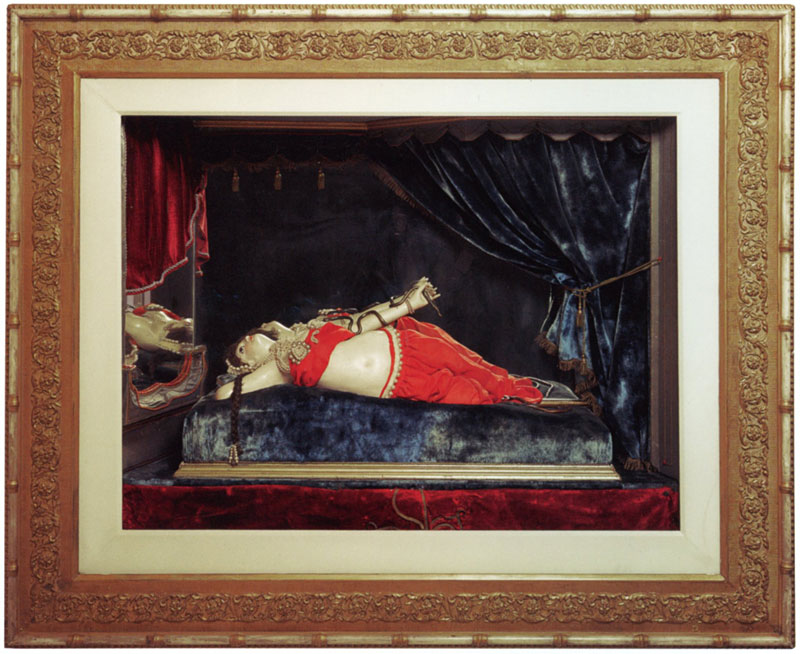
The book also--luckily for me!--features extensive text and scores of images (all images above are drawn from the book!) devoted to many of my favorite pieces in the collection, such as a number of 18th Century-style monkey dandies engaging in human activities (images 2, 3 & 4), 3 cats playing cards (image 5), a lute-playing Mephistopholes (image 7), an asp-suiciding Cleopatra (!!!) (image 6), performing tightrope walkers with orchestral accompaniment (image 9), a hookah-smoking Turk, singing birds, strutting peacocks, performing magicians, street vendors peddling their wares, and much, much more.

To give you a taste of the style and level of research to be found in this book, I include here the entire entry for the fascinating piece you see 6 images down, a late 19th century automaton entitled "The Suicide of Cleopatra":

The Suicide of Cleopatra
About 1880-90
Phalibois, Paris, France
37" x 45 1/2" w x 12 1/2" d
2003.18.236a-c

Surrounded by a massive gilt frame, this animated scene would have dominated most parlors of the time. It depicts a highly sensual version of Queen Cleopatra of Egypt's supposed suicide in 30 B.C. When activated, her breast heaves, her eyelids blink--and an asp strikes.

Although made in the late 1800s, the scene reflects a long-standing Western fascination with Egypt, which had been renewed by Napoleon Bonaparte's occupation of the country at the turn of the nineteenth century. Along with tens of thousands of troops, Bonaparte brought with him scientists and scholars who recorded all that they saw. The Description de l'Egypte, which emerged from their research, became a source for artists, designers, architects, and others, and the ensuing widespread fascination spread from everything from furniture to parlor entertainment.

Morbid Anatomy is delighted to be assisting The Morris Museum in the distribution of this lovely and informative book, which contains images and information to be found nowhere else. The cost of the book is $40; shipping and handling within the United States is $5 and shipping and handling for international orders is $15. The book is 10 1/2" X 8 1/2" and runs to about 140 pages. As I am unable to get these books listed on Amazon.com, those interested in ordering a copy can contact me directly at morbidanatomy [at] gmail.com.

You can find out more about the Morris Museum--including how to visit the collection in person!--by clicking here. Also, stay tuned for a soon-to-be-announced second field trip to visit the collection. If interested in receiving an alert, subscribe to the Morbid Anatomy mailing list by adding your email address on the upper left-hand side of this blog under the header "Mailing List of Events, Happenings, and The Like."

All images are drawn from the book and picture, from top to bottom:

  1. Book Cover
  2. Barrel Reed Organ with Monkey Automata, about 1865
  3. Monkey Violinist, about 1855
  4. Monkey Dandy, about 1880
  5. Cats Playing Cards, about 1900
  6. Suicide of Cleopatra, about 1880-1890
  7. Mephistopholes (Model No. 1), about 1886-1900
  8. Barrel Organ with Animated Figures, about 1820-1840 (detail)
  9. Tightrope Dancer and Musicians, about 1875-1885 (detail)

The Story of Henry Wellcome on the BBC


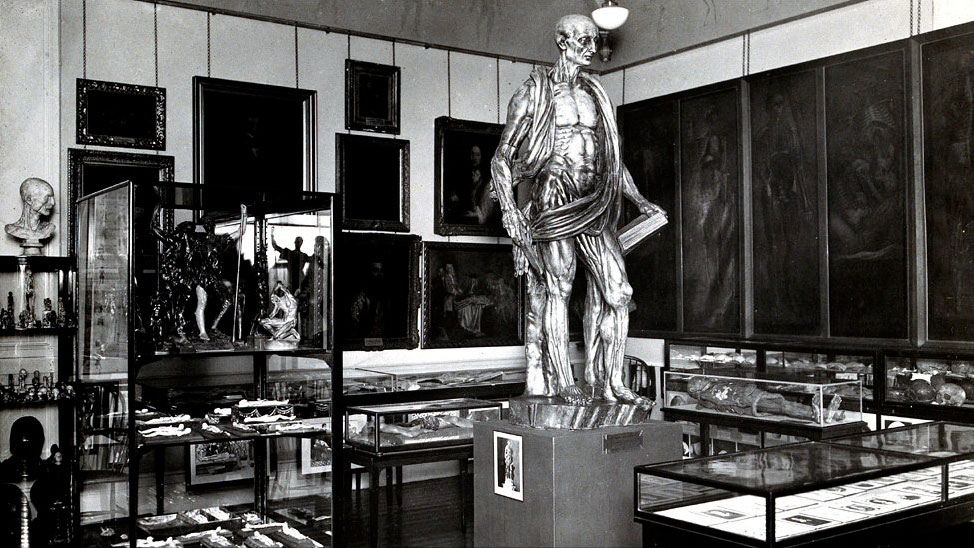
The BBC has just posted a lovely little narrated slide show about Henry Wellcome, founder of the Wellcome Trust and Library and compiler of one of the most extraordinary medical collections in the world. The piece is narrated by my friend Ross MacFarlane of the Wellcome Library, who is an unofficial specialist on Mr. Wellcome and his fabulous collection; you can check it out (highly recommended!) by clicking here.
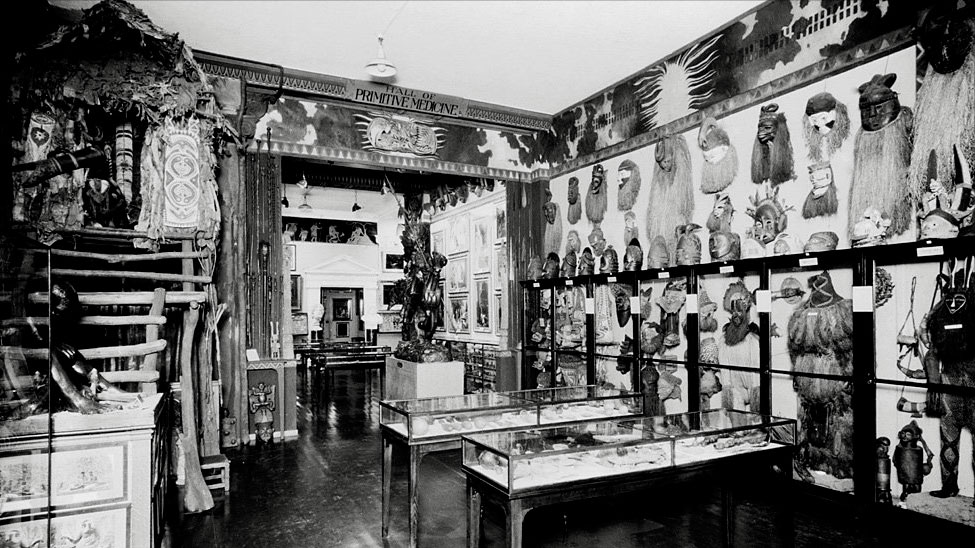
All images taken from the slide show, and feature Wellcome's collection.

Next Friday at The Coney Island Museum: Launch Party for the New Video Series "The Midnight Archives: Tales From the Observatory" with Ronni Thomas


Next Friday, August 12th, please join Morbid Anatomy and The Coney Island Museum for a launch party celebrating The Midnight Archives: Tales From the Observatory, a new video series "centered around the esoteric and always exotic personalities that spring from the Brooklyn Observatory." This project is the creation of many-time Observatory lecturer and film-maker Ronni Thomas, and promises to provide a fascinating and informative look into some of the topics explored by Observatory events past and future.

Come for the party and the screenings, stay to check out the exhibition The Great Coney Island Spectacularium and to experience The Cosmorama of the Great Dreamland Fire, and linger on for the complementary midnight martinis!

Full details follow; Hope very much to see you there.

Date: Friday, August 12
Location: The Coney Island Museum, 1208 Surf Avenue, Brooklyn MAP
Time: 8:00pm
Admission: $20
COMPLIMENTARY "MIDNIGHT MARTINI'S" AND SPECIALTY DRINKS FOR ALL!

Another in a series of exciting events in the Coney Island Museum, the Great Coney Island Spectacularium invites you to the Midnight Archive LAUNCH PARTY with filmmaker and collector Ronni Thomas!

Join us for the launch of the web series The Midnight Archives: Tales From the Observatory. The series is the work of Ronni Thomas (Alias Ronni Raygun) of the IKA Collective and is centered around the esoteric and always exotic personalities that spring from the Brooklyn Observatory. It attempts to briefly document some of the truly unique people, talents and objects from around the world who gather there on a weekly basis. Mummies, Taxidermy, 18th century robotics, early French demonic 3d horror... its all here.

Series creator Ronni Thomas will give a brief lecture followed by the screening of episode 1 "Petrifying Pets: Modern Day Mummies" (6 minutes) and a short montage reel.

You can find out more--and purchase tickets!--by clicking here. For more on The Great Coney Island Spectacularium, click here. More on Observatory here.

Are Taller People at Heightened Cancer Risk?

(HealthDay News) -- Tall folks may be more likely than shorter people to develop cancer, new British research says.

Among women, the risk of breast, ovarian, uterine and bowel cancer, leukemia or melanoma appears to go up about 16 percent for every 4-inch bump in stature, the researchers said.

"Taller women in our study had increased risk of a wide range of cancers," said study co-author Jane Green, from the cancer epidemiology unit at the University of Oxford in England. "And all the evidence from past studies is that this link is seen equally in men and women."

The findings also suggest that gains in height over the 20th century -- Europeans' average height grew nearly half an inch per decade -- might help explain some of the cancer differences seen in recent generations, the researchers said. Read more...

Ayurtox for Body Detoxification

Green tea better at preventing cancer and dementia than previously thought

For years, we covered the mounting research linking green tea and its extracts to a host of disease-fighting benefits -- from halting the progression of chronic lymphocytic leukemia (http://www.dreddyclinic.com/forum/viewtopic.php?f=78&t=22310&view=previous) and reducing the risk of cardiovascular disease to protecting the oxygen-deprived brain from memory loss (http://www.dreddyclinic.com/forum/viewtopic.php?f=23&t=22813) and preventing breast cancer (http://www.dreddyclinic.com/forum/viewtopic.php?f=15&t=24272, http://www.dreddyclinic.com/forum/viewforum.php?f=69&start=50). It almost sounds too good to be true, right? Actually, a new study has revealed that green tea is an even more incredible natural health enhancer than anyone knew previously.

Scientists at Newcastle University in the United Kingdom have just discovered that when green tea is consumed, the digestive process in the gut creates powerful chemicals that work to protect the body against two of humankind's most dreaded diseases -- Alzheimer's and cancer. The research, headed by Dr. Ed Okello, was recently published in the academic journal Phytomedicine. Read more...

AyurGold for Healthy Blood

Tipping points in digital pathology

Interesting blog post on tipping points in digital pathology:

“Social consensus through the influence of committed minorities” (DOI: 10.1103/PhysRevE.84.011130) is a fascinating read. In it, Xie et al. of the Rensselaer Polytechnic Institute take the well-known phenomenon of an inflection point in thinking – a tipping point past which a minority opinion will become the majority opinion – and use computational and analytic simulations to try to determine what that point might be. Their conclusion? That when the number of “true believers” reaches 10% of a given population, conversion of the rest of the population becomes inevitable. Below 10%, it would take far longer for such a conversion to take place.

Read more.

Mummification Class Open Spots, This Sunday, August 7th

We have 8 open slots for Observatory's final scheduled mummification class, which will take place this Sunday, August 7th. Full details follow; if interested, drop me a line to RSVP!

photo-2-12

Date: Sunday, August 7th
Time: 1-4 PM
Admission: $60
Location: Observatory, 543 Union at Nevins, Brooklyn, Buzzer 1E
*** Please RSVP at morbidanatomy [at] gmail.com

In today's class, learn the mummification process as described in the "Egyptian Book of the Dead" (Book of Coming Forth By Day). Instructor Sorceress Cagliastro will guide students in the use of the traditional materials--such as natron salts, canopic jars, oils and herbs, dried flowers and linen or gauze wraps--and traditional ritual--such as ritual of the opening of the mouth--in the creation of an authentic and perfectly respected animal mummy. Each student will leave class with an animal mummy of their own making.

Please note: No animals are harmed or killed for this class; the materials are found already deceased, obtained either from a food service such as a meat market that serves a clientele seeking intact animals, or from a pet feeder supply.

Sorceress Cagliastro has a background as a teacher, author, and forensic reconstructionist. She worked as a trade embalmer and spent many years of work at the office of the Chief Medical Examiner. She currently lives in Brooklyn with her husband, daughter, and two dogs.

More info about this class and Observatory can be found here.

Amazing Taxidermy Books Alert: New Stock of "Walter Potter" and "History of Taxidermy" Books Now Available for Sale!


Morbid Anatomy now has several additional copies of taxidermy collector/historian Pat Morris' lavishly illustrated taxidermic tomes A History of Taxidermy: Art, Science and Bad Taste and Walter Potter and his Museum of Taxidermy in stock and available for immediate sale.

Morris' new and encylopedic History of Taxidermy: Art, Science and Bad Taste (pictured above in images 1-3) is an extensive (nearly 400 pages), large-format, and lavishly illustrated 4-color tome that details the entire history of the art, science, and sometimes questionable trends of taxidermy. This thoroughly-researched and liberally illustrated text discusses the earliest historical pieces, collections public and private, changing techniques throughout its history, human taxidermy (such as shrunken heads, Jeremy Bentham and other examples), anthropomorphic taxidermy and its roots at The Great Exhibition of 1851, the taxidermy and natural history craze of the 19th century, taxidermic kitsch, gentleman country house collections, and much, much, much more.

Morris' other book (images 4-9) details the life and work of Walter Potter, the undisputed king of Victorian anthropomorphic taxidermy and artist behind unforgettable taxidermic tableaux depicting kitten tea parties, bunny schoolhouses, kitten croquet matches and more, not to mention founder of a museum dedicated to his own curious pieces. The book, entitled Walter Potter and his Museum of Taxidermy is large-format, full-color, and features scores of nearly impossible-to-find photographs of Potter's unforgettable works, archival photographs of the early museum, and antique and vintage ephemera related to the museum. The book is also extremely well researched, providing a through biography or Mr Potter, a detailed history of his museum of curious taxidermy, and the stories behind the making of his iconic pieces of anthropomorphic taxidermy.

You can find out more about these books--and order copies of them--by clicking here. But supplies are limited, so order quickly!

Farewell Walter Reed Hospital

After more than 100 years of active operations, Walter Reed Army Medical Center lowered its flag for the last time as activities transition to the newly constructed Walter Reed National Military Medical Center in neighboring Bethesda, MD.

The hospital was known for both treating U.S. presidents and high ranking military and civilian officials and scandal alike. 

D24b133ea364c6e908e29d944d2adb8589f973eb I first went to Walter Reed in 1995 as a senior medical student to do a rotation in pathology and check out the program and area as possible site of my residency training.

Truth be told, I wanted to go to Hawaii, California or Colorado where there were active Army hospitals with pathology residency programs.  By the time I finished medical school and internship, those programs were closed.

Walter Reed was one of the Army pathology programs that remained and we stayed at Walter Reed for 9 years were I completed my internship, residency and had my first job in practice.  

Some of the best years of my life, personally and professionally, although I don't think I appreciated it at the time.  The day I started "clearing post" was the day the BRAC list come out with Walter Reed's name on it.  6 years later, much like AFIP as well which was an installation on the Walter Reed campus, has closed down its operations.  


What military medicine offers trainees and physicians is a camaraderie and sense of group effort that is hard to match in civilian medicine.  Within the military healthcare system you were able to practice medicine.  No asking permission from insurance companies for approvals, no reimbursement issues that directly impacted you or issues with hospital contracts, payers, payees, etc... Nevermind you were fortunate enough to take care of soldiers, sailors, airmen, marines -- people charged with defending our country at times with personal sacrifice and taking care of their families who counted on these individuals to be safe from harm.

Hard to imagine people actually told me ten years ago the government would never close Walter Reed or AFIP.  

Times change.


What if the cure for cancer were discovered tomorrow?

There is a quote I heard or saw a number of years ago that says something like "Medicine, the only profession that labors incessantly to destroy the reason for its own existence".

Recently ESPN went through a telethon for the Jimmy V Foundation and the ESPY awards and celebration always receive mention of Coach Jim Valvano and his famous "Never Give Up" speech.  

Occasionally, I think of Dr. Randy Pausch and his "Last Lecture" speech.  

These men and countless others, both patients, families, friends and providers have strived to raise money to find cancer cures.  

What if the cure for cancer were discovered tomorrow?  And the efforts of tens of thousands of volunteers, researchers, organizers, physicians, politicians, deans and bureaucrats saw to it that a cure could be found.

Of course, one of the reasons a cure for cancer has not been discovered despite countless hours and trillions in funding worldwide is that cancer is not a single disease, it is very heterogeneous, even among cancers that involve the same organ or organ system.

For the sake of argument what if the cures for colon, lung, breast and prostate cancer were discovered tomorrow?

How long would it be before the cure was validated by groups outside those making the initial claim and the product brought to market?  

Would the cure treat only those diagnosed with the disease or could it be taken to prevent the disease?

Ask this question of anyone in passing (at least for me when I talk to folks in healthcare, laboratories, fellow pathologists) and you will hear "I would be out of a job".  But would they?  

What would a cure do to the economics of healthcare as it pertains to oncology diagnostics, therapeutics, oncologic surgery, radiation and management of known complications of the disease and its treatments? 

What effect would the saved lives that may have been lost due to population statistics and what impact would that have on other diseases and medical specialties?  Fewer oncology visits may mean increased cardiology referrals as one example. Would it be too late for me to do a cardiology fellowship?

Future posts will try to tackle some of these hypothetical scenarios based on known facts, figures, costs and population models.  If you know of any good sources, please let me know.


Indica Labs extends In situ hybridization capabilities with automated quantification of dual ISH assays

Albuquerque, New Mexico 7/26/2011 – Indica Labs, inc. announces new capabilities for measuring dual ISH assays for the purpose of measuring gene amplification in tumors and other tissues. The new, fully automated and quantitative solution allows researchers and pathologists to measure dual ISH assays, such as those provided by leading reagent manufacturers, with the single click of a button rather than having to manually count spots which is an arduous process. The software rapidly counts dual probe signals and reports ratios between probes on a per cell basis. This automated approach is not only faster and less error prone than manual interpretation of the assays, it also generates additional data such as signal ratios and signal counts at the cellular level in addition to the specimen or tumor level data. This additional level of detail is useful in measuring the cellular heterogeneity within tumors. Indica Labs, CEO Steven Hashagen stated:

“We are excited about expanding our ISH quantification capabilities. The use of brightfield ISH assays is increasingly becoming more main-stream and image analysis software dramatically simplifies the work involved for scoring these assays. Moreover, the use of dual ISH kits makes image analysis quantification even more of a necessity than before.”

This latest release of Indica's ISH software is highly configurable such that it can be used to measure a wide range of reagent kits, tissue types, and image file formats. Prior to this announcement, Indica Labs’ product offering included several other tools for measuring just single probe CISH, SISH, and RNA ISH assays. To learn more about any of the ISH quantification products visit http://indicalab.com/products.html. Additionally, Indica Labs and Aperio presented all of these capabilities in a complementary webinar that aired on July 21st. To view a recording of the webinar, visit http://www.aperio.com/pathology-events/webinar_events.asp.

###

About Indica Labs, Inc.

Indica Labs provides sophisticated pathology image processing software for whole slide tissue analysis. Indica Labs' software tools seamlessly integrate into leading digital pathology platforms to provide reproducible and highly quantitative data to pathologists in hospitals, academic medical centers, government research institutions, global pharmaceutical companies, and small biotech firms. For more information, please visit http://www.indicalab.com. Indica Labs products are intended for research use only.


Contact

Indica Labs, Inc. info@indicalab.com


PathXL Performance Acceleration – Upgrade For All PathXL Users

i-Path is pleased to introduce improved performance for PathXL platform, available to all customers from the 20th July 2011.  This upgrade will bring noticeable benefits for i-Path customers who use PathXL for research, education and clinical purposes.

The PathXL acceleration integrates with the PathXL Image Server to speed up the delivery of digital images.  From 20th July 2011 images will be provided to the customer using a faster network connection (gigabit) and intelligent algorithm compression techniques.  Current PathXL users will experience noticeable improvements,  with instantaneous image viewing on suitable bandwidth networks.

All i-Path hosted customers will benefit immediately from this upgrade with no additional effort required from the side of the customer.

Please contact the i-Path Support Team for more information.


Morbid Anatomy Presents This Week at Observatory: Taxidermy and Antique Automata Live and in Person!

Hope to see you there!

talk-ny

Shrinking and Other Acts of Sabotage
An illustrated lecture with Petra Lange-Berndt, University College London
Date: Thursday, July 28th
Time: 8:00 PM
Admission: $5
Presented by Morbid Anatomy

Taxidermy is quite literally the incarnation of trophy culture; It is no coincidence that the 19th Century craze for taxidermy coincided with the emergence of the biological sciences, which were, themselves, strongly tied to colonial interests of exploration, exploitation, classification, and reorganization of the world.

Today, this violent story -- as well as the bulk of 19th Century decorative taxidermy, such as heads on shields, armchairs made out of whole bears, elephant footstools or lamp bases adorned with birds of paradise -- are largely absent from public collections and their institutionalized narratives. Also problematic for the serious student of the medium is that, like art conservators or the editors of texts, taxidermists are only successful if there is no visible trace of their work left in the final product.

Tonight's presentation by Petra Lange-Berndt, author of Animal Art: Specimens in Modern and Contemporary Art Practices, 1850-2000, will chase the stories that are woven into the textures of taxidermy by focusing on the fabrication of the nature/cultures in question, and by asking such questions as what kind of politics are attached to these stilled lifes? And how have the power relations encountered in public natural history collections been challenged by modern and contemporary artists?

Petra Lange-Berndt is a lecturer at the Department of History of Art, University College of London. She has published a book in German on Animal Art: Specimens in Modern and Contemporary Art Practices, 1850-2000 (Silke Schreiber, 2009) and just organised a conference on "Taxidermy and Colonial Practice" at the Natural History Museum, London. She likes all kinds of unpopular arts and B-cultures and was co-curator of an exhibition in three parts on "Sigmar Polke: We Petty Bourgeois! The 1970s" at the Kunsthalle in Hamburg (2009-10); her new research is concerned with artists' colonies and communes.

Photo: Photo from Natural History Museum of Nantes (France), by Julie N. Hascoët

 “Mechanical Singing Bird Jardiniere,” made by the firm of Bontems, Paris, France, circa 1880 & recently restored

Living Dolls: The Guinness Collection of Mechanical Musical Instruments and Automata at the Morris Museum
A live automata demonstration and illustrated lecture by Jere Ryder, Conservator of the Guinness Collection of Mechanical Musical Instruments and Automata at the Morris Museum
Date: Friday, July 29th
Time: 8:00 PM
Admission: $10
Presented by Morbid Anatomy

The Guinness Collection of Mechanical Musical Instruments and Automata at the Morris Museum in Morristown, New Jersey is one of the finest collections of automata--or moving mechanical toys popular in the 18th Century and 19th Centuries--in the world. Compiled over 50 years by heir to the Guinness beer fortune Murtogh D. Guinness (1913-2002), the collection features scores of immaculately preserved historic automata--many of them produced in 19th Century France--with subjects ranging from snake charmers to magicians, singing birds to anthropomorphic monkeys, Cleopatra in her death throes to a waltz-playing Mephistopheles; it also includes a number of mechanical musical instruments and a variety of programmed media ranging from player piano rolls to pinned cylinders.

Earlier this year, Observatory brought a group to visit this collection in person; for those of you who were unable to join us--or who are hungry more!--we are bringing the automata closer to home. Tonight, we invite you to join Jere Ryder, Conservator of the Guinness Collection of Mechanical Musical Instruments and Automata at the Morris Museum, for a live demonstration of antique automata drawn from both the Guinness Collection and his own personal collection. Mr. Ryder will detail the history of these bewitching toys with an illustrated lecture on their history, show an introductory video, and demonstrate and describe the mechanics that bring them to life.

Bio: As Conservator of the Murtogh D. Guinness Collection of Mechanical Musical Instruments and Automata, Jere Ryder brings a lifetime of involvement within this specialized field. A keen interest developed after being introduced to them by collector parents, whom Mr. Guinness had encountered in the 1950s. He became a family friend, and served as mentor and inspiration for later study within the field. With no specialized teaching institutions dedicated to this particular realm, it was Jere's father, Hughes M. Ryder, who introduced he and his brother to major European families, collections and related museums, assisting his ability to enter into studies/apprenticeships to surviving, established field masters, modern manufacturers and successors of original firms dating to as early as 1800. Throughout junior high and high school he received objects for repair from regional dealers and distributors. He and his brother Stephen created a business partnership in 1973 and since have repaired, restored, appraised and advised for some of the finest collections, acquiring objects on behalf of state and privately-owned museums worldwide, and are internationally renowned for research projects and the ability to source rare instruments offering new paths of study.

Image: “Mechanical Singing Bird Jardiniere,” made by the firm of Bontems, Paris, France, circa 1880 & recently restored

You can find out more--and get directions to Observatory--by clicking here.

Amsterdam-Based Museum Vrolik Closed for Redesign; July 29th Last Day to Visit Before it Closes!


This just in from my friend Laurens De Rooy, curator of the fantastic Amsterdam-based Museum Vrolik, specimens of which are pictured above:

Museum Vrolik to close for ten months
Following in the footsteps of other top museums in Amsterdam, the Vrolik Museum will close for refurbishment and redesign from August 2011 to May 2012. The ten-month overhaul of the anatomy museum of the Academic Medical Centre aims to make the unique collection more appealing to a broader public. The 29th of July will be the last opportunity to visit the museum before it closes.

Museum Vrolik has been one of the AMC’s main attractions since 1984. Its collection includes items that are hundreds of years old, with more than ten thousand anatomical specimens in preservative, human and animal skeletons and skulls, and anatomical models and reconstructions. One of the museum’s treasures is the so-called Hovius display case, an 18th-century case full of bones and skulls ravaged by disease collected by physician Jacob Hovius. Of great scientific importance is the collection of congenital defects, including Siamese twins, cyclops and sirens.

An inspiring environment for all with an interest in disease, health, and the human body
With students of medicine and specialists the museum’s original target group, visitors without a medical background would often find the museum’s layout dated or even a little haphazard. Following its refurbishment, the museum should attract a much broader public, and serve as an easily accessible and inspiring learning environment for all with an interest in disease, health and the human body.
The main exhibition will feature the human body with all of its normalities and abnormalities, but the museum will also look into the history of its many different collections, honouring its original founders. The museum was named after Amsterdam professors Gerardus Vrolik (1775-1859) and his son Willem Vrolik (1801-1863), both anatomists and collectors. After their deaths, the Vrolik collection was expanded by other Amsterdam professors of anatomy.

The best exhibits now on show at the Special Collections UvA
During the closure of the museum a number of the museum’s top exhibits will be temporarily on display at the Special Collections of the University of Amsterdam (located at Oude Turfmarkt) which will host the exhibition ‘the discovery of man’ from 27 September 2011 to 15 January 2012. Together with Museum Vrolik, the Special Collections will exhibit anatomy atlases and specimens and explore how the dissection of the human body has changed man's view of himself. For further information, go to http://www.bijzonderecollecties.uva.nl.

Museum Vrolik
Academisch Medisch Centrum
Meibergdreef 15, J0-130 (Medical Faculty)
Open Monday to Friday, 10 a.m. - 5 p.m.
Admission free
http://www.amc.nl/vrolik

If this museum and/or the photos above are of interest, make sure to check out the lavishly illustrated publication Forces of Form:The Vrolik Museum which includes these images and more; you can ind out more--or order a copy of your very own!--by clicking here.

Images:

  1. Part of a face, with the eye, eyelids and eyebrows (Vrolik collection); Photo by Hans van den Bogaard (all rights reserved)
  2. New-born conjoined twins , linked at the chest (thoracopagus) (Vrolik collection); Photo by Hans van den Bogaard (all rights reserved)

Flaxseed Fails as Treatment for Hot Flashes

(HealthDay News) -- The search for a safe remedy for menopausal hot flashes has been foiled again, with flaxseed the latest in a long line of compounds that apparently don't reduce the incidence of the unpleasant symptoms.

Researchers presenting a new study Sunday at the annual meeting of the American Society of Clinical Oncology in Chicago report that a daily flaxseed bar was no more effective than a placebo in helping with hot flashes in women with or without breast cancer.

"It's unfortunate because these are such common problems, not just in breast cancer survivors but in postmenopausal women in general," said Dr. Joanne E. Mortimer, director of women's cancers programs at City of Hope Cancer Center in Duarte, Calif. "These poor women have one less option." Mortimer was not involved with the study.

Hot flashes often occur in breast cancer patients who have undergone hormonal treatment for their tumors as well as in women going through normal menopause. Read more...

Immunice for Immune Support