In The Hot Seat With Forbes Advisor India: Kunal Shah – Forbes

Shah thinks democratizing access to credit to the destinations where consumption happens will ... [+] automatically make the Indian ecosystem thrive on credit.

Kunal Shah is the founder of CRED, a members-only credit card payment app, and FreeCharge, a payments app now owned by one of Indias largest banks Axis Bank.

CRED, which started in 2018, is a web-based mobile application that allows members to manage all their credit cards in one place, remind them of their due dates and reward them with coins that can be redeemed on experiences, brands and other benefits, every time they pay their bills.

Admission to CRED is based on the credit score for individuals without any charges and a fee for brands and institutions. For transactions that attract a processing fee, the user is notified on the app well in advance.

A graduate in philosophy, Shah is a tech founder without an engineering background. He is deeply interested in understanding consumers better, and his fervor for behavioral economics has often led him to use microblogging site Twitter as a user feedback tool.

Shah has been an advisor to the board of Bennett Coleman & Co Limited, the Chairman of the Internet and Mobile Association of Indian and an advisor to Y Combinator and Sequoia Capital India.

He is an active angel investor and has mentored Asias startups such as Unacademy, RazorPay, Go-Jek, Innov8 and Zilingo among others.

In a conversation with Forbes Advisor India, Shah spoke about why he has focused all his energy into the credit lending market in India via his latest venture and his hopes of seeing Indian entrepreneurs create the countrys next million jobs.

In India, three aspects play a major role in determining the health of the countrys credit industry.

One is the role of income declaration and stable income, which results in credit to be seamlessly available. And it's not about identity; Aadhaar has taken away the issues relating to identity. But you still need income to get credit so that the banks have something to underwrite you against.

I think the important thing to understand is that for credit to exist in a formal manner, there needs to be either stability of income, or clarity of income in terms of a structured manner and the role filing income tax plays.

Second is that the female participation in labour is so low that our per capita income is continuously kind of constrained because of that. A very fundamental issue that people tend to forget about India is that India is a very strong patriarchal society that has not created financial independence for women. And therefore, usage of credit has been limited to what use cases that say, men come up with. This is a big factor that drives unique use of credit and credit cards and that has not been done so far in India.

The third thing is poor financial literacy. So, there is this general fear about money and credit cards and loans. We all grew up with the mindset of saving money, and all of us have just kept money in the bank accounts where that money earns a minimal 2-3% interest.

We do not understand the concept of compound interest, of how money flows and the concept of inflation. These concepts are very alien to most people because of our education system; we were never told about financial literacy and were never trained about money. We are good at math but terrible at money.

I think credit cards don't emerge when a country becomes developed, but the existence of credit cards makes a country developed. Because consumption is a big factor, which creates growth in per capita income consumption is the big factor through which incomes of people grow.

And I think the moment we democratize access to credit to the destinations where consumption happens, well automatically make the ecosystem thrive on credit. And it may emerge in the form of credit cards, it may emerge in the form of a credit line on the phone, it may emerge in the form of your bank extending a loan on your spends on your debit card; there are many many ways.

So I believe the future of credit in India may not necessarily be in the form of a card, but a simple product that allows you to buy something in the future by paying equated monthly installments or EMIs on a regular basis. And I think as a country, we cannot forget that the progress of our country in terms of per capita income or jobs is only going to come through consumption. And we are not going to create a much bigger opportunity without that.

I think the motivation was personal in many ways.

I got to start early in my life and was financially independent from the age of 16 when I was still in school due to a financial crisis around debt that my family went through. We saw all the things that can go wrong with debtdads business did not work, we lost our house to that. That has been one of the motivations at the back of my mind.

Another motivation has been to create an ecosystem where the good actors win.

I think we really need to take care of the top 2% of Indians who are paying taxes, because what if they leave India? Who's going to be building this country?

I always wondered that if we do not reward the good actors, will more people be interested in becoming good actors. I think to me that remains a core motivation to build CRED, and I think if nobody is really batting for the good actors, I should.

If you make the good actors win, more people want to be good actors. We are not in the business of punishing anybody, but if we can make their lives better, more people will want to care about it. If more people want to be good actors, the country will prosper.

I guess the spirit to see Indian entrepreneurship do well.

I had the opportunity to become an investor and I chose to start up again. I have invested in up to 60-70 startups, have mentored several hundred founders and I believe that the pandemic that we need in this country is of entrepreneurship.

If we have more job creators, then naturally we'll get rid of the addiction of seeking jobs and we will have prosperity coming in. I believe we are all patriotic at heart. Like I had the opportunity to move abroad but for some reason we are all irrationally attached to this country and we would love to see it do well. What drives me is that hunger to see that happen. And more and more and more opportunities coming in and helping people through that.

If we nurture entrepreneurs who have a wealth-creating mindset, maybe 500 people in our teams will become entrepreneurs and create the next big thing. I think thats what empowerment to me will be.

Read the rest here:

In The Hot Seat With Forbes Advisor India: Kunal Shah - Forbes

Cross sector partnerships stressed to break gender stereotypes – The News International

Islamabad : To create an enabling environment for women and girls and break gender stereotypes, cross sector partnerships between the government, civil society organisations, international organisations, and the private sector play a vital role.

This was stated by the Federal Secretary for Human Rights, Rabiya Javeri Agha, at an interactive webinar on Challenging Gender Norms: The Path to Female Empowerment organised by the Ministry of Human Rights, in collaboration with the European Union

She also proposed the development of a collaborative grass-roots initiative to create opportunities for women in the area of sports.

The panel discussion sought to explore the way that gender norms and stereotypes can be changed and negotiated through diverse mediums, including art, music, film, sports, awareness campaigns and participatory dialogue towards a more open, equal and gender inclusive society. The panel discussion was moderated by Federal Secretary for Human Rights, Rabiya Javeri Agha.

The webinar was held as part of the Reels for Rights film festival that is being held online between the August 4-25 a collaborative effort of the Ministry of Human Rights and the European Union in Pakistan.

The festival has been envisaged as an innovative and effective way to increase awareness and understanding of various human rights issues in Pakistan, with a focus on gender equality and female empowerment.

The panellists included Erum Baloch, the young protagonist of the film A Girl Who Changed a Whole City, which premiered during the festival.

Erum is an inspiring young woman from Jacobabad who pursued her passion of playing Hockey in spite of difficult personal circumstances and societal norms. She successfully formed her very own Stars Women Hockey Academy to give girls an opportunity to pursue their interest in sports.

Erum spoke about the importance of creating more public spaces for women to practice sports, as well as increasing opportunities for women to learn and play professional sports in Pakistan.

Read the original:

Cross sector partnerships stressed to break gender stereotypes - The News International

PM Modi writes appreciation note for Suresh Raina as he retires from International Cricket – The Indian Wire

Prime Minister Narendra Modi wrote a two-page appreciation note to former international cricketer Suresh Raina. Raina announced his retirement on August 15, after Dhoni decided to quit international cricket.

I do not want to use the word retirement because you are too young and energetic to retire, PM Mr. Modi wrote.

The 33-year-old Raina thanked the Prime Minister. When we play, we give our blood & sweat for the nation. No better appreciation than being loved by the people of this country and even more by the countrys PM. Thank you @narendraMr. Modi ji for your words of appreciation & best wishes. I accept them with gratitude. Jai Hind, the cricketer tweeted.

India can never forget your inspiring role during the 2011 World Cup especially during the later matches. I saw you live in action at the Motera Stadium in Ahmedabad, during the Quarter Final against Australia. Your anchoring innings had a big role to play in our teams victory. I can confidently say that most fans will miss your elegant cover drives, one which I was lucky to witness that day, said the PM.

The PM also described Raina as the perfect team-man who enjoyed others successes.

Suresh Raina will always be synonymous with team spirit. You played not for personal glory but for the glory of your team and the glory of India. Your enthusiasm on the field was infectious and we could all witness that you would be among the first and most animated players to celebrate the fall of opposing teams wicket, the PM wrote.

The Prime Ministers appreciation letter also acknowledged him fielding skills.

Your fielding was exemplary and inspiring. Some of the best catches in recent international cricket have your distinctive imprint. It would take days to count the number of runs you saved with your alertness on the field.

The Prime Minister also praised Raina for his participation in social initiatives like Swachh Bharat Abhiyan and the cause of womens empowerment.

See original here:

PM Modi writes appreciation note for Suresh Raina as he retires from International Cricket - The Indian Wire

Mace(R) Security International, Inc. announces IR Conference Schedule for second half of 2020 – Stockhouse

CLEVELAND, OH / ACCESSWIRE / August 21, 2020 / Mace® Security International, Inc. (OTCQX:MACE) or "the Company", a globally recognized leader in personal safety products, is pleased to announce its Investor Relations Conference Schedule for the second half of 2020. Gary Medved, CEO & President of Mace® Security International, states "we are excited to present our story of continuing revenue and profitability growth to the investment community. A lot of hard work has been realized by our dedicated team members in building on the legacy of the Mace® Brand, and we are proud to tell our story."

Sanjay Singh, Executive Chairman, added "The need for personal safety and peace of mind has significantly changed in the last few months. We are adapting to the changing needs in an agile and thoughtful fashion. The awareness campaigns continue as does our focus on providing empowerment to customers through new products and product line extensions. We are excited to share the future potential of Mace® Brand as an investment opportunity."

IR Conference Schedule: LD Micro 500 (virtual) September 2 at 3:40 PM Register here: https://www.webcaster4.com/Webcast/Page/2019/36541 One-on-one with executive team September 3 Investor Summit MicroCap Conference (NYC) September 29-30 (Time TBD) Register here: https://investorsummitgroup.com/ OTC Virtual Investor Conference October 8 (Time TBD) Register here: https://www.virtualinvestorconferences.com/events/event-details/monthly-investor-conference-2 LD Micro Main Event (Los Angeles) December 8-10 (Time TBD) Register info: Will be announced later Please refer to http://corp.mace.com/mace-events/ at a later date for exact day and time of presentations.

About Mace® Security International, Inc.: Mace® Security International, Inc. (MACE) is a globally recognized leader in personal safety and security. Based in Cleveland, Ohio, the company has spent more than 40 years designing and manufacturing consumer and tactical products for personal defense and security under its world-renowned Mace® Brand - the original trusted brand of defense spray products. The company also offers aerosol defense sprays and tactical products for law enforcement and security professionals worldwide through its Mace® Take Down® brand, KUROS! ® Brand personal safety products, Vigilant® Brand alarms, and Tornado ® Brand pepper spray and stun guns. MACE distributes and supports Mace® Brand products through mass market retailers, wholesale distributors, independent dealers, Amazon.com, Mace.com, and other channels. For more information, visit http://www.mace.com.

Press Contact: Gary Medved President & CEO gmedved@mace.com (440) 424-5322

SOURCE: MACE SECURITY INTERNATIONAL INC

View source version on accesswire.com: https://www.accesswire.com/602694/MaceR-Security-International-Inc-announces-IR-Conference-Schedule-for-second-half-of-2020

Continue reading here:

Mace(R) Security International, Inc. announces IR Conference Schedule for second half of 2020 - Stockhouse

No Events, No Problem: How The Creatives Behind The Annual CultureCon Conference Are Leveling Up With New Digital Offerings – Forbes

Imani Ellis, Founder of The Creative Collective NYC and CultureCon

In the midst of a season where stay-at-home orders are in full effect, what does it look like to grow a community dedicated to curating events specifically for creatives of color? For Imani Ellis, Founder of The Creative Collective NYC and CultureCon, answering this question meant that the team behind what has become the go-to conference for creatives of color had to completely reimagine their core offerings.

Like so many, weve had to pivot and go back to the drawing board, said Ellis in our recent interview. Were constantly asking ourselves, What does our community need more of? and What are we going to do about it? With the help of these routine questions, The Creative Collective NYC (CCNYC) team has been able to reach an unprecedented breakthrough for their community. Ellis was kind enough to share here what their followers can expect next and how she and her team have been able to remain innovative, reaching higher heights during a time thats presented them with quite possibly their most unique challenge yet.

Remember Why You Started

Having in-person events has been a part of our DNA from day one, Ellis expressed referring to events like the annual CultureCon conference. What began as a Bible-study-sized brave space in Ellis Harlem, NY apartment had ballooned to nearly 2,500 attendees by 2019. Striving to keep the same vibe of intimate connection established from its inception, the NYC-based brand had still grown rapidly enough to have planned a much-anticipated expansion to Atlanta in the upcoming year.

Prior to the rolling shutdowns triggered by the rapid-fire spread of the COVID-19 pandemic, CCNYC had been hosting up to four in-person events per month. By CultureCons third year theyd welcomed some of the industrys most successful creatives of color to join the cause for their community like Will Smith, Tracee Ellis Ross, Regina King, Spike Lee, Lena Waith and Elaine Welteroth. They also had plans of creating a job fair and a market featuring Black-owned businesses. But just as things were beginning to pick up, the nation shut down, leaving Ellis and her team in the same boat as many other event-focused brands who needed to quickly figure out ways to reach and serve their communities.

CCNYCs solution had to be as creative as the thousands of loyal attendees who flocked to their community-hosted events each year. So when postponements quickly turned into cancellations, CCNYC stayed true to their mission of collective effort in service of their communities and wasted no time in reaching out to their community to see what they wanted most during this time.

Lean On What You Know

Recognizing that a large part of their community had begun to use the time during the pandemic as an opportunity to reimagine what their true interests looked like and improve their skill sets, the CCNYC team reached out across their increasingly busy social media channels for feedback on which direction they should move next. We polled about 5,000 of our community members and asked them what they wanted more of - virtual happy hours or skill-based workshops, Ellis recalls. 95% said they preferred a skill-based workshop, so we set out to build a digital platform that would deliver that and then some.

Once it was decided that they were creating a brand new platform, the colleagues that Ellis mentions as some of the most incredibly talented and hard-working people she knows, jumped right to work. We talked through course ideas and prioritized topics wed actually want to learn more about, then started identifying talent and building out curriculums. With an enduring mission to help those creatives who identify as POC to live and learn unapologetically as their full selves, CCNYC leaned on their 360-degree approach of catering to their audience by building the Creative Curriculum, a dynamic learning website curated specifically for creatives of color launching today.

Team photo, CultureCon & The Creative Collective NYC

Creative Curriculum originally began as short takeovers on the brands Instagram page that showcased helpful skills on a variety of topics. Today this space has transformed into a full-service digital suite meant for community empowerment and invaluable resource sharing. This new digital platform will be presented by the all-in-one website building platform, Squarespace. Catering to the specific needs and lifestyles of CCNYCs most curious and ambitious Black and Brown community members, the Creative Curriculum will feature four tailored tracks focusing on entrepreneurship, creative innovation, professional and personal development as well as financial health and literacy.

We're proud to partner and collaborate with The Creative Collective NYC to help develop their new Creative Curriculum program, which we see as an incredible digital resource for creatives of color looking for support in getting their projects off the ground, said Kinjil Mathur, Chief Marketing Officer, Squarespace. The Creative Collective NYC's mission of providing a hub to inspire and educate the multicultural creative community aligns perfectly with Squarespace's mission to equip anyone with an idea or dream the tools they need to succeed."

Employing keynote conversations and masterclasses given by larger-than-life creative minds like Gabrielle Union-Wade, Yahya Abdul-Mateen II and Grammy-Award winning artist Kandi Burruss, guests will have the option to follow suggested tracks of learning or combine their favorite courses to create a custom curriculum of their own. And with on-demand videos (workshops can be watched nonstop for up to 30 days) making it easier for creatives to learn on their schedules, its obvious how enthusiastic the CCNYC team remains when it comes to creating spaces that address the whole individual.

We believe that establishing these creative ecosystems can lead to real change and that over time, this can lend itself to an overall economic shift with an emphasis on the importance of ownership, shares Ellis.

Never Forget What Youve Been Working For

Through their focus on having the right people in the right roles, putting effective processes in place, and striving for excellent performance no matter the project, the CCNYC team has demonstrated the importance of both leadership in service as well as effective teamwork. No one is self-made - not even those who refer to themselves as such, Ellis asserts. Its the team behind the mission that moves the needle. Its the collective effort of many that makes it all possible. Theres a common misconception that as an entrepreneur youll finally get to work for yourself...WRONG, she emphasizes. Youre working for your team, for your community, and for the vision youve created.

For any entrepreneur whos just begun their journey or whos maybe even become an expert in their own right, during uncertain times its not at all out of the ordinary to question whether or not you were built for such an unpredictable season. But according to Ellis, whos shown remarkable resilience during this time, self-awareness is key to coming out on top. You shouldnt believe every thought that you have - especially when youre going through a difficult time, urges Ellis. I would advise every entrepreneur to constantly take inventory of how theyre doing personally and professionally, she explains. There is a difference between a difficult moment and a difficult life and you have to be honest with yourself [about what] youre experiencing.

Find Joy In The Journey

Entrepreneurship isnt for everyone and thats totally okay, continued Ellis. There is no shame in trying something new or closing one chapter to begin a new one. Mentioning how weve all begun to reframe what success looks like, Ellis hopes that Millennial creatives continue to pursue the things that they love; no longer glorifying burn out culture, but doing those things that make them happy. Taking to estate sales on the weekends, Ellis has kept her curiosity high and her stress low by digging through piles of historical artifacts in her free time. Viewing the joy shes gained from the activities shes grown to love as absolutely necessary for achieving and maintaining success, the thriving entrepreneur is committed to living a full life not entirely defined by business decisions and career highlights.

You truly have to live in your truth and do your best to step out of the shadow of the worlds expectationseverything else will follow.

More here:

No Events, No Problem: How The Creatives Behind The Annual CultureCon Conference Are Leveling Up With New Digital Offerings - Forbes

Letters to the Editor: Aug. 21, 2020 – TCPalm

Treasure Coast Newspapers Published 4:00 a.m. ET Aug. 21, 2020

Autoplay

Show Thumbnails

Show Captions

As I write, the postmaster general has decided to stand down on disrupting the mail flow for the general election Nov. 3. However, based on his previous behavior and conflicts of interest, I don't trust him.

In Martin County, a safer way than mailing it is to hand-carry the ballot to the Martin County election office on the corner of Martin Luther King and Dixie Highway, up to the last minutes of the election. There is a slot outside or you can bring it in.

From Oct. 19 through Oct. 31 you can bring it inside any libraryin Martin County.

Check with the election office on any details. Make your vote count.

Harvey Finegold, Stuart

Letter carriers load mail trucks for deliveries at a U.S. Postal Service facility in McLean, Viriginia, on July 31, 2020.(Photo: J. Scott Applewhite, AP)

Back when I was in school, we were taught that you could not go on to the second lesson until you mastered the first lesson. If you did move forward without a full grasp of the first lesson, you were surely going to stumble and fail on the second lesson.

As we try to debate the Second Amendment, and come up with solutions on gun control, I wonder if the real root cause is not in the Second Amendment? It seems most of the mass shootings stem from someones hatred against another persons or groups freedom, religion, or right of expression. Those are First Amendment guarantees.

I grew up with guns. Some of my fondest memories as a kid was taking my gun into the woods with friends, setting up bottles or cans, and shooting at them to see who was the better shot. In addition to having fun, it also taught you respect and responsibility, because you knew the danger involved. I would hate to see that privilege taken way.

So, as we fight not to have that privilege taken away, I think we take the wrong approach. We say that weapons are there for our protection. The reality is that no personal firearm, regardless of its capabilities, would defend you against an attack from a foreign country, as it would have back when the Second Amendment was written. You would be no match for such arsenals as tanks, missiles, rockets, fighter jets, bombers, and nuclear bombs.

So my question is: What are you really protected against? Certainly not an attack from a foreign country. My guess: someone who hasnt quite mastered the first lesson (the First Amendment). The next time you really want to stand up and fight for the Second Amendment, start and practice the First Amendment.

Mike Bentz, Stuart

I was so sad to hear about the shops and restaurants in Port St. Lucie West. Having lived in PSL West for over 15 years I cannot understand why the snowbird bill that is before Congress again (vetoed by President Obama) is not passed. I am a Canadian and this bill sponsored by Sen. Marco Rubio would allow seniors to stay in your wonderful country for eight instead of six months. Many Americans do not realize that we are only allowed 182 days in America and being law-abiding people we adhere to the law.

My wife and I can not access any government programs, we have health insurance and love to dine out, buy things and generally enjoy the area. The statistics for snowbirds spending is well documented. Why not increase it by a third?

The only negative reason I have been able to find is that this is an immigration issue and part of a bigger picture. No offense, but I do not want to immigrate and this is a bipartisan bill. Our government lacks common sense just like yours but tell my barber, grocery store worker or favorite waiter in PSL that this makes sense.

I last heard it was before Homeland Security, and an all-out attack from Canadian seniors could be a serious national disaster.

Looking forward to again returning this November. I'm sure my wife's shopping will stimulate the local economy and I hope there are many restaurants open for our dining pleasure.

Murray Chalmers, Port St. Lucie

As I was watching the president of this rich country doing another one of his campaign speeches from his country club, surrounded by his (except for one) white-privilege millionaire members and donors, I was wondering how his unemployed loyal minions were reacting to the crumbs he was tossing at them by signing an executive order that would givethem $400 a week and no payroll taxes.

Am I missing something here? You do not get a paycheck, so you do not pay payroll taxes, really.

Trumps Republican minions refused to vote on the $600 that the Democrats felt was needed, which came to $31,200 year, only $5,000 above the federal poverty guideline for a family of four. The $400 a week comes to $20,800 a year, which is $5,400 less than the $26,200 federal poverty guide line for 2020.

On the other hand the living wage in the United States is $16.54 per hour, or $68,808 per year, in 2019, before taxes for a family of four (two working adults, two children). However, since our president is only interested in lining his pockets,he would not have been briefed on this fact.

I guess Trump agrees with his Republican fat cats: Keep the masses barefoot and pregnant and let them eat the crumbs thrown at them and expect them to thank him for all he has done for them.

Sandra Cordes, Stuart

Marlette(Photo: Marlette)

Read or Share this story: https://www.tcpalm.com/story/opinion/2020/08/21/letters-editor-aug-21-2020/5609726002/

See the rest here:

Letters to the Editor: Aug. 21, 2020 - TCPalm

Campaign Beat: Greens, Guns And Preexisting Conditions – MTPR

Campaign Beat: Greens, Guns And Preexisting Conditions

Montana's Secretary of State loses his battle to keep Green Party candidates on the ballot. New campaign ads focus on family and gun rights. The two candidates for governor release their health care plans. The national party conventions may hold little sway over Montana races. And Governor Bullock rebukes State School Superintendent Elsie Arntzen in their ongoing dispute over school masking policy

Listen now on Campaign Beat with Sally Mauk, Rob Saldin and Holly Michels.

Mauk Holly, when the state Supreme Court recently ruled to keep the Republican-backed Green Party candidates off the ballot we thought that was the end of it. But now Secretary of State Corey Stapleton plans to appeal that decision to the U.S. Supreme Court. Is Stapleton a closet fan of the Green Party? What's going on?

Michels Yeah, so it has been a pretty hectic last couple of days. Like you said, the Montana Supreme Court did uphold a lower court decision that removed the Green Party from the ballot. People had asked for their signatures to be removed from petitions that qualified the Greens once they found out, like you said, the Republican Party financed that effort. On Thursday, which was the deadline for Stapleton to certify the ballot in Montana, he sent a three paragraph press release that morning saying that he was going to appeal to the U.S. Supreme Court. He also asked on Thursday for the state Supreme Court here to issue a stay on its own order trying to delay Stapleton from certifying a ballot that would include the Green Party. Stapleton argued if for some reason the U.S. Supreme Court accepted his appeal and did decide the Greens should be removed from the ballot, he could somehow cover up those names or something and just adapt the ballot later. That's how things shook out. But been lot of back and forth. We do now have the certified ballot. It does not include the Green Party, though Stapleton did include a little addendum in the certification document noting his appeal to the U.S. Supreme Court.

Mauk My guess Holly is that federal justices will decline to hear the case.

Michels Yeah, it is pretty unlikely this appeal will get taken up by the Supreme Court just to start with. They really don't accept that many cases, except maybe 100, 250 of the more than 7,000 that they're asked to look at every year. There's also the issue of it might not be a case that they are able to review. They can't really review cases that just deal with state law. There needs to be a bigger federal issue there. And the lower district court ruling in Helena really only dealt with if Stapleton followed administrative duties that are laid out in state law. We haven't seen the state Supreme Court's full order, so we don't really know if they expanded to include in their deliberations something else. But as of now, it looks like this might not even be a case the U.S. Supreme Court could review.

Mauk All right. And meanwhile, as you said, the ballot has been certified and the Green Party candidates are not going to be on the ballot. So that's kind of the bottom line.

Rob in the Senate race Governor Bullock's campaign put out a new ad featuring the governor's wife, Lisa, and their three kids. Here's that ad.

[Bullock family]: I'm Caroline Bullock. I'm Alex. And I'm Cam. Our dad likes to talk about us. This time we're going to talk about him.

[Lisa Bullock]: They're teenagers. What could go wrong?

[Bullock family]: My dad loves Montana, it's where he grew up. He was raised in a single parent household and met our mom, Lisa, at the same school we go to go. Go Bengals!

I love fishing with him. I love running with my dad. He was by my side when I got my first buck.

We'll be hiking, then he'll always be like, "you know what's great? Every one of us owns these public lands.

I'm really proud of the work that he's done for our education system. He's been fighting in secret money in politics since before I was born.

[Lisa Bullock] Practically since he was born.

[Bullock family]I love teasing him. He's talking, he's like this ... He does not know how to whisper. [imitating] 'This is Steve Bullock.'

[Lisa Bullock] I hope they don't bring up the dance scene.

[Bullock family] He may not be a great dancer, but he is a great dad. He's doing the best job that he can for my generation and for the generations to come. And if you want to know what kind of senator he'll be, Just look at what he's done as governor.

[Steve Bullock] I'm Steve Bullock, and you bet I approve this message.

Mauk This ad Rob is funny and heartwarming and strengthens Bullock's image as an all around good guy.

Saldin Yeah. Yeah. It's a welcome change, isn't it? It's a classic positive ad. It features his kids, obviously. It's funny and endearing. It has a light touch. It humanizes Bullock and reinforces the image he wants us to have of him as just a fundamentally decent guy who's like us. And it manages to do all of that on a personal level while also connecting to a couple policy issues; public lands and education that are important Bullock. So it's all just an effective reminder, I think, of why Montanans like him.

You know, Sally, perhaps not coincidentally, I noticed that a few days after this one popped, Daines put out a similar video of his own over Twitter, of his family, wishing him a happy birthday. That one's not an official ad; at least not yet. But I thought that clip also worked well for similar reasons.

As a general rule, I do think these kinds of ads are most useful when a candidate isn't well-known. So in the context of the big three Montana campaigns in this cycle, this kind of thing would probably be even more effective, carry more bang for the buck, for candidates like Matt Rosendale and Kathleen Williams, who are somewhat less well known, I think, than Bullock and Daines. And especially I mean, the one I think you could really benefit from this kind of stuff would be Mike Cooney, who's less well-known than all the rest. So relative to them, you know, name I.D., it's not a problem for Bullock and Daines, but it's still a welcome break from the barrage of negative ads that we've been seeing, which are all designed to run up disapproval ratings on your opponent. So these positive ads work to counter those negative impressions. And this one featuring Bullock family as it's just about as good as it gets on that front.

Mauk Meanwhile, his opponent, Steve Daines, has a new ad that goes to a well-trod tried and true Montana attack, gun rights.

[Daines]: When it comes to the Second Amendment you have a clear choice. I'm a fifth generation Montanan who will always defend our Second Amendment rights. I'm endorsed by the NRA and received an A plus rating. They gave Steve Bullock an F. And here's why. Steve Bullock is ready to help Nancy Pelosi and Joe Biden pass the most radical gun control laws in our nation's history. I'm Steve Daines and I approve this message because our Second Amendment rights must be protected.

Mauk This ad, Rob, shows Daines leaning on a fence with mountains in the background, looking very Montana. But I do wonder if touting the backing of the NRA plays as well now as it used to given the recent allegations of major corruption of the group's leaders. What do you think?

Saldin You know, Sally, I tend to think this still works pretty well for Daines. And we knew this kind of thing was coming. You know, the one big downside to Bullock's run for president was that it forced him to move to the left on some issues; guns being the most notable. And, you know, that made all the sense in the world when you're trying to be the Democratic Party's presidential nominee. But it's not necessarily best practices when you're trying to be the U.S. senator from Montana. The positions Bullock took on guns, it's just a little out of step with how successful Democrats in Montana handle the issue and how Bullock himself handled the issue prior to his presidential run. So I think it is a liability for him, and Daines is hitting him hard on it.

That said, of course, it's worth pointing out that Bullock's position in the presidential was far from extreme. He wanted to increase background checks, do red flag warnings, ban assault weapons. He also talked, I thought, pretty movingly, actually, about his nephew who was killed in a school shooting. But that's not something he talked about much before a presidential run. We could also say all those policy proposals are pretty mild stuff, particularly in comparison to what some of the other Democrats, I mean, notably, like Beto O'Rourke, were saying. So in the big scheme of things Bullock is well in line with public opinion on this issue. And yet, you know, Holly, I thought you made a great point, what, a week or two ago on this? You know, our debate over guns has just become so ridiculously polarized. It's entirely reasonable to be both a proud gun owner or a supporter of the Second Amendment while also supporting something like background checks.

Mauk Holly in the governor's race, both candidates, Mike Cooney and Greg Gianforte, recently laid out their health care plans and both have the same goals to make health care affordable and accessible to Montanans. But they differ on how. And Cooney remains a staunch supporter of the Affordable Care Act, while Gianforte has been an opponent of the ACA, which now provides health coverage for tens of thousands of Montanans. That, to me stuck out is the main difference in their plans.

Michels Yep, I agree with you there. Cooney made really clear his support for the ACA and continuing Medicaid expansion in Montana. Medicaid expansion covers about 85,000 Montanans now, and is allowed for under the ACA. Cooney also made a point about talking about preserving protections for people with preexisting conditions. He said that he would like to see state law change, codify those protections within Montana law. He also stopped short of saying he would ask for a bill that would remove work requirements from the Medicaid program in Montana, but said he would support that kind of effort.

For Gianforte, he said that he recognizes the safety net Medicaid expansion provides in Montana, but he talks about wanting tighter asset and income verification on the program. I think something that's hard for Republicans to talk about this cycle is preserving protections for people with preexisting conditions. Gianforte points out he has co-sponsored and voted for bills that would protect coverage for people with preexisting conditions. But none of those have passed. So if the ACA were to be repealed or fall under some other mechanism, that provision would go away and people with preexisting conditions could be denied insurance coverage. Another difficulty for Republicans is President Trump's Department of Justice has filed a brief with the U.S. Supreme Court asking it to strike down the entire. ACA in a case that they'll hear after the November election. So that puts Republicans like Gianforte who support Trump in a difficult spot where they'll say they support protection for preexisting conditions, but at the same time the administration has asked in a brief for the Supreme Court to strike down the entire ACA, including that provision.

Mauk Rob, Democrats held their national convention this week with some memorable speeches about what's at stake in this election. And Republicans, of course, will hold their convention next week. Do you think these national conventions sway voters outside of the party base? What's their impact? Normally, and what do you think it will be in this unusual year?

Saldin This is an unusual year, although one thing is consistent. You know, the thing that sticks out to me on the Democratic side is that these conventions are always a little tricky for Montana Democrats to navigate. Back in 2008 Brian Schweitzer gave a very memorable speech at that convention in Denver. But Schweitzer is the anomaly. Tester and Bullock have typically chosen to keep their distance from these things, I think, because they don't want to be associated too closely with the National Party. And we saw that kind of tension again this week from Bullock when he came out against the Democratic Party platform on the basis of oil and gas development and the death penalty and policing; basically saying on all those issues that the National Party is too far to the left. So clearly, Bullock is a bit uncomfortable with being tied too closely with those National Party figures, the people who Daines is very eagerly trying to tie him to. In fact, we saw that in that NRA ad we talked about earlier.

Mauk Well, Holly state schools superintendent Elsie Arntzen sent another letter of complaint to Governor Bullock about school masking policy. She's feeling very left out. But the governor has sent her a sharp response.

Michels Yeah, we've talked about on this show before, this ongoing dispute between Arntzen and Bullock over how the directives the governor has issued; closure of schools in March, the mask mandate that earlier this month he extended to apply to public and private K - 12 schools, how each of their offices interact with each other over making those decisions.

Arntzen said that she feels like she has been cut out of the process. In Bullock's letter Friday morning he pretty clearly is accusing Arntzen of making statements to the press that contradict what he says is going on in the background. Bullock is saying he has sought-out ways to involve Arntzen and her staff in the process, and they've provided letters between the two offices that show there's been efforts to have some consultation there. In Bullock's letter he says that Arntzen's response has been to "stonewall privately and to claim publicly that you have been shut out. This is not a time for political posturing.".

So I think it was kind of coming to a head maybe. I think part of what's going on here is that under the emergency order Montana has been in since March, all these broad powers to make these decisions do fall to the governor and then, to some extent, the state health department. So it wouldn't be Arntzen who has the ability to make these choices. I think she is trying to say she wants more involvement. Bullock is trying to say, we've tried to include you. And I think this being an election year probably is part of why this has been such a high-profile dispute too.

Mauk You think?

There was a lot going on this week. Next week will likely be the same. And Rob and Holly, we'll talk to then. Thanks.

Campaign Beat is a weekly political analysis program produced by Montana Public Radio. Campaign Beat features University of Montana political science professor and Mansfield Center fellow Rob Saldin, and Lee Newspapers Capitol Reporter Holly Michels and host Sally Mauk.

More:

Campaign Beat: Greens, Guns And Preexisting Conditions - MTPR

How Angry Is Donald Trump at Portland This Week? We Updated the Presidential Rage-O-Meter. – Willamette Week

Since President Donald Trump deployed federal police to Portland, he can talk of little else. Perhaps that's because he sees the images of civil unrest in our streets as a winning issue for his reelection campaign. It could signal his eagerness to "send in the National Guard," as he's previously threatened. Maybe he just really likes saying "Portland." Whatever the reason, at most of his press briefingsfrom Aug. 11 through 17, they were predominantly held in the White Househe discusses our city.

How fixated is he? We decided to conduct a regular review of his official remarks, as compiled by the White House Press Office, to ascertain how angry the president is with Portland this week.

How many times did the president say the word "Portland" in official remarks last week? 9

What was his harshest appraisal?"What you're seeing in Portland and Seattle, New York, Chicago is really the Democrat road map for America," he said on Aug. 11. "They want every city in America to resemble Portland, in a form. They want to pass federal legislation gutting and hamstringing every police department in America. They want to get rid of your Second Amendment. They want to end cash bail, close prisons, defund police departmentsor at least largely defund."

Read the original:

How Angry Is Donald Trump at Portland This Week? We Updated the Presidential Rage-O-Meter. - Willamette Week

On Fox News, Palin used a sexist smear to suggest Harris betrayed her convictions. – The New York Times

Fox News hosts on Wednesday night devoted four hours to Day 3 of the Democratic convention but carried little of the convention itself.

Instead, the programming included more criticism of the Democratic Party; its nominee, Joseph R. Biden Jr.; his running mate, Senator Kamala Harris; former President Barack Obama; and the 2016 Democratic nominee, Hillary Clinton.

An example: The host Tucker Carlson asked Sarah Palin if there was anything she could have done in 2008, when she was the Republican vice-presidential nominee, to warrant what she and Mr. Carlson described as the fawning media coverage that Ms. Harris is enjoying.

I would not have prostituted myself in terms of changing any of my positions in order to garner better press, Ms. Palin said.

For instance, she elaborated, I am all about all of our freedoms, including the Second Amendment, and I would not, for instance, say yeah, you know, mandatory gun confiscation, which is what the Democrats are rooting for and pulling for. I would never have gone there in order to get that good coverage.

Ms. Palin was apparently referring to the false claim that Ms. Harris has threatened to send the police to peoples houses to take their guns.

Ms. Palins words marked a change in tone from last week, when she congratulated Ms. Harris on Instagram and offered tips like, Dont get muzzled connect with media and voters in your own unique way.

Mr. Carlson summed up the convention as platitudes heaped upon clichs smothered in a thick sauce of self-righteousness and stupidity, adding, We only tune in because its our job.

The host Sean Hannity cut away to the actual convention only to show about 20 seconds of remarks by Mrs. Clinton, calling her the twice-failed candidate.

The host Laura Ingraham wrapped up the night by criticizing Mr. Obamas policies on trade, immigration and international affairs.

Hes the man who solved none of these terrible issues and problems that theyre all talking about during his eight years in office, she said. The Obama pixie dust he was sprinkling tonight was more like sand in your eyes.

Read more here:

On Fox News, Palin used a sexist smear to suggest Harris betrayed her convictions. - The New York Times

Nanomaterials and Nanotechnology Market to Witness Steady Growth through 2025 – The News Brok

The Nanomaterials and Nanotechnology market report is an ultimate solution for businesses if they want to stay ahead of the competition in todays fast moving business environment.

What is more, business can also have details about historic data, present market trends, future product environment, marketing strategies, technological innovation, upcoming technologies, emerging trends or opportunities, and the technical progress in the related industry in this Nanomaterials and Nanotechnology market analysis report.

This Nanomaterials and Nanotechnology market report is mainly delivered to the users in the form of PDF or spreadsheet. However, PPT format can also be offered if the client has specified such requirement.

For more insights into the Market, request a sample of this report (Including Full TOC, List of Tables & Figures, Chart) @ https://www.marketresearchhub.com/enquiry.php?type=S&repid=2557187&source=atm

Nanomaterials and Nanotechnology Market Characterization-:

The overall Nanomaterials and Nanotechnology market is characterized on the basis of different analysis-:

Nanomaterials and Nanotechnology market is expected to grow at a rate of X.XX% in the forecast period 2020 to 2027.

Global Nanomaterials and Nanotechnology Market Scope and Market Size

Global Nanomaterials and Nanotechnology market is segmented on the basis of type and application. The growth among segments helps you analyse niche pockets of growth and strategies to approach the market and determine your core application areas and the difference in your target markets.

On the basis of type, Nanomaterials and Nanotechnology market is segmented into platform as a service and application program interface.

The application segment of the Nanomaterials and Nanotechnology market is divided into personal use, large enterprise, small medium enterprise (SMEs), and other

Nanomaterials and Nanotechnology Market Country Level Analysis

Global Nanomaterials and Nanotechnology market is analysed and market size, volume information is provided by type and application as referenced above.

Key Nanomaterials and Nanotechnology market players Analysis-:

The study given in this section offers details of key market players. It likewise clarifies the marketing strategies adopted by these players as well as portrays their shareholdings in the Nanomaterials and Nanotechnology market.

The key players covered in this studyBASF SEMinerals Technologies IncAMCOL InternationalLiquidia TechnologiesNanoOptoBioDelivery Sciences InternationalHosokawa Micron GroupHyperion Catalysis International IncorporatedBBI SolutionsCytodiagnosticsGoldsolNanoComposixSigma AldrichTanaka TechnologiesEastman Kodak Company

Market segment by Type, the product can be split intoCarbon NanotubesNanoclaysNanofibersNanosilverOthers

Market segment by Application, split intoAerospaceAutomotiveMedicalMilitaryElectronicsOthers

Market segment by Regions/Countries, this report coversNorth AmericaEuropeChinaJapanSoutheast AsiaIndiaCentral & South America

The study objectives of this report are:To analyze global Nanomaterials and Nanotechnology status, future forecast, growth opportunity, key market and key players.To present the Nanomaterials and Nanotechnology development in North America, Europe, China, Japan, Southeast Asia, India and Central & South America.To strategically profile the key players and comprehensively analyze their development plan and strategies.To define, describe and forecast the market by product type, market and key regions.

In this study, the years considered to estimate the market size of Nanomaterials and Nanotechnology are as follows:History Year: 2014-2018Base Year: 2018Estimated Year: 2019Forecast Year 2019 to 2025For the data information by region, company, type and application, 2018 is considered as the base year. Whenever data information was unavailable for the base year, the prior year has been considered.

For Information On The Research Approach Used In The Report, Ask to Our Industry [emailprotected] https://www.marketresearchhub.com/enquiry.php?type=E&repid=2557187&source=atm

Regional Segments Analysis:

The Middle East and Africa (GCC Countries and Egypt.)

North America (the United States, Mexico, and Canada.)

South America (Brazil etc.)

Europe (Turkey, Germany, Russia UK, Italy, France, etc.)

Asia-Pacific (Vietnam, China, Malaysia, Japan, Philippines, Korea, Thailand, India, Indonesia, and Australia.)

You can Buy This Report from Here @ https://www.marketresearchhub.com/checkout?rep_id=2557187&licType=S&source=atm

Set of Chapter covered in this report-:

Part 01: Nanomaterials and Nanotechnology Market Overview

Part 02: Manufacturers Profiles

Part 03: Global Nanomaterials and Nanotechnology Market Competition, by Players

Part 04: Global Nanomaterials and Nanotechnology Market Size by Regions

Part 05: North America Nanomaterials and Nanotechnology Revenue by Countries

Part 06: Europe Nanomaterials and Nanotechnology Revenue by Countries

Part 07: Asia-Pacific Nanomaterials and Nanotechnology Revenue by Countries

Part 08: South America Nanomaterials and Nanotechnology Revenue by Countries

Part 09: Middle East and Africa Revenue Nanomaterials and Nanotechnology by Countries

.so on

For More Information Kindly Contact:

marketresearchhub

90 State Street,

Albany NY,

United States 12207

Tel: +1-518-621-2074

USA-Canada Toll Free: 866-997-4948

Email: [emailprotected]

See more here:
Nanomaterials and Nanotechnology Market to Witness Steady Growth through 2025 - The News Brok

Book Review: What Can India’s Embrace of Nanotech Tell Us About India’s Science? – The Wire Science

A glass nanoparticle suspended in an optical cavity. Photo: uclmaps/Flickr, CC BY 2.0.

Nanotechnology may not be a familiar term to many although nanotechnology-based products are available in the market and many consumers use them. Thanks to Nano Mission, an initiative funded by the Government of India through the Department of Science and Technology from May 2007, India has made great strides in nanosciences and engineering.

In this regard, Nanoscale, a new book by Pankaj Sekhsaria, a policy researcher at the Centre for Technology Alternatives for Rural Areas, IIT Bombay, doesnt eulogise the technology and its achievements nor does it criticise them and their deployment and risks.

Instead, Sekhsaria takes an atypical tack to set out what is possible, offering us new ways to conceive of and evaluate research. Through four case studies, he attempts to understand the links between science, technology and society at different sites and at different scales as if to ensure we are aware of what all is possible before we embark on our respective critical journeys. They are:

1. Developing a cutting-edge microscope at a university in Pune, despite severe constraints

2. Using nanotechnology to validate some components of a traditional Ayurvedic preparation

3. The failure of an innovative product a nano-silver-coated ceramic candle used to purify water in households

4. Nanotechnology-based treatment protocols for retinoblastoma, a cancer that affects children

The first case study concerns the construction of a scanning tunnelling microscope by C.V. Dharmadhikari at the University of Pune, using a variety of materials, including nanoparticles. Sekhsaria describes how Dharmadhikari built this sophisticated device from scratch, indigenously, and which he and his team now use for their research.

With this in mind, Sekhsaria invokes the concept of jugaad and the culture of innovation in laboratories around India. However, Eric von Hippels user innovation theory offers a better explanation: that more innovation is driven by intermediate or end users, at the site of consumption, which is then integrated by suppliers. In this case, Dharmadhikari is both a user and an innovator: he first developed the instrument and then, in the course of using it, continued to make minor modifications to better suit his and his peers purposes.

In fact, this would be true of most scientific instruments which are constantly attended to by a community of user-innovators of PhD students, postdoctoral researchers and investigators. As a result, in an ecosystem where resources are scarce and grants and funds are constantly shadowed by uncertainty, such DIY endeavours contribute more innovation and help adapt sophisticated technologies for more local conditions including nanotechnology.

Sekhsaria subsequently describes the fate of Dharmadhikari et als scanning tunnelling microscope, and compares it to that of similar innovations elsewhere in India. However, he stops short of discussing the range, utility and novelty of such instruments and how they have enabled Indian scientists to pursue science despite their constraints. Nor is there mention of how common such solutions are common across disciplines and institutions. Of course, user innovation can occur even when new instruments are acquired but if building instruments from scratch is very widely practised, it deserves a fuller study, as an important dimension of doing science in India.

The second case study concerns the use of nanotechnological tools to validate the components of a traditional Ayurvedic preparation, called bhasmas, and related work at the Centre for Nanobioscience, Agharkar Research Institute, Pune. Using the studies of Rinku D. Umrani, Sekhsaria highlights how the dialog between modern science (nanotechnology) and traditional medicine (Ayurveda) is necessary, although there are skeptics on both sides.

While the usefulness of traditional medicine is well known and accepted, it is often debunked as unscientific or considered to be scientifically unprovable. But a dialog could help better understand each system from the other systems perspective, paving the way for potentially fruitful collaborations.

With the specific example of bhasmas, Sekhsaria focuses the discussion onto the challenge of checking if Ayurveda can provide an alternative way to manage diabetes. Umranis work suggests that the mechanisms of action of some Ayurvedic preparations, including bhasmas, involve reactions involving nanoparticles. But instead of limiting himself to a yes/no answer, Sekhsaria argues that validation is necessary but a dialog as equals is more important to facilitate further research that, by extension, the introduction of radical new technologies brings with it radical new opportunities to improve the way we organise and conduct research.

Also read: Why Elon Musk Isnt Right About Nanotechnology Being BS

The third case study highlights how an innovation perceived to be locally useful to provide good quality drinking water at the household level using nanosilver-coated candles failed in the market. Researchers at the International Advanced Research Centre for Powder Metallurgy and New Materials (ARCI), Hyderabad, had developed these devices, essentially ceramic candles coated with nanoparticles of silver that could filter out some bacterial species from water.

But for the fact that they were simple to use, required less maintenance and were locally produced, they flopped at the market because they rested on the products uniqueness instead of adjusting for consumer behaviour and aspirations. The ceramic candle platform itself was becoming obsolete as a water purification technology, and newer entrants, ranging from advanced filters to ultraviolet and reverse-osmosis systems, all of which trapped more than bacteria, heightened buyers expectations.

Nonetheless, the candles were still useful, especially in low-cost settings. So Sekhsaria contends that such products shouldnt have been left at the mercy of market forces and that the government should have stepped in with subsidies. In fact, he challenges the idea that nanosilver-coated candles are obsolete per se, and argues that obsolescence is linked to infinite demands and consumption and that ARCI might have had more success if it had involved end-users during the product development process. According to him, there is also scope to recalibrate, renegotiate and revive the product, especially if were willing to learn from our mistakes.

The fourth case study is on treating retinoblastoma in female children. While nanotechnology is expected to offer better solutions like using gold-based nanoparticles to destroy cancer cells in a photothermal process the grim reality is that in some cases, parents prefer not to treat the child and let her die. This is because when children afflicted with retinoblastoma are not treated on time, they may lose eyesight and sometimes even their lives. In this regard, Sekhsaria spotlights how clinicians often talk to these childrens parents as if they are activists, and attempt to educate parents.

There is hardly any categorised data on retinoblastoma in India and how different sections of society have responded to it. It is true that technology is no panacea and the social complexities have to be taken into account but the complexity cant be reduced to that of only discrimination.

Sekhsaria discusses how girls and women are discriminated against, and how some parents choose to ignore new technologies that offer better treatment in favour of letting them die. However, his foundation is almost entirely anecdotal, based on discussions he had in two institutions in Hyderabad and Chennai. His analysis would have been enriched by including examples from more institutions, even if only in these cities, and could have fortified Sekhsarias arguments.

As such, the reader is unable to generalise from his examples as to the fraction of parents in the country who decide thus and why, nor whether the parents of male children behave the same way. Moreover, Sekhsaria discusses only those cases where parents didnt treat the child even if they had the option to do so, or accessed treatment when the retinoblastoma had entered the later stages.

Instead, the discussion could have covered the class and access to treatment dimensions. Unless we know how different sections of society respond to all the options available to them, the books view remains one-dimensional and unable to help us understand the technology-society interface. Nanotechnological solutions are not yet in vogue and are years away from widespread adoption. And even if nanotechnology has to have a positive impact, its success depends on the solutions affordability, accessibility and the decisions of parents who need to decide what is best for their children and themselves.

In fact, overall, Nanoscale often doesnt go far enough to flesh out the stories it uses to make its point about the unique prevalence of nanotechnologies across four very different slices of society, as if the book is attempting to anticipate the nanos outsized impact on society, and even social relations, in future.

Currently, India publishes the third-highest number of research papers on nanotechnology in the world. Nanotechnologies themselves have applications in sectors ranging from agriculture to textiles, from medicine to construction materials. For example, nano-fertilisers can help increase the efficiency with which plants use nutrients in the soil and help reduce nutrient run-off. Researchers have also used precepts of nanotechnology to improve hydrogen-based renewable energy technologies.

Also read: Why India Needs Nanotechnology Regulation Before it is Too Late

In this regard, Nanoscale provides a new perspective on nanotechnology in India and asks important questions about the corresponding science, technology and policies of innovation. Sekhsaria also successfully subverts conventional wisdom on innovation and attempts to link jugaad with sophistication, calls for dialog between modern science and traditional medicine, and highlights how the market can destroy innovations even as it patronises more expensive technology.

As such, Sekhsarias reluctance to pronounce verdicts works to the books advantage because, by highlighting the gap between traditional ideas of innovation in laboratories and the ground reality, he is able to contend that we can utilise nanotechnologies to a fuller extent by applying them to areas where there is a contest of paradigms or worldviews.

Krishna Ravi Srinivas works at Research and Information Systems for Developing Countries, a policy research think-tank. The views expressed here are the authors own.

See the original post:
Book Review: What Can India's Embrace of Nanotech Tell Us About India's Science? - The Wire Science

Healthcare Nanotechnology (Nanomedicine) Market Analysis, Key Players, Industry Segments And Forecast To 2026 – The News Brok

The Healthcare Nanotechnology (Nanomedicine) market report 2020-2026 provides in-depth study of market competitive situation, product scope, market overview, opportunities, driving force and market risks. Profile the Top Key Players of Healthcare Nanotechnology (Nanomedicine), with sales, revenue and global market share of Healthcare Nanotechnology (Nanomedicine) are analyzed emphatically by landscape contrast and speak to info. Upstream raw materials and instrumentation and downstream demand analysis is additionally administrated. The Healthcare Nanotechnology (Nanomedicine) market business development trends and selling channels square measure analyzed. From a global perspective, It also represents overall industry size by analyzing qualitative insights and historical data.

Key players operating in the global Healthcare Nanotechnology (Nanomedicine) market includes : Amgen, Teva Pharmaceuticals, Abbott, UCB, Roche, Celgene, Sanofi, Merck & Co, Biogen, Stryker, Gilead Sciences, Pfizer, 3M Company, Johnson & Johnson, Smith&Nephew, Leadiant Biosciences, Kyowa Hakko Kirin, Shire, Ipsen, Endo International, and among others.

Get Free Sample PDF (including COVID19 Impact Analysis, full TOC, Tables and Figures) of Healthcare Nanotechnology (Nanomedicine) Market @https://www.researchmoz.us/enquiry.php?type=S&repid2041239

Key Target Audience of the Healthcare Nanotechnology (Nanomedicine) market:

Scope of Healthcare Nanotechnology (Nanomedicine) Market:

The global Healthcare Nanotechnology (Nanomedicine) market is valued at million US$ in 2019 and will reach million US$ by the end of 2026, growing at a CAGR of during 2020-2026. The objectives of this study are to define, segment, and project the size of the Healthcare Nanotechnology (Nanomedicine) market based on company, product type, application and key regions.

On the whole, the report proves to be an effective tool that players can use to gain a competitive edge over their competitors and ensure lasting success in the global Healthcare Nanotechnology (Nanomedicine) market. All of the findings, data, and information provided in the report are validated and revalidated with the help of trustworthy sources. The analysts who have authored the report took a unique and industry-best research and analysis approach for an in-depth study of the global Healthcare Nanotechnology (Nanomedicine) market.

The report offers an exhaustive geographical analysis of the global Healthcare Nanotechnology (Nanomedicine) market, covering important regions, viz, North America, Europe, China, Japan, Southeast Asia, India and Central & South America. It also covers key countries (regions), viz, U.S., Canada, Germany, France, U.K., Italy, Russia, China, Japan, South Korea, India, Australia, Taiwan, Indonesia, Thailand, Malaysia, Philippines, Vietnam, Mexico, Brazil, Turkey, Saudi Arabia, U.A.E, etc.

The end users/applications and product categories analysis:

On the basis on the end users/applications,this report focuses on the status and outlook for major applications/end users, sales volume, market share and growth rate foreach application.

On the basis of product,this report displays the sales volume, revenue (Million USD), product price, market share and growth rate ofeach type.

Do You Have Any Query Or Specific Requirement? Ask to Our Industry [emailprotected]https://www.researchmoz.us/enquiry.php?type=E&repid2041239

Healthcare Nanotechnology (Nanomedicine) Market The Regional analysis covers:

Key Findings & Data Available in Healthcare Nanotechnology (Nanomedicine) Market Report:

And Many More.

Get Discount on Healthcare Nanotechnology (Nanomedicine) Market Report :https://www.researchmoz.us/enquiry.php?type=D&repid2041239

Contact Us:

ResearchMozMr. Rohit Bhisey,Tel: +1-518-621-2074USA-Canada Toll Free: 866-997-4948Email: [emailprotected]Follow us on LinkedIn @ http://bit.ly/2RtaFUo

Follow me on : https://marketnews-24.blogspot.com/

See the article here:
Healthcare Nanotechnology (Nanomedicine) Market Analysis, Key Players, Industry Segments And Forecast To 2026 - The News Brok

2020 Nanotechnology in Drug Delivery Industry Applications Analysis by Global Market Sales, Share, Size, Opportunities, Types, Status and Forecasts to…

Global Nanotechnology in Drug Delivery Market Size, Status and Forecast 2020-2026

This report studies the Nanotechnology in Drug Delivery market with many aspects of the industry like the market size, market status, market trends and forecast, the report also provides brief information of the competitors and the specific growth opportunities with key market drivers. Find the complete Nanotechnology in Drug Delivery market analysis segmented by companies, region, type and applications in the report.

New vendors in the market are facing tough competition from established international vendors as they struggle with technological innovations, reliability and quality issues. The report will answer questions about the current market developments and the scope of competition, opportunity cost and more.

The major players covered in Nanotechnology in Drug Delivery Markets: Access Pharmaceuticals, Alkermes, Aquanova, Camurus, Capsulution Pharma, Celgene

The final report will add the analysis of the Impact of Covid-19 in this report Art Inventory Software industry.

Get a Sample Copy @ https://www.reportsandmarkets.com/sample-request/global-nanotechnology-in-drug-delivery-market-size-status-and-forecast-2020-2026

Market Overview:-

Nanotechnology in Drug Delivery market is segmented by Type, and by Application. Players, stakeholders, and other participants in the global Nanotechnology in Drug Delivery market will be able to gain the upper hand as they use the report as a powerful resource. The segmental analysis focuses on sales, revenue and forecast by Type and by Application for the period 2015-2026.

Nanotechnology in Drug Delivery Market in its database, which provides an expert and in-depth analysis of key business trends and future market development prospects, key drivers and restraints, profiles of major market players, segmentation and forecasting. An Nanotechnology in Drug Delivery Market provides an extensive view of size; trends and shape have been developed in this report to identify factors that will exhibit a significant impact in boosting the sales of Nanotechnology in Drug Delivery Market in the near future.

This report focuses on the global Nanotechnology in Drug Delivery status, future forecast, growth opportunity, key market and key players. The study objectives are to present the Nanotechnology in Drug Delivery development in United States, Europe, China, Japan, Southeast Asia, India, and Central & South America.

Market segment by Type, the product can be split into

Market segment by Application, split into

The Nanotechnology in Drug Delivery market is a comprehensive report which offers a meticulous overview of the market share, size, trends, demand, product analysis, application analysis, regional outlook, competitive strategies, forecasts, and strategies impacting the Nanotechnology in Drug Delivery Industry. The report includes a detailed analysis of the market competitive landscape, with the help of detailed business profiles, SWOT analysis, project feasibility analysis, and several other details about the key companies operating in the market.

The study objectives of this report are:

Inquire More about This Report @ https://www.reportsandmarkets.com/enquiry/global-nanotechnology-in-drug-delivery-market-size-status-and-forecast-2020-2026

The Nanotechnology in Drug Delivery market research report completely covers the vital statistics of the capacity, production, value, cost/profit, supply/demand import/export, further divided by company and country, and by application/type for best possible updated data representation in the figures, tables, pie chart, and graphs. These data representations provide predictive data regarding the future estimations for convincing market growth. The detailed and comprehensive knowledge about our publishers makes us out of the box in case of market analysis.

Key questions answered in this report

Table of Contents

Chapter 1: Global Nanotechnology in Drug Delivery Market Overview

Chapter 2: Nanotechnology in Drug Delivery Market Data Analysis

Chapter 3: Nanotechnology in Drug Delivery Technical Data Analysis

Chapter 4: Nanotechnology in Drug Delivery Government Policy and News

Chapter 5: Global Nanotechnology in Drug Delivery Market Manufacturing Process and Cost Structure

Chapter 6: Nanotechnology in Drug Delivery Productions Supply Sales Demand Market Status and Forecast

Chapter 7: Nanotechnology in Drug Delivery Key Manufacturers

Chapter 8: Up and Down Stream Industry Analysis

Chapter 9: Marketing Strategy -Nanotechnology in Drug Delivery Analysis

Chapter 10: Nanotechnology in Drug Delivery Development Trend Analysis

Chapter 11: Global Nanotechnology in Drug Delivery Market New Project Investment Feasibility Analysis

About Us:

Reports and Markets is not just another company in this domain but is a part of a veteran group called Algoro Research Consultants Pvt. Ltd. It offers premium progressive statistical surveying, market research reports, analysis & forecast data for a wide range of sectors both for the government and private agencies all across the world. The database of the company is updated on a daily basis. Our database contains a variety of industry verticals that include: Food Beverage, Automotive, Chemicals and Energy, IT & Telecom, Consumer, Healthcare, and many more. Each and every report goes through the appropriate research methodology, Checked from the professionals and analysts.

Contact Us:

Sanjay Jain

Manager Partner Relations & International Marketing

http://www.reportsandmarkets.com

Ph: +1-352-353-0818 (US)

Read more here:
2020 Nanotechnology in Drug Delivery Industry Applications Analysis by Global Market Sales, Share, Size, Opportunities, Types, Status and Forecasts to...

Impact of COVID-19 outbreak on Global Aerospace Nanotechnology Market Share, Top Manufacturers, Market Size, Segmentation, Types, Application,…

21 Aug 2020: Toronto Canada-Supply DemandMarket Researchoffers a detailed report onGlobal Aerospace Nanotechnology Marketreport deliver key facts & figures which provide a competitive advantage to our clients.Global Aerospace Nanotechnology Marketreport covers different aspects of the current market situation, detailed analysis for upcoming as well as future opportunities, revenue growth, pricing and profitability.

The global Aerospace Nanotechnology market is expected to reach xxx Million USD by 2026, with a CAGR of xx% from 2020 to 2026.

The competition matrix of in theGlobal Aerospace Nanotechnology Marketreport enables the client to evaluate themselves with respect to their position in the current dynamic, turbulent and disruptive scenario.

Available Sample Report in PDF Version along with Graphs and[emailprotected]https://www.supplydemandmarketresearch.com/home/contact/1452440?ref=Sample-and-Brochure&toccode=SDMRSE1452440

Summary

Further key aspects of the report indicate that:Chapter 1: Market Definition and Segment by Type, End-Use & Major Regions Market SizeChapter 2: Global Production & Consumption Market by Type and End-UseChapter 3: Europe Production & Consumption Market by Type and End-UseChapter 4: America Production & Consumption Market by Type and End-UseChapter 5: Asia Production & Consumption Market by Type and End-UseChapter 6: Oceania Production & Consumption Market by Type and End-UseChapter 7: Africa Production & Consumption Market by Type and End-UseChapter 8: Global Market Forecast by Type, End-Use and RegionChapter 9: Company information, Sales, Cost, Margin, news etc.Chapter 10: Market Competition by Companies and Market Concentration RatioChapter 11: Market Impact by Coronavirus.Chapter 12: Industry Summary.Market Segment as follows:

Key CompaniesAirbusGlonatechFlight ShieldLockheed MartinLufthansa TechniktripleO Performance SolutionZyvex TechnologiesCHOOSE NanoTechGeneral NanoHR TOUGHGUARDMetamaterial Technologies

Key TypesNanomaterialsNanotoolsNanodevices

Key End-UseAircraft PartsFuselage StructureAero Engine PartsAircraft Electronic Communication SystemOthers

This report can be dispatched within 24-48 Hours.

You can Buy This Report from Here @https://www.supplydemandmarketresearch.com/home/contact/1452440?ref=Discount&toccode=SDMRSE1452440

About Us

Contact us

Supply Demand Market ResearchCharles Lee302-20 Misssisauga Valley, Missisauga,L5A 3S1, Toronto, CanadaPh. +1-276-477-5910Email[emailprotected]

Continue reading here:
Impact of COVID-19 outbreak on Global Aerospace Nanotechnology Market Share, Top Manufacturers, Market Size, Segmentation, Types, Application,...

Covid-19 impact on Nanotechnology Enabled Coatings for Aircraft Market Share, Size, Trends and Growth 2020 to 2026: PPG, Applied Thin Films, ZKJN -…

Nanotechnology Enabled Coatings for Aircraft 2020: Latest Analysis

Los Angeles, United States:-The report titled GlobalNanotechnology Enabled Coatings for Aircraftis one of the most comprehensive and important additions toLimra Global Market Researcharchive of market research studies. It offers detailed research and analysis of key aspects of the global Nanotechnology Enabled Coatings for Aircraft. The market analysts authoring this report have provided in-depth information on leading growth drivers, restraints, challenges, trends, and opportunities to offer a complete analysis of the global Nanotechnology Enabled Coatings for Aircraft. Market participants can use the analysis on market dynamics to plan effective growth strategies and prepare for future challenges beforehand. Each trend of the global Nanotechnology Enabled Coatings for Aircraft is carefully analyzed and researched about by the market analysts.

Top Players of Nanotechnology Enabled Coatings for Aircraft are Studied: PPG, Applied Thin Films, ZKJN, MDS Coating Technologies, Kimetsan, Powdermet, EnvAerospace, Luna Innovtions, FlightShield, ToughGuard, Ceramic Pro

Download Free Sample PDF (including full TOC, Tables, and Figures) of Nanotechnology Enabled Coatings for Aircraft Research 2020-2026: https://www.limraglobalmarketresearch.com/request-a-sample/?pid=12676

Global Nanotechnology Enabled Coatings for Aircraft is estimated to reach xxx million USD in 2020 and projected to grow at the CAGR of xx% during 2020-2026. According to the latest report added to the online repository of Limra Global Market Research the Nanotechnology Enabled Coatings for Aircraft has witnessed an unprecedented growth till 2020. The extrapolated future growth is expected to continue at higher rates by 2026.

Our exploration specialists acutely ascertain the significant aspects of the global Nanotechnology Enabled Coatings for Aircraft report. It also provides an in-depth valuation in regards to the future advancements relying on the past data and present circumstance of Nanotechnology Enabled Coatings for Aircraft situation. In this Nanotechnology Enabled Coatings for Aircraft report, we have investigated the principals, players in the market, geological regions, product type, and market end-client applications. The global Nanotechnology Enabled Coatings for Aircraft report comprises of primary and secondary data which is exemplified in the form of pie outlines, Nanotechnology Enabled Coatings for Aircraft tables, analytical figures, and reference diagrams. The Nanotechnology Enabled Coatings for Aircraft report is presented in an efficient way that involves basic dialect, basic Nanotechnology Enabled Coatings for Aircraft outline, agreements, and certain facts as per solace and comprehension.

NOTE:Due to the pandemic, we have included a special section on the Impact of COVID 19 on the Nanotechnology Enabled Coatings for Aircraft which would mention How the Covid-19 is Affecting the Nanotechnology Enabled Coatings for Aircraft Industry, Market Trends and Potential Opportunities in the COVID-19 Landscape, Covid-19 Impact on Key Regions and Proposal for Nanotechnology Enabled Coatings for Aircraft Players to Combat Covid-19 Impact.

The Essential Content Covered in the GlobalNanotechnology Enabled Coatings for Aircraft Report:

* Top Key Company Profiles.* Main Business and Rival Information* SWOT Analysis and PESTEL Analysis* Production, Sales, Revenue, Price and Gross Margin* Market Share and Size

The report provides a 6-year forecast (2020-2026) assessed based on how the Nanotechnology Enabled Coatings for Aircraft is predicted to grow in major regions like USA, Europe, Japan, China, India, Southeast Asia, South America, South Africa, Others.

Key Questions Answered In this Report:

What is the overall market size in 2019? What will be the market growth during the forecast period i.e. 2020-2026?

Which region would have high demand for product in the upcoming years?

What are the factors driving the growth of the market?

Which sub-market will make the most significant contribution to the market?

What are the market opportunities for existing and entry-level players?

What are various long-term and short-term strategies adopted by the market players?

What are the key business strategies being adopted by new entrants in the Nanotechnology Enabled Coatings for Aircraft?

Get Full Customize report or for any Special Discountvisit:https://www.limraglobalmarketresearch.com/send-an-enquiry/?pid=12676

Table of Contents

Market Overview:This is the first section of the report that includes an overview of the scope of products offered in the global Nanotechnology Enabled Coatings for Aircraft, segments by product and application, and market size.

Market Competition by Player:Here, the report shows how the competition in the global Nanotechnology Enabled Coatings for Aircraft is growing or decreasing based on deep analysis of market concentrate rate, competitive situations and trends, expansions, merger and acquisition deals, and other subjects. It also shows how different companies are progressing in the global Nanotechnology Enabled Coatings for Aircraft in terms of revenue, production, sales, and market share.

Company Profiles and Sales Data:This part of the report is very important as it gives statistical as well as other types of analysis of leading manufacturers in the global Nanotechnology Enabled Coatings for Aircraft. It assesses each and every player studied in the report on the basis of main business, gross margin, revenue, sales, price, competitors, manufacturing base, product specification, product application, and product category.

Market Status and Outlook by Region:The report studies the status and outlook of different regional markets such as Europe, North America, the MEA, Asia Pacific, and South America. All of the regional markets researched about in the report are examined based on price, gross margin, revenue, production, and sales. Here, the size and CAGR of the regional markets are also provided.

Market by Product:This section carefully analyzes all product segments of the global Nanotechnology Enabled Coatings for Aircraft.

Market by Application:Here, various application segments of the global Nanotechnology Enabled Coatings for Aircraft are taken into account for research study.

Market Forecast:It starts with revenue forecast and then continues with sales, sales growth rate, and revenue growth rate forecasts of the global Nanotechnology Enabled Coatings for Aircraft. The forecasts are also provided taking into consideration product, application, and regional segments of the global Nanotechnology Enabled Coatings for Aircraft.

Upstream Raw Materials:This section includes industrial chain analysis, manufacturing cost structure analysis, and key raw materials analysis of the global Nanotechnology Enabled Coatings for Aircraft.

Marketing Strategy Analysis, Distributors:Here, the research study digs deep into behavior and other factors of downstream customers, distributors, development trends of marketing channels, and marketing channels such as indirect marketing and direct marketing.

Research Findings and Conclusion:This section is solely dedicated to the conclusion and findings of the research study on the global Nanotechnology Enabled Coatings for Aircraft.

Appendix:This is the last section of the report that focuses on data sources, viz. primary and secondary sources, market breakdown and data triangulation, market size estimation, research programs and design, research approach and methodology, and the publishers disclaimer.

Get Free Sample Copy of this report:https://www.limraglobalmarketresearch.com/request-a-sample/?pid=12676

About Us:Limra Global Market Research is a one-stop place having a wide database of market research reports for all domains. Our market research reports provide the best study of the market, its growth, and the latest trends in the market along with high accuracy and great reliability. Limra Global Market Research caters to major corporations as well as non-profit organizations. The information provided in the reports will not help our clients enhance their knowledge and decision making skills, but also provide enormous opportunities for growth by giving the newest trends in the market.

Contact Us:Limra Global Market ResearchE-mail-[emailprotected]Web:https://www.limraglobalmarketresearch.com/

Read the original:
Covid-19 impact on Nanotechnology Enabled Coatings for Aircraft Market Share, Size, Trends and Growth 2020 to 2026: PPG, Applied Thin Films, ZKJN -...

Podcast: Chemists debate the value of name reactions in organic chemistry – Chemical & Engineering News

Credit: Yang H. Ku/C&EN

Many chemistry professors teach name reactions in their undergraduate organic classes.

Scientists have been naming ideas, theorems, discoveries, and so on after other scientists for a very long time (Newtons laws of motion, anyone?). Chemists are no different. Theyve been naming reactions after each other since about the early to mid 1800s. Nowadays, organic chemists in particular use them as a kind of shorthand. However, because the majority of name reactions honor white men, some organic chemists wonder if using these names is exclusionary. In the latest episode of Stereo Chemistry, host Kerri Jansen and reporter Leigh Krietsch Boerner hear from a plethora of organic chemists on how reactions get named, who theyre named after, and whether the practice should stop.

Share your thoughts with us on Twitter! Tweet at us @cenmag, @absoluteKerri, and @LeighJKBoerner, using the hashtag #namereactions.

Read about the 2020 class of C&ENs Talented 12 at cenm.ag/t12.

Register for C&ENs Futures Festival at FuturesFestival.org.

Subscribe to Stereo Chemistry now on Apple Podcasts, Google Play, or Spotify.

The following is the script for the podcast. We have edited the interviews within for length and clarity.

Maria Gallardo-Williams: All the name reactions that we teach in organic one and organic two are named after all white men. So I find that very discouraging to women in the field or people of color in the field because it looks like nobodys ever going to name a reaction around your name.

Kerri: That was Maria Gallardo-Williams, an organic chemistry teaching professor from North Carolina State University. Shes describing a cultural practice in chemistry that has increasingly come under scrutinynaming certain chemical reactions after the scientists who discovered them, or someone who advanced the technique in a significant way. We call these name reactions. For example, the Grignard reaction, the Swern oxidation, or the Diels-Alder reaction. These names are widely used, but chemists have raised concerns that the highly visible roster of reaction names doesnt reflect the current demographics of the chemistry community. And these scientists question whether the culture of name reactions is serving chemists well.

Maria Gallardo-Williams: I mean its subtle, right? Its not, it shouldnt be a big deal. It shouldnt be a big deal, but it is a big deal.

Kerri: It turns out chemists have a lot of different perspectives on this particular issue, which were going to delve into in this episode of Stereo Chemistry. Im your host, Kerri Jansen. And Ive asked C&EN reporter Leigh Krietsch Boerner to join us, since shes the organic chemistry expert around here. Hi, Leigh.

Kerri: So I know that youve been talking to a lot of chemists about this subject over the last few weeks. What have you learned?

Leigh: Well, what really brought this to my attention was actually a Twitter thread started by Maria, whom we heard at the beginning of this episode. In early June, she posted about how shes trying to include more references to Black chemists in her teaching, to balance out the mentions of reactions named after white men. Mark Levin, an organic professor at the University of Chicago, jumped in to say that maybe organic chemists should remove names of scientists from undergraduate organic classes altogether. The thread then quickly turned to whether using name reactions is elitist or exclusionary, what the purpose of them is, and if the practice should continue. If Im remembering correctly, the phrase Death to named reactions was used.

Kerri: Well definitely link to that thread if you want to read more. But it sounds like there are some strong opinions about this.

Leigh: Yeah. I talked to almost 20 people, including several organic chemists that well hear from in this episode, and their perspectives were all over the board. And its actually kind of a sensitive subjectnot everyone is super into talking about this. But I was able to get a sense of what some of the key concerns are around name reactions, and what people think their future should be.

Kerri: Lets start with some background. How did this practice get started of naming reactions after people?

Leigh: Well a reaction is usually named after the person who discovered it or developed it. So one reason chemists started this practice was to honor a contribution to chemistry. This goes back to the mid 1800s, although its pretty hard to pin down what the first name reaction was.

Today, there are hundreds of these things. The Merck Index, a huge authoritative collection of chemicals, drugs, and biologicals, lists about 470 name reactions. But then I found out about a 3,800-page tome called the Comprehensive Organic Name Reactions and Reagents. The author, Zerong Daniel Wang, told me there are around 675 name reactions, although hes getting ready to put out a new edition, and hes going to add even more.

Kerri: So organic chemists learn 675 reactions?

Leigh: No. Thats a bit nuts. But some organic chemists have probably around 300 or so memorized.

Kerri: Thats still a lot of things to memorize.

Leigh: It is. But when practicing organic chemistry, its useful to have a shorter way to help simplify what might be a complicated chemical transformation. So instead of talking about it like a 3,3 sigmatropic rearrangement of an allyl vinyl ether, you can just say Claisen rearrangement.

Kerri: Right. Thats definitely easier.

Leigh: Exactly, and thats another big part of why the use of name reactions is so widespread. I spoke with Vy Dong, an organic professor at the University of California, Irvine, to learn more about how name reactions are used.

Vy Dong: Its a sort of language when you say, you know, performed an asymmetric Sharpless epoxidation. There, in just three words, you pretty much have conveyed a ton of information to the other person youre speaking to.

Leigh: Vy says she does use name reactions in her classroom and lab, but shes not super formal about them.

Vy Dong: I think for me, I dont expect students to just sit down and memorize the named reactions. But I say that its a really handy way to make an extra connection in your brain to something thats maybe more personal, more human. You know, I do remember meeting Kulinkovich, and trying to learn to pronounce his name exactly. Learning about his named reaction, introducing him at a talk. And now, like, Ill never forget the Kulinkovich reaction.

Kerri: Which is making cyclopropanol derivatives with a Grignard reagent and an ester over a titanium (IV) isopropoxide catalyst.

Leigh: Of course. Now, some other people I spoke with noted that being able to connect a name reaction with a face is maybe less useful for beginners in organic chemistry, who may not have ever heard of these people before. For students, knowing name reactions may be more about showing that they should be taken seriously as chemistry students.

Amanda Bryant-Friedrich: It was in my head all of my academic career. And of course, I perpetuated that with my own students by telling them, you need to know the names of these reactions, because that is how youre going to show people that youre competent, and that you understand organic chemistry.

Leigh: Thats Amanda Bryant-Friedrich, professor of pharmaceutical sciences and dean of the graduate school at Wayne State University. Referring to name reactions is part of thinking of yourself as an organic chemist, she says.

Amanda Bryant-Friedrich: You know, the interesting thing is that its part of the culture. When youre an organic chemist, you almost wear it as a badge of honor, if you can say every reaction by name thats out there.

Kerri: So knowing a bunch of name reactions is kind of proof that you know your stuff, youre on the inside.

Leigh: Yeah, and a lot of people I talked to said this, that students, especially graduate students, should, and are expected to, know some name reactions. And even thoug
h most say that memorizing these names has nothing to do with a students ability to understand the chemistry, there are some that use it as a sort of test. And if students fail this test, they might be looked down upon, in a way. So someone who doesnt know all the right name reactions, for whatever reason, may feel like they cant participate fully in organic chemistry. Heres Maria again.

Maria Gallardo-Williams: So there is a degree of snobbery, theres a degree of being selective. If you cant keep up with all these name reactions, then maybe you shouldnt be an organic chemist, which I hate. I hate things that are exclusionary by design, right? I mean, to me, thats the opposite of what we should be doing.

Leigh: And looking at that roster of name reactions gets at a bigger issue, which is who those names representor dont. Heres Amanda again.

Amanda Bryant-Friedrich: One of the questions that were walking around and one of the things that were not talking about is that most of these are white men. And so the fact that they are white men means that the idea of name reactions and the reactions in organic chemistry, theyve almost all been given to one sector of the world population: white men. And I would imagine that if you even talk to a young woman and told her about the Goldberg reaction, she would definitely first think that thats a man, and its a white man.

Leigh: Its actually not. That ones named after Irma Goldberg, one of the few reactions named after a woman.

Amanda Bryant-Friedrich: Theres a problem with that. Definitely. As we move forward now in science, and we look at these names, we have to be more aware of the fact what it is that were doing. Were being very exclusive there. Its an exclusive group of individuals and I dont know if that will serve us well in the future.

Kerri: OK, to hear that the bulk of reactions from the 19th to the mid 20th centuries were named after white men does not exactly surprise me. But Im curiouswhats the breakdown like today for these hundreds of name reactions?

Leigh: Well, its hard to know the exact numbers, because sometimes theres not that much information about the history of a reaction, and sometimes that would involve us making a call about race, ethnicity, or gender that may not be correct. To get a better handle on this, I called up Kevin Shea, an organic chemistry professor at Smith College. In 2010, Shea and one of his undergraduate students, Julie Olson, wrote a paper in the journal Accounts of Chemical Research called Named Reactions Discovered and Developed by Women.

Kevin Shea: When we started looking into reactions named for women, it was really kind of depressing.

Leigh: Basically, because there were so few, and sometimes who the reaction is named after is not straightforward.

Kevin Shea: A couple of them, its ambiguous, right? Because its like husband and wife, same last name. Right.

Leigh: Almost all of the women that worked in chemistry back in the early to mid part of the last century were married to chemists. Irma Goldberg was married to chemist Fritz Ullmann, but she didnt change her name.

Kerri: So thats how many?

Leigh: Lets see, theres the Piloty-Robinson pyrrole synthesis, the Robinson part after Gertrude and Robert Robinson; the Hunsdiecker reaction, after Clre and Heinz Hunsdiecker; the Goldberg reaction; the Jourdan-Ullmann-Goldberg reaction; the Catellani reaction, discovered by Marta Catellani in the 70s; and most recent, the StaudingerBertozzi ligation, partly after Carolyn Bertozzi. Thats six total. But since we cant be sure that the Robinson and Hunsdieker reactions were named after the female half of those couples, that makes four for sure.

Kerri: Four out of 600-something.

Leigh: Yeah. There are also a handful named after Asian men, for example Sonogashira coupling, the Suzuki reaction, and a few more. Its even harder to find reactions named after Black, Latinx, or Indigenous people. The name reactions list is definitely heavy with chemists who are male and whitetypically American or European. As Kevin and others I spoke with pointed out, thats partly the result of the fields long legacy of denying access to people who did not fit that profile. Heres Amanda again.

Amanda Bryant-Friedrich: Oh yeah, thats what its all about right? Its about access. So you can think about the amount of time that people, lets say African Americans, have actually been involved in academic science and the ways that weve actually become a part of those communities. Yeah, Im sure weve missed a lot. Weve missed a lot. Weve seen stories out there, like people who developed surgical methods that were attributed to people of color, but they did not get the actual recognition for that, because they didnt have the right title. So access has been, and always probably will be in my lifetime, one of the biggest issues that colors everything that were talking about right now.

Leigh: Who was allowed to be in the room, both in the past and now, of course has a giant, giant influence on the people we see represented in name reactions. And as several chemists I spoke with noted, not only does a lack of reactions named for women and people of color highlight a broader systemic issue within chemistry, but it also has the potential to be discouraging to chemists who dont see people who look like them on these lists.

Amanda Bryant-Friedrich: When I was learning about the name reactions and becoming a chemist myself, I recognized pretty early on that there was no one that looked like me or sounded like me or anything that was actually represented by those names. Did it mean that I felt like I could never have my own name reaction? No. It is, of course, a problemits just like walking into buildings where there are these portraits of all white men everywhere.

This is just not a visual, its written, its ingrained in our disciplines. So yeah, its definitely exclusive, and I think for future generations is going to be even more of that.

Leigh: But she says that she hopes that chemists will recognize this and change it. But that brings up the process of naming reactions itself.

Kerri: Righthow does that work? Who decides which reactions get named, and what theyre called? And which scientists are important enough to have the reaction named after them?

Leigh: Well, unlike how we name elements or chemicals, theres no central organization that decides how chemists name reactions. I spoke with Eric Jacobsen, an organic chemistry professor at Harvard University who has a reaction named after him: the Jacobsen epoxidation. He says that the process is pretty subjective.

Eric Jacobsen: You know, it seems, its kind of an arbitrary thing. And, first of all, its almost never the person who discovers the reaction who names it after themselves. There are a few very, very sort of peculiar exceptions to that, but for the most part, the vast majority of cases, other people name it, and its, I think its probably most often people who use the reaction in a synthesis will then refer to that reaction by the persons name.

Leigh: Many chemists say that this system, or lack thereof, can be problematic. Its such a word of mouth phenomenon.

Kerri: An organic process, you might say?

Leigh: Sure. But the point is that what each reaction gets called depends on who you are. For example, is it the Buchwald-Hartwig amination or is it the Hartwig Buchwald? If we think of it as a language, everybody has their own dialect, based on what theyve learned from the people around them. As Carmen Drahl wrote in C&EN in 2010, many people refer to the Mizoroki-Heck reaction as just the Heck reaction, even though Tsutomu Mizoroki developed a lot of the chemistry behind it.

Eric Jacobsen: You know, it gets messy if different people discovered the reaction and made it practical, lets say. Or if competing groups were working on the same reaction at the same time. How do you parse credit that way? Theres often an unpleasantness to it, even though its probably intended to be a nice thing, a thing of
recognition, but it often can be divisive and actually hurtful to people if theyre not recognized, even though they made important contributions to it.

Leigh: As a postdoc, Eric worked on a reaction later named after his advisor, Barry Sharplessthats the Sharpless dihydroxylation reaction. Then in 1990, shortly after Eric started his own lab, a C&EN reporter covering a method for catalytic asymmetric epoxidation of unsubstituted olefins dubbed it the Jacobsen epoxidation. The name stuck, although Eric remembers having mixed feelings about it at the time.

Eric Jacobsen: At the time I was kind of, frankly terrified, because at that point, the reaction wasnt very useful yet, and I wasnt sure if it ever would be. And, um, you know, it just seemed like a lot, a lot more attention than it should be getting. I mean, obviously, on some level, I was happy that I was getting attention and my students in my group were excited about it, but yeah, frankly I was embarrassed and I thought it was a little bizarre.

Leigh: Hes been name dropped more recently too, but C&EN had nothing to do with it this time.

Eric Jacobsen: A paper came out a couple of years ago, where in the title it said it used the Jacobsen amine. And I, frankly, didnt know what that was. I really didnt know that I had an amine. And I had to read the paper to find out what it was.

Leigh: Eric says trying to get things named after him isnt his goal as a chemist, but it was flattering. His personal experiences aside, he says chemists need to think carefully about whether using name reactions does make women and people of color feel excluded.

Eric Jacobsen: I think its important to ask people in that situation if thats the case. I hope that we all have this goal to increase representation in our field and to attract the very best people, the very best scientists for our field regardless of their race and gender. So if something like that dissuades people or discourages people, we definitely should think about it carefully.

Leigh: So how organic chemists use the language of name reactions can potentially have an impact on people that dont look like the white men that reactions are mainly named after. And chemists are trying to figure out how to deal with these issues.

Kerri: Were going to take a short break, and then well hear from these chemists and others about what they see in the future for organic chemistrys culture of name reactions.

Gina Vitale: Hi. Im Gina Vitale, an assistant editor at C&EN. If youre interested in the future of chemistry across all disciplines, check out this years class of Talented 12 early-career chemists. Every year, C&EN highlights a dozen rising stars in chemistry, who are using their creativity and chemical know-how to solve some of sciences toughest problems. The class of 2020 includes researchers who are hunting for compounds in interstellar space, figuring out better ways to diagnose tuberculosis, and dreaming up blueprints for building the next generation of computer chips.

Read all about the 2020 Talented 12 at cenm.ag/T12. Well include that link in this episodes description. You can also listen to the dazzling dozen share their research at the C&EN Futures Festival, a virtual event coming up on Aug. 2526. As well as catching the Talented 12 speak, you can also tune in to hear leaders from across the chemistry enterprise discuss the people, ideas, and discoveries that will shape the future of science. C&ENs Futures Festival is a free event, and you can register at FuturesFestival.org. Itll be recorded, too, so you can catch up with the action on-demand at FuturesFestival.org. Now back to the show.

Kerri: So Leigh, coming back to our discussion about name reactions in organic chemistry. Weve now heard reasons in favor of using name reactions, and reasons against. Youve heard from a lot of people on this subject, even though we couldnt include all of them in this episode. Where do these people think we should go from here? Will organic chemists continue to use name reactions?

Leigh: Well, some chemists would like to see more of an emphasis on descriptive names for reactions instead, like the aldol condensation or olefin metathesis, which is sometimes called the Grubbs reaction. But others, such as Jin-Quan Yu, an organic chemistry professor at Scripps Research, see the culture of name reactions as motivational, and want to keep the tradition going.

Jin-Quan Yu: For myself, Im a person of color. And when I see name reactions, my first feeling is, you know, Im inspired, because basically I admire whoever the scientists are who discovered the reaction, and Im grateful to them for their discovery, and Im enjoying, you know, benefiting from those discoveries. And I can only be inspired to dream maybe one day, my name, you know, will be attached to a reaction. If Im a student, I hope thats how they would be inspired.

Leigh: Jin says hes confident that, while the roster of name reactions is pretty white and male at the moment, that will change, and its already changing as new generations of chemists have a shot at discovering reactions. And some, like Vy from UC Irvine, do not see the use of name reactions as detrimental to the field.

Vy Dong: I could imagine if we put so much emphasis on the importance of having a named reaction or memorizing all of these 450 reactions and knowing who all the people that invented them were, I could see how that could be a problem. I just dont think that thats sort of something that drives the field right now.

Kerri: Theres also the question of what to do with all the existing name reactions, if the practice were ended. Would chemists just stop using them?

Leigh: Right. That is a hard question to answer. Eric from Harvard noted that at the very least, new chemists will need to know name reactions in order to understand references to them in the literature.

Eric Jacobsen: If we were to start from scratch right now, I might make the argument that theres no value to it at all, especially if those names alienate people in any way or discourage people in any way because theyre sort of, its a restricted list. But were not starting today, right? So theres this history to the field and theres a literature to the field and for people, you know, graduate students need to learn how to read the literature. And they also need to learn how to do new chemistry based on existing chemistry. You know, I think that it is important for them to know name reactions, or at the very least, to know where to look them up or where to find them.

Leigh: Amanda, from Wayne State, also notes that we have to work with what we have.

Amanda Bryant-Friedrich: We know in that world that were always talking about the exact same reaction, by giving it that name. Now could we have done that by giving it a name thats related to the actual functional groups involved or the mechanism involved? Sure. But that was not what we actually inherited. So I think it works very well for people now to use those names. I would love to see just having more inclusion of others. And I would imagineand I have never done the research myselfbut I would imagine that there are women, there are people of color who have done important things that we could add to that library, so that people would know that there were diverse people out there who contributed to the advancement of organic chemistry, and are name worthy. Making that list more inclusive would probably be a better way of attacking it than getting rid of it altogether.

Leigh: In fact, most of the people I spoke with do not want to end the use of name reactions. But there is a growing movement to include more context around those reactions when teaching them, and to recognize that there have been reactions named for men whove exploited the work of women, people of color, and even their own white male colleagues.

Amanda Bryant-Friedrich: I wish that there was a way where we could make that known, when people learn the reactions or . . . I know its just too difficult to take the name away, especially i
f its been around for hundreds of years or whatever. But its, it really can trigger in your mind when you know the history behind that person. If that person was someone who, honest to goodness took away opportunities from people, and took away the access that we just talked about. And then we constantly commemorate their contributions. Thats hard. That is hard.

Leigh: Of course, trying to build a more representative environment for organic chemistry doesnt end at discussing the history of named reactions in chemistry classes. What many people that I talked to agreed on is that the organic chemistry community needs to do a better job at inclusion, and work harder to highlight more women and people of color in the classroom and lab. Brandon Quillian, an associate professor of organic chemistry at Georgia Southern University, agrees.

Brandon Quillian: I think, especially from the perspective of where you can find women and minorities, I think that would definitely be very inspiring. I think it would be more of an attention-getter for those select people, because it would have helped me out, without a doubt.

Leigh: Kevin, from Smith College, says that professors can help students see past the white wall of history, by talking about how the field is changing, and pointing out modern women and people of color who are doing important work in organic chemistry.

Kevin Shea: You have to admit that it is exclusionary. Theres no question that it is. And I think if you dont address that in your classes, then youre perpetuating the exclusionary nature of that.

Leigh: As for Maria, from NC State, shes hoping organic chemists will do away with name reactions for good, abandoning them to the trash bin along with other outdated techniques like mouth pipetting.

Maria Gallardo-Williams: I mean, I dont see the need to teach my students all these names. Theyre not, theyre not going to enhance their understanding of chemistry, right? But then at the same time, if theyre going to go to graduate school, I dont want them to look like fools and not know that there are name reactions. So its really, youre like between a rock and a hard place because you have to make sure that your students look good when they get to grad school. So you have to let them know that this is a thing that other people do. They do it because weve always done it that way. And to look like a cultured and smart organic chemist, you had to do it, you know, you had to drop names, and you had to use name reactions, because it was the way we spoke. That doesnt mean that we have to speak like that forever.

Kerri: Well, thank you, Leigh, for helping us examine this issue. So what happens next? Are chemists going to do anything to change this?

Leigh: Well, not everyone thinks its a problem. But several people I interviewed said: You know, Ive never really thought about this before. Yeah, we should really examine that. Vy from UC Irvine pointed me toward a Carolyn Bertozzi tweet from a few days ago, referring to the Cope rearrangement as the Hardy-Cope. Elizabeth Hardy was a student of Arthur Copes, and the reaction was part of her thesis work. Organic chemists have the ability to change the narrative here. And most people I talked to said that they hope this podcast will launch a bigger conversation around it.

Kerri: And wed like to know what you think about this subject. You can find C&EN on Twitter @cenmag, Im @absoluteKerri.

Leigh: And my Twitter handle is @LeighJKBoerner. Well include those in this episodes description. Use the hashtag #namereactions so others can find your comments.

Kerri: And if Twitters not your thing, you can always email us at cen_multimedia@acs.org.

Leigh: And Id like to thank all the people who talked to me about this, both those that we included in the podcast and the following people we couldnt fit in: Carolyn Bertozzi, Scott Denmark, John Hartwig, Kami Hull, Mark Levin, Jie Jack Li, Jeff Seeman, Stephen Stinson, Zerong Daniel Wang, and the people who spoke to me on background.

Kerri: This episode of Stereo Chemistry was written by Leigh Krietsch Boerner and produced by me, Kerri Jansen. It was edited by Michael Torrice and Amanda Yarnell. Heather Holt was our copy editor. The music in this episode was Uncle Jojo by Dialgo and DuDa by Ian Post.

Stereo Chemistry will be back next month with a new episode. Be sure to subscribe so you dont miss it. Stereo Chemistry is the official podcast of Chemical & Engineering News, which is published by the American Chemical Society.

Leigh: Thanks for listening.

Chemical & Engineering News

Read the original here:
Podcast: Chemists debate the value of name reactions in organic chemistry - Chemical & Engineering News

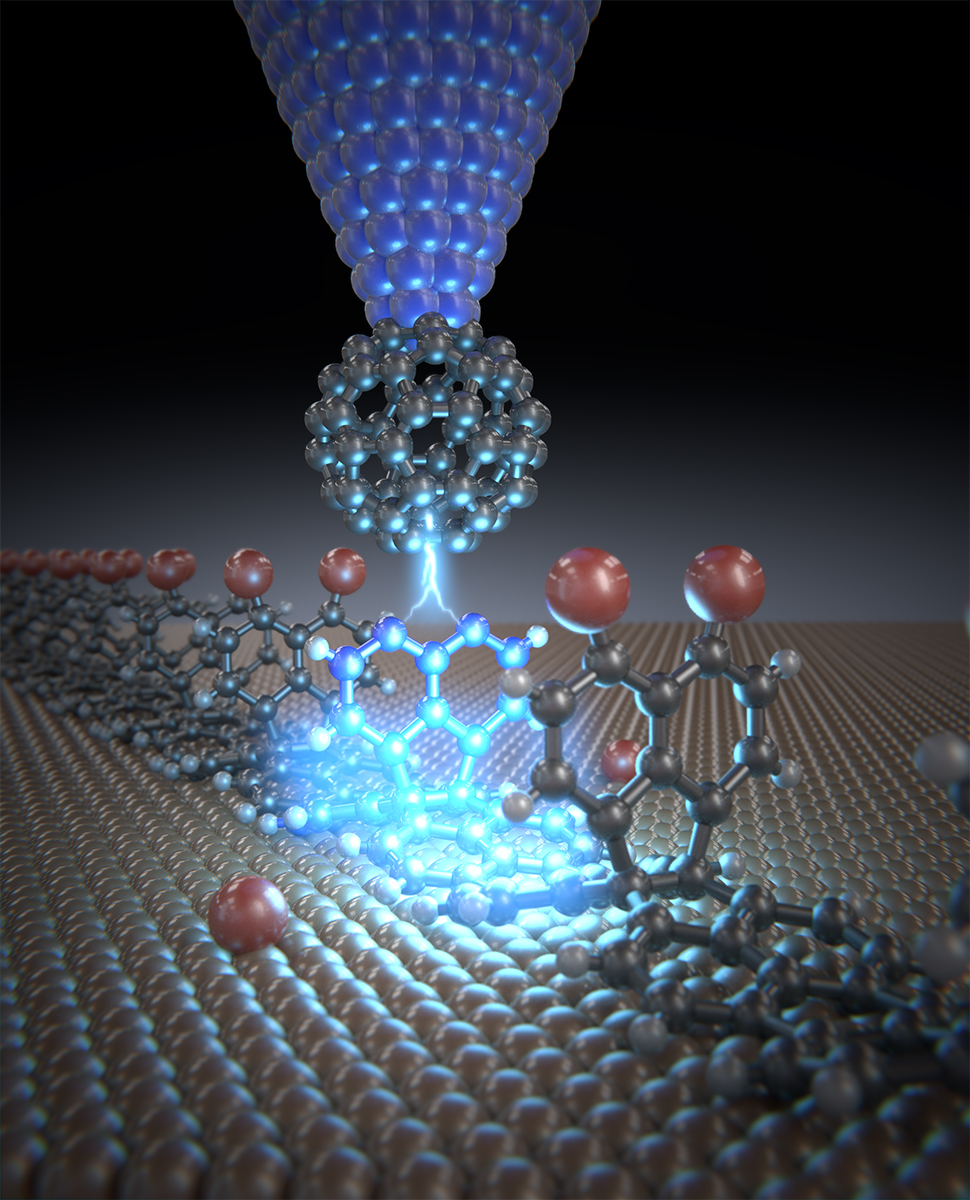
WPI-MANA Uses AFM’s Probe to Induce Chemical Reactions at Specific Sites on Single Molecule – PRNewswire

TSUKUBA, Japan, Aug. 21, 2020 /PRNewswire/ -- A team at the International Center for Materials Nanoarchitectonics (WPI-MANA) has demonstrated controlled addition reactions at specific sites on a single molecule by using an atomic force microscope's (AFM) local probe at low temperature. This work enables the synthesis of functional carbon nanostructures that cannot be obtained by conventional chemistry. Thanks to their superior electrical properties, such nanostructures are expected to find applications in nanoelectronic devices.

(Image: https://kyodonewsprwire.jp/prwfile/release/M105739/202008183185/_prw_PI5fl_0QP3Fe05.jpg)

The team synthesized three-dimensional graphene nanoribbons (3D-GNR) by on-surface chemical reaction. Then, taking advantage of the AFM's ability to conduct tip-induced assembly, they demonstrated the nanoribbons' capability as a framework for local probe chemistry. This could allow sequential reactions, particularly addition reactions (in which two molecules combine to create a bigger one), by a local probe at the single-molecule level.

The AFM's probe, terminated with a small carbon monoxide molecule, allows direct observation of the inner structures of both single molecules, as well as the products of on-surface chemical reactions.

It also allows researchers to conduct single molecule chemistry via tip-induced reactions. The local probe can be used to generate highly reactive radical species by tip-induced dehydrogenation, dehalogenation or deoxidization on surfaces. However, since these organic redox reactions are conducted with planar molecules, the molecule-substrate interaction has to be reduced by inserting thin insulating films. In contrast, if a 3D hydrocarbon is used, the out-of-plane moiety can be used for local probe chemistry in a similar way to recent measurements of intermolecular interactions.

The WPI-MANA team noted that direct addition reactions at specific sites like the ones they demonstrated can advance chemistry toward synthesis of single compounds atom by atom. Such extremely fine control offers the ability to create unprecedented new functional materials.

This research was carried out by Shigeki Kawai* (Principal Researcher, Nano Functionality Integration Group, Nano-System Field, WPI-MANA, National Institute for Materials Science (NIMS)) and his collaborators.*Present affiliation: Group Leader, Nanoprobe Group, Nano Characterization Field, Research Center for Advanced Measurement and Characterization, NIMS

Shigeki Kawai et al., SCIENCE ADVANCES, Feb. 28, 2020:https://advances.sciencemag.org/content/6/9/eaay8913

SOURCE International Center for Materials Nanoarchitectonics (WPI-MANA), National Institute for Materials Science (NIMS)

Read more here:
WPI-MANA Uses AFM's Probe to Induce Chemical Reactions at Specific Sites on Single Molecule - PRNewswire

The Chemical Reaction | Review – Chemistry World

Fiona ErskinePoint Blank2020 | 432pp | 14.99ISBN 9781786077578

Buy this book on Amazon.co.uk

Jaqueline Silver is a badass chemical engineer with a nasty habit of stumbling into danger. Part sleuth, part adventurer and all scientist, shes willing to improvise explosives on the fly and even maps out the chemical formula for oxytocin when she orgasms. Now in her second outing, chemistry has its own answer to Jack Reacher.

In The Chemical Reaction, Silver finds herself amid a chemical cocktail of international intrigue focused on priceless art and rare earth elements. It begins with Silver still in peril following her previous outing in The Chemical Detective, and, following a suitably explosive set-piece, launches into a globe-trotting adventure that takes us to the Black Sea, Sweden, Shanghai, and, uh, Yarm High Street.

The tale itself takes its time to get going, but once it does the pace continues to ramp up. There are periodic table-based codes to crack, professional athletes/strippers to seduce and deadly perils to evade. The book is chock full of characters that grab the attention, too (not least a Chinese stuntwoman who is rather handy with a sword). If theres a flaw, its that usually the climactic events happen off page, with readers watching the prelude only to see the final results in a newspaper clipping with the notable exception of one ill-fated swim near a hydroelectric dam.

Fortunately, Fiona Erskines heroine is good company, with a wry humour and a thoroughly modern attitude. Silver defies tropes that too often flood the genre, using brains rather than improbable skills and possessing a sensibility with which her readers can empathise. Silver does not go looking for trouble, but she doesnt back down when it finds her. Refreshingly turning conventions on their head, the women of the story are firmly at the fore, while the villains remain satisfyingly moustache-twirling. The authors notes at the back of the tale also add a sense of authenticity to the story (Erskine is herself a chemical engineer), providing useful real-world facts and context to the narrative.

The Chemical Reaction wont leave you pondering the deeper mysteries of the universe, but it gives chemists a personalised twist on the summer read with enough drama to hold your attention.

Fiona Erskines first novel, The Chemical Detective, featured in our book club podcast. Listen to it here.

See original here:
The Chemical Reaction | Review - Chemistry World

Two people injured in an explosion inside Purdue’s Wetherill Hall of Chemistry – Journal & Courier

Share This Story!

Let friends in your social network know what you are reading about

An explosion inside Purdue University's WetherillHall of Chemistry injured two people, university spokesman Jim Bush said Thursday.

A link has been sent to your friend's email address.

A link has been posted to your Facebook feed.

Purdue ambulance or Purdue paramedics illustration(Photo: Ron Wilkins/Journal & Courier)

WEST LAFAYETTE, Ind. An explosion inside Purdue University's WetherillHall of Chemistry injured two people, university spokesman Jim Bush said Thursday.

Purdue University firefighters were called the chemistry building about 3:40 p.m. Thursday after the explosion.

"Two people were working under a hood when a vessel exploded," Bush wrote in response to the Journal & Courier's request for information. "Both have been transported to IU Health with injuries which are non-life threatening."

Bush did not release the names of the people injured or say what their relationship is to the university.

The area around the chemistry building and the room where the explosion happened wasclosed while radiological and environmental management conducts a cleanup of the area, Bush said.

Reach Ron Wilkins at 765-420-5231 or at rwilkins@jconline.com. Follow on Twitter: @RonWilkins2.

Read or Share this story: https://www.jconline.com/story/news/local/lafayette/2020/08/20/two-injured-purdue-university-explosion-chemistry-building/3401596001/

Aug. 20, 2020, 4:01 p.m.

Aug. 20, 2020, 1 p.m.

Aug. 20, 2020, 3:35 p.m.

Aug. 20, 2020, 3:47 p.m.

Aug. 19, 2020, 4:30 p.m.

Aug. 19, 2020, 11:57 a.m.

Read the original here:
Two people injured in an explosion inside Purdue's Wetherill Hall of Chemistry - Journal & Courier

Sour beer: The chemistry behind this wondrously complex craft brew – CNN

"We know the beers taste amazing and look beautiful," said Teresa Longin, a professor of chemistry at the University of Redlands in California, who is presenting the new research this week at the American Chemical Society.

Her husband, David Soulsby, also a Redlands professor of chemistry, kept urging her to use her expertise to help explain the seemingly endless varieties and complexities of sour beer.

The two researchers performed a chemical analysis to find out which molecules were springing up during sour beers' brewing and fermenting processes, and to get a sense of how densely or sparsely a given compound was dispersed in the mix.

While scientists have previously studied the chemical makeup of a finished batch of sour beer, it's rare to get a look into the ways the microbes and chemicals are playing off each other as the beer actually is being made.

"As far as we're aware, people haven't done this before," Longin said. "Each individual barrel is its own ecosystem. It's a very parallel process to the way wine is made."

Molecular science meets a beer with history

Sour beers are created with a process in which wild yeast and bacteria are able to colonize freshly brewed beer, and that mixture undergoes spontaneous fermentation. Brewers cool the mixture and place it in barrels so that it can age for months or years.

The process has been used in Europe for centuries and is popular in the exploding American craft beer scene.

"The Belgians are experts at aging," Soulsby said. Sours often include fruit additives, such as peaches or blackberries, which help contribute to the far-flung tastes they're known for.

Various chemical processes occur in sour brewing including the interactions between acetic acid, found in vinegar, and lactic acid, which is cultured to make yogurt.

"When it ages, those flavors blend together," Soulsby explained. "Over time sugar is released, and it can become more balsamic."

In practice, though, the process is wildly unpredictable, subject to innumerable microscopic whims.

"Some batches of beer made three or four days apart could end up with different concentrations," he said.

Scientists collaborate with a local brewer

For fans, the allure of a sour comes in its uniquely tangy aroma and taste.

"That's what hooked me. I still get that every time I open a barrel," said Bryan Doty, who co-founded with his wife, Chintya, the brewery Sour Cellars in Rancho Cucamonga, California, about 40 miles east of Los Angeles.

Sour Cellars gave the Redlands researchers access to the beers fermenting in its barrels.

After he began home brewing around 2011, Bryan Doty's passion for sour beers was born after only a few batches. He was captivated by the many ways the beers could be crafted as well as the unique flavor possibilities when they reached a connoisseur's lips.

"It was a hobby that got out of control," he said.

Today, that hobby has fermented into a warehouse housing upward of 300 oak barrels, formerly used for red and white wines, each now incubating a batch of original sour beer during some stage of its lifestyle. Sour Cellars produces about 20 different beers each year, depending on which fruits might be available or in season.

The brewery seeks to follow "laborious and time-consuming traditional Belgian methods, combined with modern technologies to create more interesting aromas and flavors."

Through practice, Bryan Doty has found that fiddling with one variable or another can result in vastly different tastes once the beer is ready for bottling.

For instance, at the beginning, differences in a batch's pH level or mtemperature are key details to monitor or tweak. He also likes to experiment with rapidly cooling some or all of a particular batch. He documents weather patterns to keep track of how overall atmospheric conditions might be influencing the taste of a brew. And using different yeasts contributes mightily to how sour a particular beer might become.

For sours, the length of time the beer has to age is one of the key ways Sour Cellars creates the more complex and nuanced flavors for which it's known.

"I like to keep it in the barrel for at least a year," Bryan Doty said.

Unlike other more common types of beer, the brewing process for sours is lengthier, allowing beers more time to age, not unlike a good wine. Some of Bryan Doty's brews age for three or four years. This year, for instance, Sour Cellars is finally letting customers take swigs from a blend that the team began brewing in 2016, just after the brewery officially opened its doors.

New science helps fine-tune the brewing process

So far, the collaboration between Sour Cellars and the Redlands researchers is in its nascent stages.

"All of the stuff we did was following one barrel from one batch over a year," Longin said. That means there's nearly an endless number of ways she and Soulsby can keep investigating sour beer.

The scientists plan to continue delving into the dizzying chemical complexities that sours offer, in an effort to help Brian Doty, and brewers everywhere, to design methods to improve their process.

For Brian Doty, working at the frontiers of molecular science is a long way from the proverbial bathtub where many brewers get their start. He plans to keep working with the scientists to glean more direct insights into the types of concoctions he can pour for visitors to the Sour Cellars tasting room in years to come.

"Bryan is working with us so he can make better beer," Longin said.

View post:
Sour beer: The chemistry behind this wondrously complex craft brew - CNN