Referendums in the Pacific are attracting attention faraway – The Economist

France, China and Taiwan are all involved

TESTING THE popular will does not come naturally to Melanesian governments. Policy decisions are normally taken behind closed doors, away from the prying eyes of the general public. That may now be changing. New Caledonia, still a French possession, and Bougainville, an island at the eastern end of Papua New Guinea (PNG), held referendums on independence in 2018 and 2019. New Caledonia will hold a second such vote on October 4th. Enthusiasm for direct democracy is becoming infectious. The premier of tiny Malaita, the most populous province in the Solomon Islands, now wants to hold his own referendum on secession in protest against his national governments overtures to China.

Bougainvilles 250,000 people are in the midst of their first election since the referendum of 2019, when 97.7% voted for independence. But that vote was non-binding, requiring only that the PNG government open negotiations on the islands future status. PNGs prime minister, James Marape, is adamant that Bougainville lacks the economic clout to survive as an independent state. Bougainville once boasted one of the worlds largest copper mines, but it was closed down in the civil war of 1988-97, leaving the island devoid of profitable exports. The front-runner in the contest to lead its autonomous government, Ishmael Toroama, once commanded the Bougainville Revolutionary Army, which fought bloodily for independence from PNG in the early 1990s.

Whereas Bougainvilleans opted emphatically for independence, New Caledonians voted against it in 2018, by 57% to 43%. That was the first of three scheduled referendums on whether to split from France, the territorys colonial ruler since 1853. Since then, fervent French loyalists have regrouped, taking control of the local government. The French government is not neutral. It has let loyalists hoist the French tricolour on the campaign trail. On a visit to the territory in 2018, President Emmanuel Macron waxed lyrical about the vast stretches of the Pacific that remain a part of France.

Geostrategic rivalries are shaping Oceanias local struggles. The Solomon Islands shifted diplomatic recognition from Taiwan to China last year. Malaitas premier, Daniel Suidani, rejected that switch, condemning China for its communism and atheism. Despite the border being closed against covid-19, a direct flight from Guangzhou arrived on September 2nd, carrying Chinese workers hired to prepare facilities for the Pacific Games in 2023. We will be closing access to Malaita, Mr Suidani declared angrily, promising at the same time to shut down stores run by ethnic Chinese on the island.

Taiwanese diplomats stirred the pot by meeting Malaitan officials in Australia in March. Since then Taiwan has sent consignments of surgical masks, bags of rice and thermal-imaging equipment. Whether or not they are independent, the islands of the Pacific will not be insulated from big-power rivalry.

This article appeared in the Asia section of the print edition under the headline "No island is an island"

View original post here:

Referendums in the Pacific are attracting attention faraway - The Economist

Cyberpunk – Wikipedia

Postmodern science fiction genre in a futuristic dystopian setting

Cyberpunk is a subgenre of science fiction in a dystopian futuristic setting that tends to focus on a "combination of low-life and high tech"[1] featuring advanced technological and scientific achievements, such as artificial intelligence and cybernetics, juxtaposed with a degree of breakdown or radical change in the social order.[2] Much of cyberpunk is rooted in the New Wave science fiction movement of the 1960s and 1970s, when writers like Philip K. Dick, Roger Zelazny, John Brunner, J.G. Ballard, Philip Jos Farmer and Harlan Ellison examined the impact of drug culture, technology, and the sexual revolution while avoiding the utopian tendencies of earlier science fiction.

Comics exploring cyberpunk themes began appearing as early as Judge Dredd, first published in 1977.[3] Released in 1984, William Gibson's influential debut novel Neuromancer would help solidify cyberpunk as a genre, drawing influence from punk subculture and early hacker culture. Other influential cyberpunk writers included Bruce Sterling and Rudy Rucker. The Japanese cyberpunk subgenre began in 1982 with the debut of Katsuhiro Otomo's manga series Akira, with its 1988 anime film adaptation later popularizing the subgenre.

Early films in the genre include Ridley Scott's 1982 film Blade Runner, one of several of Philip K. Dick's works that have been adapted into films. The films Johnny Mnemonic (1995)[4] and New Rose Hotel (1998),[5][6] both based upon short stories by William Gibson, flopped commercially and critically. The Matrix trilogy (1999-2003) were some of the most successful cyberpunk films. Newer cyberpunk media includes Blade Runner 2049 (2017), a sequel to the original 1982 film, as well as Upgrade (2018), Alita: Battle Angel (2019) based on the 1990s Japanese manga Battle Angel Alita, the 2018 Netflix TV series Altered Carbon based on Richard K. Morgan's 2002 novel of the same name, and the upcoming video game Cyberpunk 2077 (2020).

Lawrence Person has attempted to define the content and ethos of the cyberpunk literary movement stating:

Classic cyberpunk characters were marginalized, alienated loners who lived on the edge of society in generally dystopic futures where daily life was impacted by rapid technological change, an ubiquitous datasphere of computerized information, and invasive modification of the human body.

Cyberpunk plots often center on conflict among artificial intelligences, hackers, and megacorporations, and tend to be set in a near-future Earth, rather than in the far-future settings or galactic vistas found in novels such as Isaac Asimov's Foundation or Frank Herbert's Dune.[8] The settings are usually post-industrial dystopias but tend to feature extraordinary cultural ferment and the use of technology in ways never anticipated by its original inventors ("the street finds its own uses for things").[9] Much of the genre's atmosphere echoes film noir, and written works in the genre often use techniques from detective fiction.[10] There are sources who view that cyberpunk has shifted from a literary movement to a mode of science fiction due to the limited number of writers and its transition to a more generalized cultural formation.[11][12][13]

The origins of cyberpunk are rooted in the New Wave science fiction movement of the 1960s and 70s, where New Worlds, under the editorship of Michael Moorcock, began inviting and encouraging stories that examined new writing styles, techniques, and archetypes. Reacting to conventional storytelling, New Wave authors attempted to present a world where society coped with a constant upheaval of new technology and culture, generally with dystopian outcomes. Writers like Roger Zelazny, J.G. Ballard, Philip Jose Farmer, and Harlan Ellison often examined the impact of drug culture, technology, and the sexual revolution with an avant-garde style influenced by the Beat Generation (especially William S. Burroughs' own SF), Dadaism, and their own ideas.[14] Ballard attacked the idea that stories should follow the "archetypes" popular since the time of Ancient Greece, and the assumption that these would somehow be the same ones that would call to modern readers, as Joseph Campbell argued in The Hero with a Thousand Faces. Instead, Ballard wanted to write a new myth for the modern reader, a style with "more psycho-literary ideas, more meta-biological and meta-chemical concepts, private time systems, synthetic psychologies and space-times, more of the sombre half-worlds one glimpses in the paintings of schizophrenics."[15]

This had a profound influence on a new generation of writers, some of whom would come to call their movement "Cyberpunk". One, Bruce Sterling, later said:

In the circle of American science fiction writers of my generation cyberpunks and humanists and so forth [Ballard] was a towering figure. We used to have bitter struggles over who was more Ballardian than whom. We knew we were not fit to polish the mans boots, and we were scarcely able to understand how we could get to a position to do work which he might respect or stand, but at least we were able to see the peak of achievement that he had reached.[16]

Ballard, Zelazny, and the rest of New Wave was seen by the subsequent generation as delivering more "realism" to science fiction, and they attempted to build on this.

Similarly influential, and generally cited as proto-cyberpunk, is the Philip K. Dick novel Do Androids Dream of Electric Sheep, first published in 1968. Presenting precisely the general feeling of dystopian post-economic-apocalyptic future as Gibson and Sterling later deliver, it examines ethical and moral problems with cybernetic, artificial intelligence in a way more "realist" than the Isaac Asimov Robot series that laid its philosophical foundation. Dick's protege and friend K. W. Jeter wrote a very dark and imaginative novel called Dr. Adder in 1972 that, Dick lamented, might have been more influential in the field had it been able to find a publisher at that time.[citation needed] It was not published until 1984, after which Jeter made it the first book in a trilogy, followed by The Glass Hammer (1985) and Death Arms (1987). Jeter wrote other standalone cyberpunk novels before going on to write three authorized sequels to Do Androids Dream of electric sheep, named Blade Runner 2: The Edge of Human (1995), Blade Runner 3: Replicant Night (1996), and Blade Runner 4: Eye and Talon.

Do Androids Dream of Electric Sheep was made into the seminal movie Blade Runner, released in 1982. This was one year after William Gibson's story, "Johnny Mnemonic" helped move proto-cyberpunk concepts into the mainstream. That story, which also became a film years later in 1995, involves another dystopian future, where human couriers deliver computer data, stored cybernetically in their own minds.

In 1983 a short story written by Bruce Bethke, called Cyberpunk, was published in Amazing Stories. The term was picked up by Gardner Dozois, editor of Isaac Asimov's Science Fiction Magazine and popularized in his editorials. Bethke says he made two lists of words, one for technology, one for troublemakers, and experimented with combining them variously into compound words, consciously attempting to coin a term that encompassed both punk attitudes and high technology.

He described the idea thus:

The kids who trashed my computer; their kids were going to be Holy Terrors, combining the ethical vacuity of teenagers with a technical fluency we adults could only guess at. Further, the parents and other adult authority figures of the early 21st Century were going to be terribly ill-equipped to deal with the first generation of teenagers who grew up truly speaking computer.[17]

Afterward, Dozois began using this term in his own writing, most notably in a Washington Post article where he said "About the closest thing here to a self-willed esthetic school would be the purveyors of bizarre hard-edged, high-tech stuff, who have on occasion been referred to as cyberpunks Sterling, Gibson, Shiner, Cadigan, Bear."[18]

About that time in 1984, William Gibson's novel Neuromancer was published, delivering a glimpse of a future encompassed by what became an archetype of cyberpunk "virtual reality", with the human mind being fed light-based worldscapes through a computer interface. Some, perhaps ironically including Bethke himself, argued at the time that the writers whose style Gibson's books epitomized should be called "Neuromantics", a pun on the name of the novel plus "New Romantics", a term used for a New Wave pop music movement that had just occurred in Britain, but this term did not catch on. Bethke later paraphrased Michael Swanwick's argument for the term: "the movement writers should properly be termed neuromantics, since so much of what they were doing was clearly Imitation Neuromancer".

Sterling was another writer who played a central role, often consciously, in the cyberpunk genre, variously seen as either keeping it on track, or distorting its natural path into a stagnant formula.[19] In 1986 he edited a volume of cyberpunk stories called Mirrorshades: The Cyberpunk Anthology, an attempt to establish what cyberpunk was, from Sterling's perspective.[20]

In the subsequent decade, the motifs of Gibson's Neuromancer became formulaic, climaxing in the satirical extremes of Neal Stephenson's Snow Crash in 1992.

Bookending the Cyberpunk era, Bethke himself published a novel in 1995 called Headcrash, like Snow Crash a satirical attack on the genre's excesses. Fittingly, it won an honor named after cyberpunk's spiritual founder, the Philip K. Dick Award.

It satirized the genre in this way:

...full of young guys with no social lives, no sex lives and no hope of ever moving out of their mothers' basements ... They're total wankers and losers who indulge in Messianic fantasies about someday getting even with the world through almost-magical computer skills, but whose actual use of the Net amounts to dialing up the scatophilia forum and downloading a few disgusting pictures. You know, cyberpunks.[21]

The impact of cyberpunk, though, has been long-lasting. Elements of both the setting and storytelling have become normal in science fiction in general, and a slew of sub-genres now have -punk tacked onto their names, most obviously Steampunk, but also a host of other Cyberpunk derivatives.

Primary figures in the cyberpunk movement include William Gibson, Neal Stephenson, Bruce Sterling, Bruce Bethke, Pat Cadigan, Rudy Rucker, and John Shirley. Philip K. Dick (author of Do Androids Dream of Electric Sheep?, from which the film Blade Runner was adapted) is also seen by some as prefiguring the movement.[22]

Blade Runner can be seen as a quintessential example of the cyberpunk style and theme.[8] Video games, board games, and tabletop role-playing games, such as Cyberpunk 2020 and Shadowrun, often feature storylines that are heavily influenced by cyberpunk writing and movies. Beginning in the early 1990s, some trends in fashion and music were also labeled as cyberpunk. Cyberpunk is also featured prominently in anime and manga (Japanese cyberpunk),[23] with Akira, Ghost in the Shell and Cowboy Bebop being among the most notable.[23]

Cyberpunk writers tend to use elements from crime fictionparticularly hardboiled detective fiction and film noirand postmodernist prose to describe an often nihilistic underground side of an electronic society. The genre's vision of a troubled future is often called the antithesis of the generally utopian visions of the future popular in the 1940s and 1950s. Gibson defined cyberpunk's antipathy towards utopian SF in his 1981 short story "The Gernsback Continuum," which pokes fun at and, to a certain extent, condemns utopian science fiction.[26][27][28]

In some cyberpunk writing, much of the action takes place online, in cyberspace, blurring the line between actual and virtual reality.[29] A typical trope in such work is a direct connection between the human brain and computer systems. Cyberpunk settings are dystopias with corruption, computers and internet connectivity. Giant, multinational corporations have for the most part replaced governments as centers of political, economic, and even military power.

The economic and technological state of Japan is a regular theme in the Cyberpunk literature of the '80s. Of Japan's influence on the genre, William Gibson said, "Modern Japan simply was cyberpunk."[25] Cyberpunk is often set in urbanized, artificial landscapes, and "city lights, receding" was used by Gibson as one of the genre's first metaphors for cyberspace and virtual reality.[30] The cityscapes of Hong Kong[31] and Shanghai[32] have had major influences in the urban backgrounds, ambiance and settings in many cyberpunk works such as Blade Runner and Shadowrun. Ridley Scott envisioned the landscape of cyberpunk Los Angeles in Blade Runner to be "Hong Kong on a very bad day".[33] The streetscapes of the Ghost in the Shell film were based on Hong Kong. Its director Mamoru Oshii felt that Hong Kong's strange and chaotic streets where "old and new exist in confusing relationships", fit the theme of the film well.[31] Hong Kong's Kowloon Walled City is particularly notable for its disorganized hyper-urbanization and breakdown in traditional urban planning to be an inspiration to cyberpunk landscapes.

One of the cyberpunk genre's prototype characters is Case, from Gibson's Neuromancer.[34] Case is a "console cowboy," a brilliant hacker who has betrayed his organized criminal partners. Robbed of his talent through a crippling injury inflicted by the vengeful partners, Case unexpectedly receives a once-in-a-lifetime opportunity to be healed by expert medical care but only if he participates in another criminal enterprise with a new crew.

Like Case, many cyberpunk protagonists are manipulated, placed in situations where they have little or no choice, and although they might see things through, they do not necessarily come out any further ahead than they previously were. These anti-heroes"criminals, outcasts, visionaries, dissenters and misfits"[35]call to mind the private eye of detective fiction. This emphasis on the misfits and the malcontents is the "punk" component of cyberpunk.

Cyberpunk can be intended to disquiet readers and call them to action. It often expresses a sense of rebellion, suggesting that one could describe it as a type of cultural revolution in science fiction. In the words of author and critic David Brin:

...a closer look [at cyberpunk authors] reveals that they nearly always portray future societies in which governments have become wimpy and pathetic ...Popular science fiction tales by Gibson, Williams, Cadigan and others do depict Orwellian accumulations of power in the next century, but nearly always clutched in the secretive hands of a wealthy or corporate elite.[36]

Cyberpunk stories have also been seen as fictional forecasts of the evolution of the Internet. The earliest descriptions of a global communications network came long before the World Wide Web entered popular awareness, though not before traditional science-fiction writers such as Arthur C. Clarke and some social commentators such as James Burke began predicting that such networks would eventually form.[37]

Some observers cite that cyberpunk tends to marginalize sectors of society such as women and Africans. For instance, it is claimed that cyberpunk depicts fantasies that ultimately empower masculinity using fragmentary and decentered aesthetic that culminate in a masculine genre populated by male outlaws.[38] Critics also note the absence of any reference to Africa or an African-American character in the quintessential cyberpunk film Blade Runner[11] while other films reinforce stereotypes.[39]

Minnesota writer Bruce Bethke coined the term in 1983 for his short story "Cyberpunk," which was published in an issue of Amazing Science Fiction Stories.[40] The term was quickly appropriated as a label to be applied to the works of William Gibson, Bruce Sterling, Pat Cadigan and others. Of these, Sterling became the movement's chief ideologue, thanks to his fanzine Cheap Truth. John Shirley wrote articles on Sterling and Rucker's significance.[41] John Brunner's 1975 novel The Shockwave Rider is considered by many[who?] to be the first cyberpunk novel with many of the tropes commonly associated with the genre, some five years before the term was popularized by Dozois.[42]

William Gibson with his novel Neuromancer (1984) is arguably the most famous writer connected with the term cyberpunk. He emphasized style, a fascination with surfaces, and atmosphere over traditional science-fiction tropes. Regarded as ground-breaking and sometimes as "the archetypal cyberpunk work,"[7] Neuromancer was awarded the Hugo, Nebula, and Philip K. Dick Awards. Count Zero (1986) and Mona Lisa Overdrive (1988) followed after Gibson's popular debut novel. According to the Jargon File, "Gibson's near-total ignorance of computers and the present-day hacker culture enabled him to speculate about the role of computers and hackers in the future in ways hackers have since found both irritatingly nave and tremendously stimulating."[43]

Early on, cyberpunk was hailed as a radical departure from science-fiction standards and a new manifestation of vitality.[44] Shortly thereafter, however, some critics arose to challenge its status as a revolutionary movement. These critics said that the SF New Wave of the 1960s was much more innovative as far as narrative techniques and styles were concerned.[45] Furthermore, while Neuromancer's narrator may have had an unusual "voice" for science fiction, much older examples can be found: Gibson's narrative voice, for example, resembles that of an updated Raymond Chandler, as in his novel The Big Sleep (1939).[44] Others noted that almost all traits claimed to be uniquely cyberpunk could in fact be found in older writers' worksoften citing J. G. Ballard, Philip K. Dick, Harlan Ellison, Stanisaw Lem, Samuel R. Delany, and even William S. Burroughs.[44] For example, Philip K. Dick's works contain recurring themes of social decay, artificial intelligence, paranoia, and blurred lines between objective and subjective realities.[46] The influential cyberpunk movie Blade Runner (1982) is based on his book, Do Androids Dream of Electric Sheep?.[47] Humans linked to machines are found in Pohl and Kornbluth's Wolfbane (1959) and Roger Zelazny's Creatures of Light and Darkness (1968).[citation needed]

In 1994, scholar Brian Stonehill suggested that Thomas Pynchon's 1973 novel Gravity's Rainbow "not only curses but precurses what we now glibly dub cyberspace."[48] Other important predecessors include Alfred Bester's two most celebrated novels, The Demolished Man and The Stars My Destination,[49] as well as Vernor Vinge's novella True Names.[50]

Science-fiction writer David Brin describes cyberpunk as "the finest free promotion campaign ever waged on behalf of science fiction." It may not have attracted the "real punks," but it did ensnare many new readers, and it provided the sort of movement that postmodern literary critics found alluring. Cyberpunk made science fiction more attractive to academics, argues Brin; in addition, it made science fiction more profitable to Hollywood and to the visual arts generally. Although the "self-important rhetoric and whines of persecution" on the part of cyberpunk fans were irritating at worst and humorous at best, Brin declares that the "rebels did shake things up. We owe them a debt."[51]

Fredric Jameson considers cyberpunk the "supreme literary expression if not of postmodernism, then of late capitalism itself".[52]

Cyberpunk further inspired many professional writers who were not among the "original" cyberpunks to incorporate cyberpunk ideas into their own works,[citation needed] such as George Alec Effinger's When Gravity Fails. Wired magazine, created by Louis Rossetto and Jane Metcalfe, mixes new technology, art, literature, and current topics in order to interest today's cyberpunk fans, which Paula Yoo claims "proves that hardcore hackers, multimedia junkies, cyberpunks and cellular freaks are poised to take over the world."[53]

The film Blade Runner (1982)adapted from Philip K. Dick's Do Androids Dream of Electric Sheep?is set in 2019 in a dystopian future in which manufactured beings called replicants are slaves used on space colonies and are legal prey on Earth to various bounty hunters who "retire" (kill) them. Although Blade Runner was largely unsuccessful in its first theatrical release, it found a viewership in the home video market and became a cult film.[54] Since the movie omits the religious and mythical elements of Dick's original novel (e.g. empathy boxes and Wilbur Mercer), it falls more strictly within the cyberpunk genre than the novel does. William Gibson would later reveal that upon first viewing the film, he was surprised at how the look of this film matched his vision for Neuromancer, a book he was then working on. The film's tone has since been the staple of many cyberpunk movies, such as The Matrix trilogy (1999-2003), which uses a wide variety of cyberpunk elements.

The number of films in the genre or at least using a few genre elements has grown steadily since Blade Runner. Several of Philip K. Dick's works have been adapted to the silver screen. The films Johnny Mnemonic[4] and New Rose Hotel,[5][6] both based upon short stories by William Gibson, flopped commercially and critically. These box offices misses significantly slowed the development of cyberpunk as a literary or cultural form although a sequel to the 1982 film Blade Runner was released in October 2017 with Harrison Ford reprising his role from the original film.

In addition, "tech-noir" film as a hybrid genre, means a work of combining neo-noir and science fiction or cyberpunk. It includes many cyberpunk films such as Blade Runner, Burst City,[55] Robocop, 12 Monkeys, The Lawnmower Man, Hackers, Hardware, and Strange Days.

The Japanese cyberpunk subgenre began in 1982 with the debut of Katsuhiro Otomo's manga series Akira, with its 1988 anime film adaptation, which Otomo directed, later popularizing the subgenre. Akira inspired a wave of Japanese cyberpunk works, including manga and anime series such as Ghost in the Shell, Battle Angel Alita, Cowboy Bebop, and Serial Experiments Lain.[56] Other early Japanese cyberpunk works include the 1982 film Burst City, the 1985 original video animation Megazone 23, and the 1989 film Tetsuo: The Iron Man.

In contrast to Western cyberpunk which has roots in New Wave science fiction literature, Japanese cyberpunk has roots in underground music culture, specifically the Japanese punk subculture that arose from the Japanese punk music scene in the 1970s. The filmmaker Sogo Ishii introduced this subculture to Japanese cinema with the punk film Panic High School (1978) and the punk biker film Crazy Thunder Road (1980), both portraying the rebellion and anarchy associated with punk, and the latter featuring a punk biker gang aesthetic. Ishii's punk films paved the way for Otomo's seminal cyberpunk work Akira.[57]

Cyberpunk themes are widely visible in anime and manga. In Japan, where cosplay is popular and not only teenagers display such fashion styles, cyberpunk has been accepted and its influence is widespread. William Gibson's Neuromancer, whose influence dominated the early cyberpunk movement, was also set in Chiba, one of Japan's largest industrial areas, although at the time of writing the novel Gibson did not know the location of Chiba and had no idea how perfectly it fit his vision in some ways. The exposure to cyberpunk ideas and fiction in the 1980s has allowed it to seep into the Japanese culture.

Cyberpunk anime and manga draw upon a futuristic vision which has elements in common with Western science fiction and therefore have received wide international acceptance outside Japan. "The conceptualization involved in cyberpunk is more of forging ahead, looking at the new global culture. It is a culture that does not exist right now, so the Japanese concept of a cyberpunk future, seems just as valid as a Western one, especially as Western cyberpunk often incorporates many Japanese elements."[58] William Gibson is now a frequent visitor to Japan, and he came to see that many of his visions of Japan have become a reality:

Modern Japan simply was cyberpunk. The Japanese themselves knew it and delighted in it. I remember my first glimpse of Shibuya, when one of the young Tokyo journalists who had taken me there, his face drenched with the light of a thousand media-sunsall that towering, animated crawl of commercial informationsaid, "You see? You see? It is Blade Runner town." And it was. It so evidently was.[25]

Cyberpunk themes have appeared in many anime and manga, including the ground-breaking Appleseed, Ghost in the Shell, Ergo Proxy, Megazone 23, Neo Tokyo, Goku Midnight Eye, Cyber City Oedo 808, Bubblegum Crisis, A.D. Police: Dead End City, Angel Cop, Extra, Blame!, Armitage III, Texhnolyze, Neon Genesis Evangelion and Psycho-Pass.

Akira (1982 manga) and its 1988 anime film adaptation have influenced numerous works in animation, comics, film, music, television and video games.[59][60] Akira has been cited as a major influence on Hollywood films such as The Matrix,[61] Chronicle,[62] Looper,[63] Midnight Special, and Inception,[59] as well as cyberpunk-influenced video games such as Hideo Kojima's Snatcher[64] and Metal Gear Solid,[56] Valve's Half-Life series[65][66] and Dontnod Entertainment's Remember Me.[67] Akira has also influenced the work of musicians such as Kanye West, who paid homage to Akira in the "Stronger" music video,[59] and Lupe Fiasco, whose album Tetsuo & Youth is named after Tetsuo Shima.[68] The popular bike from the film, Kaneda's Motorbike, appears in Steven Spielberg's film Ready Player One,[69] and CD Projekt's video game Cyberpunk 2077.[70]

Ghost in the Shell (1995) influenced a number of prominent filmmakers, most notably the Wachowskis in The Matrix (1999) and its sequels.[71] The Matrix series took several concepts from the film, including the Matrix digital rain, which was inspired by the opening credits of Ghost in the Shell, and the way characters access the Matrix through holes in the back of their necks.[72] Other parallels have been drawn to James Cameron's Avatar, Steven Spielberg's A.I. Artificial Intelligence, and Jonathan Mostow's Surrogates.[72] James Cameron cited Ghost in the Shell as a source of inspiration,[73] citing it as an influence on Avatar.[74]

The original video animation Megazone 23 (1985) has a number of similarities to The Matrix.[75] Battle Angel Alita (1990) has had a notable influence on filmmaker James Cameron, who was planning to adapt it into a film since 2000. It was an influence on his TV series Dark Angel, and he is the producer of the 2018 film adaptation Alita: Battle Angel.[76]

There are many cyberpunk video games. Popular series include Final Fantasy VII and its spin-offs and remake,[77] the Megami Tensei series, Kojima's Snatcher and Metal Gear series, Deus Ex series, Syndicate series, and System Shock and its sequel. Other games, like Blade Runner, Ghost in the Shell, and the Matrix series, are based upon genre movies, or role-playing games (for instance the various Shadowrun games).

Several RPGs called Cyberpunk exist: Cyberpunk, Cyberpunk 2020 and Cyberpunk v3, by R. Talsorian Games, and GURPS Cyberpunk, published by Steve Jackson Games as a module of the GURPS family of RPGs. Cyberpunk 2020 was designed with the settings of William Gibson's writings in mind, and to some extent with his approval[citation needed], unlike the approach taken by FASA in producing the transgenre Shadowrun game. Both are set in the near future, in a world where cybernetics are prominent. In addition, Iron Crown Enterprises released an RPG named Cyberspace, which was out of print for several years until recently being re-released in online PDF form. CD Projekt Red is currently developing Cyberpunk 2077, a cyberpunk first-person open world Role-playing video game (RPG) based on the tabletop RPG Cyberpunk 2020.[78][79][80]In 1990, in a convergence of cyberpunk art and reality, the United States Secret Service raided Steve Jackson Games's headquarters and confiscated all their computers. Officials denied that the target had been the GURPS Cyberpunk sourcebook, but Jackson would later write that he and his colleagues "were never able to secure the return of the complete manuscript; [...] The Secret Service at first flatly refused to return anything then agreed to let us copy files, but when we got to their office, restricted us to one set of out-of-date files then agreed to make copies for us, but said "tomorrow" every day from March 4 to March 26. On March 26 we received a set of disks which purported to be our files, but the material was late, incomplete and well-nigh useless."[81] Steve Jackson Games won a lawsuit against the Secret Service, aided by the new Electronic Frontier Foundation. This event has achieved a sort of notoriety, which has extended to the book itself as well. All published editions of GURPS Cyberpunk have a tagline on the front cover, which reads "The book that was seized by the U.S. Secret Service!" Inside, the book provides a summary of the raid and its aftermath.

Cyberpunk has also inspired several tabletop, miniature and board games such as Necromunda by Games Workshop. Netrunner is a collectible card game introduced in 1996, based on the Cyberpunk 2020 role-playing game. Tokyo NOVA, debuting in 1993, is a cyberpunk role-playing game that uses playing cards instead of dice.

Julie Romandetta[82]

Invariably the origin of cyberpunk music lies in the synthesizer-heavy scores of cyberpunk films such as Escape from New York (1981) and Blade Runner (1982).[83] Some musicians and acts have been classified as cyberpunk due to their aesthetic style and musical content. Often dealing with dystopian visions of the future or biomechanical themes, some fit more squarely in the category than others. Bands whose music has been classified as cyberpunk include Psydoll, Front Line Assembly, Clock DVA, Angelspit and Sigue Sigue Sputnik.

Some musicians not normally associated with cyberpunk have at times been inspired to create concept albums exploring such themes. Albums such as Gary Numan's Replicas, The Pleasure Principle and Telekon were heavily inspired by the works of Philip K. Dick. Kraftwerk's The Man-Machine and Computer World albums both explored the theme of humanity becoming dependent on technology. Nine Inch Nails' concept album Year Zero also fits into this category. Fear Factory concept albums are heavily based upon future dystopia, cybernetics, clash between man and machines, virtual worlds. Billy Idol's Cyberpunk drew heavily from cyberpunk literature and the cyberdelic counter culture in its creation. 1. Outside, a cyberpunk narrative fueled concept album by David Bowie, was warmly met by critics upon its release in 1995. Many musicians have also taken inspiration from specific cyberpunk works or authors, including Sonic Youth, whose albums Sister and Daydream Nation take influence from the works of Philip K. Dick and William Gibson respectively. Madonna's 2001 Drowned World Tour opened with a cyberpunk section, where costumes, asethetics and stage props were used to accentuate the dystopian nature of the theatrical concert.

Vaporwave and synthwave are also influenced by cyberpunk. The former has been inspired by one of the messages of cyberpunk and is interpreted as a dystopian[84] critique of capitalism[85] in the vein of cyberpunk and the latter is more surface-level, inspired only by the aesthetic of cyberpunk as a nostalgic retrofuturistic revival of aspects of cyberpunk's origins.

Some Neo-Futurism artworks and cityscapes have been influenced by cyberpunk.[citation needed] Writers David Suzuki and Holly Dressel describe the cafes, brand-name stores and video arcades of the Sony Center in the Potsdamer Platz public square of Berlin, Germany, as "a vision of a cyberpunk, corporate urban future".[86]

Several subcultures have been inspired by cyberpunk fiction. These include the cyberdelic counter culture of the late 1980s and early 90s. Cyberdelic, whose adherents referred to themselves as "cyberpunks", attempted to blend the psychedelic art and drug movement with the technology of cyberculture. Early adherents included Timothy Leary, Mark Frauenfelder and R. U. Sirius. The movement largely faded following the dot-com bubble implosion of 2000.

Cybergoth is a fashion and dance subculture which draws its inspiration from cyberpunk fiction, as well as rave and Gothic subcultures. In addition, a distinct cyberpunk fashion of its own has emerged in recent years[when?] which rejects the raver and goth influences of cybergoth, and draws inspiration from urban street fashion, "post apocalypse", functional clothing, high tech sports wear, tactical uniform and multifunction. This fashion goes by names like "tech wear", "goth ninja" or "tech ninja".

The Kowloon Walled City in Hong Kong (demolished in 1994) is often referenced as the model cyberpunk/dystopian slum as, given its poor living conditions at the time coupled with the city's political, physical, and economic isolation has caused many in academia to be fascinated by the ingenuity of its spawning.[87]

As a wider variety of writers began to work with cyberpunk concepts, new subgenres of science fiction emerged, some of which could be considered as playing off the cyberpunk label, others which could be considered as legitimate explorations into newer territory. These focused on technology and its social effects in different ways. One prominent subgenre is "steampunk," which is set in an alternate history Victorian era that combines anachronistic technology with cyberpunk's bleak film noir world view. The term was originally coined around 1987 as a joke to describe some of the novels of Tim Powers, James P. Blaylock, and K.W. Jeter, but by the time Gibson and Sterling entered the subgenre with their collaborative novel The Difference Engine the term was being used earnestly as well.[88]

Another subgenre is "biopunk" (cyberpunk themes dominated by biotechnology) from the early 1990s, a derivative style building on biotechnology rather than informational technology. In these stories, people are changed in some way not by mechanical means, but by genetic manipulation. Paul Di Filippo is seen as the most prominent biopunk writer, including his half-serious ribofunk. Bruce Sterling's Shaper/Mechanist cycle is also seen as a major influence. In addition, some people consider works such as Neal Stephenson's The Diamond Age to be postcyberpunk.

Cyberpunk works have been described as well situated within postmodern literature.[89]

In the United States, the term "Cyberpunk" is a registered trademark by R. Talsorian Games Inc. for its tabletop role-playing game[90].

Within the European Union, the "Cyberpunk" trademark is owned by two parties: CD Projekt SA for "games and online gaming services"[91] (particularly for the video game adaptation of the former) and by Sony Music for use outside games.[92]

Continue reading here:

Cyberpunk - Wikipedia

Heres what you need to run Cyberpunk 2077 on PC – The Verge

Cyberpunk 2077 will be released in a few months, but ahead of its mid-November launch, developer CD Projekt Red unveiled the system requirements needed to run the PC version of the game, and shockingly, you dont need to upgrade your computer to play the game.

The games recommended specs are not too heavy, requiring only an Intel Core i7-4790 or an AMD Ryzen 3 3200G processor, and either an Nvidia GTX 1060 or an AMD Radeon R9 Fury graphics card. So if you have not upgraded your rig in a bit, youll likely still be able to run the game at 1080p. However, if you are looking to run the game at 1440p or 4K resolution or take advantage of the games technical features like ray tracing, you will need to upgrade to an RTX 20-series or RTX 30-series GPU.

Cyberpunk 2077 is set to release on November 19th for PC, PS4, and Xbox One. If you are buying it on console and plan to upgrade within the same console family, CD Projekt Red confirmed that PS5 and Xbox Series X / S owners will be able to play Cyberpunk 2077 at launch, too. The developer also promised a free next-gen upgrade at a later date.

Read this article:

Heres what you need to run Cyberpunk 2077 on PC - The Verge

Cyberpunk 2077 system requirements revealed, here’s what you’ll need to play – GamesRadar+

The Cyberpunk 2077 system requirements have finally been revealed, and they're surprisingly approachable even if you have a low-to-mid tier machine.

Developer CD Projekt Red shared both the minimum system requirements and the recommended system requirements on the latest episode of Night City Wire. Here are both sets:

That's way more modest than I was expecting! Especially in terms of the GPU, which is nowhere near requiring those shiny new Nvidia GeForce RTX 3000 cards, and the hard drive space. There have been Call of Duty: Warzone updates that were almost as big as the entire Cyberpunk 2077 game.

Granted, you'll still get even better visuals and performance if your PC exceeds those specs. For instance, We know that Cyberpunk 2077 will capitalize on Nvidia GeForce RTX graphics effects, since the game got a beautiful trailer showcasing its performance on the new GeForce RTX 3000 series. Ray-traced reflections on shiny surfaces, beautifully fuzzy halos around bright neon light sources, and more all await if you're playing with an RTX card.

For your reference, these are the specs of the machine that CD Projekt Red used to run its big E3 2018 demo:

You'll be able to do missions or just get drinks with a lot of Cyberpunk 2077 companions - though some of them will probably end up wanting you dead.

Read the original:

Cyberpunk 2077 system requirements revealed, here's what you'll need to play - GamesRadar+

First Cyberpunk 2077 Platinum trophy has already been claimed – GamesRadar+

The game itself might not be set to release for more than two months, but that hasnt stopped someone from claiming the first Cyberpunk 2077 Platinum trophy. Earlier today, ukasz Babiel, QA lead at developer CD Projekt Red, shared a screenshot showing off their 100% completion of the game with the caption just a normal day at work.

That claim was later corroborated by global community lead Marcin Momot, who congratulated Babiel as the first person to get that Platinum Trophy in Cyberpunk 2077. Babiel later confirmed, however, that the trophy was a collective effort, suggesting that multiple QA developers helped out with the process.

The team effort means that Babiel doesnt know exactly how long it took to grab the trophy, but his screenshot does show off how many achievements are available. It looks as though as well as the Platinum, Cyberpunk 2077 will feature 26 Bronze, 17 Silver, and one Gold trophy.

As member of CD Projekt Red staff, Babiel and co obviously have a significant headstart over the rest of us, who will have to wait until the Cyberpunk 2077 release date on November 19 to even start making our own trophy hunting progress. While the team might have had an advantage, however, theres no taking away from their achievement.

The fact that the QA staff seem to be testing trophies seems like a good omen. Cyberpunk 2077 has been delayed twice from its original April release date, but with all the trophies available and Babiel saying that the team is planning speedrun contests, its starting to look like the game is finally nearing completion.

Take our quiz and find out which Cyberpunk 2077 lifepath should you pick?

More here:

First Cyberpunk 2077 Platinum trophy has already been claimed - GamesRadar+

Cyberpunk creator says its harder to reach fans directly in videogames The stakes are ridiculous – PCGamesN

During a keynote talk at this years PAX x EGX Online, Mike Pondsmith,the creator of the Cyberpunk table-top RPG that inspired Cyberpunk 2077, spoke on the contrast between developing for pen-and-paper and videogames.As he sees it, the latters abit more Hollywood than the former, raising the risk factor significantly.

Videogames are a little more like Hollywood, the stakes are ridiculous, Pondsmith explained. Theres a lot more of a problem with reaching and talking with the fans directly. Theres a wall there, between you and the people who use your game. He discusses how individual credits are often harder to find on videogames, leading to people being surprised when they find out who worked on what: I think theres a distance there.

Videogames tend to be much more expensive, too, and Pondsmith recalls his shock when he made the jump to digital game development. I can go and build a pretty good game, and maybe spend $10,000 at the most to get it printed, he says. When I did my first really large videogame project, I went in and said what are we budgeted for? and they said $20,000,000, and I went Im now responsible for figuring out what to do with $20,000,000? Oh, crud, so the stakes are higher.

The project Pondsmith is likely talking about there is The Matrix Online, the MMORPG game based on the movie trilogy he contributed to as a designer in 2005. His time in videogames was brief before agreeing to collaborate with CD Projekt Red on Cyberpunk 2077, anRPG game based on Pondsmiths 1988 RPG, Cyberpunk.

You can seea Twitch clip below you can watch the full speech here:

Were getting close to the Cyberpunk 2077 release date. CD Projekt has said fans can expect more DLC than The Witcher 3, the multiplayer microtransactions wont be aggressive, and it might even get a cookbook. If you just cant wait, we have the best cyberpunk games, and the best online board games, to keep you occupied.

Read the original post:

Cyberpunk creator says its harder to reach fans directly in videogames The stakes are ridiculous - PCGamesN

Cyberpunk 2077 Night City Wire: How To Watch Today’s Stream – GameSpot

As the November release for Cyberpunk 2077 draws closer, developer CD Projekt Red has prepared the third part in its Night City Wire series. The new episode will be streamed today, September 18, at 9 AM PT / 12 PM ET and will focus on Night City and the gangs who inhabit it.

You'll be able to watch the latest Cyberpunk 2077 Night City Wire video in several different places, including the official CD Projekt Red Twitch channel. You can also check the developer's official YouTube channel, or to make it even easier for you, we've embedded the stream below.

You need a javascript enabled browser to watch videos.

Cyberpunk 2077 Night City Wire Episode 3 - With Pre and Post Show

Size:640 360480 270

Want us to remember this setting for all your devices?

Sign up or Sign in now!

Please use a html5 video capable browser to watch videos.

This video has an invalid file format.

Sorry, but you can't access this content!

JanuaryFebruaryMarchAprilMayJuneJulyAugustSeptemberOctoberNovemberDecember12345678910111213141516171819202122232425262728293031Year2020201920182017201620152014201320122011201020092008200720062005200420032002200120001999199819971996199519941993199219911990198919881987198619851984198319821981198019791978197719761975197419731972197119701969196819671966196519641963196219611960195919581957195619551954195319521951195019491948194719461945194419431942194119401939193819371936193519341933193219311930192919281927192619251924192319221921192019191918191719161915191419131912191119101909190819071906190519041903190219011900

By clicking 'enter', you agree to GameSpot's Terms of Use and Privacy Policy

enter

The first Night City Wire episode revealed Cyberpunk 2077's districts and the Braindance gameplay mechanic that allows players to hack into the psyches of various characters and explore their memories. A new anime adaptation called Cyberpunk 2077: Edgerunners was also announced, which will be produced by Kill La Kill's Studio Trigger for Netflix.

August's second episode revealed more of the various weapons that players will be able to wield, which include sub-machine guns with tracer rounds, sniper rifles that can pierce through barriers, and thermal katanas that can slice through enemies. Cyberpunk 2077 will launch on November 19 for PC, PS4, and Xbox One, and will include a free next-gen upgrade to PS5 and Xbox Series X/S.

For more on Cyberpunk 2077, be sure check out our hub where you can get the latest news on the game as well as deep dives into the lore of the sci-fi RPG series.

GameSpot may get a commission from retail offers.

Go here to see the original:

Cyberpunk 2077 Night City Wire: How To Watch Today's Stream - GameSpot

Cyberpunk 2077: The Gangs of Night City | Game Rant – GameRant

Night City is the setting for Cyberpunk 2077 and contains nine main gangs each with their own methods and philosophies for players to explore.

The setting of Cyberpunk 2077 is packed full of street gangs that players will encounter on their journey through Night City. With every side-quest in the game supposed to be like a full story, it is likely that they wont just add flavor to the game but will have distinct territories and recognizably different styles of combat.

The gangs of Cyberpunk 2077 are extremely diverse in their MOs, aesthetics, and relationships with the technology and corporations of the Cyberpunk series. Here are all nine of the gangs of Night City that players can expect to meet in the upcoming CD Projekt Red game.

RELATED:Cyberpunk Creator Talks About The High Stakes of Making a Video Game

Animals are strongmen. Obsessed with achieving the peak of human physical capabilities, they use melee combat-enhancing cyberware and pump themselves full of something they call the Juice that works like some kind of super-steroid. Players will likely be able to get their hands on some in the game if they want to increase their strength and speed. Sasquatch is their current alpha female and has led the Animals as they ally themselves with NetWatch, an anti-cybercrime task force. They can also be found as bouncers across Night City and are in a gang war with the Voodoo Boys.

Maelstroms members dress in chrome and leather, and many have chosen to enhance themselves with so much cyberware that around a third of the gang is in full-on cyberpsychosis. They mostly deal in illegal meds, but when theyre hired for hit jobs have been known to execute them in spectacularly bizarre fashion. They are rumored to produce black market braindance records that are particularly violent and disturbing. Theyre fascinated by the Net and the occult.

Scavengers are a gang that kidnaps people with cyberware and forcibly harvests it from their bodies. They can be found all over Night City, in particular at black markets for those who arent squeamish about their methods. They are the most spread thin and least philosophically unified of the gangs of Night City, but their profit incentive keeps them as one of the most common types of gang member to encounter.

The Mox was formed in 2076, making it one of the newest gangs in Night City. The Mox claim to protect working girls and guys and were formed after the death of Lizzie Borden, a club owner and former prostitute who treated her workers fairly and protected them from abuse. The gang primarily works to protect sex workers and sexual minorities, though not without a fee. Most of their income is generated through Lizzies Bar, a braindance club in Night City where character Evelyn Parker has been seen in-game.

Tyger Claws is a Japanese gang that ruthlessly protects their territory in Night Citys Japantown. Formed in 2020, they rely on martial arts over cyberware. They are heavily based on the Yakuza both in and out of universe, and own more businesses in Night City than any of the other gangs, making most of their money through human trafficking and prostitution. They also create the drug glitter and have ties to the Arasaka megacorporation, one of the most powerful forces in the world of Cyberpunk.

The Valentinos have one goal: seduce the most attractive women in Night City. They are usually non-hostile, unless the husband of one of the subjects of their desire gets involved. They are one of the largest gangs by 2077, controlling parts of Heywood with high Latino populations, though anyone is able to join the gang. The gangs intense code of loyalty helps keep corporate enforcers and police out of their areas.

RELATED:Cyberpunk 2077 Reveals New Details For Grimes Lizzy Wizzy Character

Obsessed with strange rituals, natural drugs, and sadism, the Voodoo Boys often mutilate their victims to inspire terror across Night City. They are one of the NCPDs most wanted gangs due to the public and performative nature of their crimes. In 2077 they are a mostly Haitian gang that also helps the Haitian community established on the West Coast in the 2060s after a natural disaster decimated their home country. Little is known about their goals, but they are expert hackers and appear to be invested in uncovering the secrets of the Old Net.

The Wraiths are a gang of Raffen Shiv, a subculture of the Nomads which the player can choose as one of three Life Paths in Cyberpunk 2077. They are led by Dogkiller, who is said to wear clothes made from human skin when they attack at night. They make most of their income from the spoils of these night raids. They deck out the cars they use to travel the desert just beyond Night City's boundaries, and much of the time resemble Mad Max-style raiders in both their appearances and methods.

6th Street is a gang created by Americans who formed their own police force, feeling dissatisfied with the NCPD. Many of them are former cops or veterans, and they are obsessed with bringing their own idea of justice to Night City. They wrap themselves inpatriotic tropes in Cyberpunk, but they also engage in extortion, smuggling, robbery, and other typical gang activities. Unlike the other gangs, their close personal ties to the police has allowed them to operate without much threat from either corporations or the NCPD.

There are many more factions to be found across Cyberpunk 2077, but the gangs of Night City give insight into some of the political tensions and uneasy alliances formed between the street and corporate levels of Cyberpunks society. It remains unclear whether or not fans will be able to join some of these gangs or perhaps even change the balance of power in Night City through their actions in-game.

Cyberpunk 2077launches November 19 for PC, PS4, Stadia, and Xbox One, and later for PS5 and Xbox Series X.

MORE:Xbox Fan Designs Stellar Cyberpunk 2077 Special Edition Xbox Series S

Cyberpunk 2077 PC System Requirements Revealed

View original post here:

Cyberpunk 2077: The Gangs of Night City | Game Rant - GameRant

HEALTH announce album of collaborations, share new song CYBERPUNK 2.0.2.0. – Brooklyn Vegan

Since 2017, industrial/pop noisemakers HEALTH have been rolling out a series of collaborative singles with an array of artists across multiple different genres, from rap to indie pop to deathgrind and beyond, including Soccer Mommy, Perturbator, Youth Code, JPEGMAFIA, Xiu Xiu, Full of Hell, Ghostemane, and NOLIFE, and now they've announced an album featuring all eight of those collaborations, plus new collabs with 100 gecs, The Soft Moon, and Brothel, and a new HEALTH song called "CYBERPUNK 2.0.2.0."

The album's called DISCO4 :: PART I, and it comes out October 16 via Loma Vista (pre-order). "In the past each HEALTH LP has been accompanied by a corresponding remix record," the band says. "This time, despite being called DISCO 4 in the interest of continuity, we offer you a collection of original collaborations with artists we admire. Also, FUCK 2020."

"CYBERPUNK 2.0.2.0" is out now along with the announcement, and it's yet another great HEALTH song that finds them exploring a haunting, ethereal side. Listen and watch the grainy, dystopic, Zev Deans-directed video below. Also check out the full tracklist and a playlist of the eight previously released collabs below.

Tracklist1. HEALTH - CYBERPUNK 2.0.2.02. HEALTH, Perturbator - BODY/PRISON3. HEALTH, 100 Gecs - POWER FANTASY4. HEALTH, Ghostemane - JUDGEMENT NIGHT5. HEALTH, Youth Code - INNOCENCE6. HEALTH, Full of Hell - FULL OF HEALTH7. HEALTH, The Soft Moon - COLORS8. HEALTH, JPEGMAFIA - HATE YOU9. HEALTH, Brothel - D.F. LOOKS10. HEALTH, Soccer Mommy - MASS GRAVE11. HEALTH, Xiu Xiu - DELICIOUS APE12. HEALTH, NOLIFE - HARD TO BE A GOD

Continue reading here:

HEALTH announce album of collaborations, share new song CYBERPUNK 2.0.2.0. - Brooklyn Vegan

Hackers Is a Glorious Cyberpunk Classic That Might Actually Say Nothing About Technology – Jezebel

Hackers (1995)Screenshot: United Artists

No movie encapsulates the oft-maligned cyberpunk style of the 90s and 00s better than 1995s Hackers, 25 years old today. The film stars Dade Zero Cool Murphy (Jonny Lee Miller), Kate Acid Burn Libby (Angelina Jolie and her haircut), Ramon The Phantom Phreak Sanchez (Renoly Santiago), Emmanuel Cereal Killer Goldstein (Matthew Lillard), Paul Lord Nikon Cook (Laurence Mason) and Joey Pardella (Jesse Bradford long before he reaches heartthrob status in Bring It On) as a group of high school-aged, roller-blading hackers who use their intellect for run-of-the-mill delinquent debauchery that eventually leads to real criminal activity and the necessity of finding a fraudster in order to save themselves from prison time. Or maybe they felt the altruistic need to do the right thing in the face of corrupt authority? Really, the motivation doesnt matter, nor does the scheme, because Hackers is ultimately just a fun movie about rave clothes, a dance soundtrack (Orbital, The Prodigy, and Underworld are all represented), and an alternative reality where hacking is a skillset held by precocious, well-read teens and not political trolls looking to dismantle democracy, or whatever it is that real-life hackers do. In many ways, Hackers feels like proto-Mr. Robota collective of punk-y outcasts ripe for MIT who band together to create some good in the world and are almost destroyed because of it.

Ill try not to spoil the movie, even though it is now old enough to rent a car. But the plot to Hackers isnt what makes it worth watchingthe real attraction is the snapshot of now-vintage technology, a glimpse at what top-of-the-line gadgets looked like at the time and how optimistic a future run by floppy-disc-toting teens seemed. Everyone wore colored leather and helped each other out, and nothing hurt.

I rewatched Hackers on its 25th anniversaryhoping to draw some through-line between the retro-futurism depicted on screen and the tech-driven dystopia of modern-day existence. But that undercuts the true excellence of the film, which lies in the setting, not the plot. These teenage savants hang out at a New York City night club thats equal parts arcade, rave, laser tag, and roller rink while chain-smoking cigarettes, downing soda, and sharing classified digital security information with one anotheran image Ive carried with me since first watching the film and internalizing it as a pinnacle of 90s cool, as well as what I imagine the inside of Berghain to look like. Needless to say, it is a potent image.

The group of hackers, too, are more diverse than, say, Cher Horowitzs Clueless crew, another coming-of-age classic released in 1995. And yet, unlike Clueless, which doesnt sacrifice story for world-building, Hackers can get a little lost in its own ornamentation. The gadgety new world that these techno types inhabit [attracts] legitimate movie interest, even if it still hasnt proved gripping enough to sustain a whole film, critic Janet Maslin wrote in The New York Times in 1995. At first, Hackers stays enjoyable just by showing off the principals and their toys... But eventually Hackers turns tedious, perhaps not realizing that an audience can get tired of the same old equations floating in cyberspace. The same remains true in 2020.

That said, the specificity of the films aesthetic lends itself to revisionist viewing. Perhaps theres something to dissect about the teens ability to do what the government cannot and stop a massive cyberattack, but in reality, they wouldve been thwarted. I dont think any of it is that serious. Hackers might simply be a movie about technology that says very little about technology 25 years on, save for the fact that an interest in techno-futurism that was once subcultural is now a dominating force in everyday life. Or that technology becomes outmoded quickly, but when tethered to cultural iconographythe roller blades, the leather jackets, the asymmetrical punk haircuts all portrayed in a celebratory filmit becomes an art object worth feeling nostalgic over.

G/O Media may get a commission

However, would the kids of Hackers exist today, Im sure theyd all be found drinking soylent in Silicon Valley, and who wants to consider that reality? Instead, watching the movie so many years later, Im struck by the same details that drew me the first time I watched it: a comprehensive image of a well-developed world and the fascinating characters that live within it. Also, mesh tank tops and chain wallets. They still look cool as hell.

Continued here:

Hackers Is a Glorious Cyberpunk Classic That Might Actually Say Nothing About Technology - Jezebel

French Exotrail signs two contracts with ESA and stays on track for its electric propulsion mission – SpaceWatch.Global

Image: Exotrail

Luxembourg, 16 September 2020. The French space start-up Exotrail continues its steady development in a challenging environment and has signed two nano- and micro-satellite contracts with the European Space Agency (ESA), the companies cofounder and CEO David Henri said on Wednesday at the Luxembourg Space Forum.

Exotrail will build and deliver engineering, qualification, and flight models of its nano- and micro-electric propulsion systems called ExoMG-nano and ExoMG-micro, the company said.

The first contract follows a General Support Technology Programme (GSTP) under which Exotrail has been supported by the French space agency CNES and will accelerate the qualification and flight demonstration of ExoMG-micro. The second contract follows a standard competitive procurement process from ESA and will enable Exotrail to test and deliver an electric propulsion system in 2021.

Exotrail develops flexible and modular solutions for on-orbit transportation, including electric propulsion, mission optimisation and operation solutions for small satellites, Henri said in an interview at the ICT Spring Europe Space Forum in Luxembourg. The contracts will allow us to develop new features on both products ready to be demonstrated in space.

We have signed a row of contracts with enterprises and institutions in the admittedly difficult first half of the year; this puts us in a position to reach our business plan objectives and allowed us to secure a second funding round in difficult times.

Exotrail employs 30 people in Massy, France, where it works on propulsion systems, and in Toulouse, France, where it develops mission software, Henri said. Exotrail has raised to date more than 17 million of funding, out of which11 million were secured this year.

Visit link:

French Exotrail signs two contracts with ESA and stays on track for its electric propulsion mission - SpaceWatch.Global

Kanazawa University research: Potential drug treatment for particular type of lung-cancer – PRNewswire

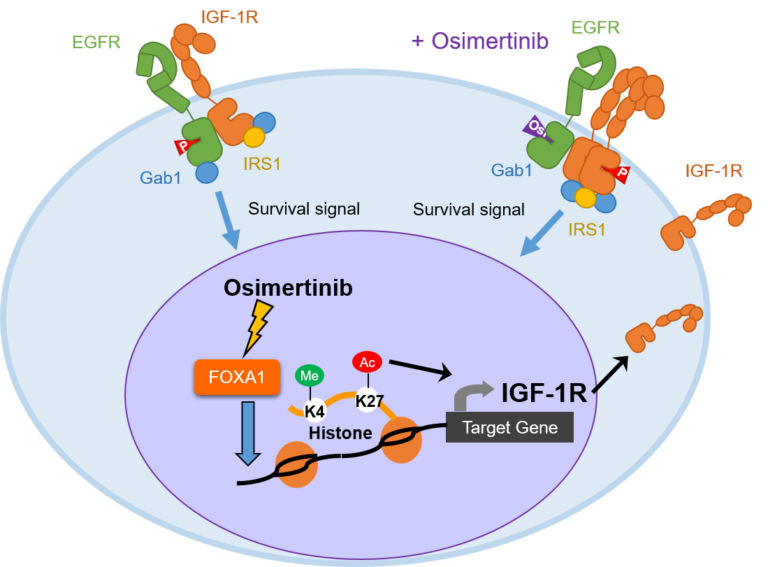
KANAZAWA, Japan, Sept. 16, 2020 /PRNewswire/ -- Researchers at Kanazawa University report in Nature Communications the mechanism making some lung-cancer patients resistant to the drug osimertinib. In addition, they suggest a combined drug treatment resolving osimertinib resistance in the case of cancer cells expressing low amounts of AXL, a protein belonging to the class of receptor tyrosine kinases.

The effectiveness of cancer treatment is often hampered by cancer cells being heterogeneous. This is the case for EGFR-mutated lung cancer: drugs based on biomolecules of a type known as tyrosine kinase inhibitor (TKI) have been used to treat the disease, but with various levels of efficacy. (EGFR stands for "epidermal growth factor receptor", a protein playing an important role in signaling processes from the extracellular environment to a cell.) Sometimes, tumor cells are simply resistant to the drug. Now, Seiji Yano from Kanazawa University and colleagues have investigated the efficacy of the TKI osimertinib for treating EGFR-mutated lung cancer, and how it relates to the expression in tumor cells of a particular protein called AXL. They found that both AXL-high and -low expressing tumor cells showed tolerance (acquired resistance) to osimertinib, but that the mechanisms involved are different for the two situations. Moreover, the researchers suggest a way to enhance the success of osimertinib treatment for the case of AXL-low expressing tumors.

First, the scientists compared the susceptibility to osimertinib in both AXL-high and -low expressing tumor cells in in vitro experiments. They observed that osimertinib inhibited the viability of the cancer cells in both cases, but that the sensitivity to the drug was higher for AXL-low expressing EGFR-mutated lung cancer cells.They also noticed that a small number of tumor cells survived the procedure an indication of osimertinib tolerance.These findings were consistent with results from the clinical study of the drug performed earlier on 29 patients with EGFR-mutated non-small cell lung cancer.

Through experiments aiming to understand the mechanism behind osimertinib tolerance, Yano and colleagues discovered that phosphorylation of IGF-1R was increased in AXL-low-expressing tumor cell lines, but not in AXL-high expressing tumors. (IGF-1R stands for 'insulin-like growth factor 1 receptor'; it is a protein located on the surface of human cells. Phosphorylation is the chemical process of adding a phosphoryl group.) The researchers then found that phosphorylated IGF-1R supported the survival of AXL-low expressing tumors after exposure to osimertinib.

The scientists then tested whether the observed osimertinib resistance could be resolved by administering linsitinib, a substance known to inhibit the phosphorylation of IGF-1R. Encouraged by the positive outcome of the experiment, Yano and colleagues went further and evaluated the combination of osimertinib and linsitinib. Their conclusion was that the transient combination of linsitinib with continuous osimertinib treatment could cure or at least dramatically delay tumor recurrence in AXL-low-expressing EGFR-mutated lung cancer. More investigating needs to be done, though. Quoting the researchers: " the safety and efficacy of the transient combination of IGF-1R inhibitor and osimertinib should be evaluated in the clinical trials."

Background

Tyrosine kinase inhibitors

A tyrosine kinase inhibitor is a drug inhibiting (that is, preventing or reducing the activity of) a specific tyrosine kinase. A tyrosine kinase is a protein (enzyme) involved in the activation of other proteins by signaling cascades. The activation happens by the addition of a phosphate group to the protein (phosphorylation); it is this step that a tyrosine kinase inhibitor inhibits. Tyrosine kinase inhibitors are used as anticancer drugs. One such drug is osimertinib, used to treat EGFR-mutated lung cancer.

AXL

AXL is a receptor tyrosine kinase a tyrosine kinase consisting of an extracellular part, a transmembrane part ('sitting' within a cell membrane) and an intracellular part. AXL regulates various important cellular processes, including proliferation, survival and motility.

In recent years, it has become clear that AXL is a key facilitator of drug tolerance by cancer cells. Seiji Yano from Kanazawa University and colleagues have found that this is also the case for EGFR-mutated lung cancer. While a high expression of AXL correlates with resistance to osimertinib, such tolerance also occurs in AXL-low-expressing cancer cells. Yano and colleagues have now found that for the latter case, phosphorylation of IGF-1R (insulin-like growth factor 1 receptor) is responsible for the resistance to osimertinib.

Reference

Rong Wang, Tadaaki Yamada, Kenji Kita, Hirokazu Taniguchi, Sachiko Arai, Koji Fukuda, Minoru Terashima, Akihiko Ishimura, Akihiro Nishiyama, Azusa Tanimoto, Shinji Takeuchi, Koshiro Ohtsubo, Kaname Yamashita, Tomoyoshi Yamano, Akihiro Yoshimura, Koichi Takayama, Kyoichi Kaira, Yoshihiko Taniguchi, Shinji Atagi, Hisanori Uehara, Rikinari Hanayama, Isao Matsumoto, Xujun Han, Kunio Matsumoto, Wei Wang, Takeshi Suzuki, and Seiji Yano. Transient IGF-1R inhibition combined with osimertinib eradicates AXL-low expressing EGFR mutated lung cancer, Nature Communications 11, XX(2020).

DOI: 10.1038/s41467-020-18442-4

URL: https://doi.org/10.1038/s41467-020-18442-4

Link to figure https://nanolsi.kanazawa-u.ac.jp/wp-content/uploads/2020/09/Figure-768x567.png

Figure CaptionMechanism of targeted drugs tolerance in lung cancer cells

Further information

About WPI NanoLSI Kanazawa University Hiroe YonedaVice Director of Public AffairsWPI Nano Life Science Institute (WPI-NanoLSI)Kanazawa UniversityKakuma-machi, Kanazawa 920-1192, JapanEmail: [emailprotected]Tel: +81 (76) 234-4550

About Nano Life Science Institute (WPI-NanoLSI) https://nanolsi.kanazawa-u.ac.jp/en/

Nano Life Science Institute (NanoLSI), Kanazawa University is a research center established in 2017 as part of the World Premier International Research Center Initiative of the Ministry of Education, Culture, Sports, Science and Technology. The objective of this initiative is to form world-tier research centers. NanoLSI combines the foremost knowledge of bio-scanning probe microscopy to establish 'nano-endoscopic techniques' to directly image, analyze, and manipulate biomolecules for insights into mechanisms governing life phenomena such as diseases.

About Kanazawa Universityhttp://www.kanazawa-u.ac.jp/e/

As the leading comprehensive university on the Sea of Japan coast, Kanazawa University has contributed greatly to higher education and academic research in Japan since it was founded in 1949. The University has three colleges and 17 schools offering courses in subjects that include medicine, computer engineering, and humanities.

The University is located on the coast of the Sea of Japan in Kanazawa a city rich in history and culture. The city of Kanazawa has a highly respected intellectual profile since the time of the fiefdom (1598-1867). Kanazawa University is divided into two main campuses: Kakuma and Takaramachi for its approximately 10,200 students including 600 from overseas.

SOURCE Kanazawa University

Read the rest here:

Kanazawa University research: Potential drug treatment for particular type of lung-cancer - PRNewswire

Could Tattoo Ink Be Used to Detect Cancer? – Smithsonian Magazine

When amateur artist Cristina Zavaleta signed up to take an illustration class with Pixar animators on character design, she had no idea shed also be embarking on a new scientific study. At the time, Zavaletas work as a post-doctoral biomedical researcher in a molecular imaging lab at Stanford involved evaluating contrasting agents, like dyes, used to detect tumors in animals. During her art class, the researcher was struck by the intensity of the colors of gouache, vibrant water-based paints, that her fellow illustrators were using. They were bringing back these pieces that were just incredible, really rich colors. And I thought, how do you even achieve that color, visually, says Zavaleta.

That simple question ultimately led Zavaleta, now an assistant professor of biomedical engineering at the University of Southern California, and her colleagues to create a first-of-its-kind library detailing the optical imaging properties of commonly used pigments and dyes, found in everything from tattoos to food coloring. The researchers hope their study will open the doors for the novel use of everyday colorants as imaging agents in medical tests, that may be more effective at early detection of several kinds of cancers.

Currently, only three dyes with fluorescent properties used as optical imaging contrast agentsmethylene blue, indocyanine green and fluoresceinare approved for human use by the U.S. Food and Drug Administration (FDA). In diagnostic medicine and in some surgical procedures, imaging contrast agents are materials used to improve internal body pictures produced by X-rays, computed tomography (CT) scans, magnetic resonance imaging (MRI), and ultrasounds. These materials can be ingested or injected and temporarily color targeted parts of the body, like specific cells, organs, blood vessels and tissues, to help clinicians see differences and abnormalities that may indicate disease. Yet, Zavaleta wondered about the significant catalogue of approved food, drug and cosmetic dyes that people routinely encounter in their everyday lives. Are there other imaging agents hiding in plain sight?

As my art brain was thinking about these paints [from class], I thought to myself, what paints are already being used in humans? says Zavaleta. And a lightbulb went off.

Tattoos. High quality pigments used in tattooing are made from mineral salts and metal chelates, which have been isolated from natural sources and used by humans for thousands of years.

Zavaletas next step was to do her homework, as any good researcher would. She contacted Adam Sky, a tattoo artist in the Bay Area whose work she admired. Sky was interested in her research, and gave her samples of some of the inks he was using, which Zavaleta collected in a well plate, a tray with multiple divots, or wells, that can be used as test tubes, shed brought along, just in case.

I immediately took them to my microscope over at Stanford, and I did all these different tests on them, Zavaleta says. I was amazed at what I was seeing.

She measured two optical elements of the inks, their fluorescence properties and Raman properties. Fluorescence relates to a dye or pigments capacity for absorption and emission of light, while Raman indicates how light scatters. Both are commonly used in imaging techniques in the cancer field. Highly fluorescent agents offer sensitivity in imaging; very small amounts are needed for them to illuminate areas very brightly. Raman imaging, on the other hand, offers specificity by allowing multiplexing, or the ability to look at several processes happening inside the human body at once. These can help show whether cells or tissues are expressing multiple genes, for example, or expressing one more highly that may be associated with a particular cancer, like HER2 and breast cancer or EGFR with lung cancer. Each of the targets has different receptors that will be illuminated by different agents, and depending on their optical properties, some agents will be better than others.

In all, the researchers evaluated the optical properties of 30 approved food, drug and cosmetic coloring dyes and tattoo ink pigments using a spectrophotometer, an instrument that measures the intensity of light after it passes through a sample solution. Seven of the colorants displayed fluorescence properties that were comparable to or exceeded the three FDA-approved clinical dyes. The researchers next measured the Raman signatures, to see how high the colors unique signatures of light photon peaks were, with high peaks being indicative of usefulness in terms of multiplexing. Finally, they tested the best-performing dyes and pigments by injecting them as imaging agents in mice with cancerous tumors.

Data from Zavaleta and her colleagues study showed that FDA-approved Green 8 dyes used in drugs and cosmetics have significant tumor targeting potential in mice with cervical and colon tumors, and the Orange 16 pigment found in tattoo inks also showed, according to the authors, promising fluorescent properties and tumor targeting potential. This is significant because, as they note in the study, no single imaging modality currently meets all the clinical needs of high sensitivity, high spatial and temporal resolution, high multiplexing capacity, high depth of penetration, low cost, and high throughput. In other words, no single imaging agent can provide all the information a doctor might need.

The USC lab where Zavaleta and her colleagues conducted the research uses nano-based imaging contrast agents, or tiny spherical vesicles that are loaded with the dyes or pigments. While nano-based agents are approved for use as a medium in human imaging, they have been controversial in the past because of potential toxicity. Metallic-based nanoparticles like those made from gold and silver have been known to stay inside the body for long periods of time after exposure. This is one of the main reasons the team instead uses liposomal nanoparticles, made up of biodegradable materials with fatty skins similar to human body cells, that are already used in other applications, like drug and nutrient delivery.

You can think of it as us having all these different batches of nanoparticles, and one has a different tattoo ink [or other dye or pigment] inside of it. And that tattoo ink has a very special barcode thats associated with it; every ink has a unique fingerprint, yellow different from red, red different from purple, Zavaleta explains. So, if we have all these different flavors of nanoparticles that we can now target to different receptors on tumors, we can enhance our ability to distinguish between different [cancers].

One use for such materials could be gathering real-time information during a test, such as a colonoscopy, where physicians are visually searching for certain kinds of polyps. Enhanced imaging agents have the potential to also reduce the invasiveness of disease detection and diagnosis, such as the number and size of biopsies needed, by providing more information from a smaller sample.

Christian Kurtis, who made the career change from biomedical researcher at the National Institutes of Health to tattoo artist in Rockville, Maryland, spent his post-doctoral period in a cancer research lab at the Uniformed Services University of the Health Sciences. Kurtis says the specificity these kinds of dyes could offer for imaging is key to better treatment.

The unfortunate problem with malignant [tumors] is that they comprise a [variety] of molecular markers that may not be present on all cell types. The increased metabolic activity of malignancy is the signature most commonly exploited in imaging, and is the reason these liposomal techniques are effective, says Kurtis. In other words, because cancer cells tend to spread quickly, researchers and physicians are able to track their growth with imaging. Having multiple types of agents that bind to the different markers would be even more helpful. In my opinion, it will be personalized or individualized medicine that will hold the key to meaningful early diagnosis of disease, he adds.

Jocelyn Rapelyea, the associate director of breast imaging and the program director of the radiology residency program at the George Washington University Cancer Center, adds that while tools like molecular breast imaging have been around for a while and help to identify problematic cells before they grow into lumps, advancing knowledge is always a positive. What works well for one patient may not for another.

Its always exciting to have the ability to be able to identify tumors at a potentially early stage. It's quite interesting how [Zavaleta] came to dyes, Rapelyea says. This is obviously a model in mice at this point, but it is promising to see that there could be potential of being able to identify earlier development.

Zavaleta knows the dyes and pigments her team has catalogued in a library will be subject to the FDAs rigorous regulatory procedures before they could ever be used as imaging agents in humans. We're not suggesting in any way that theyre safe, she says. Were saying, Hey, these are dyes that were continuously being exposed to on a day-to-day basis. Lets have a look at them further.

Continue reading here:

Could Tattoo Ink Be Used to Detect Cancer? - Smithsonian Magazine

Simulation Software Market Key Drivers, Business Insights, Trends And Forecast 2026 Altair Engineering, Inc., Bentley Systems, Ansys, Inc, Ptc – The…

While creating this Simulation Software Market report market type, organization size, end-users organization type, availability on-premises in the areas such as North America, South America, Europe, Asia-Pacific and Middle East & Africa have been considered. The well demonstrated methods and tools such as SWOT analysis and Porters Five Forces Analysis are employed carefully while forming this market research report. Moreover, to structure these Simulation Software Market reports, markets on the local, regional and global level is explored. Depending on clients needs, business and product information has been brought together via this report that assists businesses in taking better decisions.

With the utilization of significant attributes ranging from highest level of spirit, practical solutions, committed research and analysis, modernism, integrated approaches, to the most up-to-date technology, this Simulation Software Market research report has been formed. This market report brings into light comprehensive analysis of the market structure along with the estimation of varied segments and sub-segments of the market. No effort is left to be made while making this market research report. Simulation Software report is a great resource that endows with the current and future technical and financial details of the industry to 2025.

Download Free Sample (350 Pages PDF) Report: To Know the Impact of COVID-19 on this Industry @ https://www.databridgemarketresearch.com/request-a-sample/?dbmr=global-simulation-software-market

Top Key Players: Simulation Software Market

Few Of The Major Competitors Currently Working In The Global Simulation Software Market Are Altair Engineering, Inc., Bentley Systems, Ansys, Inc, Ptc, Siemens Industry Software Inc., Autodesk Inc, Cpfd Software Llc., Cybernet Systems Corp., Dassault Systmes, Design Simulation Technologies, Inc., Synopsys, Inc., The Mathworks, Inc., Gse Systems, Simulations Plus, Esi Group, The Anylogic Company, Flexsim Software Products, Inc, Rockwell Automation, Simio Llc, Among Others.

Global Simulation Software Market Is Set To Witness A Healthy Cagr Of 14.73% In The Forecast Period Of 2019- 2026. The Report Contains Data Of The Base 2018 And Historic Year 2017. Rising Demand Of Simulation Software From Automobile & Healthcare Industry And Increasing Need To Manage And Analyse Data Are The Factor For The Market Growth.

The Simulation Software Market Report Consists of the Following Points:

The Report Covers the Following, Major Points Precisely:

Major Table of Contents for Methanol Market:

And More..Get Detailed TOC @ https://www.databridgemarketresearch.com/toc/?dbmr=global-simulation-software-market

Key Questions Answered:

Regional Analysis for Methanol Market:

Research objectives Simulation Software Market:

For Any Query Regarding the Simulation Software Market Report? Contact Us at@https://www.databridgemarketresearch.com/speak-to-analyst/?dbmr=global-simulation-software-market

Thanks for reading this article you can also get individual chapter wise section or region wise report version like North America, Europe, MEA or Asia Pacific.

About Data Bridge Market Research:

Data Bridge Market Researchis a versatile market research and consulting firm with over 500 analysts working in different industries. We have catered more than 40% of the fortune 500 companies globally and have a network of more than 5000+ clientele around the globe. Our coverage of industries includes Medical Devices, Pharmaceuticals, Biotechnology, Semiconductors, Machinery, Information and Communication Technology, Automobiles and Automotive, Chemical and Material, Packaging, Food and Beverages, Cosmetics, Specialty Chemicals, Fast Moving Consumer Goods, Robotics, among many others.

Data Bridge adepts in creating satisfied clients who reckon upon our services and rely on our hard work with certitude. We are content with our glorious 99.9 % client satisfying rate.

Contact:

Data Bridge Market ResearchUS: +1 2026 387 2818UK: +44 208 089 1725Hong Kong: +852 8192 7475Email:[emailprotected]

See the original post here:

Simulation Software Market Key Drivers, Business Insights, Trends And Forecast 2026 Altair Engineering, Inc., Bentley Systems, Ansys, Inc, Ptc - The...

Faculty and Staff Achievements Summer 2020 – CSUN Today

The work of CSUNfaculty and staff members is recognized in a variety of ways, including:

Please use this link toannounce your achievements for publication in CSUN Today.

Below is a list of the individuals whose work was recognized during the summer and through August 2020.

Andrew P. Weiss, Ahmed AlwanandJulieta Garcia (CSUN Library) and Eric P. Garcia (Educational Psychology and Counseling)published an article titled Surveying Fake News: Assessing University Facultys Fragmented Definition of Fake News and Its Impact on Teaching Critical Thinking in theInternational Journal for Educational Integrity.

Ravinder Abrol (Chemistry and Biochemistry) received $145,000 from the National Institutes of Health, in support of a project titled Probing the Structural Basis of Innate G Protein Specificity in G Protein-Coupled Receptor Signaling.

Mads Peter Andersen (Chemistry and Biochemistry) received $60,146 from the National Science Foundation, in support of a project titled RUI: Far Ultra-Violet (172 nm) Photolysis of Gaseous Anthropogenic Pollutants.

Annette Besnilian (Family and Consumer Sciences) and David Boyns (Sociology) received $121,667 from the Los Angeles County Department of Public Health, in support of a project titled Champions for Change: Healthy Communities Initiative. She also received$8,000 from the Los Angeles County Board of Supervisors, in support of a project titled HEALERS (Healthy Eating + Active Living to Enable Regenerative Sustainability).

Annette Besnilian (Family and Consumer Sciences) and Merav Efrat (Health Sciences) received $250,000 from the US Department of Agriculture, in support of a project titled Pathways to Success for Hispanic Students as Registered Dietitians.

Danielle Bram (Geography) received $43,816 from California State University, San Bernardino, in support of a project titled Developing a Standardized Statewide Geospatial Dataset of Water Agencies for California.She also received $62,000 from CSU Chico, in support of a project titled California Broadband Field Testing.

Danielle Bram and Regan Maas (Geography) received $43,816 from California State University, San Bernardino, in support of a project titled DACIP Task Order 3 Ventura, and$397,000 from the CA Department of Water Resources, in support of a project entitled NHD/WBD Statewide Update Project 2.0.

Gary Chapman and Debi Prasad Choudhary (Physics and Astronomy) received $79,899 from NASA, in support of a project titled Comparing Spacecraft TSI and SSI with Proxies from Space- and Ground-Based Images.

Gabriela Chavira (Psychology), Carrie Saetermoe (Psychology), Crist Khachikian(Civil Engineering and Construction Management) and Patchareeya Kwan (Health Sciences) received $4,607,794 from the National Institutes of Health, in support of a project titled BUILD II.

Mariano Loza Coll (Biology) received $145,000 from the National Institutes of Health, in support of a project entitled Genetic Co-Regulation by Master Transcription Factors in Drosophila Intestinal Stem Cell Saribbean Octocorals.

Rafi Efrat (Accounting and Information Systems) received $649,559 from the United States Department of Education (USDE), in support of a project titled Developing Californias Workforce: Creating Pathways for Latino Transfer Students in High Demand Careers.

Michael Eller (Chemistry and Biochemistry) received $65,000 from Intel Corporation, in support of a project titled Nano-scale molecular analysis of materials for Intel.

Eileen Evans (Chemistry and Biochemistry) received $56,230 from the US Geological Survey, in support of a project titled Geodesy-Based Modeling to Inform the National Seismic Hazard Model (NSHM) of the USGS.

Joyce Feucht-Haviar (Tseng College) received $24,000 from the City of Los Angeles, in support of a project titled ReLAY Institute.

Gilberto Flores (Biology) received $346,750 from the National Institutes of Health, in support of a project titled Mechanisms and Consequences of Human Milk Oligosaccharide Growth and Bile Stress Across Diverse Strains of the Potential Therapeutic Bacterium, Akkermansia Muciniphila.

Kim Goldberg-Roth (Educational Psychology and Counseling) received two donations from the L.A. County Department of Children and Family Services:$500,000 in support of a project titled Family Preservation San Fernando Valley, and$310,200 in support of a project entitled Child Abuse and Neglect Prevention, Intervention and Treatment (CAPIT) San Fernando Valley. Goldberg-Roth also received$130,000 from the Caliornia Governors Office of Emergency Services, in support of a project titled California State Nonprofit Security Grant Program; $87,434 from the California Governors Office of Emergency Services (Cal OES), in support of a project titled Sexual Assault Response Team (XS) Program;$52,500 from the California Partnership to End Domestic Violence, in support of a project titled Emergency COVID 19 Victim Services Response CO Program;$23,679 from the Childrens Advocacy Centers of California, in support of a project titled 2020 Pandemic (CO) Program; and$10,000 from the LA County of Board of Supervisors, in support of a project titled Third District Discretionary Funding.

Christine Hayashi (Educational Leadership and Policy Studies) received $5,652 from the LA Unified School District, in support of a project titled Professional Development Services in Support of Private Schools.

Ray Hong (Biology) received $108,750 from the National Institutes of Health, in support of a project titled The Mode-of-Action for Pheromone-Induced Paralysis in Pristionchus Pacificus.Timothy Karels (Biology) received $2,500 from the Western North American Naturalist, in support of a project titled Post-Fire Recolonization of Woodrats (Neotoma Macrotis) in Southern California.

Jonathan Kelber (Biology), Maria De Bellard (Biology), Daniel Tamae (Chemistry and Biochemistry) and David Bermudes (Biology) received $5,000 from the National Institutes of Health, in support of a project titled California State University Interdisciplinary Cancer Meeting (CSU-ICM).

Luciana Lagaa (Psychology) has received $108,750 from the National Institutes of Health, in support of a project titled A Preliminary Model of Physical Pain Among Community-Dwelling Multiethnic Older Women.

Clement Lai (Asian American Studies) received $100,000 from the CSU Entertainment Alliance, in support of a project titled Pioneering Asian American Representations in Media and Entertainment: Wong Fu Production and Angry Asian Man.

Julian Lozos (Geological Sciences) received $27,000 from the Southern California Earthquake Center (SCEC), in support of a project titled SCEC5 Year 4 USGS Research Collaboration at California State University, Northridge.

Gang Lu (Physics and Astronomy) received two donations from the National Science Foundation: $691,250 in support of a project titled PREM: Partnership between CSUN and Princeton for Quantum Materials and$659,550 in support of a project titled Unraveling Exciton Dynamics in Van der Waals Heterostructures for Optoelectronic and Photonic Applications.

Ariel Malka (Management) received $100,000 from the City of Los Angeles, in support of a project titled L.A. City Gang Injunction Settlement Evaluation.

Kathleen Marsaglia (Geological Sciences) received $14,989 from The Trustees of Colombia University in the City of New York, in support of a project titled U.S. Science Support Program Office Associated with the International Ocean Discovery Program.

Nathan Martin (Recreation and Tourism Management) received $40,000 from the California Division of Boating and Waterways, in support of a project titled Aquatic Center Grant FY 2019-20.

Thomas Minehan(Chemistry and Biochemistry) received $330,662 from the National Science Foundation, in support of a project titled RUI: Exploring Shape-Selective Binding of the DNA Major Groove by Haiprin Bis (Siarylmethylene) Hydrazides.

Ignacio Osorno (Electrical and Computer Engineering) received $45,393 from Aerojet Rocketdyne, in support of a project entitled Development of Internship Honors Co-Op Program.

Miroslav Peric (Physics and Astronomy) received $265,000 from the National Science Foundation, in support of a project titled RUI: Bimolecular Collisions in Ionic Liquid.

Bethany Rainisch (Health Sciences) received $253, 044 from the Substance Abuse and Mental Health Services Administration SAMHSA, in support of a project titled Collaborative Research: Pattern and Process in the Abundance and Recruitment of Caribbean Octocorals.

S.K. Ramesh (Electrical and Computer Engineering) and Robert Ryan (Mechanical Engineering) received $1,199, 471 from the US Department of Education, in support of a project titled Bridging the Gap: Enhancing AIMS2 for Student Success.

Shelley Ruelas-Bischoff (Student Affairs), Nelida Duran (Family and Consumer Sciences) and Mirna Sawyer (Health Sciences) received $185,016 from California State University, Chico, in support of a project entitled CalFresh Healthy Living on Campus.

Cristian Ruiz-Rueda (Biology) received $232,013 from the National Science Foundation, in support of a project titled RUI: Unraveling the physiological roles of multidrug efflux pumps in bacteria.

Jacklyn Stallcup (College of Humanities) received $89,640 from the University of Maryland, in support of a project titled STARTALK CSUN Russian Language and Cultural Immersion Program.

Jessica Vey (Chemistry and Biochemistry) received $105,150 from the National Institutes of Health, in support of a project titled Mechanistic Studies to Enable Rational Design of Isobutylamine N-hydroxylase.

Ivor Weiner (Special Education) received $14,165.64 from the California Family Resource Association (CFRA), in support of a project titled Project Diaper.

Li Ye(Chemistry and Biochemistry), Virginia Oberholzer Vandergon (Biology), Brian Foley (Secondary Education) and Matthew dAlessio (Geological Sciences) received $88,388 from the University of California, in support of a project titled San Fernando Valley Science Project One Time Allotment.

Jeremy Yoder (Biology) received $436,696 from the National Science Foundation, in support of a project titled RoL, Collaborative Research, RUI: Understanding the Ecological and Genomic Bases of Local Adaptation in an Obligate Pollination Mutualism.

MariaElena Zavala (Biology) received $229,981 from the National Institute of General Medical Sciences, in support of a project titled MARC U-STAR at CSUN: Preparing Scientists Holistically. Zavala also received$27,303 from the American Society for Cell Biology, in support of a project titled Improving Diversity and Career Transitions through Society Support.

MariaElena Zavala, Ray Hongand Cheryl Hogue (Biology) received $255,248 from the National Institute of General Medical Sciences, in support of a project titled Bridges to the Doctorate Research Training Program at CSUN.

Xu Zhang (Physics and Astronomy) received $55,000 from the American Chemical Society Petroleum Research Fund, in support of a project titled Tuning Interfacial Excitonic Binding in Twisted Two-Dimensional MoS2 Bilayers.

Read the original here:

Faculty and Staff Achievements Summer 2020 - CSUN Today

Diomics Announces Agreement With Department of Defense to Accelerate Development and Testing of Diocheck SARS-CoV-2 Immune Response Indicator Patch -…

SAN DIEGO--(BUSINESS WIRE)--Diomics, a San Diego-based biotech company, today announced that it has been awarded a $2,125,000 Medical Technology Enterprise Consortium (MTEC) Other Transaction Agreement (OTA) with the U.S. Department of Defense to accelerate development and testing of its Diocheck SARS-CoV-2 Visual Immune Response Indicator, a transdermal skin patch that monitors and reports when the wearers body has mounted an immune response to SARS-CoV-2, the virus that causes COVID-19.

A change in skin color visible through the patch indicates that the person has either recently been exposed to the virus and should get tested and quarantine, or has recovered from a previous coronavirus infection and may still retain immunity. The patch begins to detect an immune response within 24 to 36 hours of application and is expected to effectively monitor for up to 14 days.

The Diocheck patch answers one of the biggest roadblocks to halting the spread of COVID-19a simple, universal way for people to continually monitor their own immune status over an extended period of time. Until theres an effective vaccine in widespread use, large populations can use the patch to monitor themselves and know quickly if they have been exposed to the virus and need to get tested and take precautions to avoid infecting others.

The Diocheck patch responds to the great unknown of how many people are unintentionally widening the spread by being asymptomatic carriers, Diomics CEO Anthony Zolezzi said. Enabling people to monitor their own health status and be confident of the status of those around them is the key to being able to safely reopen schools, theaters, offices and other places. Widespread use of the Diocheck indicator patch will give us a simple, effective, non-invasive way to know that we are all actively protecting each other.

The key to Diochecks ability to monitor for an immune response over an extended period of time is Diomics proprietary biopolymer material, Diomat, which is made from an already FDA-approved material used in a range of other diagnostic and therapeutic applications.

The company is also developing an intradermal version of Diocheck that uses nano-sized beads of the same biopolymer inserted just under the skin to detect and visually report the formation of an immune reaction to a SARS-CoV-2 protein.

Both versions of Diocheck are readily scalable to provide consistent, accurate, ongoing monitoring of the immunity status of essential front-line workers, including military, healthcare, transportation and public safety personnel, as well as teachers and students.

The Diocheck system is entering preclinical animal studies under the guidance of Jonathan R.T. Lakey, Ph.D., M.S.M., Professor of Surgery and Biomedical Engineering at the University of California, Irvine. Human clinical trials are expected to begin in December 2020.

To learn more about Diocheck and the Diomics Pandemic Prevention Platform visit diomics.com.

About Diomics, Inc.

Diomics Corporation is a biotechnology company focused on science-based innovation and the development of life-improving products. Our proprietary Diomat technology platform is optimized for the collection and delivery of compounds and proteins and can also be used for drug delivery, long-term monitoring, diagnostics and production of life-saving hormones and other bio-compounds. Based in San Diego, California, Diomics has developed numerous products, tools and services for the molecular, diagnostic and forensic industries. For more information visit diomics.com.

About the University of California, Irvine

Founded in 1965, UCI is the youngest member of the prestigious Association of American Universities. The campus has produced three Nobel laureates and is known for its academic achievement, premier research, innovation and anteater mascot. Led by Chancellor Howard Gillman, UCI has more than 36,000 students and offers 222 degree programs. Its located in one of the worlds safest and most economically vibrant communities and is Orange Countys second-largest employer, contributing $5 billion annually to the local economy. For more on UCI, visit http://www.uci.edu.

The U.S. Army Medical Research and Development Command

The U.S. Army Medical Research Acquisition Activity, 820 Chandler Street, Fort Detrick MD 21702-5014 is the awarding and administering acquisition office. This work was supported by the U.S. Army Medical Research and Development Commands (USAMRDC) Military Infectious Disease Research Program (MIDRP) and the Military Operational Medicine Research Program (MOMRP), through the Wearable Diagnostic for Detection of COVID-19 Infection Request for Project Proposals issued under the MTEC OTA (W81XWH-15-9-0001). Opinions, interpretations, conclusions and recommendations are those of the author and are not necessarily endorsed by the MIDRP or MOMRP.

Read the rest here:

Diomics Announces Agreement With Department of Defense to Accelerate Development and Testing of Diocheck SARS-CoV-2 Immune Response Indicator Patch -...

Ashok Leyland, Hindustan Zinc team up with IIT-M to develop Zinc air battery – BusinessLine

Truck major Ashok Leyland and Hindustan Zinc have (separately) joined hands with IIT-Madras in the technology institutes endeavour to develop a Zinc air battery.

While Lithium-ion batteries are the darling of the energy storage industry today, they pose challenges such as concentration of raw material source with a handful of countries, high charging time and safety issues in hot climates. (Technologies for fast charging are coming up, but they are expensive.) Therefore, a worldwide search is under way for a good alternative. Sodium-ion, iron-ion and metal air batteries are the emerging candidates.

Indian researchers develop sustainable, cost-friendly Li-S batteries

Dr Aravind Kumar Chandiran of the Department of Chemical Engineering, IIT Madras, heads a team that is developing a Zinc air battery. His target is two-fold: a battery whose cost per kWhr is at least half of the conventional Lithium-ion batteries and one that re-charges really fast.

Talking to BusinessLine, Dr Chandiran said that while Ashok Leyland is the industry partner under the government of Indias IMPRINT-2 programme (under which the research has been granted 1.5 crore), Hindustan Zinc is a separate funding arrangement with different deliverables. Hindustan Zincs interest is, obviously, to create a market for Zinc.

Dr Chandiran said that today a Lithium-ion battery costs $270-300 per kWhr (unless contracted for huge quantities, when the price could come down to $220 a kWhr). In contrast, a Zinc air battery produced today would cost $150 a kWhr; if produced on the same scale as Lithium-ion batteries, the costs would come down to $30-40 a kWhr, he said.

At the heart of the battery is the Zinc anode which can be taken out once the battery discharges its power, and replaced. Like pulling a cassette out and inserting another, says Chandiran. The cathode of the battery is, as for metal air batteries, air. Zinc reacts with the Oxygen in the air to deliver electricity, and becomes Zinc oxide. In an external contrivance, which could be solar-powered, Oxygen is kicked out of the Zinc oxide and the metal is won back a process called electrowinning.

Chandirans team is working on a design to develop battery packs of 15Ah and ~24V that are mechanically rechargeable and run a 5 kW drive motor. The novelty lies in the design of battery pack for maximum power and ultra fast electrode replacement, he says.

Of course, it is theoretically possible to recharge the battery onboard the vehicle, but it calls for a different research at a more fundamental level. It involves developing a bi-functional catalyst for two activities discharging and recharging known in chemistry as oxygen reduction reaction (ORR) and oxygen evolution reaction (OER). This is also an area that Dr Chandiran is working on, but is not connected to the Zn air battery project.

Battery storage, smart grid, energy efficiency companies raise $252 m in VC funding in Q1 2020

Meanwhile, another research is going on IIT Madras to develop a new type of anode for the Lithium-ion batteries. The conventional anode used is graphite which, according to Prof Prathap Haridoss, has its own practical issues such as lower capacity and limited fast-charging capability.

In a recent paper published in Advanced Energy Materials, an international scientific journal, Dr Haridoss and his team (which included Dr Raghavan Gopalan of IIT Madras, Dr Abhijit Chatterjee of IIT Bombay, Dr Raju Prakash, Dr Vallabha Rao Rikka and Dr Sumit Ranjan Sahu of International Advanced Research Center,) have mentioned their development of a composite made of molybdenum trioxide and carbon nanohorns. Carbon nanohorns are nano materials, just like nanotubes and graphene.

The battery developed using this new anode material will have about three times the energy density as conventional Lithium-ion batteries, Prof Haridoss told BusinessLine. The anode will cost about the same as graphite.

Visit link:

Ashok Leyland, Hindustan Zinc team up with IIT-M to develop Zinc air battery - BusinessLine

The next generation of American nuclear – Power Technology

On 18 June 2020, the US Department of Energyannounced it would be awarding more than $65m in nuclear energy research, cross-cutting technology development, facility access, and infrastructure awards.

The awards fall underthe departments nuclear energy programmes the Nuclear Energy University Programme, the Nuclear Energy Enabling Technologies, and the Nuclear Science User Facilities.

Since 2009, the Office of Nuclear Energy, part of the US Department of Energy,has allocated more than $800m to research, aiming to boost American leadership in clean energy innovation and train the next generation of nuclear engineers and scientists.

One of the notable projects in the nuclear energy category examines the risk of nuclear reactor parts fabricated via additive manufacturing that usesa novel rendition of an artificial intelligence (AI)learning strategy, the so-called multi-armed bandit reinforcement learning (RL).

Also known as 3D printing, additive manufacturing could allow for the rapid prototyping and manufacture of complex parts, saving timeandmoney,as well ascreating more scope for design flexibility.

The main objective of the RL project is the development and demonstration of the strategy using data from the Transformational Challenge Reactor (TCR)Program. Sensor and physics-based simulation data will be used in combination with the associated open source DREAM.3D-based digital platform, installed at Purdue University, Indianato calculate risk measures.

The project focuses on a critical need to upgrade validation practices by developing mathematically-rigorous QA procedures that can be scientifically defended to the nuclear regulatory body in order to qualify the risk associated with the additive manufactured parts.

Another goal of the project is the incorporation of a sensitivity analysis to estimate the importance of post-build tests, improve reliability,and ensure reduced need for post-build testing.

TheTCR programmeat the Massachusetts Institute of Technology (MIT)is designed to help change the economic paradigm of nuclear energy,according to the research team. The current basis for this TCR design is a gas-cooled reactor with multiple solid material types in a unique arrangement. The planned demonstration of the project will last over 60 months.

Gas-cooled reactors have been used for some time due to their improved energy conversion efficiency, which allows the reactor to operate at a higher safe temperature to water-cooled reactors. By using different material types in this unique arrangement, the team will be hoping to take the technology that much further with the goal of transformational efficiency in mind.

As part of the sensitivity analysis (SA), researchers from MITwill undertake uncertainty quantification (UQ) of TCR design parameters, using open-source time dependent Monte-Carlo code, NQA1 qualified commercial codes (STARCCM+), and ABAQUS for thermal-hydraulics and structural mechanics.

The SA/UQ analysis aims to find out more about the development of performance metrics of robustness for autonomous operation sensors, by processing signals such as neutron flux, temperature,and strains.

The Massachusettsteam will benefit from a decade-long collaboration on the development of high-fidelity tools for reactor applications. The team consists of a fuel and reactor design expert, computational fluid dynamics expert, neutronics expert, and a member of the TCR analyst team, to provide the necessary baseline information and keep the team well-connected with TCR progress.

As part of this cybersecurity project, Ohio State University researchers will create a simulation environment to compare different cyber architecturesand the various levels of protection they offer on the basis of risk.

IT networks have become a battlefield and critical energy infrastructure is at high risk, as was plainly illustrated by a sophisticated attack on the Kudankulam Nuclear Power Plant in Tamil Nadu, India in 2019. With so much at stake, the ability to effectively simulate an attack on a nuclear power plant will be key to any efforts to protect such important assets.

While the research focuses on the application to nuclear power plants, the model could also be applied to other critical infrastructures. The simulation environment could be used in nuclear power plant operator education and training. Related Report

Latest report from Visit GlobalData Store

The methods employed in the prototype involve: dynamic probabilistic risk assessment, as a method to characterise risk and the unfolding of an attack; modifiable and adaptive libraries; communication components; defenders or attackers and their levels of skills or prior experiences; defense responses; methods for composing canonic games into games-of-games, and more.

This project involves designinga nuclear and renewable Integrated Energy System (IES) fortheco-generation of cost-competitive electricity and clean water. In addition, tools will be modelled to allow the IES to be simulated, so as to ensure a crucial toolset for present and future studies of this type.

The planned IESis designed to be compatible with the RAVEN/Modelica framework(a combined software framework that allows for simulation and system optimisation). The components included in the IES are concentrated solar power, the supercritical CO2/sCO2cycle, multi-effect distillation, and a lead-cooled fast reactor.

As electricity markets like those in the US gradually transform to operate off an energy mix, projects that combine several elements are becoming more attractive for their flexibility and cost but also for their environmental credentials. A project that harnesses renewable solar with clean water as a waste product is bound to tick a lot of boxes.

A reference configuration for the IES will be set, with the technical and lifecycle aspects (Cyber Informed Engineering, regulatory environment), as well as system costs considered. The RAVEN/Modelica framework will be connected to the freely available and open-source System Adviser Model, with its capability then being applied to the analysis of the proposed concept.

The outcomes of this project are expected to include: a report on the feasibility and viability of the proposed IES and an analysis framework and models, compatible with the existing RAVEN/Modelica ecosystem, which can be used for future studies.

Another project that stands out in the infrastructure award category is the university of Nevada, Renos bid to study a nano-scaled structure, composition,and defects examination infrastructure system for irradiated materials that uses a Hysitron PI-95 Transmission Electron Microscope (TEM) PicoIndenter.

Accuracy at the nanoscale should go a long way to improving safety and preventing power plant failure for an industry where security and reliability of assets are naturally in the spotlight.

This system is designed to work jointly withahigh resolution TEM to enable successful in-situ characterisation of the materials.

The instrument will be used for a nanomechanical testing system, which can acquire quantitative nanomechanical and observe the sample before, during, and after each test for a complete understanding of deformation and failure processes, such as room temperature and elevated temperature.

The Hysitron PI-95 TEM PicoIndenter was chosen to complement the micro-mechanical testing capabilities of the Alemnis in-situ Scanning Electron Microscopes (SEM) Indenter system, which was awarded to the University of Nevada, Reno through the DOE FY 2018 General Scientific Infrastructure Support for Universities programme.

While the Alemnis SEM Indenter system from last years DOE Infrastructure Support allows in-situ mechanical testing inside the SEM, this testing at the TEM level is yet not possible without the proposed Hysitron PI 95 in-situ TEM nano-scaled straining test system.

Gas and Steam Turbine Insulation Products

Flow and Level Measurement Instruments for Power Generation Facilities

Optimisation of Water Circuits

Read the original here:

The next generation of American nuclear - Power Technology

Cloth masks are effective at reducing virus transmission because it spreads in respiratory droplets, which are larger than smoke particles and the…

CLAIM

Cloth masks cannot block smoke particles which are larger than viruses, so masks cannot stop virus transmission

DETAILS

Misleading: The claim fails to account for the way that viruses travel in the air, which factors into the effectiveness of cloth masks at reducing transmission. Even though viruses are smaller than smoke particles and the pores in the fabric of a cloth mask, a virus cannot travel in the air on its own and must be transported by respiratory droplets, unlike smoke particles. Respiratory droplets are larger than smoke particles and pores in the fabric, hence they can be blocked by cloth masks.

KEY TAKE AWAY

When considering effective mechanisms for reducing virus transmission, it is the size of respiratory dropletsrather than the size of the virus itselfthat needs to be considered. While viruses are smaller than smoke particles or the pores in the fabric of a cloth mask, viruses cannot travel in the air on their own and must be carried by respiratory droplets, which are much larger than smoke particles or pores in fabric. Therefore, cloth masks are effective at reducing virus transmission as they block respiratory droplets, but ineffective at reducing smoke particle transmission.

REVIEW Memes appeared on Facebook in late August 2020 claiming that cloth masks are ineffective at reducing virus transmission because smoke particles are larger than virus particles and cannot be filtered by cloth masks (see examples here and here). These memes were published following a U.S. Centers for Disease Control and Prevention (CDC) advisory warning people not to rely on cloth masks for protection against wildfire smoke. The advisory was published on Facebook on 31 August 2020 in response to the wildfires in California.

These memes echo many Facebook posts which appeared several months ago (see example) stating that the virus is smaller than pores in the fabric of cloth masks, likening it to a mosquito flying through a chain link fence. And based on the size difference, these posts claim that cloth masks do not work to reduce virus transmission. As we demonstrate below, these claims are misleading as they fail to take into account the differences between how viruses and smoke particles travel in the air.

While both smoke particles and the virus that causes COVID-19 (the size of the virus is between 60 to 140 nanometers)[1] are much smaller than the pores in fabric, a key difference between viruses and smoke particles is that viruses cannot travel in the air on their own and are instead carried by respiratory droplets. In a fact-check by USA Today, Linsey Marr, a professor of civil and environmental engineering at Virginia Tech who specializes in airborne transmission of viruses, stated, There is never a naked virus floating in the air or released by people.

In its advisory, the CDC also emphasizes the importance of respiratory droplets in virus transmission when explaining why cloth masks can reduce virus transmission, but not the inhalation of small smoke particles:

Cloth masks that are used to slow the spread of COVID-19 by blocking respiratory droplets offer little protection against wildfire smoke. They do not catch small, harmful particles in smoke that can harm your health.

Respiratory droplets are generated by coughing, sneezing, speaking, and singing. These droplets range from 5 to 10 micrometers in size and can be blocked by cloth masks. According to the World Health Organization, scientific evidence demonstrates that droplet transmission and close contact are the main routes of transmission of the virus that causes COVID-19. It is also possible that the virus is transmitted by aerosols, which are droplets less than 5 micrometers in size, although its unclear how much this mode of transmission contributes to the number of infections.

N95 masks are the most effective at filtering respiratory droplets. However the CDC advises the general public not to use N95 masks for slowing the spread of COVID-19, as these are in limited supply and should be reserved for healthcare professionals who are at greater risk of exposure to infectious material. Instead, the CDC recommends that the general public use cloth masks.

Studies show that cloth masks can reduce the spread of respiratory droplets, although they do not provide 100% protection. A 2020 study published in the New England Journal of Medicine found that wearing a damp washcloth greatly reduced the release of speech droplets into the air[2]. Another study published in ACS Nano found that well-fitted face masks made of common materials, such as cotton, filtered out 80 to 99% of droplets, depending on droplet size[3]. Studies also demonstrate that face masks can reduce the transmission of viruses that cause respiratory infections, as reported in this Health Feedback review.

However, for people with pre-existing respiratory issues, prolonged use of face masks, including cloth masks, should be exercised with caution. The CDC indicated, Masks should not be worn by: children younger than 2 years old, anyone who has trouble breathing, or anyone who is unconscious, incapacitated, or otherwise unable to remove the mask without assistance.

The recommendation to use cloth masks to reduce virus transmission contrasts with the CDCs advice against using cloth masks for protection from wildfire smoke, because unlike the virus, smoke particles can travel in the air without the aid of another larger particle. This renders smoke particles small enough to pass through the pores of cloth masks.

Smoke contains a variety of particles that can cause asthma, chest pain, and other harmful effects on human health. The most damaging particles are those smaller than 2.5 micrometers, also called PM2.5. Luke Montrose, an assistant professor of community and environmental health at Boise State University, explained in this article in The Conversation:

[PM2.5] defines the cutoff for particles that can travel deep into the lungs and cause the most damage.

The human body is equipped with natural defense mechanisms against particles bigger than PM2.5. As I tell my students, if you have ever coughed up phlegm or blown your nose after being around a campfire and discovered black or brown mucus in the tissue, you have witnessed these mechanisms firsthand.

The really small particles bypass these defenses and disturb the air [sacs] where oxygen crosses over into the blood. Fortunately, we have specialized immune cells present in the air [sacs] called macrophages. Its their job to seek out foreign material and remove or destroy it. However, studies have shown that repeated exposure to elevated levels of wood smoke can suppress macrophages, leading to increases in lung inflammation.

Because of these harmful effects, the CDC recommends that people living in areas affected by wildfires stay indoors as much as possible and use an indoor air filter. These recommendations are particularly important for vulnerable populations, such as the elderly and young children, who are living in the household. When outdoor activity cannot be avoided, the CDC recommended that people avoid wearing cloth masks, which are unable to keep out PM2.5. Instead, they recommend people wear N95 masks, which can filter out about 95% of particles that are 0.3 micrometers (microns) or larger.

In summary, while the Facebook posts and memes are correct in asserting that the pores in the fabric of cloth masks are larger than both the virus that causes COVID-19 and smoke particles, they fail to acknowledge the mechanics of virus transmission. The CDCs advice not to use cloth masks as protection from wildfire smoke is not evidence that cloth masks do not work to reduce virus transmission. Unlike smoke particles, viruses cannot travel in the air on their own and must be carried by droplets, which are much larger than smoke particles and the pores in fabric, and can therefore be blocked by cloth masks.

This fact check is available at IFCNs 2020 US Elections FactChat #Chatbot on WhatsApp. Click here, for more.

See original here:

Cloth masks are effective at reducing virus transmission because it spreads in respiratory droplets, which are larger than smoke particles and the...

Justice Ruth Bader Ginsburg, a Liberal Voice on Supreme Court, Dies at 87 – The Wall Street Journal

Justice Ruth Bader Ginsburg, a pioneering figure in the fight for womens legal equality and the second woman to serve on the Supreme Court, died Friday in her Washington home, surrounded by her family. She succumbed to metastatic pancreas cancer at the age of 87, the Supreme Court said.

Our Nation has lost a jurist of historic stature. We at the Supreme Court have lost a cherished colleague, said Chief Justice John Roberts. Today we mourn, but with confidence that future generations will remember Ruth Bader Ginsburg as we knew hera tireless and resolute champion of justice.

Justice Ginsburgs death leaves the court with eight members and a vacancy just 46 days before the presidential election. Just last week, President Trump added 20 more names to his list of potential Supreme Court nomineesall of whom with views sharply to the right of Justice Ginsburg. A political battle over who will fill her seat is certain to shape the final act of the contest between Mr. Trump and his Democratic challenger, former Vice President Joe Biden.

Cast by seniority to lead the high courts liberal bloc, the 1993 Clinton appointee spent her last years on the bench pushing back against an emboldened conservative majority, sometimes winning surprise victories or mitigating expected defeats by peeling off a vote from conservatives including Chief Justice Roberts and Justices Anthony Kennedy, Neil Gorsuch or Brett Kavanaugh.

But it was a period more often of defeat for the liberal jurisprudence that shaped Justice Ginsburg, who attended law school and began practice during the ambitious era of the Warren Court, and which she then helped steer as a womens rights advocate in the 1970s. In recent years, she spoke most forcefully in dissent, sometimes reading from the bench, from decisions she viewed as antithetical to the social progress she believed the Constitution embraced.

See the original post here:

Justice Ruth Bader Ginsburg, a Liberal Voice on Supreme Court, Dies at 87 - The Wall Street Journal