Massachusetts Sports Betting Should Soon Have Clear Vision on Potential Operators – Sports Betting Dime

Oct 2, 2022; Green Bay, Wisconsin, USA; New England Patriots running back Damien Harris (37) celebrates with tight end Hunter Henry (85) after scoring a touchdown during the fourth quarter against the Green Bay Packers at Lambeau Field. Mandatory Credit: Jeff Hanisch-USA TODAY Sports

Massachusetts online sports betting should have a clear vision of its potential operators by tonight.

Amidst a six-hour Massachusetts Gaming Commission meeting last week, the commissioners made an interesting note that all potential sports betting operators must submit a scoping survey to the commission by tonight at 5 p.m. in order to have their licenses application considered.

The Massachusetts Gaming Commission released the scoping survey for companies intending to apply for a Category 1, Category 2, or Category 3 sports bettering operator license or to be vendors for who with licenses.

The survey seeks specific company information from prospective applicants and will provide the commission with preliminary information ahead of the full applications.

While most of the retail sports betting licensing partners are already known, this process could provide valuable insight to which companies are planning to apply for one of seven coveted untethered online sports betting licenses in the Commonwealth.

As per the states sports betting bill, each of the three Massachusetts casinos will be able to offer up to two online sports betting skins, each state racetrack will have access to one, and seven untethered online sports betting operator licenses will be up for grabs. Thats a total of 15 online sports betting licenses.

Last month, 42 sports betting operators submitted notices of intent to the gaming commission to operate sports betting in the state. This was not a binding agreement to apply for a license, nor was it required to submit a license application.

There are three casinos in the state and all three have partnerships with online operators already.

Raynham Park and Suffolk Downs have yet to announce any partnerships.

While a timeline for retail or online sports betting has yet to be announced,the Massachusetts Gaming Commission will likely institute a universal launch strategy for retail sports betting on the suggestion of the operators. The commission will reveal a start date that entities can begin offering retail sports betting and any or all approved operators will be able to launch at that time.

Two weeks ago, the Massachusetts Gaming Commission approved a motion to launch retail sports betting by late January and online sports betting in the Commonwealth by early March.

The commissioners approved the motion by a vote of 4-0, with Commissioner Nakisha Skinner abstaining from the decision.

Both dates can potentially be pushed back if the Commission receives public input that would make the start date too difficult, or if the staff receives a larger than expected number of sports betting license applications.

The commissioners did note in their vote that public input affecting the launch dates could force the windows to move back. They also noted that high numbers of applicants for online sports betting could also force the online launch date back as well.

Sports betting applicants seeking one of the seven untethered online sports betting licenses will be judged on a scoring system that will take into account six separate categories:

The commission must decide how scoring will be implemented into the application process, however. They will either be scored on a pass/fail basis, by numeric scoring, meets/exceeds expectations, or a combination of the methods.

The Gaming Commission staff suggest a combination of the methods, which would then necessitate further oral interviews or written responses to commission questions.

Gambling Regulatory Writer and Editor

Covering regulatory developments in online gambling. Editing/writing/creating a newsletter for readers across all formats.

Gambling

Covering regulatory developments in online gambling. Editing/writing/creating a newsletter for readers across all formats.

Go here to see the original:

Massachusetts Sports Betting Should Soon Have Clear Vision on Potential Operators - Sports Betting Dime

Depression and weight changes: The link and how to manage – Medical News Today

Depression can cause weight changes, which may be due to physical changes in the body as a result of depression itself, side effects of antidepressants, or changes in appetite and relationship to food.

There is a close link between depression and weight changes, which can work both ways. Drastic changes in weight may affect a persons emotional state and create physical changes in their body that can also affect their mood.

Depression can change a persons eating habits, level of physical activity, and metabolic system, which can all affect weight.

This article looks at the link between depression and weight and steps a person can take to manage depression and weight changes that may occur.

Changes in appetite, diet, and eating patterns are common in depression.

Depression can cause a loss of appetite, which may lead to weight loss. However, depression may instead cause an increase in appetite and therefore weight gain. Researchers now describe two types of depression:

Weight loss may occur if people lose interest or pleasure in eating, which may happen as a result of changes in the brains reward system that occur with depression.

Antidepressants can also cause weight loss or weight gain. And other possible side effects of antidepressants, such as nausea and insomnia, may affect eating habits and weight.

Research has shown that rates of depression are twice as high in people with obesity than in those without. Researchers are still unsure whether obesity leads to depression or whether depression leads to obesity.

Depression and obesity may occur as a result of a change in stress responses in the body. Other factors that may link the two conditions include:

Read more about the link between obesity and depression.

Obesity can cause risk factors for depression, such as:

Diet can affect both weight and mental health. A diet that is high in fat and sugar or includes more than the recommended number of calories can increase the risk of obesity.

People following a healthy diet have a lower risk of experiencing or developing symptoms of depression.

Weight changes can be a side effect of antidepressants, although medications may affect each person differently.

According to a 2018 study, antidepressants increase the risk of weight gain, which can vary depending on the type of antidepressant. The researchers found that the risk of weight gain was greatest during peoples second and third years of taking antidepressants.

The risk of 5% or more weight gain was 46.3% greater in people who were in their second year of antidepressant treatment than in the general population. These findings applied to people from a wide range of demographics.

According to a 2020 study, weight changes are a possible side effect of many antidepressants. Tricyclic antidepressants may lead to many side effects, including obesity. Monoamine oxidase inhibitors may also cause weight gain.

Certain antidepressants may lead to weight loss in some people. For example, a common side effect of venlafaxine is nausea, which could make people feel like eating less.

One of the significant side effects of long-term treatment with selective serotonin reuptake inhibitors in study participants was weight loss.

Learn more about antidepressants and weight gain.

Anhedonia the loss of pleasure or interest in things a person may usually enjoy is a key symptom of depression. Anhedonia may affect a persons eating patterns.

Anhedonia and certain emotional states, such as depression, may have a link to certain behaviors that make it more difficult to lose weight, such as stopping a weight loss program or reducing cardiovascular exercise.

In people with obesity, high levels of anhedonia may also contribute to lower fitness levels and an increased risk of stopping a weight loss program.

Depression can affect sleep patterns, and people experiencing it may have difficulty sleeping. Insomnia can also be a side effect of some antidepressants.

Insufficient or poor quality sleep increases the risk of overweight and obesity, metabolic changes, dysfunctional eating patterns, and reduced physical activity.

A 2019 study found that emotional eating eating as a response to negative emotions is linked to depression and the development of obesity.

The researchers concluded that people with higher rates of emotional eating who slept for shorter durations at night may have a higher risk of weight gain.

Research suggests that increasing physical activity and sleep duration may help people reduce excessive intake of foods high in fat and sugar as a response to negative emotions. This may help them regulate their weight.

If people find that they lack motivation to exercise, they may start with short durations of low impact exercise such as walking. People can consult a healthcare professional for advice and to discuss an exercise program that may help.

If depression is affecting a persons sleep or a person thinks antidepressants may be causing insomnia, a doctor may be able to suggest treatments or a change in medication.

People may also need to alter their diet by reducing or increasing calories, depending on whether they want to gain or lose weight. People may find it helpful to speak with a doctor or dietitian who can help them create a tailored eating plan.

If people need urgent help or need to talk with someone, they can call a helpline such as the SAMHSA helpline or call 988 to reach the Suicide & Crisis Lifeline, which is available 24/7.

Learn about foods that may help with depression.

Treatment and lifestyle changes may help people manage depression and weight changes.

Losing weight may help improve symptoms in people who have depression and obesity.

If people with depression are concerned that they are losing weight, speaking with a health professional about increasing their calorie intake, as well as checking for underlying causes, may help.

A doctor can help people work out a treatment plan to target depression and any associated weight changes. A doctor can also help people find a mental health professional if necessary.

Depression can cause weight loss or weight gain. This may be due to changes within certain body systems, a side effect of medications, or mood changes that affect eating patterns and appetite.

If people with depression find it difficult to regulate their weight, they can talk with a healthcare professional about treatment options.

Treatment may include a change in medication type or dosage, an exercise program, and a dietary plan.

Read more here:
Depression and weight changes: The link and how to manage - Medical News Today

The Wim Hof breathing method: How to, benefits, and more – Medical News Today

This breathing method draws on the teachings of Wim Hof, an athlete and motivational speaker who believes that cold exposure can improve health. The method combines periods of hyperventilation with breath-holding.

The method also involves cold exposure in the form of ice baths or very cold showers.

Hof views his method as a meditative approach to improving health and well-being. His followers claim that hyperventilation leads to increased levels of oxygen in the blood, enabling a person to hold their breath for longer. However, the research to date has not proven this to be true.

Read on to learn more about the Wim Hof Method, including how it works and the benefits and risks.

The Wim Hof Method has three pillars:

A handful of studies have assessed the Wim Hof breathing method. These studies attempted to measure the methods ability to enhance specific capacities, with the results varying.

Most of the studies have been very small, meaning that they cannot provide conclusive data.

In a 2021 study, researchers observed 15 amateur sprinters. They asked the participants to perform a Wim Hof session before running and compared their performance with that of a control group.

They found that the breathing method had the following effects:

Most studies have agreed that the method does not improve athletic performance, at least over the short term.

A 2022 study involving adult males who tried the method, including cold exposure, found that the method might enhance the presence of anti-inflammatory chemicals. This may potentially enable the body to reduce or control inflammation.

The Wim Hof Method is a type of meditation. In general, meditation may reduce stress, anxiety, and depression.

On his website, Hof claims that his method offers a range of benefits, including an accumulation of brown fat, fat loss, and reduced inflammation. His most devoted followers claim that the method is life changing.

However, because research into the method is relatively limited, scientists cannot validate these claims.

A small 2018 study interviewed 16 people about their experiences with the method. They reported subjective benefits such as:

Research on hyperventilation generally not the Wim Hof Method specifically suggests that rapid breathing may relax the brain and decrease elevated pressure in the skull. Anecdotally, users report greater feelings of well-being, the ability to hold their breath for very long periods, and a reduction in depression and anxiety.

Several professional athletes who have adopted the method claim that it has improved their performance.

The foundation of the Wim Hof Method is its breathing technique. According to Hof, beginners should start as follows:

Hof says that individuals should perform the practice daily.

As a person becomes more accustomed to the method, their initial 3040 breaths should come closer together so that they are hyperventilating while still breathing as deeply as possible.

Intermediate practitioners may begin to use the method while taking a cold shower.

As a person becomes even more comfortable with the method, they may take ice baths while performing the breathing exercises. Hof argues that a number of specific, teachable advanced techniques may help a person tolerate extremely cold temperatures or improve their athletic performance.

Hof cautions that users may feel dizzy, tingly, or lightheaded when hyperventilating.

Hyperventilation poses some health risks, such as:

People who prolong the breath-holding portion of the technique may also deprive their brain of oxygen, increasing the risk of fainting or hypoxic brain injury.

It is important to note that this method is not safe to do in the water or in any context where the loss of consciousness could be dangerous. This includes cold showers when a person is alone and could fall.

Some people who practice the Wim Hof Method report having difficulty sleeping. In people prone to anxiety, the hyperventilation may also intensify feelings of anxiety or even trigger a panic attack.

The Wim Hof Method is an alternative health practice and meditation style. It has rapidly gained popularity in the alternative health community, as well as among some health and wellness advocates.

As with most forms of meditation, the Wim Hof Method may offer some health benefits. However, hyperventilation is not safe for everyone, and people with a history of fainting should consult a healthcare professional before trying this method.

See the article here:
The Wim Hof breathing method: How to, benefits, and more - Medical News Today

The Healing Company Acquires Leading Superfoods Business, Your Super, and Lands $150M Credit Facility to Expand Community of Brands – Food Industry…

Your Super ranked #1 in the food and beverage category on Inc.s 2021 5000 fastest growing company list, placing 25th overall with three-year revenue growth of 11,477 percent and $180M in cumulative revenue

The Healing Company and Your Super will partner to capitalize on two high-growth wellness sectorssuperfoods and plant-based nutrition

Acquisition financed through a combination of cash and equity in The Healing Company. Previous investors in Your Super include PepsiCo and Beyond Meat investor, PowerPlant Partners

$150M credit facility from i80 Group will fuel further acquisitions

The Healing Company is co-founded by former IMG Model and supplements entrepreneur Anabel Oelmann, and ex Jet.com and Equinox Media President Simon Belsham

Investors and advisors of The Healing Company include global wellbeing icon Dr. Deepak Chopra, MD, renowned investor and psychedelics entrepreneur Christian Angermayer, and Social Chain & Thirdweb founder and Dragons Den member Steven Bartlett

NEW YORK, NY Oct 17th, 2022 [OTC: HLCO] The Healing Company has achieved a major milestone in its mission to bring integrated healing to the world, acquiring leading plant-based superfoods brand, Your Super. In parallel with the closing of the transaction, The Healing Company also announced the closing of a $150 million credit facility provided by i80 Group.

With previous fundraising from PepsiCo and Beyond Meat investor, PowerPlant Partners, Your Super has demonstrated the ability to grow quickly, while maintaining strong margins and a positive EBITDA outlook. The company has sold more than 5M products across the US and Europe, ranking 25th on the 2021 Inc. fastest growing companies list with three-year revenue growth of 11,477 percent and $180M in cumulative revenue, and is focused on two high-growth wellness sectors, superfoods and plant-based nutrition, representing more than $200bn of global market potential. The acquisition was financed through a combination of cash and HLCO equity, and will focus on expanding the impact and accessibility of Your Supers leading portfolio of healing products, building on the companys traction to date.

The wellness industry is predicted to reach $7 trillion by 2025, with the supplement category historically showing stability in a downturn, growing 8% through the 2007-2009 recession. The new credit facility provided by i80 Group will fuel The Healing Companys plans to drive consolidation in a fragmented market, with the objective of buying and scaling more than 15 supplements and nutraceuticals brands over the next few years. The market is favorable for M&A, with valuations dropping considerably from 2021, creating substantial tailwinds for The Healing Companys roll-up strategy.

Co-founded by former IMG Model and supplements entrepreneur Anabel Oelmann, and ex Jet.com and Equinox Media President Simon Belsham, The Healing Company launched earlier this year. It is backed by a group of disruptors, entrepreneurs, and healers including world-renowned pioneer in integrative medicine and personal transformation Dr. Deepak Chopra, eminent investor and psychedelics entrepreneur Christian Angermayer, and Social Chain and Thirdweb founder and Dragons Den member Steven Bartlett.

Simon Belsham, Co-Founder and CEO of The Healing Company, says: Your Super is the perfect first acquisition for The Healing Company. With great founders, a powerful brand, robust margins, and a fantastic product portfolio in a large and growing sector, Your Super couldnt be better positioned to succeed in this challenging economy. With 100 million Americans in medical debt and facing a likely recession, preventative healthcare has never been more relevant or important. I couldnt be more excited to partner with Kristel and Michael on this next phase of growth.

Michael Kuech, Co-Founder of Your Super, says We are thrilled to enter this new chapter alongside The Healing Company and look forward to growing the healing impact of Your Super with the guidance of such a pioneering team; there couldnt be a better partner to take us to the next level.

Dr. Deepak Chopra, MD, Chief Scientific Advisor of The Healing Company, says Food is medicine, and we now know definitively that plant-based nutrition has immense healing potential as it combats inflammation, which causes more than 80% of chronic disease. Your Super has developed clean, plant-based, superfood mixes that help more people benefit from the healing power of plants, and were excited to help increase access to their products through this acquisition.

Marc Helwani, Founder and CIO of i80 Group, says, The Healing Companys targeted acquisition strategy is highly attractive in the currently challenged economic environment as weve seen declining asset prices this year, and we expect them to fall further. The Healing Companys experienced and visionary team is perfectly positioned to capitalize on this, and were proud to partner with them on this venture.

Anabel Oelmann, Co-Founder of The Healing Company, adds: Over the past 6 months weve met with hundreds of businesses and inspirational founders. Our strong mission alignment, immense conviction in the opportunity to scale this business and tremendous founders in Kristel and Michael, make us proud to have Your Super as our marquee first acquisition

About The Healing Company

The Healing Company Inc. was founded with a bold aim: Bring integrated healing to the world. Compelled by the global healthcare crisis and a deep belief in a different wayone which draws on conventional medicine and ancient wisdom, science and naturethe company looks to democratize access to integrated healing methods, while helping the world evolve how it thinks about health and healthcare.

To do so, the company is building a community of integrated healing brands, identifying, acquiring, and helping scale the reach and impact of healing practices & products.

The Healing Companys common stock is quoted for trading on the OTC Markets under the ticker symbol HLCO, and its investors and advisors include global wellbeing icon Dr. Deepak Chopra, MD, renowned investor and psychedelics entrepreneur Christian Angermayer, and Social Chain & Thirdweb founder and Dragons Den member Steven Bartlett. For more information, visit http://www.healingcompany.com.

About Your Super

Los Angeles based health and wellness brand and certified B-Corp Your Super is a next-gen industry leader in plant-based living. After Co-Founder Michael Kuech was diagnosed with cancer at age 24, his Co-Founder and partner Kristel de Groot began developing superfood and plant protein mixes to boost his immunity, and the company was born out of the couples mission to improve peoples health with the power of super plants. Your Supers plant-based superfood and protein mixes contain 5-6 naturally dried superfoods. Every ingredient is grown, harvested, 3rd party tested, and packaged 100% sustainably. The ingredients are certified organic, Non-GMO certified, Glyphosate-Free, plant-based and gluten-free. Youll never find any sweeteners, stevia, artificial flavors, fillers, preservatives or additives.

About i80 Group

i80 Group is an investment firm designed to propel the innovation economy forward by empowering growth. The firm provides bespoke financing solutions that are unique to each partners needs, advancing them through critical growth milestones. Like the I-80 freeway from which it takes its name, the firm operates at the intersection of Silicon Valley innovation and traditional Wall Street finance. For more information, please visit http://www.i80group.com.

See more here:
The Healing Company Acquires Leading Superfoods Business, Your Super, and Lands $150M Credit Facility to Expand Community of Brands - Food Industry...

Annual Pink Event slated for Saturday; raises awareness of cancer and funds for patients – Martinsville Bulletin

A Pink EventBreast Cancer Wellness Symposium & Fundraiser by the MLC Cancer Foundation will be held at 3 p.m. Saturday at New College Institute.

The event is to honor the lives of cancer survivors. The foundation was founded by Patricia Via in 2012 to assist cancer patients and survivors. Via has raised over $180,000 since the creation of her organization, which is named for her mother, the late Myrtle Lee Carter.

There will be three speakers at the event: Indira Lindsay Roberts, Dr. Nayo Wills and Dr. Tiffany D. Morris.

Dr. Nayo Wills will explain the common functional medicine tests that she and other specialists do for initial screening. She said her message is just so people can understand some basic information that they would want to know.

This will be Indira Lindsay Roberts third time speaking at the Pink Event for MLC Foundation, and though her message has changed somewhat over the years with new technology and offerings, she said, the bare bones remain the same to raise awareness of the importance of genetic testing that taking charge of your health.

People are also reading

Dr. Tiffany Morris message at the event will revolve around faith verses fact, she said, diving into the conversation that having strong faith does not mean that you cant also trust science to help heal. In her dissertation, and in her speech, Morris talks about how faith can sometimes be a barrier or conflict of interest when it comes to trusting the science.

Wills received her bachelors degree in anthropology at the University of Virginia and doctor of medicine degree at Jefferson Medical College, and completed her internal medicine residency at Washington Hospital Center. She has board certification in internal medicine from the American Board of Internal Medicine and recently completed her education in functional medicine and received certified practitioner standing at the Institute for Functional Medicine. She is also certified in acupuncture.

Wills has been practicing functional and integrative medicine for almost 17 years now, has been speaking professionally for over 20 years and uses that knowledge to reach her audiences to find answers and get to the root cause of their symptoms.

Roberts is a regional manager in oncology and womens health with Invitae Genetics. She holds a bachelors degree from North Carolina Central University, a masters degree in jurisprudence from Seton Hall School of Law and a certificate of achievement in fundamentals of genetics from Harvard Medical School.

For Invitae Genetics, Roberts sells somatic oncology testing products and part of her job covers the area of Martinsville, she said. She met Misti Williams, a genetic counselor out of Salem, Virginia, who connected Roberts with Telesa Via, Patricia Vias daughter, and the MLC Cancer Foundation.

Morris is a Martinsville local who now lives in Eden, North Carolina. She earned certified nurse educator credentials from the National League of Nursing, a bachelors degree in nursing from the University of Virginia, a masters degree in higher education specializing in integrative studies and a masters degree in nursing. She has a doctor of nursing practice in executive leadership from Grand Canyon University and was inducted into the University of North Carolinas School of Nursing Faculty Fellows program.

Morris is the inaugural chair for Elon Universitys department of nursing. She has been involved with the MLC Cancer Foundation since its beginning, participating often. She became involved because of her connection to the Via family through going to school with Telesa Via.

The money raised will go towards assistance in providing mammographic breast screening and diagnostics to uninsured women, towards financial assistance to cover medical cost for treatments and to cover costs for genetic testing.

Two cancer patients at Saturdays event will be awarded $2,500 toward their cancer medical cost at the event, and all attendees will take home resources to help in their health journeys.

Destination DC, EH Hodge Automotive Group and Donohoe Hospitality are sponsors of the event, and Martinsville-Henry County Coalition for Health and Wellness, Martinsville Alumnae Chapter of Delta Sigma Theta Sorority Inc., Upsilon Delta Zeta Martinsville Chapter of Zeta Phi Beta Sorority Inc., Martinsville City Police Department and VCU Cancer Massey Center are 2022 Community Partners.

Donations can be made to the MLC Cancer Foundation before, during and after the event at http://www.mlccancerfoundation.org and clicking the donate button at the top right of the page.

See the original post here:
Annual Pink Event slated for Saturday; raises awareness of cancer and funds for patients - Martinsville Bulletin

The Longevity Project: Traumatic Brain Injuries in the High Country – Glenwood Springs Post Independent

Editors note: This is the first of a weekly series The Longevity Project, a collaboration betweenThe Aspen TimesandPost Independent.

Many individuals who experience traumatic brain injuries (TBI) undergo what is called perseveration, where they often repeat words or phrases. For Carbondale resident Darryl Fuller, 52, the word he clings to is nature.

Sometimes he calls me nature, Darryls wife, Susan Jordan, said. Sometimes he calls other people nature. Sometimes he just uses it to fill in.

In the early stages following Fullers TBI, the word clung to was determination. These words choices seem to be in line with the kind of person Darryl Fuller is.

He and Susan have been living in Carbondale for over 20 years. They moved here in 2000, when Darryl took a job at Colorado Rocky Mountain School as the outdoor programming director, a title hes held since he moved here.

Before the accident that led to Darryls TBI, on a typical weekend, Darryl and Susan would spend it biking or skiing, enjoying all the things living in the mountains has to offer.

A love of nature seems to have carved out a career and lifestyle for Darryl.

On May 21, 2022, Darryl was in a backcountry skiing accident on Cathedral Peak. He was with a friend, trying to enjoy one of the last snow storms of the season.

While walking up the peak, Darryl slid on a patch of rocks and lost a ski. He was not injured at this point. After he fell the first time, he and his friend decided to descend the peak, making their way back down the way they had come up.

They were both being cautious and wearing protective gear, including helmets. Darryl is an experienced skier and outdoorsman, given his long career as an outdoor program director. Still, accidents can happen to the most experienced outdoor adventurers, even those who make safety a priority.

It was on their way back down the peak that Darryl fell again, sliding an estimated 1,000 feet.His friend found him lying unconscious.

Before Darryls friend was able to make it to him safely, others who witnessed his fall were able to reach him.

The miracle was that there were two people, a father and a son hiking at the Cathedral Lakes Trail on May 21. Like, who does that? said Susan. Even locals dont really do that.

Darryl was airlifted to Aspen Valley Hospital, then transferred to St. Marys Medical Center in Grand Junction. According to Susan, he almost didnt make it.

He was covered with blood, his eyes were slow and he was intubated. He couldnt talk. He was not conscious, Susan said about her first time seeing her husband.

Darryl had broken his leg, tore the upper side of his left eye, and endured a traumatic brain injury.

He moved from St. Marys Medical Center in Grand Junction to Craig Hospital in Denver, where he and Susan have been since July 6.

Darryl is one of 1.5 million people diagnosed with a TBI this year, according to estimates from theCenters for Disease Control and Prevention.

The number of people living with TBIs in the United States nearly equals the entire population of Colorado. According to Aspen Valley Hospital, an estimated5.3 millionadults and children living in the United States are suffering from permanent brain injuries. TheU.S. Censusfrom 2021 estimates the population of Colorado at 5.8 million.

Each year, Aspen Valley Hospital sees anestimated 2,000 peoplewho come in with concerns of brain injuries. Concussion is the most frequent diagnosis for those patients, but even a mild concussion can lead to lasting impacts.

Austin Colbert, the sports editor and lead photographer forThe Aspen Times, endured a mild concussion a handful of years ago and still has lingering symptoms.

I had a very light, insignificant knock on the head, and Im still dealing with symptoms five years later. Colbert said. It impacts your life.

Dr. John Hughes, who owns Aspen Integrative Medicine, described a TBI as a bomb that explodes in the brain. This bomb often goes undetected on CT or MRI scans, which makes the treatment for TBI all the more challenging.

Themost common eventsthat lead to TBIs are falls, car collisions, combative injuries or sports-related injuries. People living in rural or mountainous regionsare more likely to experience a TBIthan those who live in urban or eastern regions.

With this, Colorado ranks ninth in the country for TBI-related fatalities and 13th for TBI-related hospitalizations, according toBrain Injury Alliance of Colorado.

Astudy from Craig Hospitalestimates that Region 12 of Colorado, which consists of Pitkin, Eagle, Summit, Jackson and Grand counties, ranks No. 1 for TBIs when adjusted for the population.

Like the severity of TBIs, treatment and recovery for TBI patients varies.

I tell my patients, its still going to be a six- to nine-month process, even a year before they might get back to some resemblance of normal and can say, Hey, I have my identity back, said Dr. Hughes.

I think everybody has to have those kinds of kind of long-term expectations.

For Darryl Fuller and Susan Jordan, every day seems to get a little better.

Every little thing is just like this little golden nugget of hope, said Susan.

He can read, write, do math problems and more signs that Darryl is recovering. Conversing and walking are still challenging.

He and Susan pass the time between his treatments playing games or rolling around the hospital.

Both of them are currently not able to work. This, along with the cost of medical treatment, is why Darryls sister started aGoFundMepage that is still taking donations.

Susan also started a blog on Caringbridge in which she writes journal updates on his progress. She considers the blog a good way to keep people informed and hopes that it is something they can look back on in the future, when Darryl gets better.

For now, they are still in Craig Hospital. The release date always seems to change, depending on the fluctuating recovery process.

Susan hopes Darryl will be treated in more of a residential-style treatment facility soon.

As much as wed like to get home, hes not ready to go home, said Susan. So, I am super hopeful that were going to get Darryl back to a very high level.

Whatevers left, well just continue to work on whatever that is.

To reach Kristen Mohammadi, call 304-650-2404 or email kmohammadi@aspentimes.com.

Excerpt from:
The Longevity Project: Traumatic Brain Injuries in the High Country - Glenwood Springs Post Independent

Concierge Medicine’s Continued Rise Illuminated by Specialdocs Consultants at the Industry’s Leading Event – PR Newswire

Pioneering concierge medicine management company Specialdocs and physician clients to offer compelling perspectives at the Concierge Medicine Forum October 20th 22nd

CHICAGO, Oct. 13, 2022 /PRNewswire/ -- Terry Bauer, CEO of Specialdocs Consultants, a 20-year pioneer in concierge medicine transitions and management, and several of the company's affiliated physicians will offer insights on the extraordinary growth of this dynamic and enticing practice model at the upcoming Concierge Medicine Forum (CMF) in Atlanta. Reflecting the surging demand for personalized care, the industry's signature event is on track in 2022 to be the most well-attended conference to date, according to organizers.

"What we're seeing is a genuine recognition of the pillar stone of concierge medicine - the tremendous value of a long-term physician-patient relationship," says Bauer. "The impact of the pandemic made that crystal clear and has inspired thousands of people to thoughtfully reconsider how they chose to deliver and receive care." He cited a doubling in the number of physicians converting to the Specialdocs concierge medicine model in the last few years, as well as a 10% average annual industry growth rate of the U.S. concierge medicine market over the next 8 years, as forecast by Grand View Research.

Bauer will lead key sessions covering qualities necessary for success as a concierge physician, and how to communicate the enhanced level of care to concierge patients inside and outside the exam room. He'll also discuss the expanding plethora of paths to becoming a concierge physician. "The options go well beyond traditional conversions from fee-for-service models to acquiring a practice from a retiring physician, transitioning from hospital employment or within a group practice, or joining a successful local concierge practice," he said.

In addition, Specialdocs-affiliated physicians will be featured at the conference, sharing expert perspectives that include:

"Sharing our passion for concierge medicine at CMF with insightful, long-time collaborators like Specialdocs and others is a privilege we look forward to each year," Michael Tetreault, CMF organizer and editor of Concierge Medicine Today."We're all thrilled to see the soaring interest in membership medicine practices which continue to bring balance to physicians' lives and elevate the care offered to the patients and communities they serve."

A pioneer in concierge medicine since 2002, Specialdocs is celebrating two decades of transforming physicians' professional lives, empowering them to deliver exceptionally personalized patient care.

CONTACT:[emailprotected]

SOURCE Specialdocs Consultants

Link:
Concierge Medicine's Continued Rise Illuminated by Specialdocs Consultants at the Industry's Leading Event - PR Newswire

Many Atlantans say they’re skipping out on this year’s flu shot – 11Alive.com WXIA

Doctors say vaccine fatigue may lead to higher flu numbers.

ATLANTA If you're tired of being pricked, boosted, and the plethora of medical information, it's what experts call vaccine fatigue. Health officials say that's what many Georgians are feeling right now and they're choosing to not get the flu shot as a result.

Vaccine fatigue can be defined as: Peoples inertia or inaction towards vaccine information or instruction due to perceived burden and burnout.

11Alive spoke to Dr. Brent Harris of US MedClinic and Dr. Dana Neacsu of Medical Creations Integrative Medicine. Both say at least half their patients who received the flu shot last year, haven't or don't plan to this year.

"Its about the frequency of the immunizations. Weve had a number of those -- weve had COVID, weve had the flu shot, and now monkeypox," Dr. Neacsu said. She says the continuous stream of information can be overwhelming not just for patients, but also for medical professionals too.

"This is a problem and we need to work on it because guess what? All these vital illnesses arent going anywhere," she said.

Dr. Harris says one part of vaccine fatigue has to do with misinformation.

He says so many people thought vaccines prevented COVID-19-- and then after getting the shot-- they either got the virus or experienced side effects. He says that confusion from the beginning still lingers today.

Dr. Neacsu also says some people think the COVID booster is strong enough to protect them from the flu, but she says that's not the case.

"Having specific immunization for special illnesses is important," Neacsu said. "COVID vaccines are not going to cover you or help you prevent the flu and vice versa."

See the original post here:
Many Atlantans say they're skipping out on this year's flu shot - 11Alive.com WXIA

Needs and challenges for COVID-19 boosters and other vaccines in the US – EurekAlert

image:Of the 10 richest countries in the world, the U.S. ranks last in vaccination rates and first in both numbers and rates of COVID-19 deaths, view more

Credit: Alex Dolce, Florida Atlantic University

The United States Food and Drug Administration (FDA) issued an Emergency Use Authorization (EUA), which was immediately endorsed by the U.S. Centers for Disease Control and Prevention (CDC), for new booster shots created to combat the most recent and highly prevalent omicron variants of COVID-19, specifically BA.4 and BA.5. Fortunately, these most recent and very highly prevalent variants, while more communicable, are less lethal.

In a commentary published in The American Journal of Medicine, researchers from Florida Atlantic Universitys Schmidt College of Medicine and collaborators, provide the most updated guidance to health care providers and urge how widespread vaccination with these boosters can now avoid the specter of future and more lethal variants becoming a reality.

Of the 10 richest countries in the world, the U.S. ranks last in vaccination rates and first in both numbers and rates of COVID-19 deaths, said Charles H. Hennekens, M.D., Dr.PH, senior author, first Sir Richard Doll Professor of Medicine and senior academic advisor, FAU Schmidt College of Medicine. The dedicated health care professionals in communities and hospitals across the nation continue to try to address existing and new challenges of COVID-19. We must redouble our efforts to promote evidence-based clinical and public health practices, which should include vaccination of all U.S. adults and eligible children based on the most recent FDA and CDC guidance.

The authors point out that, compared with influenza, the mortality rate from COVID-19 is about 30 times higher. Further, a positive COVID-19 patient is likely to transmit to about six people compared with one or two for influenza. Finally, the boosters will reduce the risk of dying and hospitalization by more than 90 percent.

The most simple and straightforward newest guidance we can now offer to health care providers is that all individuals ages 5 and older should receive a booster shot, said Alexandra Rubenstein, first author, clinical research coordinator, Department of Neurology, Boston Medical Center, and an aspiring physician. Specifically, based on the recent EUAs issued by the FDA and CDC, those 5 and older may receive Pfizer bivalent boosters, and those ages 6 and older may receive bivalent boosters from Moderna. While the absolute risks of severe COVID-19 are low in youths, the benefit-to-risk ratio was deemed to be favorable in a 13-to-1 vote of independent external advisers to the FDA.

According to the authors, vaccines to prevent common and serious infectious diseases have had a greater impact on improving human health than any other medical advance of the 20th century. Nonetheless, since 2019, the percentages of children in the U.S. vaccinated against common and serious childhood diseases has decreased.

In the U.S., diphtheria-pertussis-tetanus or DPT immunizations have decreased from 85 percent in 2019 to 67 percent in 2021, said co-author Sarah K. Wood, M.D., professor of pediatrics and interim chair, Department of Womens and Childrens Health and vice dean for medical education, FAU Schmidt College of Medicine. Recently, a young adult unvaccinated against polio in a neighborhood in Rockland County, New York, contracted a paralytic disease raising concerns that the loss of herd immunity may portend new epidemics of avoidable serious morbidity and mortality in the U.S. and worldwide.

Ironically, the authors note, virtually all Americans would seek effective and safe therapies for any communicable diseases. Most individuals routinely accept major surgery, toxic chemotherapy and/or radiation therapy for cancer, which result in a far greater number of side effects than are caused by vaccinations. The authors encourage health care providers to recommend a COVID-19 booster vaccine to all eligible patients to protect individuals and communities.

Other co-authors are Vama Jhumkhawala, a first-year FAU medical student; and Mark DiCorcia, Ph.D., associate professor of obstetrics and gynecology and assistant dean for medical education, FAU Schmidt College of Medicine, as well as Dennis G. Maki, M.D., Ovid O. Meyer professor of medicine, director of the COVID-19 Intensive Care Unit and an internationally renowned infectious disease clinician and epidemiologist from the University of Wisconsin School of Medicine and Public Health.

Maki and Hennekens served together for two years as lieutenant commanders in the U.S. Public Health Service as epidemic intelligence service (EIS) officers with the CDC. They served under Alexander D. Langmuir, M.D., who created the EIS and epidemiology program at the CDC, and Donald A. Henderson, M.D., chief of the virus disease surveillance program at the CDC. Langmuir and Henderson made significant contributions to the eradication of polio and smallpox using widespread vaccinations and public health strategies of proven benefit.

- FAU -

About the Charles E. Schmidt College of Medicine:

FAUs Charles E. Schmidt College of Medicine is one of approximately 156 accredited medical schools in the U.S. The college was launched in 2010, when the Florida Board of Governors made a landmark decision authorizing FAU to award the M.D. degree. After receiving approval from the Florida legislature and the governor, it became the 134th allopathic medical school in North America. With more than 70 full and part-time faculty and more than 1,300 affiliate faculty, the college matriculates 64 medical students each year and has been nationally recognized for its innovative curriculum. To further FAUs commitment to increase much needed medical residency positions in Palm Beach County and to ensure that the region will continue to have an adequate and well-trained physician workforce, the FAU Charles E. Schmidt College of Medicine Consortium for Graduate Medical Education (GME) was formed in fall 2011 with five leading hospitals in Palm Beach County. The Consortium currently has five Accreditation Council for Graduate Medical Education (ACGME) accredited residencies including internal medicine, surgery, emergency medicine, psychiatry, and neurology. The colleges vibrant research focus areas include healthy aging, neuroscience, chronic pain management, precision medicine and machine learning. With community at the forefront, the college offers the local population a variety of evidence-based, clinical services that treat the whole person. Jointly, FAU Medicines Primary Care practice and the Marcus Institute of Integrative Health have been designed to provide complete health and wellness under one roof.

About Florida Atlantic University: Florida Atlantic University, established in 1961, officially opened its doors in 1964 as the fifth public university in Florida. Today, the University serves more than 30,000 undergraduate and graduate students across six campuses located along the southeast Florida coast. In recent years, the University has doubled its research expenditures and outpaced its peers in student achievement rates. Through the coexistence of access and excellence, FAU embodies an innovative model where traditional achievement gaps vanish. FAU is designated a Hispanic-serving institution, ranked as a top public university by U.S. News & World Report and a High Research Activity institution by the Carnegie Foundation for the Advancement of Teaching. For more information, visitwww.fau.edu.

The American Journal of Medicine

Literature review

People

Newest guidance and evidence for health care providers: COVID-19 and other vaccines

3-Oct-2022

Disclaimer: AAAS and EurekAlert! are not responsible for the accuracy of news releases posted to EurekAlert! by contributing institutions or for the use of any information through the EurekAlert system.

See more here:
Needs and challenges for COVID-19 boosters and other vaccines in the US - EurekAlert

What you need to know about mammograms – Royal Examiner

Accountants arent the only ones who go by the numbers. Increasingly, doctors gauge your health by your numbers as well. Better numbers mean better health and a lower risk of heart attacks and strokes.

You can make healthy choices that add up to better numbers every day. To do it, keep LDL cholesterol numbers in mind and choose smaller portions of high-fat foods like hamburgers, cheese, and French fries.

The two faces of cholesterol:According to the American Heart Association, an acceptable total cholesterol reading is 200 milligrams per deciliter (mg/dl) or lower. Above 200, you should take some steps to lower it. The number includes two kinds of cholesterol.

The bad: Low-density lipoproteins, the LDLs: This is the stuff that clogs arteries. You need some, but too much is bad news. Shoot for an LDL reading of less than 100.

If your total cholesterol level is high, you have two choices: You can pay more attention to eating a low-fat diet and getting some exercise, or you can get your doctors advice about cholesterol-lowering drugs.

According to the University of Kentucky College of Medicine, eating high amounts of soluble fiber from sources like oat bran and beans can also help lower cholesterol. In the colon, fiber may interfere with the bodys production of LDL.

The good: High-density lipoproteins, the HDLs: The minimum good reading here is 35 mg/dl. If you have an HDL as high as 80, despite high total cholesterol levels, you may not have to worry about heart disease.

To increase good cholesterol in your blood, eat more fruits and vegetables. Aerobic exercise can raise levels of the protective HDL and may also help to lower LDL.

If the names HDL and LDL confuse you, remember that, in most areas, high is better than low!

Read more from the original source:
What you need to know about mammograms - Royal Examiner

One Health: LSU Vet School uses integrative approach to help people, animals and the environment – NOLA.com

One Health may be a new term to many when applied to veterinary science, but the LSU School of Veterinary Medicine is working to put the idea at the forefront of its work.

One Health is the integrative effort of multiple disciplines working locally, nationally and globally to attain the optimal health towardanimal, environment and human health.

Rebecca Christofferson,an associate professor in the vet school's Department of Pathological Sciences since 2015, said for many in the LSU Vet School, the concept of One Health has been second nature for years, but naming the initiative of working toward improvinghas elevated the effort of working locally, nationally and globally of attaining optimal health across the board.

"It's why when we solve one problem, we have to make sure that that Rubik's cube is not too disturbed," Christofferson said.

The One Health approach is important because historically, using Christofferson's metaphor, there were instances of disturbing the Rubik's cube.

Take, for example, cow dipswhich were often used to treat and eradicate ticks on cattle in Louisiana and other Southern states through much of the first half of the 1900s. Farmers would dig large holes in the ground and fill them with an arsenic and pesticide-filled sludge. The farmers would then guide the cows through the sludge, which killed the ticks. The problem was the arsenic sludge was left in the ground to potentially infiltrate the water table an approach that helped the health of the cows but left what became a long-term environmental hazard, which led to problems for some humans.

With One Health, researchers like Christofferson have the opportunity to take a more global approach to solving these kinds of problems. Even still, scientists are able to bring in their personalities into their approach to research.

On a personal level, Christofferson loves how her research for the vet school contributes to the overall health of the community in the same way sheloves incorporating little nods to her passion for jazz into her veterinary science work. In her work to collect mosquitoes, she sometimes makes special trips to Roselawn Memorial Park on Baton Rouge's North Street where legendary jazz pianist Bill Evans is buried. Christofferson is a big Evans fan.

Rebecca Christofferson, right, an associate professor in the LSU School of Veterinary Medicine's Department of Pathological Science stands in her lab area with graduate assistant Erik Turner, who works with Christofferson in researching pathological diseases carried by mosquitos.

"A graveyard is a really good place to catch mosquitoes," Christofferson said. "And since I love jazz and Bill Evans, we sometimes catch them at his grave. It's just our way of including him in our work."

True, there's no feasible connection between jazz and mosquitoes. But in Christofferson's world, the idea of integration and connecting the dots between the environment, humans and animals, even the mosquito, work hand in hand.

Rebecca Christofferson, an associate professor in the LSU School of Veterinary Medicine's Department of Pathological Science, watches an adult mosquito captured inside a trap. Christofferson applies her findings not only to animals but humans and the environment through the school's One Health initiative.

Christofferson has been an associate professor in the vet school's Department of Pathological Sciences since 2015. Her main field of study is mosquitoes and the diseases they carry. She's aided by graduate assistant Erik Turner.

Their individual field of study contributes to the overall One Health mission instituted by the school's dean, Oliver Garden.

He's the first to say the idea of One Health isn't anything new. It's common knowledge that a circle of life continually rotates among humans, animals and the environment. When one is affected, all are.

Rebecca Christofferson, an associate professor in the LSU School of Veterinary Medicine's Department of Pathological Science, watches an adult mosquito captured inside a trap. Christofferson applies her findings not only to animals but humans and the environment through the school's One Health initiative.

Though the vet school primarily focused on animals in the past, Garden looks at the school's work through a different lens.

"Clearly, diseases that threaten humans involve an animal as a host and vice versa," Garden said. "We are linked, and many of the diseases that our veterinary patients suffer are very similar to those of human beings. And we at the vet school do at least as much research on human as we do veterinary health, because we regard them as inextricably linked."

Rebecca Christofferson's graduate assistant, Erik Turner, checks a mosquito trap for larvae.

Garden added, One Health is a key concept that defines 21st century living, medicine and healthy existence.

"We at LSU Vet Med embrace One Health in everything that we do, whether it's through areas of teaching, healing, discovering and protecting," Garden said.

Garden calls these areas "missions."

Graduate assistant Erik Turner, left, and associate professor Rebecca Christofferson check on a mosquito captured in a trap in the LSU School of Veterinary Medicine. The duo researches mosquito transmitted diseases and apply their findings not only to animals but people.

"These missions pervade everything that we do," he said. "And part of that is we're able to do human testing, as well as animal testing, including surveillance for such trans-boundary diseases as classical swine fever, African swine fever and Newcastle disease. We're also participating in the poultry health program, and we're the state diagnostic testing lab for rabies."

Garden also highlights Christofferson's work, pointing out her study of pathogens, along with how those pathogens are cultivated in the environment, have a direct impact on both human and animal health.

Rebecca Christofferson removes a mosquito trap from a shelf within her lab inside the LSU School of Veterinary Medicine. This trap is designed as an attractive place for pregnant female mosquitoes to lay their eggs.

"For example, Dr. Christofferson, who does work on viruses and emergency infectious diseases, has been doing work on sarcoidosis and is instrumental now in articulating the university response to monkeypox," he said.

Of course, that doesn't have anything to do with jazz. Not officially, anyway. But for Christofferson, Evans adds something personal in her own One Health mission when she sets her mosquito traps next to his grave.

The water-filled trays provide a breeding ground for fertile females, which are the only mosquitoes that bite. Males and females who aren't pregnant actually feed off pollen.

Graduate assistant Erik Turner removes a mosquito larva from a trap set buy Associate Professor Rebecca Christofferson. The duo researches how diseases are transmitted by mosquitoes.

"Yes, they're pollinators," Christofferson said. "The females only need protein from blood when they're carrying eggs."

That's one fact she shares when taking the One Health mission into high schools and other areas of the community. She also teaches her audiences how to tell the difference between male and female mosquitoes.

"The male mosquito has fuzzy antennas," she said. "Those are just some things they're interested in, and we can use them to talk about other things we're doing."

Christofferson and Turner step into their lab to check on a mosquito trap.

Graduate assistant Erik Turner removes a mosquito larva from a trap set buy Associate Professor Rebecca Christofferson. The duo researches how diseases are transmitted by mosquitoes.

This particular trap, designed to capture adult mosquitoes, has imprisoned two male and one female, which doesn't have fuzzy antennas.

"Yeah, the males get the prettier antennas," Christofferson said, laughing. "We'll trap more and bring them into the lab to study."

And what are they looking for? Zoonotic viruses, which are viruses that infect both humans and animals.

"Most of my viruses are zoonotic," she said. "So for example, some of the viruses I'm working with right now are called bunya viruses or ortho bunya viruses, and they affect cattle as well as humans, and they're transmitted by mosquitoes."

Christofferson's work focuses on the dengue virus, including such variants as Zika and West Nile, which cause fever, headache, vomiting, muscle and joint pains for people living primarily in tropical environments.

"In Louisiana, we have the environmental factor for mosquitoes carrying this virus, so we can study these mosquitoes and how the environment interacts with the mosquitoes to transmit the virus," Christofferson said.

Through it all, Christofferson keeps her eye on how she can apply her findings to the One Health initiative.

Rebecca Christofferson, right, an associate professor in the LSU School of Veterinary Medicine's Department of Pathological Science stands in her lab area with graduate assistant Erik Turner, who works with Christofferson in researching pathological diseases carried by mosquitos.

Garden is determined to do more by spreading this message through community outreach.

"We're increasingly engaging with the community through outreach programs," Garden said. "We provide key services to the community and basic veterinary needs, but in that, we'll also be educating."

Garden added that the school also is scheduling monthly community outreach programs in its library.

The LSU School of Veterinary Medicine's logo for its One Health initiative.

Garden said getting the message of One Health out using different means is important, like the culmination of the recent artist-in-residence program. He added that the school is incorporating a program for students to earn bachelor's and master's degrees in the One Health program.

In the end, the One Health initiative is a reminder of the importance of looking at the bigger picture and connecting the dots, even if the dots include a love for jazz and mosquitoes.

See the original post:
One Health: LSU Vet School uses integrative approach to help people, animals and the environment - NOLA.com

Utahs projected OB-GYN shortage prompts proactive changes for Park City Hospital – TownLift

PARK CITY, Utah Utah is predicted to have a significant need for obstetrics-gynecologist (OB-GYN) providers in the near future. By 2030, only 66% of the populations need is projected to be met. This shortage is compounded when considering that Utah has the fifth-highest fertility rate in the country, according to the Centers for Disease Control and Prevention (CDC). Recognizing the future problem and the current problem of growing wait times for treatment, Park City Hospital is being proactive with the addition of multiple providers to the practice.

Although a shortage of OB-GYN specialties is seen as being a large problem in the near future, the medical industry as a whole has seen a reduction in personnel.

I think one of the biggest reasons, if not the biggest reason, why were seeing a shortage of physicians, and in particular, OB-GYN, has a lot to do with this national trend called the Great Resignation, said Dr. Wing Province, Chief Medical Officer at the Park City Hospital.

The Great Resignation is described as a period of changing employment or retirement trends, which is in direct response to the COVID-19 Pandemic.

Although the Great Resignation has had an effect on multiple industries, the medical industry as a whole has been hit hard by changing employment numbers. The Mayo Clinic conducted a survey of the stress experienced by medical professionals during the pandemic. In the study, 20,665 respondents at 124 institutions were surveyed. The result showed that 1 in 5 physicians and 2 in 5 nurses intended to leave their practice entirely, while 1 in 3 physicians, nurse practitioners, physician assistants, and nurses would be significantly cutting back working hours.

The pandemic, particularly the peak of the pandemic, really forced a lot of professionals and especially physicians, and particularly OB-GYNs, to really think about what are their priorities and what makes them happy. A lot of physicians dealing with the pandemic looked at their careers and looked at where they were in life and said, You know what, I think retirement is calling for me, and so a lot of them stepped away from medicine, and as a result of those three forces OB-GYN was one of those that was [hit] hardest, said Dr. Province.

Its not just the reduction in available providers causing a shortage for medical specialties but also the availability of more convenient ways to perform their practice. People are acclimated to Zoom or Microsoft Teams, among other video chatting options, and this is no different for doctors. Technological changes that occurred during the pandemic and lockdowns have added new ways for medical services to be provided, including Telehealth and locums.

According to Dr. Province, Telehealth became really attractive for a lot of physicians and allowed them to evaluate where they lived and then move to somewhere where they really wanted to live where they could still practice medicine via telehealth capabilities.

Locums, another popular option, allows a physician to sign a contract with a medical facility or hospital for a certain amount of time, normally shorter periods of three to six months, sometimes up to a year. Province explained the benefits of this allows physicians to bounce around locations where theyd like to live for a short amount of time without having to commit to a longterm contract. These contracts can also come with housing stipends and other bonuses.

Recognizing the growing need for healthcare providers, the Park City Hospital is being proactive in its efforts to both maintain, and expand, available medical services to the community. There have been recent additions of multiple permanent OB-GYN providers and recruitment of locum physicians. The idea is to not only provide patient care through scheduled appointments but also have OB-GYN specialists available at all times.

We just hired Dr. Michael Chin, whos a physician whos had a home here and has visited here in Park City for several years but has decided to make this his primary home. He has a lot of leadership experience coming to us from Missouri, where he helped to build a lot of programs in the St. Louis area, and has decided to bring that experience and the skills here to Park City. He is now our department chair for both Park City Hospital and Heber Valley hospitals OB-GYN programs, said Dr. Province.

In addition to Dr. Chin, key new members of the team are Jenny Hewlett, a nurse practitioner and certified nurse midwife, and Dr. Jeanne Falk, an OB-GYN, who also practices integrative medicine that looks at the totality of womens health, including nutrition, emotional needs, and other concerns. The efforts that the hospital has made in being proactive in their staffing is a significant step in finding a solution to what is becoming a growing issue for women in Utah.

Park City Hospital and Heber Valley hospitals are unique in that they are one of the only ones in the Wasatch back, and a lot of folks come to us from Evanston and then from Coalville, Kamas, Francis, and all the outlying communities, said Dr. Province.

Seeing the writing on the wall and seeing what those national trends were, we just felt like we had to get ahead of that and make sure that were providing those services since theres not a lot of options for people in the Wasatch back.

It doesnt stop with the current staffing needs for the hospital; there are programs in the works that target children in the area to promote the study of medicine with a look toward future solutions to the projected staffing deficit.

We have a lot of partnerships with the local schools, particularly at the high schools and the middle schools to expose children to the idea of practicing medicine. A lot of them just think that they cant do it We also offer a lot of programs to provide educational funding or assistance for individuals who are interested in health care. With nurses, techs, or technologists, as it relates to OB-GYN, were hoping to get out in front of this by talking to kids while theyre young, said Dr. Province.

Continued here:
Utahs projected OB-GYN shortage prompts proactive changes for Park City Hospital - TownLift

Holistic Approach To Teen Mental Health – Why & How It Makes A Difference – GirlTalkHQ

By Nicole McCray

Being a teen is harder. Mental health is an important topic whether you are a teen, or a parent of one. According to the National Alliance on Mental Illness, 1 in 6U.S. youth aged 6-17 experience a mental health disorder each year. The National Center for Health Statistics says that5%of American 12- to 19-year-olds use antidepressants. According to the National Institutes of Health, nearly1 in 3adolescents ages 13 to 18 will experience an anxiety disorder. These numbers have been rising steadily; between 2007 and 2012, anxiety disorders in children and teenswent up 20%. This is clearly an issue that must be taken with great care.

Alongside the important medications that can be prescribed if a family physician deems it necessary, new approaches to mental health have started gaining popularity, which can aid overall mental health in teens. Rather than looking at the problems alone, people have started to look at the person as a whole. This holistic approach to mental health can be incredibly effective in treating teen mental health as it evaluates spiritual, physical, and emotional well-being. Lets talk about why it matters.

As complex humans, nothing makes more sense than addressing every part of us rather than just the parts we dont like. Holistic therapy takes old traditional medicines and combines them with new ones. This can help us by paying attention to our health spiritually, emotionally, and physically.

Teens who get physically tired from late nights with homework, sports, and social media wont be able to expect great mental health and awareness in school. Teens who often feel lost spiritually may develop poor nutrition habits or succumb to peer pressure and experiment with drugs and alcohol. One area can not be addressed alone.

There are several ways to do this through several practices. Experts at Rashav Wellness describe integrative and functional medicine as two very different pathways.

Integrative medicine doctors make use of all appropriate therapies to treat the underlying cause of disease. Treatment options may include homeopathy, herbal medicine, bodywork, chiropractic care, acupuncture, energy work, and behavioral therapy, they describe.

Here are the more common techniques that are usually used in combination with each other.

Not all teens will respond to each therapy the same. Some ideas may work while others may not resonate or take some time to resonate. They all have benefits that directly help some of the anxiety and stress that comes with being a teen.

Regulating emotions is one of the most significant upsides to holistically approaching mental health. With the brain still developing, high school can feel like very overwhelming and daunting, when it is actually just the beginning stages of a teen maturing into adulthood. Slowing down is the way to help process and clarify what a situation really means.

Here are the benefits that teens can get from the above therapy.

Sometimes talking does not help fix an energy build-up that teens may get from sitting in school or sitting on their phones. Anything that gives a physical release of tension, such as sports or massage work, can enhance mood and relieve stress. It also improves natural immunity.

Having true self-awareness is difficult. Teens live in their world, not the world around them. The practice of breathing and meditation allows teens to find clarity and focus. Attention spans have gotten shorter, but this is a practice to rebuild them. Meditation also improves empathy and connection within relationships.

The body can recover better with therapy like nutritional counseling, acupuncture, or even Reiki. Teens with depression may physically struggle to exercise or feel great. Something popular, like acupuncture, promotes blood flow and physical healing. When you include techniques to enhance body recovery helps minimize poor habits.

Medication has given some kids and adults an alternative approach to addressing emotional regulation. However, a holistic approach works on natural and sustainable skills. These practices can be used for life, whereas the goal of medication is not meant to be permanent.

Its not easy for our teens today to find easy happiness. Social media and a pandemic in the last two years have thrown a curveball. It can seem counterintuitive in some cases to have a teen talk about their problems in person when many interactions have occurred online over the last few years.

Thats why other approaches seem less stressed on one-on-one talk. Getting physical through sports, being in nature, or yoga is a healthy alternative. But not everyone loves to be active through sports, so getting bodywork or massage work is another path. Combining the two can bring a world of benefits together.

A holistic approach can avoid looking to medications and find natural ways to increase clarity, self-awareness, and happiness. These methods can make a huge difference in a teens life.

View original post here:
Holistic Approach To Teen Mental Health - Why & How It Makes A Difference - GirlTalkHQ

Zinc supplement could lower your risk of catching flu by 68% – Cheap and affordable – Express

With flu and Covid twindemic set to roam through the country this winter, it might seem impossible to entirely dodge this double whammy. However, youre not left entirely at the mercy of these viruses. There is a potent supplement that could give your immunity extra boost, according to research.

Between filling up on chicken soup and eating antiviral garlic, the advice on what can help your immunity seems to be endless.

Fortunately, research can help distinguish between whats an old wives' tale and what can actually help.

A meta-analysis of 28 randomised trials, published in the British Medical Journal, makes a strong case for making zinc supplements your go-to this winter.

Zinc is a mineral that helps with various processes in your body, including making new cells and enzymes, healing wounds and processing certain parts of your food.

READ MORE:Acholic stools are 'the most common' sign of pancreatic cancer in 'initial' stages

The researchers found that using the popular supplement as prevention was able to slash your risk of contracting flu-like illnesses by a whopping 68 percent.

Whats more, zinc could also provide a helping hand once you contract the virus, with its ability to shorten the duration of your symptoms.

Looking at 5,446 participants, the research team found that zinc treatment was able to cut the symptom period by around two days to be exact.

Apart from flu, zinc was also shown to reduce the risk of catching a cold - another prevalent culprit linked to the colder months.

DON'T MISS

While the researchers noticed a higher risk of non-serious side effects - think nausea or mouth and nasal irritation - the risk of serious adverse events was low.

Jennifer Hunter, integrative medicine doctor, said: Two things people want to know when they get a cold is how long is it going to last, and how sick am I going to get?

We found that zinc probably reduces the duration of illness and there were quite a few signals that told us that zinc has the potential to reduce severity, particularly at that peak time of illness between days two and four.

This provides clinicians and patients with a viable alternative to the inappropriate use of antibiotics, that continues to be a major problem globally.

READ MORE:Blood clots: Three fruits that could 'naturally dissolve' potentially deadly blood clots

Furthermore, the doctor explained that zinc doesnt only benefit those who are deficient in the mineral to begin with.

It is commonly thought that zinc's role in preventing and treating infections is only for people who are zinc deficient; our findings really challenge this notion, Hunter added.

While the analysis showed some promising results, the researchers also cautioned that some of the studies included were small, didnt compare the same dosages, and could include bias in the reporting of symptoms.

This is a risk that comes with meta-analyses as the data is only as reliable as the input.

Hunter said: Clinicians and consumers need to be aware that considerable uncertainty remains regarding the clinical efficacy of different zinc formulations, doses and administration routes.

At the moment there just isn't enough research to say whether a zinc nasal spray, versus a nasal gel, versus a lozenge, versus oral zinc is any better or worse than the others.

Most of the trials used zinc gluconate or zinc acetate formulations, but that doesnt mean that other zinc compounds are less effective.

Despite these uncertainties, the doctor explained that zinc products are widely available, affordable, and generally safe.

See more here:
Zinc supplement could lower your risk of catching flu by 68% - Cheap and affordable - Express

Quantum Leap: "The big bang of quantum computing will come in this decade" – CTech

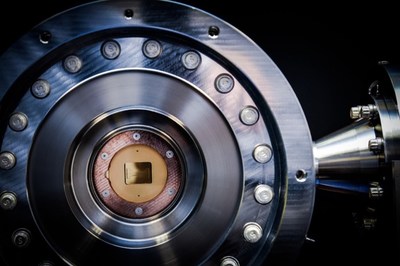
In the few images that IBM has released, its quantum computing lab looks like the engine room of a spaceship: bright white rooms with countless cables dangling from the ceiling down to a floating floor, pierced with vents. This technological tangle is just the background for the main show: rows of metal supports on which hang what look like... white solar boilers.

There, within these boilers, a historical revolution is taking shape. IBM, a computing dinosaur more than a century old, is trying to reinvent itself by winning one of the most grueling, expensive and potentially promising scientific races ever: the race to develop the quantum computer. "We are living in the most exciting era in the history of computing," says Dario Gil, Senior Vice President of IBM and head of the company's research division, in an exclusive interview with Calcalist. "We are witnessing a moment similar to the one recorded in the 40s & 50s of the last century, when the first classic computers were built." A few weeks after this conversation, his statements were further confirmed, when the Nobel Prize Committee announced the awarding of the prize in the field of physics to three researchers whose research served as a milestone in the development of the field.

The name Dario Gil shakes a lot of quanta and cells in the brains, and maybe even in the hearts, of physicists and computer engineers all over the world. This is the person who leads the most advanced effort in the world to develop a quantum computer. In September, when Gil landed in Tel Aviv for a short visit to give the opening lecture at the IBM conference, the hall was packed with senior engineers, researchers from the top universities in Israel, and representatives of government bodies - all enthralled by what Gil had to say.

2 View gallery

Dario Gil.

(Photo: Elad Gershgoren)

Gil (46) was born in Spain and moved to the United States to study at MIT University. He completed his doctoral studies there, and immediately after graduation began working at IBM in a series of research and development positions. Since 2019, he has been leading the company's research division, which has 3,000 engineers at 21 sites, including Israel. Under his management, in 2016, IBM built the first quantum computer whose services are available to anyone: if you have a complicated question, you can go to the IBM Quantum Experience website, remotely access one of the quantum computers through the cloud - and, perhaps, receive an answer. But as with everything related to quantum computing, it just sounds simple.

"Quantum computing is not just a name for an extremely fast computer," says Gill. In fact, he explains, the quantum computer is no longer a supercomputer that uses the same binary method that is accepted in every classical computer, but a completely new machine, another step in the evolution leading from strings of shells, through beaded invoices and calculating bars, to gear-based mechanical computers, to the electronic computer and now to the quantum computer. "Essentially, the quantum computer is a kind of simulator of nature, through which it is possible to simulate natural processes, and thus solve problems that previously had no solution," explains Gil. "If the classical computer is a combination of mathematics and information, then quantum computing is a combination of physics and information."

This connection makes it possible to solve certain types of problems with unprecedented speed: Google, which is also developing a quantum computer, claimed in 2019 that it had reached "quantum supremacy" a demonstration of a calculation that a quantum computer would perform more efficiently than a classical computer. The researchers at Google showed how a quantum computer performed in 200 seconds a calculation that they claim would have required a classical computer ten thousand years to complete. This claim has since been disproved by other researchers, who have presented an algorithm that allows a classical computer to perform the same calculation in a reasonable amount of timebut even this Google failure provides an idea of the enormous power a quantum computer will have.

"The quantum computer does not make the classical computer superfluous: they will live together, and each of them will solve different problems," explains Gil. "It's like asking you how to get from point A to point B: you can walk, ride a bicycle, travel by car or fly. If the distance between these points is 50 km, you won't fly between them, right? Accordingly, it is a mode suitable for a classic computer. A quantum computer allows you to fly, even to the moon, and quickly."

You will soon explain to me how it works, and in which areas exactly, but before that, let's start from the bottom line: what can we do with it?

"Quantum computing will make it possible to crack a series of problems that seemed unsolvable, in a way that will change the world. Many of these issues are related to energy. Others are related to the development of new and exciting materials. We tend to take the materials available to us for granted, but in the past there were eras that were defined by the materials that dominated them - The Stone Age', the 'Bronze Age', the 'Iron Age'. Quantum computing will help us develop materials with new properties, therefore the first sector that is already using it is industry, especially the car industry: the car manufacturers are interested in better chemistry, which will enable the production of more efficient and durable batteries for electric vehicles. For a normal computer this is a huge task, and to complete it we have to give up accuracy and settle for approximate answers only, but quantum computing can help quickly develop materials that will fit the task, even without entering the lab. The efficiency of a quantum computer when it comes to questions in chemistry is also used in the pharmaceutical industry, There they are beginning to make initial use of such computers to examine the properties of molecules, and in this way to speed up the development of new drugs; and also in the fertilizer industry, which will be able to develop substances whose production will not harm the environment.

The uses are not limited to the material world. "For the financial sector, for example, the quantum computer enables the analysis of scenarios, risk management and forecasting, and the industry is already very interested in such possible applications, which could provide the general public with dramatically improved performance in investment portfolios, for example.

2 View gallery

IBM.

(Photo: Shutterstock)

At the same time, there are industries that quantum computing will force to recalculate their course, and the information security industry is at the forefront. The modern encryption systems (mainly RSA, one of whose developers is the Israeli Prof. Adi Shamir) are asymmetric: each recipient publishes a code that allows the information sent to them to be encrypted ("public key"), which includes the product of two large prime numbers that are kept secret. To decipher the encrypted information, this product must be broken down into factors - but without knowing what the initial numbers are, "this task would require a normal computer to calculate for many years," explains Gil. "However, for the quantum computer, such a calculation can be a matter of seconds."

There is a real threat here to an entire industry, the logic behind which has been built since the 1970s, and now suddenly the ground is cracking under it.

"True, a normal computer needs ten thousand years to solve an encryption that a quantum computer would solve in an instant. That is why the quantum computer threatens the world of cyberspace and encryption, which are the basis of all global information security. This is an example that is not related to physics or nature, but simply to the stronger and faster computing power of the quantum computer.

The computer that works against all the rules of intuition

To understand the power of the quantum computer, this concept, "quantum computing", must first be broken down. The first step is to stop thinking in the familiar concepts of one and zero. Forget about bits and binaries. The key to understanding quantum computing is the recognition that this dichotomy is not there: instead of the bit, quantum computing relies on a basic unit of information called a qubit (short for "quantum bit"). The qubit is simultaneously one, zero and everything in between.

This is the moment to stop and explain the theory that underlies the quantum computer, and which seems to go against common sense. "Quantum theory makes it possible to explain the behavior of very, very small particles," Gil explains. "At school we are presented with a model of an atom that looks like a planet, with a nucleus and electrons moving around, but at the beginning of the 20th century, this model turned out to be not very accurate." This happened when physicists such as Max Planck and Albert Einstein realized that light, which until then physics saw as a wave, also behaves as a particle - and the energy of this particle can only be described in "quantum" jumps, that is, as discrete packets. In the decades that followed, this theory was developed more and more, and proved to be effective in describing a variety of phenomena in the world of particles. And yet, its deep meanings remain obscure even today.

Such is, for example, the idea that a particle is in more than one place. According to quantum theory, a particle moving between two points moves simultaneously in all the paths between them, a state called "superposition". It's not that we don't know its exact location: it just doesn't have one. Instead, it has a distribution of possible locations that coexist. In other words, reality is not certain, but probabilistic.

And this is not the only puzzle posed by quantum theory. Another confusing concept is "entanglement", a situation in which several particles exhibit identical physical values, and respond simultaneously to a change in one of them, even if they are at a great distance from each other. Gil suggests thinking of it as tossing two coins: anyone who has studied statistics knows that the probabilities of getting a "head" or a "tail" on each of them are independent. But in the quantum model, if the coins (representing particles here) are intertwined, then tossing one of them will result in the same result in the other. "Einstein didn't believe in interweaving, and hated these patterns," Gil says with a smile.

Measurements that affect the results? A reality that is not absolute but statistical? Particles that become twins even at infinite distance? If these ideas sound puzzling, incomprehensible or counter-intuitive to you, you are not alone: "Whoever comes across quantum theory and is not left stunned, has not understood it," said the physicist Niels Bohr, Einstein's contemporary and his great nemesis, who won the Nobel Prize for his contribution to the development of the theory (Einstein, by the way, had reservations about Bohr's interpretation of the theory's conclusions). Another physicist who won the Nobel Prize for his contribution to the theory, Richard Feynman, commented on this when he said: "If you think you have understood quantum theory, you have not."

The same Feynman is the father of quantum computing: he wanted to simulate the behavior of particles, but due to the probabilistic nature of the theory, a classical computer that would try to perform such a simulation would require an enormous amount of calculations, so that the simulation would become impractical. "Feynman, and like him other physicists, thought that the field of computing focused on mathematical horizons and moved too far away from nature, and that physics could be more connected to the world of information," explains Gil. "In a historic lecture he gave in 1981, Feynman claimed that there was nothing to give a classical computer to deal with particle simulation, because nature is not classical. He said, 'If we want to simulate nature, we need a machine that behaves like nature, in a quantum way.'" In 1998, this vision was realized, when the first quantum computer was built at the University of Oxford in Great Britain.

A quantum computer utilizes the enigmatic properties of quantum theory, those that are not fully understood by us, to perform calculation operations. In a normal computer, the basic unit of information is a "bit", which can have one of two values, 0 or 1; Using such bits makes it possible to perform any calculation imaginable - although some of these calculations may take a very long time. In a quantum computer, the qubit, thanks to superposition, represents not one absolute value, but a distribution of values. "You can think of it as a question of more dimensions: one and zero are just the ends, the poles of a coin for example, but it can also have a sideways tilt," explains Gil. Using statistical approaches it is possible to examine the state of the qubit and obtain useful results. This probabilistic approach is not suitable for every problem, but in solving certain problems it is infinitely more efficient than the classical computer's search for an absolute answer.

"Because of the entanglement effect, it is also possible to cause the qubits to influence each other," says Gil. And since each qubit represents an entire field of possibilities, each addition of a qubit increases the number of possible connections between the qubits with exponentially increasing power (in the classical computer, on the other hand, the addition of bits grows linearly). At the moment, IBM holds the record for qubits: last year it unveiled a quantum processor with 127 qubits, and its stated goal is to launch a processor with 433 qubits this year, and a processor with 1,021 qubits next year.

Three degrees colder than outer space

This ambition is more pretentious than it seems. It turns out that "building a machine that will behave like nature" is a complex story like no other: the qubits are very sensitive to outside influences, which makes building a computer a very complicated and expensive business. "The quantum computer is very powerful, but at the same time also very delicate," explains Gil: "It utilizes physical processes that occur in the world, but such processes are a system in which everything is connected, everything affects everything, and this can disrupt the results: if energy from the outside world goes inside and connect to the qubits, this will make them behave like normal bits, and thus the unique ability of quantum computation will be lost. Therefore, a quantum computer must be very isolated from the entire environment. The big challenge is to produce a system that is sufficiently isolated from the outside world, but not too isolated."

When I try to find out what the cost of building a quantum computer is - and IBM has already built 40 of them - Gil avoids a clear answer, but it is enough to hear what this effort entails: "There are several different approaches to building a quantum computer; IBM chose a cryogenic approach, meaning deep freezing, and the use of superconductors. The temperature in the computer is close to absolute zero: at the bottom of its case the temperature is minus 273 degrees Celsiusthree degrees less than the temperature of outer space, and less than one degree above absolute zero. The temperature should be close to absolute zero, but not reach it, because then there is no movement at all, Not even of the atoms."

The result is a cooling and protection case that resembles a water heater in its shape, and inside it has the calculation unit, whose shape gave it the nickname "chandelier" according to Gil and his team. "Inside the layers of protection there is a cylinder with the processor in it. Even if only a fraction of an energy particle enters the computer, literally a fraction of nothing, it will be enough to disrupt the results," Gil clarifies.

The great sensitivity, and the protection requirements derived from it, mean that the quantum computer is quite cumbersome: in the newest models, which try to include more and more qubits, the case already reaches a height of several meters. To some extent it is reminiscent of the first generations of classic computers, which looked like huge cabinets. Those classic computers kept getting smaller and smaller, until today we squeeze millions of times more computing power into a simple smartphone, but in the case of quantum computers, we cannot expect a similar process: "The quantum computer requires unique conditions that cannot be produced in a simple terminal device, and this will not change in the foreseeable future," Gil explains. "I believe that quantum computing will be a service that we can access remotely, as we access cloud services today. It will work similar to what IBM already enables today: the computer sits with us, and we make it possible to access the 'brain' and receive answers. Of the 40 computers we have built since 2016, today 20 are available to the public. About half a million users all over the world have already made use of the capabilities of the quantum computer we built, and based on this use, about a thousand scientific publications have already been published."

Google and Microsoft are heating up the competition

IBM is not the only company participating in the quantum computing race, but Gil exudes full confidence in its ability to lead it: according to him, most competitors only have parts of the overall system, but not a complete computer available to solve problems. Google, as mentioned, is a strong contender in this race, and it also allows remote access to its quantum computing service, Google Quantum AI; Microsoft is also working to provide a similar service on its cloud platform, Azure.

Meanwhile, quantum computing is a promise "on paper". The theoretical foundations for this revolution were laid already 40 years ago, the first proofs were presented more than 20 years ago, the industry has been buzzing around this field for several years - and we still haven't seen uses that would serve a regular person.

"If you go back to the 1940s, when the first computers were invented, you will see that even then the uses and advantages of the new invention were not clear. Those who saw the first computers said, 'Oh, great, you can use it to crack the code of encryption machines in wars, maybe even calculate routes of ballistic missiles, and that's it. Who's going to use it? Nobody,'" Gil laughs. "In the same way, the success of quantum computing will depend on its uses: how easy it will be to program, how large the community of users will be, what talents will get there. The quantum revolution will be led by a community, which is why education for this field is so important: we need more and more smart people to start to think 'how can I use quantum computing to advance my field'.

"What is beginning these days is the democratization phase of quantum computing, which will allow anyone to communicate with the computer without being an advanced programmer in the field: it will be possible to approach it with a question or a task that will be written in the classical languages of one or zero. That is why we are already seeing more use of quantum computing capacity today.

"There are also many startups that do not actually work to establish a quantum computer, but focus on various components of this world (for example, the Israeli company Quantum Machines, which develops hardware and software systems for quantum computers, and last July was selected by the Innovation Authority to establish the Israeli Quantum Computing Center). The activity of such companies creates a completely new ecosystem, thus promoting the industry and accelerating its development, just as is happening today in the field of ordinary computers. IBM will not rely only on itself either: we would like to benefit from the innovation of smart people in this field, of course also in Israel.

"I am convinced that the big bang of quantum computing will happen in this decade. Our ambition at IBM is to demonstrate 'quantum supremacy' already in the next three years. I believe that the combination of advances in artificial intelligence, together with quantum computing, will bring about a revolution in the industry of the kind that Nvidia made in its market (Nvidia developed unique processors for gaming computers, which made it the chip company that reached a billion dollar revenue the fastest.) Quantum computing can generate enormous value in the industry. It is phenomenally difficult, but it is clear to me that we will see the uses already in the current decade."

The Nobel Prize opens a new horizon for quantum computing

Quantum computing has ignited the imagination of researchers for many decades, but until now it has not left the confines of laboratories. However, the awarding of the Nobel Prize to three researchers in the field indicates that the vision is becoming a real revolution. Alain Aspect of France, the American John Clauser and Austrian Anton Zeilinger received the award for research they conducted (separately) since the 1970s, in which they examined the phenomenon of quantum entanglement (described in the article), proved its existence and laid tracks for its technological use.

The awarding of the Nobel Prize to the entanglement researchers proves that quantum computing is more than a mental exercise for a sect of physicists, and is a defining moment for companies that invest capital in the development of the field. They are pushed to this effort due to a fundamental change in the world in which they operate: in recent decades, the world of computing has operated according to "Moore's Law", which foresees that the density of transistors in computer processors will double every two years in a way that will increase the computing power of these chips. However, as the industry approaches the physical limit after which it will be impossible to cram more transistors onto a chip, the need to develop a quantum computer has become acute.

The numbers also signal that something is happening in the field. In 2020, the scope of the quantum computing market was less than half a billion dollars, but at the end of 2021, in a signal that the vision is beginning to be realized, the research company IDC published an estimate according to which in 2027 the scope of the market will reach $8.6 billion and investments in the field will amount to $16 billion (compared to $700 million in 2020 and $1.4 billion in 2021). IBM CEO Arvind Krishna also recently estimated that in 2027 quantum computing will become a real commercial industry.

Read more from the original source:

Quantum Leap: "The big bang of quantum computing will come in this decade" - CTech

Strategic Partnership Agreement to Develop the Quantum Computing Market in Japan and Asia-Pacific – PR Newswire

TOKYO, CAMBRIDGE, England and BROOMFIELD, Colo., Oct. 18, 2022 /PRNewswire/ -- Mitsui & Co., Ltd ("Mitsui") and Quantinuum have signed a strategic partnership agreement to collaborate in the delivery of quantum computing in Japan and the Asia-Pacific region.

Mitsui, which is committed to digital transformation, and Quantinuum, one of the world's leading quantum computing companies, integrated across hardware and software, have entered this strategic partnership to develop quantum computing use cases, which are expected to drive significant business transformation and innovation in the future.

Mitsui and Quantinuum will accelerate collaboration, cooperation, and development of new business models. They will jointly pursue quantum application development and provide value added services to organizations working across a variety of quantum computing domains, which is expected to be worth US$450B US$850B worldwide by 2040.*

Yoshio Kometani, Representative Director, Executive Vice President and Chief Digital Information Officer of Mitsui & Co., Ltd. stated:"We are very pleased with the strategic partnership between Mitsui and Quantinuum. By combining Quantinuum's cutting-edge quantum computing expertise and diverse quantum talents with Mitsui's broad business platform and network, we will work together to provide new value to our customers and create new business value in a wide range of industrial fields."

Ilyas Khan, Founder and CEO of Quantinuum stated:"The alliance between Mitsui and Quantinuum demonstrates our shared commitment to accelerating quantum computing across all applications and use cases in a diverse range of sectors, including chemistry, finance, and cybersecurity. Today's announcement reinforces our belief in the global quantum leadership shown by corporations and governments in Japan, pioneered by corporate leaders like Mitsui."

Details of the Strategic Partnership

Collaboration areas and applications

Recent Achievements by Quantinuum

About Mitsui & Co., Ltd.

Location: 1-2-1 Otemachi, Chiyoda-ku, Tokyo

Established: 1947

Representative: Kenichi Hori, President and Representative Director

Mitsui & Co., Ltd. (8031: JP) is a global trading and investment company with a diversified business portfolio that spans approximately 63 countries in Asia, Europe, North, Central & South America, The Middle East, Africa and Oceania.

Mitsui has about 5,500 employees and deploys talent around the globe to identify, develop, and grow businesses in collaboration with a global network of trusted partners. Mitsui has built a strong and diverse core business portfolio covering the Mineral and Metal Resources, Energy, Machinery and Infrastructure, and Chemicals industries.

Leveraging its strengths, Mitsui has further diversified beyond its core profit pillars to create multifaceted value in new areas, including innovative Energy Solutions, Healthcare & Nutrition and through a strategic focus on high-growth Asian markets. This strategy aims to derive growth opportunities by harnessing some of the world's main mega-trends: sustainability, health & wellness, digitalization and the growing power of the consumer.

Mitsui has a long heritage in Asia, where it has established a diverse and strategic portfolio of businesses and partners that gives it a strong differentiating edge, provides exceptional access for all global partners to the world's fastest growing region and strengthens its international portfolio.

For more information on Mitsui & Co's businesses visit, https://www.mitsui.com/jp/en/index.html

About Quantinuum

Location: Cambridge, U.K., Broomfield, Colorado, U.S.A.

Established: December 2021 (through the merger of Honeywell Quantum Solutions (U.S.) and Cambridge Quantum Computing (U.K.))

Representative: Ilyas Khan, CEO; Tony Uttley, COO; Shuya Kekke, CEO & Representative Director, Japan

Quantinuum is one of the world's largest integrated quantum computing companies, formed by the combination of Honeywell Quantum Solutions' world-leading hardware and Cambridge Quantum's class-leading middleware and applications. Science-led and enterprise-driven, Quantinuum accelerates quantum computing and the development of applications across chemistry, cybersecurity, finance, and optimization. Its focus is to create scalable and commercial quantum solutions to solve the world's most pressing problems in fields such as energy, logistics, climate change, and health. The company employs over 480 individuals, including 350 scientists, at nine sites across the United States, Europe, and Japan.

Selected major customers (in Japan): Nippon Steel Corporation, JSR Corporation

http://www.quantinuum.com

Photo - https://mma.prnewswire.com/media/1923231/Quantinuum.jpgPhoto - https://mma.prnewswire.com/media/1923232/Quantinuum_System_Model.jpg

SOURCE Quantinuum LLC

View post:

Strategic Partnership Agreement to Develop the Quantum Computing Market in Japan and Asia-Pacific - PR Newswire

Cleveland Clinic and IBM Begin Installation of IBM Quantum System One – Cleveland Clinic Newsroom

Cleveland Clinicand IBM have begundeployment of the first private sector onsite,IBM-managedquantum computer in the United States.The IBM Quantum Systemis to be located on Cleveland Clinics main campus in Cleveland.

The first quantum computer in healthcare, anticipated to be completed in early 2023, is a key part of the two organizations10-year partnership aimed at fundamentally advancing the pace of biomedical research through high-performance computing. Announced in 2021, the Cleveland Clinic-IBM Discovery Accelerator is a joint center that leverages Cleveland Clinics medical expertise with the technology expertise of IBM, including its leadership in quantum computing.

The current pace of scientific discovery is unacceptably slow, while our research needs are growing exponentially, said Lara Jehi, M.D., Cleveland Clinics Chief Research Information Officer. We cannot afford to continue to spend a decade or more going from a research idea in a lab to therapies on the market. Quantum offers a future to transform this pace, particularly in drug discovery and machine learning.

A step change in the way we solve scientific problems is on the horizon, said Ruoyi Zhou, Director, Ph.D., IBM Research Cleveland Clinic Partnership. At IBM, were more motivated than ever to create with Cleveland Clinic and others lasting communities of discovery and harness the power of quantum computing, AI and hybrid cloud to usher in a new era of accelerated discovery in healthcare and life sciences.

The Discovery Accelerator at Cleveland Clinic draws upon a variety of IBMs latest advancements in high performance computing, including:

Lara Jehi, M.D., and Ruoyi Zhou, Ph.D., at the site of the IBM Quantum System One on Cleveland Clinics main campus. (Courtesy: Cleveland Clinic/IBM)

The Discovery Accelerator also serves as the technology foundation for Cleveland Clinics Global Center for Pathogen Research & Human Health, part of the Cleveland Innovation District. The center, supported by a $500 million investment from the State of Ohio, Jobs Ohio and Cleveland Clinic, brings together a team focused on studying, preparing and protecting against emerging pathogens and virus-related diseases. Through Discovery Accelerator, researchers are leveraging advanced computational technology to expedite critical research into treatments and vaccines.

Together, the teams have already begun several collaborative projects that benefit from the new computational power. The Discovery Accelerator projects include a research study developing a quantum computing method to screen and optimize drugs targeted to specific proteins; improving a prediction model for cardiovascular risk following non-cardiac surgery; and using artificial intelligence to search genome sequencing findings and large drug-target databases to find effective, existing drugs that could help patients with Alzheimers and other diseases.

A significant part of the collaboration is a focus on educating the workforce of the future and creating jobs to grow the economy. An innovative educational curriculum has been designed for participants from high school to professional level, offering training and certification programs in data science, machine learning and quantum computing to build the skilled workforce needed for cutting-edge computational research of the future.

Read more from the original source:

Cleveland Clinic and IBM Begin Installation of IBM Quantum System One - Cleveland Clinic Newsroom

VW teams with Canadian quantum computing company Xanadu on batteries – Automotive News Canada

Quantum computing, Ardey added in a release, might trigger a revolution in material science that will feed into the companys in-house battery expertise.

Leaving the bits and bytes of classical computing behind, quantum computers rely on qubits, and are widely seen as having potential to solve complex problems that traditional computers could not work through on reasonable timelines.

The automaker and Toronto-based technology firm have already been collaborating on research into material science, computational chemistry, and quantum algorithms for about a year. That early work set the foundation for the formal partnership, Volkswagen said.

The goal of the research is to develop quantum algorithms that can simulate how a blend of battery materials will interact more quickly than traditional computer models. Computational chemistry, which is traditionally used for such work, Ardey said, is reaching limitations when it comes to battery research.

Juan Miguel Arrazola, head of algorithms at Xanadu, said the partnership is part of the Canadian companys drive to make quantum computers truly useful.

Focusing on batteries is a strategic choice given the demand from industry and the prospects for quantum computing to aid in understanding the complex chemistry inside a battery cell.

Using the quantum algorithms, Volkswagen said it aims to develop battery materials that are safer, lighter and cheaper.

Go here to read the rest:

VW teams with Canadian quantum computing company Xanadu on batteries - Automotive News Canada

The world, and todays employees, need quantum computing more than ever – VentureBeat

Did you miss a session from MetaBeat 2022? Head over to the on-demand library for all of our featured sessions here.

Quantum computing can soon address many of the worlds toughest, most urgent problems.

Thats why the semiconductor legislation Congress just passed is part of a $280 billion package that will, among other things, direct federal research dollars toward quantum computing.

Quantum computing will soon be able to:

The economy and the environment are clearly two top federal government agenda items.Congress in July was poised to pass the most ambitious climate bill in U.S. history. The New York Times said that the bill would pump hundreds of billions of dollars into low-carbon energy technologies like wind turbines, solar panels and electric vehicles and would put the United States on track to slash its greenhouse gas emissions to roughly 40% below 2005 levels by 2030. This could help to further advance and accelerate the adoption of quantum computing.

Low-Code/No-Code Summit

Join todays leading executives at the Low-Code/No-Code Summit virtually on November 9. Register for your free pass today.

Because quantum technology can solve many previously unsolvable problems, a long list of the worlds leading businesses including BMW and Volkswagen, FedEx, Mastercard and Wells Fargo, and Merck and Roche are making significant quantum investments. These businesses understand that transformation via quantum computing, which is quickly advancing with breakthrough technologies, is coming soon. They want to be ready when that happens.

Its wise for businesses to invest in quantum computing because the risk is low and the payoff is going to be huge. As BCG notes: No one can afford to sit on the sidelines as this transformative technology accelerates toward several critical milestones.

The reality is that quantum computing is coming, and its likely not going to be a standalone technology. It will be tied to the rest of the IT infrastructure supercomputers, CPUs and GPUs.

This is why companies like Hewlett Packard Enterprise are thinking about how to integrate quantum computing into the fabric of the IT infrastructure. Its also why Terra Quantum AG is building hybrid data centers that combine the power of quantum and classical computing.

Amid these changes, employees should start now to get prepared. There is going to be a tidal wave of need for both quantum Ph.D.s and for other talent such as skilled quantum software developers to contribute to quantum efforts.

Earning a doctorate in a field relevant to quantum computing requires a multi-year commitment. But obtaining valuable quantum computing skills doesnt require a developer to go back to college, take out a student loan or spend years studying.

With modern tools that abstract the complexity of quantum software and circuit creation, developers no longer require Ph.D.-level knowledge to contribute to the quantum revolution, enabling a more diverse workforce to help businesses achieve quantum advantage. Just look at the winners in the coding competition that my company staged. Some of these winners were recent high school graduates, and they delivered highly innovative solutions.

Leading the software stack, quantum algorithm design platforms allow developers to design sophisticated quantum circuits that could not be created otherwise. Rather than defining tedious low-level gate connections, this approach uses high-level functional models and automatically searches millions of circuit configurations to find an implementation that fits resource considerations, designer-supplied constraints and the target hardware platform. New tools like Nvidias QODA also empower developers by making quantum programming similar to how classical programming is done.

Developers will want to familiarize themselves with quantum computing, whichwill be an integral arrow in their metaphorical quiver of engineering skills. People who add quantum skills to their classical programming and data center skills will position themselves to make more money and be more appealing to employers in the long term.

Many companies and countries are experimenting with and adopting quantum computing. They understand that quantum computing is evolving rapidly and is the way of the future.

Whether you are a business leader or a developer, its important to understand that quantum computing is moving forward. The train is leaving the station will you be on board?

Erik Garcell is technical marketing manager at Classiq.

Welcome to the VentureBeat community!

DataDecisionMakers is where experts, including the technical people doing data work, can share data-related insights and innovation.

If you want to read about cutting-edge ideas and up-to-date information, best practices, and the future of data and data tech, join us at DataDecisionMakers.

You might even considercontributing an articleof your own!

Read More From DataDecisionMakers

Go here to see the original:

The world, and todays employees, need quantum computing more than ever - VentureBeat

CEO Jack Hidary on SandboxAQ’s Ambitions and Near-term Milestones – HPCwire

Spun out from Google last March, SandboxAQ is a fascinating, well-funded start-up targeting the intersection of AI and quantum technology. As the world enters the third quantum revolution, AI + Quantum software will address significant business and scientific challenges, is the companys broad self-described mission. Part software company, part investor, SandboxAQ foresees a blended classical computing-quantum computing landscape with AI infused throughout.

Its developing product portfolio comprises enterprise software for assessing and managing cryptography/data security in the so-called post-quantum era. NIST, of course, released its first official post-quantum algorithms in July and SandboxAQ is one of 12 companies selected to participate in its newproject Migration to Post Quantum Cryptography to build and commercialize tools. SandboxAQs AQ Analyzer product, says the company, is already available and being used by a few marquee customers.

Then theres SandboxAQs Strategic Investment Program, announced in August, which acquires or invests in technology companies of interest. So far, it has acquired one company (Cryptosense) and invested in two others (evolutionQ, and Qunnect).

Last week, HPCwire talked with SandboxAQ CEO Jack Hidary about the companys products and strategy. One has the sense that SandboxAQs aspirations are broad, and with nine figure funding, it has the wherewithal to pivot or expand. The A in the name stands for AI and the Q stands for quantum. One area not on the current agenda: building a quantum computer.

We want to sit above that layer. All these [qubit] technologies ion trap, and NV center (nitrogen vacancy center), neutral atoms, superconducting, photonic are very interesting and we encourage and mentor a lot of these companies who are quantum computing hardware companies. But we are not going to be building one because we really see our value as a layer on top of those computing [blocks], said Hidary. Google, of course, has another group working on quantum hardware.

Hidary joined Google in 2016 as Sandbox group director. A self-described serial entrepreneur, Hidarys varied experience includes founding EarthWeb, being a trustee of the XPrize Foundation, and running for Mayor in New York City in 2013. While at Google Sandbox, he wrote a textbook Quantum Computing: An Applied Approach.

I was recruited in to start a new division to focus on the use of AI and ultimately also quantum in solving really hard problems in the world. We realized that we needed to be multi-platform and focus on all the clouds and to do [other] kinds of stuff so we ended up spinning out earlier this year, said Hidary.

Eric Schmidt joined us about three and a half years ago as he wrapped up his chairmanship at Alphabet (Google parent company). He got really into what were doing, looking at the impact that scaled computation can have both on the AI side and the quantum side. He became chairman of SandboxAQ. I became CEO. Weve other backers like Marc Benioff from Salesforce and T. Rowe Price and Guggenheim, who are very long-term investors. What youll notice here thats interesting is we dont have short-term VCs. Wehave really long term investors who are here for 10 to 15 years.

The immediate focus is on post quantum cryptography tools delivered mostly by a SaaS model. By now were all familiar with the threat that fault-tolerant quantum computers will be able to crack conventionally encrypted (RSA) data using Shors algorithm. While fault-tolerant quantum computers are still many years away, the National Institute of Standards and Technology (NIST) and others, including SandboxAQ, have warned against Store Now/Decrypt Later attacks. (See HPCwire article, The Race to Ensure Post Quantum Data Security).

What adversaries are doing now is siphoning off information over VPNs. Theyre not cracking into your network. Theyre just doing it over VPNs, siphoning that information. They cant read it today, because its RSA protected, but theyll store it and read it in a number of years when they can, he said. The good news is you dont have to scrap your hardware. You could just upgrade the software. But thats still a monumental challenge. As you can imagine, for all the datacenters and the high-performance computing centers this is a non-trivial operation to do all that.

A big part of the problem is simply finding where encryption code is in existing infrastructure. That, in turn, has prompted calls for what is being called crypto-agility a comprehensive yet modular approach that allows easy swapping in-and-out cryptography code.

We want crypto-agility, and what we find is large corporations, large organizations, and large governments dont have crypto-agility. What were hoping is to develop tools to implement this idea. For example, as a first step to crypto-agility, were trying to see if people even have an MRI (discovery metaphor) machine for use on their own cybersecurity, and they really dont when it comes to encryption. Theres no diagnostic tools that these companies are using to find where their [encryption] footprint is or if they are encrypting everything appropriately. Maybe some stuff is not even being encrypted, said Hidary, who favors the MRI metaphor for a discovery tool.

No doubt, the need to modernize encryption/decryption methods and tools represents a huge problem and a huge market.

Without getting into technical details, Hidary said SandboxAQ is leveraging technology from its recent Cryptosense acquisition and internally developed technologies to develop a product portfolio planned to broadly encompass cryptography assessment, deployment and management. Its core current product is AQ Analyzer.

The idea, says Hidary returning to the MRI metaphor, is to take an MRI scan of inside the organization on-premise, cloud, private cloud, and so forth and this feeds into compliance vulnerabilities and post-quantum analysis. Its not just a quantum thing. Its about your general vulnerabilities on encryption. Overall, it happens to be that post quantum is helped by this, but this is a bigger issue. Then that feeds into your general sysops, network ops, and management tools that youre using.

AQ Analyzer, he says, is enterprise software that starts the process for organizations to become crypto-agile. Its now being used at large banks and telcos, and also by Mount Sinai Hospital. Healthcare replete with sensitive information is another early target for SandboxAQ. Long-term the idea is for Sandbox software tools to be able to automate much of the crypto management process from assessment to deployment through ongoing monitoring and management.

Thats the whole crypto-agility ballgame, says Hidary.

The business model, says Hidary, is carbon copy of Salesforce.coms SaaS model. Broadly, SandboxAQ uses a three-prong go-to-market via direct sales, global systems integrators in May it began programs with Ernst & Young (EY) and Deloitte and strategic partners/resellers. Vodafone and SoftBank are among the latter. Even though these are still early days for SandboxAQ as an independent entity, its moving fast, having benefitted from years of development inside Google. AQ Analyzer, said Hidary, is in general availability.

Were doing extremely well in banks and financial institutions. Theyre typically early adopters of cybersecurity because of the regulatory and compliance environment, and the trust they have with their customers, said Hidary.

Looking at near-term milestones, he said, Wed like to see a more global footprint of banks. Well be back in Europe soon now that we have Cryptosense (UK and Paris-based), and we have a local strong team in Europe. Weve had a lot of traction in the U.S. and the Canadian markets. So thats one key milestone over the next 18 months or so. Second, wed like to see [more adoption] into healthcare and telcos. We have Vodafone and Softbank mobile, on the telco side. We have Mount Sinai, wed like to see if that can be extended into additional players in those two spaces. The fourth vertical well probably go into is the energy grid. These are all critical infrastructure pieces of our society the financial structure of our society, energy, healthcare and the medical centers, the telecommunications grid.

While SandboxAQs AQ Analyzer is the companys first offering, its worth noting that the company aggressively looking for niches it can serve. For example, the company is keeping close tab on efforts to build a quantum internet.

Theres going to be a parallel quantum coherent internet to connect for distributed quantum computing, said Hidary. So nothing to do with cyber at all.

Our vision of the future that we share with I think everyone in the industry is that quantum does not take over classical, said Hidary. Its a mesh, a hybridization of CPU, GPU and quantum processing units. And the program, the code, in Python for example: part of it runs on CPUs, part of it on GPUs, and then yes, part of it will run on a QPU. In that mesh, youd want to have access both to the traditional Internet TCP IP today, but you also want to be able to connect over a quantum coherence intranet. So thats Qunnect.

Qunnect, of course, is one of the companies SandboxAQ has invested in and it is working on hardware (quantum memory and repeaters) to enable a quantum internet. Like dealing with post quantum cryptography, outfitting the quantum internet is likely to be as huge business. Looking at SandboxAQ, just seven months after being spun out from Google, the scope of its ambitions is hard to pin down.

Stay tuned.

Here is the original post:

CEO Jack Hidary on SandboxAQ's Ambitions and Near-term Milestones - HPCwire