
Monthly Archives: October 2012
Shared Mechanisms for Longevity via Calorie Restriction and AC5 Knockout
One of the handful of genetic alterations shown to extend life in mice is removal of adenylyl cyclase 5 (AC5). Researchers have noted in the past that this seems to share mechanisms with the longevity induced by calorie restriction - indeed, it is suspected that many of the varied known ways of altering laboratory animals to extend healthy life are in fact different methods to activate the same few base changes in metabolism. Here is another paper on this topic:
Adenylyl cyclase type 5 knockout mice (AC5 KO) live longer and are stress resistant, similar to calorie restriction (CR). AC5 KO mice eat more, but actually weigh less and accumulate less fat compared to [wild type] mice. CR applied to AC5 KO result in rapid decrease in body weight, metabolic deterioration and death. These data suggest that despite restricted food intake in CR, but augmented food intake in AC5 KO, the two models affect longevity and metabolism similarly.
To determine shared molecular mechanisms, mRNA expression was examined genome-wide for brain, heart, skeletal muscle and liver. Significantly more genes were regulated commonly rather than oppositely in all the tissues in both models, indicating commonality between AC5 KO and CR.
Gene Ontology analysis identified many significantly regulated, tissue-specific pathways shared by the two models, including sensory perception in heart and brain, muscle function in skeletal muscle, and lipid metabolism in liver. Moreover, when comparing gene expression changes in the heart under stress, the glutathione regulatory pathway was consistently upregulated in the longevity models but downregulated with stress. In addition, AC5 and CR shared changes in genes and proteins involved in the regulation of longevity and stress resistance, including Sirt1, ApoD and olfactory receptors in both young and intermediate age mice. Thus, the similarly regulated genes and pathways in AC5 KO and CR [suggest] a unified theory for longevity and stress resistance.
Trio of Genome-Sequencing Studies Offers a Broader View of Lung Cancer
From Nature magazine


http://rss.sciam.com/click.phdo?i=1aae064dddcda1c8093345cf6bee19f2


"Junk" DNA Holds Clues to Common Diseases
When the draft of the human genome was published in 2000, researchers thought that they had obtained the secret decoder ring for the human body. Armed with the code of 3 billion basepairs of As, Ts, Cs and Gs and the 21,000 protein-coding genes, they hoped to be able to find the genetic scaffolds of life --both in sickness and in health. [More]


http://rss.sciam.com/click.phdo?i=7b0ed7df96d7add1e7b201dddb2869c5


“Junk” DNA Holds Clues to Common Diseases
When the draft of the human genome was published in 2000, researchers thought that they had obtained the secret decoder ring for the human body. Armed with the code of 3 billion basepairs of As, Ts, Cs and Gs and the 21,000 protein-coding genes, they hoped to be able to find the genetic scaffolds of life --both in sickness and in health. [More]


http://rss.sciam.com/click.phdo?i=7b0ed7df96d7add1e7b201dddb2869c5


Are Phage Viruses the Forgotten Cure for Superbugs? [Excerpt]
Excerpted from The Forgotten Cure: The Past and Future of Phage Therapy , by Anna Kuchment . (Copernicus Books, 2011. Reprinted by permission of Springer Science+Business Media)


http://rss.sciam.com/click.phdo?i=24e2a1c4c798a3535a9c98999e220977


Researcher Alert: California Stem Cell Agency Tightening Budget Oversight on Grants

Some of California's top stem cell
researchers are going to have to sharpen their spreadsheets if they
want to win money from the state's $3 billion stem cell agency.
The agency is moving to beef up
scrutiny of the high-profile, big-ticket grant applications
that it will consider during the next several years. The effort may well extend to all grant programs. The move also makes
it clear to researchers that the CIRM staff is in the driver's seat
when it comes to budgeting on research projects.
scrutiny of the high-profile, big-ticket grant applications
that it will consider during the next several years. The effort may well extend to all grant programs. The move also makes
it clear to researchers that the CIRM staff is in the driver's seat
when it comes to budgeting on research projects.
The plan was laid out this week in a memo to directors of the California Institute for Regenerative Medicine (CIRM) by Ellen Feigal, the agency's senior vice
president for research and development. She said,
president for research and development. She said,
“Increasing the importance of
budgetary review will encourage applicants to propose rigorous,
realistic and vetted budgets, and will further our mission to be good
stewards of taxpayer dollars. These additions will not significantly
increase the workload burden on GWG members (grant reviewers) and
explicitly acknowledge that program goals, scientific plans, accurate budgeting and prudent spending are inextricably linked.”
The proposal comes before the CIRM
directors' Science Subcommittee next Monday and would alter the
closed-door grant review process in the following manner, according
to Feigal's memo.
directors' Science Subcommittee next Monday and would alter the
closed-door grant review process in the following manner, according
to Feigal's memo.
• “To assist GWG review,
appropriate expertise on budget and financial matters (e.g., this
could be in the form of a specialist reviewer, or can also be
assigned to a GWG reviewer with the appropriate background and
expertise), will review applications for sound budgeting and provide
comments or questions to the GWG for consideration by the reviewers
before the reviewer’s final scores are entered.
• “If the financial/budgetary
matter potentially directly impacts on the design or feasibility of
conducting the project, the GWG may consider this issue in the
scoring; otherwise, budgetary and financial issues and questions will
not contribute to the scientific score.
• “As appropriate, review summaries
sent to the ICOC (the CIRM governing board) will identify scientific
as well as budget or other issues. To the extent endorsed by the
GWG, the review summaries will also identify potential resolution
should the ICOC approve a given award with budget issues.
• “CIRM officers should be provided
explicit discretion to consider the budget comments, as well as
budget or other issues. To the extent endorsed by the GWG, the
review summaries will also identify potential resolution should the
ICOC approve a given award with budget issues.”
Feigal's memo clearly indicates that
CIRM staff has experienced push-back from recalcitrant researchers
when efforts have been made to bring costs under control. She noted that
the agency's staff examines a research project's budget during the
“prefunding” review that follows board approval. However, Feigal
said, at that stage, “It is often challenging to make substantive
changes to the budget, based on appropriateness of study activities
and costs, given the ICOC approval at a given budget amount.”
CIRM staff has experienced push-back from recalcitrant researchers
when efforts have been made to bring costs under control. She noted that
the agency's staff examines a research project's budget during the
“prefunding” review that follows board approval. However, Feigal
said, at that stage, “It is often challenging to make substantive
changes to the budget, based on appropriateness of study activities
and costs, given the ICOC approval at a given budget amount.”
The agency has already examined some
budgets prior to board approval. One grant review in a $200
million-plus round this summer, for example, declared that costs to
prepare regulation packages had “overlap” and were “excessive,”
along with costs dealing with manufacturing and per patient expenses.
That was for a high-scoring application by Antoni Ribas of UCLA, and
he was not alone.
budgets prior to board approval. One grant review in a $200
million-plus round this summer, for example, declared that costs to
prepare regulation packages had “overlap” and were “excessive,”
along with costs dealing with manufacturing and per patient expenses.
That was for a high-scoring application by Antoni Ribas of UCLA, and
he was not alone.
In her memo, Feigal listed other cases
of budgetary shortcomings in recent applications:,
of budgetary shortcomings in recent applications:,
• “Budget does not align with the
program deliverables and milestones. For example, the budget
includes activities not relevant to project objective(s) or that are
out of scope.
•”Budget does not contain adequate
expenses for known costs. For example, an applicant may budget
$100,000 for a GMP manufacturing run of a biologic in which it is
generally accepted knowledge that the actual expenses are typically
much greater.
•“Budget item significantly exceeds
a known cost or seems excessive without adequate justification. For
example, an applicant may propose a surgical expense of $100,000 per
patient for a procedure with Medicare reimbursement set at $15,000.
•“Cost allocations are not done
properly. For example, an applicant is developing the same
therapeutic candidate for 3 indications, and is applying for CIRM
funding for 1 of the 3, but is charging CIRM for the cost of the
entire manufacturing run.”
Initially, the budgetary review would
be used in disease team, early translational, strategic partnership
rounds, and any new rounds “as deemed appropriate.” Feigal said,
however, that “all applications for CIRM awards should be
carefully examined for budgetary appropriateness.”
be used in disease team, early translational, strategic partnership
rounds, and any new rounds “as deemed appropriate.” Feigal said,
however, that “all applications for CIRM awards should be
carefully examined for budgetary appropriateness.”
Our take: This seems to be a
well-advised move, albeit one that is not likely to find favor with
researchers accustomed to loose oversight. It moves budgetary review
to an earlier stage and gives the CIRM directors a chance to weigh in
on those matters prior to approval of grants, instead of creating a
sense of entitlement on the part of recipients that may pop up
following board approval of their applications. Indeed, the plan
makes such good sense that it raises the question why it was not in
place years ago.
well-advised move, albeit one that is not likely to find favor with
researchers accustomed to loose oversight. It moves budgetary review
to an earlier stage and gives the CIRM directors a chance to weigh in
on those matters prior to approval of grants, instead of creating a
sense of entitlement on the part of recipients that may pop up
following board approval of their applications. Indeed, the plan
makes such good sense that it raises the question why it was not in
place years ago.
A final note: Feigal's memo is an
excellent example of the type of information that clarifies issues
and helps CIRM directors make the best possible decisions. It
provides some history, good evidence for a change and an explanation
of benefits. Additionally, the memo is timely, having been posted on
the CIRM website sufficiently in advance of next week's meeting to give affected parties and others time to comment
and make constructive suggestions. The memo is also far superior to
the Power Point presentations that are often submitted to the board
minus any nuanced, written discussion of the issue at hand.
excellent example of the type of information that clarifies issues
and helps CIRM directors make the best possible decisions. It
provides some history, good evidence for a change and an explanation
of benefits. Additionally, the memo is timely, having been posted on
the CIRM website sufficiently in advance of next week's meeting to give affected parties and others time to comment
and make constructive suggestions. The memo is also far superior to
the Power Point presentations that are often submitted to the board
minus any nuanced, written discussion of the issue at hand.
Next week's meeting will be based in
San Francisco but also has teleconference locations in Irvine (2), La
Jolla, Stanford, Pleasanton, Oakland and Los Angeles where the public
and researchers can participate. The specific addresses can be found on the agenda.
San Francisco but also has teleconference locations in Irvine (2), La
Jolla, Stanford, Pleasanton, Oakland and Los Angeles where the public
and researchers can participate. The specific addresses can be found on the agenda.

 Source:
UCD’s Knoepfler’s ‘Somewhat Provocative Paper’ on iPS


UC Davis researcher Paul Knoepfler is
the rare stem cell scientist who blogs about his work as well as
writing about issues in the field.
Over the weekend, he posted an item on
what he described as a “somewhat provocative paper” published by his lab in
“Stem Cells and Development.” He said the paper argued
that iPS cells “are very similar in some ways to cancer cells.”
what he described as a “somewhat provocative paper” published by his lab in
“Stem Cells and Development.” He said the paper argued
that iPS cells “are very similar in some ways to cancer cells.”
Most of his item deals with the
technical details and background of the research. But at the end of
this item, Knoepfler wrote,
technical details and background of the research. But at the end of
this item, Knoepfler wrote,
“So what does this mean in the big
picture?
“I believe that iPS cells and cancer
cells are, while not the same, close enough to be called siblings. As
such, the clinical use of iPS cells should wait for a lot more study.
Even if scientists do not use iPS cells themselves for transplants,
but instead use differentiated derivatives of iPS cells, the risk of
patients getting malignant cancers cannot be ignored.
“At the same time, the studies
suggest possible ways to make iPS cells safer and support the notion
of reprogramming cancer cells as an innovative new cancer therapy.
“Stay tuned in the next few days for
part 2 where I will discuss what this paper went through in terms of
review, etc. to get published. It wasn’t a popular story for some
folks.”
The UC Davis press release on the
research, which was financed by the California stem cell agency and the NIH, was picked up by several online sites, including Redorbit,
Medicalexpress and geekosystem.
research, which was financed by the California stem cell agency and the NIH, was picked up by several online sites, including Redorbit,
Medicalexpress and geekosystem.

 Source:
UCD's Knoepfler's 'Somewhat Provocative Paper' on iPS


UC Davis researcher Paul Knoepfler is
the rare stem cell scientist who blogs about his work as well as
writing about issues in the field.
Over the weekend, he posted an item on
what he described as a “somewhat provocative paper” published by his lab in
“Stem Cells and Development.” He said the paper argued
that iPS cells “are very similar in some ways to cancer cells.”
what he described as a “somewhat provocative paper” published by his lab in
“Stem Cells and Development.” He said the paper argued
that iPS cells “are very similar in some ways to cancer cells.”
Most of his item deals with the
technical details and background of the research. But at the end of
this item, Knoepfler wrote,
technical details and background of the research. But at the end of
this item, Knoepfler wrote,
“So what does this mean in the big
picture?
“I believe that iPS cells and cancer
cells are, while not the same, close enough to be called siblings. As
such, the clinical use of iPS cells should wait for a lot more study.
Even if scientists do not use iPS cells themselves for transplants,
but instead use differentiated derivatives of iPS cells, the risk of
patients getting malignant cancers cannot be ignored.
“At the same time, the studies
suggest possible ways to make iPS cells safer and support the notion
of reprogramming cancer cells as an innovative new cancer therapy.
“Stay tuned in the next few days for
part 2 where I will discuss what this paper went through in terms of
review, etc. to get published. It wasn’t a popular story for some
folks.”
The UC Davis press release on the
research, which was financed by the California stem cell agency and the NIH, was picked up by several online sites, including Redorbit,
Medicalexpress and geekosystem.
research, which was financed by the California stem cell agency and the NIH, was picked up by several online sites, including Redorbit,
Medicalexpress and geekosystem.

 Source:
Mayo Clinic uses smartphone images to evaluate stroke patients in remote locations through telemedicine
A new Mayo Clinic study confirms the use of smartphones medical images to evaluate stroke patients in remote locations through telemedicine. The study, the first to test the effectiveness of smartphone teleradiology applications in a real-world telestroke network, was recently published in Stroke, a journal of the American Heart Association.
Bart Demaerschalk, M.D., neurologist and medical director of Mayo Clinic Telestroke, shows us how the smartphone technology works:
Posted at Clinical Cases and Images. Stay updated and subscribe, follow us on Twitter and connect on Facebook.


http://feedproxy.google.com/~r/CasesBlog/~3/tSGF6AYs3fU/mayo-clinic-uses-smartphone-images-to.html
Arsenic life as dead as a doornail

— Distortion of the protein
Another nail in the coffin of the arsenic life story has been published suggesting that GFAJ-1 does not in fact metabolise arsenate, but instead is very good at distinguishing the poison from phosphate. Earlier this year, two papers found that despite earlier claims, the bacterium did not in fact take up arsenate, the new paper explains in more detail why.
Publishing in Nature, Dan Tawfick and colleagues decided to investigate how exactly GFAJ-1, and other bacteria that live in arsenic rich environments, survive. Can they distinguish between the two anions, and if so, how?
The trick, suggests Tawfick, is in the peristaltic phosphate binding proteins which are highly tuned in GFAJ-1. Although arsenate ions are only a little larger than phosphate, that size difference is enough to distort a low energy hydrogen bond and stop arsenate uptake (see left).
I can’t help but wonder, have we finally laid this to rest, or will more papers refuting GFAJ-1′s ability to metabolise arsenate keep coming out for a while yet? If they keep getting their authors in high impact journals, you can see why anyone working on applicable research might want to join in.
Laura Howes


Source:
http://prospect.rsc.org/blogs/cw/2012/10/04/arsenic-life-as-dead-as-a-doornail/
Chemistry in its element – Galantamine

 From Homer the poet to Homer Simpson, we all forget things from time to time, but not to the tragic extent of people with Alzheimer’s. This week’s Chemistry in its element podcast looks at galantamine, isolated from Caucasian snowdrops, which is used to treat the disease.


Source:
http://prospect.rsc.org/blogs/cw/2012/10/03/chemistry-in-its-element-galantamine/
Skull Brain by Emilio Garcia


Barcelona-based artist, Emilio Garcia of lapolab just released a sneak peek at his latest creation, the Skull Brain. You may know Emilio for his now famous and prolific Jumping Brains series. Available in almost any color imaginable these whimsical brains have received worldwide coverage, appearances in gallery shows (including our 2010 Street Anatomy show), and collaborations with many big artists.
The Skull Brain, done in different colors and materials, will be showcased at the Art Miami, CONTEXT pavilion at Black Square Gallery. CONTEXT, Miami’s newest cutting-edge, contemporary art fair, will launch with a VIP Private Preview on Tuesday, Dec. 4, 2012, coinciding with the 23rd edition of Art Miami.
I love Emilio’s story because he wanted to do something outside of the digital realm. He created lapolab, a space for himself to do visual art and plastic experimentation. Spurred on by the success of the first Jumping Brain project, he’s gone on to do many other projects and the Skull Brain is just his latest big iteration. Looking forward to seeing where this one goes!
Also look out for a collaboration between Emilio and Street Anatomy in the future!
See the entire Skull Brain creation process on Emilio’s Flickr.


http://feedproxy.google.com/~r/streetanatomy/OQuC/~3/ihlrUSN8848/
Enric Huguet’s Calcium Sandoz Forte Ads


Wonderfully illustrated pharma ads created by legendary Spanish graphic designer, Enric Huguet. Said to be responsible for some of the most interesting posters in the 50s and 60s, Enric style is based on simplicity and conceptual clarity, ranging from illustration to simple geometric graphics.
In an interview with Gràfics Dissenyadors Col.legi of Catalonia magazine, Enric says of design,
“A graphic designer is a poet and a linguist of visual images in the world. Poetry brings warmth and emotion to the message. The linguist logic introduces clarity through the correct articulation of the message. In every work must have emotion, feeling and clarity.”
Enric designed for various pharmaceuitcal companies in his career and in 1973 he won the Laus prize for this series of Calcium Sandoz Forte illustrations for Uriach Laboratory (shown above).
I recently had the chance to learn from some top creative directors in pharmaceutical advertising that a great ad needs to visually stand on its own. This is accomplished through injecting emotion, feeling and clarity into the ad, exactly how Enric stated.
[spotted by fellow AbelsonTaylor collegue Jose Gonzalez via Graphics Pioneers]

http://feedproxy.google.com/~r/streetanatomy/OQuC/~3/UjpZfXvE4JQ/
Gold Day of the Dead Screen Print Release
Available at the Street Anatomy store for $50 [SOLD OUT]


October is already upon us and that means it’s time to prepare for Day of the Dead coming up on November 1st!
In honor of the Day of the Dead tradition, we are offering our Street Anatomy audience a very special sugar skull gold screen print. Designed by London-based medical illustrator, Emily Evans, this skull is uniquely printed in shining gold ink that catches light beautifully. A friendly skull fit for any room!
- A2 (23.4 x 16.6 in)
- Gold ink on 270gsm colourplan dark grey paper
- Limited edition of 25 prints, signed and numbered
- Exclusive to Street Anatomy!
Available at the Street Anatomy store for $50 [SOLD OUT]
There’s more! We will be launching a bespoke hand screen printed wallpaper featuring the sugar skull design above for the 2012 holiday season! Sign up for updates at anatomyboutique.co.uk.


http://feedproxy.google.com/~r/streetanatomy/OQuC/~3/oWC6UeYFHS0/
"Wellcome’s Collectors," Ross MacFarlane, The Royal Society, London. November 2nd
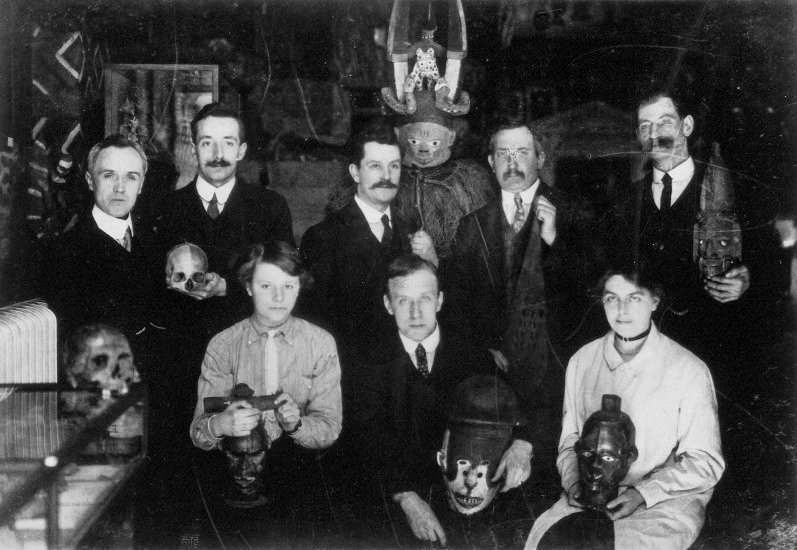
Oh, if only I were still in London... The inimitable Ross MacFarlane, genius moderator of last month's Congress for Curious Peoples, London edition on Henry Wellcome's collectors, at The Royal Society, London, on November 2:
Wellcome's Collectors1:00 pm – 2:00 pm on Friday 02 November 2012
at The Royal Society, London
History of science lecture by Ross MacFarlane.
Event details
Ross MacFarlane is Academic Engagement Officer at the Wellcome Library, London.
Pharmacist, philanthropist – and Fellow of the Royal Society – Sir Henry Wellcome is now widely recognised as one of the most acquisitive of collectors during the late nineteenth and early twentieth centuries. But Wellcome’s collection of historical objects was not the work of one man acting alone. This talk will aim to bring forth from the shadows of his store rooms the men and women who bid, bought, and collected in Wellcome’s name.
Attending this event
This event is free to attend and open to all. No tickets are required. Doors open at 12:30pm and seats will be allocated on a first-come-first-served basis.
Recorded audio will be available on this page a few days afterwards.
Enquiries: Contact the events team.
This event is free and open to the public. To find out more, click here.
Image: Photograph of Wellcome Museum staff with artefacts (Wellcome Library, London)

Source:
http://morbidanatomy.blogspot.com/2012/10/wellcomes-collectors-ross-macfarlane.html
Ectoplasm, "Spirit Art," and Mars in the Edwardian Imagination: A Series of Events at Observatory Curated by Photographer Shannon Taggart

I am very excited to announce a series of spiritualist themed events produced by my good friend, newest Observatory member, and extremely talented photographer Shannon Taggart. All the events are based around her current Observatory exhibition, The Spirit Art of Stanley Matrunick.
Full details follow; hope to see there!
The Spirit Art of Stanley Matrunick Viewing Event
Sunday, October 14 - 2pm - 5pm
Join us for a viewing event during Gowanus Open Studios Weekend. Music and Drinks! The Morbid Anatomy Library will be open also!
About the Exhibit: Stanley Matrunick (1906 – 1995) was a medium and Spiritualist minister who channeled portraits of Ascended Masters, guardians and loved ones from the other side. With the help of spirit guides, Rev. Stanley began creating spirit art in 1954 at the White Lily Chapel in Ashley, Ohio. He was then led to travel across the United States for 40 years doing portraits and readings. His work was often featured on television, radio and in print. The art presented here is from the private collection of Ron Nagy, historian of Lily Dale, NY, the world’s largest Spiritualist community. Also included are materials about Stanley Matrunick provided by his former student, Sakina Blue –Star of Sedona, Arizona.
About the Curator: Shannon Taggart is a photographer based in Brooklyn and a member of Observatory. Since 2001, she has been working on a project about Modern Spiritualism. Her images have appeared in publications including Blind Spot, Tokion, TIME and The New York Times Magazine. Her photographs have been shown at Photoworks in Brighton, England, The Photographic Resource Center in Boston, Redux Pictures in New York, the Stephen Cohen Gallery in Los Angeles and the New Gallery in Houston.
______________________________________________

A History of Ectoplasm: An Illustrated Presentation by Shannon Taggart
Date: Thursday, October 25thTime: 8pmAdmission: $10Presented by: Shannon Taggart
Why Ectoplasm? - Harry Houdini famously wondered this in his scathing critique of Spiritualism. Since it’s first appearances in Victorian era séance rooms, this mysterious substance has continued to seduce, disgust and intrigue believers and skeptics alike. This presentation will consider some of the complicated situations in which ectoplasm played a provocative role including the work of Baron von Schrenck-Notzing, the documentation of the Goligher Circle and the infamous case of Margery the Medium. Shannon Taggart’s images that address the current pursuit of ectoplasm within Modern Spiritualism will also be discussed. This lecture is part of a series that seeks to explore the intrinsic connection between Spiritualism and Photography.
Shannon Taggart is a photographer based in Brooklyn and a member of Observatory. Her images have appeared in various publications including Blind Spot, Tokion, TIME and The New York Times Magazine. Her work has been recognized by the Inge Morath Foundation, American Photography, the International Photography Awards, the Society for News and Design, Photo District News and the Alexia Foundation for World Peace. Her photographs have been shown at Photoworks in Brighton, England, The Photographic Resource Center in Boston, Redux Pictures in New York, the Stephen Cohen Gallery in Los Angeles and the New Gallery in Houston.
_______________________________________________
 Are We Alone? Planet Mars in the Edwardian Visual and Scientific Imagination, An illustrated lecture with author Jennifer TuckerDate: Saturday, October 27Time: 8pmAdmission: $10Presented by: Shannon Taggart
Astronomers, religious leaders, and members of the lay public had speculated about the possibility of life on other planets for hundreds of years before the first “proof” appeared, in May 1905, in the first successful photographs of Mars. Newspapers and magazines swiftly published reproductions of the photographs, made by the amateur planetary astronomer and wealthy businessman Percival Lowell, with accompanying descriptions of the “canals” of Mars and its imagined inhabitants. This illustrated talk shows how the intersection of science with new forms of observation and journalistic image display in the late 19th and early 20th century galvanized public interest in Mars, and how “Mars Mania” intersected and interacted with key trends and figures in art, journalism, spiritualism, astronomy, evolutionary science, and politics during a period that, noted the British writer H.G. Wells, was fascinated by the idea that “There are certain features in which [Martians] are likely to resemble us.”
Jennifer Tucker is a historian of science and technology specializing in the study of visual representation, gender, science, and popular knowledge in Victorian England. She is the author of Nature Exposed: Photography as Eyewitness in Victorian Science (2006) and editor of a special issue of History and Theory on “Photography and Historical Interpretation, “ as well as articles about the visual representation of science and technology in Victorian England. She is finishing a book about the photos and other visual representations that circulated across the wide social spectrum of Victorian society during the most famous legal case of imposture in modern Britain.
You can find out more by clicking here.

Source:
http://morbidanatomy.blogspot.com/2012/10/ectoplasm-spirit-art-and-mars-in.html
"Permit Bearer to Go to Hell and Return Unharmed": Coney Island Ticket Stub or Souvenir for Darkness and Dawn Cosmorama, Early 20th Century?

Seller's Description:
This is a souvenir of a visit to a Coney Island Bowery amusement called Darkness and Dawn. It was a Cyclorama, and had been created for an exposition in Omaha, Nebraska in 1898. It was brought to the Coney Island Bowery at the turn of the century. The souvenir is card stock, in the shape of a coffin, and has a skull and crossbones illustration at top. It also has a quote from "The Devil." The same image and text is printed on both sides (shown). The attraction on the Bowery was destroyed by fire in 1903, and was rebuilt for Luna Park several years later.
Via the wonderful Anonymous Works blog.

Source:
http://morbidanatomy.blogspot.com/2012/10/permit-bearer-to-go-to-hell-and-return.html
"Ecstatic Raptures and Immaculate Corpses: Visions of Death Made Beautiful in Italy" Exhibition, Final Open Hours TOMORROW, Saturday October 6, Noon-7 PM


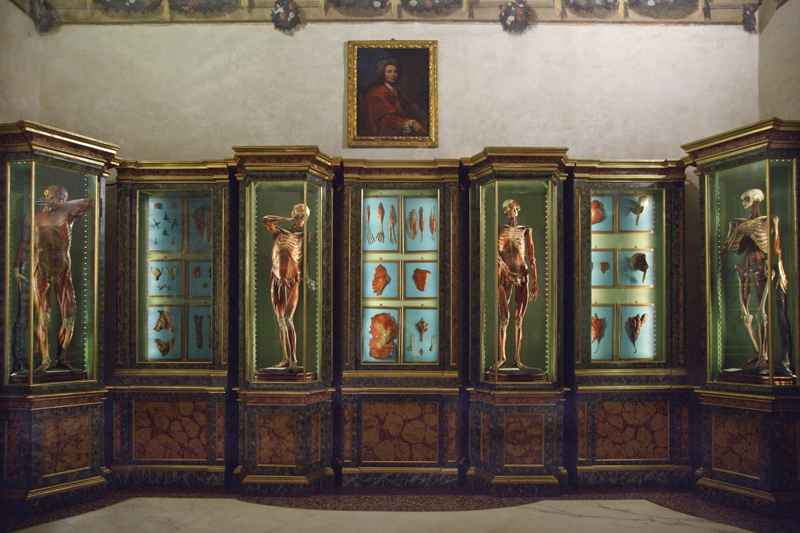
Tomorrow--Saturday, October 6--is your last chance to check out "Ecstatic Raptures and Immaculate Corpses: Visions of Death Made Beautiful in Italy," an exhibition featuring photographs by myself (some of which can be seen above) and waxworks by artists Eleanor Crook and Sigrid Sarda, on view at The Last Tuesday Society, 11 Mare Street, London All photographs and waxworks are for sale, and quite affordable, if I do say!
The exhibition will be view from Noon until 7:00 PM. Also on view will be the wonderful collection of taxidermy, naturalia, erotica, books and curiosities which comprises the spectacular Last Tuesday Society Giftshop.
Well worth a trip, I promise! Full details follow.
Ecstatic Raptures and Immaculate Corpses: Visions of Death Made Beautiful in Italy
An exhibition of photographs by Joanna Ebenstein of the Morbid Anatomy Blog, The Morbid Anatomy Library and Observatory with waxworks by Eleanor Crook and Sigrid Sarda.
Date: TOMORROW: Saturday, October 6
Time: Noon-7:00 PM
Location: The Last Tuesday Society, 11 Mare Street, London, E8 4RP
In her many projects, ranging from photography to curation to writing, New York based Joanna Ebenstein utilizes a combination of art and scholarship to tease out the ways in which the pre-rational roots of modernity are sublimated into ostensibly "purely rational" cultural activities such as science and medicine.Much of her work uses this approach to investigate historical moments or artifacts where art and science, death and beauty, spectacle and edification, faith and empiricism meet in ways that trouble contemporary categorical expectations.In the exhibition "Ecstatic Raptures and Immaculate Corpses" Ebenstein turns this approach to an examination of the uncanny and powerfully resonant representations of the dead, martyred, and anatomized body in Italy, monuments to humankind's quest to eternally preserve the corporeal body and defeat death in arenas sacred and profane.The artifacts she finds in both the churches, charnel houeses and anatomical museums of Italy complicate our ideas of the proper roles of--and divisions between--science and religion, death and beauty; art and science; eros and thanatos; sacred and profane; body and soul.
In this exhibition, you will be introduced to tantalizing visions of death made beautiful, uncanny monuments to the human dream of life eternal. You will meet "Blessed Ismelda Lambertini," an adolescent who fell into a fatal swoon of overwhelming joy at the moment of her first communion with Jesus Christ, now commemorated in a chillingly beautiful wax effigy in a Bolognese church; The Slashed Beauty, swooning with a grace at once spiritual and worldly as she makes a solemn offering of her immaculate viscera; Saint Vittoria, with slashed neck and golden ringlets, her waxen form reliquary to her own powerful bones; and the magnificent and troubling Anatomical Venuses, rapturously ecstatic life-sized wax women reclining voluptuously on silk and velvet cushions, asleep in their crystal coffins, awaiting animation by inquisitive hands eager to dissect them into their dozens of demountable, exactingly anatomically correct, wax parts.
Joanna Ebenstein: New York based visual artist and independent scholar Joanna Ebenstein runs the popular Morbid Anatomy Blog and the related Morbid Anatomy Library, where her privately held collection of books, art, artifacts, and curiosities are made available by appointment.
For the past 5 years, she has traveled the world, seeking out the most curious, obscure and macabre collections, public and private, front stage and back, and sharing her findings via her the Morbid Anatomy Blog as well as a variety of exhibitions including Anatomical Theatre, a photographic survey of artifacts of great medical museums of the Western World; The Secret Museum, a photographic exhibition exploring the poetics of collections private and public, front stage and back.
Other exhibitions using history as their muse include Savior of Mothers: The Forgotten Ballet of Dr. Ignaz Semmelweis at the Center for Disease Control Museum and The Great Coney Island Spectacularium, an immersive investigation into the often bizarre spectacles of turn of the 20th century Coney Island at The Coney Island Museum.
She is the founding member of Observatory--a gallery and lecture space in Brooklyn, New York--and annual co-curator of The Congress for Curious Peoples, a 10-day series of lectures and performances investigating curiosity and curiosities, broadly considered and taking place at the Coney Island Museum.
Her work has been shown and published internationally, and she has lectured at museums and conferences around the world.
You can find out more about the show here, and view more images by clicking here.

Source:
http://morbidanatomy.blogspot.com/2012/10/ecstatic-raptures-and-immaculate.html
Nevada Rose: Inside the American Brothel: Illustrated Lecture and Book Signing with Photographer Marc McAndrews: Tomorrow, October 4, at Observatory

Tomorrow night at Observatory! Hope to see you there!
Nevada Rose: Inside the American Brothel: Illustrated Lecture and Book Signing with Photographer Marc McAndrews, Nevada Rose: Inside the American Brothel
Date: TOMORROW, Thursday, October 4
Time: 8:00
Admission: $5
Produced by Morbid Anatomy
“…the themes are more prosaic than one might expect from a book about sex as industry, and they’re profoundly American. With “Nevada Rose,” Mr. McAndrews presents a story about work, commerce, capitalism and community. Mr. McAndrews was as interested in the landscape, the spaces, the mundane, the untouchables and staff members — as he was in the kinky and the taboo.”
– New York Times
Photographer Marc McAndrews spent five years living in and photographing "the landscape, the spaces, the mundane, the untouchables and staff members" of every legal brothel in the state of Nevada. One hundred and eighty nine of these stunning photographs, ranging in content from the prosaic to the sensational, are featured in his new book Nevada Rose: Inside the American Brothel.
Tonight, we invite you to join Mr. McAndrews for an illustrated lecture in which he will show many of these fabulous photographs, and share the stories behind them: what was it like living and working inside the Nevada brothels, how did he get access for the first time and what were his interactions like with the women, owners and customers. Books will also be available for sale and signing.
Marc McAndrews grew up in Reading, Pa. He received his BFA from the School of Visual Arts in 1998. Marc’s love of photography began when he received his first Polaroid camera from his Grandmother when he was 5 years old and he immediately began using it as a means of distraction during his family’s long drives on vacation every year. Photography and long car rides would become themes in Marc’s life. After returning from living and working in Europe, Marc began traveling the country, concentrating on photographing and documenting American culture. It was through these travels that Marc began his book project, Nevada Rose which captures the places and personalities of Nevada’s legal brothels. His work has been seen in the New York Times and magazines such as Interview, Time, Stern, D Magazine, The Observer, Inc., Exit, Fortune Small Business, Marie Claire South Africa and many others. Marc was a recipient of the Magenta Art Foundation’s 2006 “Flash Forward” award. Nevada Rose was nominated for the 2009 NY Photo Awards and was an official selection for the 2009 and 2011 Lucie Awards. His series “JROTC” and “Girl Scouts” (part of the larger “American Youth” project) were official selections for the 2009 and 2011 Lucie Awards. He’s lectured at The New School, Sarah Lawrence, New York’s International Center for Photography, Rutgers University, St. Mark’s Bookshop, The Museum of Sex and many other places His first monograph, Nevada Rose, was published by Umbrage Editions May 2011.
You can find out more about this event by clicking here.

Source:
http://morbidanatomy.blogspot.com/2012/10/nevada-rose-inside-american-brothel.html