A Good Lifestyle Makes a Difference Even Late in Life

Keeping up on the health basics makes a difference even in the last years of life: "It is well known that lifestyle factors, like being overweight, smoking and heavy drinking, predict death among elderly people. But is it uncertain whether these associations are applicable to people aged 75 years or more. So a team of researchers based in Sweden measured the differences in survival among adults aged 75 and older based on modifiable factors such as lifestyle behaviours, leisure activities, and social networks. The study involved just over 1,800 individuals who were followed for 18 years (1987-2005). Data on age, sex, occupation, education, lifestyle behaviours, social network and leisure activities were recorded. During the follow-up period 92% of participants died. Half of the participants lived longer than 90 years. Survivors were more likely to be women, be highly educated, have healthy lifestyle behaviours, have a better social network, and participate in more leisure activities than non-survivors. The results show that smokers died one year earlier than non-smokers. Former smokers had a similar pattern of survival to never smokers, suggesting that quitting smoking in middle age reduces the effect on mortality. Of the leisure activities, physical activity was most strongly associated with survival. The average age at death of participants who regularly swam, walked or did gymnastics was two years greater than those who did not. Overall, the average survival of people with a low risk profile (healthy lifestyle behaviours, participation in at least one leisure activity, and a rich or moderate social network) was 5.4 years longer than those with a high risk profile (unhealthy lifestyle behaviours, no participation in leisure activities, and a limited or poor social network). Even among those aged 85 years or older and people with chronic conditions, the average age at death was four years higher for those with a low risk profile compared with those with a high risk profile. In summary, the associations between leisure activity, not smoking, and increased survival still existed in those aged 75 years or more, with women's lives prolonged by five years and men's by six years, say the authors. These associations, although attenuated, were still present among people aged 85 or more and in those with chronic conditions."

Link: http://www.eurekalert.org/pub_releases/2012-08/bmj-hli082912.php

Source:
http://www.longevitymeme.org/newsletter/latest_rss_feed.cfm

Are some cell counts too good to be true? Why some companies’ product data may mislead.


This is a cautionary tale about the need for robust product characterization and release specifications for all cell therapy products.
Background
While our food often has a list of ingredients, our drugs don't.  We rely on our regulatory agencies to rule on the safety of our drugs.  These agencies require drug manufacturers to submit to them the composition of their therapeutic compounds and then to comply with the product specifications.  It is this composition and these specifications which formed the basis of the clinical data evaluated by the agency and upon which the marketing approval is based.  Any deviation from those specifications requires a submission to the regulatory agency for review. Any deviation without such a submission is punishable.   
At the manufacturing site, as products come off the line they are subjected to a panel of product release tests to ensure each batch complies with the product specifications.
Specification compliance is a direct function of the consistency of the raw and ancillary materials, equipment, and operating procedures used in the manufacturing process.


Cell therapies present unique challenges when complying with this paradigm for several reasons only two of which I will mention here.  Firstly, it is not possible to achieve the level of product purification as one might with other therapeutic products.  Secondly, the product characterization is at a cellular rather than molecular level.

Autologous cell therapies present another set of unique challenge in this paradigm because of the notable patient-to-patient variability where the patient is also the donor of the raw material.  This often means there is a wider tolerance of heterogeneity in the product but it still must be within what has been proven to the regulatory agency as a safe and effective range.  


In cases where an autologous cell therapy is centrally manufactured, they are most often subjected to product release testing similar to that described above.  One notable difference, particularly for fresh products, is that the products may be shipped to the clinic and even administered before the full panel of test results are obtained.  This wold be considered highly unusual (if ever acceptable) with other types of products but is tolerated because of the time-sensitivity of these products and their high safety profile.


In the case of autologous cell therapy products produced at the bedside there is often not the same kind of product release discipline.  Often the regulatory agencies deal with the product consistency and specification compliance issue by ensuring that the cell processing device used point-of-care is validated to ensure the cellular product output is always within a specified range shown to be clinically safe and effective.


The Varying Degree of Product Characterization/Specification of Autologous GTP Cell Therapy Products


However - and now I get to the point of this blog post - for cell-based products, procedures and/or devices/kits which are not mandated to be formally approved by a regulatory agency before they can be commercially marketed, there is no product specification rigor.  Compliance with the Good Tissue Practice regulations and guidance is deemed to ensure safety.  In the United States, cell-based products which are deemed to be "minimally manipulated" and intended for "homologous use" are typically allowed to go straight to market with no formal approval.  Safety and clinical data is not required but is practically necessary to support physician adoption and, where applicable, reimbursement.  


This means that for these products there is a great deal of variability in terms of how much rigor companies apply in characterizing their product and then ensuring that each batch complies with the specifications they themselves have determined to be safe and effective. Again, where such products are manufactured in a centralized facility the likelihood of some release testing is greater.  However, those companies relying on a point-of-care processing kit or device business model that has not been deemed to require formal market approval, rarely (if ever) include product release testing.


The common criticism of these companies is that they simply do not know what they are injecting into patients because of the combination of the patient-to-patient donor variability, the lack of any disciplined product characterization or dosing studies, and the absence of any product release testing.  


This criticism is not equally levied at all autologous GTP products or companies - even those relying on point-of-care processing.  Of course some companies care and do a lot to try to ensure their product is well-characterized and that each batch complies with product specifications. This may involve the use of product release tests but can also involve the combination of pre-market research into the product characterization, safety, and dosing along with validation of the device/kit output.  In this way a company can say that within a very small margin, the output will be within the product specifications the company knows is safe and efficacious.


However, in a rush to get their device/kit to market some companies appear to care very little about the cell product characterization, validation of the output of their device/kit, or tying this data to optimal dose.


More concerning are those companies that appear to provide such data but it is wrong or meaningless.  What follows appears to potentially be a case study of precisely this problem. 


The INCELL Study 


This week I came across a fascinating white paper from Incell Corporation analyzing the output of adipose tissue processing kits of MediVet-America apparently demonstrating the inaccuracy of their cell counts (a common type of cell therapy product characterization) and calling into the question the cell count claims of Intellicell Biosciences (New York, NY) and Adistem (Hong Kong).


At the heart of the critique is the claim that the cell counting (product characterization) techniques employed by these companies counts as cells things (namely acellular micelles) which are not cells.

I encourage you to read the white paper in its entirety.  They corresponding author told me to watch for one or more papers which they are preparing for submission to peer-reviewed publications shortly.  Presumably these will rely on a larger data set and perhaps test other methodologies or technologies.


For the purposes of this blog, I've pulled what I believe are the most salient excerpts below:

Intrigued by the high cell numbers  (5 to 20 million cells/gram)  reported by kit/device manufacturers such as MediVet-America (Lexington, KY), Intellicell  Biosciences (New York, NY), and Adistem, Ltd. (Hong Kong) in adipose stem cell therapy compared to other methods (e.g., 
Chung,Vidal, and Yoshimura), INCELL staff conducted a research study to  investigate the high apparent yield of stem cells.  This initial work was focused  on SVF cells from the MediVet Kit, which is marketed to isolate adiposederived canine SVF and stem cells.

The cell yields reported for the Medivet Kits are five to more than ten times higher than the yields routinely obtained by INCELL from freshly harvested human or animal adipose tissue using our adipose tissue processing methods.  These yields are also tenfold or higher than those reported in the literature by most academic researchers (Chung-canine, Vidal–equine, Yoshimura–human).  Since these  cell counts are used to support stem cell dosing recommendations and cell banking, it is important to better understand why the cell numbers are higher.

...

A comparative analytical study of three dog donors of adipose tissue was designed to evaluate the cell yields using the MediVet Kit as an example of this class of isolation system. All  kit procedures were followed as per the instructions provided.  A brief overview of the different cell counting methods used, and the resultant cell counts, observations and explanations of the results observed, are described below

....

This study shows that incorrect counting of adipose derived SVF cells and the subset of regenerative stem cells can subsequently result in inaccurate dosing, both in direct therapeutic applications and in cryostorage of cells for future use.  The DAPI-hemocytometer cell count (manual) was considered the most accurate, but there are various sources of technical difficulties that  can lead to incorrect  cell numbers. The nature of adipose tissue itself with variability in dissociation by enzymatic digestion can all contribute to the outcomes. Fat tissue has a propensity to form acellular micelles and oils upon tissue disruption. Processing methods or reagents (e.g., Solution E or lecithins) can generate micelles that may be  erroneously  counted as cells. Autofluorescence and dye trapping or uptake by the micelles can lead to very high inaccurate cell counts when automated cell counting is used. 


In this study the most inaccurate counting came from the Cellometer. When used according to kitrecommended guidelines and on-site training provided by Nexelcom for counting  cells by the MediVet procedure, the Cellometer overstated the DAPI-hemocytometer cell count by up to 20X or more. The Coulter Counter protocols also led to incorrect, high cell numbers. Although the cell counts were still a bit high, the authors recommend the NucleoCounter, or similar equipment, as more acceptable for automated counting.  The manual hemocytometer-DAPI method is the most accurate, but requires a highly experienced cell biologist or technician to make accurate counts and  is not suitable for routine clinical use. 

...

Other companies also have claims of very high cell numbers when their processes are used. Adistem, like MediVet, states they add an emulsifying agent to their kits to assist in cell release, and they also use a light activation system. Their kits were not tested in this study but it is possible that the high cell numbers reported by Adistem are also incorrect and result from the same problems highlighted in this paper for the MediVet procedure. Ultrasonic energy, which is commonly used to manufacture micellular  liposome  structures and to disrupt and lyse cells, is  another potentially problematic procedure for counting and verifying viable, regenerative cells.  Intellicell 3uses ultrasonic energy to release cells from adipose tissue, and it is possible that resultant micelles or cell fragments contribute to the higher than expected cell numbers.  This assumption could be verified with additional studies.  

In summary, the authors caution that great care must be taken when using kits and automated cell counting for stem cell dosing and cryobanking of cells intended for clinical use. Overestimated  cell numbers would be a major confounding source of variation when efficacy of stem cells injected are compared as doses based on cell number and when cryostored cells are aliquoted for use based on 

specific cell numbers as a treatment dose.  Hopefully, this study will lead to more  reproducible counting and processing methods being reported in the literature, more inter-study comparability of cell doses to clinical outcomes,  more industry diligence to support claims, and more accurate counting for dosing stem cell therapies to patients.

...

Chung D, Hayashi K, Toupadakis A, et al.  Osteogenic proliferation and differentiation of canine bone marrow and adipose tissue derived mesenchymal stromal cells and the influence of hypoxia.  Res Vet Sci, 2010; 92(1):66-75. Vidal MA, Kilroy GE, Lopez MJ, Johnson JR, Moore RM, Gimble JM. Characterization of equine adipose tissue-derived stromal cells: adipogenic and osteogenic capacity and comparison with bone marrow-derived mesenchymal stromal cells. Vet Surg, 2007; 36:613–622.  Yoshimura K, Shigeura T, Matsumoto D, et al:  Characterization of freshly isolated and cultured cells derived from the fatty and fluid portions of liposuction aspirate.  J Cell Phys, 2006; 205:64-76.

 In Conclusion

Despite some of their other challenges, Intellicell, MediVet-America, and AdiStem (and others) have scored credibility points with some of my colleagues who have been impressed by the fact that they have incorporated product release criterion and testing technologies into their business model where their peer companies have not bothered.  This credibility may be quickly eroded if it turns out the results of their cell counts have been misleading.  For now it is a word of caution to do your own due diligence and/or not to fall into a similar product development/characterization trap.  Meanwhile, we will watch for the peer-reviewed papers.

Source:
http://feeds.feedburner.com/CellTherapyBlog

California Stem Cell Agency: A New Board Member and a New Vacancy


The chairs are shifting a tad on the
governing board of the $3 billion California stem cell agency as a
French immigrant is added, a Latino leaves and a veteran patient
advocate is reappointed.


Coming on board for next week's meeting
is Anne-Marie Duliege, chief medical officer of Affymax Inc., of
Palo Alto, a publicly traded biopharmaceutical company that deals
with kidney disease. Leaving is David Serrano Sewell, who has been
named to the state Medical Board by Gov. Jerry Brown. Reappointed is
Jeff Sheehy, an HIV/AIDs patient advocate who may be the most public face
of patient advocates on the stem cell agency.
Anne-Marie Duliege
Affymax Photo

State Controller John Chiang appointed
Duliege to the CIRM post, saying

“Dr. Duliege brings
first-hand knowledge of what is required to take a drug from research
phase through FDA approval.”

In May, Duliege made a presentation to
the Bioscience Forum in South San Francisco called “Beating the
Odds,” a discussion of Affymax's first commercial product.
According to information posted by the group, Duliege led the way by
shepherding it through a 10-month gauntlet at the FDA.
Duliege has been with Affymax since
2007. Her prior positions included time at Chiron and Genentech. She
is a practicing physician, working part-time, and received her
medical degree from Paris Medical School.
Affymax has had a previous tie to the
stem cell agency. Ted Love, one of the initial members of the CIRM board, also sits on the Affymax board of directors. Indeed, Duliege fills the seat
vacated by Love when he resigned from the CIRM board. The position must be
filled by an officer of a California life science company.  
David Serrano Sewell
CIRM Photo

Serrano Sewell, who has also served on
the CIRM board since its inception, is apparently resigning to accept
an appointment to the board that regulates
California physicians. Apparently – because the stem cell agency
has not confirmed that he is leaving, although this morning it placed a resolution honoring him on the agenda for next week's meeting.  That almost invariably means a board member is departing.

Serrano Sewell, an attorney for the
city of San Francisco, was one of 10 patient advocate members on the
29-member board. Sewell was apppointed by the California lieutenant
governor. His seat will remain vacant until the current lieutenant
governor, Gavin Newsom, makes an appointment, who must also be a patient advocate.
Jeff Sheehy
CIRM Photo

Sheehy was reappointed recently by
state Senate President Pro Tem Darrell Steinberg. Sheehy is a
communications manager at UC San Francisco and a nationally known
HIV/AIDS advocate. He is co-chairman of CIRM's Science Subcommittee
and vice chairman of the grants review group. Sheehy leads the
discussion of grant applications when they come before the full board
in public session.

With the latest shuffling, the board has essentially lost its only African-American member – Ted Love.
Eugene Washington, dean of the UCLA medical school, is a member of
the board but never attends the meetings. Instead he sends a
surrogate. Serrano Sewell's departure brings the number of Hispanics
to three, co-vice chairman Art Torres, Francisco Prieto and Marcy
Feit
. No Asians sit on the board.

Source:
http://californiastemcellreport.blogspot.com/feeds/posts/default?alt=rss

Bob Klein, "Lobbying" and Reader Reaction


A robust discussion has arisen
concerning Bob Klein and his appearance last month before the
governing board of the $3 billion California stem cell agency, a body
that he once chaired and an enterprise that he once oversaw.

The comments were triggered by the original "unseemly performance" item on the California Stem Cell Report and a subsequent comment by Francisco Prieto, a longtime member of the board.
The comments discussed whether Klein
was manipulated and whether he was engaged in so-called “revolving
door” activity – the practice of former government officials,
such as Klein, becoming paid representatives of enterprises that were
involved with their former agency.
The comments raise a number of
interesting questions that we will discuss on the California Stem
Cell Report during the next few days.
You can read the remarks by going to this item and scrolling down to the end of the piece.
(Editor's note: Our apologies to some
of those who commented for the delay in posting their remarks.)

Source:
http://californiastemcellreport.blogspot.com/feeds/posts/default?alt=rss

Bob Klein, “Lobbying” and Reader Reaction


A robust discussion has arisen
concerning Bob Klein and his appearance last month before the
governing board of the $3 billion California stem cell agency, a body
that he once chaired and an enterprise that he once oversaw.

The comments were triggered by the original "unseemly performance" item on the California Stem Cell Report and a subsequent comment by Francisco Prieto, a longtime member of the board.
The comments discussed whether Klein
was manipulated and whether he was engaged in so-called “revolving
door” activity – the practice of former government officials,
such as Klein, becoming paid representatives of enterprises that were
involved with their former agency.
The comments raise a number of
interesting questions that we will discuss on the California Stem
Cell Report during the next few days.
You can read the remarks by going to this item and scrolling down to the end of the piece.
(Editor's note: Our apologies to some
of those who commented for the delay in posting their remarks.)

Source:
http://californiastemcellreport.blogspot.com/feeds/posts/default?alt=rss

Nearly $6 Million Sought: Four Scientists Seek to Overturn Rejection by CIRM Reviewers


Four researchers are appealing
rejection of their proposals to win millions of dollars from the
California stem cell agency just as the agency is moving to curb such
reconsideration efforts by scientists.

The latest appeals come in what the
agency calls its basic biology round. The agency's governing board
meets next Wednesday and Thursday to hand out as much as $35 million
to as many as 25 scientists competing for the research dollars.
The four appeals follow a record outpouring last month of attempts at reconsideration in another
round. One upshot has been a proposal that would tighten the review process. That plan also comes before directors next week.
In three of the latest appeals, the
applications were given scientific scores that exceeded those of some
proposals that were approved by reviewers. The lower scoring
proposals were given the go-ahead on the basis of “programmatic
review,” which one CIRM document says is designed to allow
“consideration of issues beyond scientific merit, such as disease
representation and societal impact.” 
The latest appeals – formally known
as extraordinary petitions – were filed by Michael Teitell of UCLA,
Deborah Lieu of UC Davis, Tony Hunter of Salk and Hanna Mikkola, also
of UCLA. In all, their applications seek nearly $6 million from CIRM.
Hunter's $1.8 million application had the highest scientific score, 70,  of the four appeals. It ranked above three grants approved by reviewers. 
In his appeal, Hunter said “no major scientific issues were found” by reviewers concerning his application. He also reported new data involving a “major concern” of reviewers. Hunter said the information was developed after the application was submitted April 25.

In the case of Lieu, reviewers
said she was “relatively inexperienced.” Lieu's appeal said she
has “24 publications with over 6 years of experience in the
differentiation of cardiac muscle cells from human pluripotent stem
cells, 12 publications (3 co-corresponding author) on human
pluripotent stem cells and their cardiac derivatives, and 3
publications on the engineering of pacemaker cells” in addition to
other related professional experience.
She is seeking $1.3 million. Her
application received a score of 68, ranking it above two other grants
approved by reviewers and equal to a third also approved by
reviewers.
Mikkola said her application built on work previously funded by CIRM. She also cited new data that the
reviewers did not have access to. Mikkola's application for $1.4 million
received a score of 65, which ranks it above one grant approved by
reviewers.
Teitell's letter to the board also cited new data that is scheduled to published in November that deals with one of the concerns of reviewers. Teitell additionally disputed some of the critical information in the summary of reviewer comments.

He is seeking $1.4 million. CIRM did not release a score on his application, although it appears to be below 63, the lowest score disclosed publicly by the agency.

Source:
http://californiastemcellreport.blogspot.com/feeds/posts/default?alt=rss

Stem Cell Agency Moving to Curb Free-Wheeling Appeals by Researchers


The $3 billion California stem cell
agency on Tuesday released details of proposed, major changes in how
scientists are allowed to appeal decisions when their
applications for millions of dollars are rejected by grant reviewers.

The agency posted on its web site a 4 ½ page plan to curb the free-wheeling pitches that reached a record level at last month's governing board meeting. Some of the changes
would formalize ad hoc procedures that have emerged over the last
several years. The plan would also make it clearer exactly what can
and cannot be done or expected under the agency's appeal process,
which is poorly understood by at least some researchers.
The agency's proposal, due to be acted
on at the CIRM board meeting next Wednesday and Tuesday, is heavily
nuanced, dealing with such matters as “supplemental information,”
an “additional analysis option,” “criteria for material dispute
of fact,” “criteria for material new information” – not to
mention the old standby – “extraordinary petition.”
CIRM also reiterates in a footnote its
distinction between an “appeal” and an “extraordinary
petition.” However, it is a distinction without a difference except
to those in thrall of bureaucratic jargon. Both are appeals. Their
purpose is to provide a method for overturning reviewers' decision under certain conditions.
Details on CIRM's proposed changes came
only four business days prior to next week's governing board meeting
– a little late to generate thoughtful comment and constructive
suggestions from those most likely to be affected by the changes –
the 500 or so recipients of $1.6 billion in CIRM funding. Before final action on the changes, the board may well want to send out the proposal to all of its grant recipients and ask them for written comment that could then be considered at a public meeting of its Science Subcommittee.
The CIRM board has been bedeviled by
the appeal process for more than four years, including the
presentations at its public meetings by scientists. Ironically, the
first such public appearance was made by Bert Lubin, who is now a member of the CIRM
board  and CEO of Childrens Hospital in Oakland, Ca..
As the California Stem Cell Report
wrote at the time, the pitch by Lubin, who was unsuccessful,
disturbed some board members. Gerald Levey, then dean of the UCLA
medical school and a member of the board, said,

"I don't think we can run a board
this way. If we do, it would be chaos." 

Lubin was later quoted in the journal
Nature as saying that his rejected application did not come from “the
in crowd” of stem cell researchers or organization.

“So a project that was really going
to go into patients was essentially triaged.”

A final note: CIRM's proposal for changes in
the appeal process also uses language that obfuscates exactly what
researchers can do under state law. The document says that scientists
“may” make oral and written comments to the board, which is a
state government entity. In fact, state law makes it clear that
researchers as well as any member of the public have the “right”
to comment. The board legally cannot prevent them from speaking or
making comments. And the board, to its credit, has always allowed
ample public comment even when it slows the board's work.  

Source:
http://californiastemcellreport.blogspot.com/feeds/posts/default?alt=rss

USC Researchers Appeal Rejection of $20 Million Proposal


Researchers from the University of
Southern California
are making a pitch to overturn rejection of their
$20 million grant application by reviewers in one of the signature
commercialization rounds of the California stem cell agency.

The appeal by Roberta Diaz Brinton and
Lon Schneider will be taken up one week from tomorrow by the
governing board of the $3 billion state enterprise.
The USC application deals with Alzheimer's. It came in the $243
million disease team round that was considered last month during a
record-breaking outpouring of appeals and a day of emotion-filled
appearances by patients. CIRM directors adjourned their meeting
without completing action on a number of items, leaving open the possibility of additional appeals such as the one from USC.
The Brinton-Schneider application
received a score of 63 from reviewers. They said in a letter to
the board,

“We are submitting the petition at
this time as we are new to the CIRM ICOC(governing board) process and after listening
to the July 26 ICOC meeting deliberations now understand that the
petition process allows the ICOC to further consider our proposal.
We noted that the proposal scored one point above ours and another
two points below ours, each utilized the extraordinary petition
strategy to gain ICOC review which resulted in funding approval in
the former, and reconsideration in the latter instance.”

Their statement reinforced a concern
expressed by CIRM Director Oswald Steward, director of the Reeve Center at UC Irvine,  at last month's board
meeting about fairness in the grant process. He said,

“I'm not really quire sure that all
of the applicants clearly understood that they could come back to us
to address the criticisms(of reviewers).”

Concerns about whether all applicants fully understand the appeal process have surfaced on a number of occasions over the last several years. The CIRM board, however, is generally reluctant to overturn negative recommendations by reviewers. It also almost never reverses positive recommendations.

Next week the board is scheduled to
make unspecified changes in the appeal process. No further details on
those changes have yet been released by the agency although the
meeting is just four business days away.
In the Brinton-Schneider letter to the
CIRM board, the scientists defended their scientific approach and
responded to criticism by reviewers, especially those related to
sedation. Reviewers expressed reservations about over-sedation, which
the researchers said were erroneous.
It is not clear whether other scientists will
be making appeals during next week's board meeting.

Source:
http://californiastemcellreport.blogspot.com/feeds/posts/default?alt=rss

Researcher Alert: Troubling CIRM Grant Appeal Process Up for Revision


Directors of the California stem cell
agency next week are expected to make unspecified changes in how
scientists can appeal denials of their applications for millions of
dollars in research grants.

The move follows a jam-packed and
emotional meeting last month in which the CIRM governing board faced a record outpouring of appeals of negative decisions by grant
reviewers. The board is the ultimate arbiter on applications. While it almost never overturns positive decisions by reviewers, it sometimes
approves applications that they have rejected. 
No details of the proposed changes in
the appeal process are yet available for the meeting Sept. 5-6 in
Burlingame, Ca. All that is known at this point is the following item
from the board agenda: “consideration of modifications to the
extraordinary petition policy and adoption of additional
information policy.” Extraordinary petitions are the key vehicle
for appeals.
The appeals process has long troubled the CIRM board. It has made changes in the procedures, but last
month's high stakes, $243 million round posed new challenges and
consumed so much time that the board was unable to complete action on
several items.
As a result of the July appeals, the
board sent five applications back for re-review. (See here, here and
here.) Some of those are expected to come up next week and others at
the end of October. The board agenda, however, did not specify which
applications would be considered next week. Nor did it specify how many additional appeals have been filed in the round that was up for
approval in July.

Source:
http://californiastemcellreport.blogspot.com/feeds/posts/default?alt=rss

Rosacea – NHS Choices video

From NHS Choices YouTube channel: Rosacea is a common but poorly understood long-term skin condition that mainly affects the face. It most commonly affects fair-skinned people from northern Europe and is estimated to affect up to 1 in 10 people. In this video, an expert explains what rosacea is, the symptoms to look out for and the various treatments.

Cathelicidin dysfunction may be a central factor in the pathogenesis of several cutaneous diseases, including rosacea.

Cathelicidins are antimicrobial peptides (AMPs) that protect the skin through 2 pathways:

- antimicrobial activity
- cytokine release, inflammation, angiogenesis, and reepithelialization

Posted at Clinical Cases and Images. Stay updated and subscribe, follow us on Twitter and connect on Facebook.


Source:
http://feeds.feedburner.com/CasesBlog

What are the New Risk Markers for Coronary Heart Disease?

Traditional CHD risk factors used in the Framingham risk score (FRS) predictions include:

- age
- gender
- systolic blood pressure
- treatment of hypertension
- total and high-density lipoprotein cholesterol levels
- smoking
- diabetes

The newer CHD risk factors include:

- N-terminal fragment of prohormone B-type natriuretic peptide levels
- von Willebrand factor antigen levels
- fibrinogen levels
- chronic kidney disease
- leukocyte count
- C-reactive protein levels
- homocysteine levels
- uric acid levels
- coronary artery calcium [CAC] scores
- carotid intima–media thickness
- peripheral arterial disease
- pulse wave velocity

Adding coronary artery calcium [CAC] scores to the FRS improved the accuracy of risk predictions.

Levels of N-terminal fragment of prohormone B-type natriuretic peptide also improved risk predictions but to a lesser extent.

Improvements in predictions with other newer markers were marginal.

References:

Evaluation of Newer Risk Markers for Coronary Heart Disease Risk Classification: A Cohort Study. Maryam Kavousi et al. Ann Intern Med. 20 March 2012;156(6):438-444.
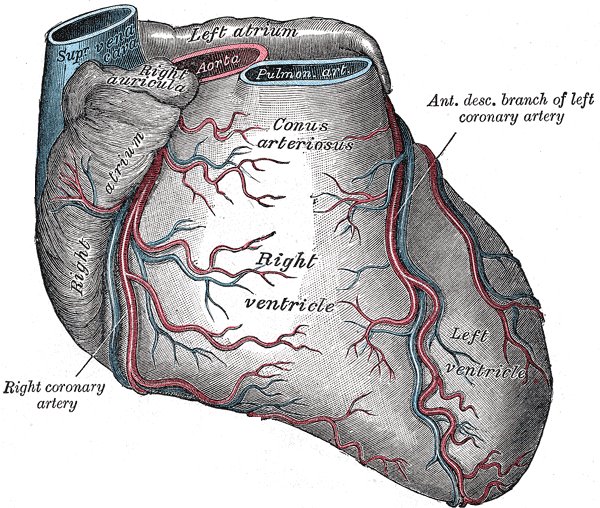
Image source: Gray's Anatomy, 1918, public domain.

Comments from Twitter:

Michael Mirochna, MD @DocRockne:  unfortunately, no evidence they help with OUTCOMES

Posted at Clinical Cases and Images. Stay updated and subscribe, follow us on Twitter and connect on Facebook.


Source:
http://feeds.feedburner.com/CasesBlog

Some local colour

Fancy catching up with some of the sights around the Czech Republic, how does Toxic Mountain sound as a field trip? Hmmm, perhaps not so alluring. Toxic Mountain is the translation of Jedovar Har, to the south of Prague, where for 130 years iron and mercury have been mined and smelted. Maria Hojdova from here in Prague, has been analysing mercury levels from the forest floors around Jedovar Har, and another site, Pribram, where lead zinc and silver were mined and lead smelted, leaving mercury behind from the ores.

Hojdova found that most of the inorganic mercury was present as the immobile and water insoluble mercury sulfide, with less than 14% of the mercury in more mobile forms – this was also backed up by showing that most contamination was on the surface of soil, rather than permeating further down. By also analysing the mercury in tree rings Hojdova also showed how the mercury deposition matched the activity of the mining areas, including a secondary peak in the 60s.

However, if that doesn’t put you off, Hojdova did conclude her talk with a recommendation for Pribram and its mining museum. Unfortunately, I don’t think my schedules going to allow such a field trip.

Meanwhile, over in the poster sessions I was treated to a fantastic story of art theft and recovery by a student from Karel Lemr‘s lab, Volodymyr Pauk. The lab were approached when n painting, Crucifixion, stolen from the St Sebestian church on Holy Hill in the Czech Republic, was recovered in Austria. Restorers and conservators obviously wanted to know what they had, both to determine authenticity and to help restoration efforts. Pauk was charged with determining which blue pigment was used – Prussian blue or indigo.

Prussian blue is an inorganic pigment (Fe4[Fe(CN)6]3) and was discovered back in the 18th century in Berlin (hence the name), whereas indigo, an organic dye extracted from plants, has been used since ancient times, until being superceeded by synthetic alternatives. Identifying which has been used can help date painting, but both are insoluble in water or many common organic solvents.

Pauk was tasked with making the pigments soluble so that they could be identified with mass spectrometry rather than traditional methods like HPLC. This was especially important, said Pauk, because when he was finally sent samples ofthe paint, they were so small that to begn with he thought he had been sent empty sample bags.

For Prussian blue, Pauk showed that the pigment could be decomposed with sodium hydroxide to give  Na4[Fe(CN)6. Meanwhile, indigo could be reduced with dithionite to give the soluble leucoindigo. That allowed Pauk and his lab to test the tiny samples of paint and identify the paint used. Although the technique was so sensitive that it detected some contamination of Prussian blue, the painting was shown to mainly contain indigo, helping to date the artwork as well as telling conservators what to use.

Restoration of the artwork is still ongoing. Meanwhile Pauk is now trying to do similar work to convert Tyrian, or Royal, purple into a mass spec-able compound. If anyone has any ideas I suggest you get in contact.

Digg This  Reddit This  Stumble Now!  Share on Facebook  Bookmark this on Delicious  Share on LinkedIn  Bookmark this on Technorati  Post on Twitter  Google Buzz (aka. Google Reader)  

Source:
http://prospect.rsc.org/blogs/cw/?feed=rss2

History and legacy at EuCheMS in Prague

This way for all your chemistry needs

This week, the historic city of Prague is playing host to nearly 1800 chemists for the 4th EuCheMS Chemistry Congress. As you might expect, I’ve been thinking quite a lot about the past over the last day and a half, but not the history that preoccupies the tourists who are sharing my hotel.

Yesterday at the opening ceremony, several of the speakers were keen to talk about their links with Prague – how they had visited before and were pleased to come back, or to highlight a longer standing connection with the city. President of Iupac Kazuyuki Tatsumi, used the opportunity to share some snaps from his previous visit back in 1982, with a familiar physical chemist stood in the picture with Tatsumi and  common mentor Rudolf Zahradnik – a young Angela Merkel. Meanwhile, Jean-Marie Lehn claims links to Prague back to 1963, and a paper co-authored with a Czech chemist. Lehn has now set up a prize, in collaboration with the French Embassy in Prague, a prize to help support Czech chemistry and young Czech researchers. This year, the winner was Michal Kolar from Charles University here in Prague for his work on halogen bonds. As part of his prize, Konar will be sponsored for a month’s study visit to France.

However, after the opening ceremony and beer on Sunday, Monday started bright and early with a full scientific programme with 12 parallel sessions. The topics that caught my attention all had a common theme – history.

One talk that stood out was in the Environmental and Radiochemistry section. This morning, Tarja Ikaheimonen of Finland’s Radiation and Nuclear Safety Authority compared the Fukushima accident to Chernobyl, and as someone who doesn’t remember the 1986 event, some of the facts and stats she reported were incredibly sobering. Forests are apparently very susceptible to nuclear contamination because the plants take up caesium instead of potassium and the Fukushima fallout was mainly over Japanese forests. In Finland the post-Chernobyl contamination is still 40% of the maximum, says Ikaheimonen, showing how long lasting that contamination can be. And of course, that then concentrates up the food chain. Butterflies in the forests near Fukushima are now showing morphological variability, just as in Finland’s forests

However, the Fukushima disaster, while obviously awful, was no where near as bad as Chernobyl, says Ikaheimonen. Caesium discharge in Japan was about 20-30% that of Chernobyl, and the fall out was mainly local, rather than contaminating vast portions of northern Europe, as Chernobyl has. And perhaps, just as the Chernobyl site is now an incredibly diverse nature reserve, the same could happen for the forests in Japan says Ikaheimonen. I have to say though, I don’t think I’d recommend that as a general strategy for improving environmental diversity.

Digg This  Reddit This  Stumble Now!  Share on Facebook  Bookmark this on Delicious  Share on LinkedIn  Bookmark this on Technorati  Post on Twitter  Google Buzz (aka. Google Reader)  

Source:
http://prospect.rsc.org/blogs/cw/?feed=rss2

Anatomical Heart Cakes by Conjurer’s Kitchen for OBJECTIFY THIS Show

Annabel de Vetten Conjurer's Kitchen anatomical heart cake for Street Anatomy's OBJECTIFY THIS exhibition Sept 7-29 2012

Annabel de Vetten Conjurer's Kitchen anatomical heart cake for Street Anatomy's OBJECTIFY THIS exhibition Sept 7-29 2012

Annabel de Vetten Conjurer's Kitchen anatomical heart cake for Street Anatomy's OBJECTIFY THIS exhibition Sept 7-29 2012

Street Anatomy has teamed up with Annabel de Vetten of UK based Conjurer’s Kitchen to create anatomical heart cakes for our OBJECTIFY THIS exhibition coming up next Friday (September 7) in Chicago.  We are extremely excited for this opportunity to share some anatomical food with the gallery audience on opening night!

Annabel creates a range of creatively unique cakes and other goodies from artistic to anatomical.  She’s one of the fantastic cake makers participating in this years Eat Your Heart Out anatomical bake shop at St. Bart’s Pathology Museum in London.


Big thank you to AnatomyUK for making this happen!


RSVP via Facebook for OBJECTIFY THIS: Female Anatomy Dissected and Displayed!

OBJECTIFY THIS Female Anatomy Dissected and Displayed Chicago 9/7 Design Cloud Gallery


Source:
http://feeds.feedburner.com/streetanatomy/OQuC

Vacon Sartirani

Vacon Sartirani Alessandra

Vacon Sartirani Angelo

Vacon Sartirani Lula

Vacon Sartirani Luc

Vacon Sartirani Daniele


We’ve featured the work of Italian artist Vacon Sartirani many times in the past (Super8 Magazine, Threadless T-Shirt submission, and a hand autopsy)—the man produces a lot, much of it with a fun anatomical twist.  This is his latest series of colored pencil drawings that layer elements of anatomy, botany, marine animals, and architecture.  Is that a seahorse?

View more of Vacon’s work at vaconsartirani.com!


Source:
http://feeds.feedburner.com/streetanatomy/OQuC

Morbid Anatomy Exhibition and Event Series, Viktor Wynd Fine Art/Last Tuesday Society, London, September 2012


As mentioned in a recent post, beginning in just a few days, Morbid Anatomy will be artist-in-residence at Viktor Wynd Fine Art and The Last Tuesday Society in London, England. The residency will span the entire month, and will include an exhibition (photographs from which you see above), as well as a full month's worth of "Morbid Anatomy Presents" programming that will include some seriously amazing lectures, a screening, a "Congress for Curious Peoples" symposium, and a field trip to the rarely open-to-the-public St Bartholomew's Hospital Pathology Museum where I will also give a lecture on the art and history of anatomical museums.

The exhibition, "Ecstatic Raptures and Immaculate Corpses: Visions of Death Made Beautiful in Italy," will open with a party next Thursday, September 6 and will premiere a new body of work based on my latest obsession: the through-lines connecting the beautiful, immaculately preserved corpse found in both  the churches and enlightenment-era anatomical museums of Italy. The exhibition, which will feature my own photographs and waxworks by the über-talented Eleanor Crook and Sigrid Sarda. You can download a postcard invitation which contains full information by clicking here.

I have just created pages for each event, which you can find at the Morbid Anatomy Facebook page by clicking here. The list also follows here, for your convenience:
FULL LIST OF EVENTS

Monday, 3rd September 2012, 7 PM
Granta Magazine - Medicine Issue Launch

Tuesday, 4th September 2012, 7 PM
Robert Marbury - Rogue Taxidermy in the Digital Age

Wednesday, 5th September 2012, 7 PM
Dr Sam Alberti of The Hunterian Museum on the History of Medical Museums

Thursday, 6 September 2012, 6-8 PM
Opening Reception for "Ecstatic Raptures and Immaculate Corpses: Visions of Death Made Beautiful in Italy," Sponsored by Hendricks Gin

Saturday, 8th September 2012, 11 AM - 5:30 PM
'Congress for Curious People' Seminar - London Edition

Monday, 10th September 2012, 7 PM
Ronni Thomas and The Real Tuesday Weld - 'Midnight Archive' screening

Tuesday, 11th September 2012, 7 PM
Martin Clayton on Leonardo Da Vinci and Dissection

Wednesday, 12th September 2012, 7 PM
Curious Cafés of the Belle Epoque with Vadim Kosmos

Monday, 17th September 2012, 7 PM
Gemma Angel on the History of Human Tattoos

Wednesday, 19th September 2012, 7 PM
Field Trip to St Bart's Pathology Museum with Lecture by Joanna Ebenstein

Thursday, 20th September 2012, 7 PM
Paul Craddock - History of Blood Transfusions

Tuesday, 25th September 2012, 7 PM
Dr. James Kennaway - Bad Vibrations

Wednesday, 26th September 2012, 7 PM
Dr. Pat Morris - Extreme Taxidermy: Elephants and Humans

Thursday, 27th September 2012, 7 PM
Royal Raymond Rife and his Oscillating Beam Ray with Mark Pilkington

Sunday, 30th September 2012, 7 PM
Eleanor Crook on Plastic Surgery of the World Wars

You can find out more about the exhibition here and more about the events here. All of the above images are drawn from the exhibition "Ecstatic Raptures and Immaculate Corpses: Visions of Death Made Beautiful in Italy," opening at Viktor Wynde's Fine Art on September 6th with a reception from 6-8, and will be on view through the end of the month. And a special shout out to Jessica Pepper, who so expertly and beautifully retouched these images.

Source:
http://morbidanatomy.blogspot.com/feeds/posts/default?alt=rss

It Came from the Stores, Exhibition, Grant Museum of Zoology, London, Through August 31, 2012

“A lovely skeleton, but sadly lacking a skull,” laments one of the tags afforded to the remains of a Capuchin monkey in this show of the unseen at the ever-exotic Grant Museum. “Rarely do ‘incomplete’ specimens make the grade for display.”

When I am in London, I will most certainly be checking out the wonderful sounding exhibition "It Came from the Stores," on view at the incomparable Grant Museum  until August 31st.

You can find out more here.

Image caption: An elephant shrew is among the specimens on show at the Grant Museum of Zoology

© UCL, Grant Museum of Zoology

Source:
http://morbidanatomy.blogspot.com/feeds/posts/default?alt=rss