An Example of the Control We Have Over Type 2 Diabetes

Type 2 diabetes is a self-inflicted medical condition for the vast majority of sufferers. You get it by consistently eating too much and accumulating a large amount of visceral fat tissue, thereby suffering all of the unpleasant metabolic consequences that it brings. The more you do this, the greater your risk. The path to diabetes is a gradual increase in metabolic disarray that first passes through what is known as metabolic syndrome before becoming full blown diabetes. Some people are susceptible than others as a result of genetic differences, but the road is basically the same for everyone: eating yourself into sickness takes years of effort, but in a wealthy society nearly everyone has the resources to do it.

Here is the interesting thing: at almost any point along the way, right up until either morbid obesity or later stage diabetes, this can all be reversed. A person can step off the path of increasing disability and head back to a healthier lifestyle, turning back the progression of diabetes. This can even be accomplished in a fairly drastic way by enlisting calorie restriction:

An extreme eight-week diet of 600 calories a day can reverse Type 2 diabetes in people newly diagnosed with the disease .... the low-calorie diet reduced fat levels in the pancreas and liver, which helped insulin production return to normal. Seven out of 11 people studied were free of diabetes three months later.

Not that I'm suggesting that it's smart to eat gluttonously for half your life and then rely on having your fat pulled from the fire this way - there are other consequences to being overweight for an extended period of time, as shown by risk levels of suffering age-related diseases in later life. But here is another more recent study to illustrate the point that cutting back and changing lifestyle is very powerful when it comes to diabetes, as it restores some of the brain's activity with respect to food that becomes disarrayed in diabetics.

Short-Term Caloric Restriction Normalizes Hypothalamic Neuronal Responsiveness to Glucose Ingestion in Patients With Type 2 Diabetes:

The hypothalamus is critically involved in the regulation of feeding. Previous studies have shown that glucose ingestion inhibits hypothalamic neuronal activity. However, this was not observed in patients with type 2 diabetes. Restoring the energy balance by reduction of the caloric intake and weight loss are important therapeutic strategies in patients with type 2 diabetes. We hypothesized that caloric restriction would have beneficial effects on the hypothalamic neuronal response to glucose ingestion.

Functional magnetic resonance imaging was performed in 10 male type 2 diabetic patients before and after a 4-day very low calorie diet (VLCD) [to measure] neuronal activity in the hypothalamus in response to an oral glucose load.

...

Post-VLCD scans showed a prolonged signal decrease after glucose ingestion. The results of the current study demonstrate that short-term caloric restriction readily normalizes hypothalamic responsiveness to glucose ingestion in patients with type 2 diabetes.

Source:
http://www.longevitymeme.org/newsletter/latest_rss_feed.cfm

Everyone Suffers the Downward Spiral of Exercise Capacity

Other than calorie restriction, regular exercise is the most potent presently available method available to maintain health and extend life expectancy - which is actually more of a criticism of our lack of advanced biotechnology than praise for the merits of exercise. Exercise is beneficial even for the elderly, however, and one part of the downward spiral that comes with age is that loss of strength and increasing frailty constrain the ability to exercise sufficiently vigorously to obtain its benefits. This is true even for the longest-lived humans: "Ageing is a continuum of biological processes characterized by progressive adaptations which can be influenced by both genetic and physiological factors. In terms of human maturation, physically and cognitively functional centenarians certainly represent an impressive example of successful healthy ageing. However, even in these unique individuals, with the passage of time, declining lung function and sarcopenia lead to a progressive fall in maximal strength, maximal oxygen uptake, and therefore reduced exercise capacity. The subsequent mobility limitation can initiate a viscous downward spiral of reduced physical function and health. Emerging literature has shed some light on this multi-factorial decline in function associated with aging and the positive role that exercise and physical capacity can play in the elderly. Recognizing the multiple factors that influence ageing, the aim of this review is to highlight the recently elucidated limitations to physical function of the extremely old and therefore evaluate the role of exercise capacity in the health and longevity of centenarians."

Link: http://www.ncbi.nlm.nih.gov/pubmed/22883374

Source:
http://www.longevitymeme.org/newsletter/latest_rss_feed.cfm

More Blood Vessel Engineering

Many research groups are working on building blood vessels. Here is one: scientists "have developed [an] artificial functioning blood vessel outside of the body, made from reprogrammed stem cells from human skin. The team also saw the cells develop into a blood vessel inside the body for the first time. The new technique could have real potential to treat patients with heart disease [by] either injecting the reprogrammed cells into the leg or heart to restore blood flow or grafting an artificially developed vessel into the body to replace blocked or damaged vessels. ... this new study demonstrates that a new type of partial stem cell developed from fibroblasts (skin cells) can be reprogrammed into vascular cells before going into the body, which have no risk turning into tumours. The [team] introduced four genes to human fibroblasts in the laboratory to reprogramme them into partial stem cells so they could become vascular cells. When these newly created cells were injected into an ischemic leg (a leg with restricted blood flow) in an animal model, the function of the leg was improved. The process of developing vascular cells from skin cells took two weeks, which makes a personalised approach of turning a patient's own skin cells into vascular cells feasible for treatment of vessel-blocking related diseases. The researchers say the next step is to test this approach in cells from patients with vascular disease."

Link: http://www.kcl.ac.uk/newsevents/news/newsrecords/2012/08-Aug/pioneering-heart-disease-treatment.aspx

Source:
http://www.longevitymeme.org/newsletter/latest_rss_feed.cfm

Removing the Pressure of Impending Death

At root, medicine is driven by the urge remain alive. It is a process of engineering the means to prevent death, and so setting out to deliberately create greater longevity by tackling the root causes of aging - rather than addressing named diseases, one by one - is no more than the logical next step in this process. We know more than enough to get started down this path, and there are some few organizations working on it even today, though far from enough and with far from enough funding.

Consider a world with the means to prevent aging - say, though a package of therapies that a person undergoes every twenty years or so. Infusions of fresh stem cell populations, engineered enzymes to degrade metabolic waste products that build up in and around cells to impair their function, some form of mitochondrial DNA repair, culling excess memory T cells, and so on. These therapies prevent and reverse the build up of damage, allowing a body to continue in good health indefinitely. There is no good reason for them to be any more expensive than your average run of clinical treatments today: they would require little time from a physician, and would operate in much the same way for everyone, allowing economies of scale in production and distribution.

In such a society, all of the pressures associated with the short span of life we presently enjoy evaporate. We are so steeped in that omnipresent pressure of time that it's somewhat hard to envisage what a society without it would look like. Every strategic decision that we make in the course of our lives is based on time - that we have ever less of it remaining, the clock is ticking, and have only a few shots at getting anything significant accomplished. It requires a decade to become truly talented in any particular profession or skill, for example, and at least a few years to figure out whether not we can follow through to that level. That is a vast investment of time when we only have a few decades in which we are at our prime. The same goes for careers and relationships of any significance. We are pressured and choices have great weight precisely because we must forever give up an ocean of possibilities in order to swim in any particular pool.

There is a related school of thought among those opposed to engineering longevity: they say that the pressures of time created by the fact that we age to death due to our inadequate medical technology are a good thing. To me this has the look of rushing to justify what is, regardless of what might be, but they argue that the industry of individuals and humanity as a whole requires the deadline of dying; that without it, no-one would accomplish anything. They look upon the unending holocaust of death and destruction caused by aging - 100,000 lives every day, all they knew, all they could accomplish in the future, all they might have done, erased - and say it is necessary.

This is a hideous nonsense, serving to illustrate that little but a veneer separates us from the barbarians who actively slaughtered millions in past decades. It is true that rapid progress is very necessary in today's world - but we need it because we are dying, and the only way to save ourselves is through technological progress. The faster the better, every increment of speed representing countless lives that might be saved on some future date. If more people were more aware and more interested in doing something about this, we might move faster yet towards the biotechnologies of rejuvenation. Unfortunately, for all that each and every human life is shaped completely by the foreknowledge of future disability and death, all too few are willing to help change this state of affairs.

But so what if the medical technologies that can prevent death by aging make our societies slower-paced, more considered, less energetic? I'm not of the mind that this is a terrible thing - free-wheeling use of a resource is characteristic of wealth, and when we are wealthy in time, we will have the luxury to use it in ways that presently make little sense, or are called wasteful. Caring about waste is a sign of poverty, a sign that we don't have enough of whatever we worry about wasting, which in turn suggests we should do all we can to accumulate more of it. Besides, I don't for one moment believe that the slowing of economic engines and technological progress will in fact happen as feared by those who advocate for the continuation of mass death and suffering. There are all sorts of economic pressures upon human action that have next to nothing to do with aging and our current all-too-short span of life: consider the shifting desires for security, food, property, knowledge, and novelty, for example. The timescales on which those urges operate will not much change in an ageless society, as people will still have the same human nature as exists today. There will continue to be dynamic and ever-changing industries devoted to keeping people fed, clothed, and entertained.

These responses to irrational fears are, at the bottom line, unnecessary to some degree. 100,000 people died today of a cause that we can do something about. Tens of millions die every year, and hundreds of millions more suffer terribly on their way to that end. There is no argument that can possibly outweigh the need to address what is by far the greatest cause of death, suffering, and loss in the world - yet, for some strange combination of reasons, many people keep trying to find one.

Source:
http://www.longevitymeme.org/newsletter/latest_rss_feed.cfm

Nanofactories to Produce and Target Drugs in the Body

Another branch of targeted therapies is the design of nanofactories that can be steered to specific locations in the body and there produce proteins and other drugs in response to local conditions or external commands. Early work in this field is underway: "Science is one step closer to producing drugs in the right place at the right time in the body, avoiding the collateral damage of untargeted treatments. Researchers [have] designed nanoparticles that can be stimulated via UV light to produce proteins on demand in vivo. The new method, which involves packaging the molecular machinery for making proteins into a membraned capsule, allows the researchers to spatially and temporally regulate protein production ... The scientists created the nano-sized 'protein factories' by using lipids to encapsulate polymerase and other machinery necessary for protein production from E. coli, along with a DNA plasmid containing a gene of interest. To block transcription until the right moment, they added a DNA 'photo-labile cage' to the plasmid - a small chemical that inhibits transcription but is cleaved by exposure to UV light. To test the principle in vivo, the researchers used luciferase as the reporter protein and injected mice with the nanovesicles. After zapping them with UV light at the site of injection, they were able to measure a local burst of luminescence. ... We have a long way to go still before we have a drug factory that will land in a target tissue to produce a drug of interest ... The study has proved the principle of the first step - getting the protein expressed on signal - but future research will need to ensure that the nanoparticles and the proteins they produce aren't toxic in the wrong place, and that they get to the right location. Targeting the nanoparticles to the appropriate tissues might be achieved by 'decorating' the surface of the vesicles with specific proteins."

Link: http://the-scientist.com/2012/08/13/next-generation-in-vivo-drug-factories/

Source:
http://www.longevitymeme.org/newsletter/latest_rss_feed.cfm

CSCR Reading List: A Look at the Grant Appeal Process at the California Stem Cell Agency


Here is a list of articles from the California Stem Cell Report as well as CIRM documents dealing with the grant appeal process at the California stem cell agency. The list was prepared on Aug. 16, 2012. To read the entire articles, click on the links.

Articles from the California Stem Cell Report

Aug. 7, 2012
A tiny opening exists for scientists
who failed to win approval last month of their bids for $20 million
research awards from the California stem cell agency.
July 26, 2012
Directors of the California stem cell
agency today approved $151 million in research awards aimed at
commercializing stem cell research and pushing therapies into
clinical treatment....Five of the applications involving appeals were
sent back by the board for more review. (See herehere and here.)
They will be considered again in early September or October.
July 24, 2012
The California stem cell agency's
latest grant round – which is budgeted for $243 million – has
drawn an extraordinary and record outpouring of appeals from more
than half of the scientists rejected by the grant reviewers. Nine of
the 15 applicants who were turned down have filed appeals to the
governing board for its meeting
Thursday
 in Burlingame. No other CIRM grant round
has drawn as high a percentage of appeals, formally known as
extraordinary petitions. (See here
for a story on the previous record 
for percentage of
appeals.)
Aug. 10, 2010

Emotionalism and Potential Favoritism Cited as Need for Changes in CIRM Grant Appeals
Passion and favoritism, democracy and gamesmanship – all are part of the ongoing discussion among directors of the $3 billion California stem cell agency as they try to fix what some of them call a “broken” grant appeal process.

July 19, 2010
UC Davis Scientist Praises CIRM Appeals Change
A stem cell researcher at UC Davis today said a change in the CIRM grant appeals procedure makes “a lot of sense.” Writing on his blog in regard to "extraordinary petitions," Paul Knoepfler said, “I think the proposed change makes a lot of sense and would greatly improve the process. Sometimes the reasons in the petitions are clearly not meritorious and as it now stands, they end up wasting CIRM's time. The last time CIRM received 9 petitions as well, which represented a remarkably large fraction of the total applications. A stricter process would discourage the submission of large numbers of petitions, an important issue given that the number of petitions received by CIRM continues to grow.”

CIRM Finally Discloses Grant Appeal Proposals
The California stem cell agency early today belatedly posted a two-page memo on proposed changes in how it will deal with appeals by scientists whose grant applications have been rejected by reviewers.

July 18, 2010
Sticky, Troubling Appeals by Rejected Researchers Targeted by Stem Cell Agency
A key step in the process for awarding billions of dollars in research grants is “broken,” according to many directors of the California stem cell agency, and major changes are looming that will affect hundreds of scientists.

June 22, 2010
Immunology Grants: CIRM Gives $25 Million to 19 Researchers
Directors of the California stem cell agency today approved $25 million for immunology research, overturning four negative decisions by its grant reviewers. Directors faced a record nine public petitions to reverse its reviewers. After some grumbling, the directors, who see only a summary of the application and reviewer comments, okayed the four.

June 19, 2010
More Grant Appeals Filed: Yamanaka Invoked
The California stem cell agency has set another benchmark, although this is one that it may not want to trot out at international stem cell gatherings. Eight scientists whose applications were rejected for funding by the CIRM grants working group and scientific reviewers are seeking to overturn those decisions at the agency's board meeting in San Diego on Tuesday. It is the largest number of “extraordinary petitions” ever filed and amounts to more than one out of every four applications that were turned down. The total number of applications received was 44. Fifteen were approved. Some of the researchers are likely to appear at the board meeting and make a personal pitch.

May 18, 2010
Competing for California Stem Cell Cash: Rules of the Game Coming Under Scrutiny
Every California stem cell scientist and researcher looking to join the field – be they from academia or business – should pay very close attention to a meeting next week of a key group of directors of the $3 billion California stem cell agency. They plan to discuss possible changes in how scientists compete for stem cell cash, which is no small matter since CIRM has another $2 billion to hand out over the next several years.

CIRM documents

Pre-application review – CIRM report (Jan. 2010) on the process

Extraordinary petition policy – Version as of 5/25/10

Appeal policy – Version as of 5/25/2010

Transcript of July 20, 2010, meeting of CIRM directors Science Subcommittee. Discussion of petitions begins on page 40.

Transcript of the June 22, 2010, CIRM directors meeting. Discussions of extraordinary petitions begin on pages 24 and 67.

Transcript of 5/25/10 Science Subcommittee meeting dealing with appeals issue. Discussion begins on page 99.

Source:
http://californiastemcellreport.blogspot.com/feeds/posts/default?alt=rss

$70 Million Research Proposal Up Next Week at California Stem Cell Agency


Directors of the $3 billion California
stem cell agency will hold a special, teleconference meeting next
Tuesday to deal with business that was put off last month, including
a new, $70 million research round.
The meeting is necessary because directors could not finish their business July 26 after they lost the supermajority quorum required to do business. They delayed action on a number of
matters, including the translational research proposal, which is
scheduled to be posted as an RFA next month.
The governing board also had discussed
dealing with changes in its intellectual property rules at next week's meeting, but that proposal is not on Tuesday's agenda. The next meeting of the board is Sept. 5 and 6 in San Francisco. The
agency has confirmed that it will be a two-day session.
At least one new appeal is expected to
come up in September in the $243 million disease team round that
consumed so much time in July.
Next week meeting involves a host of
locations throughout California. The public is entitled to
participate in the session from any of those sites. The specific
addresses can be found on the agenda.

Source:
http://californiastemcellreport.blogspot.com/feeds/posts/default?alt=rss

Top medicine articles for August 2012

Here are my suggestions for some of the top articles in medicine for August 2012:

Contrary to marketing, there is no evidence that sports drinks are essential adjunct for anyone doing exercise - BMJ http://goo.gl/h6kg9

To drink or not to drink to drink during exercise - BMJ reviews the evidence http://goo.gl/vKGX0

Mythbusting sports and exercise products - BMJ: color of urine does not reflect hydration http://goo.gl/8q1Wc

Round table on the problems with sports product evidence - BMJ video:

Health-care law driving doctors away from small practices, toward hospital employment - Washington Post http://goo.gl/Uvb7f

Top 5 reasons why the independent physician practice is dying http://goo.gl/DMZGw

Transcatheter aortic valve implantation (TAVI) is risky and costly - BMJ http://goo.gl/vYD9D

Brain MRI in COPD: In stable nonhypoxemic COPD there is white/gray matter disturbance, cognitive dysfunction? http://buff.ly/MnAIIN

A "New" Way to Prevent Hip Fractures: Cataract surgery may help prevent disabling hip fractures http://buff.ly/MnBw0h

Whooping Cough Comeback: more than twice as many cases of pertussis this year compared to last year http://buff.ly/PrZp0Z

Gout risk goes up as waistline expands: "The heavier you are, the greater your odds of getting gout" http://buff.ly/MnC9a9

Consider Cosmetics and Folk Remedies as Causes for Unexplained Lead Poisoning - CDC http://buff.ly/Ps0yWv

Dieting vs. Exercise for Weight Loss - NYTimes http://buff.ly/MnCJoo -- Weight loss predictor - A validated dynamic mathematical energy balance model that predicts weight change http://buff.ly/Ps1r1f

Find your Olympic athlete body structural match - BBC http://goo.gl/MhluY - Other calculators: http://goo.gl/K3akg

Doctors tend to enjoy classical music, while lawyers prefer jazz - Medical Journal of Australia http://goo.gl/OVjl5

The articles were selected from my Twitter and Google Reader streams. Please feel free to send suggestions for articles to clinicalcases@gmail.com and you will receive acknowledgement in the next edition of this publication.

Posted at Clinical Cases and Images. Stay updated and subscribe, follow us on Twitter and connect on Facebook.


Source:
http://feeds.feedburner.com/CasesBlog

Guidelines for Management of Acute Bacterial Sinusitis by Infectious Diseases Society of America

A bacterial cause accounts for 2%-10% of acute rhinosinusitis cases.


Nose and nasal cavities. Image source: Wikipedia, public domain.

Recommendations for Management of Acute Bacterial Sinusitis by the Infectious Diseases Society of America (IDSA):

Bacterial rather than viral rhinosinusitis should be diagnosed when any of the following occurs:

- persistent symptoms lasting at least 10 days, without improvement
- symptoms or high fever and purulent nasal discharge or facial pain for 3–4 days at illness onset
- worsening symptoms after an initial respiratory infection, lasting 5–6 days, has started to improve.

Empirical therapy should be started as soon as acute bacterial rhinosinusitis is diagnosed clinically.

Amoxicillin-clavulanate, instead of amoxicillin alone, is recommended for both children and adults.

Macrolides and trimethoprim-sulfamethoxazole are not recommended as empirical therapy, because of high rates of antimicrobial resistance.

References:

Algorithm for the management of acute bacterial rhinosinusitis (figure)
Guideline Issued for Managing Acute Bacterial Rhinosinusitis - Physician's First Watch http://bit.ly/TGn6aM
IDSA Clinical Practice Guideline for Acute Bacterial Rhinosinusitis in Children and Adults http://bit.ly/TGnaHB

Posted at Clinical Cases and Images. Stay updated and subscribe, follow us on Twitter and connect on Facebook.


Source:
http://feeds.feedburner.com/CasesBlog

7 healthy traits linked to lower death risk but only 2% of people have all 7 – are you one of them?

People who meet the 7 healthy goals recommended by the American Heart Association are less likely to die of cardiovascular causes.

Here there are:

- not smoking
- moderate exercise at least 5 times a week
- untreated blood pressure under 120/80
- HbA1c under 5.7%
- total cholesterol under 200 mg/dL
- BMI less than 25
- a diet high in produce, fish, and whole grains, and low in sodium and sugary beverages

Less than 2% of people reached all 7 ideals.

Those who met 6-7 goals had reduced risks for all-cause mortality (hazard ratio, 0.49), compared with participants meeting zero or one goal.

References:

Healthy Habits Associated with Reduced Mortality Risk - Physician's First Watch http://bit.ly/N9x8ha
Trends in Cardiovascular Health Metrics and Associations With All-Cause and CVD Mortality Among US Adults - JAMA http://bit.ly/N9xzYO
Image source: OpenClipart.org, public domain.

Posted at Clinical Cases and Images. Stay updated and subscribe, follow us on Twitter and connect on Facebook.


Source:
http://feeds.feedburner.com/CasesBlog

CW competition blog – Bibiana Campos-Seijo

This is a guest post from one of our judges for the Chemistry World Science Communication Competition


The other judges have had their say and now it is my turn. They’ve covered some fundamental rules of science communication (ie what you say, how you say it, how you go about telling a compelling story) and have given invaluable advice from their many years of experience and knowledge: ‘There’s no substitute for a good story,’ says Philip Ball; ‘Keep the language simple,’ advises Adam Hart-Davis; ‘Form needs to match content,’ Felicity Mellor tells us; ‘Let your enthusiasm for the story shine through,’ concludes Lesley Yellowlees. So what can I add to this? What can I say that has not been said already?

I’d like to get you to think about the audience. I want to emphasise the importance of engaging with  readers, listeners and viewers out there. If you get all the elements of your article, video or podcast right (ie you’ve got a good story that is relevant, and you use simple, jargon-free language) you are half way towards achieving your goal of successfully communicating science. But how can you ensure you make it all the way? Why should the readers read or the viewers view? In my opinion, the style you choose to deliver your piece is what makes the difference. If you are a budding writer or communicator, you are at the beginning of your career and you’ll be working towards defining your style. You are at a crucial point. My advice would be to spend some time analysing the style of a communicator whose work you enjoy and thinking: ‘What is it that compels me to read or watch?’ Is it their use of humour that captures my attention? Is it their knowledge of the subject? Or is it the way they present complex issues? Don’t be constrained by finding a science communicator, he/she does not have to be a scientist – it could be a teacher, a journalist, a TV presenter, a politician. The point is: if they engage with you so you listen to what they have to say and you are able to understand how they achieve it then you are also on the road to success. So define what you like and adapt elements of their style but don’t imitate them (everybody is trying to be Steve Jobs and it really doesn’t work…). Whatever you do, don’t leave your personality out!

Equally, you can turn the exercise on its head, think of communicators whose style does not engage you and write a ‘what not to do’ list. It is very often simpler to see the bad than the good.

Finally, I’d like to encourage you all to take part. If you have an interest in science communication or are working on some interesting chemistry you’d like to talk about, take the plunge!


Bibiana Campos-Seijo


You can find out about the Chemistry World Science Communication Competition and submit your entry here

Digg This  Reddit This  Stumble Now!  Share on Facebook  Bookmark this on Delicious  Share on LinkedIn  Bookmark this on Technorati  Post on Twitter  Google Buzz (aka. Google Reader)  

Source:
http://prospect.rsc.org/blogs/cw/?feed=rss2

Yoan Capote

Racional <small>Yoan Capote 2004
Racional, 2004 Plaster, plexiglas 80 x 55 x 55 cms

Racional de Marmol Yoan Capote
Racional, 2006 Marble, glass, wood and metal 196 x 66 x 66 cms

Autorretrato Yoan Capote 2008
Autorretrato, 2008 Concrete and Cast bronze 175 x 50 x 50 cms

Open Mind Yoan Capote 2008
Open Mind, 2008 Maquette/PVC, bronze, metal and glass 92 x 126 x 126 cms  Model for public art project where humans represent the neuronal processes in the human brain

Demagogia Yoan Capote 2011
Demagogia/Demagogy, 2011 bronze, washbowl accessories 56 x 60 x 39 cms

I stumbled upon the top male torso sculpture with brain genitalia , fittingly titled Racional (Rational), on Facebook and just had to find out who created this masterpiece.  Our lovely fans on Facebook told us it was created by the Cuban sculptor, Yoan Capote.

Yoan plays with the human body, rearranging it, taking it apart, and reinventing it for other human needs.  He also does this with other objects, studying the human-object interaction and giving them abstract personalities.  View all of Yoan Capote’s work at yoan-capote.com!


Source:
http://feeds.feedburner.com/streetanatomy/OQuC

Casey Cripe

Casey Cripe Anatomy
Click to view larger

Casey Cripe Anatomy detail

Casey Cripe Proportions

Casey Cripe Human Reproduction

Casey Cripe Anatomy

Incredibly detailed mixed media collages by Casey Cripe, who labels himself as a designer, builder, collector, explorer, observer, and a human.  Casey works both in digital and analog mixed media, layering scientific and anatomical images to create what have been labeled as ‘encyclopedic information visualizations.’

View more of Casey’s work at caseycripe.com and via Flickr.


[spotted by @plafStar]


Source:
http://feeds.feedburner.com/streetanatomy/OQuC

Closing Party for the Great Coney Island Spectacularium and the Cosmorama of the Great Dreamland Fire, Saturday August 25th, 8:00 PM, The Coney Island Museum

I would like to cordially invite all Morbid Anatomy readers to join us in bidding farewell to the sadly ephemeral Great Coney Island Spectacularium and Cosmorama of the great Dreamland Fire. The exhibition--more on which here--will end after Labor Day weekend, so this is one of your last chances to see it. So please, come raise a glass with us, surrounded by the unfortunate taxidermy once on view at one of the oldest dime museums in the Americas, the Niagara Falls Museum. Join us for a beer in the soon to be dismantled and utterly transporting Cosmorama of the great Dreamland Fire! Help us kiss the lovely toy theater proscenium farewell!

The party will take place next Saturday, August 25th at The Coney Island Museum; There will be free beer and wine, including a special Dreamland Fire Brew, hand-crafted by our friends at the Coney Island Brewery and wine by Red Hook Winery. Artists will be in attendance, as will special guest performers. AND rogue musician Nick Yulman will perform original scores using mechanical instruments for two 1926 films, Now You Tell One and A Wild Roomer by silent comedian and stop-motion animation innovator Charlie Bowers.

The event begins at 8:00 PM; the film will begin at 8:30pm. $20 in advance or at the door. Advance Tickets here. Hope very much to see you there!

You can find out more by clicking here.

Source:
http://morbidanatomy.blogspot.com/feeds/posts/default?alt=rss

Morbid Anatomy Exhibition and Event Series, September 1-30, Viktor Wynd Fine Art, London, England


This September, Morbid Anatomy will be artist-in-residence at Viktor Wynd Fine Art and The Last Tuesday Society in London, England. The residency will span the entire month, and will include an exhibition (photographs from which you see above), as well as a full month's worth of "Morbid Anatomy Presents" programming that will include some seriously amazing lectures, a screening, a "Congress for Curious Peoples" symposium, and a field trip to the obscure and amazing St Bartholomew's Hospital Pathology Museum where I will also give a lecture on the art and history of anatomical museums.

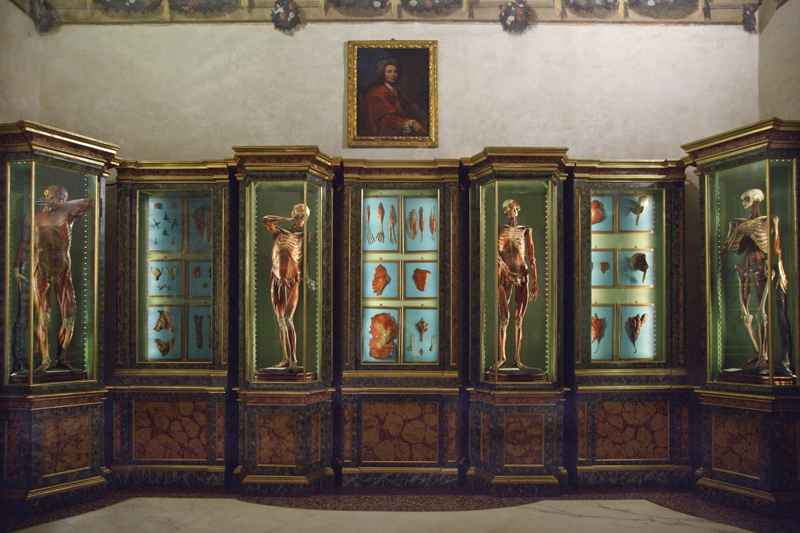
The exhibition, "Ecstatic Raptures and Immaculate Corpses: Visions of Death Made Beautiful in Italy," will open on Thursday, September 6 and will premiere a new body of work based on my latest obsession: the through-lines connecting the beautiful, immaculately preserved corpse found in both  the churches and enlightenment-era anatomical museums of Italy. The exhibition, which will feature my own photographs and waxworks by the über-talented Eleanor Crook and Sigrid Sarda, will open with Hendricks Gin-sponsored reception on Thursday, September 6 from 6-8 PM. You can download a postcard invitation which contains full information by clicking here.

For those residing in London or its environs, I hope very very much to see at the opening, or at one or more of these terrific events. Also, any suggestions for places I should visit whilst over are highly appreciated! You can email any suggestions to morbidanatomy[at]gmail.com.

Following are some highlights of the residency, after which a complete chronological schedule:

EVENTS INCLUDE

ILLUSTRATED LECTURES INCLUDE

FULL LIST OF EVENTS

Monday, 3rd September 2012, 7 PM
Granta Magazine - Medicine Issue Launch

Tuesday, 4th September 2012, 7 PM
Robert Marbury - Rogue Taxidermy in the Digital Age

Wednesday, 5th September 2012, 7 PM
Dr Sam Alberti of The Hunterian Museum on the History of Medical Museums

Thursday, 6 September 2012, 6-8 PM
Opening Reception for "Ecstatic Raptures and Immaculate Corpses: Visions of Death Made Beautiful in Italy," Sponsored by Hendricks Gin

Saturday, 8th September 2012, 11 AM - 5:30 PM
'Congress for Curious People' Seminar - London Edition

Monday, 10th September 2012, 7 PM
Ronni Thomas and The Real Tuesday Weld - 'Midnight Archive' screening

Tuesday, 11th September 2012, 7 PM
Martin Clayton on Leonardo Da Vinci and Dissection

Wednesday, 12th September 2012, 7 PM
Curious Cafés of the Belle Epoque with Vadim Kosmos

Monday, 17th September 2012, 7 PM
Gemma Angel on the History of Human Tattoos

Wednesday, 19th September 2012, 7 PM
Field Trip to St Bart's Pathology Museum with Lecture by Joanna Ebenstein

Thursday, 20th September 2012, 7 PM
Paul Craddock - History of Blood Transfusions

Tuesday, 25th September 2012, 7 PM
Dr. James Kennaway - Bad Vibrations

Wednesday, 26th September 2012, 7 PM
Dr. Pat Morris - Extreme Taxidermy: Elephants and Humans

Thursday, 27th September 2012, 7 PM
Royal Raymond Rife and his Oscillating Beam Ray with Mark Pilkington

Sunday, 30th September 2012, 7 PM
Eleanor Crook on Plastic Surgery of the World Wars

EXHIBITION INFO

Ecstatic Raptures and Immaculate Corpses: Visions of Death Made Beautiful in Italy
An exhibition of photographs by Joanna Ebenstein of the Morbid Anatomy Blog, The Morbid Anatomy Library and Observatory Gallery, Brooklyn with waxworks by Eleanor Crook and Sigrid Sarda.
Viktor Wynde Fine Art, 11 Mare Street, London, E8 4RP
Click here to download Invitation

In her many projects, ranging from photography to curation to writing, New York based Joanna Ebenstein utilizes a combination of art and scholarship to tease out the ways in which the pre-rational roots of modernity are sublimated into ostensibly "purely rational" cultural activities such as science and medicine.

Much of her work uses this approach to investigate historical moments or artifacts where art and science, death and beauty, spectacle and edification, faith and empiricism meet in ways that trouble contemporary categorical expectations.

In the exhibition "Ecstatic Raptures and Immaculate Corpses" Ebenstein turns this approach to an examination of the uncanny and powerfully resonant representations of the dead, martyred, and anatomized body in Italy, monuments to humankind's quest to eternally preserve the corporeal body and defeat death in arenas sacred and profane.

The artifacts she finds in both the churches, charnel houeses and anatomical museums of Italy complicate our ideas of the proper roles of--and divisions between--science and religion, death and beauty; art and science; eros and thanatos; sacred and profane; body and soul.

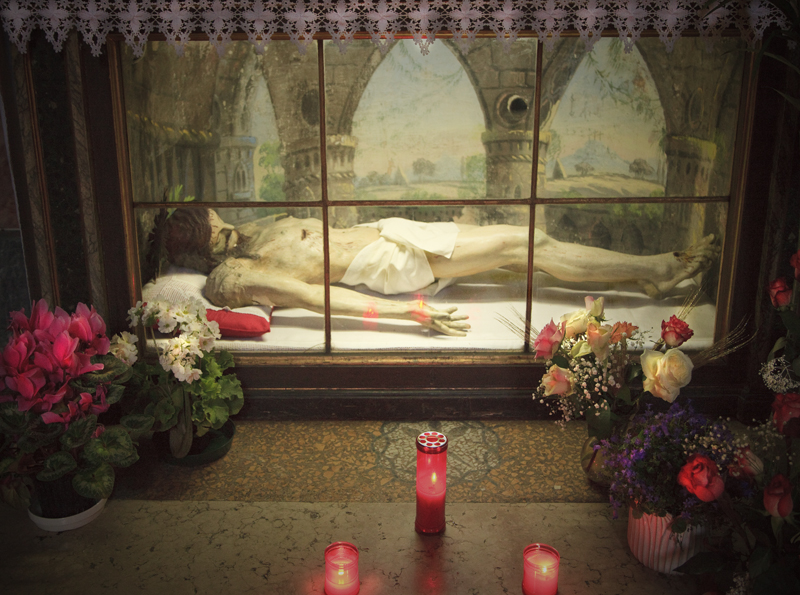
In this exhibition, you will be introduced to tantalizing visions of death made beautiful, uncanny monuments to the human dream of life eternal. You will meet "Blessed Ismelda Lambertini," an adolescent who fell into a fatal swoon of overwhelming joy at the moment of her first communion with Jesus Christ, now commemorated in a chillingly beautiful wax effigy in a Bolognese church; The Slashed Beauty, swooning with a grace at once spiritual and worldly as she makes a solemn offering of her immaculate viscera; Saint Vittoria, with slashed neck and golden ringlets, her waxen form reliquary to her own powerful bones; and the magnificent and troubling Anatomical Venuses, rapturously ecstatic life-sized wax women reclining voluptuously on silk and velvet cushions, asleep in their crystal coffins, awaiting animation by inquisitive hands eager to dissect them into their dozens of demountable, exactingly anatomically correct, wax parts.

You can find out more about the exhibition here and more about the events here. All of the above images are drawn from the exhibition "Ecstatic Raptures and Immaculate Corpses: Visions of Death Made Beautiful in Italy," opening at Viktor Wynde's Fine Art o
n September 6th with a reception from 6-8, and will be on view through the end of the month. And a special shout out to Jessica Pepper, who so expertly and beautifully retouched these images.

Source:
http://morbidanatomy.blogspot.com/feeds/posts/default?alt=rss

"A Healthy Mania for the Macabre," Stephen T. Asma, The Chronicle for Higher Education

The new morbid curiosity... may be a pendulum swing back toward the sublime and the philosophical—a new secular foray into the morbid territory that religion previously charted. One way to avoid deeper engagement with death is to paint it entirely from the crude palette of emotions like disgust and fear. We've already got plenty of that kind of "morbid" in popular culture. But awe and wonder need to be restored to our experience of death, and we're not sure how to do it in a post-religious culture.

--"A Healthy Mania for the Macabre," Stephen T. Asma, The Chronicle for Higher Education

The above is excerpted from a characteristically thoughtful and erudite piece by Stephen Asma, one of my all-time favorite scholars and author of the fantastic Stuffed Animals and Pickled Heads. The piece--entitled "A Healthy Mania for the Macabre"--explores the current uptick of interest in all things macabre, and situates it within the history ofspectacular morbid display from memento mori to Frederik Ruysch to Gunther von Hagens; It also features interesting quotations from interviews with morbid art collector Richard Harris, charnel house obsessive and Empire of Death author Paul Koudounaris, and yours truly.

You can read the entire article by clicking here. I very highly recommend it!

Image: Clemente Susini (probably): Slashed Beauty, wax, human hair, pearls, rosewood and Venetian glass case, ca 1790, La Specola, Museo di Storia Naturale, Florence, Italy; From the Anatomical Theatre exhibition

Source:
http://morbidanatomy.blogspot.com/feeds/posts/default?alt=rss

Dried Cadavers on Display in a "Terrible Example of Tyranny," Ferdinand I, Fifteenth Century Naples

In an interesting 15th century precursor to spectacular displays of human bodies such as Gunther von Hagen's Body Worlds:

Ferdinand I [of Naples (1423 – 1494)], Alfonso II's long-reigning father, had filled an exhibition hall of Castel Nuovo with the mummified remains of his enemies. Paolo Giovio, the sixteenth-century bishop, doctor, and biographer, writes in Historiarum sue temporis: "They say that these dried cadavers were displayed, pickled with herbs, a frightful sight, in the dress they wore when alive and with the same ornaments, so that by this terrible example of tyranny, those who did not wish to be similarly served might be properly afraid."

Just one of the fascinating revelations in the wonderful book Naples Declared: A Walk Around the Bay, by Benjamin Taylor. Another writer--Jacob Burckhardt, in his The Civilization of the Renaissance in Italy of 1878 --described it thusly:

Besides hunting, which he practiced regardless of all rights of property, his pleasures were of two kinds: he liked to have his opponents near him, either alive in well-guarded prisons, or dead and embalmed, dressed in the costume which they wore in their lifetime. Fearing no one, he would take great pleasure in conducting his guests on a tour of his prized “museum of mummies.”

And wow; looks like this made an appearance on The Borgias as well; I guess I had better consider giving that show another chance.

Image source: Wikipedia

Source:
http://morbidanatomy.blogspot.com/feeds/posts/default?alt=rss

Wax Model of a Decomposing Body in a Walnut Coffin, Italy, 1774-1800, The Science Museum, London

Wax model of a decomposing body in a walnut coffin, Italy, 1774-1800

The body in this wooden coffin is in a severe state of decomposition. It may have had two purposes: as ‘memento mori’, a reminder of death, or as a teaching aid. The figure is surrounded by three frogs. Frogs are symbols of rebirth and regeneration because they change so much in their lifetimes. Wax modelling was used in Europe to create religious effigies. From the 1600s, they were also used to teach anatomy. The creation of wax anatomical models, centred in Italy, was based on observing real corpses. The museum known as La Specola, or ‘the observatory’, in Florence was famous for its wax collection.

Found in the always delightful Macabre and Beautifully Grotesque Facebook Group.

Source:
http://morbidanatomy.blogspot.com/feeds/posts/default?alt=rss