“By the year 2015, half of all medical images will be in the cloud”

Dell to Host Agfa Medical Imaging Database in the Cloud

Dell's cloud infrastructure will host Agfa's imaging archive to allow doctors to incorporate images into electronic health records.

Dell has announced it will host Agfa Healthcare's medical imaging archive in the cloud.

The cloud will provide the storage capacity and processing power as doctors look for ways to make medical images compatible with electronic health records (EHRs).

Cloud computing will be an essential factor in this effort, especially when IT budgets are tight, according to Dr. Jamie Coffin, vice president and general manager of Dell Healthcare and Life Sciences.

"The world is moving to a patient-centric view of the [EHR]," Coffin told eWEEK. "You have to start to think about digital radiology, pathology, genomics and figure out how to store this in a format where you take and use it wherever your clinician is."

Agfa's medical imaging archive, called Imaging Clinical Information System (ICIS), is a central repository that allows doctors to capture, store and exchange medical images.

Using ICIS in Dell's cloud, clinicians can capture a medical image and related metadata and "marry" it with the patient demographics in an EHR, Lenny Reznik, director of enterprise imaging and information solutions for Agfa HealthCare, told eWEEK. "Their clinical information system allows you to image-enable all of the data that they have in their [picture archiving and communications systems, or PACS] into the [EHR]," said Coffin. "The idea is that they store it in the cloud, and customers can access it from wherever they are and whatever platform they're on."

Dell and Agfa announced their partnership on June 7.

ICIS incorporates the Impax Data Center, which unifies patient records across regions, hospital facilities and departments. As a vendor-neutral system, ICIS can store images from various PACS.

The Agfa platform also includes the Xero Technology Viewer, a tool that allows doctors to stream the images from any Web-enabled device. The image viewer lets doctors embed images directly into an EHR.

Agfa customers will be able to access images either in Agfa's ICIS or Dell's Cloud Clinical Archive, said Coffin.

Dell announced a similar agreement with Siemens in February in which the two companies would collaborate on a vendor-neutral image archive in the cloud.

In addition, Dell will offer its Cloud Clinical Recovery platform to Agfa customers to provide disaster protection. Medical facilities using Agfa's imaging archive will be able to access additional analytics and data services in the future, said Coffin.

Hospitals with 300 to 400 beds that can't afford a data center infrastructure or the personnel to operate it will be able to manage their images and data in the cloud, said Coffin.

"By the year 2015, half of all medical images will be in the cloud," Reznik predicted.

By allowing ICIS to manage the archiving of radiology images, doctors are free to concentrate on treating patients, according to Agfa. Storing images in the cloud allows providers to track patients over time and maintain longitudinal medical imaging record access, Michael Green, Agfa HealthCare's president and CEO of Americas region, said in a statement.

Storing the medical images in the cloud will allow doctors' offices or medical centers to manage data-intensive images when they lack physical space to store their own servers.

"A single pathology slide can be like 6GB of data because it's a high-resolution image," Coffin noted. "It really brings an ROI to the customers they've never been able to get before [from] on-site image management."

In addition, archiving medical images in the cloud allows health care providers to meet the Stage 2 requirements on meaningful use of EHRs, according to Dell. Medical image viewing is an optional menu measure for achieving Stage 2 compliance.

As health information exchanges (HIEs) continue to connect data from diverse EHR platforms, the cloud will be an important foundation as data elements such as imaging, pathology and genomics are incorporated into the exchanges, Coffin suggested.


Source:
http://feeds.feedburner.com/DigitalPathologyBlog

"X-ray Visions: Drawings and Prints from an Artist Residency at the NYU School of Medicine," Works by Laura Ferguson, Through August 13

On through August 13th at MSB Gallery at the NYU Health Sciences Libraries:

X-ray Visions: Drawings and Prints from an Artist Residency at the NYU School of Medicine
MSB Gallery, June 11 - August 13, 2012

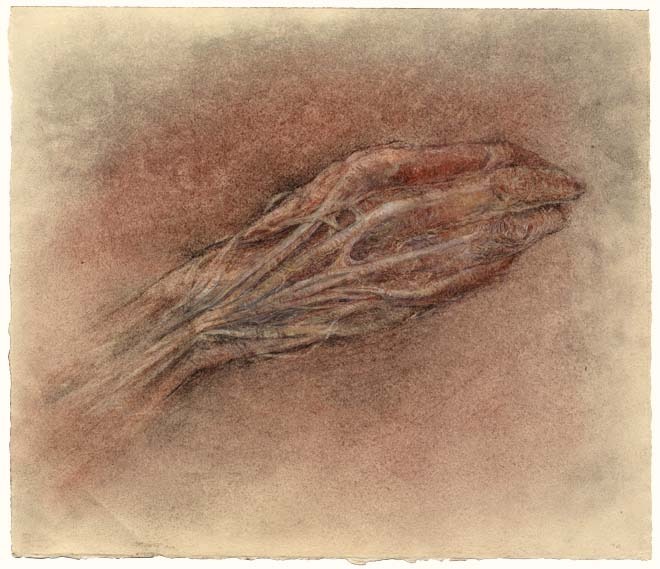
What if we could look into the body’s inner space with a kind of enhanced x-ray vision, without the need for dissection or medical imaging – perhaps lit by candlelight, with an eye to the beauty within? As an artist at NYU’s School of Medicine I’ve worked to create this kind of personal vision, making drawings in the Anatomy Lab and from 3D radiology images of my own body.

Art looks beneath the surface of life, and for me the place to look has always been the body. A curving spine – asymmetry at my core – means that for me, walking, moving and even breathing require conscious effort, an engagement with the workings of my bones and muscles, nerves, and senses. Drawing myself lets me work from the inside out, to visually convey the feeling of inhabiting this particular, individual body, and the many ways that personal identity and even consciousness are rooted in physical experience.

I see my work as following in the Renaissance tradition of Leonardo da Vinci and his great anatomy drawings, informed by the new ways of seeing made possible by contemporary medical imaging technologies. As a patient with a lifetime of x-rays, I was always fascinated by these mysterious, shadowy pictures – but felt disconnected from a part of me that seemed to belong more to my doctors than to me. As an artist I’ve been able to reclaim this hidden territory for myself, and hope my work can bring viewers to feel a deeper sense of connection with their own unique inner spaces.

Learn more about the floating colors process.

You can find out more by clicking here.

Source:
http://morbidanatomy.blogspot.com/feeds/posts/default?alt=rss

A Few More Slots Left: "Drawing from the Bestiary: Animal Anatomy of Real and Imagined Creatures," Class with Artist Saul Chernick, Observatory, June 25-July 16

We still have just a few more slots available for the upcoming class "Drawing from the Bestiary: Animal Anatomy of Real and Imagined Creatures" with one of our favorite artists, Saul Chernick. This class will teach students--via illustrated lectures and in-class projects including paper puppets and the creation of bestiary pages--"to use observational and imaginative drawing skills in tandem to capture the essential qualities of their subject" and "learn to draw animals (real, mythic, and otherwise) with greater skill and sensitivity."

You can see some of Chernick's wonderful artworks above; you can see more of them by clicking here. The class will take place on 4 consectutive Mondays, from June 25 to July 16th. The full class description follows. Also, please note that the class size is limited to 15, so if you are interested, please RSVP as soon as possible to morbidanatomy [at] gmail.com.

Drawing from the Bestiary: Animal Anatomy of Real and Imagined Creatures with Saul Chernick
A 4-part class with Artist Saul Chernick, M.F.A., Rutgers University
Dates: Mondays June 25, July 2, July 9 and July 16th (4 consecutive Mondays)
Time: 6:30-9:00 PM
Class Fee: $120
***Class size limited to 15; Must RSVP to morbidanatomy [at] gmail.com
This class is part of The Morbid Anatomy Art Academy

Contemporary artist and arts educator Saul Chernickis renowned for gorgeous artworks featuring convincingly corporeal depictions of imaginary or mythical creatures rendered in the style of Medieval and early Renaissance woodcuts from Northern Europe. Observatory is very pleased to announce a new workshop developed by Saul Chernick specially for the Morbid Anatomy Art Academy. In this class, Chernick will teach students--via illustrated lectures and in-class projects including paper puppets and bestiary pages--"to use observational and imaginative drawing skills in tandem to capture the essential qualities of their subject" and "learn to draw animals (real, mythic, and otherwise) with greater skill and sensitivity."

Full class description follows; you can see more of Chernick's fantastic work by clicking here. Class size limited to 15; Please RSVP to morbidanatomy [at] gmail.com.

Course Description
Open to artists of all levels, the goal of this workshop is help participants learn to draw animals (real, mythic, and otherwise) with greater skill and sensitivity. Through exercises in drawing and paper puppetry, participants will gain a deeper understanding of the skeletal/muscular structures of most mammals, reptiles, and birds. Participants will also learn to use observational and imaginative drawing skills in tandem to capture the essential qualities of their subject and create works of convincing visual fiction!
What to expect

  • Participants will cull images from the web to create a dossier on the animal(s) that interest them
  • Participants will fashion movable paper puppets to understand how their chosen animal moves
  • Participants will draw studies of the skeletal and muscular structures of animals
  • Participants will use the medium of their choice to create a Bestiary page entry that depicts an animal situated in an environment

Materials
What to bring to the first class:

  • Choose 1-3 animals and gather pictures on the web. Be sure to get images of their skeletons in profile. Please print these as they may be hard to use on a phone screen.
  • 3-5 sheets of Bristol Board Paper 9" x 12" or larger
  • Pencils & erasers
  • Scissors
  • Xacto or utility knife
  • Glue

What to bring for subsequent classes:

  • White or tinted drawing paper 16" x 20" or 18" x 24"
  • Tracing paper (same size as drawing paper)
  • Mechanical and/or regular pencils (2h, hb, 2b, 4b)

Optional:

  • Markers, watercolors, gouache, ink, brushes, chalk/oil pastels, colored pencils, Caran D’Ache, collage papers, etc (we’ll discuss further in detail!)

Saul Chernick, M.F.A., Rutgers University, is a visual artist and educator. Chernick has exhibited internationally in galleries and museums including the Aldrich Museum of Contemporary Art, the Bronx Museum of Art, the Jewish Museum of Art, as well as Max Protetch and Meulensteen Galleries in New York City. He has taught art for the public school system, the 92nd Street Y, Cooper Union, Parson's School of Design, and the Museum of Modern Art. He is currently the Professional Development Coordinator for the Joan Mitchell Foundation where he coaches New York artists in teaching art to young people throughout city. His work can be seen at http://www.saulchernick.com.

All images are by Saul Chernick and include, top to bottom:

  1. Field Urchin, 2011, from a series of studies in which he attempted to impose the proportions of cherubs onto horses.
  2. Desktop 2013, 2010, Ink, Watercolor, & Opaque White on Paper
  3. Heavenly Touch , 2009, Ink, Watercolor, & Opaque White on Paper
  4. Guilty Pleasures, 2010, Ink, Watercolor, & Opaque White on Paper
  5. Ars Gratia Artis, 2010, Ink on Paper

You can found out more here. As mentioned above, class size is limited to 15, so if you are interested, please RSVP as soon as you are able to morbidanatomy [at] gmail.com.

Source:
http://morbidanatomy.blogspot.com/feeds/posts/default?alt=rss

The Art of Illusions: Pre-cinematic Entertainment in Mexico, Velaslavasay Panorama, Los Angeles, June 16th


If only I lived in Los Angeles....

This Saturday, at the fantastic Velaslavasay Panorama:

The Art of Illusions
Pre-cinematic Entertainment in Mexico
An Illustrated Lecture by José Antonio Rodríguez
Saturday, June 16th
8 o ’clock pm
Tickets $12 {$10 VPES Members}
Advance tickets are highly recommended and are available at
https://www.brownpapertickets.com/event/242705
_____________________

The Velaslavasay Panorama welcomes José Antonio Rodríguez, who will be here to present an illustrated lecture about pre-cinematic entertainment in Mexico.

Having conducted research on the subject for many years, José Antonio Rodríguez will talk about the multitudinous forms of optical magic, including the magic lantern, diorama, cosmorama, panorama and scientific spectacles which were once popular throughout Mexico and beyond. Professor Rodríguez will discuss the entertainments and forms of visual culture in the eighteenth century as they were experienced in Mexico, which inspired and made possible the proliferation of moving images. He will also address the archaeology of visual media which encouraged the later popularity of the Kinetoscope and the Cinematograph in nineteenth century Mexico. In essence, "The Art of Illusions" will present ideas about how our encounters with visual spectacles guide us in constructing our own vision of the world.

José Antonio Rodríguez is an Art History professor of at the Universidad Nacional Autónoma de México (UNAM) and the author of the landmark publication The Art of Illusions: Pre-cinematic Entertainment in Mexico published through the National Institute of Anthropology and History in Mexico. He is also the author of Edward Weston: The Look of Rupture; Bernice Kolko: Photographer; Ruth D. Lechuga: A Mexican Memory; and Agustin Jimenez: Memories of the Avant-Garde. He is also the editor of the magazine Alquimia, amongst other works. This will be Professor Rodríguez's first appearance in Los Angeles.
This presentation has been funded in part by The Department of Cultural affairs of the City of Los Angeles, The Andy Warhol Foundation for the Visual Arts and The Velaslavasay Panorama Enthusiast Society.

You can find out more by clicking here.

Source:
http://morbidanatomy.blogspot.com/feeds/posts/default?alt=rss

Should Physicians Invest in Facebook?

via Medscape

Physicians and other investors often kick themselves for not having grabbed the opportunity to invest early in Microsoft, Google, or other companies whose stock price skyrocketed. Many doctors think that Facebook shares present the same type of once-in-a-lifetime opportunity. Are they right?

The debacle of Facebook's initial public offering should make anyone leery of jumping into an IPO, if they weren't already skeptical about them.

But it begs the question of whether one should invest in the social networking site that has revolutionized how people communicate with each other.

The much-anticipated IPO, which offered 421 million shares at $38 and valued Facebook at more than $100 billion, was the subject of incredible hype beforehand and an emotional backlash afterwards as the price plummeted nearly 20% in the first few days of trading.

Analysts branded it a "broken IPO" and one compared the stock to a "falling knife" that no one wanted to grab.

MarketWatch commentator Chuck Jaffe scolded anyone who believed the hype by labeling the IPO "the stupid investment of the week," and said that the experience should teach investors once and for all that the letters IPO really stand for "it's probably overpriced."

Subsequent trading seemed to drive that point home as Facebook shares continued to dive, declining more than 30% from the IPO price of $38. The head of Morgan Stanley, which was the lead manager on the share sale, said investors were "naive" if they thought they would profit on the first day of trading.

Inspired by Other Tech Stock Winners

But optimists had visions of another Google dancing in their heads, which saw its share price double in the first few months of trading and quintuple within 2 years (though it has oscillated around $600 since then, with occasional bigger dips).

Apple, whose share price has risen steadily over the past 5 years, quintupling in value, probably ranks as the most successful big tech share. Apple, however, makes things that people buy -- iPhones, iPads, laptops, PCs -- and also makes a ton of money raking off part of the proceeds from content that gets sold to people using these devices.

Facebook, and Google for that matter, have more intangible assets -- hundreds of millions of Internet users who leave behind useful traces about what they're interested in buying.

Google, though, has proven that it knows how to deliver advertising messages to people who are interested in them, while Facebook has yet to figure out just how to insert commercials into the social networking experience.

General Motors drove home that point with the announcement just before Facebook's IPO that it was pulling its advertising from the site because it had seen no measurable return on that investment.

Facebook is nonetheless the 800-pound gorilla in a social networking phenomenon that has swept the globe. And while many still think it is just a passing fad, you'd have a hard time convincing anyone under 30 that such networking is not a permanent fixture in their lives.

Why You Should or Shouldn't Snap Up the Stock

For now, it seems likely that Facebook stock will be buffeted by high-frequency traders looking for quick profits in a volatile issue. More shares will be hitting the market in coming months as IPO lockups expire, so that it will be some time before a reliable price picture emerges. Some analysts see a chance of the stock going as low as $10, while others are tipping $44 in the short term.

Obviously nobody knows. Every investor has to make his or her own decision, and you will probably want to consult with your financial advisor in figuring it out for yourself. But answering the question of whether you should invest in Facebook makes for an interesting case study in which to review some tried-and-true rules on investing.

1. Don't invest in IPOs

Jaffe is right. Pricing IPOs has always involved balancing the desire of the sellers (the founders and investors who got the new company off the ground) for the highest possible price and the preference of the buyers (institutions and individuals) for the price that will allow the greatest chance for future gains. That balance has tilted decidedly in favor of the sellers in recent years, and many analysts are saying that Facebook's $38 IPO price was too high and will make it difficult for other tech companies to go public.

Although some institutional investors may feel it is necessary to get in on the ground floor with a stock that could become a must-own issue, there's very little reason for retail investors to feel that way.

There was a time when a stock that sold for $38 might never look back and you wouldn't have a chance to get it below $50 or $75. But that hasn't happened in a while, and your chances of getting lucky on one of those issues are not great.

In this case, you would have been better off waiting a day or two and picking up the stock for $31 -- if you think it's a good investment.

2. Invest in what you know

It would almost certainly be foolish to invest in Facebook unless you were an active user on the network or could talk to friends, children, or grandchildren who are. Facebook's main asset is its 900 million active users, so it's very important to have a feel for what they're thinking to understand the future of the company.

Rupert Murdoch's News Corp. missed the boat when it acquired MySpace, an early Facebook rival and the market leader at the time, for $580 million in 2005 only to sell it just 6 years later for $35 million after MySpace lost out to Facebook.

Analysts say that Facebook users -- the college generation that first embraced it a decade ago -- are already "aging" and that younger people today have numerous alternatives, such as Twitter, Pinterest, and Flickr, among others. Will members continue to use Facebook as faithfully as they have done, or will the switch from PCs to mobile phones as the main communication device favor some of these other formats?

Facebook has had some difficulty making the transition to smart phones, and the company's purchase of the photo-sharing service Instagram for $1 billion this spring was designed to help close that gap.

In a case like Facebook, your view of the company's future will depend a lot on what you think of Mark Zuckerberg, the young man who founded it and masterminded its rise as the premier social networking site. Can Zuckerberg continue to reinvent Facebook in a fast-moving tech environment in the way that Steve Jobs kept reinventing Apple? Reports out just this week say that Facebook is getting serious about developing its own smart phone and may spend another $1 billion buying the Norwegian developer of a versatile browser.

Other Important Considerations

3. Limit your exposure

Where does an investment in Facebook fit into your portfolio? Is it a purely speculative stock or do you see it as a key component of a 21st century portfolio? What is your timeframe? Do you want to see a strong gain and early exit or is this a buy-and-hold stock?

Because Facebook is not only a new company but basically a whole new industry -- social networking -- it is difficult to evaluate its performance so far or to make any forecasts. There is no track record or benchmark for this industry.

The phenomenon of social networking could vanish as quickly as it appeared, or Facebook could begin to look like a dinosaur as newer, nimbler rivals appear on the scene. For that reason, you have to be ready to lose your entire stake in Facebook or set a strict limit for selling if it reaches the price marking how much you're willing to lose. "Strict" means that you really sell at that price and don't fall into the retail investor's trap of holding out for the stock to come back.

If you go into the stock for a relatively quick gain, set a deadline depending on the timeframe for this investment. Is "quick" 1 year or 5 years? You could have sold Google after 2 years, for instance, and booked the same gains as if you had held it and sold now.

4. What is your opportunity cost?

If you invest in Facebook now, will it make more money for you than other investments would? Value investors look for stocks that are undervalued. A lot of people concluded that Facebook was overvalued when it plummeted in the first few days of trading, but some analysts felt that it was undervalued at the IPO price of $38 and really undervalued at $31.

Facebook has no track record, so it might be easier to identify other stocks as undervalued based on their performance. David Rolfe of the RiverPark/Wedgewood Fund suggested at the time of the Facebook IPO that investors would be better off putting their money into proven stocks such as Warren Buffett's Berkshire Hathaway and Apple, which seem to be undervalued now based on their past performance.

5. Know what you're looking for in an investment

Some retail investors are abandoning the stock market, which they see as a casino rigged in favor of the house. The Facebook IPO seems to be a poster child for everything that's wrong with Wall Street now -- institutional investors getting better information, technology favoring the big investors over small investors, greed overcoming fairness.

But the very size of the company and of the initial float of more than 400 million shares should make Facebook less volatile once the waves from the IPO finally subside. In other words, if Facebook has a future, buying shares is probably a good way to benefit from it, regardless of the IPO glitches.

Many investors would prefer to hit a home run with a great stock pick than play the small ball of eking out gains through a well-balanced mutual fund. But that can lead to a lot of attempts and failures. Are you in a position now in your career or your retirement planning that you can afford to take a big loss if it means you could potentially have a huge win? If so, maybe you will want to step up to the plate and take a swing.

via Medscape - Medscape Business of Medicine © 2012 WebMD, LLC


Source:
http://feeds.feedburner.com/DigitalPathologyBlog

DCC gets teachers friendly with nanotechnology

Encouraging students to study nanotechnology can be intimidating.

So, Danville Community College is devoting certain classes to get teachers accustomed to the new field of study at the high school level.

The NanoTEACHworkshops are open to all K-12 teachers as well as college instructors. The sessions will familiarize educators with the basics of nanotechnology and then help participants develop lesson plans that can be taken back for immediate use in theK-12 classroom, according to the classs description.

Nanotechnology is the study of manipulating matter at a subatomic and molecular level and applying it to science and technology. It is being used in new ways in all kinds of business, health care and technological developments, according to nanotechnology workshop coordinator Mandy Stowe.

Stowe said the study is being used for all types of things like developing new chemicals for plants and pesticides, new ideas for environmental cleanups like oil spills and different types of cancer drugs that can specifically target tumors.

DCC already offers an associates degree in applied science with nanotechnology as well.

DCC is doing nanotechnology so students will get involved in it at an early age, said Stowe. So a lot of businesses will look at Danville because of this DCC program.

Some of the businesses are already here. Luna Innovations specifically their division Luna Nanoworks is in Danville working on pharmaceuticals with this technology. High-tech company IRflex Corp. is in Pittsylvania County.

DCC has been working to train local locals with the right skills for the jobs that may come to the area. Stowe said she hopes by getting high school teachers in the NanoTEACH workshops, they can familiarize high school students with nanotechnology, so it isnt so intimidating when they arrive in college.

Beverly Clark III, who has a doctorate in physics, serves as the head of the nanotechnology program at DCC. He believes this area can be known for having science technicians through programs like this. The school is also trying to partner with local businesses to create new courses to help improve the training of their employees. And several online courses are in development.

View original post here:
DCC gets teachers friendly with nanotechnology

Miss Davis County crowned Miss Utah 2012

Kara Arnold, Miss Davis County, was crowned Miss Utah 2012 on Saturday night at the Capitol Theater in Salt Lake City.

Arnold, of Bountiful, is a biochemistry major at the University of Utah and was recently accepted into the universitys medical school. Along with the title she won Saturday, she will receive a $10,000 scholarship to help her toward her goal of becoming a physician. She received a preliminary award for academic excellence, which is sponsored by and decided upon by the Miss America organization.

During her reigning year, Arnold will travel the state promoting her chosen platform "Discover Your Potential Step Up with STEM," serving as an ambassador for the Childrens Miracle Network Hospitals. She will also be the official spokeswoman for the Child Protection Registry, which is dedicated to protecting Utah families from adult-oriented solicitations.

First runner-up was Miss Duchesne County, Brittani Reinhardt; second runner-up was Miss Pioneer Valley, Ciera Pekarcik; and third runner up was Miss Orem, Hannah Harkness. All will receive varying amounts of scholarship money.

Copyright 2012 The Salt Lake Tribune. All rights reserved. This material may not be published, broadcast, rewritten or redistributed.

Read more from the original source:
Miss Davis County crowned Miss Utah 2012

"Imagine" examines the anatomy of brilliance

Imagine How Creativity Works By Jonah Lehrer Houghton Mifflin Harcourt. 252 pp. $26

Reviewed by Rickie Roberts

What do Bob Dylan, MIT, 3M, Tel Aviv, and the "I 0 New York" logo have in common?

In Imagine, author Jonah Lehrer weaves all of these people, places, and things into a brilliant narrative about well, simply put brilliance.

Lehrer is the author of two other equally engaging books, Proust Was a Neuroscientist (2007) and How We Decide (2009). Here, in only his third decade on this Earth, Lehrer has found a recipe for interpreting the insights, impulses, and creative possibilities of the most complex species on the planet. A graduate of Columbia University, he did a double major in neuroscience and English. In this unlikely pairing of disciplines, he has found a calling putting the highly intricate processes of the human mind into a language and a narrative that bring home his ideas to the more narrowly educated reader. In Proust Was a Neuroscientist, he explored the connection between the literary and scientific communities, and in How We Decide, he tackled the multifarious issue of decision-making by tying neuro-mechanics, context, culture, emotions, and history into a combination "how-do-we" and "how-to" book.

In Imagine, Lehrer has gone one step further. By exploring the common thread of imagination in the divergent worlds of song-writing, tape manufacturing, city building, play-writing, animation producing, mop inventing, and so much more, he is able to draw upon his unique combination of skills, knowledge, and experience to welcome the reader to a creative process that is becoming more and more critical in our society.

In chapter after chapter, he brings forward case studies of the contributions that creativity and imagination have made in success stories, ranging from bartending to pharmaceutical manufacturing. But he doesn't stop there. Through careful analysis of each case he helps us to understand the process that has taken place. From what is happening in neurotransmitters at the time of insight to the paint color on the walls, he guides us through these stories as if the lessons we learn here will make each one of us somehow capable of great things.

While he makes great use of his own scientific education and background in the narrative, Lehrer is able to do so in a way that makes even us common folk comfortable. He neither speaks over our heads in scientific matters nor does he seem to assume that the reader doesn't understand how the brain functions. He speaks of the right- and left-side brain functions without over-explanation, giving his readers credit for knowing enough about these topics to put the pieces together. Many a reader will appreciate this because once you accept that we are not all Ph.D,s you can relax and take this thrilling ride through the relationships between failure and accomplishment, brilliance and biochemistry.

Smartly, Lehrer begins the books with two studies that immediately put you at ease and suck you in with the curiosity that a well-crafted book can generate: the invention of the Swiffer Sweeper and the ubiquitous musings of Bob Dylan. Who wouldn't want to read on?

His tale of how Bob Dylan "hit the creative wall" in 1965 and retreated to isolation before producing some of his most brilliant work is antithetical to his account of how Pixar Studios uses collaboration and criticism to support the creative process that has driven so many of the most heralded animated classics of the last 30 years. Yet, Lehrer makes it work. He neither prescribes nor lectures, allowing that both isolation and collaboration have value in the creative process and must be examined in the context of the task.

See original here:
"Imagine" examines the anatomy of brilliance

Amber Parle not your typical UCDavis grad

Animal biology major Amber Parle, selected the student commencement speaker for the UC Davis College of Agricultural and Environmental Sciences' afternoon ceremony on Sunday, is not your usual graduate.

In 2011 Parle completed her first full marathon, only a year and two weeks after being hit by a car while walking in downtown Davis. And, beginning this fall, she will "follow her dream" by traveling the world for 10 years.

After being hit by a car, "I realized that life is too fragile to let dreams slip away, and so I decided that after college I would travel the world -- spending a year in each country for a total of ten years," she said.

Parle will speak at the 2 p.m. commencement in the Activities and Recreation Center Pavilion, where the College of Ag will confer degrees to students from 21 departments, including animal biology and entomology.

The other College of Ag commencement ceremony starts at 9 a.m. at the same site, and encompasses the other nine departments, including plant sciences and environmental horticulture and forestry.

Forensic entomologist Robert Kimsey serves as the master advisor of the animal biology program, which includes some 350 students. "Amber has a first-rate mind," he said, "and she led her study group."

Parle, born and reared in Southern California, is a 2008 graduate of Big Bear High School, Big Bear City, San Bernardino County. The valedictorian of her class, she was one of seven students, countywide, selected

Parle enrolled at UC Davis immediately after high school. During her time at UC Davis she explored several interests including painting, acting, drawing, photography, fitness, writing, and singing. She is currently working on her first novel and a collection of poems -- both of which she hopes to get published soon.

Parle will be leaving for South Korea in fall of 2012, where she has a yearlong contract to teach English.

After that "I will go wherever my heart takes me," she said.

Go here to see the original:
Amber Parle not your typical UCDavis grad

Miss Davis County crowned Miss Utah 2012

Kara Arnold, Miss Davis County, was crowned Miss Utah 2012 on Saturday night at the Capitol Theater in Salt Lake City.

Arnold, of Bountiful, is a biochemistry major at the University of Utah and was recently accepted into the universitys medical school. Along with the title she won Saturday, she will receive a $10,000 scholarship to help her toward her goal of becoming a physician. She received a preliminary award for academic excellence, which is sponsored by and decided upon by the Miss America organization.

During her reigning year, Arnold will travel the state promoting her chosen platform "Discover Your Potential Step Up with STEM," serving as an ambassador for the Childrens Miracle Network Hospitals. She will also be the official spokeswoman for the Child Protection Registry, which is dedicated to protecting Utah families from adult-oriented solicitations.

First runner-up was Miss Duchesne County, Brittani Reinhardt; second runner-up was Miss Pioneer Valley, Ciera Pekarcik; and third runner up was Miss Orem, Hannah Harkness. All will receive varying amounts of scholarship money.

Copyright 2012 The Salt Lake Tribune. All rights reserved. This material may not be published, broadcast, rewritten or redistributed.

Read the original post:
Miss Davis County crowned Miss Utah 2012

Centenary College hosts tactical interview program

Centenary Colleges Institute for Law Enforcement & Emergency Services Education (ILEESE) held its fourth annual major in-service training event to educate the law enforcement community, on The Tactical Interview Program, on June 5 at Centenary College in the David and Carol Lackland Center. A total of 252 members of law enforcement were in attendance. The seminar was funded at no cost to participants through a grant from the United States Department of Justice.

Jerry Lewis, who is a consultant in the areas of behavioral science and statement analysis, led the seminar. Topics included a psychological analysis of the interview from the viewpoints of the investigator as well as the subject and how an investigator may determine truthfulness, deception and their relative value in an interview. The strategies are designed to enhance interviewing skills through the application of scientific principles and persuasive techniques.

Lewis specializes in the areas of law enforcement and education. He spent 25 years in the New Jersey State Police. During his tenure, he supervised the Violent Crime Analysis and Polygraph Unit. He currently maintains a relationship with law enforcement agencies throughout the United States as both a consultant and instructor in his areas of expertise. He possesses a Masters Degree in Education from Seton Hall University, holds an adjunct faculty position with Northwestern University and has been a guest lecturer at the Delaware State Police Homicide School, New Jersey Homicide Investigators Association Conference and the New Jersey Missing Persons School.

He has conducted interviews and analyzed statements in thousands of cases involving every type of criminal case. The techniques he developed over 30 years of experience are based on the science of the mind and result in confessions from 90 percent of guilty subjects, regardless of culture, upbringing, or intelligence. In 1988, he developed the five day New Jersey State Police Interviewing and Interrogation School. He has customized training for numerous federal, state, county and local law enforcement agencies such as U.S. Customs, IRS, Chicago Police Department, Delaware State Police, Anne Arundel County Maryland, Royal Canadian Mounted Police, Ontario Provincial Police, Magloclen, and regularly presents his four-day course at police academies through New Jersey.

This program will be extremely useful for these professionals, says Mark Noll, director of the Institute for Law Enforcement & Emergency Services Education at Centenary College. The seminar not only illustrated what to ask and what not to ask, it also outlined how one may analyze statements so as to determine truth and deceit.

Read the original post:
Centenary College hosts tactical interview program

"Imagine" examines the anatomy of brilliance

Imagine How Creativity Works By Jonah Lehrer Houghton Mifflin Harcourt. 252 pp. $26

Reviewed by Rickie Roberts

What do Bob Dylan, MIT, 3M, Tel Aviv, and the "I 0 New York" logo have in common?

In Imagine, author Jonah Lehrer weaves all of these people, places, and things into a brilliant narrative about well, simply put brilliance.

Lehrer is the author of two other equally engaging books, Proust Was a Neuroscientist (2007) and How We Decide (2009). Here, in only his third decade on this Earth, Lehrer has found a recipe for interpreting the insights, impulses, and creative possibilities of the most complex species on the planet. A graduate of Columbia University, he did a double major in neuroscience and English. In this unlikely pairing of disciplines, he has found a calling putting the highly intricate processes of the human mind into a language and a narrative that bring home his ideas to the more narrowly educated reader. In Proust Was a Neuroscientist, he explored the connection between the literary and scientific communities, and in How We Decide, he tackled the multifarious issue of decision-making by tying neuro-mechanics, context, culture, emotions, and history into a combination "how-do-we" and "how-to" book.

In Imagine, Lehrer has gone one step further. By exploring the common thread of imagination in the divergent worlds of song-writing, tape manufacturing, city building, play-writing, animation producing, mop inventing, and so much more, he is able to draw upon his unique combination of skills, knowledge, and experience to welcome the reader to a creative process that is becoming more and more critical in our society.

In chapter after chapter, he brings forward case studies of the contributions that creativity and imagination have made in success stories, ranging from bartending to pharmaceutical manufacturing. But he doesn't stop there. Through careful analysis of each case he helps us to understand the process that has taken place. From what is happening in neurotransmitters at the time of insight to the paint color on the walls, he guides us through these stories as if the lessons we learn here will make each one of us somehow capable of great things.

While he makes great use of his own scientific education and background in the narrative, Lehrer is able to do so in a way that makes even us common folk comfortable. He neither speaks over our heads in scientific matters nor does he seem to assume that the reader doesn't understand how the brain functions. He speaks of the right- and left-side brain functions without over-explanation, giving his readers credit for knowing enough about these topics to put the pieces together. Many a reader will appreciate this because once you accept that we are not all Ph.D,s you can relax and take this thrilling ride through the relationships between failure and accomplishment, brilliance and biochemistry.

Smartly, Lehrer begins the books with two studies that immediately put you at ease and suck you in with the curiosity that a well-crafted book can generate: the invention of the Swiffer Sweeper and the ubiquitous musings of Bob Dylan. Who wouldn't want to read on?

His tale of how Bob Dylan "hit the creative wall" in 1965 and retreated to isolation before producing some of his most brilliant work is antithetical to his account of how Pixar Studios uses collaboration and criticism to support the creative process that has driven so many of the most heralded animated classics of the last 30 years. Yet, Lehrer makes it work. He neither prescribes nor lectures, allowing that both isolation and collaboration have value in the creative process and must be examined in the context of the task.

Read this article:
"Imagine" examines the anatomy of brilliance

The Future of Agricultural Biotechnology

USDA’a Advisory Committee has prepared a report titled ‘Opportunities and Challenges in Agricultural Biotechnology: The Decade Ahead’ which talks about the advancements made by agricultural biotechnology in the first decade and the future of it over the next ten years. As of now it is difficult to predict which modern biotechnology generated animals or plants we would be able to see in the market in the next ten years but some of the possibilities have been stated in the report and they have been mentioned below: (1) Genetically engineered plant varieties that provide improved human nutrition (e.g., soybeans enriched in omega-3 fatty acids) (2) Products designed for use in improved animal feeds (providing better nutritional balance by increasing the concentration of essential amino acids often deficient in some feed components, increased nutrient density, or more efficient utilization of nutrients such as phosphate that could provide environmental benefits) (3) Crops resistant to drought and other environmental stresses such as salinity (4) Crops resistant to pests and diseases (e.g., fusarium-resistant wheat; chestnut-blight resistant chestnut; plum pox resistance in stone fruit; various insect resistant crops) (5) Additional crops containing a number of transgenic traits incorporated in the same plant (stacked traits) (6) Crops engineered to produce pharmaceuticals, such as vaccines and antibodies (7) Crops engineered for particular industrial uses (e.g., crops having improved processing attributes such as increased starch content, producing useful enzymes that can be extracted for downstream industrial processes, or modified to have higher content of an energy-rich starting material such as oil for improved utilization as biofuel) (8) Transgenic animals for food, or for production of pharmaceuticals or industrial products (e.g., transgenic salmon engineered for increased growth rate to maturity, transgenic goats producing human serum factors in their milk, and pigs producing the enzyme phytase in their saliva for improved nutrient utilization and manure with reduced phosphorus content).

Source:
http://www.biotechblog.org/rss.xml

Ludzik won't be bullied by Parkinson's disease

Steve Ludzik woke up one day and realized he'd traveled this road before.

When I was in grade six, there was a kid who would wait for me after school and slap me around, Ludzik recalls. I was just a skinny, little kid, and one night I came home with a black eye after he beat me up.

In today's America, there are protocols for handling bullies. In 1960s Canada, there was only one way to solve the problem.

My mom was an angel, and when she found out what was going on, she got right on the phone and said she would straighten it out, Ludzik said. My dad said, 'Put that phone down!'

My dad told me that when I get out of school tomorrow, get the drop on this kid and hit him, and then keep hitting him.

Like all bullies, the guy was a coward. I grabbed him the next day and throttled him. I never had another problem, and that kid never bothered anyone after that.

That's how we were raised. Take care of it yourself and don't get pushed around.

The 51-year-old Ludzik had been thinking about that time in his life early this year. It was eating away at his conscience. He felt what he was doing was wrong.

I looked at my own kids and I knew what I had to do, Ludzik said by phone from Niagara Falls a couple of days ago. I said, 'I'm not going to get kicked around by Parkinson's disease.' Not anymore.

That's when Ludzik announced to the world that he was ill.

See the original post:
Ludzik won't be bullied by Parkinson's disease

Ludzik won’t be bullied by Parkinson’s disease

Steve Ludzik woke up one day and realized he’d traveled this road before.

When I was in grade six, there was a kid who would wait for me after school and slap me around, Ludzik recalls. I was just a skinny, little kid, and one night I came home with a black eye after he beat me up.

In today’s America, there are protocols for handling bullies. In 1960s Canada, there was only one way to solve the problem.

My mom was an angel, and when she found out what was going on, she got right on the phone and said she would straighten it out, Ludzik said. My dad said, ‘Put that phone down!’

My dad told me that when I get out of school tomorrow, get the drop on this kid and hit him, and then keep hitting him.

Like all bullies, the guy was a coward. I grabbed him the next day and throttled him. I never had another problem, and that kid never bothered anyone after that.

That’s how we were raised. Take care of it yourself and don’t get pushed around.

The 51-year-old Ludzik had been thinking about that time in his life early this year. It was eating away at his conscience. He felt what he was doing was wrong.

I looked at my own kids and I knew what I had to do, Ludzik said by phone from Niagara Falls a couple of days ago. I said, ‘I’m not going to get kicked around by Parkinson’s disease.’ Not anymore.

That’s when Ludzik announced to the world that he was ill.

See the original post:
Ludzik won't be bullied by Parkinson's disease

Source:
http://www.longevitymedicine.tv/feed/

Interest being gauged for Parkinson's support group in Steamboat

Dr. Ralph Dittman

Steamboat Springs A part-time Steamboat Springs resident who has lived with Parkinsons disease for 14 years is seeking people who would be interested in participating in a support group.

What were doing is taking a head count to see how many people are interested, Dr. Ralph Dittman said. If they are interested, they need to raise their hands now.

Dittman, who splits his time between Steamboat and Houston, was a surgeon before Parkinsons came into his life at age 51.

The disease causes certain cells in the brain to become inactive, causing loss of motor functions and some neurologic functions. Notable Parkinsons sufferers include Muhammad Ali and Michael J. Fox.

The disease did not allow Dittman to be a surgeon anymore, so for the past eight years, he has been working in the laboratory and has become a renowned stem cell researcher and has published several novels.

Dittman thinks there are people in the community who could benefit greatly from a Parkinsons support group, especially those who take care of people suffering from the disease.

Theyre the people that take the real brunt of this thing, Dittman said. Theyre the ones that really need the help.

He said that to form the group, he needs to find at least 20 people who want to participate.

View original post here:
Interest being gauged for Parkinson's support group in Steamboat

Interest being gauged for Parkinson’s support group in Steamboat

Dr. Ralph Dittman

Steamboat Springs A part-time Steamboat Springs resident who has lived with Parkinsons disease for 14 years is seeking people who would be interested in participating in a support group.

What were doing is taking a head count to see how many people are interested, Dr. Ralph Dittman said. If they are interested, they need to raise their hands now.

Dittman, who splits his time between Steamboat and Houston, was a surgeon before Parkinsons came into his life at age 51.

The disease causes certain cells in the brain to become inactive, causing loss of motor functions and some neurologic functions. Notable Parkinsons sufferers include Muhammad Ali and Michael J. Fox.

The disease did not allow Dittman to be a surgeon anymore, so for the past eight years, he has been working in the laboratory and has become a renowned stem cell researcher and has published several novels.

Dittman thinks there are people in the community who could benefit greatly from a Parkinsons support group, especially those who take care of people suffering from the disease.

Theyre the people that take the real brunt of this thing, Dittman said. Theyre the ones that really need the help.

He said that to form the group, he needs to find at least 20 people who want to participate.

View original post here:
Interest being gauged for Parkinson's support group in Steamboat

Source:
http://www.longevitymedicine.tv/feed/

Man shows how positive attitude allows him to survive Parkinson’s disease

(PR NewsChannel) / June 13, 2012 / NEWTON, Pa.

“Thumbs Up!: Staying Positive with Parkinson’s Disease” by Kevin M. Peyton

In Thumbs Up!: Staying Positive with Parkinsons Disease (ISBN 146377947X), Kevin M. Peyton gives an easy-to-read account of how his positive outlook has allowed him to live with Parkinsons disease for nearly 20 years. His account is not a celebrity memoir or a biography of a wealthy patient recording a litany of experimental treatments. Rather, it is the voice of a regular guy with an irregular disease who credits his longevity to staying optimistic, no matter what the circumstances.

Peyton hopes his book will inspire others with Parkinsons disease as well as those with other debilitating diseases. He believes it will help individuals who have loved ones affected by chronic diseases understand what they are experiencing. Despite being a book about hospitalization, tragic diagnoses and chronic pain management, Peytons upbeat attitude never falters. It is a rare book about illness that will leave readers with a smile on their faces and even a few laughs along the way.

The author doesnt have a medical license, a psychology degree, wealth or fame. What he does offer is some inspirational tips to overcoming what countless so-called experts have otherwise written off as a chronic, debilitating condition. Despite the many negative impacts the neurological illness has on his life, he does his best to focus on the positive every day. As he notes in his book, one of the philosophies he has learned in his life is a bit of wisdom he picked up from entertainer Michael J. Fox who also faces life with Parkinsons disease. Reportedly, the actor tells his children every day, Choose to have a great day, an adage that Peyton has worked into his daily life with his sons.

If you practice your faith, you always have hope. If you can identify the people that are inspirational to you, it will help you stay positive because you watch and learn from some of their experiences, says Peyton. Finally, if you can find a way to laugh, especially at yourself, then a great deal of stress is released.

Thumbs Up! is a moving book and guide to facing the adversity of illness with bravery and humor.

Thumbs Up!: Staying Positive with Parkinsons Disease is available for sale online at Amazon.com and other channels.

About the Author: Kevin M. Peyton was educated at Catholic schools in Philadelphia and earned a bachelors in mathematics from the Catholic University of America. For years, he worked for Electronic Data Systems, a company once owned by former presidential candidate Ross Perot. The first-time author lives in Pennsylvania with his wife Annie and their two sons, Conor and Ryan.

MEDIA CONTACT Kevin M. Peyton E-mail: kevin.peyton@yahoo.com Phone: (267) 897-0424 Website: http://www.createspace.com/3660497

Read more:
Man shows how positive attitude allows him to survive Parkinson’s disease

Source:
http://www.longevitymedicine.tv/feed/

Civitas Therapeutics Initiates Phase 2a Clinical Study of CVT-301, an Inhaled L-dopa for Parkinson’s Disease

CHELSEA, Mass.–(BUSINESS WIRE)–

Civitas Therapeutics, Inc., a privately-held pharmaceutical company developing transformative therapeutics using the ARCUS(TM) respiratory delivery platform, announced today the initiation of a Phase 2a clinical trial in Parkinsons disease patients evaluating CVT-301, an inhaled formulation of levodopa (L-dopa), for the rapid relief from motor fluctuations. CVT-301 provides immediate onset of a large and precise dose of L-dopa.

Consistent with our commitment to rapidly develop important new therapies for patients, we demonstrated pharmacokinetic proof-of-concept for CVT-301 in less than 12 months from launching Civitas and are now initiating this Phase 2a study in Parkinsons patients, said Dr. Martin Freed, Chief Medical Officer and co-founder of Civitas. Leveraging the ARCUS platform along with the 40 years of existing L-dopa clinical experience we hope to provide Parkinsons patients with a new therapy enabling improved management of their motor fluctuations.

The Phase 2a study is a randomized, placebo-controlled, single dose, cross-over design that will characterize the safety and tolerability of CVT-301 and evaluate pharmacodynamic effects and L-dopa pharmacokinetics in patients with Parkinsons disease with motor fluctuations (off episodes). This Phase 2a study is designed to establish the dose for future clinical trials with CVT-301. Patients will receive oral Sinemet, inhaled placebo and CVT-301 which will be followed by serial evaluations of L-dopa pharmacokinetics, motor response and safety at each visit. Twenty-four (24) patients will be enrolled.

This Phase 2a study of CVT-301 is funded in part by a grant from The Michael J. Fox Foundation for Parkinsons Research.

About CVT-301

Civitas lead program, CVT-301, is an inhaled formulation of L-dopa for the immediate relief from debilitating motor fluctuations associated with Parkinsons disease. For symptomatic relief, oral L-dopa is administered to maintain dopamine levels in the brain above the therapeutic threshold; yet the efficacy of oral L-dopa is significantly compromised by delayed absorption and excessive variability in the circulating plasma drug concentrations inherent to the oral delivery route. CVT-301 is an ARCUS(TM) therapeutic that incorporates L-dopa and is optimized to deliver a precise dose to the deep lung for rapid and predictable L-dopa absorption. The ARCUS(TM) platform is uniquely able to deliver the necessary L-dopa dose with the required precision. CVT-301 is being developed as an adjunct to standard oral L-dopa therapy to enable patients to manage motor fluctuations caused in part by the inter-dose variability of oral L-dopa. In preclinical models, CVT-301 has demonstrated rapid, durable symptomatic relief, even when compared to larger doses of oral L-dopa.

The Phase 1 clinical study is complete, and pharmacokinetic proof-of-concept was demonstrated. Therapeutic plasma levels of L-dopa were achieved within five minutes of inhalation dosing with unprecedented precision. Dose proportional pharmacokinetics were seen across all doses tested. In addition, all doses tested of CVT-301 were safe and well tolerated.

About Parkinsons Disease

Over one million people in the US suffer from Parkinsons disease, a neurodegenerative disorder caused by the diminished production of dopamine, a key neurotransmitter, resulting in progressive impairment of motor function including tremors, rigidity and difficulty in moving. Even when treated with the current standard of care, the majority of Parkinsons patients continue to experience motor fluctuations. These motor fluctuations reduce patients ability to lead productive, independent lives and are recognized by patients, care givers and healthcare professionals as one of the most troubling and debilitating issues associated with the disease.

Read the rest here:
Civitas Therapeutics Initiates Phase 2a Clinical Study of CVT-301, an Inhaled L-dopa for Parkinson’s Disease

Source:
http://www.longevitymedicine.tv/feed/