Adult stem cell infusion to treat MS – collaboration trial between Cleveland Clinic and Case

Cleveland Clinic, University Hospitals Seidman Cancer Center and Case Western Reserve University are collaborating on a clinical trial designed to treat the debilitating effects of multiple sclerosis by using a patient's own adult stem cells.

Mesenchymal stem cells, or MSCs, are found in the bone marrow. More than 150 clinical trials are currently testing MSCs' ability to encourage tissue repair as a way to treat a variety of conditions such as osteoarthritis, diabetes, emphysema and stroke.

In this trial, a patient's MSCs are harvested at Case's University Hospital, cultivated in a special laboratory and then injected intravenously back into the patient at the Cleveland Clinic.

See the two videos below that describe the project - the first is from the Cleveland Clinic and shows one of the patients, the second is from Case and focuses on the researchers:

References:
Clinical trials using adult stem cells to treat MS. Cleveland Plain Dealer.

Related:

Posted at Clinical Cases and Images. Stay updated and subscribe, follow us on Twitter and connect on Facebook.


Source:
http://feeds.feedburner.com/CasesBlog

Survival Guide – Chigoe Flea – National Geographic Video

Survival Guide - Chigoe Flea - National Geographic Video.

Tunga penetrans is hyperendemic in East Asia, India, and South America, where it originated, and in Sub-Saharan Africa, where it was introduced from South America in the late 19th century.

Tungiasis is caused by the penetration of the gravid female chigoe flea into the epidermis to feed on blood and tissue juices, usually on the feet and under the toenails or in the interdigital web spaces.

Management strategies for tungiasis include extracting all embedded fleas immediately with sterile needles or curettes, administering tetanus prophylaxis, and treating secondary wound infections with appropriate antibiotics. For heavy infestations with multiple lesions, oral therapy for 3 days with either thiabendazole or a single oral dose of niridazole (30 mg/kg) has been recommended.

References:

The Epidemiology, Diagnosis, Management, and Prevention of Ectoparasitic Diseases in Travelers. James H. Diaz MD, Dr PH. Journal of Travel Medicine, Volume 13, Issue 2, pages 100–111, March 2006.

Related reading:

Posted at Clinical Cases and Images. Stay updated and subscribe, follow us on Twitter and connect on Facebook.


Source:
http://feeds.feedburner.com/CasesBlog

AMA Guide to Assessing and Counseling Older Drivers

Motor vehicle injuries are a leading cause of injury-related deaths in the older population (persons 65 years and older). Per mile driven, the fatality rate for drivers 85 years and older is 9 times higher than the rate for drivers 25 to 69 years old.

Physicians play an important role in the safe mobility of their older patients. The AMA encourages physicians to make driver safety a routine part of their geriatric medical services and the guide is freely available as PDF documents here:

AMA Physician's Guide to Assessing and Counseling Older Drivers

For example, dementia is just one of the risks that older drivers face:

Evaluation of driving risk in dementia (click to enlarge the image).

For patients with dementia, the following characteristics are useful for identifying
patients at increased risk for unsafe driving:

- Clinical Dementia Rating scale (Level A)
- caregiver’s rating of a patient’s driving ability as marginal or unsafe (Level B)
- history of crashes or traffic citations (Level C)
- reduced driving mileage or self-reported situational avoidance (Level C)
- Mini-Mental State Examination scores of 24 or less (Level C)
- aggressive or impulsive personality characteristics (Level C)

References:

AMA Physician's Guide to Assessing and Counseling Older Drivers

Evaluation of driving risk in dementia - practice parameter update

Posted at Clinical Cases and Images. Stay updated and subscribe, follow us on Twitter and connect on Facebook.


Source:
http://feeds.feedburner.com/CasesBlog

Disfigurines

Justin Novak Disfigurines

Justin Novak Disfigurines

Justin Novak Disfigurines

Not what you’d normally find on your mother’s mantle, Justin Novak twists the snooty figurine into a self-mutilating mockery, because none of use are pristine figures.

Novak says of his work:

The ceramic figurine has historically embodied a mainstream, bourgeois ideology, and for this reason, I have employed it in the presentation of an alternative vision, an ironic anti-figurine, or ‘disfigurine.’ In the ‘disfigurine’ series, physical wounds such as bruises and lacerations serve as metaphors for psychological harm. Whereas the figurine has historically represented the dominant culture’s norms and ideals, the disfigurines speak of the damage inflicted by those very same expectations

View all of Justin’s work at justinnovak.com.

[via Dentsu London]


Source:
http://feeds.feedburner.com/streetanatomy/OQuC

Rubber, Steel and Bones

Motorbikes are a popular interest of mine, I think they look beautiful and I hope to own one some day. These bikes immediately took my fancy and I hope they take yours.

The Crypt

John Farr is a custom bike designer and creator who made this beautiful piece of machinery named ‘The Crypt’. The motorcycle is now a jaw-dropping spectacle when its cruisin’ around, continuously being stopped for pictures.


Skeleton Motorbike

John Holt is a self taught metal bender and the creator of this motorcycle ‘Iron Death’. Holt started off making medieval styled armour and now owns a shop in Boone County, Illinois, where the bike was originally built. The bike now lives in The Petersen Automotive Museum in L.A.


Skeleton Motorbike Mirror

Getgeared.co.uk are selling a The Universal Motorcycle Mirror Skeleton Hand for £39.95 each for your own custom anatomy.


Skeleton Bike

Artist Eric Tryon, fashioned together this marvellous bicycle, flexible enough so that when you turn so does the skull.


Bio-Cycle

Jud Turner designed this artwork named the ‘Bio-Cycle’ along with other skull inspired creations and anatomic bikes.


The motorbike styled toy I thought was quite cute, The Boneshaker Skeleton Motorbike is 26cm in length and is £19.15 from Amazon.co.uk


Source:
http://feeds.feedburner.com/streetanatomy/OQuC

Typography and Classic Medicine—Prints by Stephen Gaeta

These masterfully rendered typographical medical prints were the creation of designer, doctor and future cardiologist, Stephen Gaeta.  Stephen originated the popular diploma heart posted back in March 2011—so popular that the surge in traffic almost crashed Street Anatomy!

We’ve had the honor to team up with Stephen to bring you this series of typographical medical prints, Beat Poetry, Extra Ocular, Reactant, and Transgenic.

Beat Poetry 11" x 17" on eco-friendly thick matte stock

Text taken from Cases of the Organic Disease of the Heart, with Dissections and Some Remarks Intended to Point Out the Distinctive Symptoms of These Diseases, by John Collins Warren, 1809

Beat Poetry by Stephen Gaeta available at Street Anatomy

Beat Poetry detail


Extra Ocular by Stephen Gaeta available at Street Anatomy

Extra Ocular 11" x 11" on eco-friendly thick matte stock

Text taken from The Motions of the Retina Demonstrated by Experiments, from Zoonomia, by Erasmus Darwin. 1794.

Extra Ocular by Stephen Gaeta available at Street Anatomy

Extra Ocular detail


Transgenic by Stephen Gaeta available at Street Anatomy

Transgenic 17" x 11" on eco-friendly thick matte stock

Text taken from Chromosome 1 of the Human Genome Project

Transgenic by Stephen Gaeta available at Street Anatomy

Transgenic detail


Reactant by Stephen Gaeta available at Street Anatomy

Reactant 11" x 17" on eco-friendly thick matte stock

Text taken from The Sceptical Chymist, by Robert Boyle. 1661<.small>

Reactant by Stephen Gaeta available at Street Anatomy

Reactant detail

Each print is:

  • Created with text from classic medical literature pertaining to each subject
  • On eco-friendly thick matte stock
  • Printed sustainably using 100% wind power, responsibly harvested paper and vegetable based printing ink
  • Available for $25 at the Street Anatomy store!


Source:
http://feeds.feedburner.com/streetanatomy/OQuC

A man-made creation detailed enough to make Mother Nature jealous…

Katsuyo Aoki

Katsuyo Aoki

Katsuyo Aoki

Katsuyo Aoki is a Japanese ceramic artist with a nack for designing intricate skull-inspired sculptures. Winning award after award, Aoki takes the form of a human skull and transforms it into a complicated maze of ceramic beauty.

…I use ceramics as my material in my method of expression, incorporating various decorative styles, patterns, and symbolic forms as my principal axis in creating my works. The decorative styles and forms I allude to and incorporate in my works each contain a story based on historical backgrounds and ideas, myths, and allegories. Also, the technique of ceramics has a tradition that has been a part of the history of decoration over a long time, and I feel the delicateness and fragile tension of the substantial material well express my concept.

Check out the video of her work; even though the whole thing is in Japanese, it doesn’t stop the art looking incredible.


Source:
http://feeds.feedburner.com/streetanatomy/OQuC

"Not for the Squeamish: The History of Artists and Anatomists," Lecture/Studio Class, Jonathon Rosen, School of Visual Arts


For all of you New Yorkers out there: friend of Morbid Anatomy Jonathon Rosen has just alerted me to an amazing sounding class he'll be teaching as part of The School of Visual Art's continuing education series. He has also asked me to give a lecture as part of the course, so maybe I'll see you there!

This class is open and available to all; full details below. Hope very much to see you there!

Not for the Squeamish: The History of Artists and Anatomists

ILC-2196-A

T, Sep 20 - Nov 22

Hours: 06:30PM - 09:15PM

2.50 CEUs; $335.00

Course Status: Open

Location: TBA

Register for this class by clicking here!

Temple of the soul or soft machine? The human body is a place where art, science, culture, politics and medicine intersect. This lecture/studio course will focus on artists from ancient to modern who use the body as a point of departure for personal, political, religious or scientific commentary, and will provide an opportunity for students to do likewise. The influence of traditional medical imagery on contemporary art-making and pop culture will be explored through the lens of history, culture and aesthetics. Examples will range from medieval manuscripts and obscure Renaissance medical surrealism through enlightenment era wax-works, Victorian charts and medical devices to Damien Hirst, the virtual human project, Bodyworlds, and beyond. Aesthetic surgery, genetics, biomechanics, medical museums, anatomy in movies, French underground comix and anatomical oddities will also be considered. Your assignment will be to respond to the lectures with several editorial artworks that incorporate medicine or anatomy-be it personal or political, singular or narrative, 2D or 3D, static or moving. Students may use the medium of their choice; projects are not required to be anatomically correct. Prerequisite: A basic drawing, photo-collage or photography course, or equivalent.

Jonathon Rosen

Painter, illustrator, animator

One-person exhibitions include: La Luz De Jesus Gallery, Los Angeles; Adam Baumgold Fine Art; Studio Camuffo, Venice

Group exhibitions include: Triennali, Milan; Yerba Buena Center for the Arts, San Francisco; P.S. 1, Contemporary Art Center; Kunstwerk, Berlin; Exit Art

Publications include: American Illustration Annual, Print, World Art, LA Weekly, Eye (London)

Books include: Intestinal Fortitude, The Birth of Machine Consciousness

Clients include: The New York Times, Snake Eyes, Time, Rolling Stone, MTV, Blab!, Sony Music, The Ganzfeld, Details. Journal drawings for Sleepy Hollow, Tim Burton, director

Awards and honors include: Gold and silver medals, Society of Publication Designers; artist-in-residence, Harvestworks

Website: http://jrosen.org/

You can find out more--and register!--by clicking here.

Source:
http://morbidanatomy.blogspot.com/feeds/posts/default?alt=rss

"Cultures of Anatomical Collections Conference," Call for Papers, Leiden University, February 15-18 2012


Image: Museum of Anatomical Waxes “Luigi Cattezneo” Bologna, Italy, part of the Anatomical Theatre Exhibition © Joanna Ebenstein

Call for papers: Cultures of Anatomical Collections International Conference, Leiden University 15-18 February 2012

The conference ‘Cultures of Anatomical Collections’ will explore anatomical preparations and collections (preparations of human material as well as wax- and other models) as important parts of our cultural heritage. This means that we treat them in a similar way as we would examine other historical artifacts stored in today’s museum. Although the history of anatomy and anatomical illustrations has been a popular topic in the history of medicine during the last decade, the history of its material remains has been somewhat neglected. And yet, in particular when taking into account recent historiographies of materiality and medical practices, it offers challenging interdisciplinary questions on the history of anatomy as a whole. Possible topics include: How do the technical details of anatomical preparations tell us about the ideas of their maker; How do ideas on beauty and perfection shape preparations; How were preparations handled and used for teaching purposes: How does the interest of non-medical audiences shape anatomical preparations? On collections as a whole we can ask: How are particular collections build up; How do decisions of curators affect the build-up of collections; How does the housing of a collection affect its outlook and popularity?

The conference has keynote lectures and the following sessions:

Keynote Lectures : Ruth Richardson and Andrew Cunningham

1. Beauty, Perfection and Materiality in Early Modern Anatomical Collections Organiser: Marieke Hendriksen ; Confirmed speaker: Anita Guerrini

This session deals with questions regarding the materiality and aesthetics of early modern anatomical preparations. So far historians of medicine have described the beauty and perfection of early modern anatomical preparations using modern (post-Kantian) understandings of aesthetics. Yet, early modern anatomical preparations must be related to early modern ideas of aesthetics, which were about beauty and perfection as well as about sense perception and experiment. Possible questions include: How does the materiality of preparations tell us more about contemporary ideals of beauty and perfection and vice versa? How can changes in theses ideals be traced in the make-up of anatomical collections? How are beauty and perfection related to natural philosophical ideas on sense perception and experiment? How do ideas of beauty and perfection relate to the morality of the early modern anatomical theatre?

2. Anatomical Collections and Scientific Medicine in the Nineteenth Century Organiser: Hieke Huistra; Confirmed speaker: Simon Chaplin

With the birth of the clinic and the introduction of laboratory methods, medicine in the nineteenth century changed profoundly. At first sight it would seem as if these changes would pose a threat to the position and function of anatomical collections in research and teaching. This was, however, not the case – institutional anatomical collections flourished in the nineteenth century. In this session we explore questions such as what were the status and function of early modern collections in the nineteenth century? How were old (in most cases early modern) preparations displayed and used in the new scientific medicine? How did the use, content, accessibility and display change during the nineteenth century? How did the new collections relate to the ‘new’ disciplines of comparative anatomy and pathology?

3. Handling Anatomical Collections Organiser: Rina Knoeff; Confirmed speakers: Sam Alberti, Tim Huisman

This session is directed at exploring the role of the curator of the anatomical museum. Almost invisible and hardly discussed in historical discourse, he is daily busy and literally in touch with the collections. He has always been of utmost importance for the making of preparations and the general outlook of anatomical collections. Possible questions include: What are the tasks of a curator and how have they changed over time? How did/does a curator determine the outlook of a preparation and collection? How did/does he influence the focus, significant silences and boundaries of collections? How did/do his responsibilities oscillate between professional medics and the public? How did/does he merge the interests of these two groups?

4. Anatomical Collections as Public History Organiser: Rina Knoeff; Confirmed speaker: Anna Maerker

This session is about the role of the public in the making and survival of anatomical collections. Faced with recent controversies surrounding the public exhibition of human material (in particular Körperwelten) anatomical museums are faced with the questions of which exhibits should be on show, for what purposes (teaching or general interest?) and how they should be exhibited. Yet, these questions are of all times – after all, anatomical collections have almost always been publically accessible. Studying the history of anatomical collections from the public perspective can answer questions such as how are historical preparations presented in (today’s) museum and how have their public meanings transformed over time? How has public curiosity been regulated? How has the public eye influenced the presentation of a preparation?

5. Comments and Final Discussion Organisers: Rina Knoeff, Marieke Hendriksen, Hieke Huistra, Rob Zwijnenberg.

Contact: Rina Knoeff on r.knoeff@hum.leidenuniv.nl

Deadline: Proposals for 20 mins. papers can be send to Rina Knoeff until 16 September 2011.

You can find out more about this excellent looking conference here. Thanks to Kristen Ehrenberger for sending this along!

Source:
http://morbidanatomy.blogspot.com/feeds/posts/default?alt=rss

"Books and Babies: Communicating Reproduction," Exhibition, Cambridge University Library, Through December 23, 2011


Picture books teach children the facts of life. We are always reading about reproduction. Reproduction also describes what communication media do—multiply images, sounds and text for wider consumption. This exhibition is about these two senses of reproduction, about babies and books, and the ways in which they have interacted in the past and continue to interact today. Before reproduction there was generation, a broader view of how all things come into being than passing on the blueprint of a particular form of life. Before electronic media there were clay figurines, papyrus, parchment, printed books and journals. The interactions between communication media and ideas about reproduction have transformed the most intimate aspects of our lives.

This from the new exhibition "Books and Babies: Communicating Reproduction," which will be on view at Cambridge University Library through December 23, 2011. For those of you who are unable tovisit in person (like myself!), you can console yourself with the excellent web exhibition--from which the above images are drawn--by clicking here. You can find out more about visiting the exhibition here.

Thanks to Nick Hopwood and Eric Huang for sending this to my attention!

Images:

  1. Aristotle’s Works: containing the Master-Piece, Directions for Midwives, and Counsel and Advice to Child-Bearing Women. With various useful remedies (c.1850). Private collection, frontispiece and title page
  2. From Omnium humani corporis… (1641), an anatomical booklet made up of woodcut illustrations copied from earlier books under the supervision of Walther Ryff, a prolific producer of texts intended for a broad range of readers.
  3. Plate from Cesare Lombroso's textbook L’Uomo Delinquente ... (1889)

Source:
http://morbidanatomy.blogspot.com/feeds/posts/default?alt=rss

"Conjuring & Circus: Books, Prints, Posters and Apparatus" Auction, Bloomsbury Auctions, London, September 8


It has just come to my attention that Bloomsbury Auction House in London, England will be auctioning off a pretty epic collection of 729 lots related to "conjuring and circus"--a few of my favorites above--this Thursday September 8th.

You can find out more--and learn how to bid!--on the Bloomsbury Auction website by clicking here. Thanks so much to Morbid Anatomy reader Janine Veazue for sending this along!

All images sourced from the auction website; details about each can be found here.

Source:
http://morbidanatomy.blogspot.com/feeds/posts/default?alt=rss

Conversion of deoxynivalenol to 3-acetyldeoxynivalenol in barley derived fuel ethanol co-products with yeast expressing trichothecene 3-O-acetyltransferases

Background:
The trichothecene mycotoxin deoxynivalenol (DON) may be concentrated in dried distillers grains with solubles (DDGS), a co-product of fuel ethanol fermentation, when grain containing DON is used to produce fuel ethanol. Even low levels of DON ([less than or equal to] 5ppm) in DDGS sold as feed pose a significant threat to the health of monogastric animals. New and improved strategies to reduce DON in DDGS need to be developed and implemented to address this problem. Enzymes known as trichothecene 3-O-acetyltransferases convert DON to 3-acetyldeoxynivalenol (3ADON) and reduce its toxicity in plants and animals.
Results:
Two Fusarium trichothecene 3-O-acetyltransferases (FgTRI101 and FfTRI201) were cloned and expressed in yeast (Saccharomyces cerevisiae) during a series of small-scale barley (Hordeum vulgare) ethanol fermentations. DON was concentrated 1.6 to 8.2 times in DDGS compared to the starting ground grain. During the fermentation process, FgTRI101 converted 9.2% to 55.3% of DON to 3ADON, resulting in DDGS with reductions in DON and increases in 3ADON when Virginia winter barley cultivars Eve, Thoroughbred, and Price and experimental line VA06H-25 were used. Barley mashes from the barley line VA04B-125 showed that yeast expressing FfTRI201 were more effective at acetylating DON than FgTRI101; DON conversion for FfTRI201 ranged from 26.1% to 28.3%, while FgTRI101 ranged from 18.3% to 21.8% in VA04B-125 mashes. Ethanol yields were highest with the industrial yeast strain Ethanol Red (R), which also consumed galactose when present in the mash.
Conclusions:
This study demonstrates the potential of using yeast expressing a trichothecene 3-O-acetyltransferase to modify DON during commercial fuel ethanol fermentation.Source:
http://www.biotechnologyforbiofuels.com/rss/

Coffee, Sex, Smog Can All Trigger Heart Attack, Study Finds

(HealthDay News) -- A major analysis of data on potential triggers for heart attacks finds that many of the substances and activities Americans indulge in every day -- coffee, alcohol, sex, even breathing -- can all help spur an attack.

Because so many people are exposed to dirty air, air pollution while stuck in traffic topped the list of potential heart attack triggers, with the researchers pegging 7.4 percent of heart attacks to roadway smog.

But coffee was also linked to 5 percent of attacks, booze to another 5 percent, and pot smoking to just under 1 percent, the European researchers found.

Among everyday activities, exerting yourself physically was linked to 6.2 percent of heart attacks, indulging in a heavy meal was estimated to trigger 2.7 percent, and sex was linked to 2.2 percent.

The researchers stressed that the risk for heart attack from any one of these factors to a particular person at any given time is extremely small. But spread out over the population, they can add up.

For example, air pollution is a minor trigger for heart attacks, but since so many people are exposed to smog, it triggers many more heart attacks than other more potent triggers, such as alcohol and cocaine. Read more...

Immunice for Immune Support

Source:
http://feeds.feedburner.com/integratedmedicine

Grandma was right about prunes

Most of you know that I’m on the radio several times each month, taking calls from listeners with health concerns. I’ve noticed that one of the most frequent worries among female radio listeners seems to be osteoporosis – the loss of bone density often associated with age.  Here at Longevity Medical Clinic, the approach we always prefer to beat osteoporosis is to rebuild a patient’s natural bone density by restoring the level of endocrine support typically found in younger women. This is a much different and more far-reaching solution than the one preferred by the pharmaceutical industry, which favors using prescription drugs such as Fosamax. 

But here’s some interesting news. A study published a few months ago in the British Journal of Nutrition offers a simple, cheap, and tasty method of helping a woman to protect her bones.  Researchers found that consuming three ounces of prunes each day for one year resulted in a significant increase in bone density.  The study group included 238 postmenopausal women.  One half of the women consumed about three ounces of dried prunes per day, while the other half ate about three ounces of dried apples per day.  After one year the sample groups were compared using X-ray studies of multiple bone sites along with serum markers of bone turnover (the body’s natural process of replacing old bone with new bone).  The women who consumed the prunes were found to have significantly greater bone density than those who consumed the apples! 

So while an apple a day may indeed keep the doctor away, three or four prunes per day are more likely to give grandma stronger bones.

Of course, prunes don’t begin to provide all the other benefits that a woman derives from restoring youthful endocrine support.  As our patients at Longevity Medical Clinic can attest, achieving a more youthful hormone balance dramatically improves a woman’s mood, slows brain shrinkage, prevents hot flashes, and makes her skin looked 20 or 30 years younger. At the same time a youthful hormone balance will shift a woman’s metabolism away from fat and towards muscle. It even kick-starts her desire for romance and her physical capacity to enjoy it. And as if all that weren’t enough, we’ve found that proper hormone balance helps prevent hair loss, lowers the risk of heart attacks and strokes, and generally helps a women feel and function like someone much younger. 

So I guess the bottom line is this: if you’re only concerned with your bones, and you’re willing to ignore the rest of your body and brain, prunes may do the trick. But if all those other benefits are important – and they are! – I suggest that consulting with the doctors here at Longevity Medical Clinic might be a worthwhile option for you. You’ll not only avoid osteoporosis, but you’ll improve your overall health and your quality of life dramatically. Give us a call and see for yourself.

Source:
http://www.longevitymedicalclinic.com/blog/feed/

Myrtle Beach’s Shiny New Boardwalk

Myrtle Beach's Brand New Boardwalk

I’ve been to Myrtle Beach, South Carolina only once – during New Year’s 2009/2010. It was fun, but cold, and we could tell that the area would be entertaining to come back and visit come summertime. (We’d probably spend a lot of time playing miniature golf – we saw about twelve awesome looking courses!)

Of course, I’d also love to go back and visit the actual beach in Myrtle Beach, which was just lovely in December, as cold as it was. And now, there’s a fantastic, 1.2 mile long boardwalk to enjoy as well! The boardwalk was opened on Saturday, May 15, 2010 (as I was getting married in Key West, Florida), and it looks fabulous. The boardwalk is at times wooden and at times concrete, and it curves along the coastline like a giant sea snake. No longer do pedestrians have to trudge through the sand or risk walking along Ocean Boulevard – they can view beautiful Myrtle Beach from the safe vantage point of a lovely boardwalk.

Boardwalks have always evoked feelings of nostalgia for me, and I find this interesting because I never grew up actually on the beach. I lived close to the beach in San Diego, but not close enough so that my parents would walk me down to a boardwalk or a pier on the weekends. I don’t know what it is. Perhaps it’s the people watching; everyone looks so happy at the beach, and it’s enough to just sit on a bench and watch happy kids and parents stroll by.  Boardwalks are what I think about when I hear someone say “Let’s go to the beach!” Sun, sand, ocean, boardwalks and sunsets – these are also the first images that pop into my head when I daydream about beach vacations.

As this article from Budget Travel points out, there’s a lot happening along the Myrtle Beach Boardwalk; the city is very lucky to have this attraction for locals and tourists who need a break from the sandy beach scene.

Just one more reason to plan a Myrtle Beach vacation in the near future!

Myrtle Beach, South Carolina

Photos: miss-britt , Curtis and Eric

Hurricane Irene – Beaches are Still Open and Safe!

Block Island escaped from Hurricane Irene unscathed

I hate to say it, but if you have not yet booked a hotel on the beach in Outer Banks or Atlantic City for Labor Day weekend, you could probably get a very good deal right now. Both these areas were hit pretty hard by Hurricane Irene, which couldn’t have come at a worse time: one week before one of the year’s busiest beach weekends. So, I decided to write this post – not to encourage “disaster tourism” per se, but to help out these areas which are facing a very grim situation monetarily. Hotel cancellations are flooding in faster than the floods brought by storm surges and high tides as  many tourists are deciding to cancel their “last hurrah” trip of the summer and stay home instead.

Yes, there is some significant damage. The beautiful Spring Lake Boardwalk on Jersey Shore was hit very hard – nearly 1.5 miles of it were destroyed. But, the beach areas that are open are fine, and restaurant and store owners are begging people to come visit. Ocean City, New Jersey emerged from Hurricane Irene pretty much unscathed – but most tourists don’t know that. And if you had planned a trip to Nags Head, North Carolina, don’t think about canceling! That entire area is completely fine. However, if you discovered that all of the hotel rooms in the areas were completely booked a couple of weeks ago, check again – some hotels are reporting that 30% of their reservations have been cancelled.

Block Island’s gorgeous beaches in Rhode Island were also completely untouched. The ferries are running, and there is no reason for concern.

Parts of the country were absolutely devastated by this storm, and this is beyond terrible. But, if you’re fortunate enough to have not been affected by the storm and would like one last weekend at the beach, simply call the hotel and ask — chances are the area is fine and you can enjoy one last weekend of summer beach bliss.

Spring Lake Boardwalk received heavy damage, but the beach areas are ok!

Photos: joyosity, johnrudolphmueller

Florida Beach Outlook for Labor Day Weekend

A tropical weather system known as “Invest 93″in the Gulf of Mexico threatens to cast some clouds over Florida’s beaches for the upcoming Labor Day weekend. Numerous weather forecasters are wringing their hands over which way this thing is going to move. As of Thursday Sept 1 it looks like a slow northwest drift toward [...]

lined Gannet

Gannet up close and personal (Bex Outram)

Cutting line (Bex Outram)

Nearly free (Bex Outram)

Ready for release (Bex Outram)

Saturday 3rd September comments: Its been a quiet spell on the islands as the prevailing wind has prevented any major migration passage although the first autumn Brent Geese moved through yesterday whilst small numbers of wildfowl are now on the move.

The hazards of discarded fishing gear raised its ugly head again recently as the team had to rescue two immature Gannets off Brownsman, which had entangled themselves together with fishing line. Amazingly the birds had managed to twist fishing line around their beaks and no other part of their bodies, so it was time to send in the wardens to the rescue...

The birds were soon caught and the line removed and thankfully no harm had been done to either bird, so they were released unharmed to fight another day. To have these large, powerful birds in the hand was such a privilege but at the end of the day, it was just another day for Farne Island warden team. Role on tomorrow.

Happy Birthday Will!

25 today...Will Scott

Tuesday 30th August comments: An early blog post as we are celebrating yet another birthday on the islands, this time Will Scott is 25 today. The boy from the Isles of Scilly (he's a long way from home!) has enjoyed his first season on the islands as an Inner Farne warden and I suspect it won't be his last.

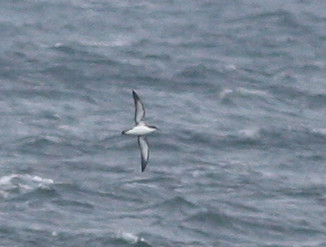
On a bird front, seawatching has continued this morning with 162 Manx Shearwaters, 18 Sooty Shearwaters and 8 Great Skuas all heading north before 10am today. Happy days!

Eyes to the sea

Manx Shearwater in full flow

Monday 29th August comments. The strong north-west winds resulted in a second day without boats but all eyes were trained to the sea as seawatching produced some reasonable totals.

Today's totals: Sooty Shearwater 33N, Manx Shearwater 357N, Great Skua 15N 9S, Arctic Skua 3N 15S and Storm Petrel 2N.

Not a bad result with a few waders noted included Greenshank, Whimbrel 2 and Common Sandpiper. It'll be interesting to see what tomorrow brings.