Women in Science and Engineering (WISE)

Dear WISE Community Members,
Women in Science and Engineering (WISE) is currently recruiting community and professional mentors to participate in our college and pre-college mentoring programs. The mentoring program will allow students interested in your chosen fields to learn from you and share your excitement and passion for your area of study.
WISE has created a new format for our Mentoring Program this year: rather than having WISE staff create mentoring pairs, we will post mentors’ profiles online for high school students to browse and pick a college student and/or professional mentor to shadow for a day. WISE will not post mentors' contact information online; high school students interested in being matched with a mentor will contact WISE staff, who will assist with the match-up.
Remember that junior high and high school students will be reading your profile in addition to college age students, so try to keep it (somewhat) short and interesting! We recommend including a photo of yourself, as that helps personalize the profile (but it is not required). Please send your profile information and photo to sbs-wisemup@email.arizona.edu.
For further assistance on what to write for your personal profile please go to: http://wise.web.arizona.edu/content/mentor_information
If you were a WISE Mentor 2010-2011, and would like to use your profile from last year; please email us at: sbs-wisemup@email.arizona.edu and we will post your profile from last year on our webpage!
The deadline to become a mentor ends September 16, 2011 at 12:00 AM. We look forward to hearing from you and are so excited for another great year of mentoring!

Thank you,

Michelle Mendoza
WISE Mentoring Intern
Women in Science and Engineering (WISE)
maganame@email.arizona.edu
http://wise.web.arizona.edu

Alyssa Salanga
WISE Mentoring Intern
Women in Science and Engineering (WISE)
amsal247@email.arizona.edu

November R. Papaleo
Director, WISE
Women in Science and Engineering
University of Arizona
SIROW/GWS
520-626-9152
sbs-wisemup@email.arizona.edu

Source:
http://physiologynews.blogspot.com/feeds/posts/default?alt=rss

VivePeru’s Winter 2011 Internships

Interested in volunteering abroad this winter?

Apply to be a part of VivePeru’s Winter 2011 Internships!

Internships available for Peru Winter 2011:
Clinical Medicine
Engineering
Social Work

Informational meetings:
Wednesday, September 14 @ 3pm in Sabino Room (SUMC)
Thursday, September 22 @ 3:30pm in Presidio Room (SUMC)
Monday, September 26 @ 5pm in Agave Room (SUMC)

Applications are DUE October 1st at 12 noon PST.

Vive Peru is a nonprofit organization pending 501(c)(3) status. We are dedicated to fostering an understanding of Latin American and Peruvian culture and providing much-needed aid to Peruvian communities. We work to promote cultural understanding and implement innovative and self-sustainable programs in the areas of health, education, social work and engineering.
Visit us on Facebook to get an idea of what you will experience while in Peru! See pictures, learn more about our volunteer programs, and find information about costs and applications at http://www.facebook.com/viveperu.

Applications are available here: http://www.viveperu.org/apply

Please feel free to email us with any questions at info@viveperu.org!

--
Laura Moedano
University of Arizona
760-791-8990 | lmoedano@email.arizona.edu

Source:
http://physiologynews.blogspot.com/feeds/posts/default?alt=rss

Benefits of Electronic Medical Records (EMR) Software | 2011 Physician Survey

Courtesy of Software Advice.  Encourage to take the survey and share in the results.

According to an August 3 report from Robert Tagalicod, the new director of CMS Office of e-Health Standards and Services, 2,383 eligible providers have successfully attested for the Medicare Electronic Health Record (EHR) – or electronic medical record (EMR) – Incentive Program. One hundred hospitals have also attested.

This is great news. But what impact is technology having on the quality of care? Are physicians benefiting from all the improvements that EMR software promises to deliver?

We want to hear from you. We’re hosting a quick, 20-question survey about the advantages of electronic medical records. What kind of impact is EMR technology having on your practice? Are you realizing productivity and financial benefits? Quality of care improvements?

Let us know. We’ll publish the results back here in two weeks.

Read more: http://www.softwareadvice.com/articles/medical/benefits-of-emr-software-survey-1081611/#ixzz1WlNFcAVc


Source:
http://feeds.feedburner.com/DigitalPathologyBlog

Aperio Successfully Defends U.S. and International Patents Covering Line-Scanning Technology in Digital Pathology Systems

USPTO and European Patent Office uphold validity of Aperio patents

VISTA, Calif.--(BUSINESS WIRE)-- Aperio, the global leader in digital pathology solutions that improve patient care, today announced that the company has successfully defended key US and European patents covering line-scanning technology in digital pathology systems. These decisions uphold Aperio’s patent rights as the innovator of industry-leading technology in digital pathology.

With inventions and intellectual property that have contributed to the creation and growth of the digital pathology market, Aperio is the clear leader in digital pathology systems. The company has the broadest patent portfolio in the field, with more than 100 issued and pending patents worldwide, including a license to the Olympus/Bacus patents.

Facts surrounding Aperio’s recent patent victories include:

  • In August, 2008 Aperio was granted European Patent Number 1317685 covering its digital slide scanner technology, which was challenged in May, 2009 by Hamamatsu Photonics KK. In June, 2011 the European Patent Office held a hearing and determined that Aperio’s patent claim to a digital slide scanner that uses a line scan camera with a focus map was valid.
  • In March, 2004 Aperio was granted United States Patent Number 6,711,283 covering its digital slide scanner technology, which was challenged in November, 2009 by Hamamatsu Photonics KK. In March, 2011 the United States Patent and Trademark Office (USPTO) made a final determination that Aperio’s claim to a digital slide scanner that uses a line scan camera with a focus map to capture, compress and align digital image strips into a contiguous digital slide was valid.

“All leading digital pathology systems on the market today utilize line-scanning technology,” said Aperio CEO Dirk G. Soenksen. “Aperio invented the use of line-scanning for creating whole-slide images and has a rich portfolio of patents covering this technological breakthrough. The affirmation by both the US and European patent offices regarding the validity of our patents during contested proceedings significantly strengthens our patents, and we are delighted with the outcome. Aperio has invested considerable resources to create the most technologically advanced digital pathology systems available today, and we remain committed to defending our intellectual property.”

With more system installations than all other digital pathology vendors combined, Aperio is the global leader in digital pathology solutions. The company has an installed base of more than 850 systems in over 30 countries, including more than 550 systems in hospitals and reference laboratories. The company’s customers also include the 13 largest pharmaceutical companies as well as numerous biotechnology and government organizations.


Source:
http://feeds.feedburner.com/DigitalPathologyBlog

Sept 11 — Remembering 10 years later

At around 8 PM, ten years ago tomorrow I was on one of the last LaGuardia - Reagan Delta shuttles to leave New York City. I was returning from a trip to the laboratory at the hospital located on the U.S. Military Academy base in West Point, NY.  We had completed a successful AABB blood bank inspection and was returning to home to Washington.  It was a trip I had done several times previously as the pathology consultant to Keller Army Community Hospital and would do several more times over the next four years on frequent site visits and to cover frozen sections as Keller did not have a full-time pathologist.  This experience was the nidus for telepathology in the Army.  I figured there had to be an easier way to cover remote frozens than to fly to New York City or drive for hours each way for 15 minutes of work.  

NikkormatFT2 IMGP1333 On this particular trip, leaving LaGuardia, I was able to capture a few images of lower Manhattan and New York harbor. At the time, I was still taking pictures with a film camera (and still do sometimes but it is getting harder to find quality film and processing facilities...).  After takeoff I pulled out my old but trusty Nikkormat FT2 camera, snapped on my equally old but reliable 200mm lens and was able to get off 3 shots. 

The lighting cooperated despite slow film and my telephoto lens.  I like the grainy nature, particularly for black and white photos.  I did not realize what I had on the roll until many months later and saw what are likely some of the last images of the World Trade Center, particularly from the air.  I could not find the original negatives but was able to scan some 4x6 prints I had made.  About 12 hours after I took this picture, the first plane hit the North tower of the World Trade Center. 

WTC1 WTC3

Source:
http://feeds.feedburner.com/DigitalPathologyBlog

MikroScan at CAP ’11

MikroScan and its digital pathology partners welcome you at booth #323 at CAP’11 for a hands-on product demonstration of our latest MikroScan D2 whole slide imaging system and partner products,  Pixcelldata’s Collibio and Smart Imaging Technology’s SIMAGIS Live.

They will unveil the smallest, most versatile hybrid telepathology and digital pathology solution on the market, the Mikroscan D2 image acquisition system. The live demonstrations and presentations will cover three pillars of products rich feature set:  D2-New

1. A decision support tool for pathologist, to assess tissue specimens, frozen sections and FNA biopsies in real-time and its impacts on the pathology workflow.

2. Remote live mode: A collaborative feature for early and rapid peer reviews and consults for pathology samples, allowing pathologist to come to a diagnosis at a rapid speed.

3. A rapidly deployable instrument and cloud computing system with flexibility to use various slide viewers, work flow management and laboratory information systems environments.


For more information check out MikroScan news.


Source:
http://feeds.feedburner.com/DigitalPathologyBlog

PerkinElmer to Acquire Caliper Life Sciences for Approximately $600 Million

  • Transaction enhances global leadership position in molecular imaging and detection forHuman and Environmental Health
  • Creates opportunity to significantly expand global delivery of compelling customer solutions in a broad range of high-growth end markets
  • Combined R&D expertise and intellectual property to accelerate innovation

WALTHAM, Mass.--(BUSINESS WIRE)-- PerkinElmer, Inc. (NYSE: PKI), a global leader focused on improving the health and safety of people and the environment, today announced that it has signed a definitive agreement to acquire Caliper Life Sciences, Inc. (NASDAQ: CALP), a Hopkinton, Massachusetts-based leader in imaging and detection solutions for life sciences research, diagnostics and environmental markets, for $10.50 per share, for a total net purchase price of approximately $600 million in cash.

Robert F. Friel, chairman and chief executive officer, PerkinElmer, said, "The acquisition of Caliper Life Sciences brings innovative molecular imaging and detection technologies to our portfolio, complementing our world-leading offerings in life science, diagnostics, environmental and food markets."

Friel added, "The R&D, application expertise, and intellectual property of the combined organization will provide our customers with enhanced knowledge and services and a strong pipeline of innovation. Additionally, the proven leadership and talent of the Caliper team will be a strong addition to our organization."

The combined technology platforms will expand PerkinElmer's deep portfolio of solutions and services for global customers including:

  • Broader offerings for molecular, cellular, animal and tissue imaging to enable translational medicine research;
  • Addition of a world-leading microfluidics platform for genomics and proteomics applications, for improved detection and screening through low sample use and efficiency;
  • High-value sample preparation technologies for key scientific workflow areas such as Next Generation DNA Sequencing;
  • More comprehensive solutions and services for identification of therapeutic response, biotherapeutics development and biologics QA/QC;
  • Platform technology additions to drive expansion into attractive areas such as detection for environmental contaminants and food pathogens; and
  • Broadening services capabilities, leveraging multi-vendor asset management, custom research, and profiling for contaminants and adverse effects.

Kevin Hrusovsky, chief executive officer, Caliper Life Sciences, noted, "We are delighted to become part of PerkinElmer. For 10 years, Caliper has partnered with strategic customers to develop a compelling suite of discovery technologies for broad life science applications."

Hrusovsky added, "I am excited by both PerkinElmer's ability to leverage its global reach for the delivery of solutions and the opportunity to accelerate the development of important advances that make a difference in improving human and environmental health. I am confident this is the correct strategic direction at this time for Caliper customers, shareholders and employees, and we are looking forward to becoming part of one of the leading companies in our industry."

Hrusovsky is anticipated to join the PerkinElmer senior leadership team following the close of the transaction.

The total purchase price represents a premium of 42% for Caliper Life Sciencesshareholders, relative to the closing price of $7.39 on Wednesday, September 7, 2011, the last trading day prior to today's announcement. The acquisition has received the unanimous support of the Boards of Directors of both companies, and is expected to close in the fourth quarter of 2011. The transaction is expected to be dilutive to PerkinElmer's 2012 GAAP earnings per share by approximately $0.05 and accretive to PerkinElmer's 2012 First Call consensus adjusted earnings per share by approximately $0.08.

The transaction is subject to customary closing conditions, including approval ofCaliper Life Sciences stockholders, and the expiration or termination of the waiting period under the Hart-Scott-Rodino Antitrust Improvements Act.

In connection with the transaction, Bank of America Merrill Lynch and Rothschildacted as financial advisors to PerkinElmer. Perella Weinberg Partners acted as exclusive financial advisor to Caliper Life Sciences, Inc., and provided a fairness opinion to the Caliper Life Sciences Board of Directors.

Source: PerkinElmer 


Source:
http://feeds.feedburner.com/DigitalPathologyBlog

CAP Foundation September Case of the Month Available

September 2011
September Case Photo
VIEW CASE WITH
• MAC/PC Users: WebViewer
• PC users: ImageScope
(First time use - * Download software)
 

Case of the Month is a resource for pathologists to assess theirdiagnostic skills using digital whole slide imaging. Posted cases are selected from the CAP archives of the Performance Improvement Program in Surgical Pathology (PIP).


CLINICAL SUMMARY

LEFT PELVIS

A 49-year-old woman, with a radiologically aggressive pelvic mass underwent a left hemipelvectomy. A 15.0 x 11.0 x 9.0 cm tan-yellow mass occupying the medullary cavity of the iliac bone and extending into the surrounding soft tissues was identified. The cut surface of the mass was variegated tan-brown and myxoid with large foci of necrosis intermixed with areas having a more blue-gray chondroid appearance.

The master list with the correct answer

  1. Chondroblastic osteosarcoma
  2. Chondrosarcoma
  3. Dedifferentiated chondrosarcoma
  4. Enchondroma
  5. Synovial chondromatosis

View the appropriate diagnosis, critique and references

PREVIOUS CASE: MEDIASTINUM, POSTERIOR
A 32-year-old man with no significant previous medical history presented with sweating, headaches, and palpitations. A CT scan revealed a mass in his posterior mediastinum. Grossly, the 125 g mass measured 7.9 x 6.5 x 5.3 cm and was partially encapsulated with a deep red to pink cut surface. Sectioning revealed a single 3.1 cm cyst filled with serosanguinous fluid surrounded by red-pink, soft parenchyma. 
view case.

Go to CASE ARCHIVES


Source:
http://feeds.feedburner.com/DigitalPathologyBlog

Check out Aperio this Month at CAP ’11 and NSH 2011

CAP_NSH Eblast 090811 2
Why do more pathologists choose Aperio? 

Join us at the following September conferences to discover why.

CAP '11 - The Pathologists' Meeting™
Aperio Booth #511 - Gaylord Resort, Grapevine, TX
September 11-12, 2011

NSH 2011 - National Society for Histotechnology
Aperio Booth #124 - Duke Energy Convention Center,
Cincinnati, OH
September 18-20, 2011

  • Preview Spectrum™ Healthcare - the workflow solution everyone is talking about
  • Learn how seamlessly Aperio integrates with your LIS provider
  • Experience the new ScanScope® AT - the highest throughput instrument on the market
  • Discuss your institution's specific needs with our Digital Pathology Consultants

Contact the Aperio Events Team at events@aperio.comfor more information or to schedule a demonstration


Source:
http://feeds.feedburner.com/DigitalPathologyBlog

From Dark Report — Learn More on How Your Lab Can Benefit from LIS-EMR Integration


YOUR PRESENTERS:

Robert D. Atlas, CEO of Atlas Development Corporation

Pat Wolfram, VP Marketing and Client Services, Ignis Systems

 
Robert Atlas
Robert D. Atlas
Pat Wolfram
Pat Wolfram

___________________________________________________________________________

This second tidal wave of EMR adoption by office-based physicians is both a problem and an opportunity for clinical laboratories and pathology groups. It is a problem because many labs continue to be overwhelmed by physician requests to help them implement EMRs and qualify for phase 1 criteria.

It's an opportunity because Meaningful Use phase 2 criteria raises the bar for how physicians must electronically interface with laboratories, particularly for lab-test ordering and lab test results reporting. Labs that "get it right" can win new clients while labs that can't deliver face the risk of losing some of their best-referring physician-clients. 

By now, nine months after the Meaningful Use phase 1 criteria became effective, most labs have some experience developing the required electronic two-way interface between their laboratory information systems (LIS) and the new EMRs installed by physician-clients. 

Now clinical labs and pathology groups are about to face a totally new set of challenges as phase 2 of meaningful use soon kicks in. That makes it essential that you prepare your lab for these next steps. Physicians adopting EMRs will soon ask even more of laboratories in the way of IT integration.

Here's your opportunity to gain a better understanding of the status of phase-1 implementation and find out what you can expect from the fast-approaching phase 2 when you join The Dark Report and DarkDaily.com for their latest audio conference, "Meaningful Use: Phase 1 Lessons Learned and How to Prepare Your Lab for Phase 2 Requirements" on Wednesday, September 21, 2011.

You'll learn from two leading experts why changes to EMR Meaningful Use requirements will affect the way labs must integrate with the EMRs of office-based physicians. Listen as our experts reveal what they've learned about integrating labs to the new EMRs in phase 1. 

Not only will you get valuable updates on the latest Meaningful Use requirements during this audio conference, but you'll also acquire tactics for dealing with them successfully.

First to speak will be Pat Wolfram, of Ignis Systems who's an expert in both EMR systems and how these systems handle lab test data—including placing electronic lab-test orders and accepting structured lab test results into patient records. 

Wolfram will give you a better understanding of the specific EMR products being adopted by physicians in your area. You'll learn about their strengths and weaknesses, particularly when it comes to supporting electronic ordering of lab tests and reporting results. You'll also get a valuable preview of the newest generation of EMR products now coming to market.

Most important, you'll get a roadmap for crafting a strategy that will help your laboratory implement an interface between the LIS and the EMR to deliver clean, complete electronic test orders to your lab, which will help your valued physician-clients meet both phase 1 and phase 2 critera.

Our second speaker, Robert D. Atlas of Atlas Development Corporation, has considerable experience in web-browser-based services that support lab test orders/reporting by physicians. Atlas will help you understand the current state of the marketplace-and the mix of informatics capabilities your lab should be ready to deliver to high-referring office-based physicians.

Find out why to expect the unexpected—and what specific action steps your lab should take to gain competitive advantage and use your LIS-to-EMR strengths to win profitable new business. 

Whether you're a lab administrator, pathologist, or industry consultant, you need to stay on top of these significant changes involving Meaningful Use and LIS-to-EMR interfaces. Register today to guarantee your place at this essential learning session. 

Don't lose your physicians to competing labs! Make sure you can deliver an effective LIS-to-EMR interface right now by registering for this very timely audio conference today. Don't forget that your entire lab and IT team can learn and participate when you register.

THE DARK REPORT AUDIO CONFERENCE AT A GLANCE

DATE: Wednesday, September 21, 2011

TIME:
 1 p.m. EDT; 12 p.m. CDT; 11 a.m. MDT; 10 a.m. PDT

PLACE:
 Your telephone or speakerphone

COST:
 $195 per dial-in site (unlimited attendance per site) through 9/9/11, $245 thereafter

TO REGISTER NOW:
 Click here or call 1-800-560-6363 toll-free

For one low price—just $195 (through 9/9/11; $245 thereafter)—you and your entire team can take part in this fast-paced, insightful audio conference. Best of all, you'll be able to connect personally with either of the panelists when we open up the phone lines for live Q&A.

Here's just some of what you’ll learn during this in-depth 90-minute conference:

  • The changes expected from Meaningful Use phase 2 criteria and why your lab needs to be ready.

  • Lessons from Meaningful Use phase 1—what works best for labs when helping physicians adopt EMRs.

  • Why even certified EMRs fall short of doing a good job handling structured lab tests results. 

  • Fast, cheap, and effective methods your lab can use to connect to physician EMRs and deliver extraordinary customer service. 

  • How to recognize when your lab's best clients are at risk during EMR implementation-and how to keep them happy.

  • LOINC's potential to help your lab deliver doctor-pleasing lab test order/results reporting capabilities.

  • How to effectively integrate with current EMR systems.

  • EMR Meaningful Use requirements and what they mean for your lab in phase 2.

  • Which government programs can help with the public health reporting requirements.

  • Why information technology is your lab's trump card to become a key player in the emerging connected-care paradigm.

  • Benefits of clean-order capture: the secrets of synchronizing orders from EMRs with results from the LIS so your lab captures a clean order, distributes the right result, files a clean claim, and gets paid on first submission.

  • How to unleash the power of a robust rules engine and embedded web services order-entry platform in the physician's EMR to enhance the clinician's workflow while improving lab test utilization. 

  • How technological solutions can enhance lab capacity and improve functional capability without adding to lab IT staff.

    …plus much more!

How to Register:
1. Online
2. Call toll free: 800-560-6363.

Your audio conference registration includes:

  • A site license to attend the conference (invite as many people as you can fit around your speakerphone at no extra charge)
  • Downloadable PowerPoint presentations from our speakers
  • A full transcript emailed to you soon after the conference
  • The opportunity to connect directly with our speaker during the audience Q&A session

    Register Now! Or for more information, call us toll-free at 800-560-6363. 
Distinguished Presenters:

Robert AtlasRobert D. Atlas is CEO of Atlas Development Corporation. He has been involved in Lab IT for more than two decades, as a manager of information systems, a software designer/developer and an IT products vendor. He is well known in the Caché/M world, having spent six years at InterSystems Corporation, where he was instrumental in helping to evolve its technology. Mr. Atlas served on the ANSI SQL Development Committee and also served as Chairman of the InterSystems Database End-users Association for several years. In 1989, he co-founded Atlas Development, which has developed a number of high-performance, mission-critical applications for healthcare industry leaders. Mr. Atlas is a graduate of the Massachusetts Institute of Technology.


Pat WolframPat Wolfram is Vice President Marketing and Customer Services at Ignis Systems Corporation. He has more than 15 years experience integrating electronic medical records (EMR) with lab services, radiology departments, hospital CDRs, and HIE repositories. His team works with physicians and their staffs implementing orders and results into the each practice's EMR workflow. Ignis Systems was commissioned by CCHIT (Certification Commission for Health Information Technology) to create test suites to validate Lab-to-EMR integration. Prior to Ignis, Mr. Wolfram was the vice president of EMR integration at MedicaLogic and the global product manager for EMR integration at GE Healthcare. He is a past chairman of the HL7 marketing committee and a recipient of the Chairman's Achievement Award at Mentor Graphics.


Yes, i want to register Now!


ACCENT® Continuing Education Credit
The American Association of Clinical Chemistry (AACC) designates this program for a maximum of 1.5 ACCENT® credit hours towards the AACC Clinical Chemist’s Recognition Award. AACC is an approved provider of continuing education for clinical laboratory scientists in the states of California, Florida, Louisiana, Montana, Nevada, North Dakota, Rhode Island, and West Virginia.



Source:
http://feeds.feedburner.com/DigitalPathologyBlog

Flagship Biosciences launches integrated DNA and protein tumor heterogeneity testing

FLAGSTAFF, Ariz. — September 7, 2011 — Flagship Biosciences, a leading provider of FFPE and frozen tissue analysis for pharmaceutical and medical device development, announced today the launch of new heterogeneity testing services. These patent-pending techniques have been developed by in-house scientists at Flagship for better assessment of the variability of a DNA mutation or a protein expressed in tissue. Rather than assuming that a tissue sample is homogenous, the approach embraces the concept that heterogeneity can be critical biological information, and its evaluation a potential prognostic for therapy.

“Heterogeneity is a reflection of the plasticity of tumor cells” said Dr. Joseph Krueger, Director of Biology at Flagship Biosciences “This plasticity is regulated by both gene mutations and epigenetic gene product regulation.  These processes can create sub-populations of cells within a tumor which are inherently resistant or acquire resistance to a targeted therapy.  The current techniques for assessing a diagnostic marker to select patients for targeted therapies fail to account for the heterogeneity commonly seen in most types of cancer.”

The DNA mutation analysis service is a combination approach of both real-time PCR and repeated Sanger sequencing, using a proprietary method of normalization when analyzing ratios between wildtype and novel and known point mutations. The method identifies mutations in a sample as well as measuring the percentage of tissue with each mutation.

The IHC heterogeneity analysis relies on a proprietary tumor heterogeneity score called HetMap that reports both cell-level heterogeneity and tumor-level heterogeneity in the same tissue block utilized to determine the DNA mutation analysis. With IHC multiplexing, the HetMap score can evaluate additional markers and the interactions of markers as necessary. 

“The recent clearances in companion diagnostics for specific mutations in melanoma and lung cancer demonstrate the importance of evaluating heterogeneity in tissue.  Despite having a driving mutation in these tumors, 40-50% of selected patients will not show a response to drugs which target these mutations.  This could be because of variability in tumor cells having that mutation, or other independent factors which cause insensitivity to the drug in sub-populations of cells” added Joseph Krueger.  “Determining mutation penetration and the variance in the expression of specific proteins can point to the underlying cause for refractory disease. Incorporating assessments of tumor heterogeneity as part of a diagnostic will facilitate better prediction of a patient’s potential for response, and will provide rationale and selection for therapy regimens that will increase the response rates of these refractory patients.

The DNA heterogeneity complements the IHC heterogeneity measurement.  The penetrance of a particular mutation can be correlated to specific factors assessed by IHC.  While immunohistochemisty is a semiquantitative technique, it has the exquisite advantage of cell-level protein expression analysis, with cellular details and contextual information about the expression of a protein in nests of cells.

The image analysis and pathology techniques behind HetMap will be presented at the Pathology Visions 2011 conference, the premier conference on Digital Pathology. Specific applications will be presented at the CTRC-AACR San Antonio Breast Cancer Symposium meeting this year.  Publications describing these novel approaches are being submitted for publication this year.

Flagship Biosciences is a pathology CRO, that specializes in tissue-based companion diagnostics, and histopathology assessment of efficacy and toxicity using brightfield and fluorescent whole slide imaging. 

Source:
http://feeds.feedburner.com/DigitalPathologyBlog

Broaden your professional background by serving as the Editor-in-Chief for LabMedicine

ASCP seeks an Editor-in-Chief for LabMedicine, the Society's journal for laboratory professionals.

This paid volunteer role has the responsibility for the overall strategic direction of LabMedicine, one of ASCP's most visible and important member benefits.

The Editor-in-Chief will also work with our editorial board and internal ASCP staff to implement a comprehensive new strategic direction for the journal.

To be considered, candidates must have:

  • Experience working with scientific journals; as an author, editor, editorial board member, or reviewer
  • A doctoral degree or medical degree, in some facet of laboratory medicine. Masters level candidates will also be considered.
  • Broad medical knowledge, high ethical standards, strategic planning skills, and a commitment to improving patient care.

A monthly stipend will be offered. For details and to apply, click here

View Job Posting

If you experience any problems linking to the URL or viewing the job posting, please send an email to recruiting@chicago.ascp.org.


Source:
http://feeds.feedburner.com/DigitalPathologyBlog

CBLPath Exhibiting at CAP ’11 Booth #217 in September

Best Practice™ Workshop Set for Monday, Sept. 12, at 6:15 p.m.

RYE BROOK, N.Y., Aug. 16, 2011 — CBLPath will showcase its Best Practice™ Partnership Program at the upcoming College of Pathologists (CAP) annual meeting, Booth #217. The company will provide attendees with valuable information about how they can leverage the convergence of anatomic, molecular and digital pathology to stay independent — Keeping Medicine Local™. CAP ’11 – THE Pathologists’ Meeting™ takes place September 11–14 in Grapevine (Dallas/Ft. Worth) Texas.

CAP ’11 attendees can learn more about CBLPath’s innovative Best Practice program — offering local pathology practices a full range of business and technology solutions — and get the most from the meeting with:

  • Demos of LabIS®, CBLPath’s proven pathology management system
  • The chance to speak with Program Partners
  • An informative Best Practice workshop on Monday, Sept. 12, at 6:15 p.m.
  • A Relaxation Station that offers chair massages to meeting attendees
  • Local representatives from across the U.S. to talk with prospective partners

For more about the CAP ’11 meeting, visit http://www.cap.org/cap11.

About CBLPath
CBLPath is a national specialty lab with a unique leadership position in the convergence of anatomic, molecular and digital pathology. Beginning from a clinical perspective, we harness molecular testing and digital pathology on an anatomic pathology foundation. CBLPath is committed to helping our clients deliver better medicine, faster. At our core are pathologists; excited about technology and innovation and its promise of helping patients. Through the Best PracticeTM Partnership Program we help our pathologist-clients effectively compete against centralized reference laboratories, grow their Practice and remain independent — Keeping Medicine Local™. We provide our subspecialty physician clients comprehensive diagnostics and timely, accurate reports enabling the best patient care. For more about the company, please visit http://www.CBLPath.com.

Source:
http://feeds.feedburner.com/DigitalPathologyBlog

Anatomy in Korea with Dr. Oh


A few days ago, I met with the very lovely and generous anatomist Dr. Chang-Seok Oh, referred to me by my friend Ross MacFarlane. I had been interested in viewing medical or old natural history collections here in Seoul, and Dr. Oh had kindly offered to take me to see an anatomical collection of a Catholic university hospital where he had a contact. The collection had a number of interesting pieces, the most outstanding being a 17th Century mummy unearthed at an archeological excavation; there were also a number of forensic reconstructions. Images of the collection can be seen above.

Dr. Oh then took me back to his office, where we gushed about our shared interest in post-Vesalius/pre-Gray's Anatomy anatomical history, and where he shared with me his beautiful original copy of the 18th century Ontleedkundige Tafelen. This book, Dr. Oh explained to me, is of the greatest importance to Asian medicine, as it was the first Western medical book translated for Eastern consumption, published in Japan (with some additions from other texts) as Kaitai Shinsho in 1774. The book then made the rounds in Asia, changing the face of Eastern medicine forever. We did a side by side comparison of the original book and a facsimile of the 18th century Japanese Kaitai Shinsho; you can see those side by side comparisons above. I really liked the visual translation that occurs as the images move from the West to the East.

Click on images to see much larger, more detailed versions. Its worth it! And thanks to Ross MacFarlane and Deborah Leem for making this happen!

Source:
http://morbidanatomy.blogspot.com/feeds/posts/default?alt=rss

Prints and the Pursuit of Knowledge in Early Modern Europe, Exhibition, Through December 10th


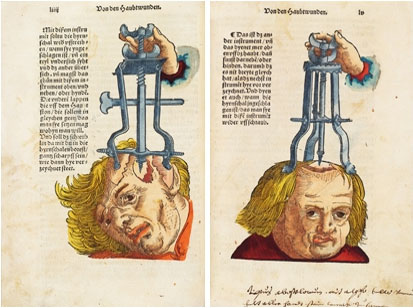
I have just been alerted to a pretty great looking exhibition on through December 10th at the Arthur M. Sackler Museum at Harvard. Entitled "Prints and the Pursuit of Knowledge in Early Modern Europe," the exhibition features not only prints but also flap anatomies (!!!), books, maps, and scientific instruments, all intended to explore "the role of celebrated artists in the scientific inquiries of the 16th century."

Full information follows, from the exhibition website:

Prints and the Pursuit of Knowledge in Early Modern Europe
Sep 6 2011 — Dec 10 2011
Arthur M. Sackler Museum

Prints and the Pursuit of Knowledge examines how celebrated Northern Renaissance artists contributed to the scientific investigations of the 16th century. The exhibition and its accompanying catalogue challenge the perception of artists as illustrators in the service of scientists. Artists’ printed images served as both instruments for research and agents in the dissemination of knowledge. The exhibition, displaying prints, books, maps, and such instruments as sundials, globes, astrolabes, and armillary spheres, looks at relationships between their producers and their production, as well as among the objects themselves. The story of 16th-century technology is enhanced by technology of the 21st, with interactive computers in the galleries, an interactive module on the website, and an iPhone/iPad application in iTunes (check back here soon for an update on availability).

Curated by Susan Dackerman, Carl A. Weyerhaeuser Curator of Prints, Division of European and American Art, Harvard Art Museums. Organized in collaboration with the Mary and Leigh Block Museum of Art, Northwestern University, Evanston, IL.

Opening Panel Discussion and Reception: September 6, 2011, 5–8pm.
Symposium: December 2, 2011, 5–8pm (evening program), and December 3, 2011, 8:30am–6:30pm (day program).

For more special programming related to the exhibition, such as tours, talks, concerts, and Family Days, see the Prints and the Pursuit of Knowledge section of our calendar.

Admission note: During Prints and the Pursuit of Knowledge, admission to the Sackler Museum galleries will be free on Tuesday, Wednesday, and Thursday, 3–5pm.

Travel dates:
– September 6–December 10, 2011
Harvard Art Museums
Arthur M. Sackler Museum, Cambridge, MA
– January 17–April 8, 2012
Mary and Leigh Block Museum of Art
Northwestern University, Evanston, IL

The exhibition and its accompanying catalogue are made possible by funding from the National Endowment for the Humanities, Mrs. Arthur K. Solomon, Lionel and Vivian Spiro, Walter and Virgilia Klein, Julian and Hope Edison, Novartis on behalf of Dr. Steven E. Hyman, the Samuel H. Kress Foundation, Barbara and the late Robert Wheaton, the Goldman Sachs Foundation, and an anonymous donor. Additional support is provided by the Harvard Art Museums’ endowment funds: the Alexander S., Robert L., and Bruce A. Beal Exhibition Fund; Anthony and Celeste Meier Exhibitions Fund; Charlotte F. and Irving W. Rabb Exhibition Fund; and Melvin R. Seiden and Janine Luke Fund for Publications and Exhibitions.

You can find out more by clicking here; you can find out about--an order a copy of!--the catalog by clicking here.

Thanks to Daniel Margocsy, who helped put it together, for passing this along!

Images all drawn the exhibition page; full info including captions can be found by clicking here.

Source:
http://morbidanatomy.blogspot.com/feeds/posts/default?alt=rss

On 9/11 a real leader for the West… not from the United States but from Canada

From the CBC:

Nobody who was killed on 9/11 deserved it. It has nothing to do with wealth versus poverty. In this particular case it has to do with a hateful ideology that has attacked people around the world...

The fact that Afghanistan became a failed state, you know, to the point where an Islamic-Fascist regime set up camp in the country; that kind of situation bred a threat... it's the right thing to do to help countries so that we don't get into that situation.

The major threat is still Islamicism... Al Qaeda and those organizations, they hate us regardless. It doesn't matter if we're in Afghanistan or not.

We're not being attacked because we are in Afghanistan; we're in Afghanistan because we were attacked.

Editor's note - A true Ronald Reagan North of the Border!