EV Kit Cars of the 1980s

Remember how in the 80's all those little fly-by-night companies cropped up and started building their own electric cars? Some of them were based on recognizable makes and models like the Jet Electrica (Ford Escort) and Solargen (AMC Concord), while others were out-of-this-world one-offs. This

Does Extra R&D Support Pay Off?

A recent survey shows that participation in the pan-European EUREKA program, designed to support research and development, has had a positive affect on sales and employment growth. Could a similar program create jobs in the U.S.?

The preceding article is a "sneak peek" from Industrial Processing Eq

The Single Largest Land Vehicle On Earth

From Gizmodo:

You've seen the Godzilla of Khazakstan and sure, it's an impressive piece of machinery. But it's a Tonka Truck compared to its big brother, the Bagger 288. This 13,500-ton leviathan chews the tops of mountains clean off.

Read the whole article

Is It a Mistake to End the U.S. Shuttle Program?

Expense has always been the biggest threat to the shuttle program. Every time a shuttle takes off, it costs $500 million. Then there's the maintenance expense. But the shuttles made it possible to build the international space station, launch the Hubble space telescope, and send multiple probes to V

Green This!

Because of the central role that maintenance technicians perform when it comes to building control systems, lighting systems, HVAC, and many other electrical systems, the maintenance pro is also at the heart of the greening of industry. Are sustainability efforts such as cutting electrical bills and

CCDev contracting and funding concerns

Last week NASA officials raised alarm in some corners of the space industry about its proposal to shift from a pure Space Act Agreement (SAA) for the next Commercial Crew Development (CCDev) round towards a hybrid approach that incorporates elements of both an SAA and a traditional contract. Not surprisingly, this topic came up again Thursday at the NewSpace 2011 Conference, although some made it clear contracting mechanisms were the lesser of their concerns about the future of CCDev.

Brent Jett, deputy manager of the Commercial Crew Program at NASA, told attendees during one panel session of the conference that he was aware of the concerns industry has raised since he and program manager Ed Mango outlined their proposed approach last week. “I know there’s a lot of angst in the community about the direction of the Commercial Crew Program,” he said. “There’s a group of people out there who strongly feel that Space Act Agreements is the only way to do it, the only way a program can be successful. There’s another group of people out there—not in this room, but within the government, within NASA—who strongly feel that to ensure crew safety, a cost-plus contract is the only way to it. So it’s almost like the debate in Washington over the debt ceiling.”

Companies have made clear their concerns about shifting from the SAA structure of previous CCDev rounds to this hybrid approach, which would incorporate many more elements of Federal Acquisition Regulations (FARs). But beyond general worries about an increase in paperwork associated with the FAR, what are the specific problems with NASA’s proposed approach?

Mark Sirangelo, head of Sierra Nevada Corporation’s space systems division, said he didn’t absolutely reject NASA’s approach request. “From our company’s perspective, we don’t really have a concern, one way or another,” he said. However, the hybrid approach NASA is proposing could have some sticking point, he said, such as how to account in a FAR-based contract for the coinvestment companies are supposed to make in their systems, as well as how to account for the cost and schedule impacts of any changes imposed by NASA. “It’s not that these are things that can’t be overcome, but it’s an unusual set of circumstances, and I think that’s why many people are looking at one more round of Space Act Agreements leading to a FAR contract.”

Garrett Reisman, the former astronaut who is managing SpaceX’s CCDev-2 work, said his company wanted to stick to the fixed-price milestone-based approach used in CCDev and COTS. A FAR-based approach would require SpaceX to hire “a whole bunch more accountants” to deal with the overhead imposed by the FAR, he said. “In addition, it’s a big corporate culture change,” he said, noting that SpaceX engineers don’t fill out timecards. “It’s all an overhead burden we don’t currently have.”

How to handle the contract for the next round of CCDev might be overshadowed by a bigger concern: how much funding, if any, that will be available for it in the next round of the program. The House version of the FY12 appropriations bill that funds NASA would give CCDev $312 million, the same as for FY11 but well below the administration’s request of $850 million.

“What we really need is money, and support from Congress and the executive branch,” Jett said. Support from the executive branch is there, but Congress, given what it’s proposed so far in FY12, is lagging. He noted the CCDev budget is about one tenth the budget of the Space Launch System (SLS) and Multi-Purpose Crew Vehicle (MPCV), which combined would get just over $3 billion in FY12 in the House bill.

“I can tell you that if that number holds for the next year, it’s going to be very challenging for us to maintain multiple partners, to maintain the type of progress we’ve made, and meet a goal to fly folks in the mid part of the decade,” Jett said. “At some point we’re going to have to spend more than a couple hundred million dollars a year.”

Company officials agreed with that concern. “The bigger issue [than contracting mechanisms] is making sure we have the proper funding for this program and making sure all of us make our milestones and go forward,” Sirangelo said.

“These are the things that keep me up at night,” Reisman said. “Worrying about how we can possibly succeed with the budgets cut way down.”

Updates on SpaceX and Orbital’s COTS progress

Much of the attention commercial spaceflight has been getting recently has been focused on NASA’s Commercial Crew Development (CCDev) program, including, as noted here, concerns about contracting mechanisms for future phases of the program. But CCDev is very much based on the earlier Commercial Orbital Transportation Services (COTS) program for developing commercial cargo transportation to and from the ISS; the success of CCDev is dependent in part on the success of COTS. And the two companies that have COTS agreements with NASA are making some news recently on their efforts.

SpaceX has, for some time, been working to get NASA to agree to combine their second and third COTS missions (their first successfully flew last December), allowing them to both approach and berth with the station on the same flight. Last Wednesday Aviation Week reported that NASA has tentatively agreed to combine the two flights, pending resolution of some issues, including the planned deployment of two small satellites during that mission. If approved, the mission would launch as soon as November 30, berthing at the ISS on December 7.

The following day, at the STS-135 post-landing press conference at the Kennedy Space Center, NASA associate administrator Bill Gerstenmaier confirmed that NASA was close to working out a deal to combine the two SpaceX flights, designed C2 and C3. “We technically have agreed with SpaceX that we want to combine those flights, but we haven’t given them formal approval yet,” he said. “We still want to go through some more analysis” on various technical aspects of the mission, he added, but said that if those issues can be worked out, combining the C2 and C3 flights made the most sense. “Overall, what we want to do is get to cargo delivery as fast as we can, and if the systems are mature enough and the design is mature enough, combining those two flights is that best way to get cargo to the ISS in the fastest manner possible.”

(While that news took place last week, there was very little notice of it then, perhaps as it was lost in the attention about the final shuttle landing. But when SpaceX tweeted effectively the same news Tuesday, although with a nine-day gap between launch and berthing, instead of seven from the AvWeek announcement, it got a lot more attention.)

The news is a little different for the other COTS awardee, Orbital Sciences. Its original plans called for a single demonstration mission of its Taurus 2 launch vehicle and Cygnus spacecraft in late 2010; like SpaceX, it suffered delays, pushing that mission back to later this year. Last Thursday, company officials announced that they were delaying that mission further, into next year. “We are targeting a test firing of the full stack in November, with a test launch, with a non-Cygnus payload on the top, in late December,” said Orbital senior vice president Frank Culbertson at an AIAA commercial space panel on Capitol Hill. The official COTS demo flight is now planned for late February 2012, he said, with full-fledged cargo flights to follow in the spring.

In a briefing with financial analysts earlier that day to talk about the company’s second quarter earnings, company executives blamed the delay on development of the launch site infrastructure at the Mid-Atlantic Regional Spaceport (MARS) at Wallops Island, Virginia. “Work related to installing and checking out the Wallops launch complex’s propellant and pressurization management systems has taken longer than we previously anticipated, delaying the turnover of the launch pad to us by some 6 to 8 weeks from the planned date,” Dave Thompson, chairman and CEO, said.

Another issue for the Taurus 2 was a problem last month during a test firing of one of the AJ-26 engines that powers the rocket’s first stage. During the test, at NASA’s Stennis Space Center in Mississippi, a metal fuel line ruptured, “badly damaging” the engine on the test stand, according to a Space News account of the test.

“Orbital, Aerojet, and NASA have substantially completed our analysis of the cause of this test failure,” Thompson said on Thursday’s call, and were now screening the remaining AJ-26 engines that Aerojet has. Thompson said it appears that two-thirds of the engines can be used “as-is”, but one third “will require some level of rework or repair.” That two thirds, though, would be enough to avoid any schedule delays.

Voyage to Vaccine Discovery Continues with Space Station Salmonella Study

Any scientist can tell you that research is a time-consuming pursuit. In fact, it can take decades to show results, as the knowledge compounds and inspires additional studies. This building of information is what led to the Recombinant Attenuated Salmonella Vaccine or RASV investigation, which launched to the International Space Station on July 8, 2011.

The investigation combines decades of expertise between two Arizona State University research teams. One team, led by Cheryl Nickerson, Ph.D. specializes in the use of the spaceflight platform to provide insight into how microbial pathogens cause infection and disease in the human body. The other team, led by Roy Curtiss III, Ph.D. focuses on the design and clinical testing of next generation vaccines to protect against diseases caused by pathogenic microbes. In addition, the Arizona State University researchers partnered with Mark Ott, Ph.D., at NASA's Johnson Space Center to strengthen the team's core expertise of space microbiology.

The vaccine samples that were flown on STS-135 are a genetically altered strain of Salmonella that carries a protective antigen against Streptococcus pneumonia -- a bacteria that causes life-threatening diseases, such as pneumonia, meningitis, and bacteremia. This organism is responsible for more than 10 million deaths annually and is particularly dangerous for newborns and the elderly, as they are less responsive to current anti-pneumococcal vaccines. "We have the opportunity," commented Nickerson, "to utilize spaceflight as a unique research and development platform for novel applications with potential to help fight a globally devastating disease."

Nickerson and Curtiss designed the RASV experiment to use the unique microgravity environment of the space station National Laboratory to increase the vaccine's anti-pneumococcal effectiveness by maximizing its ability to induce a protective immune response. Already a promising oral vaccine candidate that is in human clinical trials, RASV has many advantages over vaccines delivered by a needle. This includes activation of an additional arm of the immune system that cannot be engaged by vaccines that are administered as a shot. The Salmonella vaccine strain is genetically modified not to cause disease in humans, but instead carries an antigenic protein from Streptococcus pneumonia. This addition stimulates a protective immune response without actually causing the disease.

According to Nickerson, the initial clinical trials indicated a need for additional enhancement to the vaccine's ability to induce a potent protective immune response. By sending samples back to the space station for continued microgravity research, scientists hope that they will be able to better genetically engineer the vaccine strain to enhance its immunogenicity, while reducing or eliminating any unwanted side effects.

To accomplish this goal, special growth chambers containing the vaccine strain traveled to the station aboard the shuttle Atlantis, where crew members activated the samples. Scientists simultaneously are growing a control sample on the ground for comparison under otherwise identical conditions. The spaceflight cultured RASV strain returned to Earth with STS-135 on July 21, 2011.

Researchers will now evaluate the space-flown strain against the control sample for its ability to protect against pneumococcal infection and changes in gene expression. Molecular targets identified from this work hold promise for translation to develop new and improve existing anti-pneumococcal RASVs to prevent disease for the general public. Moreover, because RASVs can be produced against a wide variety of human pathogens, the outcome of this study could influence the development of vaccines against many other diseases in addition to pneumonia.

Early work that laid the foundation for the microgravity RASV investigation began in 1998 when Nickerson initially was funded by NASA. This was the first of what would be multiple studies from this team on Salmonella bacteria grown in true microgravity or ground-based analogues of microgravity. The goal was initially to see how the bacteria would respond to a microgravity environment.

The ground study led to 2006's Effect of Spaceflight on Microbial Gene Expression and Virulence or Microbe investigation. The findings for Microbe were surprising, as scientists discovered that Salmonella cultured in the spaceflight environment became more virulent -- meaning there was an increase in its disease-causing potential. This study also showed that spaceflight globally altered Salmonella gene expression in key ways that were not observed during culture on Earth, leading to the identification of a master switch that regulates this response.

The Nickerson team followed Microbe with 2008's Microbial Drug Resistance and Virulence or MDRV investigation. This study both reproduced the increased virulence effect in spaceflight-grown Salmonella and identified a way to turn off the increased virulence. Collectively, these investigations enabled researchers to devise the RASV flight experiment in an effort to develop a better vaccine against pneumonia. "The key to this research is the novel way that bacterial cells adapt and respond to culture in the microgravity environment," said Nickerson, "as they exhibit important biological characteristics that are directly relevant to human health and disease that are not observed using traditional experimental approaches."

The current investigation is not the final chapter in this journey towards vaccine development. Thanks to the recent signing of a Space Act Agreement between NASA and the Biodesign Institute at Arizona State University, Nickerson and her team are now users of the space station as a National Laboratory. Scientists participating in this study plan to fly a continuing series of experiments to the space station. This streamlined access will help to accelerate progress for this lifesaving vaccine.

For more information visit http://www.nasa.gov/mission_pages/station/research/news/RASV.html

NASA Announces Launch Tweetup for GRAIL Moon Mission

NASA will host a two-day launch Tweetup for 150 of its Twitter followers on Sept. 7-8 at the agency's Kennedy Space Center in Florida. The Tweetup is expected to culminate in the launch of the twin lunar-bound GRAIL spacecraft aboard a Delta II rocket from Cape Canaveral Air Force Station in Florida.
The launch window opens at 5:37 a.m. PDT (8:37 a.m. EDT) on Sept. 8. The two GRAIL spacecraft will fly in tandem orbits around the moon for several months to measure its gravity field, from its crust to core, in unprecedented detail. The mission also will answer longstanding questions about the moon and provide scientists with a better understanding of how Earth and other rocky planets in the solar system formed.
The Tweetup will provide NASA's Twitter followers with the opportunity to tour the Kennedy Space Center Visitor Complex; speak with scientists and engineers from GRAIL and other upcoming missions; and, if all goes as scheduled, view the spacecraft launch. The event also will provide participants the opportunity to meet fellow tweeps and members of NASA's social media team.
2011 is one of the busiest ever in planetary exploration; GRAIL's liftoff is the third of four space missions launching this year under the management of NASA's Jet Propulsion Laboratory in Pasadena, Calif. Aquarius launched June 10 to study ocean salinity; Juno will launch Aug. 5 to study the origins and interior of Jupiter; and the Mars Science Laboratory/Curiosity rover heads to the Red Planet no earlier than Nov. 25.
Tweetup registration opens at 6 a.m. PDT (9 a.m. EDT) on Tuesday, July 26, and closes at 9 a.m. PDT (noon EDT) on Thursday, July 28. NASA will randomly select 150 participants from online registrations

For more information visit http://www.nasa.gov/mission_pages/grail/news/grail20110722.html

Last Picture of Atlantis in Space

Space shuttle Atlantis landed at NASA's Kennedy Space Center, wrapping up the final mission of NASA's space shuttle program. At 08:27:48 UT, just 21 minutes before the deorbit burn, astrophotographer Thierry Legault captured what might be the last picture of Atlantis in space--and it was a solar transit.

For more information visit http://www.nasa.gov/mission_pages/sunearth/news/News072111-atlantis-transit.html

Astronomers Find Largest, Most Distant Reservoir of Water

Two teams of astronomers have discovered the largest and farthest reservoir of water ever detected in the universe. The water, equivalent to 140 trillion times all the water in the world's ocean, surrounds a huge, feeding black hole, called a quasar, more than 12 billion light-years away.
"The environment around this quasar is very unique in that it's producing this huge mass of water," said Matt Bradford, a scientist at NASA's Jet Propulsion Laboratory in Pasadena, Calif. "It's another demonstration that water is pervasive throughout the universe, even at the very earliest times." Bradford leads one of the teams that made the discovery. His team's research is partially funded by NASA and appears in the Astrophysical Journal Letters.
A quasar is powered by an enormous black hole that steadily consumes a surrounding disk of gas and dust. As it eats, the quasar spews out huge amounts of energy. Both groups of astronomers studied a particular quasar called APM 08279+5255, which harbors a black hole 20 billion times more massive than the sun and produces as much energy as a thousand trillion suns.
Astronomers expected water vapor to be present even in the early, distant universe, but had not detected it this far away before. There's water vapor in the Milky Way, although the total amount is 4,000 times less than in the quasar, because most of the Milky Way’s water is frozen in ice.
Water vapor is an important trace gas that reveals the nature of the quasar. In this particular quasar, the water vapor is distributed around the black hole in a gaseous region spanning hundreds of light-years in size (a light-year is about six trillion miles). Its presence indicates that the quasar is bathing the gas in X-rays and infrared radiation, and that the gas is unusually warm and dense by astronomical standards. Although the gas is at a chilly minus 63 degrees Fahrenheit (minus 53 degrees Celsius) and is 300 trillion times less dense than Earth's atmosphere, it's still five times hotter and 10 to 100 times denser than what's typical in galaxies like the Milky Way.
Measurements of the water vapor and of other molecules, such as carbon monoxide, suggest there is enough gas to feed the black hole until it grows to about six times its size. Whether this will happen is not clear, the astronomers say, since some of the gas may end up condensing into stars or might be ejected from the quasar.
Bradford's team made their observations starting in 2008, using an instrument called "Z-Spec" at the California Institute of Technology’s Submillimeter Observatory, a 33-foot (10-meter) telescope near the summit of Mauna Kea in Hawaii. Follow-up observations were made with the Combined Array for Research in Millimeter-Wave Astronomy (CARMA), an array of radio dishes in the Inyo Mountains of Southern California.
The second group, led by Dariusz Lis, senior research associate in physics at Caltech and deputy director of the Caltech Submillimeter Observatory, used the Plateau de Bure Interferometer in the French Alps to find water. In 2010, Lis's team serendipitously detected water in APM 8279+5255, observing one spectral signature. Bradford's team was able to get more information about the water, including its enormous mass, because they detected several spectral signatures of the water.
Other authors on the Bradford paper, "The water vapor spectrum of APM 08279+5255," include Hien Nguyen, Jamie Bock, Jonas Zmuidzinas and Bret Naylor of JPL; Alberto Bolatto of the University of Maryland, College Park; Phillip Maloney, Jason Glenn and Julia Kamenetzky of the University of Colorado, Boulder; James Aguirre, Roxana Lupu and Kimberly Scott of the University of Pennsylvania, Philadelphia; Hideo Matsuhara of the Institute of Space and Astronautical Science in Japan; and Eric Murphy of the Carnegie Institute of Science, Pasadena.

For more information visit http://www.nasa.gov/topics/universe/features/universe20110722.html

Project Nim trailer

Looks like a good example of cultural uplift.

I also recommend the RadioLab episode, "Lucy." Description:

The haunting epic of Lucy the chimpanzee. When Lucy was only two days old, she was adopted by psychologist Dr. Maurice K. Temerlin and his wife Jane. The Temerlins wondered, if given the right environment, how human could Lucy become? We hear from Lucy's language tutor, Dr. Roger Fouts, Lucy's caretaker and eventual friend, Dr. Sue Savage-Rumbaugh, and Mr. Temerlin himself... or his words anyway, read by radio host David Garland. And writer Charles Siebert helps us to make sense of Lucy's story.


The ethics of animal enhancement

Humanity’s relationship with animals has varied drastically over the millennia.

Animals were once (and some still are) our predators, contributing directly to the course of human evolution. They have inspired us to art—right from the time we were first able to translate our thoughts onto the walls of a cave. They have played an indelible part in our religions, at once the object of reverence, and later the object of our dominion. We have made them into our beasts of burden. They have entertained us. Animals have joined us in combat as our vehicles, weapons and messengers. We have kept animals as our companions, tried and punished them in human courts, moulded them into bizarre forms and driven entire species into extinction. Today, our relationship with animals is still changing, the most recent development being the rise of the animal rights movement.

The modern animal rights movement was given its kick-start in 1975 by Australian bioethicist Peter Singer by virtue of his seminal book, Animal Liberation. Since that time, Singer has worked to advance the notion that personhood, in both the cognitive and legal sense, is not exclusive to Homo sapiens. To this end, he founded the Great Ape Project, which in addition to advocating for ape personhood, sets aside more modest tasks like establishing minimum space requirements for animals in confinement.

Singer's revolution is arguably still in its infancy, but there have been some breakthroughs in the past twenty years that are taking the movement to the next phase. New Zealand took the first steps by passing an animal welfare act in 1999 declaring that research, testing or teaching involving the use of a great ape requires government approval—a move that essentially banned the practices. Britain soon thereafter invoked a similar ban. More recently, in April 2006 members of Spain's socialist party announced that it would introduce a bill calling for “the immediate inclusion of (simians) in the category of persons, and that they be given the moral and legal protection that currently are only enjoyed by human beings.” New Zealand is current working to introduce similar legislation, hoping to promote ape status from property to person. Such measures would represent a noteworthy step beyond mere moral consideration to that of enforceable protections. Should these bills be passed, states would be responsible for the welfare and protection of legally recognized nonhuman persons.

And of course, there's my Rights of Non-Human Persons program hosted by the Institute for Ethics and Emerging Technologies where we're hoping to see a number of candidate species granted human-level rights and protections.

The rationale behind these various efforts is the realization that some non-human animals and humans share similar psychological attributes such as the capacity for strong self-awareness, emotion, empathy and language. Work in genetics has revealed that the great apes and humans share nearly 98-percent of their genome. Various intelligence tests, brain scans and observations indicate cognitive faculties similar to those of humans. Given the mounting scientific and empirical evidence, it is becoming increasingly unacceptable to withhold consent in regards to acknowledging the presence of animal consciousness and emotional experience.

As these initiatives move forward, and as the animal rights movement continues to evolve, it can be said that humanity’s relationship with animals has transitioned from subjugation to moral consideration. And tomorrow it will transition from moral consideration to social co-existence.

The ethical imperative to uplift

Enhancement biotechnologies will profoundly impact on the nature of this co-existence. Today, efforts are placed on simply protecting animals. Tomorrow, humanity will likely strive to take this further – to endow nonhuman animals with the requisite faculties that will enable individual and group self-determination, and more broadly, to give them the cognitive and social skills that will allow them to participate in the larger social politic that includes all sentient life.

As many transhumanists and technoprogressives are inclined to point out, human enhancement offers an unprecedented opportunity for the human species to transcend biological limitations. These include not just the benefits of what may be gained, but also the benefits of what may be discarded.

In terms of what humanity may hope to gain, there are potential enhancements such as greater health and wellness, increased intelligence and memory, improved psychological control, longer lives, and novel capacities. Some of the principal arguments in favour include the recognition of fundamental bio-rights that include reproductive, morphological, and cognitive liberties. Healthier people, it is argued, will also save individuals and their governments from spending inordinate sums of money that are currently required to battle all types of ailments, including the costs of aging itself. It is also argued that enhancement technologies will result in persons more capable and willing to engage in social and political causes. In this sense, transhumanism holds radical promise for the furtherance of democratic and participatory values.

As to what humanity may hope to lose with biological augmentation, humans are poised to discard their often fragile and susceptible biological forms. It is hoped that the ravages of aging will be brought to an end, as well as the arbitrariness of the genetic lottery. More conceptually, human evolution is poised to go undergo an evolution of its own where it goes from unconscious Darwinian selection to deliberate and guided quasi-Lamarckianism. Driving this transition is the ingrained human desire to move beyond a state of nature in which an existential mode is imposed upon Homo sapiens, to one in which humanity can grow increasingly immune to unconscious and arbitrary processes. An emergent property of intelligence is its collective aversion to chaos; it perpetually works to increase levels of order and organization.

These compulsions are held by many to represent strong ethical and legal imperatives. Given the animal rights movement's goal to increase the moral circle to include higher animals, and given that a strong scientific case can be made in favour of animal personhood, a time will come for humanity to conclude that what is good for the goose is also good for the gander.

Furthermore, it would be unethical, negligent and even hypocritical of humans to enhance only themselves and ignore the larger community of sapient nonhuman animals. The idea of humanity entering into an advanced state of biological and/or postbiological existence while the rest of nature is left behind to fend for itself is distasteful.

Why uplift nonhuman animals? What is it that we hope they will gain? Ultimately, the goal of uplift is to foster better lives. By increasing the rational faculties of animals, and by giving them the tools to better manage themselves and their environment, they stand to gain everything that we have come to value as a species.

Issues of fairness, primary goods and distributive justice

The suggestion that a moral imperative exists to uplift sapient nonhumans implies that humans have an obligation to do so. Political and moral philosophers have struggled with the issue of obligations since the beginning of human social organization, due mostly to apparent incompatibilities and inconsistencies between liberty and the sense of imposition or even coercion.

Various frameworks have been proposed to deal with these issues, including social contract frameworks devised by Hobbes, Locke, Rousseau and Kant. More recently, and in the context of human enhancement, there has been the work of Martha Nussbaum and Amartya Sen who have proposed a capabilities approach in which an individual’s “functioning” is tied directly to the quality of their ability to act in society.

Quite obviously these frameworks have interesting ramifications for arguments in support of uplift scenarios, but the most potent methodology that can be applied to the issue of bringing nonhumans into the human social fold is the theory of justice proposed by philosopher John Rawls. While concerned with human society, Rawls’s theories reveal a high degree of relevance to issues of animal welfare, particularly when one ascribes a certain degree of moral worth and personhood consideration to sapient nonhumans.

One of Rawls’s more important contributions to political theory was his concept of the original position in which individuals decide principles of justice from behind a veil of ignorance. The purpose of Rawls’s thought experiment was to weed out any preconceived notions of social position or privilege in order to devise the fairest of social arrangements – the general idea being that ignorance of one’s social position and capabilities will result in the creation of the fairest and most equitable of frameworks. As Rawls noted, in the original position “no one knows his place in society, his class position or social status, nor does anyone know his fortune in the distribution of natural assets and abilities, his intelligence, strength, and the like. I shall even assume that the parties do not know their conceptions of the good or their special psychological propensities. The principles of justice are chosen behind a veil of ignorance.” Rawls’s special claim is that all those in the original position would adopt a risk-minimizing strategy that would maximize the position of the least well off.

Rawls understandably chose a reference class of Homo sapiens, but for reasons already discussed, there is no good reason to exclude nonhumans from this thought experiment. In fact, one could argue that Rawls provisioned, either intentionally or unintentionally, the inclusion of nonhumans by virtue of including psychological and physical propensities in the list. Consequently, Rawls’s veil of ignorance should also obscure knowledge of one’s species.

Decisions about justice and fairness, argued Rawls, would ultimately lead to consensus on issues of rights and duties and the distribution of social and economic advantages. In regards to how these principles were to be executed, Rawls suggested that they be crafted in such a way as to be of the greatest benefit to the least-advantaged members of society. Considering that nonhumans are completely shut-out from the social contract and carry negligible social standing, they should be considered among the most least-advantaged (applying what is referred to as the difference principle).

Quite obviously, even the most sentient and social of nonhuman animals lack the requisite cognitive and linguistic faculties to engage in advanced society; the human monopoly on what is regarded as “society” has arisen as a consequence of gross discrepancies in abilities. At first blush, therefore, social considerations for animals would appear to be a non-issue (and even nonsensical). However, pending enhancement biotechnologies alter this picture dramatically.

For nonhuman animals these discrepancies in abilities qualifies as a deficient primary good required for the attainment of fair and equal opportunity. Like some humans who argue that they have fared poorly in the genetic lottery, it can be said that nonhumans have missed out in the species lottery. Thus, when considering agents who are provisioning for a just society in the original position, and considering that the reference class should include sapient non-humans, it is fair and reasonable to assert that they would make contingencies for the uplift of nonhumans given the availability of the technologies that would allow for such endowments. To do otherwise would be an unfair distribution of primary goods that are requisites for political participation, liberty and justice. As Rawls surmised, individuals in the original position would adopt those principles that would govern the assignment of rights and duties and regulate the distribution of social and economic advantages across society.

Given the very real potential for biological augmentation some time later this century, the means to better distribute primary goods will eventually come into being and will by consequence enter into the marketplace of distributable primary goods. To deny nonhumans access to enhancement technologies, therefore, would be a breach of distributive justice and an act of genetic or biological exceptionalism – the idea that one’s biological constitution falls into a special category of goods that lie outside other sanctioned or recognized primary goods. Such claims, as argued by Allen Buchanan and others, do not carry much moral currency.

Indeed, liberal theories of distributive justice necessarily provide for the elimination or mitigation of the undeserved effects of luck on welfare. Fair equality of opportunity, argued Rawls, requires not merely that offices and positions be distributed on the basis of merit, but that all persons have reasonable opportunity to acquire the skills on the basis of which merit is assessed. These skills, in the context of animal uplift, are the biological augmentations that would enable social interaction at the “human” level (at the very least).

Critics contend that Rawls’s idea was to examine how a just society could be created no matter the socioeconomic or morphological composition of its members. The argument from Rawls, they argue, is that humans need to create an environment that will allow humans to be happy as humans and animals happy as animals.

What this line of thinking fails to take into account, however, is the presence of those primary goods in society that, when not equally distributed, prevent persons from living a just life. As Rawls noted, each person has an equal right to a fully adequate scheme of equal basic liberties which is compatible with a similar scheme of liberties for all. The introduction of uplift biotechnologies will greatly perturb the sense that Homo sapiens is the only species on the planet deserving of our most fundamental values.

The issue of consent

While it can be argued that humans are obligated to integrate sapient nonhumans into a larger inter-species society, the question of consent must also be addressed. Unfortunately, no matter how hard we try we would never be able to convey the complexities of the issue to nonhumans, and thus, cannot depend on getting informed consent from the agents themselves. In this sense, it is a situation similar to the ethical quandary of genetic modifications and the consent of the unborn and young children. Consent (or non-consent), therefore, has to be deduced and inferred by proxy.

Again, the Rawlsian framework offers a way to deal with the issue. As Rawls noted, the veil of ignorance hides knowledge of one’s actual psychological disposition. As already argued, psychological dispositions can be reasonably interpreted in such a way as to include the psychological and physical condition of nonhuman animals. Assuming that a nonhuman would participate in the original position experiment as a free and rational decision-making agent, it’s not unreasonable to conclude that they would, like humans, come to the same set of principles designed to protect the interests of the entire reference class.

Persons in the original position, it is reasonable to say, would be very concerned about incarnating as a nonhuman animal and would undoubtedly work to ensure that all the safeguards be put in place to protect their potential interests. Moreover, knowledge of how uplift biotechnologies could better disseminate primary goods among the species would most certainly be a weighty consideration. Actors in the original position would employ game theoretic logic in making their decisions, employing the maximin strategy in which choices produce the highest payoff for the worst outcome. The prospect of coming into the world as a great ape, elephant or dolphin in the midst of an advanced human civilization can be reasonably construed as a worst outcome.

Therefore, humanity can assume that it has the consent of sapient nonhumans to biologically uplift.

Less conceptually, there is an alternative way in which both consent and uplift efficacy can be determined: uplift sampling. Rather than uplift an entire species, several individuals could be uplifted in order to assess the effectiveness of the experiment. Uplifted animals could conceivably act as spokespersons for their species and provide a valuable insight into the process and whether or not the change was desirable.

All together now

A future world in which humans co-exist with uplifted whales, elephants and apes certainly sounds bizarre. The idea of a United Nations in which there is a table for the dolphin delegate seems more fantasy than reality. Such a future, however, even when considering the presence of uplifted animals, may not turn out just quite the way we think it will.

Intelligence on the planet Earth is set to undergo a sea change. Post-Singularity minds will either be manifest as cybernetic organisms, or more likely, as uploaded beings. Given the robust nature of computational substrate, intelligence is set to expand and diversify in ways that we cannot yet grasp, suffice to say that postbiological beings will scarcely resemble our current incarnation.

In this sense, “postbiological” is a more appropriate term than “posthuman”. The suggestion that posthumans will live amongst post-apes and post-elephants misses the point that a convergence of intelligences awaits us in our future. Our biological heritage may only likely play a very minor part in our larger postbiological constitution – much like the reptilian part of our brain does today in terms of our larger neurological functioning.

And like the other sapient animals who share the planet with us, and with whom we can claim a common genetic lineage, we will one day look back in awe as to what was once our shared biological heritage.



Responding to Futurismic’s rejection of animal enhancement

Paul Raven of Futurismic has taken me to task on my views of animal uplift. In response to my question, "Ultimately, we have to ask ourselves, why wouldn’t we wish to endow our primate cousins with the same cognitive gifts that we have?" Raven responds:

Because they are not us. We are related, certainly, this much is inescapable, but a chimpanzee is not a human being, and to insist that uplift is a moral duty is to enshrine the inferiority-to-us of the great apes, not to sanctify their uniqueness. This is the voice of assimilation, the voice of homogenisation, the voice of empire. It is the voice of colonialist arrogance, and a form of species fascism. If we have any moral duty toward our genetic cousins, it is to protect them from the ravages we have committed on the world they have always lived in balance with. Why raise them up to our hallowed state of consciousness if all they stand to inherit is a legacy of a broken planet and a political framework that legitimises the exploitation of those considered to carry a debt to society’s most powerful?

Raven goes on to object my comparison of cultural uplift with biological uplift:

To assume that we know what is good for an ape better than an ape itself is an act of spectacular arrogance, and no amount of dressing it up in noble colonial bullshit about civilising the natives will conceal that arrogance.

Furthermore, that said dressing-up can be done by people who frequently wring their hands over the ethical implications of the marginal possibility of sentient artificial intelligences getting upset about how they came to be made doesn’t go a long way toward defending the accusations of myopic technofetish, body-loathing and silicon-cultism that transhumanism’s more vocal detractors are fond of using.

There are a couple of things I want to make clear here.

First, when I talk about the "same cognitive gifts that we have," I am not necessarily suggesting that we humanize non-human animals—though I concede that some human characteristics, such as the capacity for speech and complex recursive language, are important augmentations. More accurately, I am discussing animal uplift in the context of the broader thrust that sees not just humans move away from the Darwinian paradigm, but the entire ecosystem itself. I realize that's not a small or subtle thing, but eventually our entire planet's biosphere will come under the auspices of intelligent oversight—what in some circles has been referred to as technogaianism. We are poised to systematically replace a number of autonomous environmental and evolutionary systems with new and improved ones that will see a dramatic reduction in global suffering and a much more vibrant planet. And quite obviously it'll also be part of our efforts to fix the damage we've done thus far to Earth. So, when I talk about enhancing animals, I'm talking about bringing them into the postbiological fold along with us. To just leave the animal kingdom alone to fend for itself seems plain wrong and repugnant to me.

And the critics can call it technofetishism or body loathing or by any other reactionary superlative. I call it common sense and intuitive thinking. It's also very likely the destiny of life on Earth.

Second, and related to the first point, I think many of my detractors must have a very different definition of imperialism than I do. What they see as imperialism (though I'm not exactly sure what they're suggesting humans are exploiting here) I see as compassion. I find it interesting how many critics of uplift call upon Western norms and taboos to make their case, while my ethics is almost exclusively informed by Eastern philosophies, namely Buddhism. I look at animal uplift in the same way I do any other compassionate act in which a human or non-human animal is pulled-up from deplorable conditions, whether it be extreme poverty, or having to survive alone in the jungle.

I'm going to issue a challenge to the opponents of animal uplift: Go back and live in the forest. I mean it. Reject all the technological gadgetry in your possession and all the institutions and specialists you've come to depend on. Throw away your phones, your shoes, your glasses and your watches. Denounce your education. As I'm sure I don't have to remind anybody, it's these things that have uplifted humanity from it's more primitive "natural" state. Humans haven't been truly human for thousands of years; we've been transhuman for quite some time now. If you reject animal uplift, then you must reject your very own transhuman condition.

Yeah, like that's going to happen. Pretty easy to dismiss uplift from the position of privilege, isn't it? Who's the real imperialist, here?


Controlling your environment with thought alone

Hmm, should we call it techekinesis? The latest brain-computer interfaces are meeting smart home technology and virtual gaming. From New Scientist:

Two friends meet in a bar in the online environment Second Life to chat about their latest tweets and favourite TV shows. Nothing unusual in that - except that both of them have Lou Gehrig's disease, otherwise known as amyotrophic lateral sclerosis (ALS), and it has left them so severely paralysed that they can only move their eyes.

These Second Lifers are just two of more than 50 severely disabled people who have been trying out a sophisticated new brain-computer interface (BCI). Second Life has been controlled using BCIs before, but only to a very rudimentary level. The new interface, developed by medical engineering company G.Tec of Schiedlberg, Austria, lets users freely explore Second Life's virtual world and control their avatar within it.

It can be used to give people control over their real-world environment too: opening and closing doors, controlling the TV, lights, thermostat and intercom, answering the phone, or even publishing Twitter posts.

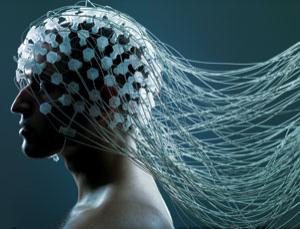
The system was developed as part of a pan-European project called Smart Homes for All, and is the first time the latest BCI technology has been combined with smart-home technology and online gaming. It uses electroencephalograph (EEG) caps to pick up brain signals, which it translates into commands that are relayed to controllers in the building, or to navigate and communicate within Second Life and Twitter.


Trailer for "H+" web series

In the not-too-distant future, most of humanity has forsaken smartphones and the trappings of technology for "HPlus," a direct connection to the Internet via a neural transmitter.

And then someone uploads a virus. All of the world's HPlus users, a full third of the world's population, suddenly die.

If this sounds intriguing, you're not alone. Bryan Singer (The X-Men movies, The Usual Suspects, Superman Returns) is serving as producer for the second Warner Premiere Digital Web series, made in conjunction with Dolphin Entertainment. Warner Premiere is expected to show the final episode of its first Web series, the live-action "Mortal Kombat: Legacy," at the Comic-Con show this week in Los Angeles.

More here.