
Is aluminum the material of the future? If you accept the opinion of Alcoa CEO Klaus Kleinfeld, it is. During the next 50 years, demand will create an "aluminized world," he predicts, citing urbanization and the need for efficient transportation and infrastructure. Will aluminum be the key to fuel-e
Monthly Archives: July 2011
BACH offers school and sports physicals – Clarksville Leaf Chronicle
BACH offers school and sports physicals Clarksville Leaf Chronicle Blanchfield Army Community Hospital will conduct school and sports physicals for BACH's Tricare Prime enrolled beneficiaries ages 4 to 22 during clinic hours from now through Aug. 31. Tricare beneficiaries assigned to a network medical provider may ... |
The Biologically-Inspired Glass Work of Danish Artist Steffan Dam


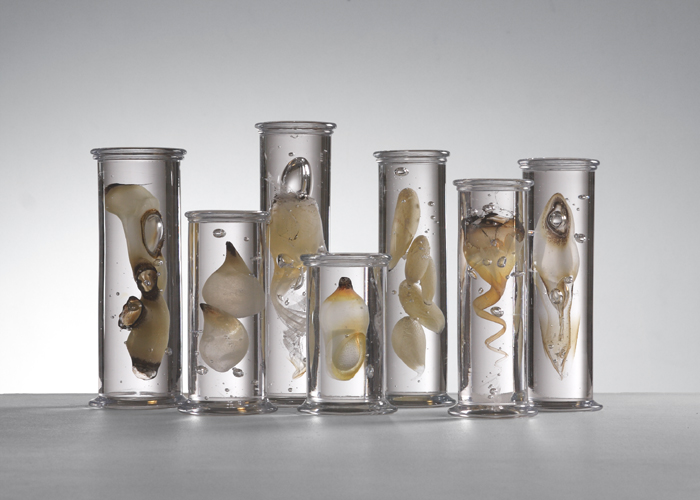
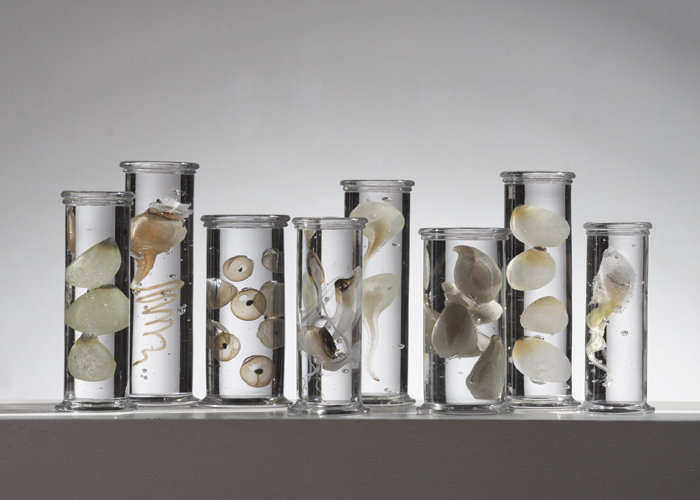
Wow. I have just come across the exquisite, biologically-inspired glass work of Danish artist Steffan Dam. The work--organized into series titled "Flower Blocks," "Specimen Blocks," "Fossils" and "Marine Biology--reminds me quite a bit of the work of revered natural history artists Ernst Heackel and Leopold and Rudolf Blaschka.
Above are just a few of my favorite pieces; I highly encourage you to visit the website to see the full collection by clicking here; you can also download a PDF catalog of his work by clicking here.
Via Wunderkammer.

GLOBAL: Academic freedom reports worldwide – University World News
 University World News | GLOBAL: Academic freedom reports worldwide University World News In the UK an Oxford academic has been allowed, under freedom of information laws, to read formerly secret data on climate change. Ireland's Royal College of Surgeons has come under fire for urging staff and students at its medical school in Bahrain not ... |
Cabinet Cards / Storydress II, Albumen Print Photographs of Life-size Paper Mache and Plaster Sculpture, Christine Elfman, 2008

Cabinet Cards / Storydress II
albumen prints from wet-plate collodion negatives
4.25 x 6.5 inches, series of 5 mounted on cabinet cards
6.5 x 8.5 inches, series of 10 framed
2008Storydress II is a series of photographs of a life-size paper mache and plaster sculpture. The dress is made of paper mache stories that I recorded of my great-grandmother’s autobiographical reminiscences. Each photograph contains legible words. The sculpture was photographed with the wet-plate collodion negative process, printed on handmade gold-toned Albumen paper, and burnished onto antique Cabinet Card mounts. For exhibition the cabinet card photographs are displayed using an antique wooden Graphoscope (magnifying device) and shelf.
Finding unknown relatives in my family photograph collection, and noticing old photographs of anonymous people in antique stores, I was taken by how many people were forgotten regardless of photography’s intention to “Secure the shadow, ‘ere the substance fades away.” The older the picture, the more forlorn the subject appeared to me. Holding their image, I was impressed with their absence. Storydress II tries to show this underlying subject of photographic portraiture. The 19th century cabinet card is turned inside out, revealing the presence of absence in a medium characterized by rigid detail and anonymity. The figure of reminiscence, cast in plaster, parallels the poetic immobility of the head clamp, used in early photography to prevent movement during long exposures, aptly defined by Barthes as “the corset of my imaginary existence”. The life size cast figure wears a paper mache dress made of family stories: recorded, torn up, and glued back together again. The tedious processes involved in making both the subject and photograph are offerings to time’s taking.
I really, really love this piece--which uses as its base a life-size paper mache and plaster sculpture!--and encourage you to visit Christine Elfman's website and click on "view close up here" to appreciate it fully. Or click on image to see a pleasing larger version.
Via Foxes in Breeches.

Increasing primary-care providers critical – TheDay.com
Increasing primary-care providers critical TheDay.com The Association of American Medical Colleges estimates that by 2015 the nation faces a shortage of about 21000 primary-care physicians. Faced with the prospects of massive medical school debt, medical school graduates are moving to better-paying ... Training doctors as a shortage loomsSignOnSanDiego.com The shortage of MDsThe Keene Sentinel |
How did modern humans settle the world? | Gene Expression

In lieu of lots of text, above is a stylized representation of the routes which Neo-Africans took ~50 thousand years ago from their point of departure to parts unknown. The two colors represent two models. The red lines show two major streams issuing out of Africa, a northern route which pushed into the heart of Central Asia, and a southern oceanic one, which pushed all the way into Australia. The second differs, with eastern and western branches of non-African humanity. The models really start to break down within the last ~10,000 years. For example, by either model India has seen an admixture even between the two branches in the Holocene. Additionally, there may have been “false dawns” and admixtures.
In the early 2000s I accept the probable likelihood of the first model. But today I am more leaning toward the second. What’s your stance, and why? I’ll give my rationale below….
The primary reason I’m skeptical of the northern vs. southern route is that Melanesians are clearly southerners, while East Asians and Europeans are northerners. But the phylogenetic stuff I’ve run myself and that I’ve seen using autosomal data sets indicate that ...


The practice does not invalidate the principle | Gene Expression
This is a big time for space, though not in a good way. The James Webb Telescope is in jeopardy, and the space shuttle program finally expired. I don’t talk about space too much on this weblog because I wouldn’t add any value. I leave the details and nuances to those who know better. But in my earliest interests in science astronomy and physics played a big part in bringing home to me the wonder of it all. At the end of the day nature is one, and the great mystery is divided into pieces due to our own cognitive limitations, not because it lacks coherence.
As far as personal biography one of my first memories which has an exact date is the return of Columbia from orbit on April 14th, 1981.* I recall being somewhat confused as to the shape of the vessel. It seemed awkward and ungainly even compared to the small planes which I had in my toy collection at the time. As I came to understand the nature of the space shuttle I felt a conjoined tendency toward awe at its technological sophistication and ambivalence at the expense of manned space flight. ...


Harvard Medical School Adviser: The risks, benefits of weight-loss surgery – Detroit Free Press
Harvard Medical School Adviser: The risks, benefits of weight-loss surgery Detroit Free Press Because of these and other complications, lifelong medical surveillance is important. Even with the risks, the American Heart Association supports weight-loss surgery for severely obese individuals who have not had success losing weight by traditional ... |
Texas Tech med school students in Class of ’15 start journey – El Paso Times
Texas Tech med school students in Class of '15 start journey El Paso Times De la Rosa welcomed 82 new first-year medical students, who will make up the third class at the school: The Class of 2015. "The ceremony signifies the beginning not only of the journey of going to medical school, but the journey of learning the skills ... |
Graduation Project's Ideas
hello every body,I'm saad .....I'm from Egypt
I study communication engineering ,3'rd year,I looking for some ideas for my graduation project and i need some help from any one expert or not.....i really want some help too in choosing the training courses related to the graduation project idea pleas
DC Motor And Generator
need a dc motor that will serve as a generator with power off and pulled in reverse
rotation. approx. load 5 ft pounds
For a Ray Transformer of 400 KV, What is the Specification of the Oil?
i have an x-ray transformer from IMS Italian company, Model Energy 600, and now I want to replace the oil, because of defect. What should be the specification of the oil, and what should be the Minimum electrical strength of the oil.
FYI, we use up to 120 kV in the control unit.
CT Reversed
What will happen if the polarity of a CT is reversed in one phase by mistake while replacing the same that meant for protection of a power transformer( say 33/3.3KV,4MVA) ?
Geometry of Car Suspenson
Does anybody know how can i find some technical data of a car suspension such as dimension,weight,rate of spring,total roll stiffness,etc... ?
The type of car and suspension is not important.
Book Excerpt: In the Presence of Masters
Reginald A. Ray on why blessings can be contagious.
I’ve got your missing links right here (9 July 2011) | Not Exactly Rocket Science
To much deserved fanfare, Bora Zivkovic launched the new Scientific American blog network, featuring 47 blogs and some of the best writers around. Several personal favourites are now on the site and demand your attention including Jennifer Ouellette, Eric Michael Johnson, Jennifer Frazer, Hannah Waters, Lucas Brouwers, Kevin Zelnio, Charles Choi, Christie Wilcox, Darren Naish, SciCurious, Jason Goldman and more. All of this prompts PZ Myers to declare that “Scienceblogs.com is dead“.
The big journalism story this week: the Guardian revealed that the News of the World hacked the voicemails of murdered girl Millie Dowler and deleted messages, prompting false hope in her parents and possibly perverting the course of justice. That was the first of several revelations that culminated in the paper ending its 168 year run, as a result of the ensuing scandal. Here’s as good a summary as you’ll get of the whole scandal by the man who broke the story: the awesome Nick Davies. The Guardian has predictably the best coverage of the continuing story.
“I am a feminist, because skeptics and atheists made me one,” says Rebecca Watson about the ...


Dial Up Dropping With Windows 7
I have recently loaded Windows 7 and as a result my internet connection drops with in 15 secs or less. I have tried different modems and drivers.
The modem dials in and connects properly and if there is data to move it will stay connected but the moment it has to wait the connection is lost. I unde
Summer Travels – Part 1 | Cosmic Variance
Like many physicists, I spend a reasonable portion of the summer months traveling, delivering talks at conferences and workshops, and taking the opportunity to meet with colleagues and gain first-hand experience of the range of research being done in my field. For me, this began a couple of hours after my classes ended for the semester (congratulations to my General Relativity class, all of whom did very well at the end of the day), when I headed off to California to hang out with Sean for a few days and to give the Caltech physics colloquium.
I always enjoy visiting Caltech, and I find colloquia particularly fun talks to deliver, since they provide the opportunity to explain what’s going on at the frontiers of the field to physicists who spend most of their time working in their own, different areas. But this talk was particularly exciting to give, because of the location. I hadn’t realized, but the Caltech physics colloquia take place in a rather old lecture hall (201 E. Bridge) in which I was told Richard Feynman delivered his renowned lectures on physics. This part of Caltech is about to undergo a round of renovations, which meant that this was probably my last chance to speak in the same place that Feynman did – a wonderful experience. With most academic travel, the main payback from a trip like this is the chance to develop some new ideas with one’s collaborators. This time was no exception, and Sean, a student of his and I started discussions about a new dark matter idea that I’ll attempt to blog about here should it come to anything.
After a week back in Philadelphia, I was on a plane once more, this time for a short hop to my old stomping grounds in Cleveland, to take part in a workshop on gravity being held at Case Western Reserve University. The last decade or so have seen a resurgence of efforts to seek a sensible way in which General Relativity (GR) might be modified, either in ways that might yield new physics of the early universe, or in a manner that might explain phenomena at late times. The main original impetus for this work has been the possibility that the phenomenon of cosmic acceleration might be signaling a modification of gravity on the largest scales. However, among many researchers the current thrust is to gain a comprehensive understanding of the ways in which gravity may differ from GR, and at what scales one might expect any allowed modifications to appear.
It is, in fact, an extremely tricky proposition to modify GR, with almost any idea one might think of running into trouble either with established tests of the theory within the solar system, or with serious theoretical inconsistencies such as the appearance of particles with negative energies, known as ghosts. Many of the more interesting ideas involve models arising from extra dimensions, which have led not only to interesting modified gravity models, but also to new ideas about field theories in four dimensions, that I will discuss in another post soon. The gravity workshop focused on many of these new ideas, and, as often happens at small intense meetings, I left with lots of new ideas about my own work.
In June, I left for a lightning trip to Brazil, to speak at the very first meeting of the whole of the Brazilian Physical Society. This conference was held in the beautiful location of Iguassu Falls. Although I was, unfortunately, too ill from a flu I had caught to be able to travel to the falls themselves, I was lucky enough to see them from the air a couple of times. I will clearly have to go back! The meeting had several thousand people, and it was clear that Brazilian physics is undergoing a period of rapid expansion, something it is heartening to see given the pressures science is facing in many other parts of the world. One of the highlights was an event launching the new South American branch of the International Center for Theoretical Physics (ICTP). The ICTP, in Trieste, Italy, was founded in 1964 by Abdus Salam, with the goal of providing educating scientists from developing countries. Their new branch, in Sao Paulo, will be directed by Nathan Berkovitz and should extend the great work of the original. It’ll be interested to see how this endeavor develops – I wish them all the best.
I’d intended three days in Brazil, but ended up there for an extra twenty-four hours because the airport at Iguassa Falls was closed for a day by particulates from the Chilean volcano. I get delayed many times every year and find myself cursing airlines (I’d missed an important meeting in Cambridge a few weeks earlier thanks to USAir), but it’s hard to be furious at a volcano. The people at the Brazilian Physical society were wonderfully helpful and I’d like to thank them as publically as I can for taking such good care of us, dealing with our hotel rooms, and getting us rebooked on new flights.
Now I’m back to work, taking a few weeks without travel and trying to get new projects up and running, while finishing writing up a few papers before the new semester creeps up on me.


PF Coal Plants
For any of you that have worked with PF you may enjoy this, or may be not http://www.youtube.com/watch?v=DJs_bf4pVkk I blew out 45 explosion doors in one night, nothing as bad as this.