Comet Hartley 2 Leaves a Bumpy Trail

New findings from NEOWISE, the asteroid- and comet-hunting portion of NASA's Wide-field Infrared Survey Explorer mission, show that comet Hartley 2 leaves a pebbly trail as it laps the sun, dotted with grains as big as golf balls.

Previously, NASA's EPOXI mission, which flew by the comet on Nov. 4, 2010, found golf ball- to basketball-sized fluffy ice particles streaming off comet Hartley 2. NEOWISE data show that the golf ball-sized chunks survive farther away from the comet than previously known, winding up in Hartley 2's trail of debris. The NEOWISE team determined the size of these particles by looking at how far they deviated from the trail. Larger particles are less likely to be pushed away from the trail by radiation pressure from the sun.

The observations also show that the comet is still actively ejecting carbon dioxide gas at a distance of 2.3 astronomical units from the sun, which is farther away from the sun than where EPOXI detected carbon dioxide jets streaming from the comet. An astronomical unit is the average distance between Earth and the sun.

"We were surprised that carbon dioxide plays a significant role in comet Hartley 2's activity when it's farther away from the sun," said James Bauer, the lead author of a new paper on the result in the Astrophysical Journal. An abstract of the scientific paper is online at http://arxiv.org/abs/1107.2637, with the option of downloading a full PDF.

JPL manages and operates the Wide-field Infrared Survey Explorer for NASA's Science Mission Directorate, Washington. The principal investigator, Edward Wright, is at UCLA. The mission was competitively selected under NASA's Explorers Program managed by the Goddard Space Flight Center, Greenbelt, Md. The science instrument was built by the Space Dynamics Laboratory, Logan, Utah, and the spacecraft was built by Ball Aerospace & Technologies Corp., Boulder, Colo. Science operations and data processing take place at the Infrared Processing and Analysis Center at the California Institute of Technology in Pasadena. Caltech manages JPL for NASA.

For more information visit http://www.nasa.gov/mission_pages/WISE/news/wise20110714.html

La Niña’s Exit Leaves Climate Forecasts in Limbo

It's what Bill Patzert, a climatologist and oceanographer at NASA's Jet Propulsion Laboratory in Pasadena, Calif., likes to call a "La Nada" – that puzzling period between cycles of the El Niño-Southern Oscillation climate pattern in the Pacific Ocean when sea surface heights in the equatorial Pacific are near average.

The comings and goings of El Niño and La Niña are part of a long-term, evolving state of global climate, for which measurements of sea surface height are a key indicator. For the past three months, since last year's strong La Niña event dissipated, data collected by the U.S.-French Ocean Surface Topography Mission (OSTM)/Jason-2 oceanography satellite have shown that the equatorial Pacific sea surface heights have been stable and near average. Elsewhere, however, the northeastern Pacific Ocean remains quite cool, with sea levels much lower than normal. The presence of cool ocean waters off the U.S. West Coast has also been a factor in this year's cool and foggy spring there.

The current state of the Pacific is shown in this OSTM/Jason-2 image, based on the average of 10 days of data centered on June 18, 2011. The image depicts places where Pacific sea surface height is higher (warmer) than normal as yellow and red, while places where the sea surface is lower (cooler) than normal are shown in blue and purple. Green indicates near-normal conditions. Sea surface height is an indicator of how much of the sun's heat is stored in the upper ocean.

For oceanographers and climate scientists like Patzert, "La Nada" conditions can bring with them a high degree of uncertainty. While some forecasters (targeting the next couple of seasons) have suggested La Nada will bring about "normal" weather conditions, Patzert cautions previous protracted La Nadas have often delivered unruly jet stream patterns and wild weather swings.

In addition, some climatologists are pondering whether a warm El Niño pattern (which often follows La Niña) may be lurking over the horizon. Patzert says that would be perfectly fine for the United States.

"For the United States, there would be some positives to the appearance of El Niño this summer," Patzert said. "The parched and fire-ravaged southern tier of the country would certainly benefit from a good El Niño soaking. Looking ahead to late August and September, El Niño would also tend to dampen the 2011 hurricane season in the United States. We've had enough wild and punishing weather this year. Relief from the drought across the southern United States and a mild hurricane season would be very welcome."

Jason-2 scientists will continue to monitor Pacific Ocean sea surface heights for signs of El Niño, La Niña or prolonged neutral conditions.

For more information visit http://www.nasa.gov/topics/earth/features/lanada20110629.html

Dark Fireworks on the Sun

On June 7, 2011, Earth-orbiting satellites detected a flash of X-rays coming from the western edge of the solar disk. Registering only "M" (for medium) on the Richter scale of solar flares, the blast at first appeared to be a run-of-the-mill eruption--that is, until researchers looked at the movies.

"We'd never seen anything like it," says Alex Young, a solar physicist at the Goddard Space Flight Center. "Half of the sun appeared to be blowing itself to bits."

"In terms of raw power, this really was just a medium-sized eruption," says Young, "but it had a uniquely dramatic appearance caused by all the inky-dark material. We don't usually see that."

Solar physicist Angelos Vourlidas of the Naval Research Lab in Washington DC calls it a case of "dark fireworks."

"The blast was triggered by an unstable magnetic filament near the sun's surface," he explains. "That filament was loaded down with cool plasma, which exploded in a spray of dark blobs and streamers. "Cool" has a special meaning on the sun: The plasma blobs registered a temperature of 20,000 Kelvin or less. That is relatively cool. Most of the surrounding gas had temperatures between 40,000 K and 1,000,000 K.

The plasma blobs were as big as planets, many larger than Earth. They rose and fell ballistically, moving under the influence of the sun's gravity like balls tossed in the air, exploding "like bombs" when they hit the stellar surface.

Some blobs, however, were more like guided missiles. "In the movies we can see material 'grabbed' by magnetic fields and funneled toward sunspot groups hundreds of thousands of kilometers away," notes Young.

SDO also detected a shadowy shock wave issuing from the blast site. The 'solar tsunami' propagated more than halfway across the sun, visibly shaking filaments and loops of magnetism en route. [91 MB Quicktime] Long-range action has become a key theme of solar physics since SDO was launched in 2010. The observatory frequently sees explosions in one part of the sun affecting other parts. Sometimes one explosion will trigger another ... and another ... with a domino sequence of flares going off all around the star.

"The June 7th blast didn't seem to trigger any big secondary explosions, but it was certainly felt far and wide," says Young.

It's tempting to look at the movies and conclude that most of the exploded material fell back--but that wouldn't be true, according to Vourlidas. "The blast also propelled a significant coronal mass ejection (CME) out of the sun's atmosphere."

He estimates that the cloud massed about 4.5 x10¹⁵ grams, placing it in the top 5% of all CMEs recorded in the Space Age. For comparison, the most massive CME ever recorded was 1016 grams, only a factor of ~2 greater than the June 7th cloud. The amount of material that fell back to the sun on June 7 was approximately equal to the amount that flew away, Vourlidas says.

As remarkable as the June 7th eruption seems to be, Young says it might not be so rare. "In fact," he says, "it might be downright common."

Before SDO, space-based observatories observed the sun with relatively slow cadences and/or limited fields of view. They could have easily missed the majesty of such an explosion, catching only a single off-center snapshot at the beginning or end of the blast to hint at what actually happened.

If Young is right, more dark fireworks could be in the offing. Stay tuned.

For more information visit http://www.nasa.gov/mission_pages/sunearth/news/dark-fireworks.html

Punching Holes in the Sky

Scientists, photographers and amateur cloud watchers have been looking up with wonderment and puzzlement at "hole punch" clouds for decades. Giant, open spaces appear in otherwise continuous cloud cover, presenting beautiful shapes but also an opportunity for scientific investigation. A new paper published last week in Science inquires into how the holes get punched – airplanes are the culprit – and into the potential for the phenomenon's link to increased precipitation around major airports.

"It appears to be a rather widespread effect for aircraft to inadvertently cause some measureable amount of rain or snow as they fly through certain clouds," said lead author Andrew Heymsfield of the National Center for Atmospheric Research, Boulder, Co. "This is not necessarily enough precipitation to affect global climate, but it is likely to be noticeable around major airports in the midlatitudes."

NASA Langley Research Center cloud specialist Patrick Minnis was one of the co-authors on the paper. NASA satellites Aqua, Terra, CALIPSO and CloudSat were used in the analysis. The research was also partly funded by NASA grants.

Picture a layer of supercooled liquid water clouds stretching across the sky, like a sheet, in subfreezing temperatures. An airliner gaining altitude punches through the cloud layer, and leaves behind a void as if by a circular cookie-cutter. In some cases, the shape left behind is more ragged, or even more rectangular or canal-like. But the nearly perfect circle often makes for the most compelling sight in the sky. The ice particles grow at the expense of the supercooled water droplets and fall out of the cloud as snow. If the cloud layer is thin or if the water is not replenished the snow leaves a hole in the cloud.

"In other conditions, it may produce a somewhat continuous snow line," Minnis said, as has been observed around the Denver airport.

Web sites on the Internet are now devoted to collecting pictures of hole punch clouds from around the world. Scientists first reported observing hole punch clouds in the 1940s, according to the Science paper. They often lead to false reports of UFOs or rocket launches. But aside from being a notch in the belt for cloud-watchers, the "mechanisms of formation and the physics of the development, duration, and thus the extent of their effect have largely been ignored." Heymsfield and the other authors studied satellite images of hole punch clouds and then used computer models to simulate how the holes evolved after formation. Whether a plane is climbing or flying level through the cloud layer determines whether a "hole" is "punched" or a "canal" is "dug" through the clouds.

In addition to describing the physics of how planes form the holes in specific cloud types, the Science paper also looks at this "inadvertent" cloud seeding. The authors suggest that the effect is not large enough to have an impact on global climate, but that "regionally near major airports in midlatitudes during cool weather months it may lead to enhanced precipitation at the ground."

For more information visit http://www.nasa.gov/topics/earth/features/hole-punch.html

NASA’s Hubble Makes One Millionth Science Observation

NASA's Hubble Space Telescope crossed another milestone in its space odyssey of exploration and discovery. On Monday, July 4, the Earth-orbiting observatory logged its one millionth science observation during a search for water in an exoplanet's atmosphere 1,000 light-years away.

"For 21 years Hubble has been the premier space science observatory, astounding us with deeply beautiful imagery and enabling ground-breaking science across a wide spectrum of astronomical disciplines," said NASA Administrator Charles Bolden. He piloted the space shuttle mission that carried Hubble to orbit. "The fact that Hubble met this milestone while studying a faraway planet is a remarkable reminder of its strength and legacy."

Although Hubble is best known for its stunning imagery of the cosmos, the millionth observation is a spectroscopic measurement, where light is divided into its component colors. These color patterns can reveal the chemical composition of cosmic sources.

Hubble's millionth exposure is of the planet HAT-P-7b, a gas giant planet larger than Jupiter orbiting a star hotter than our sun. HAT-P-7b, also known as Kepler 2b, has been studied by NASA's planet-hunting Kepler observatory after it was discovered by ground-based observations. Hubble now is being used to analyze the chemical composition of the planet’s atmosphere.

This is an artist's concept of that planet, HAT-P-7b. It is a "hot Jupiter" class planet orbiting a star that is much hotter than our sun. Hubble Space Telescope's millionth science observation was trained on this planet to look for the presence of water vapor and to study the planet's atmospheric structure via spectroscopy. (Credit: NASA; ESA; G. Bacon, STScI)

"We are looking for the spectral signature of water vapor. This is an extremely precise observation and it will take months of analysis before we have an answer," said Drake Deming of the University of Maryland and NASA's Goddard Space Flight Center in Greenbelt, Md. "Hubble demonstrated it is ideally suited for characterizing the atmospheres of exoplanets, and we are excited to see what this latest targeted world will reveal."

Hubble was launched April 24, 1990, aboard space shuttle's Discovery's STS-31 mission. Its discoveries revolutionized nearly all areas of astronomical research from planetary science to cosmology. The observatory has collected more than 50 terabytes of data to-date. The archive of that data is available to scientists and the public at:

http://hla.stsci.edu/

Hubble's odometer reading includes every observation of astronomical targets since its launch and observations used to calibrate its suite of instruments. Hubble made the millionth observation using its Wide Field Camera 3, a visible and infrared light imager with an on-board spectrometer. It was installed by astronauts during the Hubble Servicing Mission 4 in May 2009.

"The Hubble keeps amazing us with groundbreaking science," said Sen. Barbara A. Mikulski, the chairwoman of the Senate Commerce, Justice, Science and Related Agencies Appropriations Subcommittee that funds NASA. "I championed the mission to repair and renew Hubble not just to get one million science observations, but also to inspire millions of children across the planet to become our next generation of stargazers, scientists, astronauts and engineers."

For more information visit http://www.nasa.gov/mission_pages/hubble/science/millionth.html

Plasma Spectrometer Operations on Hold

Mission managers for NASA's Cassini spacecraft suspended operation of the Cassini plasma spectrometer instrument on Tuesday, June 14, 2011, after a series of voltage shifts on the spacecraft. They will determine when the instrument can resume collecting data.

The Cassini spacecraft is designed to operate with a "balanced" voltage source to create a tolerance to short circuits. On May 1, a voltage shift occurred, most likely explained by a short circuit happening somewhere in the system. On June 11, a voltage shift in the opposite direction occurred, indicating an additional short circuit. In both cases, all instruments and engineering subsystems continued to operate properly.

Analysis of telemetry data from the spacecraft by the engineering team pointed to the Cassini plasma spectrometer instrument as the cause of the voltage shifts. The instrument has additional capacitors in the power lines for noise reduction. The concern was that one or more of these capacitors may have short-circuited, which would cause the voltage to shift and explain the observed changes. Although the instrument was operating properly, engineers decided to turn it off as a precaution until the events could be better understood.

The suspension of the plasma spectrometer operations is not expected to affect other science data gathering or navigation. The plan is to resume normal plasma spectrometer operations after further analysis is completed to understand the cause of the issue better.

The Cassini-Huygens mission is a cooperative project of NASA, the European Space Agency and the Italian Space Agency. The Jet Propulsion Laboratory, a division of the California Institute of Technology in Pasadena, manages the mission for NASA's Science Mission Directorate, Washington.

For more information visit http://www.nasa.gov/mission_pages/cassini/whycassini/cassini20110615.html

First iPhone Flying on Last Shuttle

There is at least one first involved with space shuttle Atlantis’ STS-135 mission, a flight notable for its lasts: the crew is taking the first iPhone into space to help with experiments aboard the International Space Station.

A Houston company called Odyssey Space Research developed an application for the Apple smartphone that is meant to help the astronauts track their scientific results and perhaps one day aid navigation. The device will be housed inside a small research platform built by NanoRacks. The platform will be placed inside the station.

The app, called SpaceLab for iOS, is even available to Earthbound smartphone users to perform the same experiments with the software simulating microgravity.

According to the company, the software was designed with the iPhone's unique attributes in mind, such as the gyro, accelerometer, cameras and chip.

Atlantis is to launch July 8 from NASA's Kennedy Space Center in Florida on a mission to deliver supplies and experiments to the space station.

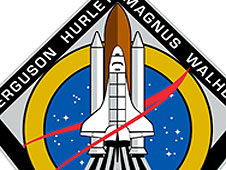
Along with the first iPhone, the crew of Atlantis is bringing along numerous items commemorating what will be the final mission of Space Shuttle Program. For instance, a flag from the first shuttle flight in 1981 will be carried to the station and left there until the first commercial spaceflight to the station, when NASA astronauts will retrieve it. The astronauts, Commander Chris Ferguson, Pilot Doug Hurley and Mission Specialists Sandy Magnus and Rex Walheim, have allocated a number of unique items that will become commemoratives for numerous organizations after they return to Earth.

For example, American flags from the Delaware Valley Historic Aircraft Association, Key Peninsula Middle School in Lake Bay, Washington, and a fire station in Houston are to orbit the Earth for 12 days before being handed over to their sponsors as symbols of inspiration.

The U.S. Honor Flag also will fly aboard Atlantis. Begun as a tribute following the Sept. 11, 2001, terrorists' attacks, the American flag serves as a traveling memorial to heroes who lost their lives while serving their communities and country.

Among the unusual things headed into space is a recipe card from one of the dishes served at Astronaut Crew Quarters at NASA's Kennedy Space Center in Florida.

NASCAR is well-represented on the mission with a cap from Joe Gibbs Racing and black flags from Texas Motor Speedway and the NASCAR organization on the roster of items.

More than 500 STS-135 mission patches are tucked inside Atlantis for the flight, a common take-along for all shuttle missions, along with 800 small American flags that typically are handed out after a mission as awards and recognitions.


When the crew returns, the items will be unpacked from lockers inside the shuttle and returned to the astronauts who often make personal visits to hand them back to their owners.

The custom of carrying mementoes into space began in the days of the Mercury missions, when an astronaut would take a roll of coins or some other small tokens into space. The Apollo astronauts carried items to the moon and back during their missions.

The tradition is not expected to end with the end of the shuttle program. When SpaceX launched its Dragon capsule last year, for instance, it carried commemorative items inside, most notably a wedge of cheese.

The items taken and returned from space rest in schools, museums and facilities all over the world and are often prominently displayed to inspire people to think of the adventures they might one day take themselves.

For more information visit http://www.nasa.gov/mission_pages/shuttle/behindscenes/whatsgoingup135.html

Uplift fears: Scientists warn of ‘Planet of the Apes’ scenario

Wow, animal uplift just got a little bit more real: a recent report from the Academy of Medical Science suggests that action is needed now to prevent nightmarish "Planet Of The Apes" science ever turning from fiction to fact. The report calls for a new rules to supervise sensitive research that involves humanising animals:

One area of concern is "Category Three" experiments which may raise "very strong ethical concerns" and should be banned. An example given is the creation of primates with distinctly human characteristics, such as speech. Exactly the same scenario is portrayed in the new movie Rise Of The Planet Of The Apes, in which scientists searching for an Alzheimer's cure create a new breed of ape with human-like intelligence. The report also acknowledges the "Frankenstein fear" that humanising animals might lead to the creation of "monsters".

Currently research involving great apes, such as chimpanzees, is outlawed in the UK. But it continues in many other countries including the US, and British scientists are permitted to experiment on monkeys. Professor Thomas Baldwin, a member of the Academy of Medical Sciences working group that produced the report, said the possibility of humanised apes should be taken seriously.

"The fear is that if you start putting very large numbers of human brain cells into the brains of primates suddenly you might transform the primate into something that has some of the capacities that we regard as distinctively human.. speech, or other ways of being able to manipulate or relate to us," he told a news briefing in London.

"These possibilities that are at the moment largely explored in fiction we need to start thinking about now."

Prof Baldwin, professor of philosophy at the University of York, recommended applying the "Great Ape Test". If modified monkeys began to acquire abilities similar to those of chimpanzees, it was time to "hold off".

"If it's heading in that direction, red lights start flashing," said Prof Baldwin. "You really do not want to go down that road."

Okay,  I'm just as concerned as anyone about the potential for abuse, particularly when animals are used in scientific experiments. But setting that aside, and assuming that cognitive enhancement could be done safely on non-human primates, there's no reason why we should fear this. In fact, I take virtually the opposite stance to this report. I feel that humanity is obligated to uplift non-human animals as we simultaneously work to uplift ourselves (i.e. transhumanism).

Reading this report, I can't help but feel that human egocentricity is driving the discussion. I sincerely believe that animal welfare is not the real issue here, but rather, ensuring human dominance on the planet.

Ultimately, we have to ask ourselves, why wouldn't we wish to endow our primate cousins with the same cognitive gifts that we have? Human intelligence and complex language skills are our most prized attributes. The time is coming when we'll be ale to share these capacities with other animals.


TED: The state of modern viruses and algorithms

Two very cool and sobering TED talks have recently been released that are worth checking out: Mikko Hypponen: Fighting viruses, defending the net and Kevin Slavin: How algorithms shape our world. Hypponen's presentation in particular is one of the best I've seen in a while.

It's been 25 years since the first PC virus (Brain A) hit the net, and what was once an annoyance has become a sophisticated tool for crime and espionage. Computer security expert Mikko Hyppönen tells us how we can stop these new viruses from threatening the internet as we know it.

Kevin Slavin argues that we're living in a world designed for -- and increasingly controlled by -- algorithms. In this riveting talk from TEDGlobal, he shows how these complex computer programs determine: espionage tactics, stock prices, movie scripts, and architecture. And he warns that we are writing code we can't understand, with implications we can't control.


Russian Futurist Opera Brought Back to Life

Anfang gut. Alles gut.
Actualizations of the futurist opera Victory Over the Sun (1913)

July 16 – October 16, 2011
Kunsthaus Bregenz Arena
Catalog

The Futurist opera Victory over the Sun, which received its premiere at the Lunapark Theater in St. Petersburg in 1913, attempted to “create a collective work based on language, painting, and music.” Its authors – the poets Velimir Khlebnikov and Aleksei Kruchenykh, the composer and painter Michail Matjuschin, and the painter Kazimir Malevich – wished to construct an “anti-harmonious” work against the current of their time. This was in Czarist Russia in the years between industrial modernization and peasant ser fdom and after the attempted revolution of 1905. While in their enthusiasm for technology the Italian Futurists had already glorified machinery before World War I and brought it to bear against people, Russian Futurism took off from an idea of the future that seemed possible only by fundamentally deconstructing the as yet scarcely industrialized present.

Anfang gut. Alles gut. is the long-term project of an evergrowing group of currently forty international artists, musicians, architects, and writers who are picking up the threads of the past and actualizing them. Since 2008 those involved have drawn on the historical text and documentations of its performances as well as the opera’s reception history to develop formats translating the almost 100- year-old material in contemporary forms into the present. To begin with, the producers selected individual aspects of the opera, such as characters, costumes, stage set, text, music, or lighting and made them the starting point for their own artistic explorations.

More via ArtDaily.org

Share

Nanoplasmonic ‘whispering gallery’ breaks emission time record in semiconductors

Renaissance architects demonstrated their understanding of geometry and physics when they built whispering galleries into their cathedrals. These circular chambers were designed to amplify and direct sound waves so that, when standing in the right spot, a whisper could be heard from across the room. Now, scientists at the University of Pennsylvania have applied the same principle on the nanoscale to drastically reduce emission lifetime, a key property of semiconductors, which can lead to the development of new ultrafast photonic devices.

A carbon nanotube transistor that can smell

Integrating biological molecules or even complex molecular machines with man-made nanoelectronic devices is one of the ultimate goals of bionanotechnology. Already there is a growing community of researchers interested in this area of bio/nano integration where biological components are interfaced with inorganic nanomaterials to create new devices and systems that combine the desirable properties of each system. One particular nanomaterial used in this kind of research are carbon nanotubes (CNTs). Scientists now report the integration of a CNT transistor with olfactory receptor proteins. The ultimate goal of this type of research is to transfer the sensing properties of biological molecular systems to artificial electronic devices.