Crowdsourced Science: 5 Ways You Can Help the Hive-Mind | 80beats

Today DISCOVER blogger Ed Yong reports on a project called Foldit, in which citizen scientists playing a slick computer game helped to unravel the complex structure of proteins, and in doing so got the game into the prestigious journal Nature.

There are plenty of great ways for non-professional scientists to help out scientific projects. DISCOVER previously brought you the ways to donate your computer’s free time to projects like SETI@home and Stardust@home. But what if you want to use your own brainpower in the aid of science? That can be arranged, as there are plenty of more active ways to contribute to crowdsourced science.

mongoliaKhan1. Mapping the place where Genghis Khan was buried

This summer archaeologist Albert Yu-Min Lin led an expedition to Mongolia in search of the lost tomb of Genghis Khan—but not before putting out the call for a little help.

Lin’s team provided high-resolution satellite photography of the area they plan to survey. On the mission’s website, volunteers can sign up to scan the images for anything that could help the team on its quest: roads, rivers, or perhaps even the outlines of where long-gone structures once stood centuries ago.

2. Amateur Martians

As we noted yesterday with the Spirit rover’s apparent demise, the rovers and orbiters NASA has sent to Mars have been a smashing success. The only problem is, those robot explorers have sent home more data than NASA’s people can map on their own.

You can help: Play “Be a Martian,” a game set up through the Jet Propulsion Lab. Players earn points and badges by finding the most interesting martian craters for study, or by matching up high-resolution images of the red planet’s surfaces to wider photos taken from above—thereby improving maps of Mars.

3. Fixing that little oil spill down south

With a temporary cap in place and the more permanent “static kill” and relief well measures on their way, we hope that BP is on the cusp of shutting down its oil leak into the Gulf of Mexico for good (fingers crossed). But even if they succeed, the gargantuan task of cleanup remains.

You can help. When BP asked the public to submit ideas for fixing the spill, it got 300,000 responses. Certainly many were kooky, but as the DISCOVER blog The Intersection noted, one proposed scheme seems very similar to the container cap on the leak now. And the X-Prize foundation, which offers multi-million dollar prizes for things like the best lunar craft or high-mileage car, said it would consider such a lucrative prize for the right idea to clean up BP’s mess.

If you’re no Kevin Costner and don’t have an oil cleanup machine in your garage, scientists still could use some help in the long recovery that’s only just beginning. One man, Drew Wheelan of the American Birding Association, sought help this summer to count the ghost crabs on the Gulf Coast, which are imperiled by the oil but harder to count than turtles or birds.

4. reCAPTCHA

captchaYou might have already helped reCAPTCHA without even knowing it.

The project, started in 2008 and acquired by Google last year, is helping to digitize old documents like books and The New York Times archive by using talents you have that computers don’t. CAPTCHAs are those squiggly letters and numbers that websites ask you to interpret to prove you’re not a spambot. And the degraded text in old newspapers tends to look a little like CAPTCHAs, making it difficult for computers to digitize them.

So, when computers can’t figure out a word, they ask us. The word or phrase is put into a CAPTCHA, where humans read it with 99 percent accuracy.

5. Galaxy Zoo – classifying galaxies (and more)

Computers have a hard time understanding messy old letters running into each other, and they have a hard time understanding messy old galaxies running into each other, too.

The people behind the Galaxy Zoo project want to understand galactic collisions, and how those collisions helped to provide the variety of galaxy types we see across the universe. So the system shows a volunteer an real image of two galaxies merging into one, surrounded by my computer-simulated images of different types of galactic smash-ups. You, the volunteer, choose the closest match. And when person after person does this with galaxy collision after galaxy collision, a better view of the universe’s evolution comes into view.

Galaxy Zoo volunteers have already turned up a new kind of galaxy, called “green pea” for its appearance. Professional astronomers alone probably couldn’t have scanned enough images to notice this, and computers’ talents aren’t well suited to spotting these oddballs.

We humans notice a surprise.

Follow DISCOVER on Twitter and Facebook.

Related Content:
DISCOVER: The 14 Best Ways To Use Your Computer’s Spare Time
80beats: NASA Invites You To “Be a Martian” And Explore the Red Planet’s Terrain
80beats: Computers Exploit Human Brainpower to Decipher Faded Texts
80beats: Crowdsourced Astronomy Project Discovers “Green Pea” Galaxies
The Intersection: Who Gets Credit For the BP Container Cap? You Do.

Images: GeoEye; Wikimedia Commons


For Air Conditioner

i have a problem in AC 1.5 tone(230v) when the AC is on it is working but after 5 min it is tripped and also voltage is dropped (150v) and also the lighting circuit is dim . the voltage is up and down the AC power circuit is ok what is problem please help me

The July eclipse, from 12,000 meters up | Bad Astronomy

My friend Glenn Schneider is an astronomer, and also a little bit nuts. He’s an umbraphile, an eclipse-chaser. But he’s not just any guy who travels the world to watch solar eclipses, he gets neck-deep into them. He actually chartered a plane and organized an incredible trip to see the total solar eclipse a few weeks ago — I wrote about this as he was planning it.

Glenn sent me a note to say that the trip was a complete success! They had more than nine minutes of totality to watch — that’s literally more than is ever possible on the ground, because a plane can "chase the shadow", counteracting the rotation of the Earth. He has some details and some great pictures on his site. Check this out:

glennschneider_eclipse2010

The blue streamers above and below the Sun (and the dark spot below the Sun) are not real, but artifacts produced by the plane window and the camera. Still, that’s incredible. Sigh. I swear, one of these days I’ll go with him. I’ve still never seen a total solar eclipse. Some day…


A Science Wonk Covers Tech | The Intersection

Techonomy SignHere’s an excerpt from my first post at the Techonomy blog–just introducing myself. You can read the full post here.

This is my first post on the Techonomy blog, so I mainly want to introduce myself. I’m Chris Mooney, a blogger for Discover and author of several books about the relationship between science and politics, and how things sometimes go dramatically splat in this area.

So I may seem, in some ways, an odd duck at Techonomy—except for the following fact.

As someone who’s extensively covered climate change, evolution, and stem cell battles (among others), I’ve learned there’s a fundamental dynamic here. Something in science or in technology comes along and dramatically changes our lives—and then people resist it. They fight back against the future, or change, or just plain reality.

Grasping this dynamic has in turn led me to look for the next set of issues that are bound to create similar tensions. That’s where Techonomy comes in….READ ON.


Martian Dust Devil

Opportunity's first dust devil. NASA/JPL-Caltech/Cornell University/Texas A&M

The Mars Exploration Rover Opportunity captured this dust devil on camera.  This is the first one for Opportunity in the six and a half years on the planet.  Spirit has seen dozens of them.  I thought sure Oppy had seen one but no, not according to the press release.

This particular dust devil was seen on July 15th while the rover was taking pictures with its panoramic camera to do a bit of drive planning.  The dustier conditions near Gusev Crater where Spirit has been working are likely more favorable to create the phenomenon.

Just a day before the dust devil was spotted, conditions near Opportunity were windy enough to blow some dust off the solar panels and increased the power output by 10 percent.  Opportunity took a series of pictures on Sol 2220 (in April) which were put together to give a 360 degree view of the area, looks pretty desolate – click here to view it.

Foldit – tapping the wisdom of computer gamers to solve tough scientific puzzles | Not Exactly Rocket Science

Foldit

It’s not every day that people can get published in one of the world’s leading scientific journals by playing computer games, but Foldit is no ordinary game. The brainchild of Seth Cooper from the University of Washington, Foldit taps into the collective efforts of tens of thousands computer gamers to solve scientific problems.

The goal of the game is to work out the complicated three-dimensional structures of different proteins. Proteins are feats of biological origami; they consist of long chains of amino acids that fold into very specific and complicated shapes. These shapes can reveal how proteins work but solving them is fiendishly challenging. To do it, scientists typically need to grow crystals of purified protein before bouncing X-rays off them. Foldit takes a different approach, using the collective efforts of causal gamers to do the hard work. And its best players can outperform software designed to do the same job. Best of all, you don’t need a PhD to play Foldit, or any scientific training at all. The controls are intuitive, tutorial levels introduce the game’s mechanics, colourful visuals provide hints, and the interface is explained in simple language. While protein scientists concern themselves with “rotating alpha-helices” and “fixing degrees of freedom”, Foldit players simply ‘tweak’, ‘freeze’, ‘wiggle’ and ‘shake’ their on-screen shapes. It’s telling that barely an eighth of the players work in science, and two-thirds of the top scorers have no biochemistry experience beyond high school.

Foldit’s success relies on the fact that it doesn’t shallowly flirt with interactivity – it’s a true game. Cooper designed it to “attract the widest possible audience… and encourage prolonged engagement”. For a start, that meant making it competitive. Players are scored based on the stability of the structures they end up with and a leader board shows how they rank against other gamers.

There’s also a social side – gamers can chat on online forums, work in groups to solve puzzles and share solutions on a wiki. Of course, there’s the thrill of contributing to genuine scientific research, but that motivates less than half of the community. The rest do it for the achievement, the social aspects and largely, because the game was fun and immersive.

And just like real game development, everything was tuned according to feedback from the players. Tools were added and refined, the difficulty of the tutorials was tweaked to stop frustrated beginners from leaving, and puzzles were matched to the skills of the players.

Foldit’s origins lie within Rosetta, a piece of software designed to solve protein structures by simulating and testing thousands of different folds. Rosetta is an example of ‘distributed computing’, where volunteers run the program on their home computers when they don’t need it. They effectively donate their computing power to speed up the laborious task of solving protein structures. But the volunteers wanted to use their biological computers – their brains – as well as their man-made ones. They suggested an interactive version of the programme and in May 2008, they got their wish with Foldit.

To test the usefulness of the approach, Cooper challenged his gamers with ten puzzles – proteins whose structures were solved but weren’t on any public database. Even so, the Foldit players did themselves proud. They outperformed the original Rosetta software on five of the puzzles and matched it on three of them. And in the two cases where Rosetta actually beat the players, it still didn’t get anywhere near the right answer.

The human gamers had many advantages that gave them the edge. The players used a far wider range of strategies than Rosetta does, and some specialise in the early, middle or late stages of the game. And they were also good at working out where to begin. In one game, when they were given ten possible starting structures, they picked the one that was closest to the actual answer. Armed with the same starting set, Rosetta couldn’t do as well.

The humans also had the massive advantage of long-term planning. Rosetta uses a “rebuild and refine” method to gradually arrive at the most stable structure through tiny tweaks. But it won’t investigate a potentially interesting move if it means making the protein temporarily less stable. The gamers had no such problems. They were quite happy to substantially unravel the protein because they knew that they could put it back together in an even better state.

“Computers are obviously superior in the ability to crunch numbers, but lack the intuitive sense of knowing when to crunch numbers, or which tool to best use at a certain point in the game,” says CharlieFortsConscience, one of Foldit’s gamers. “The experience and intuition part of the gameplay, for me, is being able to look fresh at a puzzle structure and note which areas ‘don’t look right’.”

But even experience and intuition has its limits. Some puzzles proved too much for them. While some could solve the hardest of challenges – folding a full protein from its extended chain of amino acids – most struggled. Cooper thinks that he’ll get the best outcomes by blending the best of both human creativity and computer power. If Rosetta can take them half-way, gamers can finish the job with aplomb.

Cooper was so impressed with the players’ strategies that he thinks he can use them to design better algorithms for later versions of Rosetta. As he says, “Our results indicate that scientific advancement is possible if even a small fraction of the energy that goes into playing computer games can be channelled into scientific discovery.” It’s a perfect example of what Clay Shirky describes as the “cognitive surplus” – the free time and mental energy that’s spent on leisure pursuits. Thanks to the Internet, this valuable resource could be channelled into something more productive.

In the meantime, the gamers themselves can smile at the fact that they’ve been published in the prestigious journal Nature. They’re final authors on Cooper’s new Nature paper, listed anonymously (as seems fitting) as the “Foldit players”.

Reference: Nature http://dx.doi.org/10.1038/nature09304

More on computer science and video games:

If the citation link isn’t working, read why here

Twitter.jpg Facebook.jpg Feed.jpg Book.jpg

Furan and Furfural?

After I read some papers related to the transformers aging, I found two terms that make me confused is Furan and Furfural. What is the difference of two terms, and what unit they use?

Definiens Tissue Studioâ„¢ 2.0 Supports Tumor Profiling, Multiplexing and Biomarker Translational Research

Definiens continues to push the envelope in the area of image analysis for digital pathology.  The robust yet ease of use of their products make their products suitable for clinical use and can be highly customized as needed for research and clinical trials.

Definiens Introduces New Version of its Digital Pathology Image Analysis Software

Definiens (yesterday) announced the introduction of Definiens Tissue Studio™ 2.0, the latest version of the company's leading image analysis software for digital pathology.

Along with improved processing speed, the second iteration of Definiens Tissue Studio now includes a full range of functionality for the analysis of immunofluorescence tissue stains. With its "learn-by-example" format, users train the software to identify representative regions of interest, and configure the software to automatically identify cells and sub-cellular objects. Beside the analysis of whole virtual slides, Definiens Tissue Studio 2.0 also provides full support to process tissue micro arrays.  Pathologists do not need prior computer programming, and can develop customized image analysis solutions in as little as 20 minutes.

"The fantastic reception to Definiens Tissue Studio over the last year has demonstrated the growing need among pathologists for accurate biomarker detection and quantification tools," said Martin Baatz, Ph.D. Vice President of Marketing at Definiens. "With Definiens Tissue Studio 2.0, we are providing an increased level of accuracy and speed while preserving the accessible interface and workflow that has been embraced by our customers."

Definiens Tissue Studio 2.0 is able to quantify localized biomarker expression as well as more than 50 morphological features. The rapid and accurate results provided by the software reveal underlying biological insights required for successful oncology translational research; supporting retrospective studies, diagnostics development, and early decision support in Phase I and Phase II clinical trials.

About Definiens

Definiens supports biopharmaceutical companies, clinical service organizations, and academic research institutions by automating image analysis - from drug discovery to diagnostics. The company's image analysis software enables the interpretation of vast numbers of digital images accurately and consistently. Definiens software for digital pathology and radiology images reveals biologically relevant insights for the advancement of translational research and personalized medicine. Definiens provides organizations with faster image analysis results, allowing deeper insights enabling better business decisions. The company is headquartered in Munich, Germany, and has offices throughout the United States. Further information is available at: http://www.definiens.com


Pakasuchus – the crocodile that’s trying to be a mammal | Not Exactly Rocket Science

The browser you are currently using does not support the Discover photo galleries. Supported browsers include recent versions of Mozilla Firefox, Microsoft Internet Explorer (version 7 or later), Google Chrome, and Apple Safari.

If you have any questions or feedback, please email webmaster@discovermagazine.com. Thank you for reading Discover, and we apologize for the inconvenience.

<em>Pakasuchus lived during the Cretaceous period in the Southern Hemisphere, where small crocodiles were fulfilling the same roles that small mammals. And they did so using similar body shapes and adaptations. Credit: Mark Witton</em><em>Patrick O'Connor stares at white fragments of exposed bone. These bones are actually part of the most complete specimen of Pakasuchus kapilimai, which O'Connor would later free from the rock. Credit: J.P. Cavigelli</em><em>The skull of Pakasuchus, encased in its original red sandstone. As you can see, the animal’s mouth was tightly shut when it died, so O’Connor used a medical scanner to study the details of its unusual jaws and teeth. Credit: John Sattler</em><em>Pakasuchus's teeth are its most unique feature. They include large stabbing canines and flatter grinding molars. The molars fit together extremely well, aided by a mobile jaw. Credit: Zina Deretsky</em><em>All modern crocs have a skull that resembles this Nile crocodile - a long snout, full of conical teeth that all look the same and nostrils on top. Credit: Nancy J. Stevens</em><em>Modern crocodiles all attack by snapping at their prey with a powerful bite, as this saltwater crocodile demonstrates. The victims (or dismembered parts of the victims) are swallowing whole, without any chewing. Pakasuchus's diverse teeth and short jaws suggest that it ate its prey in a very different way. Credit: me, taken in Kakadu National Park, Australia</em><em>A specimen of Pakasuchus lies embedded in sandstone. It's only partially exposed and you can't see the skull. The animal's backbone runs from the bottom-left of the block to the top-right, where you can see its hips and two legs coming off it. The tail runs from the top-right across the top of the block. The twin rows of plates are called osteoderms - bony pieces of armour. Virtually all crocodiles have osteoderms all over their body but in Pakasuchus, they're only found in the tail. Credit: Patrick M. O'Connor</em><em>The late Saidi Kapilima was one of the leaders of the Rukwa Rift Basin Project. Pakasuchus kapilimai was named in his honour. Credit: Patrick M. O'Connor</em>What do you get if you cross a crocodile and a cat? A crocodile...

Around 105 million years ago, Tanzania was home to a very strange creature. It was about the size of a cat and had features that wouldn’t look out of place on a mammal – a slender frame, long legs, a short skull and a variety of teeth for cutting and grinding its food. But this was no mammal – it was a crocodile.

The newly discovered Pakasuchus has many trademark features that clearly mark it out as a crocodilian – the group that includes modern crocs and alligators. But it was very different to these living relatives, and some of its features were so mammal-like that its name even means “cat crocodile”.

Consider its skull. All modern crocs have a snout full of consistently conical teeth. They snap at their prey with a powerful bite, before swallowing them whole. But Pakasuchus had a diverse set of chompers including piercing canines and grinding molars. It even had shearing teeth like those of cats and other meat-eating mammals. This ancient croc clearly ate its prey in a very different way. It’s dramatic proof that living crocodiles are just a thin branch of what was once an incredibly varied lineage, which came in many shapes, sizes and lifestyles.

Pakasuchus lived in the mid-Cretaceous period, when the gigantic supercontinent called Pangaea has begun to split up into separate land masses. In the Northern Hemisphere, small mammals were on the rise, exploiting all sorts of fresh ecological opportunities while dinosaurs loomed overhead. But in the Southern Hemisphere, small mammals were relatively rare and crocodiles came to fulfil the same roles using very similar adaptations.

Patrick O’Connor from Ohio University led a team that unearthed the little crocodile at Tanzania’s Rukwa Rift Basin. He named it Pakasuchus kapilimai after the Kiswahili word for ‘cat’, the Greek word for ‘crocodile’, and the late Professor Saidi Kapilima, who was an important part of the excavation. The team found several specimens of Pakasuchus but one in particular was in stunning condition.

The animal’s mouth was tightly shut when it died, so O’Connor used a medical scanner to study the details of its unusual jaws and teeth. The scans revealed that Pakasuchus only had 13 teeth, far fewer than its modern relatives. The teeth were very diverse, as the movie below show. And its molars fit together extremely well, and could grind and shear food with the aid of a mobile jaw. These traits are a standard part of a mammal’s hardware but they’re completely unprecedented in crocodiles.

Pakasuchus bizarre features don’t end in its mouth. It had long slender legs and nostrils on the front end of its snout, which suggests that it lived on land. Modern crocodiles, which primarily hunt in water, have short legs (they use their tails to swim) and their nostrils are on the top of their snout to allow them to breathe more easily at the surface.

Pakasuchus also lacks the heavy bony plates, or ‘osteoderms’, that are found on virtually all other crocs, whether living or extinct. Its tail is the only place that retains this body armour. O’Connor thinks that this species was an active hunter that sacrificed its cumbersome protection in favour of agility and speed.

By comparing Pakasuchus’s entire skeleton to those of several other crocodilians, O’Connor discovered that it belongs to a large extinct group called the notosuchians. This lineage is famed for its diversity. Pakasuchus was the only one with molars that met, but the others had their own weird adaptations. They included plant-eating Chimaerasuchus; Notosuchus with a possible pig-like snout and fleshy cheeks; Armadillosuchus with its banded, armadillo-like body armour; the bizarre, rabbit-toothed Yacarerani; and Anatosuchus with a broad, duck-like snout.

All of these species were medium-sized land-living creatures with features and habits that are decidedly unlike the typical crocodile. They were a highly successful part of the Cretaceous ecosystem, eking out lifestyles that mammals were sharing in the opposite hemisphere. Perhaps the eventual coming of mammalian competitors, or a significant environmental change, sealed the fate of these bizarre crocs. Whatever the case, it’s clear that today’s species are just the very tip of a once-diverse lineage.

Reference: Nature http://dx.doi.org/10.1038/nature09061

More on crocodiles:

If the citation link isn’t working, read why here


Twitter.jpg Facebook.jpg Feed.jpg Book.jpg

Where Do We Go From Here?

As Space Priorities Shift, Orbiting Station Takes On a Central Role, NY Times

"NASA's Moon program, known as Constellation, has been hamstrung. Although pieces of it could survive in bills under consideration in Congress, it remains unclear what rockets NASA is to build, what their destinations would be and how long it would take to get there. Without the space station, NASA's financing of commercial rockets to take crew and cargo there would almost certainly evaporate. And without government financing, companies would be unlikely to invest billions of dollars to pursue a speculative market."

Help!!

Hello Guys, im here again to ask for your help.. attached here is th problem! hope to here for your suggestion!!

Drakozoon in 3D! Scientists Take a Look at an Ancient Sea Blob | Discoblog

DrakozoonThe Silurian Period, 425 million years ago: As volcanic ash rained down on proto-England, a sea blob named Drakozoon gave its last. Now, using a computer model, scientists have finally witnessed what the soft-bodied ancient looked like in 3D.

Researchers first found a Drakozoon fossil six years ago in Herefordshire Lagerstätte, home to England’s mother-load of soft-bodied fossils. Such fossils are rare since most of these creatures decompose before a fossil can form.To capitalize on the find, a team chopped the Drakozoon fossil into 200 pieces, photographed those slices, and used a computer to construct a rotatable image of the old softy.

They found that Drakozoon, which was little more than a tenth of an inch long, had a hood that it wrapped around itself to ward off predators, and had tentacles for snaring microscopic food bits out of neighboring water. The researchers also noted that Drakozoon had eight ridges on the sides of its body, what they believe could be vestiges of an evolutionary step up from creatures with repeating body segments, similar to modern-day caterpillars. The critter was described in the journal Biology Letters.

Mark Sutton, from the Imperial College London’s earth science and engineering department, said in a college press release:

“Excitingly, our 3D model brings back to life a creature that until recently no one knew even existed. . .”

Related content:
Discoblog: The Curious Case of the Immortal Jellyfish
Discoblog: Stem Cell-Powered Worm Doesn’t Age, Can Grow a New Head
Discoblog: Military Blob-bot to Ooze Its Way Past Enemy Lines
Discoblog: Weekly News Roundup: Giant Sea Blobs Attack!

Image: Imperial College London


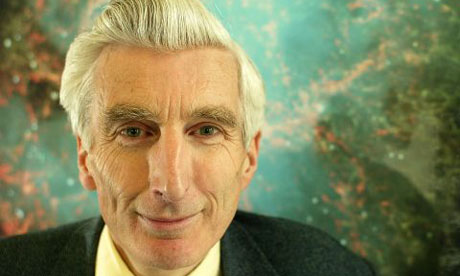
Martin Rees on our posthuman future—and avoiding catastophe

Thomas McCabe, writing for Kurzweil AI, recently reported on Sir Martin Rees's address to the Long Now Foundation. McCabe notes,

Over the truly long term, our posthuman descendants will become — not just second-generation intelligences — but thousand-generation or million-generation intelligences. He quoted Darwin on how no species can pass its likeness into the distant future unaltered; in a billion years of biological evolution, we’ve gone from bugs to humans, and technological evolution is a lot faster than biological. Our distant descendants will be not just strange, but completely alien to us.

According to Rees, we not only have unprecedented opportunity, but unprecedented responsibility. If the new technologies we build have a high chance of causing civilization-wide catastrophe for the first time in history, we are responsible for actively preventing that from happening, not just trying to predict it or understand it.

Link.