From the Vault: Us and Them Among the Slime Molds | The Loom

[An old post I'm fond of]

dictyostelium.jpgScoop up some dirt, and you’ll probably wind up with some slime mold. Many species go by the common name of slime mold, but the ones scientists know best belong to the genus Dictyostelium. They are amoebae, and for the most part they live the life of a rugged individualist. Each slime mold prowls through the soil, searching for bacteria which it engulfs and digests. After gorging itself sufficiently, it divides in two, and the new pair go their separate, bacteria-devouring ways. But if the Dictyostelium in a stamp-size plot of soil should eat their surroundings clean, they send each other alarm signals. They then use the signals to steer toward their neighbors, and as many as a million amoebae converge in a swirling mound. The mound itself begins to act as if it were a single organism. It stretches out into a bullet-shaped slug the size of a sand grain, slithers up toward the surface of the soil, probes specks of dirt, and turns around when it hits a dead end. Its movements are slow – it needs a day to travel an inch – but the deliberateness of the movements eerily evokes an it rather than a they.

After several hours, the Dictyostelium slug goes through another change. The back end catches up with the tip, and the slug turns into a blob. About 20 percent of the cells move to the top of the blob and produce a slender stalk. In order to keep the stalk from flopping over, these cells must produce rigid bundles of cellulose. Unfortunately, this cellulose also tears apart the amoebae that make it. The remaining amoebae in the blob then take advantage of the suicide of their slugmates. They slide up to the top and form a globe. Each amoeba in the globe covers itself in a cellulose coat and becomes a dormant spore. In this form the colony will wait until something – a drop of rainwater, a passing worm, the foot of a bird – picks up the spores and takes them to a bacteria-rich place where they can emerge from their shells and start their lives over.

The individual amoebae forming the stalk make the ultimate sacrifice so that other Dictyostelium may live and perhaps reproduce. These stalk-formers are not marked for death when they are born. When the amoebae mix together and the slug takes shape, the individuals that wind up in the front end of the slug will be the ones that form the stalk. In other words, they get a losing ticket in the Dictyostelium lottery. Aside from their rotten luck, they are indistinguishable from the amoebae that will survive as spores.

It is remarkable that stalk-forming amoebae should remain loyal to their fellow amoebae. Why should they willingly join a group of other amoebae when their loyalty will end in its and their death? Why shouldn’t amoebae just stay away from the group and try to tough it out on their own? Of course, just joining a group is not a guarantee of loyalty. It’s not hard to imagine amoebae finding a way to avoid the lottery of death. Actually, we don’t even have to imagine them: scientists have discovered that some Dictyostelium will cheat their fellow amoebae, thanks to genes that ensure that they will form spores rather than stalks.

The puzzle of loyal amoebae is, at its foundation, a puzzle about evolution. In each generation, the members of a population will vary in all sorts of ways – in their size, in their shape, and in their behavior. Depending on the environment in which the population lives, some of these variations will give certain members an edge when it comes to surviving and reproducing. Genes that make successful variations possible will become more common, while the unsuccessful genes will become less common.

Imagine that a Dictyostelium divides in two, and one of its offspring undergoes a mutation that makes it cheat. It escapes the stalk lottery, and is guaranteed to become a spore. Over generations, its descendants would become more common because none of them have to die making a stalk. Its cheating gene would become more common in the population as a result. Other individuals might also mutate into cheaters on their own, and their offspring would thrive as well. Meanwhile, genes that promote cooperation would become less common. It might be possible for Dictyostelium to continue organizing slugs and stalks if only a small fraction of amoebae cheated. But in time natural selection could produce so many cheaters that a slug would fail to produce a stalk, dooming the spores to death. As plausible as this scenario may be, scientists don’t see it happening in the real world. Dictyostelium is thriving happily in forests around the world. Clearly betrayal has not evolved to catastrophic levels. Why not?


A paper in the new issue of Nature sheds some light on the answer. It comes from the laboratory of David Queller and Joan Strassman at Rice University in Texas. They and their students went to the Houston Arboretum and dug up dirt from various spots. They extracted Dictyostelium purpureum from the dirt and raised the isolates in a lab. Then they mixed the slime mold together, adding several million cells from different pairs of isolates to a single dish. To tell the slime mold apart, they added green fluorescent dye to one isolate in each pair.

The scientists then waited for the slime molds to use up their food and then start to seek out one another. The results were striking. In any given stalk, almost all the cells came from one isolate or the other. One stalk glowed green, while the other remained dark. This result was in stark contrast to the results the scientists got when they mixed together fluorescent and non-fluorescent cells from a single isolate. In those cases, the stalks were half and half.

The scientists conclude that the slime mold has some way of telling apart cells of its own isolate from others. It has an “us versus them” view of the world.

Recognizing kin can be a powerful weapon against the evolution of cheating. In the 1960s evolutionary biologists William Hamilton and George Williams recognized individuals that share a lot of genes may evolve seemingly altruistic behavior towards one another. Even if one individual doesn’t pass on its own genes, it may be able to help a relative pass on those genes more successfully. This dedidation to one’s kin is not such a big sacrifice from an evolutionary point of view, because even if you don’t get to reproduce, your sibling may. And some of your genes will be carried by your nephews and nieces. For these slime molds, becoming a stalk cell may not be such a terrible fate, evolutionarily speaking, because they help their kin survive as spores. It may pay more than cheating your way to the top. All these slime molds need is a way to tell which amoebae are kin and which are not. And the new study shows that they have a keen sense for us versus them.

What makes these results particularly interesting is that another species of slime mold, Dictyostelium discoideum, does not appear to stay with its kin so carefully. Queller and Strassman have found that unrelated D. discoideum will come together and form a single slug. Queller and Strassman suspect that amoebae join forces with strangers because they can form larger slugs. A larger slug can move farther and faster, possibly raising the odds that its spores will be able to reach fertile ground elsewhere.

But these mixed slugs offer more opportunities for cheaters, since kin selection is not so strong. One opportunity arises with the signals that tell each cell how to develop. Once amoebae become destined to develop into stalk cells, they still need to receive signals from neighboring cells to complete their development. You could well imagine that if a mutant amoeba became deaf to these signals it could avoid its fate as a dead stalk cell and become a spore instead.

Queller and Strassman have experimentally created these deaf amoebae by knocking out the gene D. discoideum needs to receive the development signal. (The gene is known as dimA.) The scientists mixed the dimA mutants with ordinary amoebae that were still able to receive the signal and turn into stalk cells. As they expected, the deaf amoebae did not become stalk cells. Instead, they prepared to become spores.

But when Queller and Strassman allowed these colonies to develop completely, they got a surprise. Most of the deaf amoebae failed to get into the ball of spores at the top of the stalk. The scientists don’t yet know exactly why deaf amoebae can’t become spores as well as ordinary ones. But what is clear is that dimA must have more than one role. In some cases, it acts as a signal that tells an amoeba to become a stalk cell. But in cells that are destined to become spores, it must also have some essential role in their development. It’s common for genes to play different roles, and this research on slime molds suggests it may pose a major obstacle to the evolution of cheaters. The advantages a cheating amoeba gains by losing one of dimA’s functions are wiped out by its losing another, equally important one.

It may also be difficult for D. discoideum to hide its cheating ways from its fellow slime mold. In another experiment, Queller and Strassman discovered that some mutant Dictyostelium cheat if they lose a gene called csA. Normally csA produces a sticky protein on the surface of amoebae. The csA mutants, by contrast, are slippery. When amoebae form a slug, these slippery mutants slide back to the rear, where they will have a good chance of becoming spores rather than stalk cells. The problem for a csA cheater is that this same sticky protein serves as a badge of loyalty. When individual Dictyostelium start moving toward one another in the soil, they recognize their neighbors by their csA badge. This sticky protein allows two Dictyostelium to glue themselves together and continue searching for other amoebae with the same badge. Cheating amoebae don’t have the csA badge, and so they are shunned. Cheating can only benefit slime mold once they’re in a group. If they can’t get in a group at all, they’re out of luck.

It looks like we’ll have to wait for future research to show why one species of slime mold is so careful to stay with its kin, while another mingles with strangers. But these results make Dictyostelium a great model for scientists to study to understand the evolution of cooperation in bigger creatures, such as ourselves.

Source: NJ Mehdiabadi et al, “Kin preference in a social microbe,” Nature, August 24, 2006, doi:10.1038/442881a


More about salinomycin

New mission for salinomycin in cancer by Cord Naujokat, SciTopics, July 15, 2010. Excerpt (in the "continue reading" section):

In addition, a very recent study demonstrates that salinomycin overcomes ATP-binding cassette (ABC) transporter-mediated multidrug and apoptosis resistance in human leukemia stem cell-like cells (3).

Reference #3: Salinomycin overcomes ABC transporter-mediated multidrug and apoptosis resistance in human leukemia stem cell-like KG-1a cells, by Dominik Fuchs and 4 co-authors, including Cord Naujokat, Biochem Biophys Res Commun 2010(Apr 16);394(4): 1098-104 [Epub 2010(Mar 27)][PubMed citation].

Comments: Near the end of this article about salinomycin is the comment that "the investigation of its safety, toxicity, pharmacology and anticancer activity in humans will be a challenge." The author then mentions a preliminary study of "a small cohort of patients with metastatic breast cancer or metastatic head and neck cancers". The results of this preliminary study of the toxicity of salinomycin are summarized. They have not yet been published in the peer-reviewed literature, although a manuscript has been submitted [see reference #4 in the article]. The implication of these preliminary results is that there may be a "therapeutic window" for salinomycin, that is, a drug dosage that yields clinically significant benefits in the absence of excessive toxicity.

For a previous commentary on salinomycin, see: Cancer stem cell breakthrough by Kat Arney, Science Update blog, Cancer Research UK, August 14, 2009. Excerpt:

We need to stress that these were laboratory experiments, and there is no evidence yet that salinomycin can treat cancer in humans. Salinomycin is currently used as an antibiotic for chickens and cows, and it can be toxic or even fatal to humans, causing serious muscle and heart problems.

If there is a "therapeutic window" for salinomycin, it could be a small one, and is likely to vary from one tumor to another.

For a previous post to this blog about salinomycin, see: Identification of selective inhibitors of breast CSCs in mice, August 14, 2009.

June the Fourth Month of Hottest Global Temps

The world is melting.

RIVERS OF ICE: Panoramic view of West Rongbuk Glacier and Mount Everest, taken in 1921 (top) by Major E.O. Wheeler and in 2009 (bottom) by David Breashears. (Photo courtesy of the Royal Geographical Society)

From Climate Progress and NOAA

NOAA: June is fourth month in a row of record HIGH Global Temperatures

10 warmest years on record all since 1995

NOAA’s National Climatic Data Center (NCDC) has posted its State of the Climate, Global Analysis for June.  The results confirm NASA’s:   The first half of 2010 breaks the thermometer.

Here are some highlights:

June was the fourth consecutive month that was the warmest on record for the combined global land and surface temperatures (March, April, and May were also the warmest). This was the 304th consecutive month with a combined global land and surface temperature above the 20th century average. The last month with below average temperatures was February 1985.
It was the warmest June on record for the land surfaces of the globe. Previous record was set in 2005. The land surface temperature exceeded the previous record by 0.11?C (0.20?F). This large difference over land contributed strongly to the overall global land and ocean temperature anomaly….
The year-to-date (January-June) combined global land and ocean temperature was the warmest on record…..
2010 surpassed 1998 (Feb, Jul, Aug) for the most “warmest months” in any calendar year….
Each of the 10 warmest average global temperatures recorded since 1880 have occurred in the last fifteen years. The warmest year-to-date on record, through June, was 1998, and 2010 is warmer so far (note: although 1998 was the warmest year through June, a late-year warm surge in 2005 made that year the warmest total year)

The temperatures will keep rising until something is done. t’s time for a climate and energy bill!

Kristin Davis calls on New York Senators Schumer and Gillibrand to oppose Mosque at Ground Zero

BREAKING NEWS... LR EXCLUSIVE...

From Eric Dondero:

Kristin Davis is the Anti-Prohibition Party candidate for Governor of New York. She is a Libertarian. She is a follower of individual liberty philosopher Ayn Rand and a devotee of free market economics. She is a staunch supporter of drug legalization. She is also pro-defense and a patriot.

At her Birthday bash in New York City Saturday night, surrounded by celebrity invitees and supporters, Davis told the crowd she opposes the Mosque proposed near Ground Zero:

"this isn't about religious freedom this is about a monument to the attacks on America on 9-11."

Davis continued:

"If I can ask you to be serious for one minute in a night which is supposed to be a party I want to talk about something I feel very, very strongly about- I do not want a Mosque built near the 9/11 sight. I think it is wrong and would be held up as an important propaganda victory by radical extremist Islamics. The people of New York, the families of those murdered oppose this monument to the attack on this country."

Davis called on US Senators Chuck Schumer and Kirsten Gillibrand to pass federal legislation to block the Mosques construction.

Davis is currently in the middle of her statewide petition drive. If you'd like to help or offer a $$ donation visit KristinDavis2010.com

Aussie writer for Libertarian Republican nominated for Senate

BREAKING NEWS!!

From Eric Dondero:

Late Friday, Libertarian Republican received the news that our longtime international contributing editor James Fryar, has been nominated for a Senate seat in Queensland. This is the northeast province of Australia. The capitol of Queensland is Brisbane.

From Jim:

The Liberal Democratic Party has nominated me as Senate candidate for Queensland in the forthcoming election to be held on the 21st of August.

Gillard has panicked and decided that rather than try to fix the mess she and Rudd have left the nation in, her best option is to go to the polls now before her reputation starts to really stink with voters. Three weeks ago she was put in power by the unions and claimed that she would be the fixer and sort out the problems which she blamed on Rudd, even though she had clearly been involved in every decision the government had made.

The last straw for her was the details of Rudds political knifing being leaked to the media. She has to have the election now, while she is only on the nose, instead of waiting until she is putrefying.

Jim is an oil rig worker. He is a member of the Australian Libertarian Society.

You can read his full announcement, including an insider perspective on the mining industry and the controversy Gillard has gotten herself into over mining rights, at our sister site WorldwideLiberty.

Remember Katyn – For a Free Poland

15,000 Poles murdered by the Socialists

An award-winning film by Wadja from 2007, with limited release in the United States.

Description:

In March 1940 Soviet leader Josef Stalin ordered the executions of 22,000 Polish army and police officers, intellectuals and clergy. The killings took place in the spring of the same year in the Katyn Forest. The victims, mostly from POW camps in Kozielsk, Starobielsk and Ostaszkow, were shot in the back of the head. The Nazis discovered the mass graves during their march on Moscow in the fall of 1941, but Soviet propaganda blamed the deaths on Adolf Hitler and punished anyone speaking the truth with harsh prison terms. In 1990, Moscow admitted that dictator Josef Stalin's secret police were responsible.

Note - U.S. President Franklin D. Roosevelt, a Democrat, deliberately covered up the massacre, and who was responsible, after the area was liberated from the Nazis in 1944. (Source: Katyn Forest Massacre film BBC).

The movie is available at Blockbuster.

Leave it up to a Republican Congressman to oppose Stalin bust at WWII Memorial Park

by Eric Dondero

The National D-Day Memorial Foundation Park is located in Bedford County, Virginia. The National D-Day Foundation has sparked a controversy for including a bust of famed Soviet mass murderer Josef Stalin. A public-private partnership, the D-Day Park may soon become part of the National Parks if pending legislation is passed in Congress.

The Park lies within the District of Congressman Tom Perriello. But the Democrat has been careful in his criticisms of the Stalin bust, only saying that it's sparked "unneeded controversy." In a letter (pdf) to Foundation Chairman Robert M. Bradley, Perriello mentioned that he believed the bust was inconsistent with the goals of the Foundation, but made no mention of Stalin's atrocities, such as the mass starvations of the Kulaks, and his murderous record of ethnic cleansing against tens of millions of Poles, Ukraniuns, Jews and numerous other groups.

In stark contrast, the Republican Congressman from the neighboring district Rep. William Goodlatte however, has taken it on as a cause celebre.

From the Lynchburg News & Advance:

Goodlatte adds that he has heard from numerous constituents opposed to the Stalin bust, and in response, the Congressman wrote the D-Day Foundation multiple letters requesting that the bust be removed.

Goodlatte is quoted:

“Josef Stalin was a paranoid megalomaniac responsible for the slaughter of millions of his citizens and others. As leader of the Soviet Union, he led a campaign of terror including mass executions and forced labor in work camps at home in the Soviet Union and he oversaw the spread of communism throughout eastern Europe and is responsible for the Cold War. The appropriate location for the bust of such a dark and sinister man is off in a dark closet but the empty pedestal and telling plaque should remain as a reminder of this aspect of World War II history,“

Of course, FDR had a warm friendship with his pal "Joe" during the War. And his appeasement is credited with the handing over of Eastern Europe to Stalinist repression.

Only fitting; a member of the Party of Dwight D. Eisenhower gets it right, while a member of the FDR Party can only muster a half-hearted protest.

Photo from the 2007 film Katyn on the Soviet murderous rampages against Polish officers in 1939/40.

Paton pulls ahead of Democrat Gabrielle Giffords in Arizona – Tuscon-area District

Witnessed the Fall of the Berlin Wall 1989, and the end of Soviet domination

Jonathan Paton is now running slightly ahead of incumbent Democrat Rep. Gabrielle Giffords in the race for Congress AZ CD-8. The District includes Tucson and a huge area of the border region.

Via Hedgehog:

US HOUSE – ARIZONA – CD8 (Tarrance)
Jonathan Paton (R) 45%
Gabrielle Giffords (D-inc) 44%

Paton is a libertarian-leaning conservative. His background includes small business, world travel and a stint in the Army Reserves. From his Bio:

As a student at Sabino High School, Jonathan worked at Marie Callender’s as a busboy and dishwasher, saving up the funds to go to Germany as a Rotary exchange student. His year abroad in 1989 was an important time in Germany’s history. He watched the Berlin Wall fall and took with him the images of people experiencing freedom for the first time.

After graduating from the University of Arizona summa cum laude and with honors in German and Russian, Jonathan enlisted in the U.S. Army Reserve and was promptly named Soldier of the Year.

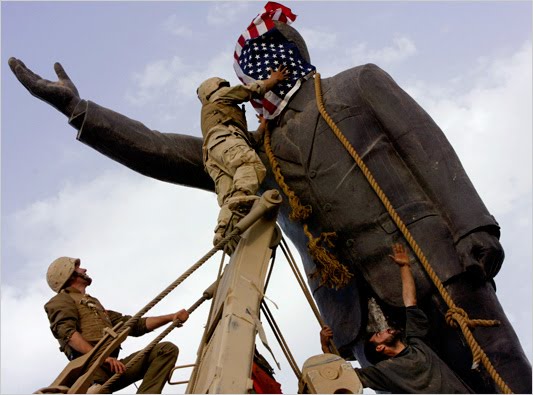
Participated in the Liberation of the Iraqi people from Saddam Hussein

In the State Senate Paton has been something of a crusader against coruption, particularly in state government. He went up against ex-Gov. Janet Napolitano on welfare, and transparency on child protection services. He is currently Senate Judiciary Committee Chairman.

On issues of great interest to Pro-Defense Libertarians and Rightwing Human Rights advocates:

•Jonathan wrote the nation’s first law to crack down on human smuggling -- a law that has already locked up more than 1,000 human smugglers.

•Jonathan wrote the law to divest state investments from Iran after seeing first hand in Iraq the IEDs manufactured in that country to kill American soldiers.

•Jonathan eliminated the state income tax for active duty military personnel, a $10 million tax cut for military families.

A Republican win over Giffords would be a major upset, and add greatly to the chances of GOP control of the House. The Giffords seat, although targetted, originally was not high on the list of "likely" Republican pick-ups.

PatonforCongress.com

Taxes on Beer, Guns and Smokes have increased 41% under Obama

From Eric Dondero:

Smokers, gun owners, beer drinkers, don't have a friend in Obama. So-called sin taxes have gone up an astounding 41% since Obama was elected.

From Reuters "U.S. pockets $20.6 bln in sin taxes in FY'09" July 16:

The U.S. federal government collected $20.6 billion in taxes on alcohol, tobacco, firearms and ammunition in fiscal year 2009, up 41 percent from the previous fiscal year, according to the annual report of the Alcohol and Tobacco Tax and Trade Bureau.

Part of the U.S. Treasury Department, the TTB credited most of the $6 billion rise in revenues collected to the increased taxes on the tobacco industry as a result of the Children's Health Insurance Reauthorization Act passed in February 2009.

(H/t Drudge)

Rick Perry to Jan Brewer – Texas will support you

From Eric Dondero:

Texas Governor Rick Perry unequivocally stated his support for Arizona and Governor Jan Brewer in their fight against the Feds over illegal immigration. Perry has decided to pull out of a border states conference with governors from 6 Mexican states. New Mexico Gov. Bill Richardson, and California Gov. Arnold Schwarzenegger have said they will attend. Indeed, Richardson will host the conference, which was originally set for Phoenix, until the 6 Mexican governors threatened a boycott.

Texas Tea Party supporters have been urging Perry to take a more definitive stance in favor of Arizona.

Appearing on Fox News, Perry was asked by Neal Cavuto if he'd be attending. He said without flinching, "I won't be there."

He further stated:

"I talked to Jan [Brewer] early on and I said, ‘Listen, we’re not going to be coming to the meeting. Regardless of what anybody else is saying … we’re going to support you."

Rick Perry expands lead over Democrat Bill White – Texas Governors race

50 to 41%

From Eric Dondero:

In a previous poll Perry had 48% to ex-Houston Mayor Bill White's 43%. Now the libertarian-leaning Governor has widened his lead to 9%.

From Rasmussen July 15:

The latest Rasmussen Reports telephone survey of Likely Voters in the Lone Star State shows Perry with 50% support. White, a former mayor of Houston, picks up 41% of the vote. Two percent (2%) like another candidate in the race, and seven percent (7%) are undecided.

In mid-June, Perry held a 48% to 40% lead over White.

NASA’s WISE Mission to Complete Extensive Sky Survey

This image shows the famous Pleiades cluster of stars as seen through the eyes of WISE, or NASA's Wide-field Infrared Survey Explorer. The mosaic contains a few hundred image frames -- just a fraction of the more than one million WISE has captured so far as it completes its first survey of the entire sky in infrared light. Image credit: NASA/JPL-Caltech/UCLA - Larger Image

NASA's Wide-field Infrared Survey Explorer, or WISE, will complete its first study of the entire sky on July 17, 2010. The mission has generated more than one million images so far, of everything from asteroids to distant galaxies.

"Like a globe-trotting shutterbug, WISE has completed a world tour with 1.3 million slides casing the whole sky," said Edward Wright, the principal investigator of the mission at the University of California, Los Angeles.

Some of these images have been processed and stitched together into a novel picture being released today. It shows the Pleiades cluster of stars, also known as the Seven Sisters, resting in a tangled bed of wispy dust. The pictured region covers seven square degrees, or an area equal to 35 full moons, highlighting the telescope's ability to take wide shots of vast regions of space.

The new picture was taken in February. It shows infrared light from WISE's four detectors in a range of wavelengths. This infrared vision highlights the region's expansive dust cloud, through which the Seven Sisters and other stars in the cluster are passing. Infrared light also reveals the smaller and cooler stars of the family.

"The WISE all-sky survey is helping us sift through the huge and diverse population of celestial objects," said Hashima Hasan, WISE Program scientist at NASA Headquarters in Washington. "It's a great example of the high impact science that's likely from NASA's Explorer Program."

The first release of WISE data, covering about 80 percent of the sky, will be delivered to the astronomical community in May of next year. The mission scanned strips of the sky as it orbited around the Earth's poles since its launch last December. WISE always stays over the Earth's day-night line. As the Earth moves around the sun, innovative slices of sky come into the telescope's field of view. It has taken six months, or the amount of time for Earth to travel halfway around the sun, for the mission to complete one full scan of the entire sky.

For the next three months, the mission will map half of the sky again. This will improve the telescope's data, revealing more hidden asteroids, stars and galaxies. The mapping will give astronomers a look at what's changed in the sky. The mission will end when the instrument's block of solid hydrogen coolant, desirable to chill its infrared detectors, runs out.

"The eyes of WISE have not blinked since launch," said William Irace, the mission's project manager at NASA's Jet Propulsion Laboratory in Pasadena, Calif. "Both our telescope and spacecraft have performed flawlessly and have imaged every corner of our universe, just as we planned."

So far, WISE has observed more than 100,000 asteroids, both known and formerly unseen. Most of these space rocks are in the main belt between Mars and Jupiter. However, some are near-Earth objects, asteroids and comets with orbits that pass relatively close to Earth. WISE has discovered more than 90 of these new near-Earth objects. The infrared telescope is also good at spotting comets that orbit far from Earth and has discovered more than a dozen of these so far.

WISE's infrared vision also gives it a exceptional ability to pick up the glow of cool stars, called brown dwarfs, in addition to distant galaxies bursting with light and energy. These galaxies are called ultra-luminous infrared galaxies. WISE can see the brightest of them.

"WISE is filling in the blanks on the infrared properties of everything in the universe from nearby asteroids to distant quasars," said Peter Eisenhardt of JPL, project scientist for WISE. "But the most thrilling discoveries may well be objects we haven't yet imagined exist."

JPL manages the Wide-field Infrared Survey Explorer for NASA's Science Mission Directorate in Washington. The mission was selected under NASA's Explorers Program managed by the Goddard Space Flight Center in Greenbelt, Md. The science instrument was built by the Space Dynamics Laboratory in Logan, Utah, and the spacecraft was built by Ball Aerospace & Technologies Corp., in Boulder, Colo. Science operations and data processing take place at the Infrared Processing and Analysis Center at the California Institute of Technology in Pasadena. Caltech manages JPL for NASA.

For More information visit http://www.jpl.nasa.gov/news/news.cfm?release=2010-238

Calling on Californians: West Coast Represent! | The Intersection

Nishanta Rajakaruna, a professor of botany at College of the Atlantic, sent me UC Davis geologist Eldridge M. Moores’s list on why serpentine should remain the State Rock of California (background here). Why should you care? It’s simple:

When politicians make so-called “scientific” decisions based on nonsense, it’s our collective responsibility to call them out on it!

Alright, so what can you do? Judgment on the bill in question (SB624) happens this week, so if you live in CA, please email/call:

1. Senator Feinstein

2. Senator Boxer

3. The Governor

4. Gloria Romero who is naively pushing for this (and we’re not sure why)

5. Your state assembly person

Let them know that sound science must play a role in the policy-making process. Here are Eldridge’s talking points:

  • Serpentine is closely associated with gold deposits in the foothills, with the California Gold Rush, and California’s history;
  • Serpentine is formed by hydration of rocks (peridotite) that come from the Earth’s mantle, the layer beneath the Earth’s crust.
  • Principally, serpentines and associated rocks are part of rock suites called ophiolites that are fragments of ocean crust and mantle emplaced in continents;
  • Ophiolites are widespread in California–in the Coast Ranges, the Klamath Mountains, the Sierra Nevada, along other parts of the western margin of North America, in the Appalachians, and in Latin America, Eurasia, and elsewhere. Thus these rocks are important for a full understanding of the complex evolution of the California landscape and our planet.
  • Serpentines are fairly easy to identify, being mostly shiny black or green. Many serpentines are also weak rocks and prone to landslide. Having serpentine as California’s State Rock calls attention to these issues in many places; and provides a “teaching moment.”
  • The asbestos in serpentine is mostly the less-harmful form, chrysotile, rather than the more dangerous form – amphibole. The latter forms by different geologic processes from a variety of rock-types;
  • Having children possess samples of serpentine should not endanger their health any more than samples of many other rocks;
  • Many rare species of plants grow only on serpentines, including special trees, shrubs, and non-woody plants. California is world-famous for these plants: indeed many grow only in California. These plants also provide a “teaching moment”.
  • Serpentines and their original mineral, olivine are increasingly viewed as an ideal repository of carbon dioxide (CO2), because they chemically combine to fix the CO2 in the solid mineral magnesite (magnesium carbonate). This possibility is important for the future of California serpentines, for the US’s efforts to control its greenhouse emissions, and provides an additional “teaching moment” for all of us.
  • Serpentine plays an important role in small movements (creep) where serpentine is present along active faults, reducing the hazard of large earthquakes.
  • “Defrocking” serpentine as the California State Rock is not going to make any of these issues go away. It will, however, make it more difficult to communicate the many issues, both bad and good, to the public in California.

Related, there’s now a Serpentine Protest Song.

Update: Helpful links

The Law Against Serpentine: The Attorneys’ Arena

Geotripper

Highly Allochthonous

Twitter: #CAserpentine

Serpentine: A Group of Minerals

Throwing the Baby Out with the Bathwater: The Serpentine Issue in California

Asbestos in California’s State Rock? Not Really


Geert Wilders’ social tolerance side confuses International Leftists

Wilders and his Freedom Party are "willing to fight for libertarian social values"

From Eric Dondero:

David Warren a traditionalist Catholic columnist for the Ottawa Citizen penned an incredibly open and frank editorial about Dutch Member of Parliament Geert Wilders. Titled, "A breach in the Islamist-leftist alliance," Warren admits those on the Left don't know what to make of Wilders.

The views of his Freedom Party are Pro-Free Enterprise on economics, Pro-civil liberties and tolerance on social matters, yet stridently Pro-Defense on National Security. These positions don't fit traditional political labels.

From the Ottawa Citizen, July 17:

Geert Wilders is a little too liberal for my taste. His Freedom Party, which made huge strides in the recent Dutch general election -- leaving Wilders only about two heartbeats short of their prime minister's office -- is the very opposite of socially conservative.

The more straitlaced sort of North American visitor, who almost involuntarily compares parts of Amsterdam with Sodom and/or Gomorrah, will get no sympathy from the Freedom Party.

This creates an interesting challenge for our progressive types. They would like to think of Wilders as a "fascist," or better, some kind of fundamentalist Christian crazy. They have observed that his movement is catching populist fire, and may be spreading across Europe at Tea-Party speed.

Half-naked Euro Babes in Amsterdam in stark contrast to drab, gloomy Muslim immigrants

Warren continues:

Indeed, such a visitor may find that his only allies, in calling down the wrath of the heavens upon the antinomianism of the contemporary urban Dutch, are preaching in the local Islamist mosque.

Given the contrast between the modest demeanour of many young immigrant Muslim women, with their heads covered and their strollers full of babies -- and that of so many "native" young western women, childless but provocatively half-naked under the summer sun -- I have sometimes myself wondered which side I am on.

Warren then goes on to point out that in many social respects, traditional religionism in Europe, is closer to that of the strident social conservatism of Islam instead of the libertinism of modern Euros.

The Roman Catholic religion to which I subscribe also requires modesty in female dress... It also requires chastity, and constant acknowledgement of God.

The point here is that freedom has undergone redefinition, since the so-called "Enlightenment" in the West, and has been confused with licence in our post-modern era.

The Freedom Party of Geert Wilders takes this post-modern notion of freedom more or less for granted. It is hardly a Christian political force. It is "rationalist" in the Enlightenment tradition, and it is rational insofar as it detects a conflict between libertarian social values, and the strictures of even conventional Islam (let alone radical Islamists and terrorists). It is willing to fight for the preservation of these post-modern values, even if this requires banning mass Muslim immigration.