
College of Osteopathic Medicine of the Pacific Among Top Medical Schools in ... Marketwire (press release) "The Social Mission of Medical Education: Ranking the Schools," published recently in the Annals of Internal Medicine, ranks COMP 21 st overall in the study ... |
Monthly Archives: July 2010
Taking On Homeopathy in Germany
Homeopathy is having a bad year. From a scientific point of view, it has had a couple of bad centuries. The progress of our scientific understanding of biology, chemistry, and physics has failed to confirm any of the core beliefs of homeopathy. Like does not cure like (this is a form of superstition known as sympathetic magic, with no basis in science). Diluting substances does not make them stronger – a notion that violates the chemical law of mass action and the laws of thermodynamics. And countless clinical studies have shown that homeopathic preparations are nothing more than placebos. That homeopathy cannot work and does not work is settled science, as much as it is possible for science to be settled.
Despite the science, homeopathy has persevered through a combination of cultural inertia and political support. But in the last year there are signs that this trend may be reversing. In the UK The House of Commons Science and Technology Committee (STC) released a report, Evidence Check 2: Homeopathy, in which they conclude that homeopathy is failed science and should be completely abandoned – no further support in the NHS and no further research.
Following that the British Medical Association has openly called for an NHS ban on homeopathy, calling the practice “witchcraft.”
Now German politicians are starting to echo the same sentiments.
Karl Lauterbach, the centre-left Social Democrats’ chair on the Bundestag health committee, told German news magazine Der Spiegel that insurers should be “prohibited from paying for homeopathy.”
and
According to Spiegel, Rainer Hess of the Federal Joint Committee for doctors and insurers also characterized the current situation as “extremely unsatisfactory.”
The common thread in the UK and Germany is rising health care costs, which is creating the political will to oppose worthless interventions like homeopathy. Up until now systems like homeopathy which are not science-based have received political support from individual believers and promoted largely through the notion of “health care freedom.” But the political climate is changing, and suddenly paying for interventions that do not work seems unnecessarily wasteful. This creates an opportunity to focus attention on interventions like homeopathy.
In Germany, as in the US, homeopathy has received support from individual politicians. According to the cited news article:
“There have already been many attempts to drop protective provisions on such remedies, but influential politicians have consistently prevented this from happening,” Hess said, adding that despite hundreds of medical studies failing to clearly prove the benefits of homeopathics, insurers are still made to pay for them.
It sounds like Germany has had their own Tom Harkin and Orin Hatch to contend with. Political support for homeopathy in the US actually goes back much further. In 1938 Senator Royal Copeland from New York, a homeopath, managed to insert into the new FDA regulations automatic approval for homeopathic products. This situation continues to today – homeopathic products do not require any testing for safety and efficacy.
It is good to hear that politicians in Germany are now openly discussing not only removing the protections that force insurance companies to pay for homeopathy, but actually banning insurance companies from paying for it. This would be similar to the BMA proposed ban on NHS support for homeopathy.
In both cases no one is proposing that homeopathy itself be banned. If an individual wants to pay for water in the mistaken belief that it is an effective remedy, they are free to do so. However, the seller should not be free to make misleading or fraudulent claims – but that is a different type of regulation. What is now being discussed in Germany and the UK is simply preventing public money from being spent on treatments which have already been proven not to work.
I would like to see these efforts spread to the US. We are facing our own health care crisis here, with a new focus on cost-effective medicine. Amazingly, Harkin was able to hijack efforts to deal with the situation (through “Obamacare”) to increase public support for unscientific medicine. This trend needs to reverse – and homeopathy seems like the low-hanging fruit to me.
With homeopathy the science could not be more clear, and recent exhaustive reviews, like Evidence Check 2: Homeopathy, have shown that it simply does not work. It should therefore be an easy political position to take, that our limited health care dollars should not be spent on ineffective medicine.
![[StumbleUpon]](http://euvolution.com/futurist-transhuman-news-blog/wp-content/plugins/wp-o-matic/cache/42f7d_stumbleupon.jpg)
![[Slashdot]](http://euvolution.com/futurist-transhuman-news-blog/wp-content/plugins/wp-o-matic/cache/1bf6e_favicon.ico)
![[del.icio.us]](http://euvolution.com/futurist-transhuman-news-blog/wp-content/plugins/wp-o-matic/cache/42f7d_favicon.ico)
The China Study Revisited: New Analysis of Raw Data Doesn’t Support Vegetarian Ideology
Over a year ago I wrote about The China Study, a book by T. Colin Campbell and his son based on a huge epidemiologic study of diet and health done in China. The book’s major thesis is that we could prevent or cure most disease (heart disease, cancer, diabetes, autoimmune diseases, bone, kidney, eye and other diseases) by eating a whole foods plant-based diet, drastically reducing our protein intake, and avoiding meat and dairy products entirely.
I noticed a number of things in the book that bothered me. I found evidence of sloppy citations, cherry-picked references, omission of data that contradicted the thesis, and recommendations that went beyond the data. I concluded:
He marshals a lot of evidence, but is it sufficient to support his recommendation that everyone give up animal protein entirely, including dairy products? I don’t think so.
The China Study involved 367 variables and 8000 correlations. I said I would leave it to others to comment on the study design and the statistical analysis, and now someone has done just that. Denise Minger devoted a month and a half to examining the raw data to see how closely Campbell’s claims aligned with the data he drew from; she found many weaknesses and errors.
Campbell says
Plasma cholesterol… is positively associated with most cancer mortality rates. Plasma cholesterol is positively associated with animal protein intake and inversely associated with plant protein intake.
The data do show that cholesterol is positively associated with various cancers, that cholesterol is positively associated with animal protein, and that cholesterol is negatively associated with plant protein. So by indirect deduction they assume that animal protein is associated with cancers and that reducing intake is protective. But if you compare animal protein intake directly with cancer, there are as many negative correlations as positive, and not one of those correlations reaches a level of statistical significance. Comparing dietary plant protein to various types of cancer, there are many more positive correlations and one of them does show strong statistical significance. The variable “death from all cancers” is four times as strongly associated with plant protein as with animal protein. And Campbell fails to mention an important confounder: cholesterol is higher in geographic areas with a higher incidence of schistosomiasis and hepatitis B infection, both risk factors for cancer.
Campbell says breast cancer is associated with dietary fat (which is associated with animal protein intake). The data show a non-significant association with dietary fat, but stronger (still non-significant) associations with several other factors and a significant association with wine, alcohol, and blood glucose level. The (non-significant) association of breast cancer with legume intake is virtually identical to the (non-significant) association with dietary fat. Animal protein itself shows a weaker correlation with breast cancer than light-colored vegetables, legume intake, fruit, and a number of other purportedly healthy plant foods.)
He indicts animal protein as being correlated with cardiovascular disease, but fails to mention that plant protein is more strongly correlated and wheat protein is far, far more strongly correlated. The China Study data show the opposite of what Campbell claims: animal protein doesn’t correspond with more disease, even in the highest animal food-eating counties.
These are just a couple of examples. Minger found many more, which she describes in her long article, complete with impressive graphs. Her exposé is well worth reading in its entirety, if only as a demonstration of how to think about epidemiologic data.
Minger goes on to reveal gaping logical holes in Campbell’s own research on casein, a milk protein that he believes causes cancer. He showed that casein was associated with cancer when given in isolation to lab animals, but he projects those results onto humans and onto all sources of animal protein. Other animal proteins have been shown to have anti-cancer effects, and the results of a normal diet containing multiple protein sources are likely to be very different from his casein-only studies.
Minger concludes
I believe Campbell was influenced by his own expectations about animal protein and disease, leading him to seek out specific correlations in the China Study data (and elsewhere) to confirm his predictions.
She is being polite.
This is a cautionary tale. It shows how complex issues can be over-simplified into meaninglessness, how epidemiologic data can be misinterpreted and mislead us, and how a researcher can approach a problem with preconceptions that allow him to see only what he wants to see. The China Study was embraced by vegetarians because it seemed to support their beliefs with strong evidence. Minger has shown that that evidence is largely illusory. The issues raised are important and deserve further study by unbiased scientists. At any rate, one thing is clear: the China Study is not sufficient reason to recommend drastic reductions in protein intake, let alone total avoidance of meat and dairy foods.
![[StumbleUpon]](http://euvolution.com/futurist-transhuman-news-blog/wp-content/plugins/wp-o-matic/cache/1bf6e_stumbleupon.jpg)
![[Slashdot]](http://euvolution.com/futurist-transhuman-news-blog/wp-content/plugins/wp-o-matic/cache/d4c4f_favicon.ico)
The Texas Medical Board acts in the case of the Winkler County whistle blowing nurses
I can’t speak for anyone else who blogs here at Science-Based Medicine, but there’s one thing I like to emphasize to people who complain that we exist only to “bash ‘alternative’ medicine.” We don’t. We exist to champion medicine based on science against all manner of dubious practices. Part of that mandate involves understanding and accepting that science-based medicine is not perfect. It is not some sort of panacea. Rather, it has many shortcomings and all too often does not live up to its promise. Our argument is merely that, similar to Winston Churchill’s invocation of the famous saying that “democracy is the worst form of government except all the others that have been tried,” science-based medicine is the worst form of medicine except for all the others that have been tried before. (Look for someone to quote mine that sentence soon.) It’s not even close, either. SBM has produced far and away better results than any form of medicine that has come before it, which is why it’s always puzzled me that so much of “alternative” medicine seems to be a throwback to ancient, pre-scientific, sometimes religion-based medical systems that existed in the days before germ theory and a rudimentary understanding of human physiology. After all, it wasn’t until William Harvey in 1626 that doctors even knew for sure that there was a direct connection between the arterial and venous system, for example, and the sphygmomanometer wasn’t invented until 1881. Monitoring blood pressure didn’t become routine until the early 20th century, and monitoring the diastolic blood pressure wasn’t routine until the 1920s.
If there’s one area that SBM needs to do better in, it’s regulating our own. To me, the license to practice medicine is a privilege, not a right. That I should even have to emphasize such a statement is bothersome to me, but all too often medical licenses, once obtained, seem to be treated as a right that can’t easily be taken away. That’s not to say that actually getting to the point of being licensed and board-certified isn’t difficult. It is. There’s the need to maintain excellent grades in college, after which there’s medical school and residency, both of which can be quite brutal. But once a physician is fully trained, board certified, and licensed, it seems that medical boards bend over backwards not to take away his license, seemingly even if he’s providing treatments so far outside the standard of care that they might as well be magic.
The case that provoked this complaint from me is one I’ve written about before, namely that of the Winkler County, TX family practitioner, Dr. Rolando Arafiles, Jr.. At the time, Dr. Arafiles was selling dubious supplements, hawking colloidal silver, promoting Morgellon’s disease quackery, and had anti-vaccine propaganda on his website. It turns out that — finally! — Dr. Arafiles is facing the Texas Medical Board for his substandard practice, as documented in a story on Medscape entitled Physician in Whistle-Blower Case Charged by Texas Medical Board:
The Texas Medical Board (TMB) has charged a family physician at the center of a nationally publicized whistle-blower case involving 2 nurses with poor medical judgment, nontherapeutic prescribing, failure to maintain adequate records, overbilling, witness intimidation, and other violations.
The charges follow a report that the 2 nurses — Anne Mitchell, RN, and Vickilyn Galle, RN — made anonymously to the TMB last year about patient care rendered by Rolando Arafiles, Jr, MD, at Winkler County Memorial Hospital in Kermit, Texas, where the 2 nurses and Dr. Arafiles worked.
After the TMB contacted him about the report, Dr. Arafiles asked the sheriff of Winkler County to investigate its source. The sheriff, the physician’s acknowledged friend and patient, traced the report back to Mitchell and Gale, who were then charged in a state court with misuse of official information, which is a third-degree felony.
The American Nurses Association at the time called the criminal prosecution “outrageous,” arguing that nurses were obligated to stand up for patient safety.
A local news report on the case can be found here:
A brief recap of the Winkler County nurses case
Readers might recall that Dr. Arafiles achieved notoriety when these two brave nurses reported their concerns about Dr. Arafiles’ substandard care to the Texas Medical Board. However, it should be noted that the failure to discipline Dr. Arafiles is not simply a problem of the TMB. Remember, prior to going to the TMB, Galle and Mitchell had taken their complaint through formal channels at the 25-bed rural hospital where they worked, Winkler County Memorial Hospital. Their complaints were in essence ignored. Moreover, it’s not as though these problems were subtle. They weren’t, and they became apparent immediately after Dr. Arafiles joined the medical staff of Winkler County Memorial Hospital, as I documented. More appallingly and all too often not mentioned or barely mentioned is that Winkler County Sheriff Robert Roberts, Jr. was not only just Dr. Arafiles friend and patient, but he had been in business with Dr. Arafiles selling supplements. In fact, during crossexamination, Dr. Arafiles even described how Sheriff Roberts had sold his nutritional supplement called “Zrii,” going so far as to hold meetings at the local Pizza Hut to recruit other sellers. No wonder when it came to chasing down these nurses, Sheriff Roberts transformed himself from Barney Fife to, as I put it, Jack Bauer on crack. At least he didn’t torture anyone — physically, that is. He certainly tortured Mitchell and Galle mentally and emotionally, destroying their careers in the process with his misuse of his power.
To bring this post back to the topic of SBM and how state medical boards too often fail to restrain or discipline physicians who not only don’t practice SBM but practice medicine far enough outside the realm of SBM to be dangerous, let’s take a look in light of what we know about Dr. Arafiles the charges pending against him before the TMB:
In a complaint filed last month with a state administrative court, the TMB charged Dr. Arafiles with 9 instances of substandard care. In 1 case, the TMB stated, he sutured part of the rubber from suture-kit scissors to a patient’s torn and broken thumb (in his trial testimony, Dr. Arafiles said he was attempting to stabilize the fracture). And when another patient was admitted to the hospital for an abscess caused by methicillin-resistant Staphylococcus aureus, Dr. Arafiles rubbed an olive oil solution — not on the hospital’s formulary and not approved by the US Food and Drug Administration for this purpose — on the abscess, according to the TMB. The nurses had reported to the TMB that Dr. Arafiles promoted the use of herbal medicines.
I’m going to be honest right here. This doesn’t sound very bad at all compared to Arafiles’ promotion of Morgellons disease and anti-vaccine quackery, as well as his hawking of colloidal silver to treat H1N1. As a surgeon, I may frown on suturing part of the rubber from a suture kit scissors to a patient’s thumb as a not particularly effective way to stabilize anything but, given that disposable suture sets are sterile, it probably didn’t do any harm. I doubt I’d recommend yanking Arafiles’ license over this alone, although I’d probably recommend that Arafiles have a bit of education over the proper way to suture. As for rubbing olive oil on an MRSA abscess, it’s true that this is inadequate treatment in and of itself for an abscess. Although some abscesses can be treated with antibiotics alone, the vast majority of abscesses require drainage of the pus in order to heal. For skin abcesses, that usually ends up meaning “lancing” the boil, cleaning out the pus, and packing the wound daily. If the only thing Dr. Arafiles was doing were rubbing olive oil on the abscess, then there’s no doubt that would be substandard care. If, on the other hand, he were also treating it with vancomycin and/or “lancing” the boil, then, although the olive oil didn’t add anything, it’s probably didn’t do any harm or interfere with the treatment of the abscess, either. I e-mailed a representative of the Texas Nurses Association a request for the full complaint, but did not receive it in time for this post; perhaps I’ll post an addendum when I have the full text of the complaint.
A strange set of charges
Upon perusing the list of charges brought by the TMB against Dr. Arafiles, I find it odd that the TMB focuses on these things, rather than Dr. Arafiles’ egegrious offenses against SBM that are easily found on the Internet. More serious are the charges in this list:
The TMB also alleged that Dr. Arafiles:
- diagnosed hypothyroidism in 1 patient without any testing and diagnosed the same disorder in a second patient despite normal thyroid function tests;
- prescribed hormone replacement therapy (HRT) for a woman whose lab work showed testosterone, estradiol, and progesterone levels within the normal range — HRT was contraindicated for the woman because of a history of deep vein thrombosis, which reoccurred after HRT was initiated;
- performed and billed for unnecessary genitourinary exams;
- failed to adequately document the care he provided; and
- engaged in witness intimidation regarding the 2 whistle-blowing nurses.
The first two complaints are common in the “alt-med” world. Suzanne Somers, for example, appears to believe that virtually every woman needs supplementation with “bioidentical” estrogens, while diagnosing thyroid disorders based on dubious tests or not tests at all also appears to be a cottage industry. There’s a lot of quackery in both areas, that’s for sure. More disturbing is Dr. Arafiles’ performing unnecessary genitourinary examinations. Usually, when a state medical board examines such a complaints, it’s almost always a male physician doing unnecessary pelvic examinations. Failure to adequately document care is a bit of a catch-all; I daresay that virtually every physician could be accused of that for one or more patients if someone looked at his or her patient charts.
All of these are bad. Indeed the charge of witness intimidation should go far beyond mere action against his license by the TMB. This is a felony. Given that the Winkler County prosecutor, Sheriff, and Dr. Arafiles himself are clearly part of a good ol’ boy network that closed ranks against these “uppity” nurses, the Texas state attorney general should investigate and press charges against not just Dr. Arafiles, but against Sheriff Roberts as well. What I can’t help but note is the selectivity of the choice of the TMB, given that many of Dr. Arafiles’s other offenses against the standard of care and medical ethics were right there on his website, Health2Fit, which Dr. Arafiles has eliminated since February and is not archived anywhere that I can find. I knew I should have downloaded the entire website when I was writing about this last in February. Fortunately, I kept several pages because I knew Arafiles’ website would disappear down the memory hole soon, including its links to other Morgellons sites and the section where it sells “Alka Vita Silver” to cure various ailments, including H1N1. Here are some screen shots from my archive of Dr. Arafiles’ Health2Fit website. (Note that Dr. Arafiles claims ownership of Health2Fit on his LinkedIn page.)
Here’s where Health2Fit sells a “water alkalinizer” for $1,495 (click on images to embiggen):

And here are some of the claims Dr. Arafiles made for his alkalinizer:

Here’s Dr. Arafiles’ quack Miranda warning, which is quite extensive:
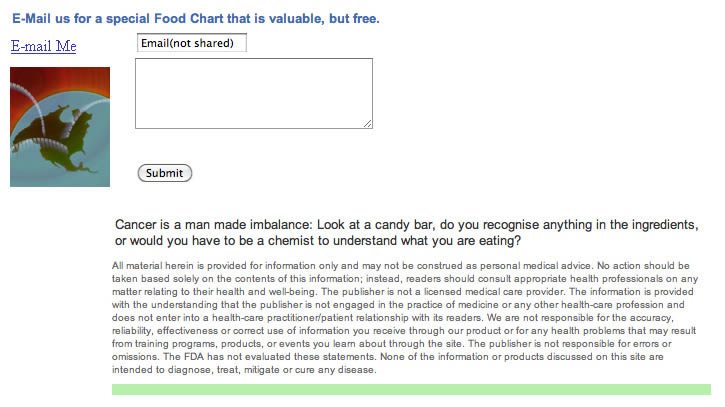
Finally, here’s the page where Dr. Arafiles sells colloidal silver and claims that it is efficacious against H1N1:
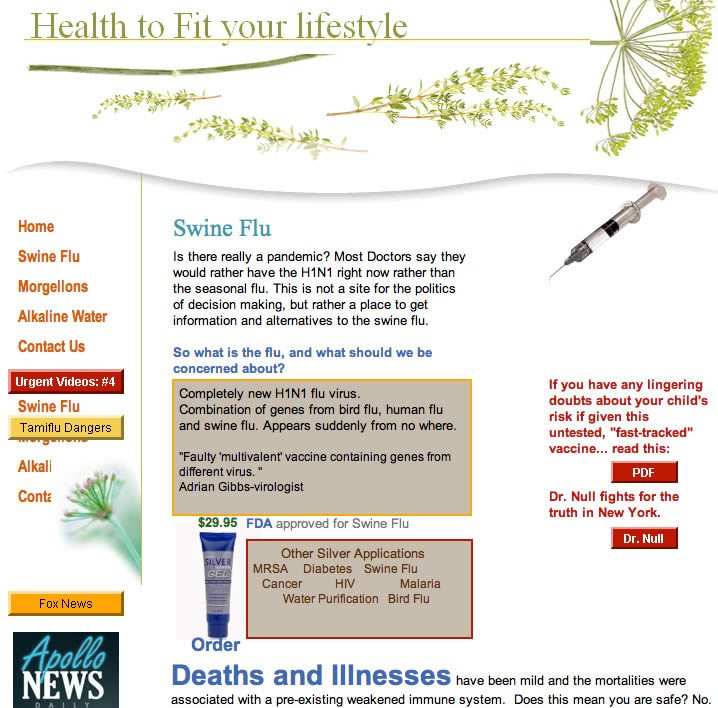
There are other examples, such as Dr. Arafiles taking a homeopathy course taught by Sherri Nakken and belonging to a group of physicians who prescribe intravenous hydrogen peroxide and bioluminescence therapy (whatever that is), but I think I’ve made my point, which is that Dr. Arafiles appears to have committed far more serious offenses against the standard of care and SBM than what the TMB is charging him with. In fact, other than the charge of witness intimidation, the charges that the TMB is bringing against Dr. Arafiles remind me more than anything else of the government’s prosecuting Al Capone for tax evasion. Of course, Al Capone went to jail and spent some time in Alcatraz, but it was rather unsatisfying that it was for a much lesser offense. Worse, there’s no guarantee that Dr. Arafiles will even have his medical license revoked. As I pointed out before, state medical boards are often very loathe to strip a doctor of his medical license.
More than a case about a single doctor
As I’ve pointed out before, the Arafiles case is about far more than just Dr. Arafiles. It’s easy for physicians like myself, who have never practiced in rural areas with few physicians but rather always in large cities or heavily populated suburban areas, to come to think that this is the way that medicine is practiced everywhere. I know I’d never be able to get away with what Dr. Arafiles got away with for as long as he got away with it. I can be easily replaced. Physicians like Dr. Arafiles cannot, and don’t think that they don’t know it. Add to that the problem that most state medical boards are understaffed, underfunded, and enforce regulations that are insufficient to deal with all the issues with which they are charged, and it’s not surprising that it takes truly egregious offenses to get their attention. Does anyone think that Dr. Arafiles would be likely to be facing the TMB this way now if he hadn’t been the focus of an internationally reported case and been caught using his crony the Sheriff to find out who had reported him and make sure they were punished. True, Galle never went to trial and Mitchell was acquitted by the jury in less than an hour, but neither of them have found work since then. Awards for integrity and bravery, as deserved as they are, don’t change that, nor does a $15,850 fine against the hospital.
Unfortunately, because most states devote too few resources to their state medical boards and the enforcement of laws and regulations governing physician conduct, most state medical boards are very reluctant to go after physicians practicing “alternative” medicine as being below the standard of care because doing so involves a value judgement regarding medical science and evidence. Also, most state medical boards are made up of physicians, and if there’s one thing about physicians it’s that we all realize that all of us, even the best among us, are one mistake away from a potentially bankrupting malpractice suit. Consequently, physicians tend to be loathe to be too critical of other physicians, much less sit in judgment of their decisions or the science (or lack thereof) by which they justify their decisions. It’s far easier to go after physicians who are impaired due to drugs or alcohol, who commit obvious crimes, or who sexually abuse patients. These are offenses that virtually everyone understands and condemns in a physician (or anyone else, for that matter). No need to adjudicate on scientific evidence or clinical trials. As Kimball Atwood put it:
When a physician is accused of DUI, “substance abuse,” being too loose with narcotic prescriptions, throwing scalpels in the OR, or diddling patients, the response of a state medical board tends to be swift and definitive. Shoot first, ask questions later. After all, the first responsibility of the board is to the public’s safety, not to preserving the physician’s livelihood. One might therefore expect that a physician accused of using dangerous, substandard treatments would face a similar predicament. As you’ve undoubtedly guessed, such is not the case.
Indeed, it is not, and Kimball proceeded to provide four examples.
Then there’s the issue of licensure itself. As we have pointed out numerous times right here on SBM, there is a concerted effort by proponents of unscientific medical modalities, such as naturopathy, to obtain licensure, or at least to make the law more friendly to them. Perhaps the most spectacular example of the latter tactic is that of Dr. Rashid Buttar. Regular readers will recall that Dr. Buttar has been under investigation by the North Carolina Board of Medical Examiners for quite some time for his tendency to diagnose cancer patients and children with autism as having “heavy metal toxicity” and then to treat them all with some variant of his chelation therapy, plus lots of supplements and other woo, of course. He even referred to the board as a “rabid dog” at one point, something that most people accused of breaking the law would probably be well-advised not to do before their case reaches trial.
Dr. Buttar, however, apparently had reason to be confident. During the last two or three years, during which time the NCBME was investigating him, Dr. Buttar led a charge by the North Carolina Integrative Medical Society to get legislators to change state law to make it friendlier to practitioners of alternative medicine. He succeeded. As a result, the board didn’t think it could succeed in stripping Dr. Buttar of his medical license or even banning him from treating cancer patients and children:
Dr. Rashid Buttar, whose alternative medical practice in Huntersville has been under scrutiny by the N.C. Medical Board for a decade, has accepted a reprimand from the licensing agency.
But Buttar, who was facing potential restrictions to his license, instead can continue offering unconventional treatments as long as he asks patients to sign a form acknowledging his practice is outside the mainstream.
The reason was clear:
Mansfield, the board’s attorney, said a change in state law, which took effect in October, was partly the reason. The law, one of those that Buttar had pushed for, prevents the medical board from disciplining a physician for using non-traditional or experimental treatments unless it can prove they are ineffective or more harmful than prevailing treatments.
It’s an astounding double standard. All Dr. Buttar has to do is to have patients sign in essence a waiver, an acknowledgment that what he is doing does not meet the standard of care and is not validated by science, and he can do whatever he wants, even treat autistic children with urine therapy to “boost their immune systems.” He doesn’t have to prove a thing; if the board wants to go after him it has to prove that “non-traditional” treatments are ineffective or more harmful because North Carolina law now deceptively conflates experimental treatments (which don’t get to the point of being experimental without a lot of preclinical evidence) with “non-traditional” treatments (which often have little or no good scientific evidence for their efficacy). In other words, Dr. Buttar and his ilk don’t have to demonstrate that their woo works; authorities have to demonstrate that it doesn’t. It’s a perfect reversal of what the standard of evidence should be in medicine, and means that North Carolina is now as quackery-friendly a state as there is. Meanwhile, doctors with ethics who treat patients according to science-based guidelines have to justify their treatment decisions. Nor is this a problem that is confined to the United States. Just consider how long it took the U.K. to finally strip Andrew Wakefield of his license to practice medicine.
If we as physicians are ever going to counter this problem, we’re going to have to accept that the problem exists and then do two things. First, we have to restrain our longstanding impulse to circle the wagons and protect a member of the tribe at all costs, even when we know that member has stepped far afield from the land of science-based medicine. Second, we have to lose some of our reluctance, particularly at the state medical board level, to pass judgment on non-scientific treatments like homeopathy, naturopathy, or others. Being a shruggie is no longer acceptable. Our system of regulating physicians and protecting the public from quackery is clearly broken. Will we rise to the challenge to fix it, or will we allow promoters of unscientific medicine to infiltrate and destroy it?
In the meantime, here’s hoping that Mitchell and Galle prevail in their civil suit against Dr. Arafiles, Sheriff Roberts, Winkler County, and Winkler County Memorial Hospital, among others. A message needs to be sent that complaints against physicians practicing below the standard of care should not endanger the livelihood of the whistleblower.
ADDENDUM: A copy of the formal complaint against Dr. Arafiles can be found here.
![[StumbleUpon]](http://euvolution.com/futurist-transhuman-news-blog/wp-content/plugins/wp-o-matic/cache/d4c4f_stumbleupon.jpg)
![[Slashdot]](http://euvolution.com/futurist-transhuman-news-blog/wp-content/plugins/wp-o-matic/cache/92973_favicon.ico)
Mike Conley’s Tales of the Weird: Medium claimed he could levitate – McDowell News
Mike Conley's Tales of the Weird: Medium claimed he could levitate McDowell News To them, it is a sign of holiness or spiritual enlightenment. In the 19 th and early 20 th centuries, the religious movement of spiritualism was quite ... |
Book Excerpt: Holy Play
Kirk Byron Jones on envisioning God in new and imaginative ways.
New technology can give diabetics greater freedom – Globe and Mail
 Globe and Mail | New technology can give diabetics greater freedom Globe and Mail New insulin-delivery and glucose-monitoring technology can give Type 1 diabetics the freedom to live more as they choose. THE CANADIAN PRESS The Canadian ... Is Your Teen With Diabetes Hitting The Road? Take These PrecautionsCarJunky.com |
Software Defects in Cardiac Medical Devices are a Life-or-Death Issue, says … – Business Wire (press release)
Software Defects in Cardiac Medical Devices are a Life-or-Death Issue, says ... Business Wire (press release) ... medical devices such as pacemakers and infusion pumps pose a growing threat to public health, warns a new report published by the Software Freedom Law ... |
Obama Patent Office approves, then nixes trademarks for marijuana – ZDNet (blog)
Obama Patent Office approves, then nixes trademarks for marijuana ZDNet (blog) He is deeply disturbed by how partisanship has come before patriotism in America, which gives him the freedom to pick on both sides. ... |
Kosovo and Serbia Should Continue Democratic Course Following Court Decision
In the aftermath of today's ruling by the International Court of Justice (ICJ) on Kosovo's secession from Serbia,
Clinton Shows Strength on Human Rights in Vietnam
Freedom House is encouraged that Secretary of State Clinton today raised concerns about human rights with Vietnamese officials in Hanoi
Missouri Democrat Robin Carnahan – tied at the hip to Obama
A Vote for Carnahan is a Vote for Obama and ObamaCare
Latest polls show Republican Roy Blunt 6 points ahead. He's held a small but consistent lead in the polls throughout the campaign.
From the Kansas City Star:
President Barack Obama has been here three times since January — and big dollars. As of mid-July, Blunt and Carnahan together have raised more than $15 million.

Idaho GOP the "point of the spear" in nationwide Anti-Federal Government rebellion
 "libertarian" Gov. Butch Otter Standing up to the Feds
From Eric Dondero:
Paying for products and services with gold and silver; dumping the federal income tax; State seizing federal lands, that's the agenda of the newly revamped and excited Idaho Republican Party. Some say that the Idaho GOP has adopted in a near full-sweep, the entire agenda of both the Constition Party and the Libertarian Party.
Idaho took the lead on the repeal of the Health Care Reform Act (ObamaCare). The Legislature is 3/4ths Republican. And now they're branching out in other areas to push back on federal control.
From Capitol Hill Blues, "Tea Party excess in Idaho" July 19:
To be sure, conservatives across America — many with tea party sympathies — are reshaping the 2010 political landscape amid anger over bank bailouts, health care reform, illegal immigration and federal deficits. In Maine, GOP delegates passed a “tea party platform” rejecting all United Nations treaties. Kentucky Republicans chose Rand Paul, progeny of libertarian hero and Texas Rep. Ron Paul, as their nominee for U.S. House.
But Idaho is the point of the spear.
After all, its state Legislature is already three-quarters Republican. In March, libertarian-leaning GOP Gov. C.L. “Butch” Otter became the first state chief executive to sign a bill to sue the federal government over health care reform. It’s an anti-federal streak that survived from its 1970s “Sagebrush Rebellion” days, when the Rocky Mountain West’s residents arose to assert local control over swaths of federal land that dominate their region.
Photo of Idaho Governor Butch Otter.

Very Important! Vote coming up in Missouri for Health Care choice on Aug. 3
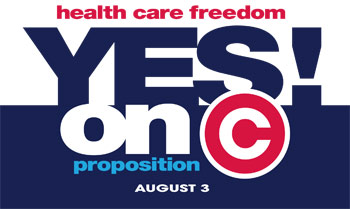 At issue, can the Government force you to buy a Product?
From Eric Dondero:
The Missouri Health Care Freedom Act is set to go to a vote of the electorate on Aug. 3. It's being compared to the first shots fired in the Revolutionary War at Lexington & Concord. If Missouri votes for repeal, other states will almost immediately follow.
From SolidPrinciples blog:
Have no doubt – this is the first shot fired against the power grab known as Obamacare. If successful, if we beat back this overreach of federal power in Missouri, other states will move forward. Should we fail – especially with low voter turnout, the media,the Obama administration and Congressional Democrats will gain a second wind. I can think of few things more disastrous leading into November than giving the Democrats hope.
Why should you care? What does a Missouri proposition have to do with the other 49 states? MHCFA represents the first battle in the war against the bureaucratic, tax-happy nightmare that has saddled Americans over the last century. Just as the Supreme Court gun cases are changing the debate on the Second Amendment back to gun ownershig being a fundamental right, states signalling their refusal to go along with individual and employer mandates will alter the debate on the proper role of the federal government. At issue is a single idea – can the government compel you to purchase a product they design simply because you’re a US citizen?
The simple language on the ballot will read:
Shall the Missouri Statutes be amended to:
Deny the government authority to penalize citizens for refusing to purchase private health insurance or infringe upon the right to offer or accept direct payment for lawful healthcare services?
Modify laws regarding the liquidation of certain domestic insurance companies?
Republican Party, Libertarian Party united against Democrat big government program
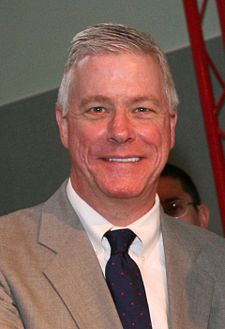 Lt. Gov. Peter Kinder (photo) has been at the forefront of the repeal effort. A Republican under a Democrat Gov. Kinder filed suite in federal court to allow Missouri to opt out, in addition to the ballot measure.
The Missouri GOP is fully behind Kinder and the Repeal effort. Lloyd Smith, Executive Director of the MO GOP said:
Missouri Republicans have been at the forefront of protecting state sovereignty from the federal government’s onslaught of onerous regulations and mandates. Thanks to the General Assembly, Missouri voters will be the first in the nation to go to the polls and make their voice heard against the Obama-Pelosi-Reid health care bill. And now, Lt. Governor Peter Kinder has taken legal action, alleging that the health care bill violates the rights of Missourians from all walks of life.
The Missouri Libertarian Party is also strongly backing the measure. From LPMO.org:
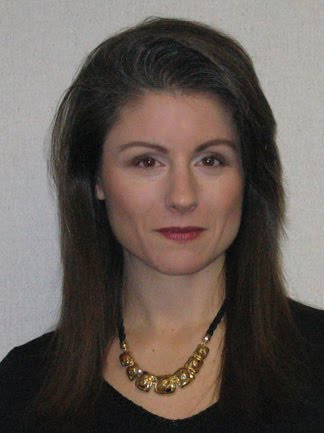
The Missouri Libertarian Party passed a resolution to endorse Proposition C, the Healthcare Freedom Act, which is a referendum on the August 3rd primary ballot. Proposition C is a first in the nation opportunity for Missouri voters to push back against some of the blatantly unconstitutional provisions of the Obamacare legislation, said Dr. Cisse Spragins, Missouri LP state chair (photo). Besides being unconstitutional, the mammoth 2000+ page bill was rammed through despite the fact that a majority of Americans opposed it. Even those who were initially in favor of the legislation are beginning to understand its negative ramifications, and the fact that it is in many respects corporate welfare for insurance and pharmaceutical companies, Spragins added.
There has been little coverage in the liberal media, which could indicate that they are expecting to lose. However, turn-out is a great concern for the GOP and the MHCFA coalition.
Note - Colorado has a similar initiative measure headed for the ballot in November.

Virginia race – Robert Hurt pulls ahead, Democrat Perriello a near goner
 Dems attack Hurt for "supporting Palin's radical rightwing agenda"
From Eric Dondero:
One of the truly bellweather races in the Nation is for Congressional district 5, south central Virginia. First-term incumbent Tom Perriello, a blue dog and self-described "moderate" has been a top GOP target.
Note - on Saturday, we featured Perriello here at Libertarian Republican for his lackluster opposition to a Stalin bust at a D-Day Memorial Park in his district - "Leave it up to a Republican Congressman to oppose Stalin bust at WWII Memorial Park."
Now a poll has been released showing Perriello way behind.
From RCP, Sean Trende, "Perriello Down By 23 Points":
SurveyUSA shows Republican Rob Hurt leading Freshman Democrat Tom Perriello by an astonishing 58%-35% margin.
Hurt is a strong fiscal conservative and individual liberties advocate. From his website:
Individual Liberty, Private Property and the 2nd Amendment
The right to keep private property was considered a fundamental right by our Founding Fathers. As a member of Congress, I will support efforts that allow states to limit eminent domain and will work to ensure that government cannot confiscate private property.
Along with Personal Property, the Founding Fathers also paid special attention to our constitutional right to keep and bear arms. As a long time supporter of the 2nd Amendment, I am proud of my consistent support for gun rights, and proud of my consistent A plus rating from the National Rifle Association.
Hurt has received support from some prominent Virginia libertarians. Rick Sincere, a former Libertarian Party of VA official and longtime Republican Liberty Caucus member, helped with a money bomb for Hurt in June. (Rick Sincere News & Thoughts blog).
Hurt has also received donations from Sarah Palin's PAC. This has sparked controversy in the district, with the Perriello campaign sending out fundraising appeals bashing Palin:
“Palin knows that she can count on Sen. Hurt to support her radical right-wing agenda. Robert Hurt knows that he needs national Republican celebrities like Sarah Palin to raise money for him.”
(Source: The Hill)

A Whopper of a lead for the GOP in Nebraska; Dem candidate for Governor down in fringe territory
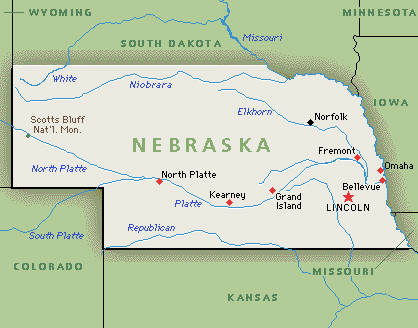 71% to 18%
From Eric Dondero:
This poll just released by Rasmussen:
GOVERNOR – NEBRASKA (Rasmussen)
Dave Heineman (R-inc) 71%
Dave Meister (D) 18%
Meister recently told Nebraska Watchdog:
“If I didn’t think we could win I wouldn’t be in it.”

Finding the Road to Absolute Freedom and Spiritual Victory – PR Web (press release)
Finding the Road to Absolute Freedom and Spiritual Victory PR Web (press release) Through this book, readers will find enlightenment and the path to the most promising walk with God everyday in their lives. For more information on Life ... |
NASA Telescope Finds Elusive Buckyballs in Space for First Time

NASA's Spitzer Space Telescope has at last found buckyballs in space, as illustrated by this artist's conception. Image credit: NASA/JPL-Caltech - Larger Image
Astronomers using NASA's Spitzer Space Telescope have discovered carbon molecules, known as "buckyballs," in space for the first time. Buckyballs are soccer-ball-shaped molecules that were first observed in a laboratory 25 years ago.
They are named for their resemblance to architect Buckminster Fuller's geodesic domes, which have interlocking circles on the surface of a partial sphere. Buckyballs were thought to float around in space, but had escaped detection until now.
"We found what are now the largest molecules known to exist in space," said astronomer Jan Cami of the University of Western Ontario, Canada, and the SETI Institute in Mountain View, Calif. "We are particularly excited because they have unique properties that make them important players for all sorts of physical and chemical processes going on in space." Cami has authored a paper about the discovery that will appear online Thursday in the journal Science.
Buckyballs are made of 60 carbon atoms arranged in three-dimensional, spherical structures. Their alternating patterns of hexagons and pentagons match a typical black-and-white soccer ball. The research team also found the more elongated relative of buckyballs, known as C70, for the first time in space. These molecules consist of 70 carbon atoms and are shaped more like an oval rugby ball. Both types of molecules belong to a class known officially as buckminsterfullerenes, or fullerenes.
The Cami team unexpectedly found the carbon balls in a planetary nebula named Tc 1. Planetary nebulas are the remains of stars, like the sun, that shed their outer layers of gas and dust as they age. A compact, hot star, or white dwarf, at the center of the nebula illuminates and heats these clouds of material that has been shed.
The buckyballs were found in these clouds, perhaps reflecting a short stage in the star's life, when it sloughs off a puff of material rich in carbon. The astronomers used Spitzer's spectroscopy instrument to analyze infrared light from the planetary nebula and see the spectral signatures of the buckyballs. These molecules are approximately room temperature -- the ideal temperature to give off distinct patterns of infrared light that Spitzer can detect. According to Cami, Spitzer looked at the right place at the right time. A century from now, the buckyballs might be too cool to be detected.
The data from Spitzer were compared with data from laboratory measurements of the same molecules and showed a perfect match.
"We did not plan for this discovery," Cami said. "But when we saw these whopping spectral signatures, we knew immediately that we were looking at one of the most sought-after molecules."
In 1970, Japanese professor Eiji Osawa predicted the existence of buckyballs, but they were not observed until lab experiments in 1985. Researchers simulated conditions in the atmospheres of aging, carbon-rich giant stars, in which chains of carbon had been detected. Surprisingly, these experiments resulted in the formation of large quantities of buckminsterfullerenes. The molecules have since been found on Earth in candle soot, layers of rock and meteorites.
The study of fullerenes and their relatives has grown into a busy field of research because of the molecules' unique strength and exceptional chemical and physical properties. Among the potential applications are armor, drug delivery and superconducting technologies.
Sir Harry Kroto, who shared the 1996 Nobel Prize in chemistry with Bob Curl and Rick Smalley for the discovery of buckyballs, said, "This most exciting breakthrough provides convincing evidence that the buckyball has, as I long suspected, existed since time immemorial in the dark recesses of our galaxy."
Previous searches for buckyballs in space, in particular around carbon-rich stars, proved unsuccessful. A promising case for their presence in the tenuous clouds between the stars was presented 15 years ago, using observations at optical wavelengths. That finding is awaiting confirmation from laboratory data. More recently, another Spitzer team reported evidence for buckyballs in a different type of object, but the spectral signatures they observed were partly contaminated by other chemical substances.
For More Information visit http://www.jpl.nasa.gov/news/news.cfm?release=2010-243

City grants PUD status to North Austin Medical Center – Community Impact Newspaper
Community Impact Newspaper | City grants PUD status to North Austin Medical Center Community Impact Newspaper Obtaining the freedom to add a wing to a hospital or develop a medical office park across the street at any given time without conforming to city zoning ... |
Open Letter to Dr. Josephine Briggs
Josephine P. Briggs, M.D.
Director, National Center for Complementary and Alternative Medicine
Dear Dr. Briggs,
As you know, we’ve met twice. The first time was at the Yale “Integrative Medicine” Symposium in March. The second was in April, when Drs. Novella, Gorski and I met with you for an hour at the NCCAM in Bethesda. At the time I concluded that you favor science-based medicine, although you are in the awkward position of having to appear ‘open-minded’ about nonsense.
More about that below, but first let me address the principal reason for this letter: it is disturbing that you will shortly appear at the 25th Anniversary Convention of the American Association of Naturopathic Physicians (AANP). It is disturbing for two reasons: first, it suggests that you know little about the tenets and methods of the group that you’ll be addressing; second, your presence will be interpreted as an endorsement of those methods and of that group—whether or not that is your intention. If you read nothing more of this letter or its links, please read the following articles (they’re “part of your education,” as my 91 y.o. mother used to say to me):
Naturopathy: A Critical Appraisal
Naturopathy, Pseudoscience, and Medicine: Myths and Fallacies vs Truth
The first article is an introduction to the group to which you will be speaking; the second is my response to complaints, from that group and a few of its apologists, about the first article. It was a surprise to me that the editor, George Lundberg, preferred that I make my response a comprehensive one.
Thus the second article inevitably became the crash course—call it CAM for Smarties—that your predecessors never offered you, replete with examples of useless and dangerous pseudoscientific methods, real science being brought to bear in evaluating such methods, proponents’ inaccurate or cherry-picked citations of biomedical literature, bits of pertinent but little-known history, the standard logical fallacies, embarrassing socio-political machinations, wasteful and dangerous ‘research’ (funded—unwittingly, I’m sure—by the NCCAM), bait-and-switch labeling of rational methods as “CAM,” vacuous assertions about ‘toxins’ and ”curing the underlying cause, not just suppressing the symptoms,” anti-vaccination hysteria, misleading language, the obligatory recycling of psychokinesis claims, and more.
Please excuse me if this sounds preachy; I admit that it does, but understand that I’m writing in good faith. My own views of “CAM” did not dawn on me overnight, but were the result of years of research. My ‘internship,’ as it were, consisted of sitting on a state commission from the fall of 2000 until the spring of 2002, listening to AANP members (including at least one with whom you will share the podium), reading about ‘naturopathic medicine,’ and attempting (unsuccessfully) to engage its advocates in rational discussion. I began that task open to forming opinions based on whatever information became available; by its end it had become abundantly clear that the group is best characterized as a pseudoscientific cult, and nothing since has altered that opinion.
Regarding your presence at the convention being tantamount to an endorsement of ‘naturopathic medicine,’ this is so obviously true that it ought not be necessary to mention it. Previous experience, however, has taught me to expect an air of—please don’t take this personally—utter cluelessness whenever I’ve raised such an issue. If you’ve read the second naturopathy article linked above, you already know that according to proponents,
The validity of naturopathic medicine is demonstrated by its support in government (including accreditation of its schools and NIH-funded research), on medical school Web sites, and in other parts of the public domain.
An appearance at their annual convention by the most important “CAM” administrator at the NIH surely has the political arm of the AANP licking its chops. NDs, as they call themselves, are currently licensed in 14 or 15 states and a couple of provinces, and aggressively seek licensure throughout the U.S. and Canada. They appear to wield political clout well out of proportion to their numbers, no doubt thanks in part to the legislative language that created the NCCAM’s National Advisory Council for Complementary and Alternative Medicine (NACCAM):
Of the 18 appointed members…Nine…shall be practitioners licensed in one or more of the major systems with which the Center is involved. Six of the members shall be appointed by the Secretary from the general public and shall include leaders in the fields of public policy, law, health policy, economics, and management. Three of the six shall represent the interests of individual consumers of complementary and alternative medicine.
Thus there have been 1-3 NDs on the NACCAM since its inception in 1999, although their numbers in general are, by any measure, miniscule: I reckoned there were about 2500 in the U.S. in 2003; the AANP now places that number at 6000. By comparison, there are about 800,000 MDs and 50,000 DOs in the U.S.
NDs claim to be well trained to practice what most people think of as family medicine or primary care medicine, although their version of training is chock full of pseudoscientific nonsense and lacks a true residency program. They began by purporting to use only “natural medicines,” but in regions where they’ve become politically connected they’ve sought, and been granted, the license to prescribe numerous drugs. Predictably, they’ve recently begun to bump people off with such exotic choices as intravenous colchicine and disodium ethylenediaminetetraacetic acid (that pesky TACT drug), in addition to more folksy nostrums such as acupuncture, vitamin B12, and an “herbal tincture” for a teenage girl who would shortly die of asthma.
I see that your talk is titled “Complementary and Alternative Medicine: Promising Ideas from Outside the Mainstream.” I imagine that it will cover some of the material that you covered at the Yale Symposium, where you used the similar phrase, “Quirky Ideas from Outside the Mainstream.” Without reading more into that word substitution than is warranted, let me assure you that there are no promising ideas emanating from naturopathy, even if there are plenty of quirky ones, e.g., inflating balloons in the nasopharynx to effect a “controlled release of the connective tissue tension to unwind the body and return it toward to its original design.”
Regarding the implicit requirement of your office that you appear open-minded even to medical absurdities, you made that clear in your own account of our NCCAM meeting and of another that you’d had a few weeks earlier, involving a group of homeopaths and associated crackpots who called themselves “the leading scientists in the field”:
Recently, I hosted two meetings with groups that represent disparate views of CAM research. These meetings have given me a renewed appreciation for the value of listening to differing voices and perspectives about the work we do.
My NCCAM colleagues and I know there are differing views of the value of doing CAM research. On one side, we have stakeholders who are staunch CAM advocates, and on the other side, we have CAM skeptics.
Each group has its own beliefs and opinions on the direction, importance, and value of the work that NCCAM funds. The advocates would like to see more research dollars supporting various CAM approaches while the skeptics see our research investment as giving undue credibility to unfeasible CAM modalities and want less research funding.
As I’ve stated before, our position is that science must remain neutral, and we should be strictly objective. There are compelling reasons to explore many CAM modalities, and the science should speak for itself. (emphasis yours)
Certainly science must remain neutral in the face of not-yet-seen data from rigorous studies, but that is different from what you, in your dual roles as “CAM” Explicator-in-Chief and Steward of Public Funds, must remain. You typically face questions that are, for all purposes relevant to the NIH, to modern medicine, and to the American citizenry, already settled—whether by basic science, clinical studies, rational thinking, or all three. I’ve offered several examples in the two naturopathy articles linked above.
Consider homeopathy, a core claim of “naturopathic medicine” and the subject of your meeting with the “staunch CAM advocates.” It makes no more sense for you to remain neutral on that topic than it would for the NIMH Director to remain neutral on exorcisms, or for the NCI Director to remain neutral on Krebiozen. Edzard Ernst, a one-time homeopath whose own portfolio of “CAM” investigations dwarfs the entire output of the NCCAM, puts it this way:
Should we keep an open mind about astrology, perpetual motion, alchemy, alien abduction, and sightings of Elvis Presley? No, and we are happy to confess that our minds have closed down on homeopathy in the same way.
Science and skepticism, moreover, are not distinct. Good science involves, first and foremost, skepticism. This is true for the design of any experiment, in which the primary goal is to attempt to falsify the hypothesis, and also for scientific thinking in general. Bruce Alberts, the editor of Science, discussed this in a 2008 editorial titled “Considering Science Education”:
…society may less appreciate the advantage of having everyone acquire, as part of their formal education, the ways of thinking and behaving that are central to the practice of successful science: scientific habits of mind. These habits include a skeptical attitude toward dogmatic claims and a strong desire for logic and evidence. As famed astronomer Carl Sagan put it, science is our best “bunk” detector. Individuals and societies clearly need a means to logically test the onslaught of constant clever attempts to manipulate our purchasing and political decisions. (emphasis added)
I believe that you know all this at some level, but that your current job demands that you bend over backwards to frame skeptics as extreme—distinguishing them from “neutral” scientists. Thus you, like many reporters, have placed skeptics of homeopathy or naturopathy at one end of a contrived belief spectrum, and “staunch CAM advocates” at the other. Please indulge me while I compare this version of ‘neutrality’ with others that exist in the popular domain:
- Some people feel strongly that the moon landings were a collective hoax. Others feel just as strongly that they really happened.
- Some people believe that the Holocaust didn’t happen. Others believe that it did.
- Some people believe that the variety of species on earth is a product of Intelligent Design (ID). Others believe in the theory of evolution by variation and natural selection.
This could go on and on, but you probably get the point. The last bullet is more pertinent to your tacit endorsement of the AANP than you might imagine. What follows is a representative view of herbalism offered by Thomas Kruzel, with whom you will also share the podium at the convention (he will discuss “Emunctorology”; don’t ask). Kruzel is Past President of the AANP and the former Vice President of Clinical Affairs and Chief Medical Officer at the Southwest College of Naturopathic Medicine. He was selected Physician of the Year by the AANP in 2000, and Physician of the Year by the Arizona Naturopathic Medical Association in 2003:
Herbal Medicine: Naturopathic physicians have been trained in the art and science of prescribing medications derived from plant sources. The majority of prescription drugs are derived as well from plants but are often altered and used as single constituents. What makes herbal medicine unique is that plants have evolved along with human beings and have been used as non-toxic medications for centuries.
If there is any problem with herbal medicines it is that unless one knows how to prescribe them, they may not be effective. Herbal medications should be prescribed based on the symptoms that the person presents rather than for the name of the disease. Herbal medications are much more effective at relieving the patients symptoms when prescribed in this manner. When prescribed the medicines act with the body’s own innate healing mechanism to restore balance and ultimately allows healing to occur.
What’s nice about plant or herbal medicines is that because they are derived from the whole plant they are considerably less toxic to the body. The plant medicine has evolved to work in harmony with the normal body processes rather than taking over its function as many drug therapies do. Because of this herbal medicines may be taken for longer periods of time without the side effects so often experienced with drugs.
You are particularly impressed, I hope, by the magical, ID-like claim that “plant medicine has evolved to work in harmony with the normal body processes.” Other curious assertions include the conflation of herbal medicine with the core claims of either homeopathy or the non-existent ‘allopathy’ (we can’t tell which)—”…should be prescribed based on the symptoms…”—demonstrating that the author doesn’t know much about even the fanciful methods for which he claims expertise; and the dangerously false statement that medicines “derived from the whole plant are considerably less toxic” (than are well-researched and precisely dosed “prescription drugs”).
Dr. Briggs, please consider the possibility that you no longer must hide your considerable scientific prowess in order to be a good NCCAM Director. Your ’stakeholders’ include not only very small numbers of naturopaths, homeopaths, and other fringe practitioners, but also far larger numbers of citizens who wonder about the validity of what those practitioners are peddling. It is to those citizens that you should be directing your efforts, which ought to begin with sober, objective, skeptical, scientific considerations of the various claims, the vast majority of which can, like balloons in the nasopharynx, be dismissed in milliseconds by anyone with even a modest understanding of nature. They don’t require clinical trials.
Things are changing elsewhere. My colleague Steve Novella has just written about substantial efforts to deny insurance coverage for homeopathy in the land of its birth, Germany. In the UK, homeopathy has been far more popular than it is here, even to the point of its being funded by the National Health Service. One of the “staunch CAM advocates” who reportedly attended your meeting by teleconference was Peter Fisher, Homeopath to the Queen. Yet both the British Medical Association and the House of Commons Science and Technology Committee have seen through the ruse of pseudoscience that is homeopathy, the former declaring it “witchcraft” and latter making this statement:
The Committee concurred with the Government that the evidence base shows that homeopathy is not efficacious (that is, it does not work beyond the placebo effect) and that explanations for why homeopathy would work are scientifically implausible.
American citizens want and deserve, for their tax money, exactly that sort of definitive evaluation of such claims. Your first responsibility, Dr. Briggs, is to them—it is not to the AANP, other “CAM stakeholders,” Tom Harkin, Orrin Hatch, or Dan Burton, and certainly not to the members of the NACCAM. Yes, we “skeptics see [the NCCAM] research investment as giving undue credibility to unfeasible CAM modalities,” because the evidence is overwhelming that this is the case. We also see your appearing at conventions of pseudomedical pseudoprofessional organizations as giving undue credibility to unfeasible and dangerous claims.
Sincerely yours,
Kimball C. Atwood, M.D.
Skeptic
![[StumbleUpon]](http://euvolution.com/futurist-transhuman-news-blog/wp-content/plugins/wp-o-matic/cache/d8901_stumbleupon.jpg)
![[Slashdot]](http://euvolution.com/futurist-transhuman-news-blog/wp-content/plugins/wp-o-matic/cache/77d8a_favicon.ico)
![[Reddit]](http://euvolution.com/futurist-transhuman-news-blog/wp-content/plugins/wp-o-matic/cache/d8901_favicon.ico)