Next from X Prize: An Award for Cleaning up BP’s Oil Spill? | 80beats

x-prizeBP can’t clean up its mess. Kevin Costner’s trying. But if you know how to clean up the leaking oil in the Gulf of Mexico, you could be a winner.

The X Prize Foundation says this week that it’s considering the creation of a multimillion-dollar prize for the solution to cleaning the BP oil spill. This is the same organization that put together awards of $10 million or more for private spacecraft and high mileage cars. The foundation’s Frances Beland announced the idea at an oil spill conference in Washington, D.C.

Beland said the foundation wanted to come up with a prize to find a solution to capping the well but found it was unable to obtain enough data to design such a challenge, so it opted to focus on the cleanup. “We’re going to launch a prize for cleanup, and we’re going to kick ass,” he said, to applause. Beland said 35,000 solutions to the Gulf crisis have been proposed to BP, the government and other organizations, including the X Prize Foundation [CNN].

ApteraDespite Beland’s high-flying rhetoric, many teams are finding little success in the other X Prize events that are ongoing. The Automotive X Prize, intend to reward cars that can exceed 100 miles per gallon, went through its knockout stage to narrow the competition before next month’s finals. Many of the entries fell by the wayside, unable to meet the milestones of at least 67 MPG or equivalent (MPGe) needed at this stage. (The “equivalent” business is necessary because many of the experimental vehicles use energy sources other than gasoline.)

The Knockout outcome was particularly disappointing for the West Philly team, a high-school group that garnered more and more attention as the contest progressed…. West Philly’s converted Ford Focus fell 3.5 points short of the required efficiency score of 67 MPGe, apparently due in part to a battery-charging snafu [MSNBC].

In addition, some of the car entries stretch the competition definition of being something you could sell to ordinary drivers. As DISCOVER saw when we visited the Shell Eco-Marathon, you can make cars that score way, way above 100 MPG if you sacrifice just about everything else in pursuit of that goal. The Auto X Prize cars are closer to what you might see on the road, but many of the designs are still a little out there.

And given the teams’ struggles to meet even 67 MPG while staying within the competition’s rules, there’s a chance that the winner will be… nobody.

“The prize money’s not won if you’re not successful,” said Eric Cahill, X Prize’s senior director. He added that it’s “entirely possible” that no competitor will achieve the target. “When the rules were first published, we received a lot of heat that this was too easy,” Mr. Cahill said. But as batteries overheated, sensors malfunctioned and cars struggled to cut through densely humid air, the target looks anything but easy [The New York Times].

Thinking back to the mess in the Gulf, we can’t help but reflect on that ever-growing list of 35,000 ideas for the cleanup: Hopefully at least one of them has what it takes.

Related Content:
DISCOVER: Should American Science Be More Like “American Idol”?
80beats: BP to Kevin Costner: We’ll Take 32 of Your Oil Clean-Up Machines
80beats: Lunar X Prize Competitor Hopes to Send a Rover Back to Tranquility Base
Discoblog: Shell Eco-Marathon: Meet the 1,000 MPG Cars of the Future

Image: Aptera


The Little Flying Car That Could… Get FAA Approval | 80beats

transitionIt’s a car… It’s a plane… It’s a car-plane. Last March, we described the maiden flight of Terrafugia’s new flying, driving machine, called the Transition. Now we’re one step closer to a Jetson’s reality: the Transition has just received FAA approval as a “light sport aircraft.”

Approval was not guaranteed, since the little guy is a bit husky, weighing more than the FAA’s “light sport aircraft” limit. As The Register reports, Terrafugia wanted to keep the plane in this classification to keep the vehicle available to more drivers/pilots.

[T]he plane-car was originally designed to fit within a weight limit of 1320 lb, meaning that it could qualify as a “light sport” aircraft. A US light sport pilot’s licence is significantly easier and cheaper to get than a normal private ticket, requiring only 20 hours logged, and red tape is lessened. [The Register]

But giving Transition road-worthy safety gear (like an air bag) meant adding on the pounds. The FAA has said that they’re willing to let a little extra weight slide, allowing the Transition 110-pounds worth of stretching room.

The vehicle can travel at 115 mph in the air and requires 1,700 feet to take off. When it folds up its wings (which it can do electronically), it can snuggle into a garage or a gas station. Though it does seem an exciting commuting option, Terafugia designed the Transition with pilots in mind, giving them the option to land and drive when flying conditions are too rough.

The two-seater Transition can use its front-wheel drive on roads at ordinary highway speeds, with wings folded, at a respectable 30 miles per gallon. Once it has arrived at a suitable take-off spot–an airport, or adequately sized piece of flat private land–it can fold down the wings, engage its rear-facing propellor, and take off. [The Telegraph]

So far, Terrafugia says 70 futuristic folks have pre-ordered the car, paying a refundable $10,000 deposit. The total price tag is $194,000.

Related content:
80beats: A Chitty Chitty Bang Bang For Everyone! New Flying Car Takes to the Sky
80beats: Swiss “Rocketman” Blasts Across the English Channel
DISCOVER: Dude, Where’s My Jetpack? asks why we don’t all have flying cars and ray guns yet
DISCOVER: Chasing the Jetsons wonders if we’ll ever have what they have
Discoblog: Back to the Future: The First Green Flying Car Is Ready for Takeoff

Image: Terrafugia


Do Scientists Understand the Public, Cont. | The Intersection

Ok, I'm now officially overwhelmed by the volume of response to the Washington Post piece and the American Academy paper. Over at DotEarth, for instance--and under the marvelous headline "Scientists From Mars Face Public From Venus"--Andy Revkin has solicited expert responses, and so we hear from Randy Olson, Matt Nisbet, Mike Hulme, John Horgan, Tom Bowman, Sheila Jasanoff, and Robert Brulle. They all have a lot to say. I like this from Nisbet:
The highlighted points of emphasis in the report have been the dominant focus of research in the field of science communication and science studies for the past 15 years and the basis for recent innovative projects such as the World Wide Views on Global Warming initiative. It is therefore deeply encouraging that these same points of emphasis emerged from the meetings convened by the American Academy. It’s a major sign that research in the field has contributed to a cultural shift in how leaders in U.S. science view public engagement. I agree, but I don't think the research alone has done this. I think that the timing was right for hard scientists to look across at social scientists and see what they had to say. Sheila Jasanoff of the Harvard Kennedy ...


Casting aside Copernicus | Cosmic Variance

The Copernican principle is a guiding foundation of cosmology. In short, it states that we are not in a privileged place in the Universe. A “random” observer will see the same Universe that we do. The cosmological standard model does satisfy this principle in space: at this moment, any other observer in the Universe should see the same Universe as we do (at large scales). Just like us, they see a smooth distribution of galaxies and a smooth CMB sky, with similar small anisotropies. However, we do live at a privileged time: in the history of the Universe, we just happen to be at the time when the dark energy density starts dominating over the dark matter density. This is known as the “coincidence” problem, and has been much discussed and agonized over. Here is a graphical description:
copernican1
Today is very, very near where the two lines cross (redshift=0 is today; redshift=1,000 is where the CMB is generated; the Big Bang is at redshift=infinity). You can’t even see the crossing on the main plot; you need to go to the inset to see the incredibly rapid change at redshift=1. Last week at the Yukawa Institute workshop John Moffat was advocating calling the standard model “anti-Copernican” because of this fine-tuning. He has been wanting to take matters one step further: if we are willing to break the Copernican principle in time, why not seriously consider breaking it in space instead? More on this later.

The Copernican principle is one of those weird things in science that is a mix of science and aesthetics. It can’t be written down as an equation. And its application is often subject to the eye of the beholder. For example, the plot above looks like a problem because we’ve used redshift on the x-axis to represent time. There are physically motivated reasons to use this, as it relates to the size of the Universe, and is thus a proxy for many relevant physical processes. If instead we label time the way we normally measure it (as in, on your wristwatch, if you happened to have been around since the Big Bang), you get something that looks much more reasonable:copernican2
We’re no longer at a special time, and the coincidence problem vanishes. The Universe has been dark-energy dominated for billions of years, and we’re nowhere near the special crossing point. So which plot is right?


Take a Virtual Aerospace Tour (June 2010)

Ready to fly away from your cubicle yet? Ron Darner, a longtime CR4er who serves as the newsletter editor for Chapter 320 (Watertown, Wisconsin) of the Experimental Aircraft Association (EAA), has offered to take us on another virtual aerospace tour. So fasten your seatbelts, folks.

10 Great Racetracks as Seen From Space

From Wired Top Stories:

Racetracks pretty much look the same from the grandstands or on television — a vast expanse of asphalt on which drivers do battle. Seen from space, though, you can appreciate their form and the skill it requires to drive them at the limit. Here are

Choice Magazine Reviews The Tangled Bank: “Highly Recommended” | The Loom

zimmercover220.jpgI’m thrilled that the evolutionary biologist Brian K. Hall has such great things to say about The Tangled Bank in a review for Choice, the leading review journal for academic librarians (subscriber link):

Those familiar with the books, newspaper and journal columns, and commentaries by Zimmer (e.g., Microcosm, CH, Sep’08, 46-0275; Soul Made Flesh, CH, Dec’04, 42-2220) will be delighted that he has turned his considerable writing skills to creating an accessible and superbly illustrated introduction to biological evolution. The best books on evolution are those that synthesize the processes of evolution (natural selection, mutation, the origin of variation, the role of development) with the patterns of evolution (the fossil record, phylogenetic trees, changes within and between species) and introduce readers to the major players and how they study evolution. Zimmer describes all these processes and patterns of evolution admirably, using his flair with language and substantial knowledge of biology–the latter aided by four scientific advisers, who have advised him well. Zimmer has a gift for finding just the right example to fascinate the reader, encouraging him or her to want to read on and learn more. The book is astoundingly well illustrated; it could serve as a coffee-table book as well as an up-to-date introduction to the changing ways in which evolution has been and is being studied. The inclusion of selected readings allows entry into the primary literature. A book to both browse and read in depth. Summing Up: Highly recommended. All libraries. — B. K. Hall, emeritus, Dalhousie University


Jupiter in 3D | Bad Astronomy

I love anaglyphs (3D pictures) and I love astronomy animations and I love Jupiter, so how much do you think I love this anaglyph animation of Jupiter?

[Note: the embedded version here shows it as two separate animations. Go to the YouTube page and you'll see a 3D label at the bottom of the player. Click that, and you can set the animation to be red/green or lots of other options. Currently, I can't seem to embed the video that way, so again I urge you to go to the YouTube page.]

This is from Chris Owen, an amateur astronomer equipped with a 25 cm (10″) Newtonian ’scope (the same kind I had for about 20 years!). The animation shows Jupiter over the course of about 2.5 hours, with one exposure taken every five minutes. You can also watch Europa and Io, two of Jupiter’s big moons, orbiting the planet as well. He created the animation straight, then converted it to 3D. You can see the original on his DeviantArt page — that’s a 3 Mb image, which is why I didn’t embed it, but click it to see because it’s cool.

I like the 3D version; you really get a sense that Jupiter is a ball, and it’s nifty to be able to see the two moons as being farther away than the planet itself, proven positively by seeing Europa physically go behind Jupiter as it orbits. Note too that these observations were made last year, before the Southern Equatorial Belt disappeared.

While these animations are a bit of fun, I suspect they will actually give people more of a sense that these objects aren’t just points of light in the sky, but worlds. I’m a fan of things that give people a deeper connection to the Universe, so I really like these anaglyphs!


Driver Education UK Style

This is just a way of picking your brains, I am about to venture into Driver Education,(again)

Have you any novel ideas

Please tell me what you found useful or not

1 To train/guide people in the learning process

2 Enable them to pick up spatial awareness skills.

The Achilles' Heel of Your Computer

From Technology Review RSS Feeds:

Computers often need to be connected to printers, cameras, and USB flash drives and other hardware, but the small pieces of software that enable communications with these peripherals, known as "device drivers," have a bad reputation. Experts believ

Two Big endorsements from the Republican Liberty Caucus – Nevada and Oklahoma

From Eric Dondero:

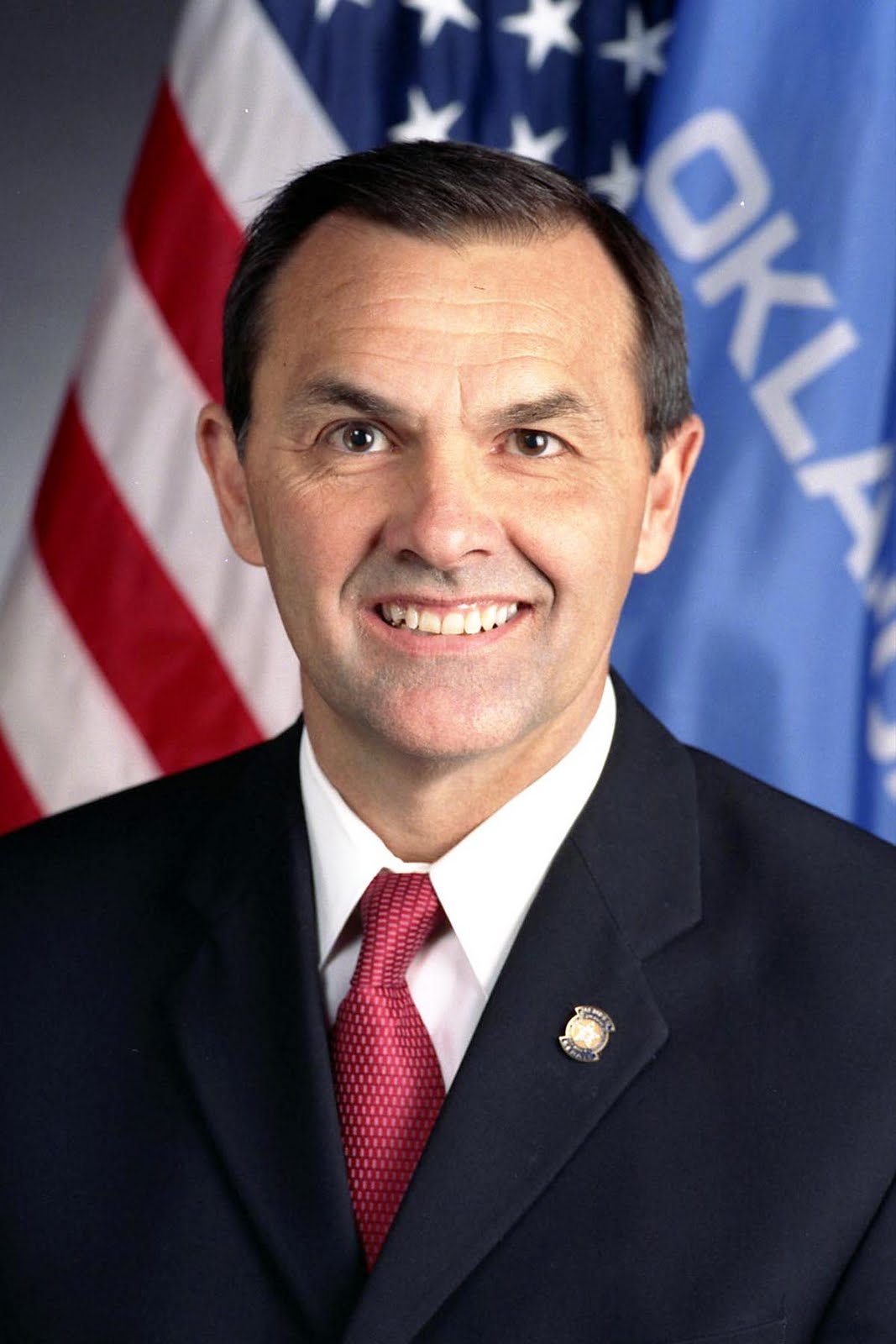
The Republican Liberty Caucus met in conference call Monday night and resolved to officially endorse two high profile Republican candidates: Sharron Angle for US Senate in Nevada and Randy Brogdon for Oklahoma Governor.

Interestingly, the RLC had backed Angle in 2008 in a failed primary run for Congress against now-Congressman Dean Heller. (She lost by a very slim margin.)

RLC National Committeeman Aaron Bitterman comments:

Voters interested in supporting a candidate who will work to reduce the size of government should enthusiastically support Sharron Angle for U.S. Senate in Nevada.

The bonus is that electing Angle will rid our country of Majority Leader Harry Reid.

On Brogdon, Bitterman had this to say:

Brogdon is in a tough election with Congresswoman Mary Fallin, the establishment favorite, to win the Republican primary taking place July 27.

As a State Senator, Randy Brogdon proposed or passed …

• The Healthcare Freedom of Choice Act
• The Real ID Opt-out Bill
• The Freedom Firearm Act
• The Tenth Amendment Resolution

Brogdon was also the lead sponsor of the Stop OverSpending Initiative (TABOR) and was instrumental in supporting an initiative to protect private property rights in response to Kelo v. New London.

It should also be noted that Brogdon has had a longstanding friendship with the Republican Liberty Caucus. He's affiliated with Howie Rich's Americans for Limited Government. He's also been a guest speaker and attendee on a number of occasions at Oklahoma Libertarian Party meetings.

IMPORTANT!

From the Editor: We will have a very special announcement regarding Sharron Angle on Thursday morning. You will not want to miss this.

FAA Floats a Break to Flying Car

From CNET News.com:

This 4th of July weekend, you might, either at its beginning or its end, find yourself wishing your car could fly. Thanks to a new FAA decision, this wish might seem slightly less Peter Pan and slightly more Peter Perfect. It seems that the soaring minds

Another stupid Muslim Terrorist Story

Unfortunately with Deadly Consequences

From Cliff Thies:

The headline of the London Daily Mail reads "Innocent couple died 'after wrong house was fire-bombed in bungled honour killing'."

An innocent couple died in a house fire at the hands of assailants who got the wrong address in a botched honour killing, a court heard today.

Abdullah Mohammed, 41, and his wife, Aysha Mohammed, 39, were overcome by smoke and fumes after an accelerant was poured through their letterbox and set alight.

Their killers were ordered by another man to avenge his family's honour but instead of firebombing 135 London Road in Blackburn, Lancashire, they started the blaze at 175 London Road, the court heard.

Opening the case at Preston Crown Court, Brian Cummings QC said: 'The prosecution allege that Sadik Miah, Mohammed Miah (no relation) and Habib Iqbal were directly responsible for starting the fire that night

'The prosecution say, on behalf of his family, Hisamuddin Ibrahim wanted to kill a man by the name of Mo Ibrahim (no relation) to punish him for damaging the family's honour for having an affair with his married sister, Hafija Gordi.'

Just another stupid Muslim terrorist story? No! More like another story of creeping Sharia Law.

Abdullah Mohammed, 41, and his wife, Aysha Mohammed, 39, who were murdered in a botched 'honour killing,' were indeed an 'innocent couple,' as the headline puts it. Ditto their minor children who, thankfully, survived. But so were the persons the murderers intended to kill. In Great Britain, as in our country, a person is presumed innocent until proven guilty in a court of law. Even then, the punishment is to fit the crime. Guilt is not to be determined by any Sadik, Mohammed, Habib or Hisamuddin, with punishment determined by primitive tribal standards masquerading as a religion, and executed by hired assassins. It's bad enough that immigrants don't respect the rule of law. But, for the editors of a great newspapers to accept that the intended victims might not be innocent is much worse.

Photo of London row houses not actual site of fire.

Sexy Russian Spy busted!

From Cliff Thies:

With all the bad news in the world, the wars, the depression, the oil spill, finally, some good news: hot Russian spy babes are back! The headline read "sexy Russian spy busted!" And is she ever! And those eyes. If the North Vietnamese could break John McCain, could anybody blame me if she forced me, with those eyes, to tell her everything???

More photos at the NY Post

Photo hat tip Humble Libertarian

Check Your Sustainability Score

A recent ASME survey revealed a sharp divide in how engineers view "sustainable manufacturing." Some see sustainability as a buzzword rather than a valid business mindset. Others see great value in changing practices to use fewer non-renewable resources and changing their company attitude toward con