Today: The First Test Launch of the SpaceX Astronaut Taxi | 80beats

spacexThe scene is set at Cape Canaveral: Atop the two-stage Falcon 9 rocket sits a dummy of the Dragon Spacecraft capsule that could one day taxi cargo and astronauts to and from the International Space Station. This will be the first launch of the the rocket, built by the privately-owned company SpaceX and funded in part by a $1.6 billion contract with NASA. The Falcon 9 should take off between 11 this morning and 3 in the afternoon (eastern daylight time), though the company has reserved a second launch window for tomorrow. Currently, a live feed of the launch pad shows the rocket primed to go, but announces a launch delay of unknown duration.

SpaceX’s ultimate goals for this test, as described on the company’s website: “launch and separate from Falcon 9, orbit Earth, transmit telemetry, receive commands, demonstrate orbital maneuvering and thermal control, re-enter atmosphere, and recover Dragon spacecraft.” This is a pretty big wish list, since many first launches have failed, including several of SpaceX’s own early attempts with the Falcon 9’s predecessor, the smaller Falcon 1 rocket. So SpaceX company founder Elon Musk hedged his bets when asked what he expected from the Falcon 9’s debut launch.

Historically, the maiden flights of rockets have a notoriously high failure rate. Some two-thirds of the rockets introduced in the past 20 years have had an unsuccessful first outing. “A 100% success would be reaching orbit,” Mr Musk told reporters on the eve of the launch, “but I think given this is a test flight, even if we prove out just that the first stage works correctly – that will have been a good day. And it will be a great day if both stages work correctly.” [BBC]

The Dragon’s voyage to orbit will last about 10 minutes. If successful, the capsule, capable of carrying 13,000 pounds, will later provide supplies to the ISS and also carry satellites into orbit. SpaceX has kept human spaceflight in mind as they designed the capsule, but fitting it for humans (the company says seven passengers could fit inside) would require an estimated three years and a contract with the International Space Station. As reported by The Wall Street Journal, the company has developed this system at a fraction of the cost that big name competitors like Boeing and Lockheed Martin needed to design the current generation of rockets, and the indefatigable company hasn’t given in to early criticism from the likes of the U.S. Air Force.

“There are a lot of critics out there we wouldn’t convince under any circumstances,” Mr. Musk said in an interview earlier this year. “There is zero chance of [NASA] affording another Apollo program” and funding it with tax dollars, he said. “If we want to do great things on that scale again, it’s going to be for a much smaller budget.” One that relies on commercial entities providing and operating spacecraft at discounted prices. “The best thing that NASA can do is define the goal, but not define the path.” [Wall Street Journal]

Others at SpaceX echo Musk’s definition of success, noting that even if the ship fails to meet today’s goals that is could provide information to make later launch attempts.

“If the vehicle lifts off the pad, no matter what the outcome is, we’re going to learn something that’s going to make the second flight more likely and the third flight and the fourth flight,” added Ken Bowersox, a SpaceX vice president and former NASA astronaut.[Reuters]

If successful, next steps will include first an ISS fly-by and later a docking with the station.

Related content:
Bad Astronomy:Space X to launch Falcon 9 at 15:00 UT today
Bad Astronomy: Falcon 9 getting ready for maiden voyage
Bad Astronomy: Space X tests re-entry material
80beats: Fired Up: SpaceX Successfully Tests Rocket Engines; Plans for an April Launch
80beats: Internet Millionaire’s Privately Funded Rocket Reaches Orbit
80beats: Millionaire’s Private Rocket Fails to Reach Orbit on Third Try
Cosmic Variance: SpaceX Launches a Satellite

Image: SpaceX


Followup: Jupiter impact video, and a color picture! | Bad Astronomy

Anthony Wesley, who discovered the impact event on Jupiter yesterday, has posted a lovely color image of the flash:

wesley_jupimpact_color

Wow. He was only taking greyscale video, but put together a three-color composite and added in the data from the flash. So this image is not precisely real, but on the other hand is no less real than other astronomical images. He has also posted a greyscale video of the flash which is pretty tremendous, too. It’s also up on YouTube:

Note the ring of light just around the flash itself, just barely visible around the central point. That’s probably not a physical halo; it’s an artifact of how telescopes and detectors see bright point sources — the way the light spreads out in an optical system is called the point spread function. Many Hubble images of stars, for example, show the same ring.

By coincidence, the impact point appears to be near the edge of where the South Equatorial Belt on Jupiter is. That’s the belt that disappeared recently. That’s guaranteed to be a coincidence; the belt vanished many weeks ago. And I expect some folks will ask if the impact may affect the belt. My gut says no. You have to appreciate the scale of what you’re seeing here: Jupiter is 140,000 km (86,000 miles) across — 11 times the diameter of the Earth! In this picture, the Earth wouldn’t even stretch across the North Equatorial Belt, the dark red band above Jupiter’s equator.

So even though this explosion may have been the equivalent of thousands of nuclear weapons all blowing up at once, it probably will only have a passing and unnoticeable effect on Jupiter’s weather. But note: I’m guessing. Jupiter is a complex and weird planet.

Also, a lot of people are asking how this can be an impact if Jupiter isn’t solid. After all, what’s getting hit?

Again, remember the scale. What you’re seeing on Jupiter is the tops of its clouds, which are tens of thousands of kilometers deep. When a large rock enters at high speed — and with Jupiter’s gravity, those speeds can reach 80 km/sec (50 miles/sec) or more — it slams into the air and feels a huge amount of pressure. Moving at hypersonic speeds, it compresses the gas violently, and the gas heats up. The rocks slows, converting its enormous energy of motion into heat. It also starts to break up due to stress, creating many smaller chunks. These each slam the gas and heat it, and also get stressed. They fall apart, creating smaller chunks… and at some moment, usually just seconds after everything starts, the pieces are so small they burn up completely due to the heat, dumping all their energy all at once into the atmosphere. This happens so suddenly, and the energy release so vast, it’s by any definition an explosion.

The bigger the rock, and the faster it moves, the more explosive energy it releases. A rock 1 kilometer (0.6 miles) across moving at 80 km/sec will explode with the energy of almost <Dr. Evil>one million one-megaton bombs</Dr. Evil>.

So that’s why you don’t need to hit anything solid to make a big boom.

By the way, had this event happened here on Earth with the same energy release, it wouldn’t be an extinction level event like the dinosaur killer, but it would — not to get too technical or anything — suck mightily. Anything within hundreds of kilometers would be totaled and burning, global weather patterns would be affected, and even though it wouldn’t kill everybody, I expect there would be a global economic collapse that would cripple the planet. And I wonder if some governments might see this as an opportune time to attack any pesky neighbors… happily, on average an impact this large is extremely rare, like once every half million years or so.

It’s not clear how often Jupiter gets hit, and this is only the third confirmed impact we’ve seen (along with the Shoemaker Levy 9 comet impact in 1994, and last year’s asteroid impact also discovered by Wesley). But with amateurs getting more sophisticated in their technique and equipment, expect to see more of these. And they can monitor Jupiter far better and more completely than professional observatories can (which are usually pointed elsewhere; it’s a big sky), so not only will we see more of these, but they’ll be almost exclusively the domain of the amateur astronomer.

And my sincere and very hearty congratulations and thanks to Wesley and Christopher Go for their amazing images and footage of this incredible event!

Image and video credit: Anthony Wesley


Time to Vote For 3 Quarks Daily’s Science Prize | The Loom

Thanks to everyone who nominated posts from the Loom for 3 Quarks Daily’s Science Prize. Now it’s time to vote!

If you need some background information on the prize, go here. You can then peruse the list of nominated posts here. Great stuff abounds, so you won’t hurt my feelings if you decide someone else’s post is the best! When you’re ready, vote here. The deadline is June 7, 11:59 PM eastern time.

The top 20 vote-getting posts will then be judged by the folks at 3 Quarks Daily, who will then pass their top 6 to Richard Dawkins. Dawkins will then select the 1st, 2nd, and 3rd prize winner. Winners will be announced June 21, 2010.


Small Engine Hour Meter

I have a Briggs &amp; Stratton #030210 Elite Series 13,500 Watt 15 HP Vanguard OHV Gas Powered Portable Generator With Electric Start.

I would like to add a surface mount hour meter for maintenance tracking. B&amp;S does have a #5081H hour meter but the reviews I have read are mixed. One major

Survival wind speed meaning?

Dear Colleagues, I have to design 56m lattice tower about these parameters: Basic wind speed (3 sec gust)- 42m/s Survival wind speed 48,8m/s What is the meaning of these 48,8m/s how to use this data in my design? I would design the tower for 42m/s using the results from 1,2D+-1.6W combo. Will design

Let’s Put the Oil Spill Crisis to Good Use and Take Control

“You never want a serious crisis to go to waste.” Rahm Emanuel
Finally, Rahm and I agree on something! Unfortunately, we’re going to part ways on the solution to putting the Deepwater Horizon crisis to good use. The Obama administration and the left will argue that the Federal Government needs to interfere more in the operations [...]

“Top Cap” Installed on BP Oil Leak; Effectiveness Remains to Be Seen | 80beats

Gulf Oil SpillThe top cap is in place. How much oil is it actually capturing, though? The Coast Guard says we won’t know until later in the day, but plenty is still leaking into the Gulf of Mexico.

After failing to cut through the riser with its fancy-sounding diamond-tipped saw, BP yesterday had to settle for cutting the broken riser pipes with what’s been described as a big pair of shears. That method, however, likely produced a rougher cut along the edge, which would hamper the effectiveness of the containment dome BP has now placed on top of its leak.

The government’s point man for the crisis, Coast Guard Adm. Thad Allen, said the cap’s installation atop a severed pipe late Thursday was a positive development but it was too early to tell if will work. The funnel-like lid is designed to channel oil for pumping to a surface tanker. “Even if successful, this is only a temporary and partial fix and we must continue our aggressive response operations at the source, on the surface and along the Gulf’s precious coastline,” Allen said in a statement [AP].

This morning Allen offered the very rough estimate of the containment dome’s effectiveness, saying it might be capturing 1,000 barrels of oil per day. If that’s the right number, then it’s practically nothing: The government’s own estimate was increased last week to between 12,000 and 19,000 barrels per day, and BP warned that the flow would increase when it sheared off the pipe in preparation for installing the dome. According to the Christian Science Monitor, it does appear that a jagged cut has hurt the ability to capture oil:

That seemed to be the case early Friday morning, according to the BP “spillcam,” as a plume of oil and gas burst from the side of the top cap and a “dispersant ops” sub injected a kerosene dispersant into the plume via a long rod [Christian Science Monitor].

Back on shore, people are getting desperate. Oil has been found on about 100 miles of U.S. shoreline along the Gulf already, with more to come. In Louisiana, the government has entered “try anything” mode: Governor Bobby Jindal is going ahead with a plan to dredge massive amounts of sand to build 6-feet-tall sand berms that, in theory, could protect about 100 miles of Louisiana shores from the incoming oil.

The project would require dredging an estimated 68 million cubic meters of sand and cost at least $350 million—perhaps three times that figure. “I was stunned,” says Joseph Kelley, a coastal geophysicist at the University of Maine, Orono. “This is a big proposal and not well thought out” [ScienceNOW].

Nevertheless, the feds have now given the thumbs-up for Louisiana to build about half the proposed amount. Says Allen:

“There are a lot of doubts whether this is a valid oil spill–response technique. But we’re not averse to attempting this as a prototype” [ScienceNOW].

With BP’s plans ending consistently in failure, it’s time to consider all ideas on the table. For this one, though, many scientists are relieved that it will be half-sized, at least to start out with. Beyond the question of whether it will even work—given the timetable to build it and the likelihood of storms destroying it, it might not—there’s also the chance that it will harm the Louisiana wetlands even more than doing nothing. If sand is gathered from the marshes and then thrown asunder by storms, the area might lack the sand resource it needs to recover.

Previous posts on the BP oil spill:
80beats: Oil Spill Update: Saw Gets Stuck; Will Oil Still Be Leaking at Christmas?
80beats: With “Top Kill” a Failure, BP Goes Back to the Containment Dome Plan
80beats: This Hurricane Season Looks Rough, And What If One Hits the Oil Spill?
80beats: We Did the Math: BP Oil Spill Is Now Worse Than the Exxon Valdez
80beats: Scientists Say Gulf Spill Is Way Worse Than Estimated. How’d We Get It So Wrong?

Image: BP


Air Purifiers

I am looking to purchase an Oreck air purifier, but am concerned that they are way over priced and in all actuality have no benefit. Does anyone have experience with Oreck air purifiers and are they worth the price?

FDA Approval Is Not A Shield

From Chemical & Engineering News: Latest News:

Generic drug manufacturers are not shielded from lawsuits over the safety of their products despite FDA approval, a federal judge has ruled. On May 26, U.S. District Judge Berle M. Schiller refused to dismiss litigation brought by c

Harnessing a Star's Power for Clean Energy

From CNET News.com:

Think clean energy is a fantasy? What if the power of a star was applied to the problem? That's the approach being explored at the National Ignition Facility, a huge-scale experiment in laser fusion based at the Lawrence Livermore National Laboratory here. Sc

DIY Truck Bed Protection

In this episode, Motorz TV shows you how to perform three installs on two pickup trucks. First, you'll learn how to install a truck cap and a bedliner on a Ford F-250. Next, you'll learn how to install a BedRug BedTred, a truck bed liner with a textured appearance.

Watch th

Just How Much Sex Are We Talking About? | The Intersection

This is the last in a series of guest posts from Vanessa Woods, author of the new book, Bonobo Handshake. Vanessa is a Research Scientist in Evolutionary Anthropology at Duke University and studies the cognition of chimpanzees and bonobos in Congo. So there is some doubt floating around like a bad smell, that bonobos don't even have that much sex. For a species that only 25% of people know is a great ape, and those that do know them only really know about their great sex life, taking the sex away from bonobos is like taking the mojo from Austin Powers. Don't let anyone tell you bonobos have equal or less sex than chimpanzees. Like this article in the New Yorker or scientists like Stanford 1998: “Female bonobos are frequently portrayed as hyper-sexual, but mating frequencies in the wild are actually quite comparable for the two species of Pan.” When I was at Lola, I did a study. I compared the infant bonobos in the Lola nursery to infant chimpanzees in a chimp sanctuary. The nursery groups are isolated from the adults, so they can’t learn their sexual behaviors from adults. And they are wild-born, some of them just arrived and they live ...


Chris Christie quotes rock group The Eagles in criticizing Teachers Unions

At a town hall meeting in Robinsville, NJ, Governor Christie, a self-proclaimed "Bruce Springsteen fanatic," quoted another classic rock group:

"This is not about teachers... my argument is not with the teachers of New Jersey. My argument is with the Union... who collects $730 a year in mandatory dues. And if you don't want to join the Union, here's your option. You can be out. You pay 85% of that $730 to be out of the Union.

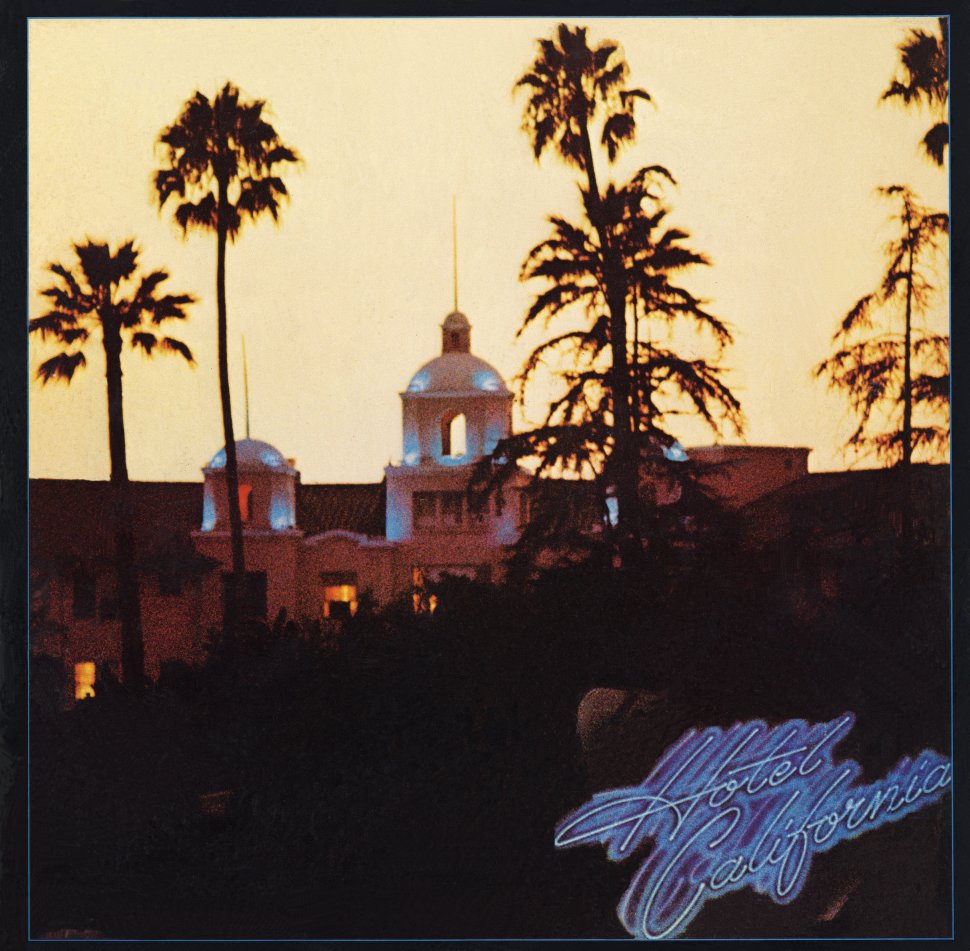
It's like the Hotel California, you know. You can check in any time you like, but you can never leave."

(laughter)

See the full video at YouTube.

Sizing a boiler?

I know someone looking for an engineer to size a boiler system to replace several hot water heaters in an apartment building.

I guess you would need to establish BTU requirement through heat loss calculation.

Out of (16) units, I would guess that no more than (8) units would

Rex Bell Wins the 2010 Thomas Paine Award at the LP National Convention

Libertarian Party of Indiana leader, candidate, and frequent LPIN.org blogger Rex Bell Rex Bell has won the National Libertarian Party’s Thomas Paine Award for his literary efforts in communicating libertarian ideas.
The Thomas Paine award honors individuals within the Libertarian Party who have excelled in the area of communications. Hoosier Eric Schansberg won this award [...]