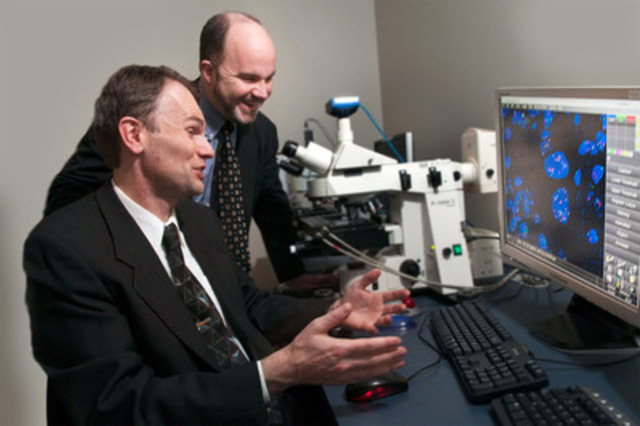
31-01-2012 15:24 MDA Vice President of Research Sanjay Bidichandani explains the promising research being done in neuromuscular disease research using adult stem cells.
Link:
Stem Cell Therapy in Neuromuscular Disease Research - Video

31-01-2012 15:24 MDA Vice President of Research Sanjay Bidichandani explains the promising research being done in neuromuscular disease research using adult stem cells.
Link:
Stem Cell Therapy in Neuromuscular Disease Research - Video
NEW YORK & PETACH TIKVAH, Israel--(BUSINESS WIRE)-- BrainStorm Cell Therapeutics Inc. (OTCBB: BCLI.OB - News), a leading developer of adult stem cell technologies and therapeutics, announced today that the prestigious Experimental Neurology Journal, published an article indicating that preclinical studies using cells that underwent treatment with Brainstorm’s NurOwn™ technology show promise in an animal model of Huntington’s disease. The article was published by leading scientists including Professor Melamed and Professor Offen of the Tel Aviv University.
In these studies, bone marrow derived mesenchymal stem cells secreting neurotrophic factors (MSC-NTF), from patients with Huntington’s disease, were transplanted into the animal model of this disease and showed therapeutic improvement.
“The findings from this study demonstrate that stem cells derived from patients with a neurodegenerative disease, which are processed using BrainStorm’s NurOwn™ technology, may alleviate neurotoxic signs, in a similar way to cells derived from healthy donors. This is an important development for the company, as it confirms that autologous transplantation may be beneficial for such additional therapeutic indications,” said Dr. Adrian Harel, BrainStorm’s CEO.
"These findings provide support once again that BrainStorm’s MSC-NTF secreting cells have the potential to become a platform that in the future will provide treatment for various neuro-degenerative diseases," says Chaim Lebovits, President of BrainStorm. "This study follows previously published pre-clinical studies that demonstrated improvement in animal models of neurodegenerative diseases such as Parkinson’s, Multiple Sclerosis (MS) and neural damage such as optic nerve transection and sciatic nerve injury. Therefore, BrainStorm will consider focusing on a new indication in the near future, in addition to the ongoing Clinical Trials in ALS.”
BrainStrom is currently conducting a Phase I/II Human Clinical Trial for Amyotrophic Lateral Sclerosis (ALS) also known as Lou Gehrig’s disease at the Hadassah Medical center. Initial results from the clinical trial (which is designed mainly to test the safety of the treatment), that were announced last week, have shown that the Brainstorm’s NurOwn™ therapy is safe and does not show any significant treatment-related adverse events and have also shown certain signs of beneficial clinical effects.
To read the Article entitled ‘Mesenchymal stem cells induced to secrete neurotrophic factors attenuate quinolinic acid toxicity: A potential therapy for Huntington's disease’ by Sadan et al. please go to:
http://www.sciencedirect.com/science/article/pii/S0014488612000295
About BrainStorm Cell Therapeutics, Inc.
BrainStorm Cell Therapeutics Inc. is a biotech company developing adult stem cell therapeutic products, derived from autologous (self) bone marrow cells, for the treatment of neurodegenerative diseases. The company, through its wholly owned subsidiary Brainstorm Cell Therapeutics Ltd., holds rights to develop and commercialize the technology through an exclusive, worldwide licensing agreement with Ramot at Tel Aviv University Ltd., the technology transfer company of Tel-Aviv University. The technology is currently in a Phase I/II clinical trials for ALS in Israel.
Safe Harbor Statement
Statements in this announcement other than historical data and information constitute "forward-looking statements" and involve risks and uncertainties that could cause BrainStorm Cell Therapeutics Inc.'s actual results to differ materially from those stated or implied by such forward-looking statements, including, inter alia, regarding safety and efficacy in its human clinical trials and thereafter; the Company's ability to progress any product candidates in pre-clinical or clinical trials; the scope, rate and progress of its pre-clinical trials and other research and development activities; the scope, rate and progress of clinical trials we commence; clinical trial results; safety and efficacy of the product even if the data from pre-clinical or clinical trials is positive; uncertainties relating to clinical trials; risks relating to the commercialization, if any, of our proposed product candidates; dependence on the efforts of third parties; failure by us to secure and maintain relationships with collaborators; dependence on intellectual property; competition for clinical resources and patient enrollment from drug candidates in development by other companies with greater resources and visibility, and risks that we may lack the financial resources and access to capital to fund our operations. The potential risks and uncertainties include risks associated with BrainStorm's limited operating history, history of losses; minimal working capital, dependence on its license to Ramot's technology; ability to adequately protect its technology; dependence on key executives and on its scientific consultants; ability to obtain required regulatory approvals; and other factors detailed in BrainStorm's annual report on Form 10-K and quarterly reports on Form 10-Q available at http://www.sec.gov. The Company does not undertake any obligation to update forward-looking statements made by us.
Sanofi Canada President and CEO visits BC's Genetic Pathology Evaluation Centre
Hugh O'Neill, Sanofi Canada's President and CEO (standing) and Dr. Torsten Nielsen, Co-Director of the Genetic …
MONTREAL , Feb. 1, 2012 /CNW Telbec/ - Hugh O'Neill, Sanofi Canada's President and CEO (standing) and Dr. Torsten Nielsen ,Co-Director of the Genetic Pathology Evaluation Centre in Vancouver , BC, discuss the latest advances in microarray technology. Sanofi Canada has a ten-year research collaboration with the Centre, supporting their mission to improve cancer diagnosis, assessment and treatment.
Image with caption: "Hugh O'Neill, Sanofi Canada's President and CEO (standing) and Dr. Torsten Nielsen, Co-Director of the Genetic Pathology Evaluation Centre in Vancouver, BC, discuss the latest advances in microarray technology. Sanofi Canada has a ten-year research collaboration with the Centre, supporting their mission to improve cancer diagnosis, assessment and treatment. (CNW Group/Sanofi Canada)". Image available at: http://photos.newswire.ca/images/download/20120201_C8511_PHOTO_EN_9497.jpg

Read more here:
Sanofi Canada focuses in on cancer research
CAMBRIDGE, Mass.--(BUSINESS WIRE)-- NinePoint Medical, Inc., an emerging leader in the development of medical devices for in vivo pathology, today announced the appointment of 11 leading experts to its newly formed clinical and technology advisory boards. These experts will support the continued growth of NinePoint Medical and will serve as strategic advisers to the company as it progresses a next-generation high-resolution optical imaging technology, the Nvision VLE Imaging System.
“We look forward to working closely with these distinguished experts as we continue to develop our groundbreaking technology, which we believe can dramatically improve patient care,” said Charles Carignan, M.D., president and chief executive officer of NinePoint Medical. “Their unique and diverse perspectives within the areas of endoscopy, pathology and imaging will be instrumental as we prepare to market the Nvision VLE Imaging System, which recently received 510(k) clearance from the FDA for use as an imaging tool in the evaluation of human tissue microstructure by providing two-dimensional, cross sectional, real-time depth visualization. These appointments will be invaluable as we focus our efforts on further developing the technology to improve the detection, diagnosis and treatment of mucosal and soft tissue diseases.”
The inaugural members of NinePoint Medical’s clinical and technology advisory boards include:
Clinical Advisory Board:
Blair A. Jobe, M.D., FACS, is the Sampson Family Endowed Professor of Surgery within the department of cardiothoracic surgery at the University of Pittsburgh School of Medicine. He currently serves as the director of esophageal research and director of esophageal diagnostics and therapeutic endoscopy within the division of thoracic and foregut surgery. Dr. Jobe’s areas of interest are in esophageal cancer, Barrett’s esophagus, esophageal preservation in the face of early malignancy, minimally invasive surgery, endoscopic therapy, esophageal motility disorders and complicated gastroesophageal reflux disease. Laurence Lovat, MBBS, Ph.D., is a consultant gastroenterologist at University College Hospital and reader in gastroenterology and laser medicine at University College London. Dr. Lovat’s research focuses on optical techniques for diagnosing and treating pre-malignant lesions arising within Barrett's esophagus. He developed photodynamic therapy for high-grade dysplasia in Barrett's and also worked on elastic scattering spectroscopy to detect dysplasia in patients undergoing endoscopic surveillance. He also serves as a specialist adviser to the UK Department of Health and NICE. Norman S. Nishioka, M.D., is a gastroenterologist at Massachusetts General Hospital and an associate professor of medicine at Harvard Medical School. Dr. Nishioka has special clinical interest in the diagnosis and treatment of gastroesophageal reflux disease (GERD), Barrett’s esophagus and early esophageal cancer. He has contributed to the clinical development of various optical imaging technologies including optical coherence tomography and optical frequency domain imaging in the gastrointestinal tract. Gary J. Tearney, M.D., Ph.D., is a co-inventor of NinePoint Medical’s optical imaging technology. As the associate director of the Wellman Center for Photomedicine at Massachusetts General Hospital and the optical diagnostics program leader at the Center for Integration of Medicine and Innovative Technology, Dr. Tearney’s research focuses on optical coherence tomography and other imaging modalities. He is also a professor of pathology at Harvard Medical School and an affiliated faculty member of the Harvard-MIT Division of Health Sciences and Technology. Michael Wallace, M.D., is a professor of medicine with the Mayo Clinic College of Medicine and is the director of research for the department of medicine and the division of gastroenterology and hepatology at the Mayo Clinic in Jacksonville, Fla. Dr. Wallace's areas of interest are in endoscopic ultrasound (EUS), gastrointestinal oncology, clinical research, advanced endoscopic imaging technologies, endoscopic mucosal resection and intestinal stent placement. In collaboration with the Massachusetts Institute of Technology, Dr. Wallace pioneered the development of light scattering spectroscopy which has now been applied to the detection of early cancer in Barrett's esophagus, colon cancer and other non-GI cancers. Kenneth Wang, M.D., is director of the Advanced Endoscopy Group and Esophageal Neoplasia Clinic and a consultant in the division of gastroenterology and hepatology at the Mayo Clinic. Additionally, Dr. Wang is editor in chief of the journal Diseases of the Esophagus and associate editor of the journal Clinical Gastroenterology and Hepatology. His areas of interest include laser therapy, Barrett's esophagus, esophageal cancer, photodynamic therapy, endoscopic ultrasonography, gastrointestinal bleeding, optical biopsy, laser confocal microscopy, radiofrequency abalation and endoscopic mucosal resection/dissection. Herbert Wolfsen, M.D., is a professor of medicine at the Mayo Medical School and chief of gastrointestinal endoscopy at the Mayo Clinic in Jacksonville, Fla. Dr. Wolfsen’s areas of interest include advanced endoscopic imaging for detection of Barrett’s disease, dysplasia and esophageal cancer, and endoscopic therapy for Barrett's disease, including radiofrequency ablation, photodynamic therapy and cryotherapy.
Technology Advisory Board:
Michael Becich, M.D., Ph.D., is a professor and chairman of the department of biomedical informatics at the University of Pittsburgh School of Medicine. He is also associate director of the University of Pittsburgh Cancer Institute and co-director of the Clinical and Translational Science Institute at the University of Pittsburgh School of Medicine. Dr. Becich's research interests are focused on the interface between clinical informatics, imaging informatics and bioinformatics. He has been an innovator and entrepreneur in the area of whole slide imaging and digital pathology, and their use in improving patient care and safety. Brett E. Bouma, Ph.D., is a co-inventor of NinePoint Medical’s optical imaging technology. He is a professor of dermatology and health sciences and technology at Harvard Medical School and an associate physicist at the Wellman Center for Photomedicine at Massachusetts General Hospital. Dr. Bouma’s research on optical technology has contributed to the development of imaging modalities such as optical coherence tomography, spectrally encoded confocal microscopy and spectrally encoded endoscopy. Sanjiv Sam Gambhir, M.D., Ph.D., is the Virginia & D.K. Ludwig Professor of Cancer Research and the chair of radiology at Stanford University School of Medicine. He also heads up the Canary Center at Stanford for Cancer Early Detection. An internationally recognized researcher in molecular imaging with more than $75 million of NIH funding as the principal investigator, Dr. Gambhir’s lab has focused on interrogating fundamental molecular events in living subjects. He has developed and clinically translated several multimodality molecular imaging strategies, including imaging of gene and cell therapies. Jacques Van Dam, M.D., Ph.D., is a professor of medicine at the University of Southern California and director of clinical gastroenterology at the USC University Medical Center. Dr. Van Dam’s areas of expertise include pancreatic, esophageal, gastric and colorectal cancer. Dr. Van Dam’s clinical expertise is in diagnostic and therapeutic endoscopy, advanced interventional endoscopy, and advanced endoscopic imaging including microendoscopy and optical biopsy.
About NinePoint Medical, Inc.
NinePoint Medical, Inc. is a transformational medical device company developing innovative, real-time, in vivo pathology devices focused on dramatically improving patient care. Through its proprietary Nvision VLE Imaging System, NinePoint intends to bridge the gap between the diagnosis and treatment of disease. The Nvision VLE Imaging System will enable physicians and pathologists, for the first time, to view real-time, high-resolution, volumetric images of organs and tissues up to 3mm deep at less than 10 micron resolution. Initially, NinePoint is focusing on devices that enable real-time, endoscopic screening and surveillance of diseases of the mucosa of various tissues that are often precancerous. Eventually, the company intends to develop medical devices that provide physicians with immediately actionable information and that will allow them to diagnose and treat patients during the same procedure. This convergence of access, diagnosis and treatment during one procedure is expected to improve patient experiences and outcomes, improve the efficiency of care and provide important savings to the health care system. Headquartered in Cambridge, Mass., NinePoint is backed by Third Rock Ventures and Prospect Venture Partners. For more information, please visit http://www.ninepointmedical.com.
Originally posted here:
NinePoint Medical Announces Formation of Clinical and Technology Advisory Boards
Editor's Choice
Main Category: Nutrition / Diet
Also Included In: Regulatory Affairs / Drug Approvals
Article Date: 31 Jan 2012 - 10:00 PST
email to a friend printer friendly opinions
Current Article Ratings:
Patient / Public: Healthcare Prof:
The key outcome of the FLABEL conference (Food Labeling to Advance Better Education for Life) in November 2011 was reported to be that even though nutrition labeling is commonly used throughout Europe, consumers pay insufficient attention and lack motivation to use them. FLABEL Scientific Advisor, Professor Klaus G. Grunert, will present the final findings of this three-and-a-half-year project in a webinar today.
Nutrition labels provide consumers with the option to choose healthier foods, however, scientific studies on using these labels in real-life shopping situations are limited. According to the FLABEL project, consumers do understand the information presented in nutrition labels and use it to opt for healthier choices. Most of the consumers were able to correctly rank foods according to its health rating, when given information on key nutrients, such as fat, saturated fat, sugar and salt, as well as energy for a variety of products.
The key finding of the FLABEL research shows that consumer's choices are affected by their lack of motivation and attention in terms of nutrition labeling. Professor Grunert says that these important hurdles need to be overcome, explaining, that: "consumers need to be motivated to engage with nutrition information - for instance, by having a health goal - in order to pay attention to nutrition labels".
Lack of attention also has a negative impact on nutrition labels' choices on healthy foods. For instance, researchers tracked consumer's eye movements in a mock grocery store experiment when people were shopping for food. According to the data, the consumers only scanned the nutrition labels for an average of between just 25 and 100 milliseconds, insufficient to process the information provided.
The attention consumers' pay to read the nutrition information provided on the labels can be improved by motivating the consumer, however, the most promising option for doing so, including using the labels to make healthy choices is to consistently provide information on key nutrients and energy on the front of the pack. According to Grundert:
"Complementing this information with a health logo can also increase attention to, and use of, the information, especially when the consumer is under time pressure. The use of color-coding can increase attention and use in certain situations, although the effects are not strong."
Participants in the FLABEL project reported they prefer and would like to use more complex labels, which offer the entire information of a product. The data also indicates that whether or not consumers' prefer certain products depend on previous exposure or familiarity with the label.
The findings of the project evidently demonstrated a very high presence of nutrition information on food labels in Europe.
In an investigation conducted in the EU 27 and Turkey, researchers evaluated more than 37,000 products in five product categories, including sweet biscuits, breakfast cereals, chilled pre-packed ready meals, carbonated soft drinks and yoghurts, and established that the majority (85%) of food products displayed nutrition information on the back of the pack, with almost half (48%) of the products showing nutrition information on the front packaging.
A table with a list of nutrition proved to be the most common method of labeling for the back of the pack (84%) whilst Guideline Daily Amounts (GDA) labels and nutrition claims were the most frequent method on packaging fronts. Both types of labeling were found on a quarter of all products.
The webinar was held today, from 9:30-10:20 CET (8:30-9:20 GMT), this link provide the full study results, including their policy implications.
Written by Petra Rattue
Copyright: Medical News Today
Not to be reproduced without permission of Medical News Today
Visit our nutrition / diet section for the latest news on this subject. Please use one of the following formats to cite this article in your essay, paper or report:
MLA
Petra Rattue. "Nutrition Labels Being Ignored By Consumers." Medical News Today. MediLexicon, Intl., 31 Jan. 2012. Web.
1 Feb. 2012. <http://www.medicalnewstoday.com/articles/240983.php>
APA
Please note: If no author information is provided, the source is cited instead.
Rate this article:
(Hover over the stars then click to rate) Patient / Public:
or Health Professional:
Please note that we publish your name, but we do not publish your email address. It is only used to let you know when your message is published. We do not use it for any other purpose. Please see our privacy policy for more information.
If you write about specific medications or operations, please do not name health care professionals by name.
All opinions are moderated before being included (to stop spam)
Contact Our News Editors
For any corrections of factual information, or to contact the editors please use our feedback form.
Please send any medical news or health news press releases to:
Note: Any medical information published on this website is not intended as a substitute for informed medical advice and you should not take any action before consulting with a health care professional. For more information, please read our terms and conditions.
Read the original post:
Nutrition Labels Being Ignored By Consumers
DUBLIN--(BUSINESS WIRE)-- Research and Markets(http://www.researchandmarkets.com/research/09b8df/france_baby_food) has announced the addition of the "France Baby Food & Paediatric Nutrition Market: Analysis & Forecast (2007 - 2017)" report to their offering.
This Report Provides A Holistic View To The Overall France Baby Food And Paediatric Nutrition Market With Over View Of Western Europe Market And 11 Year Market Data & Forecast Based On Following Segmentation:
By Product
Bottled Baby Food Baby Cereals Baby Snacks Baby Soups Canned & Frozen Baby Foods
By Type
Dried Baby Food Milk Formula Prepared Baby Food Other Baby Food
Key Topics Covered:
Chapter 1 Introduction 1.1 Objectives & Coverage 1.2 Report Description 1.3 Scope And Definitions 1.3.1 Segmentation & Analysis 1.4 Stakeholders 1.5 Data Sources, Methodology & Forecasting
Chapter 2 Western Europe Baby Food & Pediatric Nutrition Market 2.1 Overview 2.2 Demographic Trends 2.3 Drivers 2.4 Inhibitors 2.5 Opportunities 2.6 Market Size & Growth 2.7 Market Trend 2.8 Future Prospect 2.9 Market Forecast 2.10 Competitive Landscape
Chapter 3 France Baby Food & Pediatric Nutrition Market 3.1 Market Size & Growth 3.2 Market Trend 3.3 Future Prospect 3.4 Market Forecast 3.5 Competitive Landscape
For more information visit http://www.researchandmarkets.com/research/09b8df/france_baby_food
Continued here:
Research and Markets: France Baby Food & Paediatric Nutrition Market: Analysis & Forecast (2007 - 2017)
DUBLIN--(BUSINESS WIRE)-- Research and Markets(http://www.researchandmarkets.com/research/90cb8b/malaysia_baby_food) has announced the addition of the "Malaysia Baby Food & Paediatric Nutrition Market: Analysis & Forecast (2007 - 2017)" report to their offering.
Parent's desire to give the best to their babies and rising income levels has helped the strong growth in the Malaysian baby food & paediatric nutrition market, despite the declining birth rates. The rising awareness about the baby food benefits and parents' concern over their child's growth will drive the growth of Malaysia baby food & paediatric nutrition market over the forecasted period. The Malaysia baby food and paediatric nutrition sales value expected to grow with a CAGR of 6.58% during 2012 - 2017 to be worth USD 577.8 million in 2017. Danone continues to lead the market with about 1/3rd of the market share in 2011.
This report provides a holistic view to the overall Malaysia Baby Food and Paediatric Nutrition market with over view of Asia - Pacific Market and 11 year market data & forecast based on following segmentation:
By Product
Bottled baby food Baby cereals Baby snacks Baby soups Canned & Frozen baby foods
By Type
Dried Baby Food Milk Formula Prepared Baby Food Other Baby Food
Key Topics Covered:
Chapter 1 Introduction 1.1 Objectives & Coverage 1.2 Report Description 1.3 Scope And Definitions 1.3.1 Segmentation & Analysis 1.4 Stakeholders 1.5 Data Sources, Methodology & Forecasting
Chapter 2 Asia - Pacific Baby Food & Pediatric Nutrition Market 2.1 Overview 2.2 Demographic Trends 2.3 Drivers 2.4 Inhibitors 2.5 Opportunities 2.6 Market Size & Growth 2.7 Market Trend 2.8 Future Prospect 2.9 Market Forecast 2.10 Competitive Landscape
Chapter 3 Malaysia Baby Food & Pediatric Nutrition Market 3.1 Market Size & Growth 3.2 Market Trend 3.3 Future Prospect 3.4 Market Forecast 3.5 Competitive Landscape
For more information visit http://www.researchandmarkets.com/research/90cb8b/malaysia_baby_food
BRADFORD, England, February 1, 2012 /PRNewswire/ --
Predator Nutrition is regarded as the first port of call for high quality proteins and other nutritional supplements and sporting accessories in Europe and the UK, with a reputation for collaborating with some of the top sports supplement manufacturers in the world.
Predator Nutrition's latest exclusive distribution deal is with American sports supplements manufacturer, Antaeus Labs.
Antaeus Labs are well known for their discovery, development and distribution of highly effective transdermal delivery systems and innovative legal muscle building supplements. They are at the forefront of pioneering new techniques and products that will continue to transform the sports supplementation world with every new product that they introduce.
They are bestknown for products such as Trenazone and Ultradrol. Trenazoneis a cutting edge transdermal delivery system that promotes muscle growth in an innovative way, and Ultradrol has been labelled as "the world's best legal bulking and repartitioning agent".
With this in mind, and with Predator Nutrition's already sterling reputation for excellent customer service and a huge range of the premium quality supplements, the collaboration between these two companies is sure to benefit both parties and their customers worldwide. This new deal gives Predator Nutrition the exclusive rights to distribute Antaeus Labs' products in Europe and the UK.
The man behind Predator Nutrition, Reggie Johal said that "Antaeus Labs is a company that we have been interested in for years. They are pioneers in the sports supplements world and are dedicated to providing high quality products that we in turn will distribute with high quality service. It really is a pleasure to be collaborating with such a top quality brand."
Antaeus Labs CEO, Jake Ganor, also commented on the deal with encouraging words "we have been working alongside Predator Nutrition for a while now and see this exclusivity deal as a fantastic stepping stone to great things for both of us."
With this recent announcement it is clear that both parties are working hard to creating a bright future for the sports supplements world. With both Antaeus Labs and Predator Nutrition experiencing rapid growth and the announcement of the latest deal, both brands are sure to go from strength to strength in 2012 and beyond.
The rest is here:
Antaeus Labs & Predator Nutrition Press Release
Iowa City board approves assessor's budget, eliminates longevity funds
BY DI STAFF | FEBRUARY 01, 2012 7:20 AM
The Iowa City Conference Board passed the City Assessor's fiscal-year 2013 budget proposal during one of its two yearly meetings Tuesday night.
The conference board — consisting of Iowa City city councilors, Johnson County supervisors, and Iowa City School Board members — voted to eliminate a proposed $3,525 longevity expenditure before passing the budget. Longevity pay was previously allotted $3,350 for fiscal-year 2012.
City Assessor Dennis Baldridge said the conference board eliminated step/merit pay for fiscal 2012 because they want to spend more time evaluating how the pay options would effect citizens. The proposed step/merit expenditures for fiscal 2013 is $6,000.
Baldridge suggested the conference board leave both longevity and merit/salary pay in the budget for this meeting and vote at the next meeting.
But conference board members insisted on proceeding with only step/merit pay.
"We're either doing longevity or merit," Supervisor Janelle Rettig said. "I think [Baldridge] wanted to move to merit last year, but we didn't have a clear direction from the conference board to do that."
All conference members approved the budget proposal with the elimination of the longevity pay.
The assessor's budget will be effective July 1.
A public hearing for the assessor's budget will be held March 6 at 3 p.m.
—by Kristen East
In today's issue:
View the discussion thread.comments powered by
See the original post:
Iowa City board approves assessor's budget, eliminates longevity funds
Public release date: 1-Feb-2012
[ | E-mail | Share ]
Contact: Vicki Cohn
vcohn@liebertpub.com
914-740-2100
Mary Ann Liebert, Inc./Genetic Engineering News
New Rochelle, NY -- The value of routine body mass index (BMI) screening in schools has been a topic of ongoing controversy. An expert Roundtable Discussion in the current issue of Childhood Obesity, a peer-reviewed journal published by Mary Ann Liebert, Inc., debates the pros and cons of routine BMI screening in the school setting, discusses the most recent data, and explores when and for what purpose BMI screening results should be shared with parents and the potential benefits. The Roundtable is available online.
Patricia B. Crawford, DrPH, RD, Adjunct Professor, University of California, Berkeley, moderates the Roundtable entitled, "An Update on the Use and Value of School BMI Screening, Surveillance, and Reporting." Participants include Jim Hinson, PhD, Superintendent of Schools, Independence School District, Missouri, Kristine Madsen, MD, MPH, Assistant Professor, University of California, San Francisco, Dianne Neumark-Sztainer, PhD, MPH, RD, Professor, University of Minnesota, Minneapolis, and Allison Nihiser, MPH, Health Scientist, National Center for Chronic Disease Prevention and Health Promotion, Centers for Disease Control and Prevention, Atlanta, Georgia.
"Ignoring this issue is clearly not an option," says David L. Katz, MD, MPH, Editor-in-Chief of Childhood Obesity and Director of Yale University's Prevention Research Center. "But it must be handled thoughtfully so that what we know about BMI in kids empowers us and them, and their parents, and their teachers to do something constructive, and compassionate about it. This insightful, multidisciplinary group highlights the important opportunities in this strategy, while considering how to avoid any potential pitfalls. Great insights here and very practical guidance."
###
Childhood Obesity is a bimonthly peer-reviewed journal, published in print and online, and the journal of record for all aspects of communication on the broad spectrum of issues and strategies related to weight management and obesity prevention in children and adolescents. The Journal includes peer-reviewed articles documenting cutting-edge research and clinical studies, opinion pieces and roundtable discussions, profiles of successful programs and interventions, and updates on task force recommendations, global initiatives, and policy platforms. It reports on news and developments in science and medicine, features programs and initiatives developed in the public and private sector, and includes a Literature Watch and Web Watch. Tables of content and a free sample issue may be viewed online.
Mary Ann Liebert, Inc. is a privately held, fully integrated media company known for establishing authoritative medical and biomedical peer-reviewed journals, including Metabolic Syndrome and Related Disorders, Population Health Management, Diabetes Technology & Therapeutics, and Journal of Women's Health. Its biotechnology trade magazine, Genetic Engineering & Biotechnology News (GEN), was the first in its field and is today the industry's most widely read publication worldwide. A complete list of the firm's 70 journals, newsmagazines, and books is available on our website.
Mary Ann Liebert, Inc.
140 Huguenot Street,
New Rochelle, NY 10801-5215
http://www.liebertpub.com
Phone 914-740-2100
800-M-LIEBERT
Fax 914-740-2101
[ | E-mail | Share ]
AAAS and EurekAlert! are not responsible for the accuracy of news releases posted to EurekAlert! by contributing institutions or for the use of any information through the EurekAlert! system.
Read more from the original source:
Assessing the value of BMI screening and surveillance in schools
24-01-2012 14:26 http://www.TheBeeShine.com
Originally posted here:
Charlie Clips speaks on KOTD, Dizaster, DNA,
24-01-2012 06:06 Sharon-Ann Riley channels the Galactic Federation of Light. The GFL discuss Cosmic triggers demolishing old mind control programs, slave encodings, family dna karma release. Sharon-Ann Riley is a Galactic Ambassador whose role is to empower humanity to trust its divinity and spiritual knowingness.She has experienced ET visitations and UFO encounters throughout her life. She is an incarnated Galactic Federation Ascended Master and Blue Ray Star Seed. Her role is to prepare Humanity for its galactic re-emergence. Sharon assists the Galactic Federation, Cosmic / multidimensional beings and Mother Gaia with Earth Healing. She is guided to various places around the world to channel energy and activate the land by the Great Mother and Galactic Federation. http://www.sharonannriley.com Email: info@sharonannriley.com Written Transcript: http://www.sharonannriley.com The above transcript is copyrighted to http://www.sharonannriley.com . Posting on websites is permitted as long as the information is not altered and credit to ©2011 Sharon-Ann Riley and website is included. For all publications / syndications please contact info@sharonannriley.com
Continued here:
Releasing DNA fear codes,Galactic Federation of Light, Sharon-Ann Riley, 2 February 2012 - Video
28-01-2012 06:10 uploaded by Killuminatithemovie with clips from the "esoteric agenda" Please visit my channel and Subscribe Izabelab@rocketmail.com Anastasia Beavenhouser on FB. new paradigm 2012 shamanism shift cleansing 2012 mother earth climatic disaster pole shift end time new world new earth hopi prophecy 2012 December Dec 21st 2012 Apocalypse end world Rapture time asteroids Nostradamus native american calentamiento end of world end of the world as we know it end of paradigm new paradigm change Extreme Weather Patterns Maya END OF THE WORLD DOOMS DAY NEW AGE change evoloution shift timewave zero terence mckenna 2012 sightings nostradamus dimensional shift omega dedroidify Mayan Calendar Apocalypse Pinchbeck i ching prophecies prophecy alien ufo illuminati solar radiation Harmonic Convergence Great Shift cosmic cycle Pleiades The Photon belt Great Shift the wave of love red elk Galactic Federation solstice quetzalcoatl Pahana global warming pleiades orion singularity quantum revelations spirituality vision quest Apocalypse Armageddon endtime rapture apocalypto thunderbeing films ken thornton post 2012 emergence planetary ET Pleiadian wayshowers WWIII alycone indigo galactic yoga sacred geometry pineal ufo phi om fifth 5th sun gloabl shift Pleiades bloodline David Icke lightworkers seer photons cosmic arcturian alignment enlightenment 5th dimenson mass awakening great awakening wayshower way shower heyoka light cosmic rays sun ascended indigo children 2012 milky way ken thornton ...
Go here to see the original:
Sacred Geometry DNA changes 2012 Mollecular Atom Consciousness.mp4 - Video
01-02-2012 03:13 Bioline's Senior Global Product Manager, Dr Steve Hawkins, runs through the features, benefits and specially formulated novel buffer system of MyTaq DNA Polymerase. About MyTaq The MyTaq DNA Polymerase product range is a new generation of very high performance PCR products developed by Bioline: The PCR Company, specifically designed to deliver outstanding results on all templates, including complex genomic DNA. MyTaq is based on the latest technology in PCR enzyme preparation, engineered to increase affinity for DNA, resulting in significant improvements to yield, sensitivity and speed. The enzyme is supplied with an industry-leading novel buffer system, specifically formulated and validated for the unique properties of MyTaq, making it the perfect choice for all of your PCR assays. For more information please see: bioline.com
Read more from the original source:
MyTaq DNA Polymerase - Product Overview, Features
30-01-2012 19:22 Penn Research Finds Genetic Link Between Native Americans, Russian Region Artifacts show that humans were living in North America 15000 years ago; they reached the tip of South America over the next 2000 years. Using techniques akin to DNA fingerprinting, scientists have continued to gather evidence that the majority of current native people of North and South America derive their ancestry from Asia. University of Pennsylvania researcher Theodore Schurr's group focused on two types of DNA - mitochondrial DNA, which is passed down in eggs and traces maternal lines, and the Y chromosome, which is passed down through male lines. The Y chromosome analysis took advantage of non-coding regions, which are not part of genes and which are used in criminal forensics to match suspects to crime scenes. These DNA regions differ from one person to another, Schurr said. The more such quirks people share, the more recently they are likely to have had a common ancestry. Schurr said his group had collected about 1500 DNA samples from Native Americans, as well as 750 from people in the Altai. The researchers also compared DNA from people from other parts of Asia. The scientists can use groups of variations on the Y chromosome to identify specific human male lineages, and variations in mitochondrial DNA to trace female lineages. Male lineages called Q, and a subset of Q called Q-M3, appear widespread in Native Americans and are thought to have come from a founder population. Both also appear ...
See the original post:
# 1146 Native Americans DNA Linked to Altai from Russia - Video
OXFORD, England--(BUSINESS WIRE)-- Oxford Nanopore Technologies Ltd. announces that Clive G Brown, Chief Technology Officer, will present at the Advances in Genome Biology and Technology (AGBT) conference in Marco Island, Florida, on 17th February 2012 at 11.40am (EST) / 4.40pm (GMT).
The talk is titled: “Single Molecule ‘Strand’ Sequencing Using Protein Nanopores and Scalable Electronic Devices”.
Oxford Nanopore intends to commercialise DNA strand sequencing products, directly to customers within 2012. At the AGBT presentation, Oxford Nanopore will show DNA strand sequencing data and other disruptive features of the Company's proprietary electronics-based sensing devices.
Further information will be provided at the time of the Company's presentation at the AGBT conference.
-ends-
Notes to editors
Oxford Nanopore Technologies
Oxford Nanopore Technologies Ltd is developing a novel technology for direct, electronic detection and analysis of single molecules using nanopores. The modular, scalable GridION technology platform is designed to offer substantial benefits in a variety of applications.
The Company is developing two techniques for DNA sequencing: Strand Sequencing, and Exonuclease sequencing, both of which combine a protein nanopore with a processive enzyme for the analysis of DNA. The system is also compatible with the direct analysis of RNA. The Company has signed a commercialisation agreement for its exonuclease sequencing technology but not its strand sequencing technology which it intends to commercialise independently. Oxford Nanopore is also developing a Protein Analysis technology that combines target proteins with ligands for direct, electronic analysis using protein nanopores. These nanopore sensing techniques are combined with the Company's proprietary array chip within the GridION system.
The Company is also developing the subsequent generation of nanopore sensing devices based on solid-state nanopores.
Oxford Nanopore has licensed or owns more than 300 patents and patent applications that relate to many aspects of nanopore sensing including fundamental nanopore sensing patents, analysis using protein nanopores or solid state nanopores and for the analysis of DNA, proteins and other molecules. The Company has collaborations and exclusive licensing deals with leading institutions including the University of Oxford, Harvard and UCSC. Oxford Nanopore has funding programmes in these laboratories to support the science of nanopore sensing. This includes the use of functionalised solid-state nanopores for molecular characterisation, methods of fabricating solid-state nanopores and modifications of solid-state nanopores to adjust sensitivity or other parameters.
Excerpt from:
Oxford Nanopore to Present DNA 'Strand Sequencing' Technology at AGBT Conference
Oxford Nanopore Technologies Ltd., the U.K. company developing a novel gene-sequencing technology, plans to market DNA strand-sequencing products directly to customers this year.
Oxford Nanopore will present data on strand sequencing at the Advances in Genome Biology and Technology conference in Florida on Feb. 17, the closely held Oxford, England-based company said today in a statement. IP Group Plc (IPO), which owns 21.5 percent of Oxford Nanopore, rose to its highest price since 2008 in London trading.
The announcement signals that Oxford Nanopore’s more immediate plans are to sell systems that don’t rely on exonuclease sequencing, for which it has a deal with Illumina Inc. (ILMN), the San Diego-based maker of gene-sequencing machines that Roche Holding AG (ROG) is trying to buy.
“With strand you’re reading the DNA directly,” Chief Technology Officer Clive Brown, who is presenting Oxford Nanopore’s data on Feb. 17, said in an interview. “You get more information of more biological utility coming out.”
Illumina owns 15 percent of Oxford Nanopore. Its other shareholders include Lansdowne Partners and Invesco Perpetual, the U.K. group of mutual funds.
$1 Billion Value
Oxford Nanopore is valued at about $1 billion, and IP Group’s holding could add 38 pence a share to its stock, said Charles Weston, a London-based analyst at Numis Securities, which advises IP Group, in a note to investors. He based the figures on Oxford Nanopore gaining 25 percent of a market that could grow to $6 billion within five years.
Weston raised his rating on London-based IP Group to “add” from “hold.” IP Group climbed 14 percent to close at 101 pence, the biggest increase since Aug. 26, 2009. That gives the company a market value of 369.4 million pounds ($586 million).
“It’s obviously a fantastic validation for IP Group, but it now becomes a very large part of their portfolio,” Weston said in an interview.
Oxford Nanopore is entering the race to develop a next- generation machine able to decode the building blocks of life in a single day, Weston said. Among the challenges it faces are competition from much larger companies, the lack of a sales force and that its technology hasn’t subjected to the scrutiny of potential users, he said.
More Funding
The company has raised 74 million pounds since it was founded and will need more funding before marketing its products, Chief Executive Officer Gordon Sanghera said in an interview yesterday. Financing could come from an initial public offering or additional private funding, he said.
“My feeling is we will do another private round,” Sanghera said. “We probably have a shareholder base that says stay put and wait until we have a burgeoning customer base.”
In addition to its major shareholders, Oxford Nanopore has individual shareholders, including company managers, and employees have stock options, according to the company.
Roche on Jan. 25 offered to buy Illumina, which has a majority of the market share for new gene-sequencing equipment, for $5.7 billion in a hostile takeover bid. That came after Illumina said its new HiSeq 2500 machine will be available in the second half of the year.
Illumina’s competitor, Carlsbad, California-based Life Technologies Corp. (LIFE), also said last month it is taking orders for a $149,000 benchtop machine called the Ion Proton Sequencer, which is designed to fully transcribe a person’s DNA in a day, rather than weeks or months, for about $1,000.
Oxford Origin
Oxford Nanopore, spun out of University of Oxford in 2005, uses different sequencing technologies that were initially based on the research of founder and board member Hagan Bayley, a chemistry professor at the university. The company has built on that science through collaborations with researchers at Harvard University, the University of California Santa Cruz and Boston University, among others, and with internal research, said Zoe McDougall, a spokeswoman.
The techniques rely on an engineered protein or nanopore that creates a tiny hole in a cell membrane one-billionth of a meter wide. As DNA bases or building blocks pass through the hole, an electronic chip measures changes in electrical current in the membrane and produces data that, when decoded, identifies the sequence of bases that make up a genome.
In strand sequencing, an entire string of DNA is guided by an enzyme and passes intact through the hole. In exonuclease sequencing, the DNA building blocks are separated by an enzyme and pass individually through the hole.
Strand sequencing provides more genetic information more cheaply, Oxford Nanopore’s Brown said. The technique can read long and complicated DNA structures more easily and with less sample preparation, he said. It also requires less computer software and smaller computers, Brown said.
To contact the reporter on this story: Andrea Gerlin in London at agerlin@bloomberg.net
To contact the editor responsible for this story: Phil Serafino at pserafino@bloomberg.net
Read more here:
Oxford Nanopore to Market DNA Strand-Sequencing Products Starting in 2012
Public release date: 1-Feb-2012
[ | E-mail | Share ]
Contact: Susan Chaityn Lebovits
lebovits@brandies.edu
781-726-4027
Brandeis University
Bacterial resistance to antibiotics is growing exponentially, contributing to an estimated 99,000 deaths from hospital-associated infections in the U.S. annually, according to the Centers for Disease Control and Prevention. One reason that this is happening is that drug resistant proteins are transporting "good" antibiotics, or inhibitors, out of the cells, leaving them to mutate.
In a paper recently published in the journal Nature, Professor of Biochemistry Dorothee Kern and collaborators including former postdoctoral student Katherine A. Henzler-Wildman, looked at how one of these drug transporters, EmrE, works. The hope is that someday a drug will be developed to impede this motion of transport.
"You have a disease and an antibiotic goes into the cells to try to kill it," explains Kern. "But the protein EmrE takes the antibiotic and transports it out. The goal would be to find clever ways to stop EmrE from functioning as an exporter while allowing necessary nutrients to remain"
The challenge with making drugs, says Kern, is that you need to kill specific targets but nothing else.
Kern and her team studied the protein using nuclear magnetic resonance (NMR) spectroscopy, adding a drug mimetic in order to learn how the structure EmrE was designed and how it functioned as it was transporting ? moving the drug from inside of the cell to the outside. Currently there are around 12 to 13 similarly known proteins within the EmrE family.
Increasing the knowledge of how this protein works will hopefully help to target all of them. Once you understand that, you could design inhibitors that do not allow the protein to transport the "good" drugs out.
"We were actually looking at a transporter in real time," says Kern. "That is something very novel as previously these structures were only seen by X-ray crystallography, so they were frozen, and not moving."
Kern says EmrE actually bounces back and forth between two alternate conformations, hand-shaped structures that take one molecule, pump it out, return to grab the next one, then pumps that one out (Fig. 1).
"The cool thing about discovering how the protein functions is that this was unexpected," says Kern. "Everyone thought that the inside and the outside had two different structures."
Kern says that she is extremely proud of her former postdoctoral student, who began working on the project at Brandeis in 2006 and has continued pushing and leading this project at Washington University in St. Louis, where she is now an assistant professor of ?biochemistry and molecular biophysics.
"Before Katie had worked out the kinks, my lab continued to make proteins for her and shipped them there," says Kern. "In collaboration with postdoctoral fellow Michael Clarkson, the NMR dynamics experiments were collected at Brandeis. It's been a real fun collaboration."
Why are there so many resistant strains of bacteria?
Antibiotics try to kill bacteria. To avoid being killed bacteria mutate, meaning that they change the structure of the amino acids within their cell. This way the protein is no longer able to be taken over by the antibiotic.
"These bacteria survive and duplicate every 20 minutes," says Kern. "Now you have a new strain, a new form of bacteria and the designed drug no longer works. This survival and changing of composition occurs when an antibiotic encounters them."
As more antibiotics are being used, more new strains of bacteria are created that are resistant to current antibiotics, which is why bacteria and viruses are harder to target.
"It's called mutagenesis?changes in the genomic material and bacteria can do this very quickly," says Kern. "If you look at the statistics, the numbers of resistant strains are exponentially growing."
Kern cautions against purchasing anti-bacterial products such as cutting boards, soaps and toothpaste as they are contributing to this rash of mutations.
"If you have an infection and use a high concentration of antibiotics, the bacteria are being killed before they can adapt and change,"says Kern. "If the dose is very small, they are not all getting killed, and they have time to mutate."
Kern says this is another reason why it is so crucial to complete a prescribed course of antibiotics when you're sick even if you're asymptomatic ?if 95 percent of the bacteria are gone, there is still five percent that can develop resistance in a matter of days.
###
[ | E-mail | Share ]
AAAS and EurekAlert! are not responsible for the accuracy of news releases posted to EurekAlert! by contributing institutions or for the use of any information through the EurekAlert! system.
See original here:
A step closer to understanding, averting drug resistance
04-10-2011 05:56 This 18 year study involving over 1000 dogs and owners lifts the curtain on the dog and human dynamic. Dale McCluskey shows the reasons behind failure within many feel good and owner focused systems of training. Why so many trainers are exploiting conditioning and misrepresenting dominance for the sake of their bridge to no where agenda. This study is from Dale's new book "The Mind and Body Connection - New and Profound Insight into the Dog and Human Dynamic" Available at Barnes and Noble and Amazon Kindle.
Read more from the original source:
The Dog Study that Invalidates Behavioral Science - Video
Public release date: 31-Jan-2012
[ | E-mail | Share ]
Contact: Jim Sliwa
jsliwa@asmusa.org
202-942-9297
American Society for Microbiology
In response to recent actions of the U.S. National Science Advisory Board for Biosecurity (NSABB), which recommended that two scientific journals withhold crucial details in upcoming reports about experiments with a novel strain of the bird flu virus, H5N1, the American Society for Microbiology (ASM) will publish a special series of commentaries by prominent scientists, including the acting chair of the NSABB, weighing in on whether the recommendations were necessary and what role biosecurity considerations should play in the dissemination of research findings. The commentaries will be published in the Society's online, open-access journal, mBio?, on January 31. The commentaries are accompanied by an editorial from Editor-in-Chief Arturo Casadevall and ASM Publications Board Chair Thomas Shenk who introduce the problem as the H5N1 manuscript redaction controversy.
The strain of avian flu in question has caused hundreds of deaths worldwide, and though it is highly lethal in humans, it apparently lacks the ability to transmit easily from person to person. The current controversy surrounds a report that describes experiments that created a form of the H5N1 virus that is transmissible from ferret to ferret, animals used as models of human flu infection.
In the interest of biosecurity, the NSABB recommended that the federal government move to restrict information in the study that would enable a reader to replicate the experiments that enhanced the transmissibility of the virus. The government honored the recommendation and asked the scholarly journals in question, Science and Nature, to redact many of the experimental details, an unprecedented request to which the researchers and journals agreed. This recommendation has generated tremendous controversy among scientists. As noted by Drs. Casadevall and Shenk in their accompanying editorial, the controversy poses a new problem for scientists who are used to resolving disputes with additional laboratory work but are now in a position where they cannot use this method of conflict resolution to settle the matter.
In the first Commentary, Paul Keim, the acting chair of the NSABB and the Chair of the Microbiology Department at Northern Arizona University, lays out his reasons for supporting these recommendations. According to Keim, the fact that it is possible for a highly virulent form of the bird flu virus to acquire the ability to transmit from mammal to mammal is the most important piece of information in the study and should compel policy makers, granting agencies, public health officials, vaccine and drug developers to move forward with greater urgency in developing flu-fighting infrastructure. The experimental details, on the other hand, would not enhance public health efforts and could actually enable those with ill intent to create a strain of flu that would put lives in danger.
Robert Webster, of St Jude Children's Research Hospital in Memphis, Tennessee, asks how science and policy can maintain the sharing of scientific information while minimizing risks to public health. He emphasizes that suppressing scientific knowledge was in the public interest in this instance, but that so-called dual-use research will continue to raise many questions about where to draw the line between freedom of information and public safety. Webster argues there is an urgent need for general guidance in the matter and he proposes creating an international panel to consider approaches to promoting research while maintaining biosecurity.
The final contributor, Vincent Racaniello of Columbia University, argues that NSABB was wrong to recommend suppressing the information in these studies. It is not known whether the ferret adapted virus is lethal or transmissible among humans, Racaniello says, and he points out that adapting viruses to living in lab animals is actually a common strategy for reducing their suitability and virulence to human hosts. He is also concerned about the precedent set by withholding details from a scientific publication. The idea that scientific studies can be published without methods and data will undermine the system of publication, replication and advancement that guides modern scientific endeavor.
The matter of the NSABB and the H5N1 research raises important questions for science and policy, the answers to which principled persons may disagree. The American Society for Microbiology has long contributed to national discussions on health and biosecurity, and it is hoped that the Commentaries appearing in mBio? on January 31 will stimulate a thoughtful and productive dialogue among the various stakeholders.
###
IN RELATED NEWS: The ASM will host a special session at its annual Biodefense and Emerging Diseases Research Meeting on February 29, featuring a live discussion of the H5N1 research controversy. Hosted by NSABB Chair Paul Keim, the session's participants will include Michael Osterholm of the Center for Infectious Disease Research and Policy, Anthony Fauci of the National Institutes of Health, Bruce Alberts of Science Magazine and Ron Fouchier of Erasmus MC. Additional information can be found online at http://www.asmbiodefense.org.
mBio? is an open access online journal published by the American Society for Microbiology to make microbiology research broadly accessible. The focus of the journal is on rapid publication of cutting-edge research spanning the entire spectrum of microbiology and related fields. It can be found online at http://mbio.asm.org.
The American Society for Microbiology is the largest single life science society, composed of over 39,000 scientists and health professionals. ASM's mission is to advance the microbiological sciences as a vehicle for understanding life processes and to apply and communicate this knowledge for the improvement of health and environmental and economic well-being worldwide.
[ | E-mail | Share ]
AAAS and EurekAlert! are not responsible for the accuracy of news releases posted to EurekAlert! by contributing institutions or for the use of any information through the EurekAlert! system.
Read more here:
NSABB and H5N1 redactions: Biosecurity runs up against scientific endeavor