Insight Psychological Centers Announces a New Treatment Program for Adolescents with Eating Disorders in Downtown …

CHICAGO, May 1, 2012 /PRNewswire/ -- Insight Psychological Centers, treatment center for eating, mood and anxiety disorders, announced today the opening of a new eating disorders program designed specifically for adolescents and their families.

Using a clinically innovative approach of Multi-Family Dialectical Behavioral Therapy (DBT), Insight is at the cutting edge of behavioral science. Led by Ellen Astrachan-Fletcher, Ph.D., Associate Professor in Northwestern University's Feinberg School of Medicine, Insight's Adolescent Program uses the latest techniques developed in academia to treat teens.

Dr. Astrachan-Fletcher, founder of the eating disorders clinic at the University of Illinois at Chicago and co-author of The Dialectical Behavior Therapy Skills Workbook for Bulimia: Using DBT to Break the Cycle and Regain Control of Your Life, is a prominent figure in the science of DBT. The DBT program is one of the most effective treatment methods for helping people recover from anorexia, bulimia and binge eating.[1] Helping patients view and interact with the world in a different way, DBT is a holistic, safe approach to imparting life skills. "Treating adolescents involves treating the whole family when possible," says Astrachan-Fletcher. "Multi-family DBT harnesses the power of peer families. We are seeing excellent results when the whole family learns to replace emotion-minded behaviors with more useful ways of interacting with the world."

Insight's adolescent family programs are currently offered in its loop location and are planned for launch in Northbrook, Evanston and west suburbs later in the year.

Delivering awareness and recovery 7 days a week, Insight Psychological Centers is managed by Northwestern University faculty, Drs. Susan McClanahan and Jenny Conviser. Insight's specialty is using intensive programs to improve health in people who suffer from depression, mood, anxiety and eating disorders. For more information visit http://www.insightforeating.com or call 312-540-9955.

Contact Laura Adams, Director of Business Development, 773-546-8447

[1] Varchol, L & Cooper, H. Psychotherapy approaches for adolescents with eating disorders, Current Opinion in Pediatrics, 2009;21:457-464.

Originally posted here:
Insight Psychological Centers Announces a New Treatment Program for Adolescents with Eating Disorders in Downtown ...

Murad Introduces Resurgence® Age-Diffusing Firming Mask That Instantly Tightens, Firms and Rehydrates Skin

Quotes delayed, except where indicated otherwise. Delay times are 15 mins for NASDAQ, NYSE and Amex. See also delay times for other exchanges. Quotes and other information supplied by independent providers identified on the Yahoo! Finance partner page. Quotes are updated automatically, but will be turned off after 25 minutes of inactivity. Quotes are delayed at least 15 minutes. All information provided "as is" for informational purposes only, not intended for trading purposes or advice. Neither Yahoo! nor any of independent providers is liable for any informational errors, incompleteness, or delays, or for any actions taken in reliance on information contained herein. By accessing the Yahoo! site, you agree not to redistribute the information found therein.

Fundamental company data provided by Capital IQ. Historical chart data and daily updates provided by Commodity Systems, Inc. (CSI). International historical chart data and daily updates provided by Morningstar, Inc.

Yahoo! - ABC News Network

Read the original post:
Murad Introduces Resurgence® Age-Diffusing Firming Mask That Instantly Tightens, Firms and Rehydrates Skin

Implanted Defibrillators Benefit Older People

(HealthDay News) -- Implanted cardioverter defibrillators (ICDs), which deliver an electric shock to prevent sudden death when a heart stops beating properly, improve survival in people 75 and older, new research suggests.

The finding contradicts several earlier studies, notably a 2007 report from Canada that said the benefits of ICDs were limited for older people.

"Their discussion looked at defibrillators in patients who were older and sicker," said Dr. Paul Chan, an assistant professor of medicine at the University of Missouri in Kansas City, and lead author of the new report. "It found use of defibrillators was limited, because they were more likely to die. But there was no control group, no comparison with a group of similar patients who did not get defibrillators."

The new study did have such a control group. It looked at results for 500 people who got ICDs because their left ventricles, which pump blood to the body, were functioning at no more than 35 percent of capacity. The study compared those results to those for a similar number of people with the same condition who did not get ICDs.

"We found that older people were more likely to die," Chan said, "but in this older group of patients, we still found they got a benefit from the defibrillator, similar to that seen in the other age groups."

Over the course of the six-year study, the overall death rate was 26.7 percent for the non-ICD group and 21.6 percent for the ICD group. This 30 percent reduction in deaths was the same for people 75 and older as well as younger recipients. Read more…

Source:
http://anti-aging-for-today.blogspot.com/feeds/posts/default?alt=rss

Has Your Doctor Turned You Into a Hypochondriac?

Once you turn 40 you start hearing a different tune from your doctor. The person who once said you were healthy as an ox is starting to tell you about the problems of aging, how you aren't as strong as you used to be and that oncoming illnesses are imminent and dangerous. This has led many to believe that their doctor is trying to make them a hypochondriac. Are doctors doing this, or is it just the imagination of someone who really cannot accept that his or her health truly is declining? If the doctor is doing this, is this considered malpractice? All of these questions will be answered.

Has Your Doctor Turned You Into a Hypochondriac? is a post from: Anti Aging Nutrition News


Source:
http://feeds2.feedburner.com/AntiAgingNutritionNews

ATA 2012: Where “Meaningful Use” Becomes a Reality

WASHINGTON, April 26, 2012 /PRNewswire via COMTEX/ -- ATA 2012: April 29 - May 1, San Jose, CA.

The American Telemedicine Association applauds the ongoing development of electronic medical records and related health information technologies. These systems lead to greater provider and payer administrative efficiencies; but more importantly, they are a vehicle for improving healthcare quality, increasing access and reducing costs through telemedicine. The complete integration of telemedicine services is an essential element in establishing meaningful use of the investment in HIT. Telemedicine combines high-tech technologies and a human touch to improve the lives of patients, regardless of their location.


"Electronic records and IT systems mean little to the healthcare consumer if they aren't integrated into the delivery of actual patient services," said Jonathan Linkous, CEO of the American Telemedicine Association. "The government has its own definition, but for patients, 'meaningful use' means telemedicine."

ATA's position represents a growing consensus among consumers, providers and payers that telemedicine should be an important component of reformed healthcare. This is evidenced in the following developments:

1. A majority of consumers now want remote access to care - According to a new Deloitte survey of health care consumers 55% want to communicate with their doctors via email. 68% percent are interested in remote monitoring devices that allow self-monitoring of their condition and electronic reporting of results to their physician.

2. Congress addressing cross-state licensure issues - Congress has just passed a law eliminating duplicate state license requirements for physicians treating the nation's military families and veterans. They are also exploring other solutions to streamline licensure, enabling physicians to remotely deliver healthcare anywhere in the country.

3. Billions announced for innovations in Medicare and Medicaid - The new CMS Innovation Center is about to announce up to $1 billion in grants for the winners of the Health Care Innovation Challenge. In addition, more than $1 billion more will be announced soon for other focused initiatives such as Bundled Payments, Comprehensive Primary Care, and the Strong Start Program.

4. The start of Accountable Care Organizations (ACOs) - The first set of 32 pioneer ACOs, serving 860,000 patients, was announced last December with others due to be announced this March and May. ATA estimates that one quarter of all Americans, 73 million patients, are now covered under some form of managed care health insurance program.

ATA has been leading the effort in all of these areas and will continue to work with all stakeholders to ensure the HIT and telemedicine are combined to best serve patient populations.

Organizations and individuals interested in learning more about telemedicine and HIT are encouraged to attend the ATA 2012 Annual Meeting, April 29-May 1, 2012, in San Jose, California. ATA 2012 is the world's largest telemedicine, telehealth and mHealth event, with 450 presentations and an exhibit hall with 200 product and service vendors. This year, over 4,500 healthcare professionals--clinicians, administrators, entrepreneurs, IT specialists, engineers and more--are expected to attend. Free passes for the ATA 2012 Exhibit Hall are available. For more information, visit http://www.ATA2012.com.

The American Telemedicine Association is the leading resource and advocate promoting the use of advanced remote medical technologies. ATA and its diverse membership work to fully integrate telemedicine into healthcare systems to improve quality, equity and affordability of healthcare throughout the world. Established in 1993, ATA is headquartered in Washington, D.C. For more information, visit http://www.americantelemed.org .

SOURCE: American Telemedicine Association

Source:
http://feeds.feedburner.com/DigitalPathologyBlog

2012 DPA WEBINAR SERIES ANNOUNCEMENT – Begins May 9

Dpa_logo_final_webDr. Sylvia Asa (University Health Network, Toronto), Mr. Dirk Soenksen (Aperio, Vista, CA) and myself will address cultural and strategic barriers to adoption of digital pathology.  Each one of these webinar series sessions will be moderated by Robert McGonnagle, publisher of CAP Today.  


CAP2Having been a part of the discussion and getting a quick look and the other speakers' slide decks in advance of our session in a couple of weeks, think this is going to be a good series on what the challenges and barriers are in digital pathology adoption in the clinical space and some insights as to how to overcome them.  

Join us May 9 by registering below.

BARRIERS TO ADOPTION OF DIGITAL PATHOLOGY

REGISTRATION IS FREE. REGISTER TODAY.

Apilogo-smThe Digital Pathology Association (DPA) in partnership with the Association of Pathology Informatics and CAP Today will host a series of four, one-hour webinars in 2012 focusing on the barriers to adoption of digital pathology. The topics to be addressed during the webinars include: a cultural and strategic perspective, regulatory issues, financial aspects of deployment, and technical considerations.

Each session will be moderated by Robert McGonnagle, publisher of CAP Today. Each of the four webinar sessions will include several experts in the field who will deliver short & focused presentations, and then will interact with McGonnagle and attendees about the major points presented.

These webinars will serve as a bridge between the recent, comprehensive article about regulatory aspects of digital pathology that appeared in CAP Today (see:Regulators Scanning the Digital Scanners) and the two most important, national conferences focusing on digital pathology, Pathology Visions 2012, the annual conference of the DPA, to be held October 28-31, 2012 and Pathology Informatics 2012 to be held October 9 – 12, 2012 in Chicago.

Mark your calendar from 11 AM EST to 12 Noon EST for the following dates: 

May 9| Cultural and Strategic Barriers to the adoption of Digital Pathology 

Featuring: Dr. Sylvia Asa, Dirk Soenksen of Aperio & Dr. Keith Kaplan 

Sylvia AsaSoenksenKaplan_Keith


July 25 | Financial Barriers to the Adoption of Digital Pathology

September 19 | Technical Barriers to the Adoption of Digital Pathology

November 14 | Regulatory Barriers to the Adoption of Digital Pathology

There will be no charge for participating in these webinars, however advance registration is required. Click HERE to register. The archived version of the webinars will be made available to DPA Members only. More details about these events will be published as they become available including the names of the participating faculty members.


Source:
http://feeds.feedburner.com/DigitalPathologyBlog

Telemedicine Technology Creating a New Standard of Care

SAN JOSE, Calif., April 25, 2012 /PRNewswire via COMTEX/ -- Telemedicine, once a specialty niche, is quickly becoming a new standard of care for hospitals and healthcare providers across America. Driven by patient demand and an imperative to improve healthcare quality and accessibility, telemedicine is now a near-requirement for modern medical institutions. Organizations not adopting these technologies expose themselves to declining clinical outcomes, loss of market-share and potential litigation.

"You can no longer afford to ignore telemedicine or offer it only as a peripheral service," said Jon Linkous, CEO of the American Telemedicine Association. "Providers that don't integrate telemedicine into their delivery models are limiting patient access to the best on-demand care possible. They are also losing out to their competitors who are using the technology to improve care, reduce costs and expand their markets."

The importance of telemedicine as a standard of care is evident in several areas:

Increased patient demand for telemedicine. According to ATA over 10 million Americans are now directly benefitting from telemedicine each year.

State mandates for insurance coverage of telehealth services. 15 states have now passed laws requiring private payers to cover services provided via telemedicine. The foundation for this legislation is that patients should receive the best care, regardless of whether an on-site provider is available.

A growing standard of care: Practically every hospital in the country uses telemedicine to assure 24/7 access to professional radiology services. Similar use is now growing for many other specialty services. So it is not surprising that patient and consumer groups are starting to expect such access everywhere. In fact, several recent lawsuits (that were later settled out of court) were filed against hospitals for not providing telemedicine services.

Organizations and individuals interested in learning more about telemedicine are encouraged to attend the ATA 2012 Annual Meeting, April 29-May 1, 2012 in San Jose, California. ATA 2012 is the world's largest telemedicine, telehealth and mHealth event, with 450 presentations and an exhibit hall with 200 product and service vendors. This year, over 4,500 healthcare professionals--clinicians, administrators, entrepreneurs, IT specialists, engineers and more--are expected to attend. Free passes for the ATA 2012 Exhibit Hall are available. For more information, visit http://www.ATA2012.com .

The American Telemedicine Association is the leading resource and advocate promoting the use of advanced remote medical technologies. ATA and its diverse membership work to fully integrate telemedicine into healthcare systems to improve quality, equity and affordability of healthcare throughout the world. Established in 1993, ATA is headquartered in Washington, D.C. For more information, visit http://www.americantelemed.org .

Source: American Telemedicine Association


Source:
http://feeds.feedburner.com/DigitalPathologyBlog

PathX LIS Mobile Edition

Worklist1Frequent readers know I am a fan of cloud computing, hosted services and/or software or SAAS, IAAS, PAAS, web-based computing, etc...

Of course, cloud computing or any of the other acronyms or names is not new. The idea of utilizing remote servers or applications is as old as the most primitive networks. That is the premise for networks.

More recently, remote services, technology, applications that are maintained and served have become increasingly common for everything from enterprise e-mail solutions through Microsoft, for example, to image analysis applications.

As a consumer, I can get the latest version without the hassles of updates, upgrades or routine support that may normally be necessary with local applications or installations.

As a healthcare provider, particularly for organizations without a deep IT bench, the ability to outsource functionality to another provider can often mean lower costs without sacrificing reliability, support, security or access.

Digital pathology allows for "anytime, anywhere" review of pathology images (slides, cases) that can be viewed by the right person at the right time.  These images themselves can be locally served or hosted to be viewed but in order to report the diagnosis/findings in order to create a final surgical pathology report and a legal document requires access to the appropriate laboratory infromation system in order to do so.

Prostate1This can be accomplished with remote services such as Citrix connectivity, remote desktop protocols, terminal server configurations or a host of others to allow for secure remote access.

Or we can leverage the power of the cloud and hosted functionality that provides a platform for remote signout over the web.  

Many laboratory information system vendors offer web-based signout to facilitate shared access regardless of where a particular individual may be, as mentioned previously on this blog, including a post about signing out cases from 35,000 feet, above the cloud(s).

Recently I had a chance to take a look at a hosted LIS available as a mobile application on my 4G iPad 3 from PathX.

A little skeptical of actually signing out cases from my iPhone or iPad, I assumed a very rudimentary experience that would look nothing like a conventional worklist-driven solution to present cases for review and signature.  Instead what I saw was just that - worklist of cases pending signature and release in the palm of my hand.  

Once you launch the application, you are presented with your worklist of completed cases which you can select, preview and verify.

Within the application is some other functionality including a Twitter feed from the vendor as well as Dark Daily updates, ability for clients to order supplies and some setting controls that are user defined.

Prostate2Considering the value proposition of digital pathology, that one is no longer tethered to their microscope, their histology laboratory, and now their LIS, the added functionality of mobile review and signout facilitates a critical component of "anytime, anywhere" review AND signout.

This technology raises a major question in my mind, namely, what/where constitutes the point of service, a critical component of CLIA regulations in terms of "where the pathologist was sitting when he/she made the diagnosis".  Legitimately, this could still have been in a professional office setting with a CLIA license when the diagnosis was rendered, dictated and transcribed.  The act of verifying/certifying that report as accurate may or may not be another matter.  More on this in a subsequent post. 

In the meantime, if you are in the market for an LIS solution and considering a hosted solution, consider PathX, with the added functionality of mobile sign-out.

Source:
http://feeds.feedburner.com/DigitalPathologyBlog

3rd International Definiens Symposium to be held in Munich from June 14-16, 2012

Program features latest trends in quantitative digital pathology and tissue-based biomarker development with leading experts from Roche, AstraZeneca, Novartis and cutting-edge biomedical image and data analysis during hands-on workshops


DefiniensMunich, Germany, April 19, 2012 — Definiens®, the global leader of image and data analysis solutions for quantitative digital pathology, invites professionals interested in pathology and biomarker development to the 3rd International Definiens Symposium. The symposium will be held at the Definiens headquarters in Munich from June 14-16, 2012.

The annual event is the premier forum for the latest trends in quantitative research in histology, tissue-based biomarker development and cutting-edge biomedical image and data analysis. It brings together experts from around the world to share best practices and experiences. This year’s keynote lecture will be delivered by Dr. Frauke Bentzien from Exelixis, one of the pioneers in quantitative digital pathology who has been successfully applying this new paradigm in preclinical safety studies and clinical trials for many years. 

The Definiens Symposium offers attendees the opportunity to network with peers and renowned experts and learn from their approaches and experiences. A one-day pre-conference workshop will provide hands-on experiences and training on the latest Definiens solutions for image analysis and data mining. 

Nobel Laureate Prof. Gerd Binnig, Founder and CTO Definiens, will share his vision for the next generation of pathology tools, while leading experts from Roche, AstraZeneca, Novartis, GlaxoSmithKline and Johnson & Johnson, as well as practitioners from other renowned institutions, will contribute insights from their work. To find the full speaker panel and the workshop program, visit http://www.definiens.com/community/symposium.html

“We are delighted to have such a distinguished group of speakers,” stated Thomas Heydler, CEO of Definiens. “The digital pathology market is  quickly transitioning into a second phase of adoption where quantitative approaches  allow us to unveil the real value of digital slides and are currently transforming pathology into a quantitative discipline. By bringing together thought leaders, experts and users, the International Definiens Symposium provides a very stimulating forum for learning about the future of this exciting field.”

Previous International Definiens Symposia were held at the Spanish Cardiovascular Research Center in Madrid in 2010 and the Moffitt Cancer Center in Tampa, FL in 2011. The symposia  received excellent feedback from participants. “I thought the conference was outstanding! The quality of the speakers and the visionary spirit combined with the demonstration of exciting achievements at the forefront of quantitative pathology were very inspiring,” said Prof. Manfred Dietel from the Institute of Pathology at the Charité Berlin. 


http://www.definiens.com/community/symposium.html

Source:
http://feeds.feedburner.com/DigitalPathologyBlog

New technique uses virtual slides to view tissue in 3D

Researchers at the University of Leeds say their digital scanning system produces high-res images that can be rotated.

Today, pathologists and researchers must cut super-thin slices of tissue samples to view them on a microscope -- a labor-intensive process that renders 3D images created from hundreds of 2D sections prohibitively expensive.

Not to mention tedious to construct. Imagine if a single scene in Halo was presented as a series of 2D images one must perfectly align before getting the lay of, say, a single battleground.

A 3D rendering of cirrhotic human liver tissue infected with hepatitis C.

(Credit: University of Leeds)

Now, computer scientists and medical researchers at the University of Leeds in the United Kingdom say they've devised a novel workaround in the form of a digital scanning system that produces 3D views of tissue samples with almost no extra labor.

Read more.

Source: CNET (by Elizabeth Armstrong Moore)

Source:
http://feeds.feedburner.com/DigitalPathologyBlog

Key Patent in the United States further consolidates Visiopharm as innovation leader in Quantitative Digital Pathology

Hoersholm, Denmark - April 23, 2012 -- Visiopharm A/S, a global leader in Quantitative Digital Pathology, announced today that the United States patent and Trademark office will issue the patent “Feature-based registration of sectional images” (Application No. 12/514,918).

The patented technology, which is now protected in both Europe and in the United States, enables perfect alignment of whole slide images at any magnification, independently of tissue type and staining. This is a central capability for the next generation of quantitative bio-marker analysis, and for time- and cost efficient Whole Slide stereology

Next generation of quantitative bio-marker analysis: High-precision alignment of digital slides has direct application for automating the analysis of biomarkers. The rate limiting step for the application of Quantitative Digital pathology in research and diagnostics has been robust and reliable tumor identification and classification. With this technology, it is now possible to implement automated Virtual Double Staining. This is done by aligning two serial sections stained for different markers by immunohistochemistry; any nuclear, membrane, or cytoplasmic biomarker of interest may be stained for in each of the slides. Advanced analysis software is used for automated alignment of slides; the tumor cells are found in one slide, e.g., by means of a cytoplasmic marker, and the expression of the bio-marker of interest, such as Estrogen receptor or Ki67, is quantified in the other slide, within the cells identified with the cytoplasmic marker.

Visiopharm

With the Virtual double staining approach, we can use standardized and optimized staining protocols for both of the markers used without the difficulties that we experience with physical double staining due to, e.g., conflicting protocol requirements and overlapping chromogenes. This could be an important step towards deploying automated and standardized image analysis in clinical pathology. We are currently involved in a number of collaborative studies where this technology is applied and refined for different markers, different reagent vendors, different scanners, and different tumor types. We are basing the development of these methods on our standardized and optimized staining protocols, and expect to publish some of this work later in 2012”, stated Professor Mogens Vyberg, Director of NordiQC.

The technology is fully integrated as part of Visiopharm image analysis and stereology solutions. 

“This patent is very important to Visiopharm. We strongly believe this will become central to improve quality and automation, while at the same time reducing the costs associated with tissue based diagnostics and research. The results we are obtaining with our collaborators are very encouraging in terms of developing fully automated diagnostic tests and validating the value of this approach.”, adds Michael Grunkin, CEO of Visiopharm.

Time- and cost efficient Stereology: For the vast majority of scientific applications, highly automated Whole Slide Stereology can now replace Classical labor-intensive, manual, and high-maintenance complex hardware configurations for microscope-based stereology systems. The ability to automatically align Whole Slide Images of serial sections for an entire study is essential to automating the physical disector, and the sampling of perfectly aligned disector pairs. The technology is implemented in the Autodisector™, which is making Whole Slide Stereology a time- and cost-efficient option also in high-throughput environments.

According to Johnnie B. Andersen, Honorary Associate Professor at the Stereological Research Lab, and Stereology expert at Visiopharm, “Apart from automation, Whole Slide Stereology has demonstrated numerous significant advantages to researchers. Based on thin sections, the classical problems with lack of staining penetration in thick tissue sections are completely eliminated. Working with thin sections also eliminates practical problems that frequently originate from shrinkage and collapse of thick sections. Eliminating these critical issues will save researchers countless hours of futile lab work, when preparing tissue sections for important scientific studies. Loss of critical study data for those reasons can be very expensive. Finally, the combination of slide scanning and Whole Slide Stereology makes stereological data fully traceable, which is mission-critical in highly regulated environments”.

About Visiopharm

Over the past 10 years, Visiopharm image analysis and stereology software has become the preferred Quantitative Digital Pathology solution for leading biopharmaceutical companies, clinical researchers, and academic researchers all over the world. Visiopharm has more than 300 deployed systems worldwide and a large network of distribution and support partners, and is featured in over 400 scientific publications.

Source: Visiopharm

Source:
http://feeds.feedburner.com/DigitalPathologyBlog

Tonight at Observatory: Fire and Smoke: A Conversation on Death and Ritual Offering with Tibetan Buddhist Tsering Phunstok

Tonight at Observatory; hope to see you there!

A Discussion on Death & Impermanence Followed by a Ritual Offering with Venerable Tsering Phunstok from Dharamsala, India
Date: Monday, April 23rd
Time: 8:00
Admission: $8
(Please note: All admission fees from tonight's event will be donated to support Venerable Tsering Phunstock, his monastery, and health projects in India)
Presented by Morbid Anatomy

What can a monk tell you about the secret of life? And how does understanding impermanence and preparing for death expand upon the secret of life? Tonight’s conversation between Venerable Tsering Phunstok– a practicing Tibetan Buddhist monk residing in India– and artist Shannon Brunette will investigate Tibetan Buddhist perspectives on death and impermanence in modern life, as well as the life of the Tibetan monk as it relates to the most basic tenets of Buddhist practice and beliefs regarding death, karma and reincarnation through conversation. Questions will also be taken from the audience.

After the talk, Ven. Tsering Phunstok will conduct a traditional Tibetan fire and smoke offering. The Smoke Offering (Sang) is a ritual practice of making vast offerings to pacify obstacles and raise awareness. It is a practice of connecting with the forces of life and establishing an open relationship with existence. It is traditionally used to create harmony, resolve karmic debts, generate vitality, success, prosperity and health in our life, in our land and in our local community. In this purifying ritual edible food, poison-less trees, flowers, fruits, grains, clothes as well as other things are burned to create a smoke cloud offering. This is an offering for both the living and the dead – and for all spirits.

Buddhists believe that giving without seeking anything in return leads to greater spiritual wealth; Buddhists call this generosity and giving D?na. All admission fees from tonight’s event will be donated to support Tsering, his monastery and health projects in India. We are asking that you share your generosity further at the completion of the ritual offering.

Venerable Tsering Phuntsok
has been a practicing Buddhist monk since entering the Palyulchoekhorling Nyingmapa Buddhist monastery in Bir, India, in 1987 at age 16. For the first 17 years he studied and practiced in the Nyingmapa tradition of Tibetan Buddhism, receiving training in meditation, Buddhist scripture and philosophy, tantric ritual, lama dancing and music. He has received many tantric empowerments and sutra teachings from His Holiness the Dalai Lama and many other High Lamas, including late H.H. Penor Rinpoche. In the last several years he has worked on health related projects for his monastery as well as overseeing his nephew and nieces. He currently makes his residence in Dharamsala, India in the foothills of the Himalayas; his home is less than a minute walk from the Temple and residence of the H. H. Dalai Lama. Currently, he facilitates cultural exchange programs between the Tibetan community and US university students who come to Dharamsala to volunteer with Lha Charitable Trust, a local social work agency devoted to improving the lives of Tibetan refugees and local Indians.

Shannon Brunette
has lived and worked in Brooklyn, NY since 1998 and her beloved hometown is St. Paul/Minneapolis, MN. She received her Masters of Fine Arts at the School of Visual Arts in 2006. Currently, she is exploring a new body of work relating to cultural exchange opportunities, from Alaska video artist-in-residence focusing on climate change to a 5-week international fellowship in exchange with the traditional craftspeople of Orissa, India to volunteer work in Dharamsala with Lha Charitable Trust. Utilizing film and video as a tool to investigate the past, present and future through a poetic and complex interplay between images, to offer an opportunity for reflection and meditation. Shannon captures vignettes from mundane to beautiful and editing in a collage-like style, she explores the nature of fragmented memory, triggered by temporality and impermanence.

More info here.

Source:
http://morbidanatomy.blogspot.com/feeds/posts/default?alt=rss

Morbid Anatomy Coming to Chicago: "A Journey into the Curious World of the Medical Museum," The Chicago Cultural Center, Thursday, May 3, 6 PM


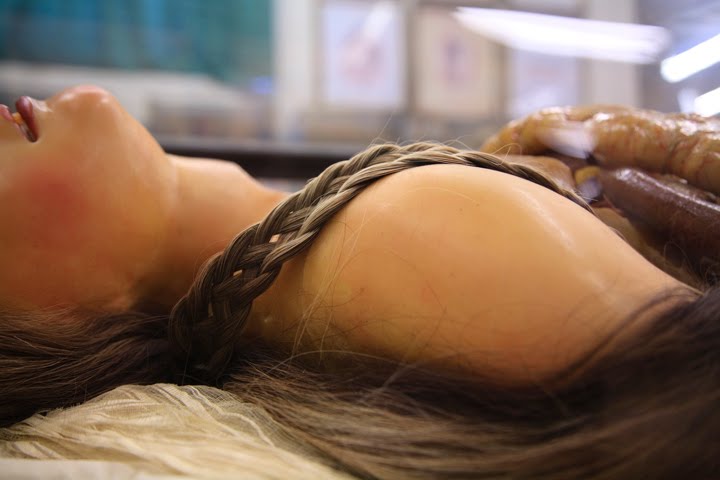
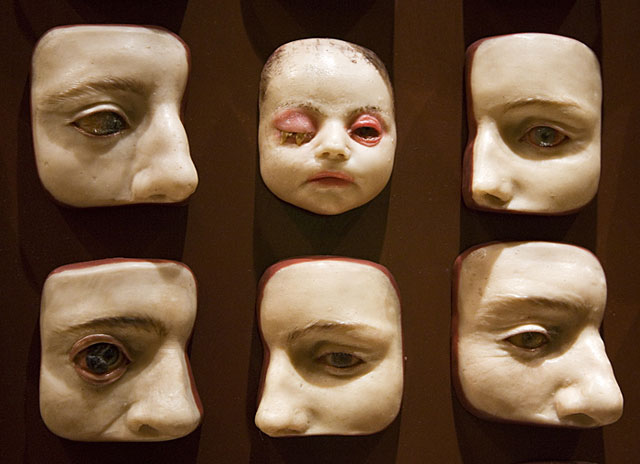
For those of you in and about Chicago, I would love to see you this Thursday, May 3, at The Chicago Cultural Center where I will be giving a lecture entitled "A Journey into the Curious World of the Medical Museum" as part of a series of events supplementing the amazing looking  Morbid Curiosity exhibition. The images above--drawn from my exhibitions The Secret Museum and Anatomical Theatre--constitute a tiny sampling of the many images I will be showing in the presentation.

Full details follow; very much hope very much to see you there.

A Journey into the Curious World of the Medical Museum
An Illustrated Lecture by Joanna Ebenstein
_______


The Chicago Cultural Center
78 E. Washington Street Chicago, IL 60602
Thursday, May 3, 2012
6 o’clock PM

Abounding with images and insight, Ms. Ebenstein’s lecture will introduce you to the Medical Museum and its curious denizens, from the Anatomical Venus to the Slashed Beauty, the allegorical fetal skeleton tableau to the taxidermied bearded lady, the flayed horseman of the apocalypse to the three fetuses dancing a jig. Ebenstein will discuss the history of medical modeling, survey the great artists of the genre, and examine the other death-related arts and amusements which made up the cultural landscape at the time that these objects were originally created, collected, and exhibited.

Joanna Ebenstein is a New York-based artist and independent researcher. She runs the popular Morbid Anatomy Blog and the related Morbid Anatomy Library, where her privately held cabinet of curiosities and research library are made available by appointment. Her work has been shown and published internationally, and she has lectured at museums and conferences around the world. For more information, visit http://morbidanatomy.blogspot.com

You can find out more by clicking here.

Images top to bottom, as drawn from my recent photo exhibitions The Secret Museum and Anatomical Theatre:

  1. "Anatomical Venus" Wax wodel with human hair and pearls in rosewood and Venetian glass case, "La Specola" (Museo di Storia Naturale), Florence, Italy, Probably modeled by Clemente Susini (around 1790)
  2. "Slashed Beauty" Wax wodel with human hair and pearls in rosewood and Venetian glass case, "La Specola" (Museo di Storia Naturale), Florence, Italy, Probably modeled by Clemente Susini (around 1790)
  3. "Anatomical Venuses," Wax Models with human hair in rosewood and Venetian glass cases,The Josephinum, Workshop of Clemente Susini of Florence circa 1780s, Vienna, Austria
  4. The Mütter Museum : Philadelphia, Pennsylvania, Pathological model; 19th Century?
  5. Wax Model of Eye Surgery, Musée Orfila, Paris. Courtesy Université Paris Descartes
  6. Wax Anatomical Models in Rosewood and Venetian Glass Boxes, The Josephinum, Workshop of Clemente Susini of Florence circa 1780s, Vienna, Austria
  7. Wax moulages; Probably by Carl Henning (1860-1917) or Theodor Henning (1897-1946); Early 20th Century; Federal Pathologic-Anatomical Museum (Pathologisch-anatomisches Bundesmuseum): Vienna, Austria, Austria
  8. Plaster Models in Pathological Cabinet, The Museum of the Faculty of Medicine at the Jagiellonian University, Krakow
  9. Skeleton and hand models for "la médecine opératoire" Musée Orfila, Paris. Courtesy Université Paris Descartes

Source:
http://morbidanatomy.blogspot.com/feeds/posts/default?alt=rss

This Monday at Observatory: Organization and Productivity for Creative Types: A Workshop with Oliver Burkeman of "The Guardian"

I am very excited about Monday's upcoming organization for creatives class with journalist Oliver Burkeman, of London's Guardian. There are a few slots still left... if you are interested, please RSVP to morbidanatomy [at] gmail.com. Hope to see you there!

Organizational workshop for creative types with Oliver Burkeman of The Guardian
Date: Monday, April 30th
Time: 7:30-9:30 PM
Admission: $20

*** Limited class size; Must RSVP to morbidanatomy [at] gmail.com to be added to class list
This class is part of The Morbid Anatomy Art Academy

Do you hunger to climb the corporate ladder with ruthless efficiency, leaving your rivals in the dust as you pursue your relentless quest for wealth and power? Hopefully not, but that doesn't mean you can't borrow some tactics from such people and apply them to your own ends; to that end, today's class--taught by Oliver Burkeman, compulsive to-do-list-maker and journalist for London's Guardian--will teach creatives, freelancers, and artists how to plan and manage multiple projects, better plan their time, and, in general, feel less overwhelmed by juggling a variety of projects at one time.

Burkemanhas spent much of the last few years researching and reporting on self-help culture, including the fascinating history of the "how to succeed" publishing genre, and motivational gurus from Dale Carnegie to Stephen Covey, and sifting the wheat from the chaff. (There's a lot of chaff.) Drawing on this research, this workshop will explore some fundamental principles of getting organized, managing multiple projects, overcoming procrastination, time management, and being both more productive and less stressed in the kinds of sprawling artistic/creative/freelance lives that don't get much attention in The Seven Habits of Highly Effective People. No cringe-inducing motivational speeches will be given; no Magic Systems for Instant Success will be promoted. Instead, we'll plunder from the world of the grinning gurus the bits that actually work – so that you'll leave equipped with a toolkit of immediately useable ways to do the stuff you're already doing, and the projects you're planning, with greater efficiency and ease.
The class will begin with an illustrated lecture and conclude with a workshop segment where students will be guided in an application of the principles; participants are encouraged to come to class with a project to organize.

Oliver Burkemanin a writer based in Brooklyn with an unhealthy interest in filing systems. He writes features and a weekly column on psychology for the (London) Guardian. His book The Antidote: Happiness for People Who Can't Stand Positive Thinking will be published by Faber & Faber in the fall.

More here.

Source:
http://morbidanatomy.blogspot.com/feeds/posts/default?alt=rss

Stem cell division to evaluate clinical trials

Home

Calcutta News.Net Friday 27th April, 2012 (IANS)

The Directorate General of Health Services has established a stem cell division to evaluate proposals concerning stem cell research, Health and Family Welfare Minister Ghulam Nabi Azad said here Friday.

Speaking in the Lok Sabha, Azad said the stem cell division was established within the Biological Division in Central Drugs Standard Control Organisation for the internal evaluation of all proposals, including stem cell concerning with clinical trial and marketing authorisation.

"Till recently, there was no mechanism in place to take note of the cases violating these guidelines or take action against the agencies found violating these guidelines," said Azad.

The Indian Council of Medical Research and the Department of Biotechnology have jointly formulated guidelines for stem cell research and therapy to help experts and scientists working in the field conduct research responsibly and ethically sensitive manner.

However, in view of the recent development in the field, the guidelines will be revised this year.

More here:
Stem cell division to evaluate clinical trials

President's Council on Fitness, Sports & Nutrition Announces 2012 Lifetime Achievement Award Recipients

WASHINGTON, DC--(Marketwire -04/27/12)- In honor of National Physical Fitness and Sports Month, the President's Council on Fitness, Sports & Nutrition (PCFSN) will pay tribute to the 2012 Lifetime Achievement Award winners at their annual meeting on May 1, 2012.

Presented annually since 2007, the Lifetime Achievement Award is given to individuals whose careers have greatly contributed to the advancement or promotion of physical activity, fitness, sports, and nutrition-related programs nationwide. Recipients are selected by members of PCFSN based on the span and scope of an individual's career, the estimated number of lives they have touched, and the impact of their legacy.

2012 PCFSN Lifetime Achievement Award Recipients

Linn Goldberg, M.D. - Dr. Goldberg is Professor of Medicine and Chief of the Division of Health Promotion & Sports Medicine at Oregon Health & Science University. His groundbreaking programs for young athletes (ATLAS for boys and ATHENA for girls) utilize exercise and nutrition alternatives to prevent the use of alcohol, performance enhancing and illicit drugs.

Thomas McKenzie, Ph.D. - Dr. McKenzie is Emeritus professor in the San Diego State University School of Exercise and Nutritional Sciences. Dr. McKenzie has authored or co-authored over 170 publications and co-founded SPARK -- a nationally recognized research-based public health organization dedicated to improve health through physical activity. In March 2012, he was awarded a Hall of Fame Award from the National Association for Sport and Physical Education.

Jacki Sorensen - Sorensen is the originator of Aerobic Dancing -- the complete fitness program that combines health and toning benefits of jogging with the fun of dancing. Sorensen is the President and founder of Jacki's Inc.

Charles Sterling, Ed.D. - Sterling is Chairman of Youth Initiatives at The Cooper Institute and Chairman of the FITNESSGRAM Board of Trustees. Dr. Sterling is best known professionally as the founder of the widely-used FITNESSGRAM, a health-related testing and feedback system for youth.

Pat Summitt - Summitt is Hall of Fame University of Tennessee Head Women's Basketball Coach Emeritus. Summitt has won more games than anyone else in NCAA college basketball history, winning eight national titles and 1,098 games at Tennessee.

Image Available: http://www2.marketwire.com/mw/frame_mw?attachid=1961726

Visit link:
President's Council on Fitness, Sports & Nutrition Announces 2012 Lifetime Achievement Award Recipients

Drug-Resistant ‘Superbugs’ Go Undetected

Nature | Health

Poor training in use of tests is part of the issue. Microbiology companies could help by revealing the exact composition of their test media, which might help improve understanding of tests' limitations

April 27, 2012

By Daniel Cressey of Nature magazine

Efforts to detect and halt the global spread of drug-resistant bacteria are being hindered by a poor understanding of the limitations of crucial laboratory tests. Because infected patients need to be isolated quickly to avoid spreading infections, the failure to identify antibiotic-resistant pathogens is increasing the risk of untreatable outbreaks, microbiologists argue.

This month at the European Congress of Clinical Microbiology and Infectious Diseases in London, Herman Goossens, director of the Laboratory of Medical Microbiology at the Vaccine and Infectious Disease Institute of the University of Antwerp in Belgium, presented data about one type of commercial kit often used to identify particular drug-resistant pathogens.

The tests contain mixtures of chemicals that encourage some bacteria to grow and discourage others. Samples from stools or rectal swabs are streaked across the growth medium on a plate and then left overnight. The next day, different-colored growths indicate the presence of different species of resistant bacteria.

Under the radar

One type of bacterium that is causing concern carries genetic mutations that cause it to produce carbapenemase enzymes, which confer resistance to carbapenem antibiotics. Health agencies around the world have reported a surge in infections involving carbapenem-resistant bacteria over the past decade. Another worrying mutation produces extended-spectrum -lactamases (ESBLs), which are resistant to cephalosporin drugs.

An example of the difficulties with identifying these bacteria, Goossens says, is a common test for carbapenem-resistant bacteria using plates made by CHROMagar, a microbiology company based in Paris. The plates detect only high levels of carbapenem resistance, meaning that laboratories may fail to detect bacteria with low but clinically important levels of resistance, he says.

See original here:
Drug-Resistant 'Superbugs' Go Undetected

New avocado rootstocks are high-performing and disease-tolerant

Public release date: 27-Apr-2012 [ | E-mail | Share ]

Contact: Iqbal Pittalwala iqbal@ucr.edu 951-827-6050 University of California - Riverside

RIVERSIDE, Calif. Avocado, a significant fruit crop grown in many tropical and subtropical parts of the world, is threatened by Phytophthora root rot (PRR), a disease that has already eliminated commercial avocado production in many areas in Latin America and crippled production in Australia and South Africa. Just in California the disease is estimated to cost avocado growers approximately $30-40 million a year in production losses.

Research on developing PRR-tolerant rootstocks to manage the disease has been a major focus of avocado research at the University of California, Riverside since the 1950s. The latest research now comes from a team that has released three rootstocks, available for commercial propagation by nurseries, that demonstrate superior tolerance to PRR.

The research, scheduled to appear soon in the journal HortScience, describes the three avocado root-rot-tolerant varieties: Zentmyer, Steddom, and Uzi.

Zentmyer is an extremely vigorous and highly durable variety that is PRR-tolerant under most conditions. But it is not recommended for locations, such as some parts of California, where salt is a problem and often does not yield consistently under non-root-rot condition. Steddom has both a high PRR-tolerance and good salt tolerance. Uzi is highly tolerant to PRR, and its yields are high and usually consistent.

The Zentmyer rootstock is named after George Zentmyer, a pioneer avocado pathologist at UC Riverside and a collector of avocado germplasm (hereditary material). Steddom is named after a former graduate student at UCR. Uzi is named after an Israeli scientist.

"With the release of these high-performing rootstocks, avocado growers worldwide will have more options in choosing PRR-tolerant rootstocks to determine which ones perform better under their own growing conditions," said Greg W. Douhan, an assistant professor of plant pathology and microbiology, who led the research.

A rootstock is the part of the plant that produces the root system. For many fruit trees it is often genetically different than the scion the top portion of the plant that is grafted to the rootstock. The scion gives rise to leaves, stems, flowers, and fruit.

Commercial avocado trees are propagated by grafting scions of desirable cultivars onto various rootstocks with the most popular avocado cultivar being the Hass avocado. While avocados can be grown from seeds, their fruit quality and yield potential can vary dramatically. Therefore, it is more advantageous for avocado growers to have both a scion and rootstock that has the most desirable characteristics, enabling the best "plants" to be grown for profitability and consumption.

Excerpt from:
New avocado rootstocks are high-performing and disease-tolerant