Aurora Announces Joining Hitachi Data Systems Technology Alliance Program

First Aperio and Dell, now Aurora and Hitachi. 

AURORA JOINS HITACHI DATA SYSTEMS TECHNOLOGY ALLIANCE PROGRAM TO OFFER BEST-IN-BREED DATA MANAGEMENT AND DIGITAL PATHOLOGY SOLUTIONS

MONTREAL, QUEBEC, CANADA- March 20, 2012 – Aurora Interactive announced today that it has joined the Hitachi Data Systems Technology Alliance Program.  This will allow Aurora to deliver data management and digital pathology solutions to their clients, giving clients timely control of their data and medical choices.

“Aurora is proud to join the Hitachi Data Systems Technology Alliance Program. Hitachi Data Systems is a globally respected leader in the IT industry, and one of the premier technology and services providers to the medical field. Joining this program will allow us to seamlessly fulfill the needs of our clients who have taken the next step in digital pathology adoption and require universal and vendor neutral mass data management solutions. Our participation in the Hitachi Data Systems Technology Alliance Program is fully aligned with our strategy of universality and interoperability and our commitment to giving our clients control over their data and medical choices. As HDS believes that data drives our world and information is the new currency, Aurora believes that timely and efficient data and information access is the key to better patient care and outcomes,” stated Pierre Le Fèvre, President and Chief Executive Officer, Aurora Interactive.

“Hitachi Data Systems would like to welcome Aurora Interactive to our Technology Alliance Program. We strongly believe in partnering with best-in-breed providers to bring our clients leading technologies to pair with our data management systems. Aurora Interactive is an ideal digital pathology partner for us,” said Dave Wilson, senior director, Global Health Solutions,, Hitachi Data Systems.

About Aurora Interactive Ltd.

Aurora Interactive has developed the leading web based software platform (mScope) for simplification, productivity and ease of communications.  mScope’s Universal Web Viewer has collaborative tools to view medical slides and images anytime, anywhere, regardless of file format.  The software has four applications to aid digital pathology web based communications needs: mScope Education, mScope Clinical, mScope Research and mScope Universal Viewer. Aurora’s mission is to improve patient outcomes and help members of the medical community achieve their full potential by eliminating the learning, diagnostic and collaborative restrictions imposed by time and space. http://www.aurorainteractive.com 

Source:
http://feeds.feedburner.com/DigitalPathologyBlog

PathXL Webinar: Biobanking – A New Era

Pathxl logo
4th April 2012, 4.15pmGMT /11.15amEST /8.15amPST /5.15pmCET

PathXLTM Biobank is a highly configurable sample collection, tracking, storage, management and distribution platform that provides the flexibility required to build customised solutions across a range of biobank applications. 

As well as providing a complete biobank management solution, PathXLTM Biobank is also available in the form of a virtual microscopy plug-in to existing biobank solutions enhancing its functionality and efficiency.Biobank pic

Guest Speaker:  

PathXLTM Biobank was developed in partnership with the Northern Ireland Biobank; Dr Jackie James (Northern Ireland Biobank Scientific Lead) provides a customer insight. 

Why Attend?

This is the world’s first biobank platform with an inbuilt image management and viewing platform specifically for virtual slides.  Find out how you can manage collection, tracking and distribution of all samples in your biobank and see how easily researchers can search, review and request samples online.

Click here to register

Source:
http://feeds.feedburner.com/DigitalPathologyBlog

“I signed out 15 cases from 35,000 feet.”


35000

On page 18 of this months' CAP Today within in article dedicated to "AP IT" is an ad from PathCentral mentioning the work of Dr. Greg Henderson and using onboard Wi-Fi, the ability to acccess a web-based LIS solution and review whole slide images from 35,000 feet as part of a non-profit health care initiative. 


Talk about cloud computing.  

Mobile devices, ubiquitous high speed bandwidth and web-based LIS systems allow for slide review and diagnoses independent of geography, even if you are flying over a fly-over state.

Check out the free online CAP Today publication for thoughts from many on the current state of "AP IT" and CAP Today's review of AP LIS systems this month. 


Source:
http://feeds.feedburner.com/DigitalPathologyBlog

Aperio Announces Strategic Collaboration with Dell to Create Cloud-Based Services for Pathology

More news from USCAP week -- Aperio partners with Dell to create secure cloud for an electronic pathology network.  Aperio, in addition to providing slide scanners and associated software products for case management, viewing and image analysis is entering into providing a platform with a trusted server partner to facilitate collective intelligence around the globe. 

One of the keys to adoption remains making the process and processes "as fast as glass".  If this truly does shorten TAT for consults, further strengthening the case for e-Patholology solutions, as Dr. Epstein suggests below, another barrier is overcome. 

Example of a perfect storm for digital pathology - higher speed reliable scanners, reduced costs, faster, more reliable networks and storage through cloud computing and web-based viewing, analysis and reporting are highlighted by this collaboration.

Dell’s Unified Clinical Archive Cloud to Power Aperio ePathology Network™

VISTA, Calif., Mar 19, 2012 (BUSINESS WIRE) -- Aperio, the leading provider of digital pathology systems, announced a strategic collaboration with Dell to create the world’s first scalable, secure medical cloud network for Pathology.

Through its secure cloud-based Unified Clinical Archive solution, Dell manages nearly 5 billion medical images and studies for healthcare organizations. And now, Dell will host the existing suite of Aperio’s industry-leading solutions for digital pathology. Fortified by Dell’s standards-based technology and storage capabilities, Aperio’s ePathology Network™ solution will provide secure, compliant, worldwide access to pathology consultations via the cloud.

“Our goal is to address the regional and global imbalances of pathology expertise available for patient care by enabling access to pathologists for all types of consultations, regardless of location. With Dell’s cloud-based archiving platform, we can make our ePathology Solutions™ more widely available,” said David Schlotterbeck, CEO of Aperio.

“This state-of-the-art ePathology Network technology from Aperio will revolutionize the practice of secondary consultations,” states Dr. Jonathan Epstein, Director of Surgical Pathology at Johns Hopkins. “We fully expect that the time to return an opinion on these cases will be significantly reduced -- from multiple days to as a few as a couple of hours in critical cases. This will have a significant positive impact on patient care.”

Dell and Aperio are also collaborating to develop the world’s leading repository of characterized digital slide images and cases, which will include the Juan Rosai Collection of Surgical Pathology Seminars. This furthers another mission of Aperio to make quality educational and reference materials more readily available to all pathologists around the world. The eSlide Repository™ will be a fulcrum for the healthcare and life sciences industries’ focus on personalized medicine and enhanced precision and predictability.

“Dell is excited to work with Aperio to facilitate the archiving and sharing of whole slide pathology images via the cloud,” said James Coffin, Ph.D., vice president and general manager of Dell Healthcare and Life Sciences. “This is a prime example of how on-premise and cloud-based solutions with application-neutral data management capabilities can break down traditional information silos and allow healthcare organizations to securely manage, store and share data to advance patient care.”

About Aperio

For over a decade, Aperio has advanced the technology that enables glass slides to be digitized and securely shared with others. Aperio products are transforming the practice of pathology in hospitals, reference labs and pharmaceutical and research institutions around the world. From the moment glass slides are elevated to eSlides, Aperio ePathology Solutions equip pathologists with the power to evaluate, engage and excel like never before. The NETWORK enables remote, simultaneous, real-time viewing and easy distribution for consults and collaboration. PRECISION tools empower pathologists with advanced analytic capabilities. An interoperable, scalable and secure web-based software platform facilitates integration with existing systems. With Aperio ePathology Solutions, organizations can optimize their pathology operations for transparency, consistency and efficiency to support patient care, personalized medicine and research. For clearance updates, specific product indications, and more information please visit http://www.aperio.com .

SOURCE: Aperio

Source:
http://feeds.feedburner.com/DigitalPathologyBlog

Parascript Offers Greater Accuracy in Detecting Breast Cancer

Parascript-LOGO

Parascript, LLC, an image analysis and pattern recognition technology provider, announced that its AccuDetect® Galileo computer-aided detection software for digital mammography showed better overall performance in detecting breast cancer in a recent retrospective study against iCad's SecondLook. Findings from the study, performed at Maastricht University Medical Center departments of Radiology and Surgery in the Netherlands, with collaboration from University of Udine's Institute of Diagnostic Radiology in Italy, were presented at the annual meeting of the European Society of Radiology, ECR, on March 3.

In the study, digital mammograms of 326 patients were analyzed (117 patients with biopsy proven breast cancer, 209 negative cases) using AccuDetect Galileo 4.0 and SecondLook version 7.2. AccuDetect Galileo significantly increased true positive fraction (TPF) of cancer cases when compared to SecondLook. It demonstrated a per image increase of 6.9% to 72.2%; per case increase of 4.3% to 84.6%. The University of Maastricht team noted that AccuDetect Galileo had a significant performance improvement in detecting soft tissue densities on extremely dense breasts (BI-RADS breast density class 4) over SecondLook, increasing TPF by15.4% to 69.2%. Dense breast tissue can obscure an underlying cancer, or conversely mimic one that does not exist, thus making accurate detection difficult.

"We are encouraged by the results of this new study," said Yuri Prizemin, director of business development for medical imaging for Parascript. "We believe that Parascript CAD advancements in marking malignant lesions on extremely dense breasts will help radiologists to improve breast cancer detection."

Full findings from the study were presented by the study authors M. Lobbes, K. Keymeulen, M. Smidt, R.G. Beets-Tan, J.E. Wildberger, and C. Boetes from Maastricht University and R. Girometti and C. Zuiani from University of Udine in Retrospective Comparison of the Accuracy of Two Different Computer-aided Detection Systems for Detecting Malignant Lesions on Mammography.

About Parascript, LLC
The Parascript image analysis suite extracts meaningful information from images. Employing patented digital image analysis and pattern recognition technologies, the Parascript image analysis suite improves decision quality in medical imaging, postal and payment automation, fraud detection and forms processing operations. Parascript software processes billions of documents per year. Fortune 500 companies, postal operators, major government and financial institutions rely on Parascript products. Organizations include the U.S. Postal Service, Bell + Howell, Fiserv, Elsag, Lockheed Martin, NCR, Siemens and Burroughs.

Source:
http://feeds.feedburner.com/DigitalPathologyBlog

Apollo To Interface ViewsIQ’s Panoptiq™ With Apollo EPMM®

More news during week of USCAP:

Apollo Logo_2 color

Falls Church, VA – March 19, 2012 – Apollo, the leading provider of collaborative clinical multimedia management solutions for the healthcare industry, today announced that it has entered into an agreement with ViewsIQ to interface Panoptiq™, an innovative slide imaging technology, with Apollo’s Enterprise Patient Media Manager (Apollo EPMM®). 


Apollo EPMM brings together all clinical media related to an individual patient from throughout the medical enterprise and makes it immediately and easily available to authorized personnel.  This gives healthcare professionals the ability to securely collaborate while using their own best practices. The result is a more integrated clinical team, a dramatic increase in workflow efficiency and effectiveness, and improved patient outcomes at a lower cost.

For laboratory applications, Apollo's solution automatically collects media such as digital slides, gross images, cytology and other imaging modalities from the original source.  Cross-referenced with pictures, videos and other media from multiple specialties throughout the enterprise, pathologists and clinicians get a complete picture of the patient on demand, in a secure, compliant form that enables real-time consults.

ViewsIQ Panoptiq enables pathologists to create panoramic images of their slides in real-time at extremely high resolution with their own microscopes. Trialed by top pathologists at premier healthcare institutions in Canada, Panoptiq integrates seamlessly with the workflow of the pathologist. With Panoptiq, pathologists can see and communicate the microscopic view of the slide more effectively and conveniently.

 “The interfacing of Panoptiq with Apollo EPMM will dramatically enhance the clinical image integration and management capabilities for pathologists and laboratory users,” said Mark Newburger, Apollo CEO, “as well as enabling healthcare providers across the enterprise to access these images immediately.”

“The ability for healthcare providers to access Panoptiq images securely from any location adds significant value to patient care.” said Herman Lo, CEO of ViewsIQ. “With the inclusion of Panoptiq in the total Apollo EPMM solution, we can now offer a robust and comprehensive management, access and storage solution for Panoptiq slide images.” 

About Apollo

Apollo EPMM is an enterprise-wide solution that enables all authorized providers in the healthcare chain to collaborate for the benefit of the patient.  Apollo's EPMM uses the providers’ own best practices by incorporating systems already in place and adds the ability to consult in real-time with the entire clinical team in a cost- effective, flexible, compliant and secure environment.   While others promise easy, secure, specialty-specific access throughout the enterprise, Apollo delivers it today at marquis institutions throughout the United States and Canada.  For more information visit http://www.apollopacs.com and follow us on Twitter. Visit Apollo at USCAP Booth #317.

About ViewsIQ

 ViewsIQ is a Canadian healthcare technology company that develops microscopy imaging solutions for academic institutions and clinical laboratories. Its recent innovation called Panoptiq enables pathologists to create and view panoramic images of their slides in real-time with no delay to their workflow. Healthcare and academic institutions in North America are adopting Panoptiq at a growing pace. For more information please visit our website at http://www.viewsiq.ca, and follow us on Twitter and YouTube.  Visit ViewsIQ at USCAP Booth #814.

Source:
http://feeds.feedburner.com/DigitalPathologyBlog

Definiens Expands Stereology Capabilities for Quantitative Digital Pathology

Munich, Germany, March 19, 2012 / B3C newswire / Definiens®, the leading provider of image analysis and data mining solutions for quantitative digital pathology, today announced it will expand its already comprehensive product portfolio with additional stereological analysis methods. Stereology can be incorporated into both manual and automated whole slide image analysis workflows. Find more under http://info.definiens.com/stereology.html.

Stereology complements the unique combination of flexibility and ease-of-use that makes Definiens Tissue Studio® the leading solution for analyzing histological samples. With the latest release of Definiens Tissue Studio 3.5, systematic random sampling is now available out of the box.

High productivity through end-to-end automation is achieved by combining stereological methods with Definiens’ automated and precision detection of structure and morphology in heterogeneous tissue. This significantly reduces user interaction and analysis time and delivers unbiased and detailed readouts at the same time. Alternatively, semi-automatic or manual stereology workflows can be applied wherever appropriate.

For three dimensional measurements, Definiens also offers automated co-registration of serial tissue sections. Definiens stereology solutions are compatible with all major slide image file formats on the market and work with both bright field and fluorescence image data.

“Stereological methods are a long established approach to obtaining quantitative data about three-dimensional features from two dimensional tissue sections,” says Thomas Heydler, CEO, Definiens. “Definiens’ offerings in image and data analysis provide biomedical professionals with tools to significantly accelerate workflows and retrieve unparalleled insights from tissue samples.”

Visit Definiens at the USCAP’s industry exhibition, booth number 807, Vancouver, Canada, from March 17—23, 2012.


Link to the press release

Source:
http://feeds.feedburner.com/DigitalPathologyBlog

DigiPath Adds 10 Upgrade Options to PathScope

DigiPath, Inc®, a provider of affordable, innovative and reliable digital pathology solutions, announced today that it has added 10 innovative upgrade options to PathScope™, the $24,999 single slide scanning system.

PathScope™ can be configured with 1, 2, 4, or 30 slide capacities.   The capacity configurations range from $24,999 to $54,999.

Users can configure the three objective slots with a 2x, 2.5x, 5x, 10x, 20x, 40x, and 63x dry lens.  The dry objective configurations range from $24,999 to $39,999.

PathScope™ can also support 50x or 100x oil lens.  These oil scanning solutions are priced at $39,999 to $49,999.

“DigiPath continues its innovation by adding greater capacity and dry and oil objective lens solutions,” said Eric Stoppenhagen, President of DigiPath, Inc. “DigiPath also continues to show that customers can adopt digital pathology solutions from $24,999 to $54,999, which is the most affordable offering in the marketplace.”

About DigiPath, Inc.

DigiPath, Inc. provides the next generation of affordable, innovative, and reliable digital pathology solutions.  DigiPath’s advisors bring over 60 years combined expertise in pioneering digital pathology, implementing over 500 installations at community pathology practices, hospitals, academic medical centers, reference laboratories, biopharma organizations, and life science research institutions worldwide.

Source:
http://feeds.feedburner.com/DigitalPathologyBlog

ASCP Becomes Managing Partner for ADASP

The American Society for Clinical Pathology (ASCP) and the Association of Directors of Anatomic and Surgical Pathology (ADASP) signed a Memorandum of Understanding (MOU) effective March 15 for ASCP to manage the day-to-day activities of ADASP, so its leaders can conduct business more efficiently. Previously, ADASP volunteers handled both administrative and strategic functions. The MOU also fosters greater collaboration for both organizations' educational and scientific activities in support of anatomic pathology and the broader pathology community.

"Our partnership with ASCP creates new opportunities for our members to be fully engaged and focused on strategic planning," said ADASP President Jeffrey L. Myers, MD, FASCP, A. James French Professor and Director of Divisions of Anatomic Pathology and Medical Laboratories, University of Michigan, Ann Arbor, Mich. "The MOU creates the capacity for our organization to think and do big things. We found a great partner in ASCP."

Source:
http://feeds.feedburner.com/DigitalPathologyBlog

IMRT referral triples after urology group purchases IMRT machine

This post is courtesy of The Pathology Blawg, formerly The Pathology Malpractice Blog.  In addition to discussing medicolegal issues in the world of pathology, The Pathology Blawg also provides material about physician self referral, markups, client billing, pod labs and other unscrupulous maneuvers that negatively impact patient care, contribute to overutilization and damage the profession of pathology, with the hope that greater awareness will bring an end to these practices.

IMRT machine aka ATM machine

This is an article from the Baltimore Sun about Chesapeake Urology Associates' (CUA) use of Intensity Modulated Radiation Therapy (IMRT) for prostate cancer.  Before 2007, they referred 12% of their Medicare patients for IMRT, but amazingly, starting in 2007, their referral rate more than tripled to 43%.  Why the difference?  They bought an IMRT machine in 2007, and now they can bill for the treatments.  Our good friend Dr. Jean Mitchell is interviewed for the piece, and she states the obvious:  This is a way for urology groups to simply make a ton of money off of their patients.  Interestingly, Dr. Mitchell states that CUA's doctors are "some of the less egregious", as many urology groups send around 70% of their patients to IMRT machines they own.

CUA would only speak through their attorney (which is never a good sign), who said,

CUA's doctors are well-respected physicians of the highest integrity," said Howard R. Rubin, the attorney. "They reject any insinuation by you or Prof. Mitchell that any recommendations relating to a patient's care are motivated by anything other than the best interests of the patient.

Which leads me to my question.  If this level of referral (43%) for IMRT is the referral rate the group has decided is in the best interests of their patients, then why did so many patients not get referred for IMRT prior to the group's purchase of the machine?  Why did they not take more of their patient's best interests into account before they owned the machine?

It's all smoke and mirrors.  Keep in mind that urology offices also routinely own their own CT scanners and pathology labs.  They have perfected vertical integration of the diagnosis and treatment of prostate cancer and the commoditization of prostate cancer patients.

Maryland, as the article states, is starting to crack down heavily on self referral, and has already forced orthopedists to sell their in office MRIs.  Raise your hand if you think CUA's IMRT referral rate will drop if Maryland gets around to banning self referral for IMRT.  My hand is up.

http://articles.baltimoresun.com/2012-01-17/health/bs-bz-hancock-chesapeake-urology-20120114_1_imrt-prostate-cancer-cancer-treatments 


Source:
http://feeds.feedburner.com/DigitalPathologyBlog

Sue Jeiven's Anthromorphic Mouse Taxidermy Class, Valentine's Day Edition


Above are some photos from the recent Valentine's Day edition of our most popular and most often sold out of Observatory class, Anthropomorphic Mouse Taxidermy Class with Susan Jeiven. Sue was recently profiled by the Spanish Television network Telemundo in a piece entitled "Pasatiempos controversial: Disecan animales muertos para decorar;" you can view it in its entirety by clicking here.

For those interested in studying with Sue, in making your own pieces and learning this largely lost Victorian art: I am pleased to announce a few rare vacancies in some upcoming classes; click here to find out more. Click on images to see larger versions; you can also see more photos from past classes by clicking here.

Source:
http://morbidanatomy.blogspot.com/feeds/posts/default?alt=rss

Madonna Dolorosa, Mater Dolorosa, or Lady of Sorrows: Naples, Italy


More from Italy, as I sort through my thousands of photographs: I don't know much about the top piece, but I am guessing it is a 18th or early 19th century Madonna Dolorosa, Mater Dolorosa, or Lady of Sorrows, a popular motif in Naples; we spotted it at one of the many antiques shops we popped into on our trip. The bottom image is my own Madonna Dolorosa, made by the workshop of Giuseppe and Marco Ferrigno, a studio which continues to create--by hand!--fine Baroque-style crèches and terracotta figures of the sort for which Naples is still, rightrully, renowned.

Click on images to see much larger, finer images.

Source:
http://morbidanatomy.blogspot.com/feeds/posts/default?alt=rss

Coney Island USA's Amazing Annual Spring Gala! This Saturday, March 24; Special Prizes for Morbid Anatomy Readers!


I am very excited to draw your attention this year's annual Coney Island USA Spring Gala, fast approaching and taking place this Saturday, March 24th! Last year's iteration was amazing; these folks really really know how to put on a party. The $100 ticket gets you not only an evening of performance, music, burlesque and spectacle, but also free booze from 7-11, hors d'oeuvres and exclusive access to the VIP balcony where you and hide from the throngs if so desired; you are also supporting the wonderful cause that is Coney Island USA.

I will definitely be there; hope to see you there, too! Also, please note: as a special incentive, if you type "Morbid Anatomy" in the notes field on the ticket site, you will recieve a free Morbid Anatomy totebag from your friends here at the blog!

Full info follows; hope very very much to see you there!

CONEY ISLAND USA SPRING GALA 2012: CELEBRATING THE 30TH ANNIVERSARY OF THE MERMAID PARADE!

SATURDAY, MARCH 24TH
7PM - 11PM
WEBSTER HALL
125 EAST 11 ST (BETWEEN 3RD AND 4TH AVE.)
NEW YORK, NY 10003

Join Coney Island USA as we invade Manhattan at New York’s oldest nightclub, Webster Hall, and celebrate the 30th Anniversary of the Mermaid Parade at our annual Spring Gala. All proceeds of the Spring Gala go directly towards funding Coney Island USA's innovative arts programming such as The Coney Island Circus Sideshow, The Mermaid Parade, The Coney Island Museum, Burlesque at the Beach and the Coney Island Film Festival to name just a few. Coney Island USA also fights to preserve and revitalize Coney Island’s historic amusement district.

This year’s gala event will feature a dazzling display of daring feats executed by the cast of Sideshows by the Seashore, some of New York’s most talented and titillating burlesque performers, a glorious gamut of go go gals and guys, as well as special musical guests for your auditory pleasure. And be on the lookout for all kinds of surprises!

Scheduled to perform:
From the cast of The Coney Island Circus Sideshow: Insectavora, Kryssy Kocktail, Princess Pat, Serpentina, Scott Baker
Fire Dancing by: Sasha Fire Gypsy

Burlesque By: Miss Coney Island 2012 - BB Heart, Bambi the Mermaid, Bunny Love, *World Famous Bob*, The Go Go Stylings of: Amelia Bareparts, Apathy Angel, Dottie Dynamo, Evelyn Vinyl, Go Go Harder, Jezebel Express, Justina Flash, LaMaia, Magdalena Fox, Raven Twin, Rosey La Rouge, Sara Hassan, Sizzle Dizzle
Mermaid: Angela
Magic by: Cardone
Juggling by: Kyle Petersen
Musical Guest: Alison Gordy
Accordion: Matt Dallow
Multi Talents: Kyle Petersen, Jonathan Burns, Mark Hayward
Strongman: Chris Schoeck
Lasers By: S&M Visuals
Performance DJ: Ron-Fresh Prince of Darkness
Ambient DJ: Lemar Soulflower
Live Body Painting by: Dr. Flux
The Voice of The Mermaid Parade: Chris T.
Hosted by: Adam The First Real Man & *World Famous Bob*
Stage Sidekick: Brian Fisherman
With VIP Host and Hostesses: Creamy Stevens, Kat Mon Dieu, Marni Halasa, Tigger, Noah D’Klein, Little Brooklyn, Alfie Bunz,
Kita St. Cyr, Hazel Honeysuckle, Beelezebabe, Ginger Brown, Bambi The Mermaid, Bunny Love, Cherry Delight, Glenn Marla
Crew: Tony, LaMaia (Kitten), Pat Bresnan, Ron Garcia-Vidal

Also expect Special Guests from over 30 Years of Mermaid Parades, including former Royalty - Joe Franklin, Phoebe Legere, Alison Gordy, Fred Kahl, *World Famous Bob*, Kiva, Ron Kuby, Reverend Billy, Savitri D.

Auction Items at the gala include:
Two seats on the reviewing stand with the King and Queen for 30th Anniversary Mermaid Parade
Darren Aronofsky signed copy of his 'Noah' graphic novel
Tickets to Monster Jam
Fire Breathing Lessons
Golf foursome
Dinner for four at Gossip Bar
Christmas Day visit from Santa
WWOW Radio: pair of tickets for any performance April – June
Set of Shocked and Amazed from James Taylor and Full Congress Pass
One Hour Burlesque lesson from World Famous *Bob*
Full behind the scenes tour of the New York Aquarium
Full Film Festival Pass with collection of Film Fest posters
Freak Bar Party - - - (10 tickets to the Freaks Show and a dedicated
area at the Freak Bar) *date restrictions apply
Marie Roberts Mermaid Banner
Plus more to be announced!

AND (IF THAT ISN’T ENOUGH!) ALL OF OUR GUESTS WILL BE INVITED TO STAY AT WEBSTER HALL FOR A VERY SPECIAL CIRCUS AFTER-PARTY BEGINNING AT 11PM!

Check out photos from prior galas here.

TICKETS:
ALL advance online ticket buyers will be entered into a drawing for TWO seats on the judges stand for this years 30th Anniversary Mermaid Parade on June 23rd (a $300 dollar value), to be given away at the Spring Gala. So get your tickets online now, and you could be our lucky winner. Advance online sale ends Friday, March 23rd at 11pm.

Spring Gala V.I.P.Ticket, $250 (includes open bar from 7-11pm, signature cocktails, hors d'oeuvres, exclusive seating with our V.I.P.’s and Gift Bags),
Click here to order.

Spring Gala Supporter, $100 (includes special signature cocktails, beer and wine from 7-11, hors d'oeuvres and exclusive access to the VIP balcony where you can interact with past Royalty, Celebrities and Coney Island USA’s core supporters), Click here to order.

General Admission (Entry Only) Tickets, $60, Click here to order.

Advance sale ends Friday, March 23rd at 11pm. Tickets may be purchased at Webster Hall night of the gala (March 24th).

Please Note: There are no restrooms on the main level and no elevator access to the restrooms, however, venue staff is prepared to carry any wheelchairs or assist in getting patrons into the venue and to the restrooms, if necesssary. You must let us know if you have special needs.

How else can I help support Coney Island USA?

Join the Host Committee! Co-Chaired by Darren Aronofsky!
Joining the Host Committee is a great way to get involved and help make this amazing event happen. Host Committee members sell or purchase 5 Gala Supporter Tickets or 3 V.I.P. Tickets and receive a free admission for themselves so they can host their friends in return! Committee members are invited to a private dinner in recognition of their support and will have their names printed in the Gala Journal that will go to all of our guests.

For further Host Committee info, contact Tim Pendrell
e-mail: tim@coneyisland.com phone: 718-372-5159

You can buy your tickets by clicking here.

Source:
http://morbidanatomy.blogspot.com/feeds/posts/default?alt=rss

Call for Papers:" Art and Science: Knowledge, Creation and Discovery" Conference, Linnean Society, London, June 28-29


This very exciting call for papers just in from Morbid Anatomy reader Arlene Leis:

AAH Summer Symposium 2012
Art and Science: Knowledge, Creation and Discovery
28 – 29 June 2012
The Linnean Society, London

Call for Papers
Although their academic paradigms may at first seem diametrically opposed, the association between arts and sciences has survived renaissances, revolutions and beyond.

This intellectual conjunction has motivated artistic practice and production throughout history, forming the conceptual nucleus of some of the most stimulating forms of creative expression. By engaging with this inter-relationship, we hope to address the assumed divisions that have kept the arts and sciences as separate areas of academic enquiry, whilst at the same time questioning if such an alliance is necessary or profitable for either discipline.

As well as considering general ideas of artistic and scientific collaboration, this year’s Summer Symposium will investigate the interaction between art and science throughout artistic practice, theory and history. Topics for papers could include, but are not limited to:

  • Artists who work directly or indirectly with science
  • Medical and anatomical images, diagrams, and the art of science
  • Architecture and the body
  • Histories of collection, taxonomies, display and acquisition in the arts and sciences
  • The role of the science of perception in the development of perspective, figuration and abstraction
  • The idea of the modern as related to science and technology
  • The figure of the polymath
  • Neuroscience and histories of vision
  • Photography between science and art
  • Mathematics and beauty – the Golden Section
  • Technology and the evolving dissemination of art history
  • Science in art historical conservation and research

Papers should be 20 minutes in length and abstracts of no more than 300 words should be submitted with a brief biography to: aah.art.science@gmail.com by 29 April 2012.

The conference is open to all, but speakers need to be student AAH members.

Symposium Organisers
Arlene Leis, University of York
Rebecca Norris, University of Cambridge
Freya Gowrley, University of Edinburgh

Keynote speakers
Dr Craig Ashley Hanson, (Calvin College)
Dr Petra Lange-Berndt, (UCL)

To find out more, click here.

Image from call for papers PDF; Rebecca Nichols, Arbor Vitae (2007), more here.

Source:
http://morbidanatomy.blogspot.com/feeds/posts/default?alt=rss

"Does the Brain’s Wiring Make us Who we Are?" April 2, NYC


This wonderful looking event just in from friend, former Observatory lecturer, and author of the lovely Portraits of the Mind: Visualizing the Brain from Antiquity to the 21st Century Carl Schoonover; hope very much to see you there!

Does the brain’s wiring make us who we are?
Two leading neuroscientists debate maps, minds and the future of their field.
Date: Monday, April 2, 2012
Time: 6:30 pm, cocktails. 7 pm, program.
Location: Havemeyer Hall 309, Columbia University, Broadway @ 116th St

Sebastian Seung (MIT)
Professor of Computational Neuroscience, MIT; Author of Connectome: How the Brain’s Wiring Makes Us Who We Are

vs. Anthony Movshon (NYU)
Professor and Director, Center for Neural Science, NYU

Moderators: Robert Krulwich of NPR’s Radiolab and Carl Zimmer, science journalist (NYTimes, Discover, NPR)

FREE AND OPEN TO THE GENERAL PUBLIC

What will be the next big breakthrough in neuroscience? What will finally explain how brains work, how they fail in disease, and what makes us each unique? Some neuroscientists believe that research would be radically accelerated by finding and deciphering “connectomes,” maps of connections between neurons. Funding agencies are wagering millions of dollars on the idea that connectomics will be as fundamental to neuroscience as genomics is to molecular biology.

But others disagree, arguing that maps of the brain by themselves cannot offer much insight into how this remarkable organ does its job. Just as a genome by itself is only a blueprint with little power to explain how an organism works, a connectome is at best a framework with little power to explain brain function. Should neuroscience make it a priority to launch a significant connectomics program, diverting human and financial resources from other worthy goals?

Join us as leading “connectomist” Dr. Sebastian Seung defends his position in public against the formidable neurophysiologist Dr. Anthony Movshon. Award-winning science writer Carl Zimmer teams up with co-creator of NPR's Radiolab, Robert Krulwich, to moderate this debate on neural cartography, guiding the audience through both known and unknown territory as we ask the question: Are brain maps the future of neuroscience or an empty promise?

Seating is limited. Tickets can be reserved beginning March 12 at Noon.

Questions: neuwrite@gmail.com

NeuWrite is a collaborative working group for scientists and writers.

Image credit: A. Zlateski based on images of K. Briggman, M. Helmstaedter, and W. Denk.

More can be found here.

Source:
http://morbidanatomy.blogspot.com/feeds/posts/default?alt=rss

New Lot of the Beautiful Book "Musical Machines and Living Dolls" The Guinness Collection at The Morris Museum


The Murtogh D. Guinness Collection at the Morris Museum is an astounding collection of automata (mechanical toys popular in the 18th and 19th century) and mechanical musical instruments that can be visited in--of all surprising places--Morristown, New Jersey. The collection is mind-blowingly vast; it is, in fact, the largest such public collection in the U. S. and one of the largest in the world, with around 700 automata and mechanical musical instruments and over 5,000 programmed media, nearly all of which are were produced in the 19th Century.

The highlight of the Morris Collection--in my opinion, at least!--is its extensive lot of fine 19th Century European automatons. Most of the pieces are in excellent repair and still able to go through their uncanny motions, and the scale, quality, and range of the collection are simply flabbergasting, the kind of thing you might consider yourself lucky to find in France (where many automata producers were based) but certainly not here on the East Coast of the United States.

The Morris Museum has just published a new book devoted to this collection, and I currently have 10 copies of the book in stock. Entitled Musical Machines and Living Dolls: Mechanical Musical Instruments and Automata from the Murtogh D. Guinness Collection, this book is a lovely little gem all its own; it is hardcover, full color throughout, beautifully printed, and well-researched. It also includes a well-researched overview of the history of automata from ancient times to the present and a biography of Murtogh D. Guinness, the heir to the Guinness beer fortune who amassed this collection and ultimately bequeathed it to the Morris Museum.

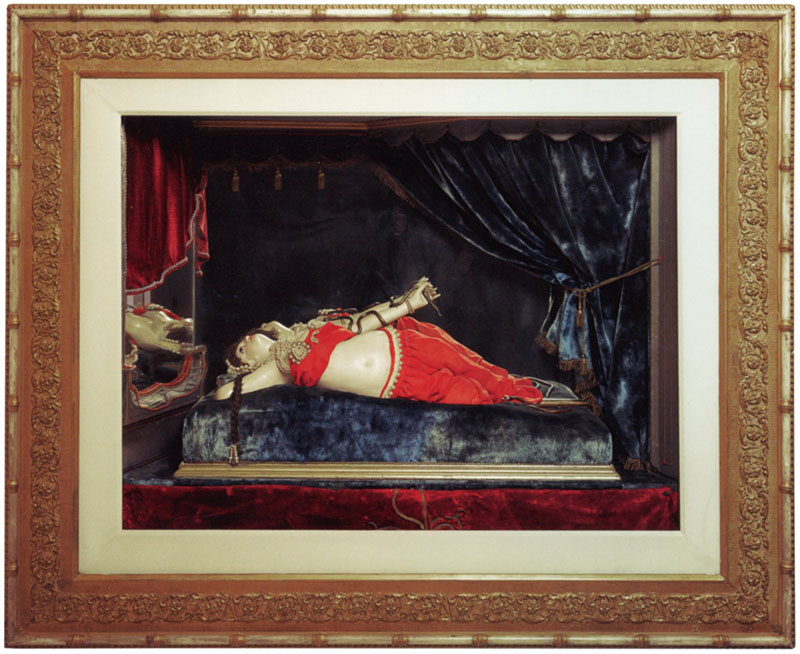
The book also--luckily for me!--features extensive text and scores of images (all images above are drawn from the book!) devoted to many of my favorite pieces in the collection, such as a number of 18th Century-style monkey dandies engaging in human activities (images 2, 3 & 4), 3 cats playing cards (image 5), a lute-playing Mephistopholes (image 7), an asp-suiciding Cleopatra (!!!) (image 6), performing tightrope walkers with orchestral accompaniment (image 9), a hookah-smoking Turk, singing birds, strutting peacocks, performing magicians, street vendors peddling their wares, and much, much more.

To give you a taste of the style and level of research to be found in this book, I include here the entire entry for the fascinating piece you see 6 images down, a late 19th century automaton entitled "The Suicide of Cleopatra":

The Suicide of Cleopatra
About 1880-90
Phalibois, Paris, France
37" x 45 1/2" w x 12 1/2" d
2003.18.236a-c

Surrounded by a massive gilt frame, this animated scene would have dominated most parlors of the time. It depicts a highly sensual version of Queen Cleopatra of Egypt's supposed suicide in 30 B.C. When activated, her breast heaves, her eyelids blink--and an asp strikes.

Although made in the late 1800s, the scene reflects a long-standing Western fascination with Egypt, which had been renewed by Napoleon Bonaparte's occupation of the country at the turn of the nineteenth century. Along with tens of thousands of troops, Bonaparte brought with him scientists and scholars who recorded all that they saw. The Description de l'Egypte, which emerged from their research, became a source for artists, designers, architects, and others, and the ensuing widespread fascination spread from everything from furniture to parlor entertainment.

Morbid Anatomy is delighted to be assisting The Morris Museum in the distribution of this lovely and informative book, which contains images and information to be found nowhere else. The cost of the book is $40; shipping and handling within the United States is $5 and shipping and handling for international orders is $20. The book is 10 1/2" X 8 1/2" and runs to about 140 pages. As I am unable to get these books listed on Amazon.com, those interested in ordering a copy can contact me directly at morbidanatomy [at] gmail.com.

You can find out more about the Morris Museum--including how to visit the collection in person!--by clicking here. Also, stay tuned for a soon-to-be-announced second field trip to visit the collection. If interested in receiving an alert, subscribe to the Morbid Anatomy mailing list by adding your email address on the upper left-hand side of this blog under the header "Mailing List of Events, Happenings, and The Like."

All images are drawn from the book and picture, from top to bottom:

  1. Book Cover
  2. Barrel Reed Organ with Monkey Automata, about 1865
  3. Monkey Violinist, about 1855
  4. Monkey Dandy, about 1880
  5. Cats Playing Cards, about 1900
  6. Suicide of Cleopatra, about 1880-1890
  7. Mephistopholes (Model No. 1), about 1886-1900
  8. Barrel Organ with Animated Figures, about 1820-1840 (detail)
  9. Tightrope Dancer and Musicians, about 1875-1885 (detail)

Source:
http://morbidanatomy.blogspot.com/feeds/posts/default?alt=rss

Selling the Dead: Anatomy as Business in the Dutch Golden Age, Lecture this Friday by Daniel Margocsy at Observatory

This Friday at Observatory! Hope to see you there.

Selling the Dead: Anatomy as Business in the Dutch Golden Age
An Illustrated Lecture with
Daniel Margocsy of Hunter College
Date: Friday, March 23rd
Time: 8:00
Admission: $5
Presented by Morbid Anatomy

What can dead bodies tell you about the secret of life? And how can you make money from investigating these secrets? This lecture takes us back to the Dutch Golden Age when anatomists busily engaged with cutting up cadavers, orangoutans and exotic toads to study the circulation of blood, sweat and tears. Sumptuous paintings, color prints, illustrated atlases, wax preparations and bottled embryos showcased and touted the latest discoveries about the human body.

It was a good business to do anatomy. Immortalized by Rembrandt’s Anatomy Lesson, Dr. Tulp was one of the richest men in Amsterdam, and Frederik Ruysch amassed a fortune from selling his anatomical specimens to the Russian czar. The talk reveals the entrepreneurial life of Dutch physicians, surgeons and apothecaries who transformed decaying cadavers into material wealth.

Daniel Margocsy is assistant professor of early modern history at Hunter College – CUNY. He received his PhD in the history of science from Harvard University in 2009. He has published articles in the Journal of the History of Ideas, the British Journal for the History of Science and the Netherlands Yearbook of Art History, and is currently working on the book Commercial Visions: Science, Trade and Visual Culture in the Dutch Golden Age.

Image: Frederik Ruysch tableau utilizing fetal skeletons and other human remains, from a 1744 etching

More on Observatory can be found here. To sign up for events on Facebook, join our group by clicking here. To sign up for our weekly mailer, click here.

Source:
http://morbidanatomy.blogspot.com/feeds/posts/default?alt=rss

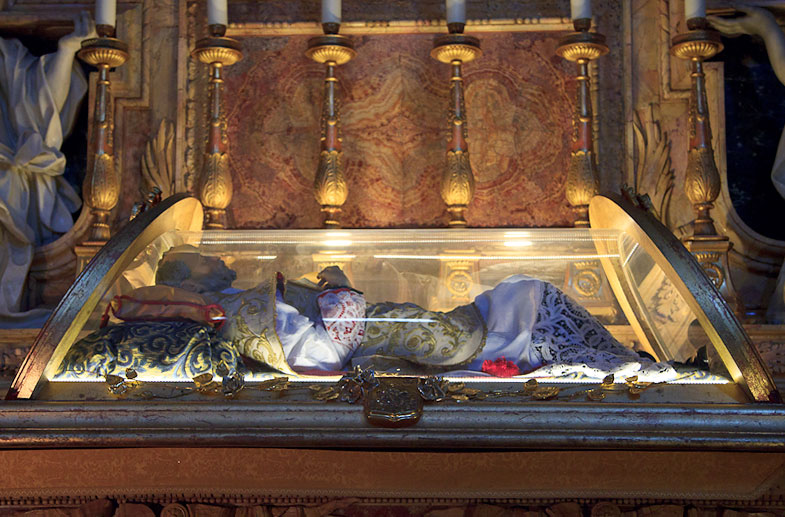
The Body of San Giovanni Leonardi, Patron Saint of Pharmacists, Rome, Italy


Incorruptible? Effigy? There is definitely some wax involved. The caption next to this figure in his space age crystal coffin read:

Corpo di San Giovanni Leonardi (Diecimo-Lucca 1591-Roma 1609) Fondatore dell'Ordine della Madre di Dio Cofondatore del Collegio di Propaganda Fide, Patrono dei Framacisti." (Or, as translated by Google, "Body of St. John Leonardi (Diecimo Lucca-1591-Rome 1609) Founder of the Order of the Mother of God, co-founder of the College of Propaganda Fide, Patron of Pharmacists.)

As seen at--if I remember correctly--his shrine at Santa Maria of Campitelli church in Rome. More on this saint can be found here. More from Italy to come very soon.

Source:
http://morbidanatomy.blogspot.com/feeds/posts/default?alt=rss

Stem cell therapy could repair some heart damage: Study

Published on Mar 25, 2012

CHICAGO (AFP) - Patients with advanced heart disease who received an experimental stem cell therapy showed slight improvements in blood pumping but no change in most of their symptoms, United States researchers said on Saturday.

Study authors described the trial as the largest to date to examine stem cell therapy as a route to repairing the heart in patients with chronic ischemic heart disease and left ventricular dysfunction.

Previous studies have established that the approach is safe in human patients, but none had examined how well it worked on a variety of heart ailments.

The clinical trial involved 92 patients, with an average age of 63, who were picked at random to get either a placebo or a series of injections of their own stem cells, taken from their bone marrow, into damaged areas of their hearts.

See the rest here:
Stem cell therapy could repair some heart damage: Study