Anatomic Fashion Friday: Leopard Skull T

Urban Outfitters Leapord Skull shirt

MEOW. This looks so comfortable. And (trend alert) leopard print will be big this fall. Calling it now. Found this at Urban Outfitters for $89 (a little overpriced IMHO) and I think it would make for an interesting T to wear to the gym. Skulls at yoga class anyone?


The Art of Judith G. Klausner

Judith G. Klausner - Mantis Endoskeleton

Judith G. Klausner - Flora Dentata Tooth & Nail

Judith G. Klausner - The Facts of Life

The delicate and detailed art of Judith G. Klausner is both fascinating and, for some, gives you that funny feeling in your stomach. Made with materials such as human nail clipping, baby teeth, bones, and insect wings, the artist is definitely aware of the negative gut reaction some viewers might have towards her work, a reaction she has turned into a source of inspiration.

I first began working with insects in 2005, and was startled by the strong reactions of disgust I received. It struck me as tragic that our cultural phobia could blind us so effectively to such exquisite delicacy. From there I became interested in examining what other small beauty was lost to us through prejudice or oversight.

I can only imagine how long it must take to assemble one of these miniature specimens, major props!


Redefining age 65 – when your job description is "rockstar"

Deep Purple and Orchestra - Maybe I'm a Leo, Mainz, Germany, July 2011:

Ian Gillan, 65, is best known as the lead singer and lyricist for Deep Purple. Roger Glover, 65, is the bassist and songwriter for the group. Ian Paice, 63, is the drummer. He is the only founding member of the band who never stopped performing with the group, and the only member to appear on every album the band has released during the last 43 years (Deep Purple was founded in 1968).

This is the same group almost 40 years ago, in 1972:
I have attended two concerts of Deep Purple, the last one was in June 2011 and it was quite impressive. The audience age ranged from 5 to 75 and everyone rose to their feet to the sound of Smoke on the Water.
Related:
Videos from Deep Purple at Ravinia Festival 2011, 3 part series.

Posted at Clinical Cases and Images. Stay updated and subscribe, follow us on Twitter and connect on Facebook.


Street Art Plexi Pieces by SARO

SARO Piggy plexi at the Street Anatomy store

Dotted Piggy Plexi by SARO 7.5"x11" on plexi glass - $50

SARO Piggy plexi at the Street Anatomy store

Cross Piggy Plexi detail by SARO 7.5"x11" on plexi glass - $50

SARO Piggy plexi at the Street Anatomy store

Dotted Piggy Plexi detail by SARO 7.5"x11" on plexi glass - $50

SARO Cyclops plexi at the Street Anatomy store

Dotted Cyclops Plexi by SARO 7.5"x11" on plexi glass - $50

SARO Cyclops plexi at the Street Anatomy store

Dotted Cyclops Plexi detail by SARO 7.5"x11" on plexi glass - $50

Pig anatomy has never looked so graphically delicious.  These are reverse spray-painted pieces on plexiglass by the prominent Chicago street artist, SARO. Place the plexi on any surface and see it show through the negative space between the spray paint.

  • 7.5″x11″ on plexi glass
  • Multi-layer stencil painted in reverse with Premium Spray paint
  • Available for $50 each, exclusively at the Street Anatomy store.


Read our interview with SARO to find out more about the man behind the street art.


Morbid Anatomy Presents This Week at Observatory: Taxidermy and Antique Automata Live and in Person!

Hope to see you there!

talk-ny

Shrinking and Other Acts of Sabotage
An illustrated lecture with Petra Lange-Berndt, University College London
Date: Thursday, July 28th
Time: 8:00 PM
Admission: $5
Presented by Morbid Anatomy

Taxidermy is quite literally the incarnation of trophy culture; It is no coincidence that the 19th Century craze for taxidermy coincided with the emergence of the biological sciences, which were, themselves, strongly tied to colonial interests of exploration, exploitation, classification, and reorganization of the world.

Today, this violent story -- as well as the bulk of 19th Century decorative taxidermy, such as heads on shields, armchairs made out of whole bears, elephant footstools or lamp bases adorned with birds of paradise -- are largely absent from public collections and their institutionalized narratives. Also problematic for the serious student of the medium is that, like art conservators or the editors of texts, taxidermists are only successful if there is no visible trace of their work left in the final product.

Tonight's presentation by Petra Lange-Berndt, author of Animal Art: Specimens in Modern and Contemporary Art Practices, 1850-2000, will chase the stories that are woven into the textures of taxidermy by focusing on the fabrication of the nature/cultures in question, and by asking such questions as what kind of politics are attached to these stilled lifes? And how have the power relations encountered in public natural history collections been challenged by modern and contemporary artists?

Petra Lange-Berndt is a lecturer at the Department of History of Art, University College of London. She has published a book in German on Animal Art: Specimens in Modern and Contemporary Art Practices, 1850-2000 (Silke Schreiber, 2009) and just organised a conference on "Taxidermy and Colonial Practice" at the Natural History Museum, London. She likes all kinds of unpopular arts and B-cultures and was co-curator of an exhibition in three parts on "Sigmar Polke: We Petty Bourgeois! The 1970s" at the Kunsthalle in Hamburg (2009-10); her new research is concerned with artists' colonies and communes.

Photo: Photo from Natural History Museum of Nantes (France), by Julie N. Hascoët

 “Mechanical Singing Bird Jardiniere,” made by the firm of Bontems, Paris, France, circa 1880 & recently restored

Living Dolls: The Guinness Collection of Mechanical Musical Instruments and Automata at the Morris Museum
A live automata demonstration and illustrated lecture by Jere Ryder, Conservator of the Guinness Collection of Mechanical Musical Instruments and Automata at the Morris Museum
Date: Friday, July 29th
Time: 8:00 PM
Admission: $10
Presented by Morbid Anatomy

The Guinness Collection of Mechanical Musical Instruments and Automata at the Morris Museum in Morristown, New Jersey is one of the finest collections of automata--or moving mechanical toys popular in the 18th Century and 19th Centuries--in the world. Compiled over 50 years by heir to the Guinness beer fortune Murtogh D. Guinness (1913-2002), the collection features scores of immaculately preserved historic automata--many of them produced in 19th Century France--with subjects ranging from snake charmers to magicians, singing birds to anthropomorphic monkeys, Cleopatra in her death throes to a waltz-playing Mephistopheles; it also includes a number of mechanical musical instruments and a variety of programmed media ranging from player piano rolls to pinned cylinders.

Earlier this year, Observatory brought a group to visit this collection in person; for those of you who were unable to join us--or who are hungry more!--we are bringing the automata closer to home. Tonight, we invite you to join Jere Ryder, Conservator of the Guinness Collection of Mechanical Musical Instruments and Automata at the Morris Museum, for a live demonstration of antique automata drawn from both the Guinness Collection and his own personal collection. Mr. Ryder will detail the history of these bewitching toys with an illustrated lecture on their history, show an introductory video, and demonstrate and describe the mechanics that bring them to life.

Bio: As Conservator of the Murtogh D. Guinness Collection of Mechanical Musical Instruments and Automata, Jere Ryder brings a lifetime of involvement within this specialized field. A keen interest developed after being introduced to them by collector parents, whom Mr. Guinness had encountered in the 1950s. He became a family friend, and served as mentor and inspiration for later study within the field. With no specialized teaching institutions dedicated to this particular realm, it was Jere's father, Hughes M. Ryder, who introduced he and his brother to major European families, collections and related museums, assisting his ability to enter into studies/apprenticeships to surviving, established field masters, modern manufacturers and successors of original firms dating to as early as 1800. Throughout junior high and high school he received objects for repair from regional dealers and distributors. He and his brother Stephen created a business partnership in 1973 and since have repaired, restored, appraised and advised for some of the finest collections, acquiring objects on behalf of state and privately-owned museums worldwide, and are internationally renowned for research projects and the ability to source rare instruments offering new paths of study.

Image: “Mechanical Singing Bird Jardiniere,” made by the firm of Bontems, Paris, France, circa 1880 & recently restored

You can find out more--and get directions to Observatory--by clicking here.

Amsterdam-Based Museum Vrolik Closed for Redesign; July 29th Last Day to Visit Before it Closes!


This just in from my friend Laurens De Rooy, curator of the fantastic Amsterdam-based Museum Vrolik, specimens of which are pictured above:

Museum Vrolik to close for ten months
Following in the footsteps of other top museums in Amsterdam, the Vrolik Museum will close for refurbishment and redesign from August 2011 to May 2012. The ten-month overhaul of the anatomy museum of the Academic Medical Centre aims to make the unique collection more appealing to a broader public. The 29th of July will be the last opportunity to visit the museum before it closes.

Museum Vrolik has been one of the AMC’s main attractions since 1984. Its collection includes items that are hundreds of years old, with more than ten thousand anatomical specimens in preservative, human and animal skeletons and skulls, and anatomical models and reconstructions. One of the museum’s treasures is the so-called Hovius display case, an 18th-century case full of bones and skulls ravaged by disease collected by physician Jacob Hovius. Of great scientific importance is the collection of congenital defects, including Siamese twins, cyclops and sirens.

An inspiring environment for all with an interest in disease, health, and the human body
With students of medicine and specialists the museum’s original target group, visitors without a medical background would often find the museum’s layout dated or even a little haphazard. Following its refurbishment, the museum should attract a much broader public, and serve as an easily accessible and inspiring learning environment for all with an interest in disease, health and the human body.
The main exhibition will feature the human body with all of its normalities and abnormalities, but the museum will also look into the history of its many different collections, honouring its original founders. The museum was named after Amsterdam professors Gerardus Vrolik (1775-1859) and his son Willem Vrolik (1801-1863), both anatomists and collectors. After their deaths, the Vrolik collection was expanded by other Amsterdam professors of anatomy.

The best exhibits now on show at the Special Collections UvA
During the closure of the museum a number of the museum’s top exhibits will be temporarily on display at the Special Collections of the University of Amsterdam (located at Oude Turfmarkt) which will host the exhibition ‘the discovery of man’ from 27 September 2011 to 15 January 2012. Together with Museum Vrolik, the Special Collections will exhibit anatomy atlases and specimens and explore how the dissection of the human body has changed man's view of himself. For further information, go to http://www.bijzonderecollecties.uva.nl.

Museum Vrolik
Academisch Medisch Centrum
Meibergdreef 15, J0-130 (Medical Faculty)
Open Monday to Friday, 10 a.m. - 5 p.m.
Admission free
http://www.amc.nl/vrolik

If this museum and/or the photos above are of interest, make sure to check out the lavishly illustrated publication Forces of Form:The Vrolik Museum which includes these images and more; you can ind out more--or order a copy of your very own!--by clicking here.

Images:

  1. Part of a face, with the eye, eyelids and eyebrows (Vrolik collection); Photo by Hans van den Bogaard (all rights reserved)
  2. New-born conjoined twins , linked at the chest (thoracopagus) (Vrolik collection); Photo by Hans van den Bogaard (all rights reserved)

Simultaneous saccharification and co-fermentation of lignocellulosic residues from commercial furfural production and corn kernels using different nutrient media

Background:
As the supply of starch grain and sugar cane, currently the main feedstocks for bioethanol production, become limited, lignocelluloses will be sought as alternative materials for bioethanol production. Production of cellulosic ethanol is still cost-inefficient due to the low final ethanol concentration and the addition of nutrients. Here, simultaneous saccharification and co-fermentation (SSCF) of lignocellulosic residues from commercial furfural production (furfural residue, FR) and corn kernels were carried out to compare different nutritional media. The final ethanol concentration, the yield, the amount of live yeast cells and yeast cell death ratio were investigated to evaluate the effectiveness of integrating cellulosic and starch ethanol.
Results:
Both the ethanol yield and amount of live yeast cells increased with increasing corn kernels concentration, while the yeast cell death ratio decreased in the SSCF of FR and corn kernels. An ethanol concentration of 73.1 g/L at 120 h, which corresponded to a 101.1% ethanol yield based on FR cellulose and corn starch, was obtained in the SSCF of 7.5% FR and 14.5% corn kernels with mineral salt medium. SSCF could simultaneously convert cellulose into ethanol from both corn kernels and FR, and the SSCF ethanol yield was similar between the organic and mineral salt media.
Conclusions:
Starch ethanol promotes cellulosic ethanol by providing important nutrients for fermentative organisms whereby cellulosic ethanol promotes starch ethanol by providing cellulosic enzymes that convert the cellulosic polysaccharides in starch materials into additional ethanol. It is feasible to produce ethanol in SSCF of FR and corn kernels with mineral salt medium. It would be cost-efficient to produce ethanol in SSCF of high water insoluble solid (WIS) of lignocellulosic materials and corn kernels. Compared with prehydrolysis and fed-batch strategy using lignocellulosic materials, addition of starch hydrolysates to cellulosic ethanol production is a more suitable method to improve the final ethanol concentration.

Increased isobutanol production in Saccharomyces cerevisiae by overexpression of genes in valine metabolism

Background:
Isobutanol can be a better biofuel than ethanol due to its higher energy density and lower hygroscopicity. Furthermore, the branched-chain structure of isobutanol gives a higher octane number than the isomeric n-butanol. Saccharomyces cerevisiae was chosen as the production host because of its relative tolerance to alcohols, robustness in industrial fermentations, and the possibility for future combination of isobutanol production with fermentation of lignocellulosic materials.
Results:
The yield of isobutanol was improved from 0.16 to 0.97 mg per g glucose by simultaneous overexpression of biosynthetic genes ILV2, ILV3, and ILV5 in valine metabolism in anaerobic fermentation of glucose in mineral medium in S. cerevisiae. Isobutanol yield was further improved by two times by the additional overexpression of BAT2, encoding the cytoplasmic branched-chain amino acid aminotransferase. Overexpression of ILV6, encoding the regulatory subunit of Ilv2, in the ILV2 ILV3 ILV5 overexpression strain decreased isobutanol production yield by three times. In aerobic cultivations in shake flasks in mineral medium the isobutanol yield of the ILV2 ILV3 ILV5 overexpression strain and the reference strain were 3.86 and 0.28 mg per g glucose, respectively. They were increased to 4.12 and 2.4 mg per g glucose in YPD complex medium under aerobic conditions, respectively.
Conclusions:
Overexpression of genes ILV2, ILV3, ILV5, and BAT2 in valine metabolism led to an increase in isobutanol production in S. cerevisiae. Additional overexpression of ILV6 in the ILV2 ILV3 ILV5 overexpression strain had a negative effect, presumably by increasing the sensitivity of Ilv2 to valine inhibition, thus weakening the positive impact of overexpression of ILV2, ILV3, and ILV5 on isobutanol production.Aerobic cultivations of the ILV2 ILV3 ILV5 overexpression strain and the reference strain showed that supplying amino acids in cultivation media gave a substantial improvement in isobutanol production for the reference strain, but not for the ILV2 ILV3 ILV5 overexpression strain. This result implies that other constraints besides the enzyme activities for the supply of 2-ketoisovalerate may become bottlenecks for isobutanol production after ILV2 ILV3 and ILV5 have been overexpressed, and it most probably includes the valine inhibition to Ilv2.

Poor Diet May Make COPD Worse, Study Finds

(HealthDay News) -- Certain vitamin deficiencies may lead to decreased lung function in people with chronic obstructive pulmonary disorder (COPD), which includes emphysema and chronic bronchitis, says a new study.

For the study, 20 COPD patients (13 women, seven men) completed a questionnaire to assess their dietary intake of vitamins A, C, D, E and selenium, all of which contain cell-protecting antioxidants. A diet low in antioxidants -- as compared to national dietary intake requirements -- was common among the patients.

The percentages of deficiencies were: 25 percent (selenium), 45 percent (vitamin C), 90 percent (vitamin E), 55 percent (vitamin A), and 70 percent (vitamin D).

The researchers then measured the maximum amount of air the patients could exhale with force. All the patients with a selenium-deficient diet had decreased lung function. Among patients deficient in vitamins C, A, and D, only men had decreased lung function. Read more...

Ayurtox for Body Detoxification

My Favorite Aruba Beaches: #5 – Palm Beach

Aruba's Palm Beach

Aruba’s Palm Beach is that beach – the one that almost every tropical island with a tourist center has — the beach with all of the jet ski and float rentals, the bars and restaurants and a ton of people. It’s located smack in the middle of the Hi-Rise area, where all of the island’s largest and nicest hotels sit. However, unlike a lot of touristy beaches I’ve been to in the Bahamas or in Mexico, Palm Beach does not have people walking up to you trying to sell test tubes of liquor or cheesy t-shirts and jewelry. And that was really nice! It wasn’t that surprising though, given the entire island has a very laid back, friendly vibe. My suggestion would be to snag some shade under one of the dozens of palm trees that line the beach, or the many palapas, grab a drink and proceed to people watch. It’s a real sport at this beach.

Aruba's Palm Beach and Pirate Ship

Keep an eye out for pirate ships here! Jolly Pirates has a snorkeling tour that starts at Palm Beach and takes snorkelers and those who simply want to make merry in the sun on a pirate ship to Malmok and Boca Catalina. The beach closer to the pier where you can board the ships is a bit nicer than the beach in the other direction — it’s simply too crowded with people, boats and tour outfitters. Alternatively, head to the very southern part of the beach, which is also more quiet than the central portion.

We visited Palm Beach on a day when we wanted to do some shopping and be near some restaurants and bars and it worked out perfectly. The huge advantage to Palm Beach is that you never have to worry about finding a bathroom or a bite to eat. And these things are important when you’re too busy relaxing to worry about anything.

A view of Aruba's Palm Beach and Hi-Rise hotel area

IF YOU GO: Take the time to wander around the beautiful hotels along the beach — there are some fabulous gardens and fountains to explore! You can sneak into the Marriott’s lazy river if you’re, well — sneaky. Grab a casual bite at the Pelican Pier Bar - the grouper sandwich was one of the best we had on the island!


Photos: Jenny Bengen-Albert

My Favorite Aruba Beaches: #4 – Baby Beach

Aruba's Baby Beach

My husband and I enjoyed Baby Beach on a recent trip to Aruba, but to be completely honest, it didn’t live up to some of the hype we had heard about the beach beforehand (You must rent a car and go! It’s unbelievably fabulous and you will want to pitch a tent and live on the beach forever!) Baby Beach is located on Aruba’s very southwestern tip, and it takes a good 40 minutes to get there by car. The beach is so named because the water is remarkably shallow – rarely more than 5 feet deep – and the beach is in the shape of a large half-moon. As such, Baby Beach is very popular with families with small kids, so it’s not the quietest on the island — but watching kids snorkel is very cute and entertaining (“MOMMY! Look at all the BWUE fishes!) But, the water’s shallow depths also mean that for adults, at least, the snoekleing here isn’t fantastic — I found that too much sand gets kicked up from the bottom on due to the windy summer days and the visibility was nowhere near as good as it was at Arashi or at Boca Catalina. Snorkelers used to be able to easily swim around the reefs that surround Baby Beach, but a recent storm damaged the reefs, and the waves outside of the protected lagoon area are a bit rough and choppy. Not necessarily dangerous, just not the best place to be if you’re an inexperienced snorkeler or swimmer.

With all that said — I would definitely go back to Baby Beach because it is a wonderful swimming beach. The reefs create a large, safe area to swim around in and there are often very little waves to speak of close to shore. The drive to Baby Beach is about 40 minutes from Oranjestad, and it’s a pretty drive. If you’re hungry when you get there, be sure to stop by the Rum Reef Bar & Grill for some tasty fish sandwiches! There are a few palapas to relax under, but I preferred to take a nap under the sea grape trees.

Secluded Baby Beach in Aruba

Baby Beach has a somewhat isolated feel to it, partly due to the fact that it takes a good 40 minutes to get there OranjestadBaby Beach is at the very southern tip of the island. It reminded me a bit of Iceland’s Blue Lagoon, for some reason. If you’re looking for a more private place to swim near Baby Beach, drive over to Rodger’s Beach –though be forewarned that the setting is a bit strange and spooky. The backdrop is an oil refinery, and the towers are continuously putting out plumes of black and gray smoke. You can’t really smell it and the water looks fine, but it’s just a bit odd. Both Baby Beach and Rodgers Beach are where to go if you want to hang out with locals, simply because getting there is a bit harder than the island’s other beaches.

IF YOU GO: It’s best to rent a car to get to Baby Beach, because the Arubus doesn’t go here — it stops in San Nicolas, but that’s still a ways from Baby Beach. You could also take a taxi for about $40 each way, but car rentals are about $40 per day, so it’s your best bet. Do stop for lunch at the Rum Reef Bar & Grill, the food’s great! You can also rent snorkeling and suba equipment at the JADA shop there next to Rum Reef.

Photos: Jenny Bengen-Albert

My Favorite Aruba Beaches: 3 – Eagle Beach

Eagle Beach in Aruba

My husband and I just returned from Aruba, and Eagle Beach was directly across from the timeshare we stayed in called La Cabana Beach & Racquet Club. But, I can guarantee you that it was more than sheer laziness which prompted us to hang out on this beach every single day of our stay! Eagle Beach is pristine, beautiful and calm, and you can view some truly spectacular sunsets there as well. It’s located in Aruba’s Low-Rise area (as opposed to the High-Rise area with all of the big glitzy hotels).

Calm, warm waters on Aruba's Eagle Beach

The first thing we noted was that Eagle Beach has a plethora of palapas. However, snagging one of these delightfully shady, shaggy umbrellas requires getting to the beach by 7:30 in the morning, even in low season — by 9:00 in the morning, every single one was always sadly reserved. No matter, though — we decided to do sightseeing during the day and hang out at the island’s other beaches and come back to Eagle Beach around 6:30 to watch the sunsets. And what sunsets! By that time the palapas were all free and we happily slurped on tropical beverages while watching the sun dip below the horizon.

Stunning Sunsets on Aruba's Eagle Beach

We found Eagle Beach in Oranjestad, Aruba to be the perfect beach for all-around relaxing. There were small stands offering float and kayak rentals, and there weren’t any of the loud motorboats that crowd Palm Beach. There’s a bar serving up delicious drinks near the La Cabana beach entrance and plenty of lounge chairs to relax on. Eagle Beach isn’t where you want to be for the best snorkeling — for that, you should go to Boca Catalina or Baby Beach. But, if you’re looking for a large, chill beach with plenty of room to spread out, Eagle Beach is where it’s at.

My Favorite Aruba Beaches: #2 – Boca Catalina (Catalina Bay)

Chillin' on Boca Catalina Beach in Aruba

Starting from Aruba’s northwestern side, Boca Catalina is a very short bus ride just south of gorgeous Arashi Beach. Boca means “mouth” in Spanish, and the beach here does somewhat form a gentle yawn around the warm, shallow waters. My husband and I found Boca Catalina to have the best snorkeling on Aruba, though we didn’t spend as much time at Malmok Beach as we would have liked.

A school of colorful fish at Boca Catalina in Aruba

Boca Catalina has a lovely reef that’s popular with the island’s catamarans, sail boats and even pirate ship tours. It’s still very quiet and relaxed though, especially since there are generally very few speed boats. Closer to shore, you’ll find yourself in shallow water that’s not much more than 6-7 feet deep. There are plenty of fish here to keep you occupied (huge schools of fish will surround you!) But, when it’s particularly windy, the water can be choppy and the sand is kicked up quite a bit on the bottom, making the visibility in the more shallow areas a bit murky at times.

Swim out a good 200 feet though and you’ll be in 15-20 feet of water — this is where you should be for the best snorkeling.  The water here is very clear, the currents are not strong, and if you hover over the “dark spots” (where the reefs are), you’ll be able to admire more fish than you’ll know what to do with. If you don’t have an underwater camera, think about getting one before you go — it’s totally worth it. We saw starfish, barracudas, flounders and all sorts of tropical looking fish. Some of them can be a little mouthy at times, so watch the fingers! When you’re done with snorkeling for the day, don’t leave the beach without scouring the shoreline for shells – your efforts will be rewarded here.

IF YOU GO: Like most of Aruba’s beaches that are outside of the hotel areas, Boca Catalina doesn’t have restrooms, but the restaurants and hotels of the High Rise area and Palm Beach are a five minute bus ride away.  Hop on the Arubus for $1.30 one way or $2.60 round-trip. Take advantage of the shady palapas – have a beer and fall asleep to the sounds of gently rolling waves. Paradise.

Photos: Jenny Bengen-Albert

My Favorite Aruba Beaches: #1 – Arashi Beach

Gorgeous Arashi Beach

I’ve just returned from a one-week vacation in Aruba, and I now understand why every tourist we met there was on their 9th or 10th visit to the island. Gusty , persistent trade winds keep the island cool and dry in the summer months (and the pests at bay), the island is outside of the hurricane belt and there are gorgeous beaches at every turn.

If you drive up Aruba’s western coast to the very tip, you’ll come across a lovely patch of sand that fronts and even more lovely patch of water called Arashi Beach. You know you’ve arrived when you see the California Lighthouse; it’s a short walk away from the beach via a trail. Soft, white sand is not hard to find in Aruba, and you’ll find it here, too. For me, though, Arashi’s real draw was the water. It was clear – crystal clear. It felt like we were swimming in a giant bowl of water with sand at the bottom. And, despite the constant trade winds continually whipping across the sands, the waves were small and not remotely bothersome, and the sandy bottom was not stirred up. Just dazzling. Check out this picture:

Truly crystal-clear water at Aruba's Arashi Beach

I swear that was the seawater and not the hotel pool! Like many of Aruba’s beaches, Arashi is quite shallow for a ways out – no more 6-7 feet deep when you’re more than 200 feet from shore. Despite the ridiculous amounts of sunscreen I slathered on while at Arashi Beach, I still managed to get burned. Why? The water’s clarity transfixed me, and I was content to simply float around in the gentle waves like a dopey pelican. It took me some time to get over the fact that when looking through the water to the bottom, I could, in fact, tell which of my toes needed a touch-up from the pedicure I had gotten two weeks prior.

When I was finally able to tear myself from the water, I headed for some shade under the adorable palapas that line the beach. Palapa. I love that word. My husband and I want to build one in our backyard now — who cares if the only body of water we have is a $25 plastic pool from Target; it’s about the ambiance, right?

Palapas at Arashi Beach in Aruba. Can anything sum up "tropical" better?

The California Lighthouse at Arashi Beach in Aruba

Neither my husband nor myself were feeling particularly ambitious, but if we had been, we would have taken the short stroll up to the California Lighthouse, which can be reached via a trail from the beach.

The snorkeling at Arashi is ok, but nowhere near as good as it is a little south of there at beach called Boca de Catalina (Catalina Bay). (See my next post). Arashi is a quiet swimming hole – very few if any boats and no kite surfers or jet skis.

IF YOU GO: Don’t bother renting a car! Just hop on the Arubus, which is $1.30 one way or $2.60 round-trip. Arashi Beach is actually the end of the line for the bus, which does a U-turn in the parking lot. The bus hits all of the beaches on the island’s Western side and they come and go about every twenty minutes. May-December is low season in Aruba, so the beaches aren’t generally crowded. But, if you have your heart set on taking naps under a palapa, try to get to the beach by about 11:30.

Photos: Jenny Bengen-Albert

Dr. Beach on Rip Currents

Probably the best and most informative video you’ll ever see on recognizing and dealing effectively with rip currents, from Dr. Stephen Leatherman. Thanks to Kenneth Wright for posting this on my FloridaBeachunter Facebook Page.

Coastal Wildlife Club Turtle Patrol

Most any stretch of beach in Florida with sea turtle egg-laying activity has volunteer caretakers who carefully monitor the nesting and keep careful records. The Coastal Wildlife Club in the Englewood, Florida area keeps track of the nests on the beaches in Lee, Charlotte and Sarasota Counties, including Manasota Key, Palm Island, Little Gasparilla Island [...]

Wailoaloa Beach Nadi Fiji

Wailoaloa Beach at Nadi, Fiji, is for flashpackers what Denarau Island is for tourists on upscale South Pacific package tours. A half dozen reasonably priced places to stay grace Wailoaloa’s brown sands.

Its a big ‘un

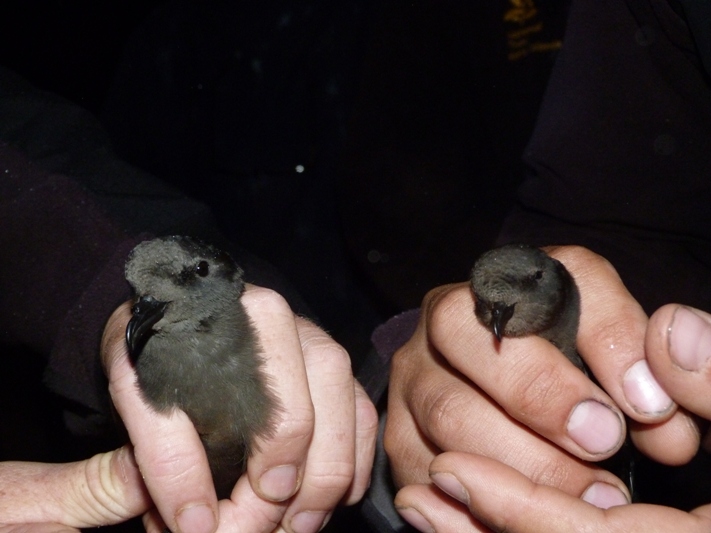
Leach (left), Storm (right) what a pair (Will Scott)

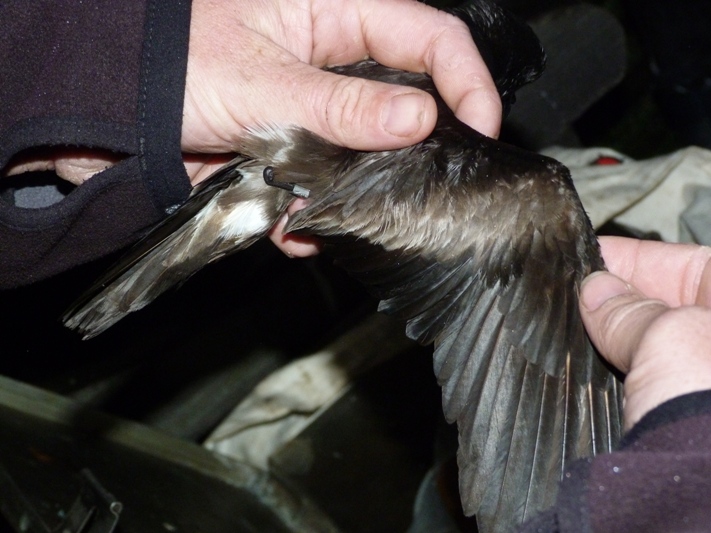
Wing of a Leach's (Will Scott)
Wednesday 27th July comments: The Farnes never appear to amaze me, even after all these years. Following an unprecedented influx of Storm Petrels – birds were still passing today, so it was decide to try overnight tape luring to ring individuals and try piece together the movements of these small oceanic wanderers.

So as darkness fell on Inner Farne, the nets were erected, the tape lure set up and soon after we were enjoying the delights of the first capture – a ringed bird from another part of the UK. Suddenly a second bird bounced into the net, another ringed individual. It was a great start. The night went on to produce a total of eleven of these amazing birds but the night was not complete.

As we passed 03:15, we decided it was time to call it a night and pack up for some well deserved sleep. However this was shattered as we discovered to our amazement a ‘Big Un’ in the nets. A Leach’s Petrel, the larger relative of the Storm Petrel had been caught the first ever trapped Leach’s in Farnes history.

What bird, what a night. The bird was ringed and processed and eventually released but not before the entire warden team had enjoyed the sight of this monster. It capped a great few days on the Farnes and only knows what the next few months may bring…